

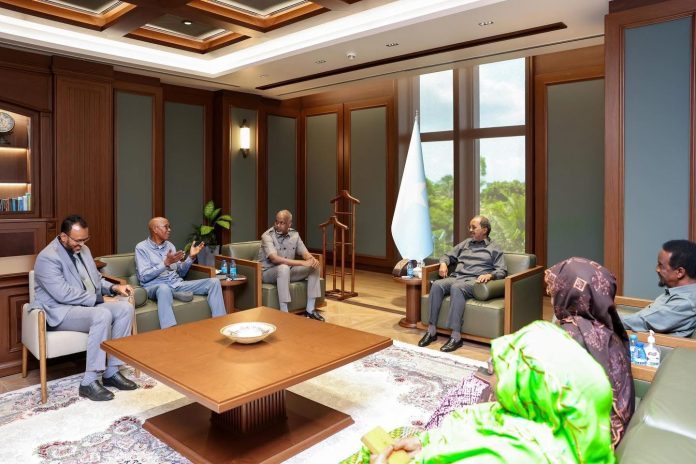
May 25(Jowhar) Madaxweynaha Jamhuuriyadda Federaalka Soomaaliya Mudane Xasan Sheekh Maxamuud ayaa kulan la qaatay bulshada rayidka ah ee Soomaaliyeed, kuwaas oo uu kala hadlay dhammaystirka hannaanka dimuqraadiyadeed ee dalka, dhismaha dowladnimada iyo horumarka laga xaqiijiyey amniga, maamul wanaagga iyo doorashooyinka dadweynaha ee qof iyo codka ah.
Pope Leo’s First Encyclical Warns of Growing Artificial Intelligence Risks
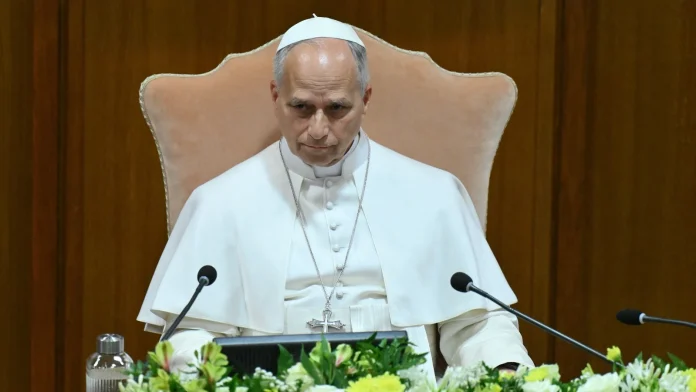
The Vatican has released Pope Leo XIV’s long-awaited first encyclical, Magnifica Humanitas — “Magnificent Humanity” — a major new teaching focused squarely on artificial intelligence.
The pope signed the text on 15 May, deliberately timing it to coincide with the 135th anniversary of Rerum Novarum, the landmark encyclical issued by the previous pontiff to take the name Leo, Pope Leo XIII.
Rerum Novarum tackled the social and economic shocks unleashed by the Industrial Revolution in the late 1800s.
Now, Pope Leo XIV has turned to what he framed as the defining upheaval of the present age: Artificial Intelligence.
In an unusual Vatican first, the pope appeared in the Synod Hall for the document’s publication, where it was presented to the Curia, diplomats and the media.
That style of rollout — a pope attending the presentation of his own encyclical — marks a notable break with routine and underscored the weight Pope Leo attaches to the text.
Attention quickly shifted to who would stand with him as the document was unveiled.
Pope Leo shakes hands with Christopher Olah ahead of the presentation
Seated beside a panel of cardinals and theologians was Christopher Olah, co-founder of Anthropic, one of the world’s most influential AI companies.
Mr Olah helped establish the US firm in 2021. Anthropic is behind the AI system Claude.
He has described Anthropic as an AI lab focused on the safety of large models.
By placing Mr Olah alongside senior church figures, the Vatican spotlighted the intersection of ethics, policy and power that increasingly surrounds AI.
Anthropic attracted the anger of the Trump administration earlier this year after it declined a Pentagon request for unconditional use of its Claude AI models.
The dispute escalated to the point where the US president called for the government to “immediately” stop using Anthropic technology.
Anthropic pledged to sue over what it described as “intimidation” and maintained that its systems should not be used for mass surveillance of US citizens or deployed in fully autonomous weapons systems.
Earlier this month, the Pentagon confirmed it had struck agreements with seven AI companies — not including Anthropic — to deploy advanced capabilities on the US Department of Defense’s classified networks, part of an effort to broaden the pool of AI firms working across the military.
Some observers say Mr Olah’s presence at the Vatican event could intensify the public dispute between Pope Leo and Donald Trump, which has sharpened in recent weeks.
Christopher Olah joined a panel of theologians and cardinals at the presentation
Last week, Pope Leo issued a forceful warning about autonomous weapons and the militarisation of emerging technology during a speech at Rome’s La Sapienza University, criticising the direction of AI use in current global conflicts.
He said heavy AI investment and high-tech weapons were pushing the world into a “spiral of annihilation”.
The Vatican’s interest in artificial intelligence did not begin with this encyclical.
Technology professionals in Silicon Valley alerted the Holy See to the scale of what was coming as early as 2016.
Those in Silicon Valley urged senior Vatican figures — including Bishop Paul Tighe, who is from Co Meath — to begin grappling with the issue.
Contacts between Vatican officials and Silicon Valley representatives have continued over a decade.
In that time, the Vatican has acknowledged AI’s potential benefits, particularly in medicine and education.
At the same time, it has signalled deep concern about how the technology can be exploited.
The pope has also raised alarms about job losses linked to AI.
In an irony that highlights the moment, Mr Olah’s company is currently looking for new offices in Dublin as it expands its EU Headquarters.
In March, the IDA said Anthropic had announced plans to significantly expand its Dublin presence over the coming year.
Even so, Central Statistics Office figures released last week pointed to a fall in employment levels in the tech sector.
Beyond labour issues and threats to jobs, the encyclical is set to address themes including justice, peace and morality.
The substantial document is expected to serve as the first major signpost in Catholic teaching on artificial intelligence — and to shape Pope Leo’s pontificate in the years ahead.
Ruushka ayaa gantaal cusub oo nooca Oreshnik ah ku weeraray Ukraine
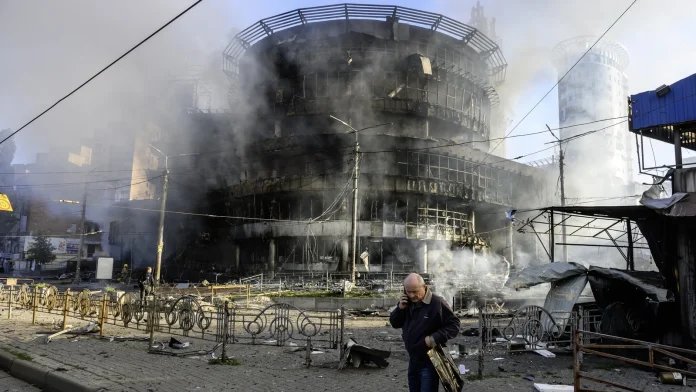
May 25(Jowhar)-Kyiv waxay ku soo baraarugtay weerar saacado badan socday iyadoo Ruushku uu soo diray boqolaal diyaaradood oo aan duuliye lahayn iyo gantaallo mid ka mid ah duqeymaha ugu xooggan caasimadda tan iyo markii dagaalku bilaabmay, oo ay ku jiraan gantaalka Oreshnik ee hypersonic oo u dhow magaalada.
Crack in Los Angeles chemical tank may lower explosion risk, officials say
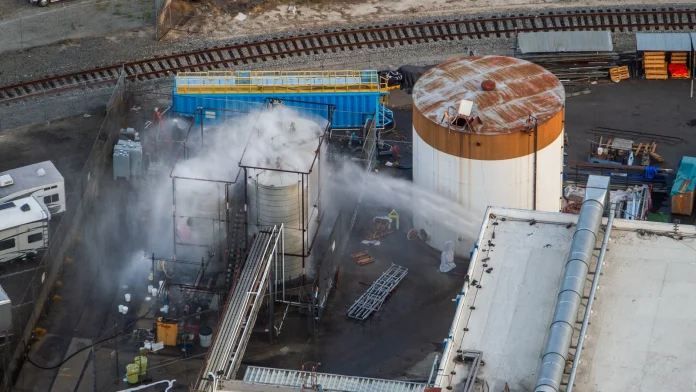
A dangerous chemical leak in Orange County that triggered a mass evacuation may be showing the first signs of easing, after firefighters reported spotting what appeared to be a crack in a compromised storage tank — a development that could be reducing internal pressure and lowering the risk of a blast.
Roughly 50,000 residents were ordered to evacuate from the Garden Grove area, southeast of Los Angeles, on Friday when the tank began leaking and fumes drifted across a densely populated region about 8km from Disneyland.
Federal regulators have sent a team of specialists to assist local crews and evaluate potential scenarios. Environmental Protection Agency (EPA) chief Lee Zeldin told CNN yesterday that the “most catastrophic scenario” would involve one tank exploding and triggering a chain reaction among nearby tanks.
“That’s the reason why you see such a big evacuation.”
Still, Mr Zeldin said officials believe “the most likely scenario is one of a low-volume release, where the local authorities are going to be able to monitor, neutralise and contain the threat.”
Firefighters were working “to confirm that the pressure in the tank has been released” and that the danger of an explosion has been eliminated, TJ McGovern, interim fire chief for the Orange County Fire Authority, said in a video post on X.
Around 50,000 residents were forced to evacuate their homes
On Saturday night, crews moved close enough to the tank to collect more information and observed a “potential crack in the tank, which could potentially be relieving some of the pressure in there,” Mr McGovern said.
He described the effort as a crucial step that is helping responders plan next moves with greater confidence. “This operation that we did gave us positive intel to make educated decisions today in the positive light,” he said, noting that experts are now scrutinising the data gathered.
“We’re not there yet, but this was a step in a right direction.”
Officials have not said what caused the leak, which was first reported on Thursday, and Mr McGovern did not address whether the apparent crack is connected to the release.
The tank holds 26,000 litres of methyl methacrylate, a volatile, flammable chemical commonly used in plastic production.
California Governor Gavin Newsom declared a state of emergency for Orange County on Saturday.
The state’s whole-of-government response in #GardenGrove includes real-time environmental monitoring, evacuations, traffic control, shelter operations, and community assistance as crews continue working to protect public safety. https://t.co/XTv6UNJ6jH
— Governor Newsom Press Office (@GovPressOffice) May 25, 2026
Fire officials warned on Saturday that the tank’s temperature was rising — a worrying sign that heightened fears of a catastrophic explosion — and crews have been spraying it with water in an effort to keep it cool.
The tank is owned by GKN Aerospace, a UK-headquartered company that operates 32 manufacturing sites across 12 countries, including China, India, Mexico, Turkey, Sweden and Germany, and employs 16,000 people, according to its website.
GKN Aerospace, which develops airplane technology, said in a statement yesterday that it is “working around the clock to mitigate the risk of a leak”.
“We are acutely aware of the uncertainty this incident is causing and sincerely apologise for the ongoing disruption to the local community,” the statement said.
The tank is located around 8km from Disneyland
By yesterday, residents forced out by the evacuation orders still had not been cleared to return, and officials opened additional shelters to take in those displaced.
Disneyland officials said the “resort remains open to guests,” adding that they were monitoring developments closely.
According to the EPA, methyl methacrylate can irritate the skin, eyes and mucous membranes, and may trigger respiratory and neurological effects with acute or prolonged exposure.
Responders were also working to install containment barriers aimed at preventing any spilled chemical from entering storm drains or river channels that ultimately flow into the ocean.
Madaxweyne Xasan oo bilaabay kulamo uu la leeyahay Odayaasha Beelaha Muqdisho ee mucaaradka ah
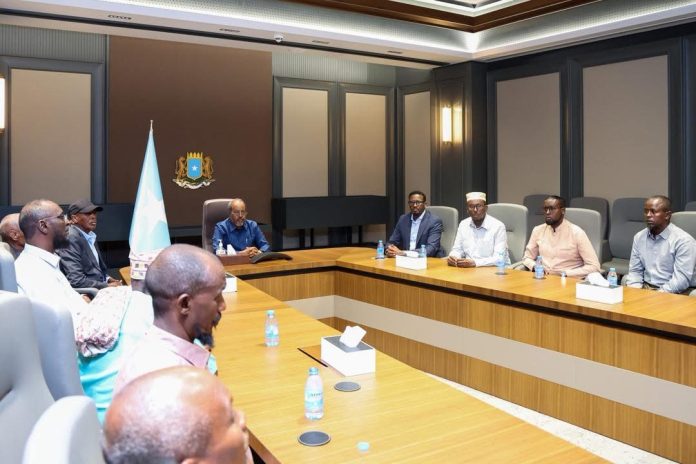
May 25(Jowhar) Madaxweyne Xasan Sheikh ayaa bilaabay in uu lakulmo odayaasha beelaha uu saami qeybsigooda kasoo jeeda ee Muqdisho,gaar ahaana qeybaha kasoo horjeeda ee tabashada mudooyinkii lasoo dhaafay ka qabay, isagoo doonaya in uu kala hadlo sidii aysan ugu biiri laheyn mucaaradka kasoo horjeeda ee abaabulka Banaanbaxyada ka wada Muqdisho, kuwas oo diidan kororsiga mudo xileedka.
Rubio: US will pursue alternative options if Iran negotiations collapse
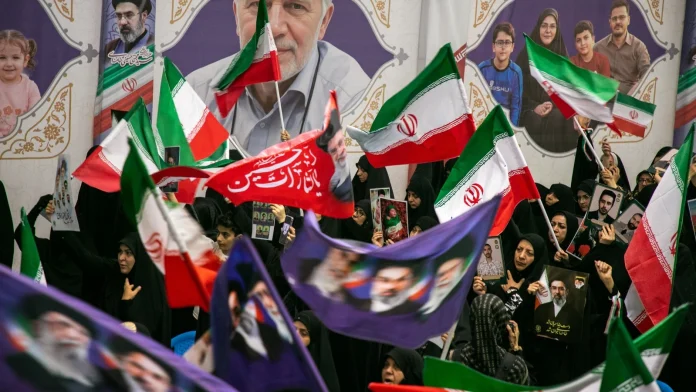
Washington is signaling it will either strike a “good” agreement with Iran or pursue what it calls “another way,” as the Trump administration tamped down expectations of a swift breakthrough in a conflict now stretching into its third month.
Speaking to reporters in New Delhi, Secretary of State Marco Rubio said the United States would exhaust diplomatic avenues before turning to “alternatives,” a day after President Donald Trump said he had instructed his envoys not to rush into any deal with Tehran.
Rubio described what he called a serious proposal focused on restoring shipping through a key choke point and launching talks on Iran’s nuclear programme. There was a “pretty solid thing on the table in terms of their ability to open up the strait, get the strait open, enter into a very real, significant, time-limited negotiation on the nuclear matter, and hopefully we can pull it off,” he said.
On Sunday, Mr Trump wrote on Truth Social that the US blockade on Iranian ships in the Strait of Hormuz would “remain in full force and effect until an agreement is reached, certified, and signed”.
He added: “Both sides must take their time and get it right.”
US Secretary of State Marco Rubio speaks to journalists before boarding his plane at Indira Gandhi International Airport in New Delhi
Iran’s government did not immediately respond. However, Tasnim news agency, which is linked to Iran’s Revolutionary Guards, said the United States was still blocking elements of a possible deal, including Tehran’s insistence that frozen funds be released.
Markets reacted quickly: oil prices slid 6% to two-week lows this morning as investors grew more optimistic that the United States and Iran were edging closer to a peace agreement.
Mr Trump helped fuel expectations of an imminent pact on Saturday, saying Washington and Tehran had “largely negotiated” a memorandum of understanding for a peace deal that would reopen the Strait of Hormuz.
Before the conflict, that vital waterway carried a fifth of global shipments of oil and liquefied natural gas.
Latest Middle East stories
Even so, the negotiations remain tangled in deep disputes — Iran’s nuclear ambitions, Israel’s war in Lebanon with the Iranian-backed Hezbollah militia, and Tehran’s demands for sanctions relief and the release of tens of billions of dollars in Iranian oil revenues held in foreign banks.
A senior Trump administration official, speaking on condition of anonymity, offered what he described as the latest outline of the talks.
The official said Iran had agreed “in principle” to reopen the Strait of Hormuz if the United States lifted its naval blockade, and to dispose of Tehran’s stockpile of highly enriched uranium.
The US believes Iran’s Supreme Leader Ayatollah Mojtaba Khamenei has signed off on the broad framework, the official added.
Iran has not immediately confirmed the account, nor has there been clarification of what an “in principle” agreement would entail in practice.
According to the US official, the sequence envisioned by Washington would first restore passage through the strait and end the US naval blockade, while the more detailed nuclear steps would require additional time to negotiate.
The official also rejected claims that Iran had refused to dispose of its enriched uranium stockpile. “It’s a question about how,” the official said.
A second senior administration official said yesterday that the proposed framework would give negotiators 60 days to finalise an agreement.
Iranian sources had told Reuters that later stages could include “feasible formulas” to settle the dispute over the highly enriched uranium, including diluting the material under the supervision of the UN nuclear watchdog.
Iran has repeatedly denied US and Israeli accusations that it is seeking nuclear weapons, insisting it enriches uranium for civilian purposes — though the level of purity it has reached far exceeds what is required for power generation.
Mr Trump’s approval rating have been hurt by the war’s impact on US energy prices, and he has faced congressional efforts to restrict his war powers. He has repeatedly highlighted the prospect of a deal to end the conflict launched by the US and Israel on 28 February.
A fragile ceasefire has remained in place since early April.
The president also used social media to rebut critics of his negotiation strategy and any suggestion that he is conceding too much.
“If I make a deal with Iran, it will be a good and proper one … So don’t listen to the losers, who are critical about something they know nothing about,” Mr Trump posted yesterday.
While a deal that strengthens the shaky ceasefire could calm markets, it would not immediately resolve a global energy crisis that has pushed up the costs of fuel, fertiliser and food.
The US-Israeli bombing of Iran killed thousands of people in Iran before it was suspended in early April.
Israel has also killed thousands more and driven hundreds of thousands from their homes in Lebanon, which it invaded in pursuit of militant group Hezbollah. Iranian strikes on Israel and neighbouring Gulf states have killed dozens.
Turkish riot police raid opposition party headquarters amid rising political tensions
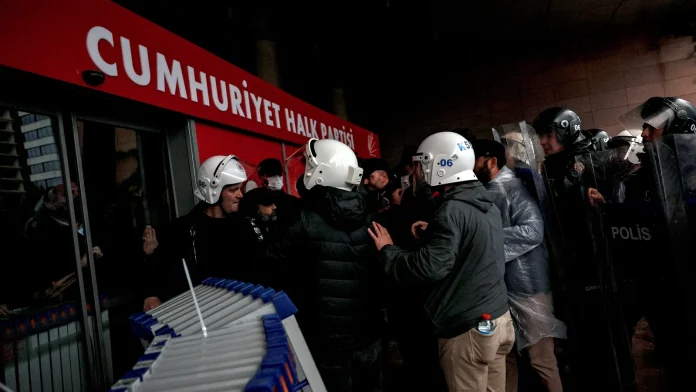
Clouds of tear gas and a surge of riot police turned the headquarters of Turkey’s main opposition party into a flashpoint in Ankara, as officers forced their way inside and ousted the party’s leader just days after a court moved to dismiss the current leadership.
The clashes marked the latest, and most dramatic, confrontation in what critics describe as President Recep Tayyip Erdogan’s widening crackdown on political opponents — a campaign that has repeatedly spilled into the streets as rivals and supporters push back.
Members of the Republican People’s Party (CHP) had barricaded entrances to the building, refusing to comply with a court order issued on Thursday in the context of an official probe into the party. Police later broke in, firing teargas as they moved to remove CHP leader Özgür Özel.
“They stormed our headquarters, used tear gas, beat us with batons, ransacked the party (building) and threw us out,” Özgür Özel CHP party leader told AFP.
Ousted CHP party leader Ozgur Ozel led supporters through the streets after the operation at the party headquarters
Özel accused Erdogan of acting irrationally, saying the president had “lost his senses” and arguing that the operation was part of political manoeuvres aimed at securing victory in the next elections, scheduled for 2028.
The confrontation comes after Turkish authorities last year jailed Erdogan’s chief political rival, Istanbul mayor Ekrem Imamoglu, who had been selected as the CHP’s candidate for the 2028 presidential election.
Imamoglu was arrested on corruption charges — allegations he has rejected as politically motivated.
Thursday’s court decision also upended internal CHP politics: it annulled Özel’s 2023 win in the party’s leadership elections and installed the party’s former chair, Kemal Kilicdaroglu, as interim leader. Kilicdaroglu has been portrayed by opponents as a lacklustre figure who suffered a string of electoral defeats.
“Just as he (Erdogan) jailed the presidential candidate who could have beaten him, he has now officially closed the political party that could have beaten him,” Mr Ozel told AFP.
Rights group warning
Pushed out of the headquarters, Özel set off on foot in the rain, walking several kilometres toward parliament with supporters surrounding him.
“The Republican People’s Party will from now be on the streets or in the squares,” he said as he was forced out of the building.
In later remarks to AFP, he went further, declaring: “Turkey has ceased to be a modern democratic republic and has turned into an authoritarian regime.”
Before police intervened, supporters of Kilicdaroglu had attempted to force their way into the CHP headquarters — a standoff that escalated until officers received orders to take control of the building.
Similar turmoil erupted last year in Istanbul, where courts appointed an administrator to run regional CHP offices, setting the stage for confrontations that echoed Saturday’s scenes in the capital.
On Saturday, global NGO Human Rights Watch warned that Erdogan’s government was chipping away at Turkish democracy through what it called “abusive tactics” targeting the CHP.
The group described the court order as “the latest deeply damaging blow to the rule of law, democracy and human rights” in Turkey.
California scrambles for fix as Los Angeles chemical tank overheats
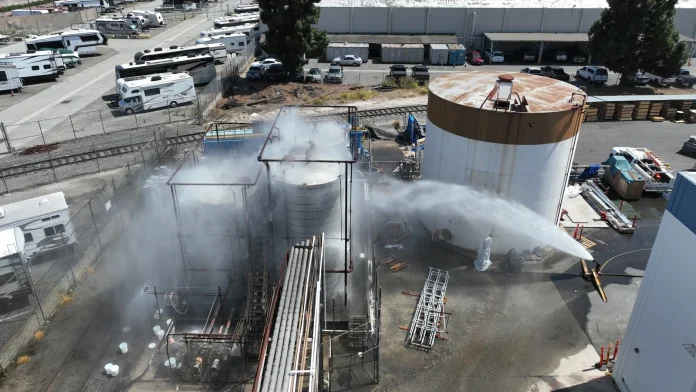
A volatile chemical tank in Southern California has put firefighters in a race against heat and time, prompting officials to bring in specialists from across California as evacuation shelters in several nearby cities filled to capacity.
Evacuation orders remained in place for an area covering tens of thousands of people in the Garden Grove suburb of Los Angeles.
California Governor Gavin Newsom declared a state of emergency for Orange County, and his office pleaded for residents to follow evacuation orders.
“We have brought in subject matter experts from all across the state to think completely outside the box, and we had some really good productive conversations today,” Craig Covey, division chief of the Orange County Fire Authority, said in a video posted on social media.
He did not elaborate on possible solutions.
Shift to offensive from defensive as risk grows
Evacuation shelters were reported at full capacity in Anaheim, Fountain Valley, La Palma and Huntington Beach.
After drone readings on Friday indicated that water being sprayed on the tanks appeared to be stabilising conditions, firefighters re-entered the danger zone overnight, Mr Covey said earlier.
Once crews reached the tank’s gauge, however, they discovered the internal temperature had climbed to 32C — rising from 25C when responders had previously withdrawn.
The temperature was increasing by about one degree an hour, he said. “That’s the bad news.”
Officials have warned since Friday that the tank, which contains methyl methacrylate, a flammable chemical used in plastics and manufacturing, could rupture and spill up to 26,500 litres of toxic material or explode and endanger nearby tanks.
Many Los Angeles evacuees spent the night in evacuee centres
Mr Covey said firefighters were examining whether a heavy, sustained flow of cooling water could slow the curing process inside the tank, easing pressure enough to avert an explosion.
“Letting this thing just fail and blow up is unacceptable to us,” he said.
The emergency began on Thursday at the GKN Aerospace facility in Garden Grove, a city of about 172,000 people roughly 50 km south of Los Angeles.
According to its website, the site specialises in manufacturing and testing windows and canopies for commercial and military aircraft.
GKN said it was working with “all relevant experts” to solve the problem.
“We sincerely apologise for the significant disruption to the many local residents and businesses who have had to be evacuated,” a GKN spokesperson said in a statement.
Mr Covey said teams moved overnight from what he described as a “defensive” posture to an “offensive” operation, supported by chemists from the manufacturer’s emergency response team.
The aim was to neutralise a nearby 15,000-gallon tank and cut its explosive potential if the smaller tank were to fail.
“We did put people in harm’s way last night,” Mr Covey said.
Health officials have said they were concerned that vapour from the chemical could cause severe respiratory problems with prolonged exposure.
Air-quality monitors had not detected vapour as of the latest health update cited by officials.
“You are safe as long as you are out of the zone that was determined to be an evacuation zone,” Dr Regina Chinsio-Kwong of the Orange County Health Care Agency said on Friday.
Mr Covey said crews were also preparing for the possibility of a spill, weighing options to dike, dam and divert the liquid into a holding area at the commercial site rather than allow it to flow into storm drains, river channels or the ocean.
“We are not giving up,” he added.
Pakistan Train Explosion Leaves Dozens Dead in Devastating Blast
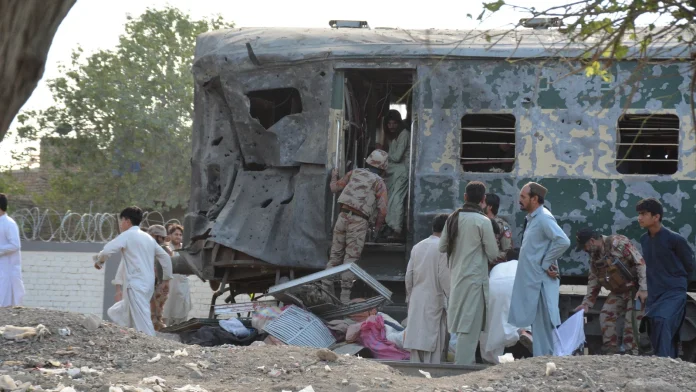
A deadly explosion ripped through a train carrying military personnel in Pakistan’s restive southwestern province of Balochistan, killing at least 24 people and leaving more than 50 wounded, a senior official said.
Army servicemen were among the dead in the attack in the provincial capital, Quetta, the official told AFP, underscoring the scale of violence in a region long plagued by separatist militancy.
The Baloch Liberation Army (BLA) militant group claimed responsibility, while Prime Minister Shehbaz Sharif denounced what he called a “cowardly” act of terrorism.
Photos from the scene showed a train carriage twisted and toppled onto its side, as survivors and rescuers clambered over wreckage in a frantic search for those trapped.
In the aftermath, blood-stained victims were carried away on stretchers from a derailed car, as armed security personnel formed a perimeter around the site.
According to the local official, the train was transporting army personnel and their family members from Quetta to Peshawar in Pakistan’s northwest.
The blast struck as the train passed a signal at Chaman Pattak in Quetta, the official said, when an explosive-laden car rammed one of the carriages, triggering a powerful explosion.
The shockwave blew out windows and wrecked vehicles nearby, adding to the destruction along the route.
Another official told AFP the soldiers were travelling ahead of the Eid holiday, which is set to begin on Tuesday.
‘Running for shelter’
Balochistan, Pakistan’s largest province by land area and its poorest, trails much of the country across key measures such as education, employment and economic development.
Separatist groups in the province accuse the federal government of profiting from Balochistan’s natural gas and rich mineral reserves while leaving local communities without meaningful gains.
A police official said the improvised explosive device used in the attack weighed about 35kg.
They said police and security agencies had launched an investigation into the bombing.
The BLA, considered the most active separatist militant group in the province, said in a statement sent to AFP that it carried out the attack.
The group — designated a terrorist organisation by the United States — said it has targeted military installations, as well as police and civil administration officials, in gun assaults and suicide bombings.
In recent years, the BLA has stepped up attacks on Pakistanis from other provinces working in Balochistan, along with foreign energy companies operating in the region.
Last year, separatists attacked a train carrying 450 passengers, setting off a deadly siege that lasted two days.
Sharif condemned the “heinous bomb explosion… which has resulted in the tragic loss of innocent lives and left many others injured”.
“Such cowardly acts of terrorism cannot weaken the resolve of the people of Pakistan,” he said.
“I express my heartfelt condolences to the families of the victims and pray for the swift recovery of the injured.”
Russia hits Ukraine using Oreshnik hypersonic missile in new strike
Kyiv woke to an hours-long onslaught as Russia unleashed hundreds of drones and missiles in one of the capital’s most intense bombardments since the war began, including the launch of an Oreshnik hypersonic missile near the city.
Ukrainian officials said the overnight barrage killed two people in Kyiv and two more in the surrounding area, while nearly 100 were wounded.
Authorities reported damage to dozens of residential buildings and several schools, with many of the impacts concentrated in central Kyiv.
“It’s important that this does not remain without consequences for Russia,” Ukrainian President Volodymyr Zelensky wrote on the Telegram messaging app.
He called on Ukraine’s partners to respond.
“Decisions are needed – from the United States, from Europe and others,” he said.
Officials also recorded strikes elsewhere in the country and said two people were killed in the southern region of Kherson.
Firefighters extinguish a fire in an apartment building partially destroyed by a Russian strike in Kyiv
European leaders denounced the attack on Kyiv, with Britain and Germany calling the use of the Oreshnik—an intermediate range missile capable of carrying nuclear warheads—an “escalation”.
Kaja Kallas, the European Union’s top diplomat, said Moscow was resorting to “a political scare tactic and reckless nuclear-brinkmanship”.
Chornobyl museum hit in attack
The strikes caused minor damage to Ukraine’s cabinet building and the Foreign Ministry, officials said.
Kyiv’s national art museum and the philharmonic hall, both located in the city’s core, were badly damaged, according to officials, who added that numerous other historic buildings in the centre were also affected.
“This is a war against our culture, memory, and identity,” said Kyrylo Budanov, Mr Zelensky’s top aide.
“For centuries, Moscow has tried to destroy everything that makes us Ukrainian,” he added.
One strike levelled a newly opened museum dedicated to the 1986 Chornobyl nuclear disaster, drawing a furious response from Mr Zelensky during a visit to the site.
Nearby, at a city-centre cafe that had marked its opening just yesterday, workers swept up shattered glass and debris.
Even with the damage, the cafe kept serving customers—some of whom said they came specifically to show solidarity.
“Once the emotions die down a bit, we’ll think about whether to restore everything … or whether to work at all,” said Yevhenii Prusak, the cafe’s co-owner.
It was only the third reported use of the Oreshnik missile against Ukraine since the war began with Russia’s full-scale invasion in February 2022.
The Oreshnik is assessed to have a range of several thousand kilometres.
The previous two attacks hit major cities, but Mr Zelensky said this strike landed in Bila Tserkva, a city of 200,000 people about 64 km from the outskirts of Kyiv.
Analysis of Reuters footage suggests the missile’s warhead split into 36 submunitions, according to Rollo Collins, an investigator at the Centre for Information Resilience, an open-source investigation organisation.
Overall, Ukraine’s air force said, Russia fired 90 missiles and launched 600 drones.
A damaged classroom at the Starobilsk College of Luhansk Pedagogical University
Mr Zelensky said Russia also aimed at water-supply facilities, arguing Moscow was seeking to damage infrastructure ahead of higher summer demand.
Russia said it used Oreshnik, Iskander, Kinzhal and Zircon missiles in retaliation for Ukrainian strikes on civilian targets inside Russia.
Ukraine says it does not target civilians.
Russia’s Defence Ministry said the attacks hit Ukrainian military command facilities, including sites used by land forces and military intelligence, as well as air bases and military-industrial locations.
Russia also denies targeting civilians, though thousands have been killed in bombardments of Ukrainian cities during the war.
We need your consent to load this rte-player contentWe use rte-player to manage extra content that can set cookies on your device and collect data about your activity. Please review their details and accept them to load the content.Manage Preferences
‘It was terrifying’
The barrage hit Lukyanivka, a district north of Kyiv’s city centre that is home to a missile plant, particularly hard.
Apartment blocks and businesses in the area have repeatedly been damaged by Russian strikes over the course of the war, and this time a shopping centre and nearby market were left gutted by fire.
Mayor Vitali Klitschko said at least two people were killed in the capital and another 81 were wounded.
Roughly 30 buildings across Kyiv were damaged or destroyed, Mr Zelensky said.
As explosions echoed overnight, many residents headed underground to metro stations for shelter.
Nataliia Zvarych, 62, said she ran to her local station as the blasts began shaking the city.
“It was terrifying, scary,” she said.
Kyiv has recently broadened its drone capabilities and intensified strikes on undisputed Russian territory, including residential areas and oil export infrastructure.
US-led efforts to negotiate an end to more than four years of war have slowed in recent months, with Washington’s focus pulled towards its conflict in the Middle East.
Analysis: Deep strikes – Ukraine and Russia’s drone warfare escalates

Ukraine and Moldova advance to the next phase of EU membership talks
The European Union has agreed to push Ukraine and Moldova into the next phase of their bids to join the bloc, after diplomats said...
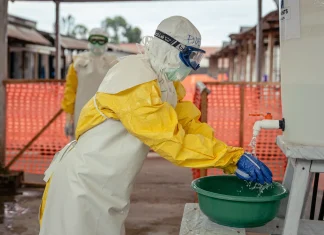
WHO Director-General: Steady progress reported in containing the Ebola outbreak
Ebola is outrunning the response in central Africa, World Health Organization chief Tedros Adhanom Ghebreyesus warned in Geneva, saying the outbreak in the Democratic...
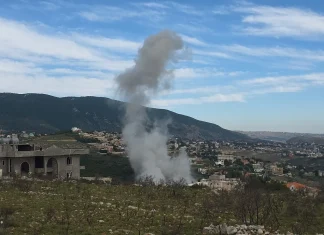
Israel and Lebanon Reach Conditional Ceasefire Agreement to Implement Truce
A ceasefire between Israel and Lebanon is set to take hold after negotiations in Washington, the Trump administration said, raising hopes that the truce...
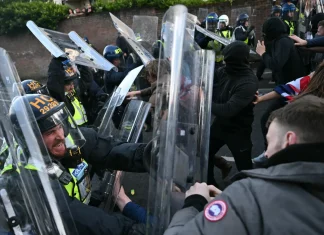
Protesters and police clash in England following Nowak murder
Southampton erupted into disorder as protesters hurled bricks and other missiles at police near the site where an 18-year-old student was handcuffed while dying...

Finland indicts man accused of online abuse involving 361 children
Finnish prosecutors have brought charges against a man accused of sexually abusing hundreds of children through social media, a case authorities say spans several...