Monday, December 22, 2025
Home Blog Page 14

Machado to Forego In-Person Acceptance of Nobel Peace Prize

Machado will not receive Nobel Peace Prize in person
Maria Corina Machado gestures during a protest in Caracas in January

Empty Chair in Oslo, Shadows in Caracas: The Silence Where a Laureate Should Stand

On a crisp Oslo afternoon, flags fluttered, red carpets lay ready, and the echo of footsteps bounced off the ornate walls of City Hall — but one expected presence was missing.

“She is unfortunately not in Norway and will not stand onstage at Oslo City Hall at 1pm when the ceremony starts,” Kristian Berg Harpviken, director of the Norwegian Nobel Institute, told Norwegian broadcaster NRK, his voice carrying the flat certainty that comes with delivering difficult news. When asked where Maria Corina Machado was, he added simply: “I don’t know.”

The chair reserved for Venezuela’s most recognisable opposition figure remained empty. In its shadow, a daughter would step forward.

Between Ceremony and Concealment: Machado’s Odyssey

Maria Corina Machado, an engineer-turned-activist who has spent years in the crosshairs of Venezuela’s political struggle, won the Nobel Peace Prize last October — an accolade that turned her personal defiance into a global symbol. She had been expected to break a decade-long travel ban and appear in Oslo to accept the prize in person, a theatrical defiance that would itself have been an act of resistance.

Instead, the prize ceremony will proceed without her, with her daughter, Ana Corina Sosa Machado, standing in to receive the award and deliver the Nobel lecture. It is a quiet, intimate substitution that speaks loudly: when leaders are silenced, families inherit the public mourning and the public bravery.

Why Her Absence Matters

Machado’s absence is more than a logistical hiccup. It is emblematic of a wider pattern: authoritarian regimes that curtail movement, murk the information space, and leverage the law to keep opposition figures off the stage and out of sight.

President Nicolás Maduro, who has held power since 2013, casts outside criticism as plots against the nation. He has argued that foreign actors seek control of Venezuela’s vast oil wealth; the country indeed sits atop what is widely regarded as the world’s largest proven crude oil reserves, estimated at roughly 300 billion barrels. For Caracas, geopolitics and oil have always been two sides of the same coin.

Voices from the Borderlands: Exile, Memory, and Resilience

Walk the chaotic markets of La Candelaria in central Caracas or the quieter lanes of Petare, and you’ll find a vocabulary of loss and endurance. A former neighbour of Machado’s, now living in Bogotá, told me: “We packed our lives into suitcases twice over — first for work, then for dignity. Maria’s prize is ours too. We didn’t leave our homes because we wanted to; we left because the walls closed in.”

On the outskirts of Lima, a Venezuelan barber names Carlos, clipped and quick with a smile, said: “When they announced the Nobel, some of us cried in the shop. It’s not just about Maria. It’s about being seen. For eight years my family couldn’t sleep; now the world is listening, even if she isn’t here to hear it.”

These voices are part grief, part astonishment. They are also a reminder: political awards travel faster than people do. Migration statistics tell the shape of that journey — according to the UNHCR and IOM joint data, more than seven million Venezuelans have left the country since the crisis escalated, making it one of the largest displacement crises in the world.

The Daughter Who Will Speak

There is a certain theatre to a daughter taking the stage for a mother who stands in the shadows. In a statement released ahead of the ceremony, a close associate said Ana Corina Sosa Machado planned to “speak of hope, of those who stayed, and of those who left with empty pockets but full stories.” The substitution is poignant: families of exiles become the living archives of political struggle.

What the Nobel Means — and What It Risks

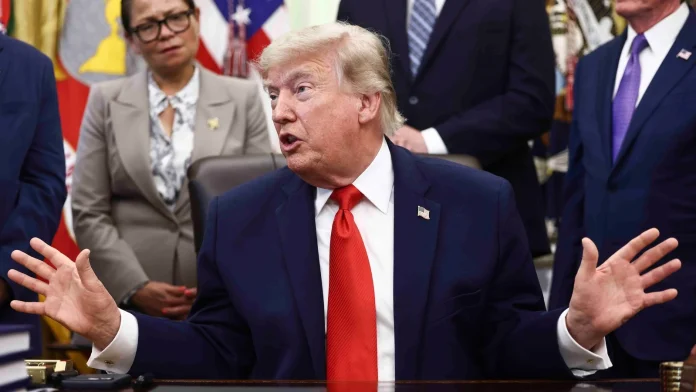
The Nobel Peace Prize has always been a magnifying glass; it can warm a cause or scorch its laureates. For Machado, who dedicated part of her prize to the polarising former US President Donald Trump — a remark that drew as much attention as it did criticism — the award is entangled with global geopolitics as much as with domestic resistance.

Analysts point out the paradox: international recognition can offer protection by keeping a spotlight trained on an individual, yet it can also harden the resolve of a regime determined to prevent that individual from exercising their newfound platform.

“Recognition can be a double-edged sword,” said Dr. Elena Márquez, a political scientist at a university in Madrid who studies Latin American democracies. “It elevates a leader, but it can also ossify narratives of foreign meddling used by those in power to delegitimise internal dissent. The critical question is: will this prize translate into tangible support for democratic institutions in Venezuela, or will it simply become another line in a foreign news feed?”

Local Color: Symbols, Salsa, and Graffiti

To understand the human texture of this crisis, look at the murals. In Old Caracas, walls still bloom with painted faces — of missing students, of loved ones, of political martyrs. Street stalls sell arepas and empanadas, vendors yelling prices with the same rhythm as protesters once chanted slogans. In airports, departure lounges are crowded with people who carry a photocopy of a childhood memory or the weight of an unread letter.

One mural near the Plaza Bolívar depicts a woman with a crown of stars and a cracked ribbon reading “Libertad.” A young artist, who asked to be called Maya, said: “I paint because the paint is cheaper than prison. Each face is a prayer. Each colour is a refusal to be erased.”

Questions for the Reader

What do we owe people who choose to resist from within and from exile? When international honours collide with local danger, do we protect the symbol, or the struggle? If the Nobel brings attention but not action, is attention enough?

As readers around the world watch the ceremony unfold without its intended protagonist, consider this: awards can spotlight injustice, but only collective, sustained pressure — legal, diplomatic, humanitarian — shifts the arc of history. The empty chair in Oslo is both a question and an invitation.

Beyond Oslo: The Long Arc

For now, a daughter will step up to an empty microphone, and speeches will be recorded and broadcast. Cameras will search for Machado’s face in crowded squares and dim safe houses. In Caracas, many will watch with quivering hope; elsewhere, the Venezuelan diaspora will log onto streams, gather in community centers, and listen.

Whatever happens next, this moment is a reminder of an uncomfortable truth: freedoms are fragile, and the protections of a global stage don’t always dissolve the local chains. As the day in Oslo closes, the real work — rebuilding institutions, nurturing civil society, reintegrating millions of migrants, and ensuring that courageous voices can be heard without fear — remains unfinished. Will the empty chair be a pause or a prelude?

Listen. Watch. Ask. And above all, hold the stories of those who are absent close — for the absent tell us as much about our world as the present ever could.

Australia moves to reclaim control from tech giants via new ban

Australia 'taking back control' from tech giants with ban
Australia has become the first country to ban social media for children under 16s

Australia’s Digital Pause: A Sunburnt Country Reconsiders Childhood Online

It was an odd kind of quiet on the feeds that morning — not the usual stream of snackable videos and endless scrolls, but a soft, almost ceremonial silence as kids and parents across Australia uploaded “goodbye” posts, private messages and farewell playlists.

At a backyard barbecue in Brisbane, 14-year-old Mia sat under a gum tree, phone in hand, filming the last few seconds of an account she says shaped much of her teenage life. “It’s like closing a chapter I didn’t know I was writing,” she whispered to the camera before switching off.

By sunset, Prime Minister Anthony Albanese declared the change more than symbolic. “We are choosing to reclaim the childhood our children deserve,” he said, framing the new law as a decisive response to tech platforms whose reach, he suggested, had outrun the capacity of parents and regulators to protect young people.

What Changed — and Who It Affects

Under the new legislation, Australia is the first nation to bar children under 16 from using major social media platforms. TikTok, YouTube, Instagram and Facebook — among others falling under the law — must block underage users or face fines that can reach A$49.5 million (about €28.2 million) per breach.

Officials estimate roughly one million Australian children will be directly affected. Many posted last-minute goodbyes in the hours before enforcement began; some filmed celebratory dances for the margins of their feeds. Others merely logged out, puzzled about where friendships and creative outlets would migrate next.

Which platforms are named in the legislation

  • TikTok
  • YouTube
  • Instagram
  • Facebook

The rulebook is blunt: platforms either block accounts that belong to under-16s or risk hefty penalties. The government argues the move will help reduce exposure to harmful content, addictive design features, cyberbullying and commercial pressures targeted at children.

Inside the Debate: Protecting Kids or Closing Doors?

Not everyone greets the new era with relief. Tech companies have warned of practical and ethical pitfalls: age verification systems can invade privacy, motivated teens can lie about their ages, and the enforcement burden will fall unevenly across platforms. “Policies that look neat on paper tend to get messier when real people have to live with them,” a spokesperson from one large tech firm said. “This will push activity onto smaller apps and encrypted spaces where moderation is weaker.”

Free-speech advocates have been cautious, too. “The risk of overreach is real,” said Dr. Lena Moreno, a digital rights scholar. “We must guard against policies that curtail civic participation or disproportionately penalize marginalised youths who rely on online spaces to find community.”

Conversely, for many parents and child-welfare campaigners the law is overdue. “As a mum, I’ve watched my son scroll himself into late-night anxiety,” said Gabrielle Turner, a parent from Adelaide. “I’m tired of feeling like the digital giants are parenting him better than I can.”

The Science and the Stories

Research over the past decade has built a complicated picture: social media can foster creativity and connection, but it’s also been linked, in numerous studies, to sleep disruption, body-image concerns, and heightened levels of anxiety for some adolescents. The nuance matters: heavy use is not the same as moderate, and platforms that amplify sensational content often do the most harm.

“Platforms are optimized to keep attention, not to nurture developing brains,” explains Dr. Amir Patel, a child psychologist who advises several Australian schools. “For kids whose self-esteem is still forming, constant feedback loops can magnify insecurities.”

Patel points to nighttime scrolling as a particular problem: disrupted sleep correlates strongly with mood disorders. “Even short-term reductions in screen time can improve mood and academic focus,” he adds.

Practical Problems: Verification, Workarounds and Unintended Consequences

How will platforms enforce the ban? The law’s enforcement mechanism is straightforward — a requirement to block under-16s — but the practicalities are thorny. Critics predict a surge in fake accounts, VPNs, and older siblings taking over younger users’ logins. There are also privacy concerns: robust age verification can mean handing over identity documents or data to private companies.

“We could be trading one set of risks for another,” said privacy lawyer Aisha Rahman. “Companies may ask for more personal details to verify age, and that data itself becomes a target.”

Equally, there’s a socioeconomic angle. Young people in isolated communities or remote areas often rely on online spaces for cultural exchange and support; restricting access could deepen digital divides. “In our town, kids use YouTube to learn carpentry and watch AFL highlights,” said Tom Wheeler, a council worker in regional Victoria. “Banning that access without alternatives leaves a hole.”

What Comes Next — and What This Means Globally

For other governments watching, Australia’s move is a test case. Regulators in Europe and North America have wrestled with children’s protection online, but few have taken such a sweeping step. The European Union’s Digital Services Act and other frameworks aim to compel platforms to act on harmful content, while U.S. lawmakers continue to debate targeted reforms. Australia’s law may embolden some and caution others.

Economically, creators and advertisers will feel reverberations. Teen-focused creators may lose a chunk of their audience; brands will need to shift campaigns. “This forces a rethink of how we reach younger audiences — perhaps into more supervised, educational contexts,” suggests media strategist Elena Vos.

Human Moments: Loss, Relief and the Space In Between

In Melbourne, a small group of teenagers gathered in a skate park, their faces lit by late summer sun. Some were defiant. “We’ll just swap apps, or use accounts of friends,” said 15-year-old Jayden. Others were reflective. “I’m kind of glad,” admitted his friend Noor. “I spend so much time watching people live lives that aren’t mine.”

Parents are thinking in practical terms: more family dinners without the ping of notifications, more outdoor time, but also the logistics of supervising offline social lives and extracurriculars. “We want to create new rituals,” said Gabrielle Turner. “But we also need affordable after-school programs and spaces where kids can make friends without a screen between them.”

A Question for the Reader

What do you imagine childhood should look like in the age of ubiquitous connectivity? Is it safer — or more isolating — for children to be shielded from social media? Australia’s experiment forces us to grapple with the trade-offs between protection and autonomy, privacy and oversight.

History will judge whether this moment was a prudent course correction or an overreaching policy. For now, families, schools and tech companies will have to find new ways to help young people grow — online, offline, and in the messy, wonderful space in between.

Trump oo mar kale weerar culus ku qaaday Ilhan Cumar iyo Soomaalida

Dec 10(Jowhar)-Madaxweynaha Maraykanka Donald Trump ayaa mar kale weerar afka ah ku qaaday Soomaalida iyo xildhibaan Ilhaan Omar oo ka tirsan Aqalka Kongareeska lagana soo doorto gobolka Minnesota, xilli uu ka hadlayay isku soo bax ka dhacay Pennsylvania, shalay.

Nobel Committee Unsure Whether Machado Will Accept Peace Prize

Nobel officials not sure Machado will collect peace prize
Venezuelan opposition leader Maria Corina Machado was awarded the Nobel Peace Prize in October

Under Oslo Rain: A Nobel Prize Without Its Laureate

Outside the Grand Hotel in central Oslo, umbrellas bloom like a field of black flowers. Police lines crease the sidewalks. Reporters huddle under awnings, clutching notebooks and hot coffee as the Norwegian drizzle threads through their collars. Inside the gilded halls, a reserved seat remains empty. The press conference announced for Monday afternoon — a rare chance to see Maria Corina Machado on an international stage after months in hiding — never happened. It was postponed, then quietly cancelled. The question floating in the damp air felt almost metaphysical: where do you award a prize whose recipient cannot safely appear?

Machado, a 58-year-old opposition leader and thorn in Nicolás Maduro’s side, was awarded the Nobel Peace Prize in October for her years of campaigning for democratic change in Venezuela. The accolade has lit a global spotlight on a country that, over the past decade, has offered one of the most dramatic stories of political collapse and human displacement in the Hemisphere.

The arresting image of absence

The absence of Machado is itself a story. Her relatives — a mother, three sisters and three children, according to people who met them in Oslo — arrived days earlier, moving through the city with guarded smiles. “We came for dignity,” one sister told me, voice low, gloved hands folded around a cup of tea in a hotel lobby. “But dignity is complicated when your sister must decide between exile and a bullet.”

For many at the ceremony, the missing figure underlined a wrenching reality: modern awards and ancient dangers now intersect in new ways. A spokesperson for the Nobel Institute admitted that Machado had told officials she could not easily travel to Norway. Yet that admission left more questions than answers: Is she in a safe house in Caracas? Has she crossed a border? Is she in exile already, forced into mobility by threats and legal prosecutions?

Between fugitive and laureate

Venezuela’s government has declared Machado a criminal in absentia — accusing her of conspiracy, “incitement,” even “terrorism” — a label that can be used to bar travel or justify arrest. “If she leaves Venezuela, she will be considered a fugitive,” a government official told state media last month. For the regime in Caracas, branding opposition leaders as criminals is a method of delegitimizing dissent. For the dissidents and their supporters, it is a way to keep them off the streets, out of sight and out of reach of voters.

But the calculus of exile is not solely legal; it’s profoundly personal. “My mother keeps asking me if Maria is safe,” said a family friend who declined to be named. “She thinks if Maria comes, we will have proof that rebels can return without fear. But some of us believe that once you leave, you cannot truly lead the struggle at home.”

Leadership from afar

This is the headache for any resistance movement: can a leader in exile keep the flame alive? Political analysts say it’s possible but perilous. “Distance dilutes momentum,” said a Latin America specialist at a Washington think tank. “You can be loud abroad and visible, but you lose the daily contact, the street-level networks. Without tangible gains — free elections, splits in the security apparatus, international pressure — the inspiration of a figurehead can’t convert into change.”

Consider the broader context: since the political and economic collapse that accelerated in the mid-2010s, more than 7 million Venezuelans have left the country, according to UNHCR and IOM estimates. Hyperinflation wiped out savings, public services frayed, and oil production — once the engine of the economy — plummeted from millions of barrels per day to a fraction of that output. Those figures are not abstract; they are the reason entire neighborhoods emptied, why buses run with fewer passengers, why the elderly queue for hours for medicine.

Oslo’s tableau of allies, skeptics and unease

Oslo has become, for a few days, a Latin American stage. A handful of regional leaders arrived to lend moral weight to the award. Argentina’s president, among others, was expected. “We are here to salute bravery,” one visiting leader said outside City Hall, the historical vaulted ceiling humming above him. “Democracy is not an abstract concept. It is a people’s right. We hope Venezuela finds its way back.”

But the celebration is not unanimous. Machado’s ties and political alignments — she has publicly aligned with certain right-wing figures abroad — have drawn criticism. “A prize is not an endorsement of every political alliance,” a Norwegian political commentator told me. “The Nobel recognizes courage, not perfect consensus.”

Security and spectacle

Police have kept vigil where laureates normally stay; journalists and curious tourists trace the predictable choreography of a Nobel week. Yet there is an undercurrent of something less ceremonial: a militarized Caribbean in the background, operations by the United States targeting suspected drug-running vessels, and a regime in Caracas insisting such moves are pretexts for regime change and seizure of oil resources. The signals are of a region on edge.

“It’s easy to write this as a story about one woman,” said a Venezuelan activist in Europe, “but it’s really about millions who cannot return, about families split across borders, about a democracy in slow motion. The prize is a spotlight, but the crisis doesn’t end when the cameras turn off.”

What does a Nobel mean in the age of exile?

Let me ask you, reader: what is the meaning of recognition when safety remains the price of attendance? The Nobel Peace Prize is a global megaphone, a moral argument applied to a person as much as a cause. Yet in this case, the accolade also exposes a paradox of modern dissidence: the international applause can both protect and endanger.

If Machado does not travel to Oslo, the prize will sit with her absent name and an empty chair. If she travels and cannot return, the opposition will face yet another rift — between those who stay and those who must find new ways to influence events from abroad. Either path will test the durability of the movement she has galvanized.

Looking beyond the ceremony

The story is larger than any single day in Oslo. It is about how nations reckon with authoritarian drift, how international institutions confer legitimacy, and how personal sacrifice intersects with strategic necessity. It is about the millions of Venezuelans whose lives were reshaped by economic collapse — more than 7 million people on the move — and about a region grappling with migration, security concerns, and geopolitical postures.

“A prize can inspire,” a human rights lawyer I spoke to said. “But it does not replace red lines or realistic strategies. The next steps — negotiations, international pressure, civic organizing — will determine whether this moment becomes a turning point or a footnote.”

On Wednesday the ceremony will proceed at Oslo City Hall. The world will watch the ritual of laureates: speeches, applause, the exchange of medals and diplomas. But for those who follow Venezuela closely, the real drama is quieter, happening in hidden rooms, border crossings, encrypted messages and the long, hard work of rebuilding public life. The question remains: can recognition from afar translate into change at home, or will the laureate’s absence mark yet another cost of dissent?

Israeli Forces Raid UNRWA Compound in East Jerusalem

Israel raids UN refugee agency compound in East Jerusalem
The Israeli flag was raised over the UNRWA building

Flags at Dawn: When a City’s Streets Woke to the Sound of a Raid

It was the kind of early winter morning in East Jerusalem that feels suspended between two timeframes: the present, with its tangle of checkpoints and municipal notices, and the long, aching history that clings to every stone and shopfront. Before the sun rose over the Old City, Israeli police, municipal officials and heavy equipment rolled into a compound once run by the United Nations Relief and Works Agency (UNRWA). Within hours, the blue-and-white of the United Nations had been replaced by the Israeli flag.

Witnesses described a scene more reminiscent of a show of force than a tax collection. Motorbikes idled at the gate. Forklifts and flatbeds moved through courtyards. Communications were cut off, and, according to UNRWA’s leadership, furniture, IT equipment and other property were seized.

What exactly happened — and why the uproar?

Israeli municipal authorities say the operation was a routine collection of unpaid property taxes: 11 million shekels, roughly €3 million, they told reporters, owed by the agency after repeated warnings. “This is a substantial debt that required collection after repeated requests, warnings and numerous opportunities given to settle it, which were not answered,” the Jerusalem municipality said in a statement.

The United Nations tells a different story. UNRWA spokesman Jonathan Fowler said the compound remains UN property despite Israel’s ban that ordered the agency to vacate its premises earlier in the year. The UN points to the 1946 Convention on the Privileges and Immunities of the United Nations — a treaty that, they say, obliges Israel to respect the inviolability of UN premises wherever the UN operates. The Secretary-General’s office, echoing that legal line, demanded the immediate restoration of the compound’s inviolability.

Antonio Guterres did not mince words. “This compound remains United Nations premises and is inviolable and immune from any other form of interference,” he said, urging Israel to “refrain from taking any further action with regard to UNRWA premises.”

Voices from the compound, on the street and beyond

Philippe Lazzarini, UNRWA’s Commissioner-General, tweeted a stark image: police motorcycles and trucks at the gates, communications cut, property taken. “This could create a dangerous precedent anywhere else the UN is present across the world,” he wrote, framing the raid not only as a local dispute but as a signal of alarm to the international community.

Inside East Jerusalem, reactions were immediate and personal. “We woke up to sirens and the sound of something being carried out of the gate,” said a shopkeeper in the nearby neighborhood of Sheikh Jarrah. “This compound used to be quiet — children coming for school, people collecting food aid. Now there’s an Israeli flag where the UN flag used to be. It feels like the rug has been pulled from under us.”

An elderly woman sitting outside a bakery nearby shook her head. “They took the things that were left,” she said. “What happens to the people who relied on that help?”

On the Israeli side, officials have been careful with language. The prime minister’s office and the foreign ministry did not respond to requests for further comment, and the municipality’s legalistic framing emphasized debt collection rather than political symbolism. But to many international law observers, the optics cannot be divorced from the wider context: East Jerusalem is territory that most of the world regards as occupied, despite Israel’s 1980 annexation and Israel’s view that the whole city is its capital.

An international law specialist, speaking on condition of anonymity, said the move raises complex questions about sanctity of UN premises and the limits of municipal powers. “There’s a body of law that protects UN assets. Whether those protections are absolute is a matter for courts and diplomats, but crossings of this sort rarely stay legalistic for long — they become political,” the expert said.

Why UNRWA matters — and why tensions have escalated

UNRWA is not a niche bureaucracy. Established in 1949, it provides schooling, healthcare, social services and emergency shelter to generations of Palestinian refugees. The agency officially registers roughly 5.9 million Palestinians as refugees across Gaza, the West Bank, Jordan, Lebanon and Syria — a number that underscores how the Palestinian refugee question is not only historic, but living and expanding.

For many Palestinians, UNRWA is woven into the very fabric of everyday survival. “My children went to UNRWA schools. My sister was vaccinated through UNRWA clinics. When the shelling came in 2014 and again in 2021, tents and food came from them,” a Gaza native who now lives in East Jerusalem recalled. “If you ask people in the camps, UNRWA is more than an organisation — it’s a memory keeper of our losses and a lifeline for our present.”

Israel’s criticisms of UNRWA have hardened since October 7, 2023, when Hamas militants launched an attack that killed about 1,200 people in Israel, according to Israeli tallies. Israeli authorities have alleged that some UNRWA staff were complicit or even participants in that attack. UNRWA has dismissed some staff and said it was not provided with evidence for many of the allegations. Meanwhile, Israel’s parliament passed a law in October 2024 banning the agency from operating in the country and forbidding officials from contact — a move that pushed the relationship to a breaking point.

Those accusations and legal moves have placed UNRWA at the centre of a bitter struggle: is it an impartial humanitarian actor or a politicized entity with a partisan tilt? To Palestinians, curbing UNRWA is tantamount to chipping away at refugee identity and the right of return. To many Israeli officials, it is a security and sovereignty issue; to the international community, it is a test of norms that protect humanitarian actors.

What the raid means for the region and the rules that usually bind it

Beyond this single compound — empty of staff since the start of the year, according to UNRWA — the seizure raises questions about how the rules of international engagement are upheld in daily life. The UN General Assembly had just renewed UNRWA’s mandate for another three years, a global show of confidence that clashed with the Israeli action on the ground. Diplomats in capitals from New York to Brussels now face awkward questions about enforcement mechanisms when a signatory state is accused of violating UN immunities.

For residents, the calculus is simple and immediate: who will teach the children, who will pick up the slack when health clinics cannot operate, and what happens to the shelters in times of fresh escalations? For policymakers, the calculus is geopolitical: the move could ripple into aid flows, further polarize local politics, and embolden other states to test the inviolability of UN premises elsewhere.

Snapshot: key facts

  • Claimed unpaid taxes: 11 million shekels (roughly €3m) — Jerusalem municipality’s figure.
  • UNRWA mandate renewal: extended by the UN General Assembly for three years.
  • Casualties in Gaza since October 7, 2023: more than 70,000, according to Gaza health authorities.
  • UNRWA beneficiaries: approximately 5.9 million registered Palestinian refugees across the region.
  • Legal backdrop: Israel annexed East Jerusalem in 1980 after capturing it in 1967; most countries consider East Jerusalem occupied.

Looking forward: the questions that will not go away

Will legal channels reverse what happened at the compound, or will the action stand as a new reality? Will other countries accept a precedent if UN immunities can be challenged with municipal tax claims? How will Palestinians who depend on UNRWA services cope if the agency is further sidelined?

As the sun climbed higher, the Israeli flag at the gate of the UN compound seemed less like a municipal notice and more like a question left to the world: when the instruments of humanitarian rule collide with the instruments of state power, which rules will prevail? Look around the neighborhoods of East Jerusalem, and you’ll see lives tethered to that answer — families, students, elders waiting for clinics, teachers wondering if their classrooms will reopen.

What would you do if the agency that taught your children suddenly had to close its doors? Whose duty is it to protect the sanctity of aid in the fog of long conflicts — and who decides when that sanctity can be set aside? The answers will shape not only the fate of a compound on a quiet East Jerusalem morning, but the possibilities for an already fragile peace.

Lithuania declares state of emergency over mysterious weather balloon sightings

Lithuania in state of emergency over weather balloons
Vilnius airport was repeatedly closed in October and November due to the appearance of weather balloons

When Balloons Become a Borderline Weapon: Lithuania’s Airspace in Turmoil

On a cold morning in Vilnius, the city’s Baroque spires and cobbled streets looked unchanged. But above them, something small and innocent—white weather balloons—had become menacing. For weeks now, the fragile domes of plastic and helium have threaded across Lithuania’s eastern sky, carrying bundles of contraband and, in the process, tripping a modern cascade of security alarms.

These aren’t the high-tech drones or ballistic missiles that dominate headlines. They are simple balloons, launched from across the border in Belarus, drifting into Lithuanian airspace with loads of untaxed cigarettes strapped beneath them. Yet their impact has been anything but small: runways shut, flights diverted, families delayed and an anxious nation moving into emergency mode.

Numbers that Interrupt Everyday Life

To understand the scale, consider this: Lithuanian authorities say about 600 of these smuggling balloons and nearly 200 drones—197 by the interior ministry’s count—have crossed into Lithuania so far this year.

Those incursions have not been abstract figures. More than 350 flights were disrupted in 2025 alone, affecting roughly 51,000 passengers, the ministry reports. Vilnius airport was forced to close repeatedly in October and November, and just last Saturday yet another appearance of balloons halted operations.

“I had a flight to London that was delayed five hours,” said Rasa, a graphic designer who missed an important meeting. “The airport staff were calm, but you could see the worry. Everyone kept looking up.”

The Government’s Response: A State of Emergency

On Monday, Vilnius declared a state of emergency — not over a weather front but because airspace had been made unsafe by what the government describes as a hybrid campaign coming from Minsk. The measure is intended to give Lithuania’s armed forces broader authority to work alongside police and border guards to intercept the balloons and the people who send them.

Interior Minister Vladislav Kondratovič, speaking in a government livestream, framed the move as more than about commercial aviation. “This is a matter of national security,” he said, outlining the need for closer institutional coordination. If parliament — the Seimas — approves additional measures, troops would gain powers to detain suspects and to temporarily restrict access to affected areas for up to three months.

Prime Minister Inga Ruginienė, addressing the nation, invoked the vocabulary of defense and resilience: “We must take the strictest measures to protect the regions most affected by these attacks,” her office reported. She stressed that ordinary life would largely continue uninterrupted, but for commuters, travelers and small business owners, the new reality already feels intrusive.

How Does a Balloon Become a Security Threat?

It’s easy to caricature smuggling as old-fashioned bootlegging. But these balloons are a clever workaround of border controls—lightweight, cheap and, critically, hard to track until close to populated zones or airport approaches. Smugglers exploit a wedge between aviation safety protocols and the realities of cross-border criminal networks.

“They’re exploiting legal and technological blind spots,” said Dr. Marta Žukauskaitė, a security analyst at Vilnius University. “When you layer smuggling onto the frictions of geopolitics—strained state relations, porous governance—the result is a form of asymmetric pressure. It’s small-scale, but cumulative and disruptive.”

Local Voices: A City on Edge

Walk through a market in the Užupis district and you’ll hear conversations about flights, not just groceries. Shopkeeper Jonas leans on his counter and counts the cost: “Customers who fly often ask if their trip will be canceled. The airport is part of our livelihood—tourists come, but they see these headlines and hesitate.”

At the airport, a baggage handler who asked to be called Dainius described a surreal mix of routine and adrenaline. “You train for emergencies, but this is different. We’re watching the sky for balloons like watchmen of the old city. You never think a balloon can cancel your day.”

International Reactions and the Politics of Blame

Vilnius has been explicit in naming the source: Belarus. Lithuania accuses Minsk of not acting to prevent the balloons, arguing this inaction amounts to a deliberate hybrid attack. The European Commission’s president, Ursula von der Leyen, echoed that framing — calling the smuggling campaign “completely unacceptable” and signaling the EU’s readiness to consider additional sanctions against Belarus.

Belarusian President Alexander Lukashenko, for his part, dismissed allegations that the balloons posed a genuine hazard as “unrealistic,” according to state media. That exchange underscores a broader geopolitical tug-of-war: neighborly friction stretched into the skies above local airports.

Why Cigarettes?

At first blush, cigarettes seem a strange payload for a geopolitical incident. But the economics are straightforward. Heavy taxation and price gaps in the region make smuggled tobacco highly profitable. Organized networks use creative and low-cost methods to shuttle goods across borders — and when those methods intersect with sensitive infrastructure like airports, what began as contraband becomes a strategic nuisance.

“Profit incentives are the engine here,” said Ieva Petraitė, an economist specializing in illicit trade. “But weaponization happens when states perceive—or present—these smuggling operations as part of a larger campaign to sow disruption.”

What This Means for the Future

There are no easy technical fixes. Tracking balloons requires radar adjustments and new response protocols; policing clauses force domestic debates about civil liberties. The proposed emergency powers are due for a parliamentary vote, and if adopted they could remain in force for up to three months.

There are, however, broader lessons stretching beyond Lithuania’s airspace. We live in an era where low-cost, low-tech tools can be used to escalate tensions without ever firing a conventional weapon. Hybrid tactics—whether cyber intrusions, disinformation flows, or airborne contraband—blur the lines between crime and conflict.

Ask yourself: in a hyperconnected world, how do democracies keep everyday life moving while also protecting critical infrastructure from clever, ambiguous threats? Can a city maintain openness and warmth when a balloon in the sky becomes a symbol of geopolitical strain?

Closing: Skybound Stories and the Human Angle

For now, Vilnius carries on. Cafés in the Old Town still fill at dusk, and the bell tower tolls on schedule. But the sight of a white orb against a pale blue morning has a different tenor these days. It’s not just contraband; it’s a parable about vulnerability in a globalized age.

“We don’t want militarized skies,” said an airport counselor who asked to remain anonymous. “We want safe skies that don’t make you choose between travel and fear.”

That sentiment feels like the heart of the matter: policy and posture matter, but so does the daily human business of living—catching a flight, seeing a neighbor, selling bread. As Lithuania votes and Brussels watches, the question trickles downward: how will communities reclaim the ordinary under an extraordinary sky?

Hamas says Gaza ceasefire stalled by Israeli violations

Gaza truce cannot proceed with Israeli violations - Hamas
Gaza's health ministry has reported that 377 Palestinians have been killed by Israel since the ceasefire came into effect

A fragile silence: the ceasefire that breathes but does not live

On the cracked asphalt leading to the Allenby Bridge, at the edge of the Jordan Valley, an idling convoy of trucks looks like a promise paused. Drivers clutch tea cups, elders count cigarettes, and the sun climbs on an ordinary morning that has become anything but ordinary for the people who depend on what those trucks carry.

“We have been waiting long enough to believe in a crossing,” said Mariam Abu Saleh, a Gaza-based aid coordinator who once managed food distribution in her neighbourhood and now coordinates remotely from Amman. “Every time the trucks move a little, hope moves with them. Every time the trucks stop, a whole community freezes.”

The cause of that freeze is the precarious truce brokered under U.S. auspices and announced on 10 October. It halted overt combat, for now, between Israeli forces and Hamas fighters in Gaza — a pause that has offered breath to a territory devastated by a war that erupted after the 7 October attack on Israel. But breathing does not mean healing, and the truce’s second act is held hostage to accusations and counter-accusations.

One phase, many conditions

At the heart of the disagreement is a disagreement about implementation. Hamas has said repeatedly that the agreement cannot move into its second phase while Israel continues what it calls “violations” of the deal. Under the initial terms, Palestinian militants would release remaining captives — living and dead — and Israel would ease restrictions, reopen crossings like Rafah with Egypt, and allow a significant increase in humanitarian supplies into Gaza.

So far, the human ledger looks both like progress and an unfinished equation. Nearly 2,000 Palestinians have been released from Israeli detention and the bodies of hundreds more returned. Of the hostages taken into Gaza, all have been freed save for one body. Yet, according to Gaza’s health ministry — figures the UN regards as reliable — at least 70,366 people in the territory have died in the course of the conflict. Since the ceasefire came into effect, the ministry reports 377 Palestinians have been killed by Israeli action; Israeli military tallies note three soldiers killed during the same window.

“Numbers tell a story of their own, but they do not tell the whole story,” cautioned Dr. Amal Nasser, a public-health expert who has tracked wartime mortality in Gaza for a decade. “Each statistic is a family. Each figure is a classroom emptied. A ceasefire that does not deliver medicine, fuel and structural safety is a pause, not a remedy.”

Allenby bridge: a practical opening, a political test

This week, Israeli officials said that the Allenby (King Hussein) Bridge crossing — the main land route between Jordan and the Israeli-controlled West Bank — would allow aid trucks destined for Gaza to proceed after security inspections. Israel had closed the crossing to aid after a Jordanian truck driver fatally shot two Israelis at the border in September. Passengers were mostly allowed through days later; humanitarian shipments were not.

“Aid trucks will proceed under escort and security, following a thorough security inspection,” one Israeli official said in a terse statement. The words were practical, dry, meant to reassure — but in Gaza they read as a tentative lifeline.

For years, Rafah has been the human artery between Gaza and Egypt; reopening it fully was central to the ceasefire’s initial steps. “Rafah is not just a crossing point,” said Hossam Badran, a member of Hamas’s political bureau, in a sharply worded statement. “Under the agreement Israel should have reopened Rafah and allowed a significant increase in the volume of aid. They have not. The second phase cannot begin as long as the occupation continues its violations.”

Lines drawn on the map, lines drawn in sand

One of the trickiest practical issues has been troop positions. Under the truce, Israeli forces pulled back to a so-called “Yellow Line,” although operational control over large swathes of the territory persists. On Sunday, Israel’s military chief, Lieutenant General Eyal Zamir, called that demarcation “the new border line.”

Words like “border” and “occupation” carry heavy political freight. “To my neighbours, to my children, a yellow line on a map is not peace — it is a border tattooed by a soldier,” said Omar al-Khateeb, a teacher in Khan Younis whose house still bears the marks of airstrikes. “Lines on maps do not feed hospitals.”

Badran publicly denounced Zamir’s remarks as evidence of bad-faith compliance: “The statements clearly reveal the criminal occupation’s lack of commitment to the ceasefire agreement,” he said. The accusation highlights a deeper problem: agreement texts on paper can hinge on perceptions of intent and good faith in execution.

What the second phase promises — and why it matters

The second stage of the plan is more than a security choreography. It envisages disarming Hamas, the further withdrawal of Israeli forces, the establishment of a transitional Palestinian authority, and the deployment of an international stabilization force. For Israel, the phase cannot begin until the remains of the last captive, identified as Ran Gvili, are handed over.

Hamas has framed disarmament as something that can occur — but only within a political transformation it deems meaningful. “We will hand over weapons to the government of a future Palestinian state once the occupation ends,” Badran said. That is a conditionality that reaches beyond military steps into the realm of statehood and sovereignty.

Voices from the ground

“My brother was taken in October,” said Salma, who asked to be identified by first name for safety reasons. “We saw him on a grainy clip and we prayed. When they came back — most of them — we buried them. The ceasefire brought his classmates back, but it did not bring back our roofs or our schools.”

International mediators — Egypt, Qatar and the United States among them — find themselves as anxious stewards of a fragile blueprint. “Diplomacy needs leverage to work,” said Ambassador Rachel Adler, a veteran mediator who has worked on Middle East ceasefires. “Mediators can cajole, but without both sides accepting the text in practice, words remain an instrument of delay.”

Why the world should care

This is not a local argument only. It is a test of how the international community manages ceasefires in an era of urbanized conflict, asymmetric power, and an increasingly volatile regional balance. Will international bodies accept piecemeal progress — more aid here, a guarded withdrawal there — or demand that steps be completed in a coherent sequence to prevent a relapse into violence?

And there is a human cost to indecision. Hospitals in Gaza are skeletal echoes of their former selves. Generators and fuel are lifelines. Schools double as shelters. Without consistent and substantial aid, public health, sanitation, and the fragile economy tilt toward collapse.

Questions we carry forward

As the Allenby bridge opens to aid — if only partially — the world watches a truce that can either be stitched into lasting calm or unravel again under small violations and big distrust. Which will prevail: the patience of those waiting at the crossings, or the impatience of political agendas?

Ask yourself: when a ceasefire is announced, do we measure it by the absence of bombs or by the return of normal life? If the latter, this truce remains a work in progress, one whose success relies on more than promises and press statements; it requires sustained access to food, medicine, shelter and the dignity of return.

In the end, the story of this ceasefire will be written in the detail of deliveries — trucks crossing borders, babies receiving vaccinations, a classroom reopening — and in the courage of negotiators to press hard on both sides to honour what they agreed. Until then, the silence along the crossings is less a victory and more a fragile, breath-held truce.

U.S., Greenland Pledge Mutual Respect as Ties Deepen

US and Greenland pledge to show a 'mutual respect'
Greenlandic Minister for Foreign Affairs Vivian Motzfeldt met with US ambassador to Denmark, Kenneth Howery

On Greenland’s Edge: An Island of Ice, Identity and Geopolitics

Nuuk looked like a watercolor this morning — soft light pooling between corrugated tin roofs, the harbor dotted with fishing boats, a dog trotting along the quay with the casual air of someone who has watched centuries of ships come and go. Yet beneath that timeless scene there was a new, modern tension: the American ambassador to Denmark had flown in, and in the rooms where policy is spoken in polite Danish and blunt Greenlandic, conversations about sovereignty, security, and respect were being painstakingly rehearsed.

“We need a conversation that rebuilds trust,” said a Greenlandic minister I met outside the government house, pulling her collar against a wind that smelled faintly of diesel and cod smoke. “Eighty years of cooperation doesn’t erase the shock people felt when a president mused about buying our home.”

Why Greenland Matters — and Why It Hurts to Be Talked About Like Real Estate

The island is vast — roughly 2.16 million square kilometers, dominated by an ice sheet that still blankets about 80% of its landmass — yet sparsely populated, home to roughly 56,000 people. For decades it has been a quiet player in a noisy game: the location of Thule (Pituffik) Air Base, a key node in North American early warning systems; a place where Arctic warming is reshaping coastlines and livelihoods; and a repository of minerals and potential fossil fuels that have suddenly jumped to the top of strategic shopping lists.

It was when ideas about “buying” Greenland bubbled into public view that the island’s people recoiled. “You don’t put a price on where your grandparents were buried,” a fisherman told me, his hands still smelling of sea and smoke. “That’s not how we talk about land.”

President Donald Trump’s public suggestion in 2019 — that the United States could acquire Greenland — was a diplomatic grenade. Denmark and Greenland both said no; Greenlanders were outraged. The aftershocks linger. So when Kenneth Howery, Washington’s new ambassador to Denmark and a co-founder of PayPal, made his first visit to Nuuk for the U.S.-Greenland Joint Committee, the mood was cautious but purposeful. The committee issued a statement that spoke of “mutual respect” and the desire to “build on momentum,” yet those are words more salve than solution for many locals.

“Mutual Respect” — A Short Statement, a Long Road

“We reaffirmed our commitment to a strong and forward-looking relationship based on mutual respect,” read the joint communiqué. To a diplomat’s ear, that is precisely the kind of phrase that lubricates ongoing cooperation. To a Greenlander’s ear, it can ring hollow unless followed by real policy changes.

“Respect starts with listening,” said Dr. Aqqaluk Petersen, a political scientist at the University of Greenland. “It’s not enough for outsiders to decide what is best for us while treating us as a strategic asset. We want partnerships — not purchases.”

There are concrete reasons for the U.S. interest. Greenland’s geography places it on the shortest aerial route between parts of Europe and North America; it hosts early-warning radar infrastructure that helps detect ballistic missile launches; and melting Arctic ice is opening sea lanes and access to untapped resources. Those realities have made Arctic territories the subject of renewed attention from Washington, Moscow, Beijing — and other capitals.

Faces of Nuuk: People, Place and Pride

Walk through downtown Nuuk and the politics are not abstract. Children in bright parkas leap over puddles; an elder mends a net on a bench; a café hums with students arguing about language policy. Greenlandic (Kalaallisut) pushes up alongside Danish signage. The cultural confidence is new, fragile, and fiercely guarded.

“We are not a pawn,” said 27-year-old Inuuteq, who works in a Nuuk tech start-up. “We want investment. We want security. But you can’t treat us like an object. We’re trying to build our own economy, and that means hard choices.”

Greenlandic self-rule, introduced in stages with major reforms in 1979 and again with the Self-Government Act in 2009, has handed Nuuk more authority over internal affairs while Denmark retains control of foreign policy and defense. The arrangement is complex: Greenland manages many domestic matters but remains tied to the Kingdom of Denmark, with Copenhagen supplying a sizable annual block grant that supports public services.

Economic Realities and Environmental Dilemmas

Natural resources loom large in any discussion about Greenland’s future. Mineral deposits — from rare earth elements to uranium and potentially hydrocarbons — promise economic opportunity, yet they also threaten social and environmental upheaval.

“Resource development must be guided by our values,” said a community elder from Qeqertarsuaq, who asked not to be named for fear of political fallout. “We cannot sell tomorrow for short-term gains today.”

At the same time, warming in the Arctic is not some distant phenomenon. Greenland’s ice melt contributes to global sea-level rise, and the consequences ripple across continents. Local hunters notice shifting migration patterns of seals and whales; municipal planners scramble to adapt infrastructure to thawing permafrost. These environmental changes are a global warning and a local emergency.

Geopolitics, Indigenous Rights and the Global Arctic

What happens in Nuuk matters far beyond the fjord. The Arctic is a stage for broader tensions: great-power competition between the United States, Russia and China; new shipping routes that could shorten transit times between Asia and Europe; and debates over who gets to shape the future of climate-vulnerable places.

“There’s a pattern of big powers framing the Arctic as a strategic chessboard,” said Dr. Sigrid Hult, a defense analyst in Copenhagen. “But indigenous voices are central. Any long-term strategy that ignores Greenlandic agency will fail.”

That point is also an echo of a larger global trend: communities seeking decolonization of governance and economy, indigenous groups asserting rights over lands long governed by colonial powers, and nations scrambling to update defense doctrines in a changing climate. Greenland is at the nexus of all of those currents.

Paths Forward: Questions for the World

The conversations this week in Nuuk — between Ambassador Howery, Greenlandic ministers, and Danish officials — were not dramatic. They were the work of smoothing, clarifying, promising. But promises require proof. Greenlanders want concrete commitments: respect for their agency in any security or economic deals, investments in local defense capacity (which Denmark admits it has under-prioritized), and guarantees that resource development will follow environmental and social safeguards.

What would true partnership look like? Perhaps it includes:

  • Joint investment in local infrastructure and emergency services, not just bases;
  • Transparent, Greenland-led decisions on resource projects with benefit-sharing;
  • Collaborative climate adaptation programs informed by indigenous knowledge;
  • Clear mechanisms to ensure that military and strategic discussions include Greenlandic representatives.

Are those demands unreasonable? To many Greenlanders, they are simply the basics of dignity and self-determination.

Closing Thoughts: Listening as Strategy

Outside the committee rooms, Nuuk goes on. Children play; nets are mended; elders tell stories in kitchens where the smell of coffee mingles with the wind off the fjord. The island will continue to be desirable for reasons that go beyond spice-laden headlines — geography, resources, climate and strategic positioning. But more than anything, it is home.

As you read this from wherever you are, consider this: how should powerful states behave toward places that are small in population but large in consequence? Is “mutual respect” enough, or must it be backed by policies that recognize history, culture and rights? Greenland’s answer will shape not only its future, but how the world treats the places it wants most when the ice thins and the horizons open.

Ra’iisul wasaare Xamze oo la kulmay Madaxweynaha iyo Agaasimaha Guud ee hay’adda Caalamiga ee IRC

Dec 09(Jowhar)-Ra’iisul Wasaaraha Xukuumadda Jamhuuriyadda Federaalka Soomaaliya Mudane Xamze Cabdi Barre ayaa maanta xafiiskiisa ku qaabilay Madaxweynaha iyo Agaasimaha Guud ee hay’adda Caalamiga ah ee Samafalka {International Rescue Committee (IRC), David Miliband, oo booqasho shaqo ku yimid dalka.

2025 poised to match second-hottest year ever, climate data shows

World will overshoot 1.5C temperature rise goal, UN says
The UN says the world is facing warming of around 2.5C

Heat on the Horizon: How the World Is Waking Up to a New Climate Normal

On a map of the globe, red is no longer an accent color. It has become the background—blotches of heat streaking from the Arctic down to tropical seas, from city skylines to remote farmland. This year, according to Europe’s Copernicus Climate Change Service, the planet is poised to register what many scientists call an almost unbearable truth: 2025 is lining up to be the second-warmest year ever recorded, effectively tied with 2023, and following a historic peak in 2024.

Numbers are clinical, but their meaning is visceral. Between January and November this year, the global temperature anomaly averaged about 1.48°C above pre-industrial levels. November alone sat at roughly 1.54°C above that baseline, with an average surface air temperature near 14.02°C. Those decimals don’t feel small when you’re standing ankle-deep in a flooded rice paddy, or when a hurricane-sized storm tears through a coastal town.

What the Data Tells Us

Copernicus synthesizes billions of measurements—satellites, ocean buoys, weather stations—building a continuous record that stretches back to the 1940s. Their latest monthly update paints a worrying arc: the three-year running mean for 2023–2025 is on course to exceed 1.5°C above pre-industrial times for the first time in recorded history.

“These are not theoretical thresholds scribbled on a graph,” said Dr. Elena Mendez, a climate systems analyst who studies extreme weather attribution. “They are markers of how often and how brutally the planet will swing from one disaster to another. A small change in average temperature magnifies storms, shifts monsoon patterns, and rewires local ecosystems.”

To put greenhouse gases in context: atmospheric carbon dioxide has climbed into the low 420 parts-per-million range, levels not seen in millions of years. That accumulation acts like a thermostat gone rogue—incremental increases that compound risk. The weather we’re getting is one we didn’t ask for but are rapidly learning to live with.

Lives Torn by Weather: Stories from the Frontlines

Numbers become human when you meet the people who pick up the pieces. In Leyte, in the central Philippines, fishermen still talk about the sea as if it were a person—unpredictable, fierce, and deserving of respect. “We’ve always known when the storm is coming by the birds and the smell of salt,” said Maria Santos, a 49-year-old fisher who lost her home in back-to-back typhoons last November. “Now the sky changes its mind in hours. We couldn’t save much. We lost cousins, boats, our mango trees.”

That string of storms in Southeast Asia left a grim toll. Officials estimate roughly 260 lives were lost in the Philippines alone, with vast swaths of Indonesia, Malaysia and Thailand submerged by flooding. In a Bangkok suburb, a schoolteacher named Somchai recalls teaching under candlelight after power lines collapsed. “Children ask if the floods will take their school next,” he said. “They are learning geometry from wet benches while someone calculates the cost of rebuilding.”

These are not isolated incidents. Copernicus flagged the northern hemisphere autumn (September–November) as the third warmest on record, with particularly striking warmth in northern Canada, across the Arctic Ocean, and even in parts of Antarctica. Meanwhile, pockets of anomalous cold—like lingering chill over northeastern Russia—remind us that climate change doesn’t mean uniform warmth; it means greater volatility.

Why a Degree Matters

One point on a thermometer feels abstract. But climate scientists and emergency managers translate that fraction of a degree into clearer, more immediate realities:

  • More intense and more frequent extreme rainfall events, leading to flash floods and landslides.
  • Stronger tropical cyclones fueled by warmer ocean surfaces.
  • Longer droughts and heatwaves in agricultural regions, threatening food security.
  • Accelerated melting of ice sheets and glaciers, pushing up sea levels and coastal erosion.

Politics, Power, and the Stalled Transition

In conference rooms from Dubai to Belém, the tug-of-war between ambition and economy plays out in real time. After a high-decibel consensus at COP28 in Dubai to begin a global shift away from fossil fuels, momentum has splintered. The recent COP30 gathering in Belém, Brazil, concluded with compromises that stopped short of an explicit global call to phase out oil, gas, and coal—an omission that delegates from fossil-fuel-producing nations welcomed, while many activists and frontline communities found it deeply disappointing.

“We can’t ask the rivers to wait while negotiators count political points,” said Joana Ribeiro, an Indigenous rights organizer working near the Amazon in northern Brazil. “Our waters are already changing temperatures, our fish are moving. Delays here are not abstract—they mean fewer harvests, less medicine, homes lost to erosion.”

At the same time, national leaders and industry reps argue for a slower timetable that protects jobs and energy security. “Transition requires careful planning,” said a government energy advisor who asked not to be named. “We must balance emissions cuts with livelihoods—especially in regions where coal or oil extraction supports local economies.”

The Bigger Picture: Justice, Innovation, and the Choices Ahead

So what does the world do with a three-year average that might finally puncture the 1.5°C ceiling? There’s no single answer. But there are clear paths—and costs for inaction. Rapid emissions reductions will require a mix of policy, finance, technology, and social planning: scaling up renewables, electrifying transport, retrofitting buildings, protecting and restoring ecosystems that store carbon, and investing in resilient infrastructure.

Those solutions also demand a moral framework: who pays, and who benefits? For low-income and Indigenous communities that contributed least to the problem but bear its brunt, “climate justice” is not a slogan; it’s survival. International financing, technology transfer, and legally enforceable commitments to support a just transition matter as much as any headline target.

Scientists, meanwhile, are sounding a practical alarm. “We have the tools to bend the curve,” said Dr. Arun Patel, an atmospheric physicist. “But time is not neutral. The earlier we act, the more options we keep open. Each year of delay closes a door on cheaper, less disruptive pathways.”

What You Can Do—and What I Keep Thinking About

Individual action alone won’t reverse global emissions, but it shapes culture and political will. Vote for leaders who are serious about climate policy. Demand transparency from corporations. Support local resilience projects—community storm shelters, mangrove restoration, floodplain zoning. And ask the uncomfortable questions: Whose jobs will change? Which regions will need international support? What does a fair transition look like for people who have never been asked to make sacrifices before?

When I spoke with Maria Santos in Leyte, her answer was simple and human: “We don’t want pity. We want plans. We want a fishing cooperative to replace what we lost, better storm shelters, and early warning systems that actually reach every barangay.”

This is where statistics meet politics, and where empathy meets engineering. The climate is changing, and the world is changing with it. The choice now is not whether to respond—it’s how, and how fast.

Will the next international summit find the courage to match the urgency scientists are mapping in rivers of numbers? Or will the planet be left to teach us the cost of delay? The answer will be written in heat, in hail, in harvests, and in the stamina of communities deciding how to move forward—together. What role will you choose to play?

Bondi attack suspects had 'tactical training', police say

Authorities say Bondi attack suspects received tactical training before the attack

0
Bondi’s Quiet Broken: A Beach, a Minute’s Silence, and the Aftermath of Violence On a raw, gray morning at Bondi Beach, the city held its...
Sudan drone attack on Darfur market kills 10: rescuers

Drone strike on Darfur market in Sudan kills 10, rescuers report

0
Smoke over the stalls: a market, a drone and a country fraying at the edges When I arrived in Malha by imagination and inquiry —...
Nigeria secures release of 100 kidnapped children

Nigeria’s security forces free abducted students in rescue operation

0
They Came Back: A Quiet Night of Long Roads, Loud Hugs and a Country Reckoning The midnight air outside Papiri tasted of dust and diesel...

Shelter Afrique Development Bank Gets New Board Leadership

0
Nairobi, Kenya – 18 December 2025: Shelter Afrique Development Bank (ShafDB), the Pan-African Multilateral Development Bank (MDB) dedicated to promoting and financing housing, urban...
Takeaways from latest release of Jeffrey Epstein files

Newly released Jeffrey Epstein files: top takeaways and revelations

0
A file cabinet opened, but the light is still dim When the Department of Justice slid a fresh tranche of documents about Jeffrey Epstein across...