Monday, December 22, 2025
Home Blog Page 15

2025 poised to match second-hottest year ever, climate data shows

World will overshoot 1.5C temperature rise goal, UN says
The UN says the world is facing warming of around 2.5C

Heat on the Horizon: How the World Is Waking Up to a New Climate Normal

On a map of the globe, red is no longer an accent color. It has become the background—blotches of heat streaking from the Arctic down to tropical seas, from city skylines to remote farmland. This year, according to Europe’s Copernicus Climate Change Service, the planet is poised to register what many scientists call an almost unbearable truth: 2025 is lining up to be the second-warmest year ever recorded, effectively tied with 2023, and following a historic peak in 2024.

Numbers are clinical, but their meaning is visceral. Between January and November this year, the global temperature anomaly averaged about 1.48°C above pre-industrial levels. November alone sat at roughly 1.54°C above that baseline, with an average surface air temperature near 14.02°C. Those decimals don’t feel small when you’re standing ankle-deep in a flooded rice paddy, or when a hurricane-sized storm tears through a coastal town.

What the Data Tells Us

Copernicus synthesizes billions of measurements—satellites, ocean buoys, weather stations—building a continuous record that stretches back to the 1940s. Their latest monthly update paints a worrying arc: the three-year running mean for 2023–2025 is on course to exceed 1.5°C above pre-industrial times for the first time in recorded history.

“These are not theoretical thresholds scribbled on a graph,” said Dr. Elena Mendez, a climate systems analyst who studies extreme weather attribution. “They are markers of how often and how brutally the planet will swing from one disaster to another. A small change in average temperature magnifies storms, shifts monsoon patterns, and rewires local ecosystems.”

To put greenhouse gases in context: atmospheric carbon dioxide has climbed into the low 420 parts-per-million range, levels not seen in millions of years. That accumulation acts like a thermostat gone rogue—incremental increases that compound risk. The weather we’re getting is one we didn’t ask for but are rapidly learning to live with.

Lives Torn by Weather: Stories from the Frontlines

Numbers become human when you meet the people who pick up the pieces. In Leyte, in the central Philippines, fishermen still talk about the sea as if it were a person—unpredictable, fierce, and deserving of respect. “We’ve always known when the storm is coming by the birds and the smell of salt,” said Maria Santos, a 49-year-old fisher who lost her home in back-to-back typhoons last November. “Now the sky changes its mind in hours. We couldn’t save much. We lost cousins, boats, our mango trees.”

That string of storms in Southeast Asia left a grim toll. Officials estimate roughly 260 lives were lost in the Philippines alone, with vast swaths of Indonesia, Malaysia and Thailand submerged by flooding. In a Bangkok suburb, a schoolteacher named Somchai recalls teaching under candlelight after power lines collapsed. “Children ask if the floods will take their school next,” he said. “They are learning geometry from wet benches while someone calculates the cost of rebuilding.”

These are not isolated incidents. Copernicus flagged the northern hemisphere autumn (September–November) as the third warmest on record, with particularly striking warmth in northern Canada, across the Arctic Ocean, and even in parts of Antarctica. Meanwhile, pockets of anomalous cold—like lingering chill over northeastern Russia—remind us that climate change doesn’t mean uniform warmth; it means greater volatility.

Why a Degree Matters

One point on a thermometer feels abstract. But climate scientists and emergency managers translate that fraction of a degree into clearer, more immediate realities:

  • More intense and more frequent extreme rainfall events, leading to flash floods and landslides.
  • Stronger tropical cyclones fueled by warmer ocean surfaces.
  • Longer droughts and heatwaves in agricultural regions, threatening food security.
  • Accelerated melting of ice sheets and glaciers, pushing up sea levels and coastal erosion.

Politics, Power, and the Stalled Transition

In conference rooms from Dubai to Belém, the tug-of-war between ambition and economy plays out in real time. After a high-decibel consensus at COP28 in Dubai to begin a global shift away from fossil fuels, momentum has splintered. The recent COP30 gathering in Belém, Brazil, concluded with compromises that stopped short of an explicit global call to phase out oil, gas, and coal—an omission that delegates from fossil-fuel-producing nations welcomed, while many activists and frontline communities found it deeply disappointing.

“We can’t ask the rivers to wait while negotiators count political points,” said Joana Ribeiro, an Indigenous rights organizer working near the Amazon in northern Brazil. “Our waters are already changing temperatures, our fish are moving. Delays here are not abstract—they mean fewer harvests, less medicine, homes lost to erosion.”

At the same time, national leaders and industry reps argue for a slower timetable that protects jobs and energy security. “Transition requires careful planning,” said a government energy advisor who asked not to be named. “We must balance emissions cuts with livelihoods—especially in regions where coal or oil extraction supports local economies.”

The Bigger Picture: Justice, Innovation, and the Choices Ahead

So what does the world do with a three-year average that might finally puncture the 1.5°C ceiling? There’s no single answer. But there are clear paths—and costs for inaction. Rapid emissions reductions will require a mix of policy, finance, technology, and social planning: scaling up renewables, electrifying transport, retrofitting buildings, protecting and restoring ecosystems that store carbon, and investing in resilient infrastructure.

Those solutions also demand a moral framework: who pays, and who benefits? For low-income and Indigenous communities that contributed least to the problem but bear its brunt, “climate justice” is not a slogan; it’s survival. International financing, technology transfer, and legally enforceable commitments to support a just transition matter as much as any headline target.

Scientists, meanwhile, are sounding a practical alarm. “We have the tools to bend the curve,” said Dr. Arun Patel, an atmospheric physicist. “But time is not neutral. The earlier we act, the more options we keep open. Each year of delay closes a door on cheaper, less disruptive pathways.”

What You Can Do—and What I Keep Thinking About

Individual action alone won’t reverse global emissions, but it shapes culture and political will. Vote for leaders who are serious about climate policy. Demand transparency from corporations. Support local resilience projects—community storm shelters, mangrove restoration, floodplain zoning. And ask the uncomfortable questions: Whose jobs will change? Which regions will need international support? What does a fair transition look like for people who have never been asked to make sacrifices before?

When I spoke with Maria Santos in Leyte, her answer was simple and human: “We don’t want pity. We want plans. We want a fishing cooperative to replace what we lost, better storm shelters, and early warning systems that actually reach every barangay.”

This is where statistics meet politics, and where empathy meets engineering. The climate is changing, and the world is changing with it. The choice now is not whether to respond—it’s how, and how fast.

Will the next international summit find the courage to match the urgency scientists are mapping in rivers of numbers? Or will the planet be left to teach us the cost of delay? The answer will be written in heat, in hail, in harvests, and in the stamina of communities deciding how to move forward—together. What role will you choose to play?

Cambodia, Thailand border clashes escalate as civilian death toll rises

Cambodia, Thailand clash at border as civilian toll rises
Military vehicles parked near the Thailand-Cambodia border

Borderfire: A Day of Smoke and Sirens on the Cambodia–Thailand Line

The sun barely rose when the first reports came in: villages along the 817-kilometre stretch of border between Cambodia and Thailand were under fire again. Smoke threaded the paddy fields. Mothers wrapped children in sarongs and fled. Men who had tilled the same plots for decades grabbed what they could and ran toward roads choked with cars, motorbikes and livestock.

<p“This morning we woke to a sound like thunder,” said a woman who gave her name as Srey in a makeshift shelter near the border. “We thought it was a storm at first. Then people showed us the videos on their phones — drones, rockets. We left everything.”

How it all started (and why it won’t go quiet)

Both governments accuse the other of igniting the latest round of violence. Phnom Penh says it waited 24 hours to honour a ceasefire brokered earlier this year — a rare diplomatic intervention that, remarkably, was attributed to former US President Donald Trump. But, after evacuations and talks failed to end the strikes, Cambodia’s influential former leader Hun Sen announced that his country had been compelled to launch counterattacks.

“Cambodia needs peace, but Cambodia is compelled to counterattack to defend our territory,” Hun Sen wrote on Facebook, declaring that fortified bunkers and weapons gave Cambodian forces an advantage in defending against what he called an “invading enemy.”

In Bangkok, military spokespeople were equally blunt. “Thailand is determined to defend its sovereignty and territorial integrity and therefore military measures must be taken as necessary,” Rear Admiral Surasant Kongsiri told reporters, as officials described clashes across five border provinces and a navy operation in Trat province that they said would soon expel Cambodian soldiers.

Weapons, drones and the echo of history

The fighting has not been a skirmish over a single village; it’s been an exchange of heavy weaponry and high-tech tools of war. Both sides accuse the other of using artillery and rocket launchers — and Thailand says Cambodian forces dropped bombs from drones. Thailand, which possesses a larger and better-equipped military, has also used fighter jets to support ground troops.

For people on the ground, the weapons are not abstractions. “I could see the streak of metal in the sky,” a rice farmer named Somchai said, describing an airstrike that passed low over his field. “Our cows hid behind the trees. Then the ground shook.”

These border tensions are far from new. For more than a century, the two neighbours have sparred over territory, with un-demarcated points and disputes over ancient temples fueling nationalist fervour on both sides. The last major flare-up in July saw a five-day exchange of rockets and heavy artillery that killed at least 48 people and displaced roughly 300,000. In 2011, another week-long battle over temple grounds left scars and animosities that endure to this day.

Evacuations, shelters and a quiet panic

Authorities on both sides say they have evacuated hundreds of thousands of people from border districts. Shelters are filling up in town halls, schools and temple grounds. The makeshift camps don’t smell of defeat so much as determination: boiling rice, plastic water bottles, children tracing circles in the dust.

“We’ve been through this before,” said Dara, a teacher now running a shelter in a community center. “We know what to do — but that doesn’t make it easier. The children ask when they can go home. What can I tell them?”

Cambodia’s Defence Ministry accused Thai forces of “brutal and unlawful actions,” claiming nine civilians were killed since the clashes resumed and 20 were seriously injured. Thailand’s military reported three soldiers dead and 29 people injured. Numbers are fluid; both sides release figures that reflect their own narrative and priorities, and in the chaos of displacement, verifying casualties and damage is difficult.

On the edge: daily life in limbo

At the shelters, people trade stories of close calls and lost possessions — a wedding dress, a family photograph, a small motorbike that was all a family could afford. Volunteers hand out rice sacks and blankets, while medics set up triage stations for those injured by shrapnel, stress or the cramped living conditions.

“We’ve had people fainting from dehydration, and others from shock,” a volunteer nurse said. “We are doing what we can, but supplies run out quickly. When the fighting comes so close it becomes a small, constant panic.”

The larger picture: more than a local skirmish

Ask yourself: why do border disputes that began over old maps and temples still combust in 2025? It’s not simply about cartography. It’s about identity, pride, strategic advantage and the politics of distraction. Nationalist sentiment can be stoked by politicians on both sides. Military capability disparities make small incidents spiral: Thailand’s armed forces are larger — in personnel, budget and hardware — and this imbalance feeds fears and calculations about escalation.

Experts caution that localized fighting rarely stays localized when national narratives are involved. “When leaders frame a conflict as defending national honour, it becomes existential,” said Dr. Maya Phan, a Southeast Asia analyst. “That makes compromise very hard, because leadership risks losing domestic legitimacy if they are seen as conceding.”

There are also geopolitical currents. A ceasefire brokered earlier this year by a high-profile outside player briefly cooled the flames, illustrating how third-party mediation can offer a pause. But when the underlying disputes over sovereignty and territorial control remain unresolved, any truce is brittle.

A human toll that outlasts headlines

Beyond the strategic calculus are the human stories that will remain long after the last shell is fired. Children who can no longer attend school will have lost months of learning. Farmers who miss planting seasons lose their income and their ability to feed their families. Psychological scars and trauma ripple out across generations.

“It’s not just the homes — it’s the rhythm of our lives,” a grandmother said as she handed a steaming bowl of rice to a child at a shelter. “We live with the land. When it is gone, we are not the same.”

Where do we go from here?

There are no easy answers. Diplomacy will need to pair with a genuine commitment to demarcation, equitable resource sharing and mechanisms that prevent local incidents from spiralling into full-scale war. Civil society — the volunteers, teachers and medics at the shelters — will need continued support from national governments and international agencies to care for the displaced.

For readers watching from afar: imagine what it is to have your life packed into a plastic tote and your future announced as uncertain. Could your country settle a century-old map dispute without the guns coming back out? How do communities rebuild trust after they have been told, repeatedly, that the other side will come for them?

Between spinning political narratives and the grit of ordinary people, the story along this border is, at its heart, about what we choose to protect: lines on a map or the lives rooted in the land those lines cut through. The answer will determine not only whether the ceasefire holds, but what kind of peace will follow — one stitched together by mutual respect, or one that simply waits for the next flare-up.

For now, the shelters multiply like a patchwork of resilience, and the border hums with an uneasy silence, punctuated by the distant rumble of artillery and the quiet, human sound of people trying to live.

12 Urur Siyaasadeed oo soo gudbiyay musharixiinta uga qeyb galeyso doorashada degmooyinka Muqdisho

Dec 09(Jowhar)-Gudoomiyaha gudiga doorashooyinka Federaalka Cabdikariim Axmed Xassan oo saaka ka hadlayay Muqdisho ayaa sheegay in guddigiisu ay si buuxda u gudanayaan waajibaadkooda shaqo ee loo xilsaaray.

Australia to enforce nationwide social media ban for under-16s

Australia social media ban for under 16s to take effect
Ten of the biggest social media platforms will be required to block Australians aged under 16 or be fined

Australia draws a line on childhood and screens — and the world is watching

At midnight in Canberra, Australia flicked a switch that will change millions of small routines: the scrolls in school corridors, the early-morning TikTok dances, the private group chats parents watch from the other room. New legislation now makes Australia the first country to require social platforms to ban anyone under 16 from many mainstream apps — or face fines large enough to make Big Tech sit up and take notice.

From 00:00 local time (1pm Irish time), ten of the largest platforms were told to block accounts belonging to Australians under the age of 16 or risk penalties of up to A$49.5 million (roughly €28 million). The move is straightforward in its wording but complicated in its living effects. It asks platforms to police age the way playground teachers used to — with a heavy, digital hand.

A simple rule, messy reality

On paper, the rule looks tidy: under-16s off the major social apps. In practice, it confronts a thicket of questions. How do you know someone’s age on the internet? What about privacy? What happens to teenagers who have already built social lives and creative followings online? And who decides which services are “major” enough to be covered — and which fly under the radar?

To make the law work, platforms say they will use a mix of techniques: asking for uploaded ID, querying linked payment details, analyzing user behavior to estimate age, or running selfie-based age estimation tools. Some will rely on “age inference,” an algorithmic nudge that guesses a person’s years from how they act online. Others will push users to prove their birthday with documents.

“We’re not in favour of children being left alone on platforms designed for adults,” said a child psychologist in Melbourne. “But asking kids to hand over identity documents to access their friends is not a neat solution either. There are trade-offs, and families will feel them.”

Voices from the neighbourhood

In a small cafe near Bondi Beach, Maria, a mother of two who works nights, folded her hands around a warm cup and explained why she welcomed the change. “My 12-year-old learns so much from content — but they also find algorithms that push the worst bits: body shame, bad advice, quick dopamine bursts. If this law helps me breathe a little as a parent, I’m grateful,” she said.

Across town, Jamal, a 17-year-old skateboarder who posts trick videos to build his profile, felt differently. “I made a small following and it’s how I get gigs now. I get that kids need protection, but rules that blanket everyone don’t fix the real problem. They just move it.”

At a high school in Adelaide, teachers described a complicated classroom reality: students who are now more anxious, yet more savvy about online privacy tricks. “We’ve got kids who are masters at getting past rules — using VPNs, fake birthdays, sibling accounts,” said an educator. “You can erect a fence, but kids find the gaps.”

Big Tech pushes back — and adapts

Technology companies did not accept the new rule without a fight. Several argued the law violates free expression and that forced age checks could be abused or leak sensitive data. Some platforms will comply by trying to estimate ages rather than requiring documents. One high-profile executive called the policy a dangerous precedent for internet control, warning of unintended consequences.

Platforms have also argued economically: while advertising to children may not be lucrative now, under-16 users are the pipeline of future audiences. Companies fear globalization of rules like Australia’s — once a major market sets a regulatory standard, others often follow.

Numbers that matter

The Australian government notes that social media use among kids is high: 86% of Australians aged 8 to 15 used social media before the ban took effect. Globally, researchers have flagged worrying trends — rising rates of anxiety and disordered sleep among teens, and increasing scrutiny over algorithms that favour engagement over wellbeing. At the same time, social platforms are showing signs of structural stagnation: growth has plateaued in several markets, and time-on-platform metrics have fallen in recent years.

Those figures are part of the calculus governments now face: protect a generation and risk disrupting social patterns — or leave things to a market that has repeatedly proved reluctant to self-regulate.

How the law will be enforced — and evaded

Practical enforcement will look like a patchwork. Platforms will decide how to detect age. Some will ask for identity documents, others will infer. Critics warn that any system that centralizes sensitive youth data could create new vulnerabilities.

  • Age inference: algorithms make probabilistic guesses based on behavior and content interaction.
  • Age estimation: photo-based tools try to determine age from faces — an approach fraught with bias.
  • Document checks: uploading passports or driver’s licences raises privacy concerns and inequity issues for younger users without official ID.

“Every method has a cost,” said a privacy advocate in Brisbane. “If we demand IDs, we penalize kids who don’t have them and create databases that hackers would love. If we rely on algorithms, we bake in bias.”

Is this the start of a global wave?

Australia’s move has been framed by some analysts as a bellwether. Officials from Denmark to Malaysia have signalled interest in stricter protections for minors online, and some U.S. states are reconsidering trust-and-safety features that once protected young users.

“Countries are watching to see what happens if a major democracy forces platforms to choose: comply or pay big fines,” said an internet policy researcher. “If the system works — and stays secure — other governments will take notes.”

Wider questions, larger currents

Beyond the technical mechanics lies a human question: what kind of childhood do we want to protect? This is not merely a debate about apps; it is a collision of parenting, commerce, technology, and civic values. Some see the law as overdue — a hard boundary in an age that blurred boundaries. Others see it as an blunt instrument that could push kids into shadowier corners of the web.

Ask yourself: would you trade a bit of constant connectivity for a quieter adolescence? And who should be trusted to make that decision — parents, platforms, lawmakers, or kids themselves?

What comes next

Legal challenges are already brewing. A High Court challenge overseen by a libertarian politician remains pending, and several platforms are exploring technical and legal responses. Meanwhile, families and schools will adapt, making choices that combine workaround savvy, technological literacy, and new rules at home.

One thing is clear: this moment is not just Australian. It is a conversation the whole world is having about the cost of early exposure to attention-hungry systems — and who pays for the fix. Whether this policy becomes a model, a cautionary tale, or a starting point for more nuanced regulation will depend on how it is applied in real lives — in kitchens, bedrooms, and classrooms across the planet.

We will be watching. Will the fence keep out what we fear, or simply reroute a generation? The answer will shape the next decade of growing up online.

Mucaaradka oo si kulul uga hadlay xarriga iyo Barakicinta lagu hayo shacabkii daganaa Dab-damiska

Dec 09(Jowhar)-Madasha Samatabixinta Soomaaliyeed ayaa si adag u canbaareysay xadgudubyada ay ciidamada amniga iyo mas’uuliyiin dowladeed ka geysteen xaafadda Dab-damiska, halkaas oo ay ku jiraan boob, hanjabaad, jir dil, iyo xarig ka dhan ah dad danyar ah oo horey looga barakiciyey guryahooda.

Thai Strike in Cambodia Kills a Soldier and Several Civilians

Thailand strikes Cambodia, killing soldier and civilians
Cambodian soldiers ride a motorbike as local residents evacuate following clashes along the Cambodia-Thailand border

When the Border Roared: Life and Loss Along the Thailand–Cambodia Frontier

The night the shells came back, the sky over the border looked like a bruise. Villagers in the borderlands—where rice paddies blur into scrub and an ancient temple crowns a limestone outcrop—said they could see the flash, hear the thump, and taste the dust in the air. Within hours, entire families were on the move again, clutching documents, sandals, and the small, stubborn things you can carry when homes are no longer safe.

“We thought it was over,” said Pannarat Woratham, a 59-year-old farmer from Surin province in Thailand, her voice still vibrating with the strain of too many hurried departures. “This is the second time since July. The children cry. Even the temple bells sounded strange.” She fled in the afternoon to a wat—the centuries-old Buddhist temple that has become a sanctuary for the displaced—and watched neighbors arrive, one by one, with bedding and tears.

The Numbers That Make Reality

Facts can feel cold next to the human stories, but the numbers here do not lie. Thai officials say around 35,000 people in Thailand were evacuated after the latest flare-up along the border. Cambodia’s information ministry reported at least four civilian deaths in the provinces of Preah Vihear and Oddar Meanchey, and said roughly a dozen others were wounded, including a journalist struck by shrapnel.

The Thai military confirmed the death of one soldier and said 18 others were injured during renewed fighting. These figures come on the heels of an earlier bout of violence this summer: five days of heavy clashes that left 43 people dead and forced roughly 300,000 men, women, and children to move away from flashpoints on both sides of the frontier.

  • 35,000 people evacuated in Thailand (official evacuation figures)
  • 4 Cambodian civilians reported killed by shelling
  • Approximately 10 civilians wounded, including a journalist
  • 1 Thai soldier killed; 18 soldiers wounded
  • Earlier clashes (five days) killed 43 people and displaced about 300,000

What Really Lies Beneath: Temples, Maps, and Memory

To understand why so many lives hang on the question of a few hectares of scrub and old stone, you have to travel back a century. The border between Thailand and Cambodia—or Siam and French Indochina, as it once was mapped—was drawn, more often than not, by colonial surveyors and paper. The maps they produced left behind a legacy of ambiguity that blossomed into recurring confrontation.

The famous temple of Preah Vihear, perched on a ridge and visible for miles, is both a world heritage site and an emotional epicentre. Cambodia claims the temple, and a 1962 International Court of Justice decision largely affirmed that claim, but surrounding areas remain contested. Local people, for whom the land is both livelihood and village, feel the consequences acutely.

“When you talk about this place with locals, they don’t speak in legal briefs. They speak about the season’s flooding, the cow that won’t calve, whether the paddy will survive another night without water,” said Dr. Somchai Anurak, a regional security analyst based in Bangkok. “But those very fields and hills are the theatre for a larger game—of national pride, of political face-saving, even geopolitics—where civilians become expendable variables.”

From Tanks to Temples: The Morning of the Air Strikes

Military spokespeople on both sides traded briefings and accusations as the skirmishes reignited. The Thai army said it launched air strikes in self-defence, insisting its aim was precision attacks on Cambodian military targets along the line of clash. “The Thai air power is being used only against Cambodian military targets,” a Thai army spokesman told reporters, adding that strikes were “highly precise and aimed solely at military objectives with no impact on civilians.”

Cambodia’s defence ministry painted a different picture, alleging that Thai forces used tanks and fighter jets in Preah Vihear and Oddar Meanchey and accused Bangkok of firing rockets near centuries-old temples. “They entered our village with tanks,” said Hul Malis, a woman from Prey Chan in Banteay Meanchey who fled with neighbours just minutes before reported incursions. “We are running. We are so scared.”

What Refuge Looks Like

The village temple—an oasis of shade, incense, and murmured sutras—has become an improvised shelter in places like Surin and Oddar Meanchey. Monks hand out rice and instant noodles. Local NGOs set up makeshift medical tents. Children in bright T-shirts play near leaning umbrellas while adults whisper about the latest order from a town official: leave, return, wait.

“Our phones ring all night. People ask where to go. We try to tell them: go to the school, go to the wat,” said Lina, a volunteer with a grassroots relief group in Oddar Meanchey. “It is always the same: your life is arranged around the weather, the harvest, and then—suddenly—around the sound of artillery.”

Diplomacy, Hatreds, and Fault Lines

The ceasefires and declarations brokered by regional players and international powers have helped, briefly. ASEAN, China, and other mediators nudged a respite this summer, and there have been public proclamations of restraint. Yet confidence-building measures have repeatedly unraveled—undermined by trench politics at home and strategic signalling abroad.

Malaysian Prime Minister Anwar Ibrahim urged both nations to halt hostilities and pursue diplomacy; his plea echoed across international channels. Thailand’s prime minister, Anutin Charnvirakul, responded tersely that no external party should tell Thailand to stop and added, “If you want things to stop, tell the aggressor to stop.” His words framed the dispute in a zero-sum clockwork of accusation and defiance.

A Wider Picture

This is not just a bilateral quarrel. Across Southeast Asia and the globe, other dormant lines of conflict—historical, ethnic, or cartographic—flare from time to time. Where state narratives meet local lives, the human cost escalates quickly. The border clashes here are a reminder that unresolved historical wounds can still roil modern politics and everyday existence.

What does it mean for a child who has lost a classroom to shelling? For a farmer who cannot tend his season’s rice? For an elderly villager who cannot walk to the nearest clinic? These are the questions that should press on the conscience of diplomats as they count maps and sign agreements.

What Comes Next?

For now, people are counting and tending and waiting for the next signal. Authorities are tallying evacuations and monitoring refugees. Humanitarian groups are trying to get aid across. Journalists—scarce and often pressured—are piecing together a picture that never fully matches the lived reality on the ground.

Will a new round of diplomacy bring a durable settlement? Can ASEAN or an international coalition broker not just a pause but a path to demilitarised borders, mine clearance, and economic cooperation that benefits communities on both sides? Or will this become another chapter in a book of recurring grief?

As the sun sets over paddy fields and ruined walls, the question hangs heavy: whose map will the people live by—the one nations sign in capital rooms, or the one etched by the rhythms of harvest, temple festivals, and the daily courage of those who simply want to sleep through the night?

Change begins with attention. If you were to send one message—to leaders, to neighbours, to yourself—what would you ask for the families under those temple roofs tonight?

Tsunami warnings in Japan downgraded after powerful offshore earthquake

Japan tsunami warnings downgraded after major earthquake
A tsunami warning flashes over live footage of a waterfront area, on a television screen in Sapporo, in northern Japan

A night the sea remembered: Hachinohe wakes to a 7.5 tremor

It was just after 11pm when the ground under northeastern Japan decided it had a story to tell. A 7.5-magnitude earthquake — sheer numbers that make even hardened reporters pause — rolled beneath the ocean about 80 kilometres off Aomori prefecture, waking towns from the coast to the low hills and sending a column of sirens into the long northern night.

For residents of Hachinohe, the seismic intensity read as an “upper 6” on Japan’s familiar 1–7 scale: the sort of shaking that throws people from their feet, topples heavy furniture, and rains glass and tiles from walls. The Japan Meteorological Agency (JMA) registered the quake at a depth of roughly 54 kilometres and, in the immediate aftermath, warned of tsunamis possibly reaching three metres along parts of the northeast coast.

A rapid wave of alerts, then cautious relief

Authorities ordered roughly 90,000 people to evacuate coastal zones from the northern island of Hokkaido down through Aomori and Iwate prefectures. Ports reported measured surges — tide gauges recording between 20 and 70 centimetres — and early tsunami warnings were later reduced to advisories as predicted wave heights eased.

“We told everyone to grab the essentials and head uphill immediately,” said a Hachinohe hotel worker, speaking quietly as staff checked guests and corridors. “I saw our reception desk slide across the floor. People were shaken, but conscious. We helped the elderly out first.” Public broadcaster NHK cited hospital staff saying a number of injured people had been taken in, though the most acute fear of large-scale casualties had not materialised by late afternoon.

Prime Minister Sanae Takaichi appeared before press and offered a short, steady accounting: “As of now, I am hearing that there have been seven injuries reported,” she told reporters, emphasising that the government was monitoring the situation closely. At a briefing, a JMA official warned that aftershocks and possibly stronger events could unfold over coming days, putting the region on a one-week “megaquake” advisory — a protocol born of bitter experience.

Life on edge: communities, trains and the fragile comfort of routine

Take away the trains and much of daily life in Japan, and you feel the country’s pulse change. East Japan Railway suspended some services around the affected area; commuters who had planned long trips rerouted or stayed put as staff worked to check tracks and bridges. For many locals, the suspension was a sharp reminder of March 11, 2011 — a 9.0 quake that created tsunamis and a cascade of disasters that still lives in memory.

“The trains are the arteries of our town,” said an older woman standing outside Hachinohe station, wearing a thick navy coat against the evening chill. “When they stop, you know something big has happened. We call our neighbours, we check on the elderly. That’s how it has to be.” There is a resiliency in that everyday exchange: neighbourhood associations, volunteer firefighters and community centres that roll into action because they have had to, before.

Utilities reported no irregularities at regional nuclear power plants operated by Tohoku Electric Power and Hokkaido Electric Power — a fact that, in this part of the world, is always newsworthy. Initial reports of thousands of households without power were later revised to the hundreds, as crews restored lines and systems.

Voices from the shore: fishermen, children, volunteers

On the coast, where fishing boats bobbed nervously and nets lay in dark heaps, a fisherman named Kenji wiped salt from his hands and watched the horizon with a practised calm. “My father told me about the 2011 tsunami,” he said. “We have new sirens, new evacuation routes. But when the sea moves like that at night, you think of everything: your boat, your house, the people.” He spoke of the way coastal communities crouch together at moments like this — sharing shelters, sharing food, sharing the burden of anxiety.

At a crowded evacuation centre, volunteers handed out rice balls and hot tea. A young volunteer coordinator pushed an armful of blankets toward an elderly man and explained where to charge phones. “Sometimes the small things are everything — warmth, light, a phone that works,” she said. “We practice drills so that when there’s a real quake, people don’t freeze.” These acts of care, repeated countless times across Japan, are as much part of the country’s earthquake culture as the technique of securing shelves or strapping down appliances.

Context: why Japan feels every tectonic whisper

Japan sits in the Pacific “Ring of Fire,” a seam of seismic and volcanic activity that runs around the Pacific basin. It experiences a tremor at least every five minutes on average; roughly 20% of the world’s earthquakes of magnitude 6.0 or greater occur in and around Japan. These are not abstract figures here — they shape building codes, school curricula, the way cities are designed and the habits people pass down through families.

The disaster management lessons from 2011 still shape national policy. The meltdown at Fukushima Daiichi after that quake and tsunami prompted wholesale reviews of nuclear safety, evacuation planning, and disaster communication. One practical outcome is the “megaquake” advisory system, which prompts authorities and residents to stay alert for days after significant tremors.

What to watch now: aftershocks, infrastructure checks, human costs

In the hours and days after a major earthquake, three main concerns rise to the surface: the pattern of aftershocks (which can themselves be damaging), the integrity of critical infrastructure — roads, rail, ports, power — and the human toll: displaced households, mental strain, and the slow work of repair. Emergency responders will be monitoring coastal tide gauges, checking bridges and rail lines, and doing door-to-door assessments in hard-hit towns.

  • Expect aftershocks: the JMA cautioned that stronger quakes could follow in the coming days.
  • Watch for localized power outages: utilities reported initial outages but were restoring service.
  • Pay attention to advisories: tsunami warnings may be upgraded or downgraded as conditions evolve.

Seismologists remind us there is no absolute safety from the earth’s convulsions, only layers of preparedness. “We cannot prevent earthquakes,” said a seismologist at Tohoku University. “But careful planning, infrastructure investment and community drills reduce harm. Japan has built systems that work, but nature always tests them.” That test, again, is being conducted tonight in Aomori and along the coast.

Beyond the tremor: what this says about resilience

As you read these words from afar, quiet questions surface. How do we live with systems that are at once marvels of engineering and constantly under threat? How do communities rebuild not only infrastructure but trust and a sense of safety? In Hachinohe’s evacuation centres and the volunteers who hand out tea, there is a template for a kind of practical optimism: we prepare, we respond, we remember — and we try to be kinder to one another in the hours that follow.

Natural disasters are local in their impact and global in their lessons. They ask us to reckon with the limits of prediction, the value of preparedness, and the simple human dignity of looking out for a neighbour. Tonight, the northeast coast of Japan is counting its lucky stars and its losses in equal measure. In the days to come, the work of repair and listening will begin — brick by brick, story by story, tea by hot tea. Will we, as a global community, learn the same lessons before the next siren sounds?

Police investigate pepper-spray attack at London’s Heathrow Airport

Police probe pepper spray assault at Heathrow Airport
Armed officers arrested a 31-year-old man on suspicion of assault at Heathrow Airport

Morning Disturbance at Heathrow: A Suitcase, a Spray, and the Ripple Effects of a Few Chaotic Minutes

It was the kind of morning at Heathrow that usually hums along like clockwork — taxis sighing, coffee smelling sweet under harsh fluorescent lights, families juggling suitcases and the last-minute rituals of travel. Then, in the multi-storey car park that serves Terminal 3, minutes stretched and ordinary routines splintered into a scene of coughing, confusion and a very small child frightened into tears.

London’s Metropolitan Police have since described what unfolded as a targeted theft that escalated. Investigators say a woman was robbed of her suitcase inside a lift by four men, and that one of the group discharged a substance believed to be pepper spray. Twenty-one people received medical attention at the scene and five were taken to hospital. Among the affected was a three-year-old girl, who was treated on site, with authorities stressing there were no life-changing or life-threatening injuries.

Reconstructing the scramble

The morning’s dissonance — hoarse coughs, urgent directions, the staccato beeps of emergency radios — was captured on CCTV and pieced together by detectives. Commander Peter Stevens of the Metropolitan Police told reporters that, after reviewing footage and conducting interviews, officers now believe the incident began with a suitcase robbery by people who knew each other.

“At this stage,” he said, “it appears the woman was robbed by a group of four men and a substance believed to be pepper spray was discharged in her direction inside the car park lift. Those in the lift and the surrounding area were affected. We are treating this as an isolated incident and are working to trace further suspects.”

Armed officers were on scene shortly after 8am and a 31-year-old man was arrested on suspicion of assault; he remains in custody while enquiries continue. Fire crews provided what they called “specialist assistance,” and the London Ambulance Service treated 21 patients, five of whom needed hospital care.

On the ground: voices from the scene

Jayesh Patel, who had been trying to catch a family flight to India, described the frustration of having the day — and their carefully planned itinerary — collapse in a handful of chaotic minutes. “We were literally stuck for an hour and a half,” he told me. “We ran to the gate and missed check-in by three minutes. They turned us away. Now we’ve got to drive 100 miles back home — and explain that to our kids.”

A paramedic who asked not to be named recalled the scene as disorientating. “People were coughing, rubbing their eyes, some yelling that they couldn’t breathe properly. The little girl was terrified — clinging to her mother. We treated most here; a few needed to go to hospital for further checks. It’s always the children who touch you at these incidents.”

A taxi driver unloading at the terminal, Surinder Singh, spoke about the knock-on effects outside the car park. “Traffic became a nightmare. Buses stopped, drivers were asking what was happening. I’ve worked Heathrow for twenty years; you get delays, you get strikes, but when people get sprayed like that it throws everything into confusion.”

Why a car park fight matters to the world beyond Terminal 3

On the surface, this is a contained episode — a theft, an assault, a handful of people injured. But it exposes threads that stretch beyond a single lift: how we secure public spaces, how airports manage the flow of millions, and how fragile the choreography of modern travel can be when confronted with sudden violence.

Heathrow is Europe’s busiest aviation hub, handling roughly 61 million passengers in 2023. A single interrupted artery — a stuck elevator, a diverted shuttle, a blocked exit — can cascade through international schedules. Already, passengers at Terminal 3 reported missed flights and long waits for onward transport.

Security experts say incidents like this are becoming more visible as airports, car parks and transport hubs grow busier and as social safety nets tighten. “What we’re seeing is not necessarily an increase in organized criminality at every turn,” said Dr. Aisha Rahman, a security analyst who studies urban transit systems. “It’s often opportunistic — thefts borne of proximity, speed, and the anonymity of crowded spaces. Add a stressful travel morning and conflicts can spark quickly.”

She added, “Surveillance footage helps reconstruct events afterwards, but it doesn’t always prevent the immediate harm. The balance between being open and being safe is a live tension in major transport hubs worldwide.”

Small moments, big consequences

Walking the corridors between the car park and Terminal 3, you feel the layered humanity of an airport: students with backpacks, a couple rehearsing vows mid-queue, people with the practiced calm of frequent travelers. Those ordinary, human textures are what make incidents like this hit so hard — a stolen suitcase is not just a bag; it’s medication, passports, souvenirs, a sleeping child’s blanket.

“My mum’s bag had all her passport stuff and her tablets,” said Maria, a traveler who witnessed medics tending to the coughs and watery eyes. “You don’t expect to be mugged while coming to the airport. It makes you think twice about how safe places feel.”

Practical takeaways for travelers

If the morning’s events leave you unsettled, here are practical steps to feel a little more secure when navigating busy transport hubs:

  • Keep valuables locked in cabin you can watch, or use security cables for luggage if you must leave a bag momentarily.
  • Share travel itineraries and meeting points with companions; designate a single contact person if separated.
  • Be aware of exits and help points in car parks and terminals; note emergency services’ locations.
  • If you see suspicious behavior, alert staff immediately — early reporting can prevent escalation.
  • Consider single-day travel insurance that covers missed flights due to local disruptions.

Questions to leave you with

As passengers resume their journeys and investigators follow up, what do incidents like this teach us about public safety in a hyper-connected world? How do we design spaces that feel both welcoming and secure? And how do we preserve the small kindnesses of travel — a shared joke at passport control, a helping hand with a stroller — when fear starts to nibble at confidence?

For the family who missed their flight, for the child who clung to her mother, this was senseless and scary. For the police and paramedics, it was another morning’s fast puzzle to solve. For the rest of us, it’s a reminder: travel is a marvel of logistics and human trust, and that trust can wobble on the axis of a few minutes. How we respond — with clearer protections, better design, and an insistence on compassion — will shape how safely and gracefully we move through the world.

Macron: Finding common ground is the main obstacle to Ukraine deal

Finding 'convergence' main issue on Ukraine deal - Macron
(L-R) Friedrich Merz, Keir Starmer, Volodymyr Zelensky and Emmanuel Macron are meeting in London

At the Table, in the Corridors: A Fragile Convergence for Peace

On a damp London morning, the flags outside a stately government building fluttered as if shrugging off the weight of a conversation that could reshape the map of Europe. Leaders and envoys moved through a choreography as old as diplomacy itself—handshakes, guarded smiles, papers passed across polished tables. It felt, at times, almost intimate: the rubbing of hands, the quick aside, the pause before a camera flash. Yet beneath that intimacy is a bargaining dance with the future of a nation still scarred by war.

French President Emmanuel Macron spoke of “convergence” — a careful word for an even more careful hope: that the United States, European capitals, and Kyiv can align on a framework to end Russia’s invasion. “We are trying to build the bridge between different positions so that we can move to a new phase,” he told aides, his tone equal parts diplomatic and urgent. “That phase must secure the best possible conditions for Ukraine, for Europe and for collective security.”

Why Convergence Matters

Think of convergence as a compass. Without a shared direction, even the most earnest ceasefire talk can dissolve into competing assurances, conditional aid, and bitter recriminations. On the table this week were fragile compromises: territorial questions, security guarantees, and the logistics of enforcement. Those are technical terms that mask profound human realities — homes destroyed, children displaced, harvests abandoned.

President Volodymyr Zelensky, who has been crisscrossing capitals, was blunt: “We can’t manage without Americans, we can’t manage without Europe,” he said to a room of ministers. “We need to make some important decisions.” His message to Western allies was both simple and stark: unity matters not just for diplomacy but for survival.

Voices From the Ground

In a café near a London embassy, a Ukrainian teacher sipping black tea summed up the anxiety many feel. “We are tired of waiting,” she said. “We want a plan that keeps our children safe, not promises that vanish with the next headline.”

A retired British diplomat, who asked not to be named, offered a cautionary note: “Peace without security is just a pause in conflict. If you create a ceasefire that leaves the underlying power imbalance unchanged, you will not have peace — you will have a countdown to the next crisis.”

An EU official in Brussels, involved in the discussions on frozen Russian assets, described heated debates behind closed doors. “There is an economic lever on the table — tens of billions of euros immobilised in European accounts — but turning that into a practical tool to support Ukraine is legally complex and politically risky,” she said. “Belgium, for instance, fears litigation or retaliation.”

Money, Momentum and the Moral Calculus

One of the sharpest packets on the table is financial: a proposal to convert up to €210 billion in frozen Russian assets into a long-term loan to underwrite Ukraine’s budgetary and military needs. Seven European leaders, including Ireland’s Taoiseach, have backed the concept in a letter urging swift action. “Time is of the essence,” they wrote, arguing that this was both “the most financially feasible and politically realistic solution” and a matter of justice for damages inflicted by aggression.

But not all capitals are comfortable. Belgium, home to Euroclear — which holds a large share of these immobilised assets — has voiced worries about retaliation and legal claims. It’s a reminder that even within the EU’s close-knit halls, national concerns can jostle with collective purpose.

How Would Such a Loan Work?

  • Frozen assets would be pooled and converted into a long-term loan mechanism.
  • Proceeds would be earmarked for Ukraine’s reconstruction and defence budgets.
  • Repayments or compensation could be tied to eventual reparations or legal frameworks yet to be negotiated.

Whether that model is implemented this autumn will depend on a European Council decision that ministers hope will give Kyiv the financial breathing space to both defend itself and bargain from a position of relative strength.

The American Angle: Complex, Unpredictable, Essential

The United States remains pivotal. Over recent months the tone from Washington has been uneven. President Donald Trump, according to sources close to the talks, has alternated between pressing for a high-profile settlement and admonishing Ukrainian leaders for not immediately embracing White House proposals. “I’m a little bit disappointed that President Zelensky hasn’t yet read the proposal,” he remarked to reporters, encapsulating a diplomacy laced with impatience.

Behind the headlines are real negotiations. Portions of the US plan reportedly envision Ukraine relinquishing certain territories in exchange for robust — if not NATO-level — security guarantees. Key details, like where defensive jets would be based and what legal guarantees would look like, remain clouded. Moscow’s reaction has been to reject elements of the plan outright, turning the diplomatic chessboard into an even more complicated game.

A Western security expert watched the week’s meetings and commented, “You can’t force a durable peace through headline diplomacy alone. Guarantees need clarity. Verification mechanisms need teeth. Otherwise you end up papering over the real issues.”

Beyond the Summit: What Comes Next?

After London, Zelensky heads to Brussels to meet NATO and EU leaders, and capitals from Washington to Warsaw are bracing for more talks. The next phase — if convergence is achieved — will likely involve months of technical work: drafting security arrangements, building monitoring mechanisms, and integrating economic recovery plans.

But even if leaders sign on, the human work remains. Rebuilding trust between societies, resettling displaced families, and restoring livelihoods are tasks that money and treaties only begin to address. “Peace is not just the end of guns; it’s the beginning of normal life,” a farmer from eastern Ukraine told me over the phone, his voice raw with fatigue. “We want to go back to planting, not planning exits.”

So where does that leave us, the global audience watching with varying degrees of proximity and involvement? We are being asked, quietly and collectively, to weigh strategic patience against moral urgency. Are we prepared to back a plan that compromises for peace, or do we hold out for maximal justice at the risk of prolonging conflict?

These are not academic questions. They ask us to define what we mean by security in an interconnected age. They force us to confront whether international law, economic leverage, and political will can be combined to make a peace that is both just and sustainable.

As the delegations disperse, leave their black SUVs, and step back into parliaments and press rooms, one truth remains unmistakable: the path to a lasting solution will be long, messy, and stubbornly human. And it will demand, above all, a rare thing in politics — sustained, patient unity.

Axmed Madoobe oo gaaray Nairobi iyo mucaaradka oo beri ku wajahan

Dec 08(Jowhar)-UPADTE: Magaalada Nairobi waxaa isugu tagayo Madasha Mucaaradka iyo Madaxda Maamulada Putland iyo Jubbaland.

US envoy Witkoff calls Ukraine talks 'productive'

U.S. Envoy Witkoff Calls Ukraine Talks Constructive, Signaling Tangible Progress

0
Miami at Dusk: Negotiators, Palm Trees and the Heavy Business of Making Peace The sun slipped behind Biscayne Bay as a convoy of black SUVs...
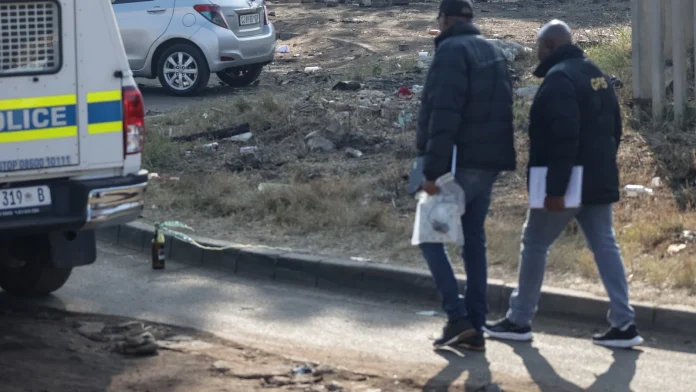
Bondi attack suspects had 'tactical training', police say

Authorities say Bondi attack suspects received tactical training before the attack

0
Bondi’s Quiet Broken: A Beach, a Minute’s Silence, and the Aftermath of Violence On a raw, gray morning at Bondi Beach, the city held its...
Sudan drone attack on Darfur market kills 10: rescuers

Drone strike on Darfur market in Sudan kills 10, rescuers report

0
Smoke over the stalls: a market, a drone and a country fraying at the edges When I arrived in Malha by imagination and inquiry —...
Nigeria secures release of 100 kidnapped children

Nigeria’s security forces free abducted students in rescue operation

0
They Came Back: A Quiet Night of Long Roads, Loud Hugs and a Country Reckoning The midnight air outside Papiri tasted of dust and diesel...

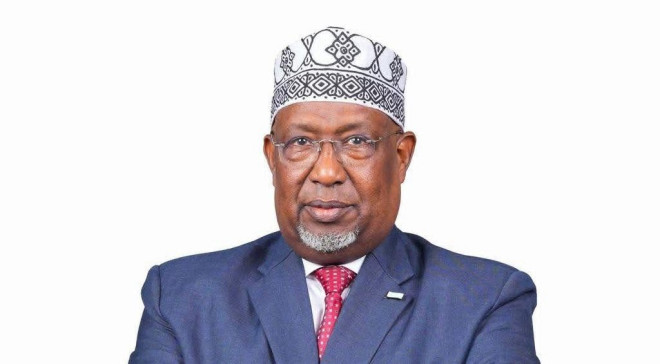
Shelter Afrique Development Bank Gets New Board Leadership

0
Nairobi, Kenya – 18 December 2025: Shelter Afrique Development Bank (ShafDB), the Pan-African Multilateral Development Bank (MDB) dedicated to promoting and financing housing, urban...