

May 16(Jowhar)-Shirkadda soo saarta diyaaradaha Boeing ayaa iibin doonta tii ugu horreysay ee weyn ee Shiinaha muddo ku dhow toban sano gudahood iyadoo la raacayo heshiis ku saabsan 200 oo diyaaradood oo lagu dhawaaqay Jimcihii ka dib shirkii Madaxweyne Donald Trump uu la yeeshay Madaxweynaha Shiinaha Xi Jinping.
AU oo ka walaacsan fashilka wada-hadaladii Xalane ee DFS iyo Mucaaradka
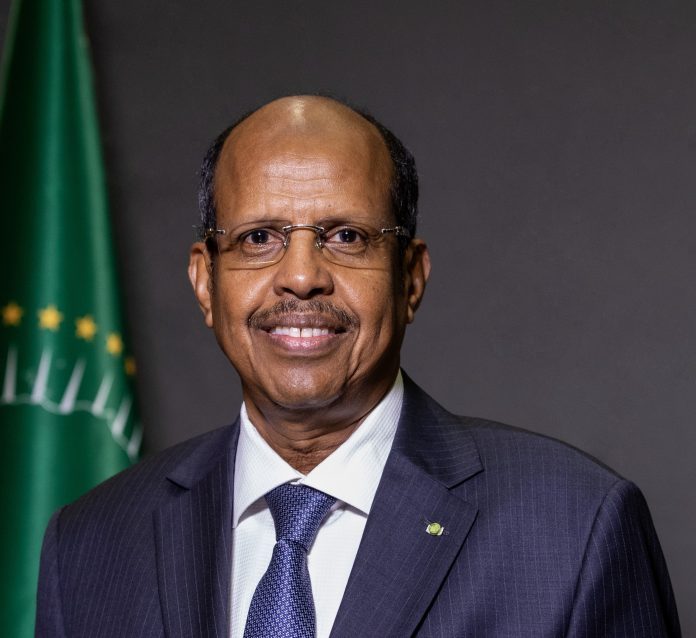
May 16(Jowhar) Midowga Afrika ayaa walaac ka muujiyay fashilkii ku yimid wada-hadalladii Madaxweyne Xasan Sheekh Maxamuud iyo Madaxda Mucaaradka ku dhexmaray Magaalada Muqdishu.
CCW:Taageerada degdegga ah ee Turkigu u muujiyeen Xasan Sheekh waxay dirtay fariin siyaasadeed oo walaac leh
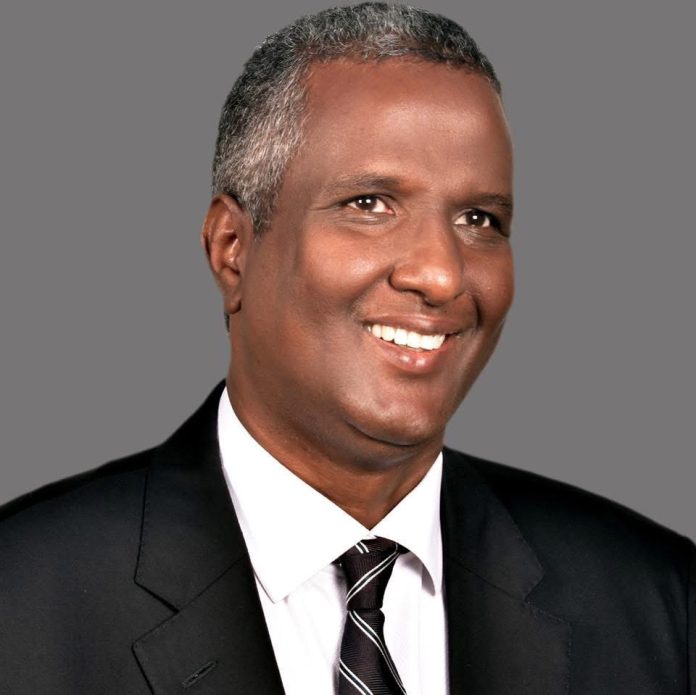
May 16(Jowhar) Hoggaamiyaha Xisbiga wadajir Xil Cabdiraxmaan Cabdishakuur Warsame oo kamid ah golaha Mustaqbalka Soomaaliya ayaa si adag u dhaleeceeyey farriintii taageerada ahayd ee Safaaradda Turkiga ay u dirtay Madaxweyne Xasan Sheekh Maxamuud, saacado uun ka dib markii uu dhammaaday muddo-xileedkiisii dastuuriga ahaa.
Boeing Says China Pledges to Purchase 200 Jets

When Planes Become Diplomacy: A Sky-High Deal in Beijing
There are moments when politics takes off—literally. On a bright morning in Beijing, amidst the flags and the formal smiles, business and statecraft braided into an announcement that felt part trade deal, part theater. Boeing, the Seattle-based aerospace colossus, confirmed that China had committed to buying 200 aircraft during a high-profile visit by US President Donald Trump. And if the initial sketched lines of that agreement grow into a finished painting, the order could swell with another 750 planes down the road.
“We had a very successful trip to China and accomplished our major goal of reopening the China market to orders for Boeing aircraft,” Boeing said in a statement—words that were part celebration, part strategy. “This included an initial commitment for 200 aircraft and we expect further commitments will follow after this initial tranche.” The company, which said CEO Kelly Ortberg joined the delegation, thanked the US administration for helping make the milestone possible and signaled a long-term focus on China’s soaring appetite for air travel.
What 200 Planes Actually Means
Numbers like 200 and 750 can sound abstract until you imagine what they represent: more pilots to train, more mechanics in hangars, more gates at airports, and a vast artery of global trade and tourist flows humming to life. Boeing’s own long-term forecast—published last year—paints a sweeping picture: roughly 44,000 commercial jets will be built worldwide over the next 20 years. About half that demand, Boeing projects, will come from China, South Asia and Southeast Asia.
That’s not small-market math. If Boeing’s outlook is right, the Asia-Pacific will be the engine room of aviation growth for decades: household incomes rising, middle-class tourism exploding, and more cities turning into aviation hubs. “This deal is the tip of an iceberg,” said Li Mei, an aviation analyst in Beijing. “China’s internal demand—new regional routes, second-tier city connections, cargo expansion—is massive. Airlines will need modern, fuel-efficient fleets to meet that.”
Local Scenes, Global Ripples
Walk through Beijing Daxing Airport late on a Friday and you’ll see what the forecast looks like in human terms: families with wheeled luggage, teenagers glued to phones, itineraries pinned to cheap boarding passes. “I fly home to Xi’an every month for my parents,” said Zhang Rui, a teacher, as her toddler dragged a stuffed panda behind her. “If flights become more frequent and affordable, it changes everything—career options, weekend trips, the way we see the country.”
For smaller cities, a new plane order is more than metal and wings; it can be a ticket to connection. Airports in southwestern and northeastern China have been expanding, airport hotels are sprouting, and regional carriers are jockeying to grab market share. The trickle-down effect touches airports, tourism, maintenance, and even local restaurants that feed crews.
Politics on the Tarmac
No major corporate win of this size happens in a political vacuum. The optics—US president in Beijing, American CEOs at the table—are unmistakable. Boeing explicitly thanked the Trump administration for its role. “Trade policy and state visits create space for deals like this to happen,” said Rachel Thompson, a trade policy expert at a think tank in Washington. “But these agreements also sit atop a complex web: national security concerns, industrial policy, and fierce competition from Airbus.”
The interplay between politics and commerce is practical, too. For Chinese carriers and leasing companies, government endorsement can smooth approvals and financing. For Boeing, re-establishing momentum in China—after years of tension, regulatory hurdles, and the pandemic slowdown—could mean reaffirming its place in what is arguably the most consequential market for commercial aviation growth this century.
Voices from the Ground
“It’s encouraging to see business and government working together,” said Chen Guang, an apprentice technician at a Chengdu maintenance facility. “More planes mean more work for people like me. We’re learning new systems, new engines, and that will build skill across our cities.”
Not everyone is celebratory. Environmental advocates point out that aviation has an outsized climate footprint. Commercial aviation is responsible for roughly 2–3% of global CO2 emissions, and as fleets expand, so do the stakes of decarbonization. “Buying planes without a roadmap to sustainable fuels or offsetting is risky,” said Dr. Asha Rao, a climate researcher specializing in transport emissions. “If the world wants to meet its climate goals, airlines and manufacturers must pair growth with innovation—hybrid engines, sustainable aviation fuels, better air traffic management.”
Industry Dynamics: Supply Chains, Jobs, and Competition
Behind the announcement is a sprawling supply chain—tens of thousands of suppliers in metalworking, avionics, logistics, and composites. Boeing’s factories from Everett to Charleston hum to different cadences when new orders arrive. “A large order like this re-orients production planning for years,” explained Mark Alvarez, a union representative at a Boeing plant in the U.S. “It protects jobs here and sends ripple effects to our subcontractors.”
Then there’s the competition. Airbus has been a dominant force in China for years, and the European manufacturer has its own relationships and localized production strategies. Deals of this scale are as much about market positioning as they are about hardware. “Airbus and Boeing are packaging aircraft sales with maintenance, training, financing, and local partnerships,” said Li Mei. “It’s not just about the planes; it’s an ecosystem.”
Beyond the Order Book: What Comes Next?
Assuming the initial tranche becomes firm and additional commitments follow, the logistical work begins: delivery schedules, financing, pilot training programs, maintenance contracts, and regulatory approvals. Leasing companies and state-run banks may craft financing packages to smooth purchases. Airports will need to plan gate allocations, and training academies will ramp up to teach thousands of new pilots and technicians.
But there’s a bigger question for readers to consider: what does a rapidly expanding aviation network mean for our planet and for inequality? Easier travel can connect families, catalyze commerce, and knit regions together. It can also accelerate carbon emissions and expand tourist pressures on fragile ecosystems. How do policymakers balance growth with sustainability?
Human Stories in the Shadow of Metal Giants
At the end of a day, these deals translate into real human stories. For the flight attendant from Kunming who dreams of saving for a house, for the engineer in Shenzhen hoping to lead a new team, for the retired couple now able to visit distant grandchildren—planes are more than stock market symbols.
“We grew up in a place with no direct flights,” said an entrepreneur in Chongqing. “Last year we chartered a private jet for a meeting. If these kinds of deals lead to better connectivity, that changes where we can do business and who we can employ.”
Takeaway
Airlines place orders, corporations applaud, and politicians take bows—but the story of 200 planes (and perhaps hundreds more) is not merely about hardware. It’s about economies reshaped, careers launched, environmental trade-offs, and a world that keeps getting smaller by the minute.
So ask yourself: when you look up and see a contrail arcing across the sky, are you seeing a promise of connection, a climate dilemma, or simply the future arriving on schedule? The answer may be all of the above—and the planes that fly over will carry the consequences.
QM oo ka digtay macluul halis ah oo ku soo fool leh Soomaaliya
May 16(Jowhar)Qaramada Midoobay ayaa ku dhawaaqday in malaayiin qof oo Soomaaliyeed ay la ildaran yihiin gaajo daran, iyadoo ka digtay khatar macluul oo si weyn ugu sii fidi karta dalka haddii aan si degdeg ah wax looga qaban.
Burnham Given Green Light to Seek Labour Nomination in By-Election

A northern stage, a national reckoning: Andy Burnham’s return to Westminster and the fight for Makerfield
There is a damp, metallic air that hangs over towns like Makerfield — the smell of coal history, chip fat and wet tar from old roofs — and yet, in the cafés and market squares, you can taste a new kind of political electricity. It is the kind of buzz that signals a turning point: not just another by-election, but a potential pivot for the Labour Party that could reshape British politics.
On a drizzly morning, Labour’s ruling body quietly gave the nod that has set tongues wagging across the country. The National Executive Committee (NEC) has allowed Andy Burnham to enter the candidate selection process for the upcoming Makerfield by-election. For many here, it feels less like an administrative footnote and more like the opening of an act that could force a full stop on the current government — or at least a long, uncomfortable comma.
Why Makerfield matters
Makerfield is not Westminster. It is a patchwork of post-industrial towns where terraces still outnumber the new estates, where the local bingo hall knows everyone’s name and where elections are decided by shoe-leather campaigning and kitchen-table conversations. The seat was won for Labour at the 2024 general election by Josh Simons with a majority of 5,399 over Nigel Farage’s Reform UK — but those numbers are now fragile relics in a shifting landscape.
In the months since, national polling has favoured Reform’s surge. Local elections this month were a warning light: Reform reportedly took every council ward in the Makerfield constituency, pulling in around half the vote, while Labour’s share fell to just over a quarter. In the raw arithmetic of politics, that is the difference between comfort and crisis.
Burnham’s gravity
Andy Burnham, Greater Manchester’s mayor and a familiar northern figure, brings with him a different currency: personal popularity. Ipsos polling has him with a net favourability of +24% across the North West — a rating that dwarfs many figures inside the national party. That kind of local affection can make a seat competitive even when national tides run the other way.
“People here know Andy,” said Sharon Ellis, who runs a greengrocer’s stall on a busy high street. “He’s been around longer than most of the MPs. He talks like he’s from here — not like he’s reading a script. That matters to us.”
Wes Streeting, whose own resignation from the health brief has added to the intra-party drama, has been explicit in his backing. “The Makerfield by-election will be tough. Votes will need to be earned,” Streeting said. “Andy is the best chance of winning and that should override factional advantage or propping up one person.”
Behind the headline: resignations, rivalries and rules
What looks like a tidy local contest is in truth a pressure test for Labour’s leadership. Josh Simons — a former loyalist who stepped down amid controversy about a think tank he once ran — said he would leave parliament to make way for Burnham, arguing the mayor could “drive the change our country is crying out for”. That gesture has not quelled the tensions; it has amplified them.
Keir Starmer, the prime minister, finds himself under renewed scrutiny after poor local election results. At least 89 MPs have reportedly publicly called for his resignation, and his critics are not currently united behind a single challenger. The rules of Labour’s leadership contests require 81 nominations from MPs to trigger a formal challenge — a high bar that has so far prevented an all-out coup.
Some within the party appear to be trying to thread a needle: allow Burnham to run in Makerfield, see how he performs, and let the by-election settle questions that are being argued in backrooms and WhatsApp groups. Starmer himself, according to close sources, is not expected to block Burnham’s candidacy — a tacit acknowledgement that the party cannot easily muscle its way out of this moment.
Voices from the ground
“We’re fed up with promises,” said Tariq Khan, a taxi driver who grew up near the mills. “If Andy can be the man who actually does something for the North, then good. But he’s got to show up — in our pubs, in our schools, not just on telly.”
A Labour insider, speaking on condition of anonymity, framed the calculation bluntly: “This is about survival and legitimacy. If we lose Makerfield to Reform, it’s not just one seat — it’s a narrative. It tells voters that Labour has stopped listening.”
At the same time, Conservative and Reform strategists are circling. Reform’s success in the recent local elections has been driven by a message that marries economic insecurity with cultural grievance. The party has consolidated a protest vote that in the past might have simply stayed home. As one local teacher put it: “People feel left behind. They don’t want lectures; they want answers.”
What to watch next
There are several moving parts that will determine whether Burnham’s candidacy becomes a political game-changer or a high-profile detour.
- Selection timetable: Applications for candidacy opened immediately after the NEC decision and close within days — a compressed window that favors heavyweights with ready-made machines.
- Local turnout: Can Labour motivate its base in the face of Reform’s momentum? Recent council results suggested they are currently losing that battle in Makerfield.
- Leadership dynamics: Will other senior figures, such as Wes Streeting or even Ed Miliband as a possible dark horse, enter the fray for the party leadership if Burnham’s bid succeeds?
- National mood: Is this a one-off northern phenomenon, or proof of a broader fracturing of the political centre-left in Britain?
Bigger questions
Beyond seat counts and internal maneuvers, the drama in Makerfield asks bigger questions about politics and identity in 21st-century Britain. What happens when regional leaders with strong local reputations try to translate municipal clout into national change? How does a mainstream party contend with a populist challenger that has learned to harvest disillusionment and amplify it into votes?
And for ordinary people casting their ballots, perhaps the most unsettling question is simple: which institutions still represent me? Is it a party headquarters in London or a mayor who has shared their kitchen-table conversations? Politics, after all, is as much about trust as policy.
So, what do you think? Does a well-liked regional figure do better to build bridges from the outside, or to storm the centre as a challenger? As the country looks on, Makerfield is no longer just a constituency; it has become a theatre for a national conversation about belonging, representation and the future of progressive politics.
Whether Andy Burnham wins the seat, or whether his candidacy simply accelerates a leadership campaign, one thing is clear: the quiet streets of the North are about to have an outsized voice in the direction of the nation. And that, more than any poll or press release, is why this story matters.
Mareykanka oo sheegtay dilka hoggaamiye sare oo ka tirsanaa Daacish
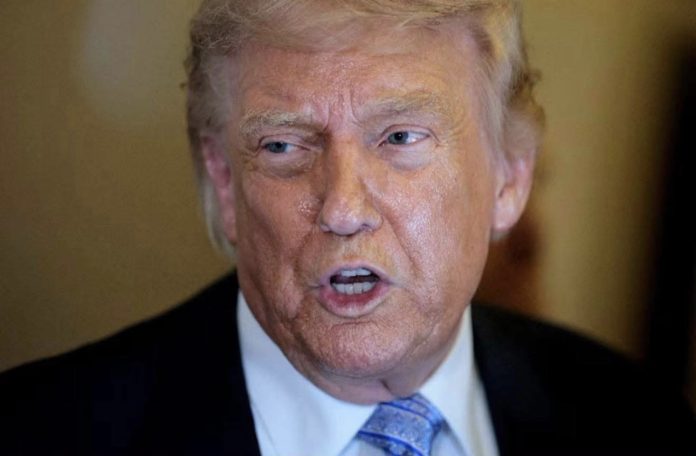
May 15(Jowhar)-Mareykanka ayaa ku dhawaaqay in la dilay mid kamid ah hoggaamiyeyaasha ugu sarreeya kooxda Daacish, kaas oo lagu beegsaday gudaha dalka Nigeria, sida uu shaaciyay madaxweynaha Mareykanka Donald Trump.
New Ebola outbreak in Democratic Republic of Congo leaves 65 dead
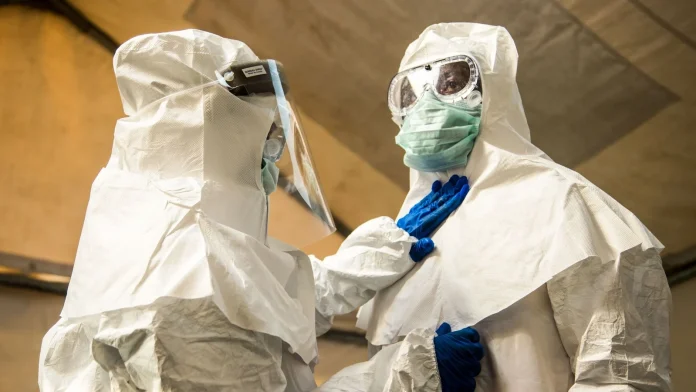
When the Market Grew Quiet: Ebola Returns to Eastern Congo
The sun rose over Bunia like any other morning — but the market, usually a tangle of voices, plastic tarps and clattering scales, felt different. Vendors wrapped their wares tighter. Fewer shoppers lingered for the small talk that is the economy’s secret currency. A child chased a goat down the alley and his laughter died fast as people stared at the new posters tacked to the clinic door: “Ebola — Report Symptoms. Avoid Close Contact.”
This hush is the sound of a community remembering an old, terrible lesson. Health authorities in the Democratic Republic of Congo (DRC) have declared a fresh outbreak of Ebola in the northeastern Ituri province, a region that shares porous borders with Uganda and South Sudan. Officials say the virus has already sent a tremor across the border: Uganda confirmed that a 59-year-old man from the DRC died in Kampala earlier this week, and his body was returned home the same day. He has been identified as an imported case linked to the Ituri outbreak.
Numbers that Demand Attention
At the time of reporting, regional health agencies listed 246 suspected cases and 65 deaths inside the DRC. Those figures, raw and grim, tell part of the story: a disease both swift and stealthy, touching remote villages, refugee camps and trading towns where people are always in motion.
“This is not a small flare-up,” said a senior epidemiologist with a West African public health institute. “When you see hundreds of suspected cases and tens of deaths in a short window, that signals a chain of transmission that can accelerate quickly if not contained.”
Why the Strain Matters
Not all Ebolas are the same. Tests on the fatal case treated in Uganda show infection with the Bundibugyo strain — a species of the Ebola virus first identified in the mid-2000s. Unlike the Zaire strain, for which we have licensed vaccines and which has produced some of the deadliest epidemics on record, Bundibugyo currently lacks a widely available, approved vaccine.
“We have tools for some strains, but not all,” said a World Health Organization outbreak specialist. “That complicates the response because ring vaccination — one of the fastest ways to stop spread — is not an option with Bundibugyo in the same way it has been for Zaire.”
That gap matters. Vaccines such as rVSV-ZEBOV have been game-changers for Zaire Ebola virus outbreaks, helping blunt chains of transmission across past epidemics. The absence of a similar, approved countermeasure for Bundibugyo makes classic public-health tactics — rapid diagnosis, isolation, contact tracing and safe burials — even more critical.
On the Front Lines: People, Places, and the Strain on Systems
Ituri is a place of intense human movement. For decades, insecurity and economic desperation have pushed families to flee, trade and regroup across borders. “People here are used to crossing for markets, for family, for safety,” said a nurse who has worked at the Bunia health center for 14 years. “When you add a virus that spreads through close contact, that movement becomes our greatest vulnerability.”
The DRC is no stranger to Ebola. Since the virus was first identified in 1976 near the Ebola River — within the borders of what was then Zaire — health workers in the country have repeatedly faced the same enemy. The North Kivu outbreak of 2018–2020, the country’s largest in recent memory, provided hard-earned expertise in community engagement and rapid response. Yet it also exposed limitations: fragile health systems, intermittent access for responders because of insecurity, and the deep mistrust that can crop up when communities have been failed by authorities for years.
“Experience helps, but every outbreak is its own challenge,” said an international public-health adviser currently embedded with Congolese teams. “Here, the security situation and cross-border human flows make containment more complicated. We can do everything right medically and still lose ground if people are moving because they must.”
Voices from the Ground
“We are scared,” said Anne-Marie, a Bunia resident who runs a tea stall near the market. “When they told us it was Ebola, people stopped coming. But who will buy tea? We need to survive. How do you avoid life when life itself is a market?”
A community health worker added, “We put on protective gear, but the heat is unbearable. People ask questions we cannot answer: ‘Will they come?’ ‘Can this cross to our village?’ We try to reassure them while racing the clock.”
Across Borders: The Ugandan Connection
Public health knows no borders. Uganda’s quick confirmation of the imported fatality — and the fact that the body was repatriated the same day — underscores the cross-border realities. Health officials in Kampala emphasized that they had not detected any local transmission but raised the alarm early.
“This was an imported case, and there is no evidence of community transmission in Uganda at this time,” a Ugandan health ministry spokesperson told reporters. “But we are increasing surveillance at border points and working with our neighbors to track contacts.”
That sort of cooperation will be essential. In past outbreaks, porous borders and movement of people have turned localized flare-ups into regional crises. The economies of East and Central Africa are interlinked; informal trade routes, family ties, and displaced populations mean health threats can jump borders faster than formal notices can travel.
Why the World Should Care
Ebola is not just a local problem; it’s a global one. Infectious diseases exploit weakness — in health systems, in governance, in social safety nets. The current outbreak raises broader questions about preparedness and equity. Why do some pathogens continue to outpace the tools we have? Why are certain communities repeatedly the frontlines of global health emergencies?
Consider the data: while the Zaire strain tends to have higher case-fatality ratios in many outbreaks — sometimes exceeding 50% — other strains can still inflict severe illness and death. Bundibugyo’s prior appearances have shown variability in virulence, and the absence of a specific vaccine means reliance on the nuts-and-bolts public-health work: testing, tracing, treating and culturally appropriate community engagement.
What to Watch
- Numbers: new confirmed and suspected cases, and any local transmissions reported in Uganda or South Sudan.
- Response measures: deployment of rapid response teams, laboratory capacity, and community engagement efforts.
- Cross-border coordination: joint surveillance, traveler screening, and communication between ministries.
- Humanitarian access: whether insecurity prevents teams from reaching hotspots and conducting safe burials.
Hope, Resilience and Hard Work
Even in the thick of fear, there is resilience. Health workers in the region have seen worse and returned to the trenches with a knowledge that is both technical and human. They know how to sit with families, how to explain why a cloth face is not enough, how to organize a safe burial that honours the dead and protects the living.
“You see courage every day here,” said a local NGO coordinator. “Mothers who bring children for screening. Volunteers who sleep at the clinic. These are the people who will win us time.”
Winning time matters. Each delay gives the virus sunlight to jump, to travel, to spread. Each rapid test, each phone call to check on a contact, each PPE suit and trench of messaging can slow that march. For the rest of the world, this is a reminder that global health security depends on the dignity and strength of communities we rarely meet — and that investing in their resilience is not charity, but self-preservation.
Questions to Carry With You
As you read this from wherever you are, consider: How prepared are our global systems to respond when a pathogen resurfaces in a fragile region? What responsibilities do governments, global agencies and private donors have to back up local responders before the headlines begin? And perhaps most pressingly: how do we center the voices of the people who live with these outbreaks every day, rather than speaking over them?
There are no easy answers. There is, however, urgent work to be done — on the ground, at borders, and in labs racing to broaden the tools in our arsenal. For Bunia and the towns and camps across Ituri, the coming days will be a test of patience, solidarity and science. For the rest of us, it is a moment to watch, learn and act.
Israel and Lebanon approve 45-day truce extension, US confirms
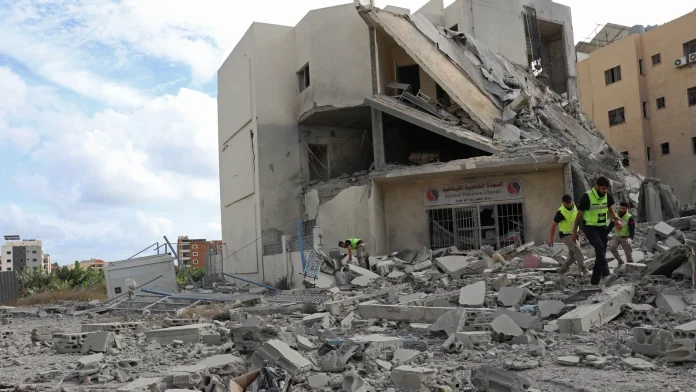
Forty-Five Days of Fragile Quiet: A Ceasefire, the Sparks That Remain, and the People Between
On a cool Washington morning, diplomats shook hands and announced what many in the region have been praying for: the temporary silence that began on 16 April will be stretched for another 45 days. The U.S. State Department framed the move as a pragmatic pause—an interval for talks, for promises to be turned into plans, for negotiators to meet again on 2 and 3 June. But the headlines and the reality on the ground rarely march in lockstep.
Diplomacy in the capital, fear on the coastline
“We extended the cessation to enable further progress,” a U.S. official said, echoing the terse language of diplomacy. In the hushed corridors of power, that progress looks like maps, contingency plans, and lists of demands. On the streets of southern Lebanon and in the shattered neighborhoods of Gaza, the word progress means something else entirely: shelter rebuilt, children returned to school, markets open again.
For many, the ceasefire has been less a definitive end to violence than a brittle vase put back together with tape. Southern towns that ought to be quiet have not been at peace. From Tyre’s battered beachfront to the olive groves above Kfar Tibnit, explosions were still seen and heard. Smoke rising from fields and apartment blocks has become as familiar a sight as minaret silhouettes at sunset.
Lives shattered in a single strike
On the outskirts of Haruf, a small humanitarian clinic run by the Islamic Health Committee became a scene of mourning. Three paramedics were killed when an airstrike hit the building; a fourth remains critically injured. “They were not combatants. They were just there to help,” said Amal, a nurse who worked with the team and whose voice wavered when she described the cramped, exhausted shifts. “We keep saving people and then losing our own.”
Nearby, residents described the building as a last refuge. “There are only women, children, and the elderly here,” Hafez Ramadan told me. “They came from towns that were destroyed. Now they have nowhere to go.” Across the southern district, at least 37 people were reported wounded in strikes near Tyre—hospital staff among them, women and children counted with the rest.
The human arithmetic: numbers that do not convey the full cost
Numbers help us orient ourselves, but they rarely tell the whole story.
- Lebanese health authorities report some 2,882 people killed in Lebanese territory since 2 March.
- About 1.2 million people have been displaced inside Lebanon, many uprooted from the south.
- Israeli military losses in southern Lebanon stand at 19 soldiers killed in clashes with Hezbollah since early March; a civilian contractor has also died.
- In Gaza, medics said at least seven Palestinians were killed in recent strikes, including a child; since the October ceasefire, around 850 Palestinians have been killed.
- Gaza authorities put the death toll since October 2023 at over 70,000—a figure the UN has judged reliable.
- Hamas’ 7 October 2023 attack killed over 1,200 people in Israel, according to Israeli tallies.
Staring at these figures is like scanning a ledger of loss. Each number is a family, a teacher, a lost market stall. Each statistic is a house without laughter. When a whole town is razed, the memory of it lasts far longer than the news cycle.
Displacement and the scent of the sea
Walk through Tyre and you find a city split between the ordinary and the extraordinary. Fishermen still untangle nets at dawn, the smell of salt and diesel braided together. Yet there are long lines for bread and crowds of people who have left homes with only what they could carry. Hotels have turned into temporary shelters. Apartment blocks once bustling with life stand hollowed and blackened.
“We came here with a suitcase and one bag of clothes,” said Laila, a mother of three who fled from a southern village. She sat outside a hotel now serving as a makeshift shelter, wrapping her youngest in a blanket. “The children ask when they can go home. I don’t have an answer for them.”
Gaza: flames rekindled amid a precarious truce
While diplomats brokered rhythm in Washington, Gaza’s battered neighborhoods pulsed with fresh violence. Two strikes—one on an apartment block in Rimal, another on a nearby street—killed at least seven people, according to medics. Video from the scene captured a scene any seasoned journalist has come to dread: flames devouring a mostly ruined building, neighbours hauling out bodies wrapped in white sheets.
“The missile hit without warning,” Mahmoud Basal, a civil defence spokesperson, said in a voice that tried to be steady. “There were hundreds of people inside. Families. Children.”
Israel says it has stepped up operations in Gaza since redirecting resources away from its involvement in Iran. One stated goal is to target militant leaders; the identity and fate of a senior commander said to be targeted in recent strikes remain unclear. Meanwhile, Israel retains forces within large swaths of Gaza, where many neighborhoods are already ground to rubble and roughly two million people live in an area the size of a small county.
What a ceasefire buys—and what it doesn’t
Ceasefires are complicated instruments. They buy time for negotiators, space for aid convoys, and a sliver of hope for civilians to rebuild roofs and nerves. But they do not magically resolve the underlying dynamics: displaced populations needing durable housing, the dismantling of armed groups, questions of sovereignty, and the political bargains that underpin any lasting accord.
“A ceasefire is a short-term medicine,” a regional analyst told me. “But if you don’t treat the disease—diplomacy, reconstruction, accountability—you’ll be back in the hospital.”
Looking outward: why this matters to the rest of the world
Conflicts in a small geography ripple far beyond their borders. They unsettle regional alliances, push asylum seekers toward uncertain horizons, and test the international community’s capacity to mediate when violence is so normalized that the rules become negotiable. Humanitarian organizations report funding gaps, and donors are increasingly fatigued by overlapping crises from the Sahel to South Asia. Yet the human need here is immediate and enormous.
When you read these reports from your phone or tablet, you might be tempted to ask: What can I do? First, stay informed from reliable sources. Second, consider supporting reputable humanitarian organizations that have boots on the ground. And third, insist on accountability—on political leaders and on international institutions—to translate temporary silences into durable security.
What comes next?
The 45-day extension sets a deadline: negotiators return in early June. That gives room for shuttle diplomacy, for technical committees to pore over deconfliction maps, and for aid to flow—potentially. But for families out of doors, for medics who have buried their colleagues, for the fishermen of Tyre and the children of Rimal, time is both a balm and a threat.
“We want more than a pause,” Laila said, looking at her children asleep in the back of a hotel room that smells faintly of sea and disinfectant. “We want a home.”
As international actors count the days, those who wake to the sound of generators and the smell of burnt rubber will measure the ceasefire differently: in broken windows replaced, in schools reopened, in streets where market sellers can call out prices again without glancing at the skies.
Forty-five days is a gift, fragile as glass. Will it be enough to build something lasting, or merely another chapter in a long book of returns and losses? The answers will be written in the months ahead—in the negotiating rooms, but most crucially, in the dust of the neighborhoods that have been waiting to be named safe once more.
WHO issues warning over youth addiction risk from nicotine pouches

The Quiet Package: How a Tiny Pouch Is Roiling Public Health
Step into a late-night corner shop in any capital city — the fluorescent hum, a wall of energy drinks, and beside the till, a neat display of tiny sachets promising a “fresh” hit of nicotine. They come in glossy packets, candy-like flavors, and promises that sound harmless: smoke-free, spit-free, discreet. What looks like a convenience purchase is, public health experts warn, the front line in a new battle over addiction, youth marketing and the future of tobacco.
These are nicotine pouches: small, white, tobacco-free sachets placed under the lip to deliver nicotine directly. For multinational tobacco companies, they represent a strategic pivot away from combustible cigarettes as smoking declines. For health authorities and campaigners, they are a puzzle — potential harm-reduction tool for some, and a highly addictive consumer product being marketed in ways that make young people look twice.
What are nicotine pouches, and why do they matter?
Nicotine pouches contain nicotine, fillers, sweeteners and flavorings. Unlike traditional smokeless tobacco like snus, they don’t contain tobacco leaf — yet they deliver pure nicotine to the bloodstream through the mouth. Users report a quick buzz, a steady calm, or simply an alternative to smoking and vaping.
“It’s a neat little device for nicotine delivery,” says Dr. Amina Farouk, a behavioral scientist who studies addiction. “The appeal is obvious: no smoke, no odor, more social acceptability. That very neatness is also the problem — it makes nicotine easier to hide and normalize.”
For big tobacco companies facing falling cigarette sales, these pouches are an economic lifeline. They are inexpensive to produce, easy to ship, and fit seamlessly into the lifestyle marketing playbook companies have used for decades — music sponsorships, sleek packaging, celebrity tie-ins. The result: a product that skirts some of the stigmas of smoking while potentially creating a new generation of nicotine users.
Global alarm bells: the WHO’s warning and a patchwork of laws
Last month the World Health Organization issued a blunt call to action. The UN health agency pointed to a surge in marketing, especially on social media, where influencers and aspirational campaigns tilt toward younger audiences. It called for governments to tighten rules — from capping nicotine content and banning flavors, to restricting advertising and sponsorships.
“These products are engineered to be attractive and fast-acting,” a WHO report summary stated, raising the alarm about both the concentration of nicotine in some pouches and technological tweaks meant to increase delivery speed. The agency noted that some 160 countries currently have no specific regulation covering these pouches — a yawning regulatory gap in a rapidly expanding market.
Consider the contrast: in the United States, where pouches have become one of the fastest-growing segments in nicotine retail, regulators have described them as less harmful than combustible tobacco. The U.S. Food and Drug Administration has suggested they may carry lower risk than cigarettes or even some vaping products. But “less harmful” is not harmless — and regulators are racing to reconcile potential benefits for adult smokers with risks to youth uptake.
Marketing, flavors, and the young ear they lean toward
Walk through a festival crowd or watch the slick adverts around a Formula 1 weekend and you’ll see the strategies in action: lifestyle photography, energetic playlists, and sponsorships that place pouches alongside elite entertainment. Flavors — citrus, licorice, iced mint, berry blends — speak to palate as much as identity.
“We’re not marketing to children,” says a spokesperson for a leading pouch brand, insisting their target is adult smokers seeking alternatives. “Data show most users are already nicotine consumers.” Yet at street level the message can land differently.
“I tried them because they were in a friend’s bag,” says Marco, a 20-year-old university student in Lisbon. “They didn’t smell like cigarettes and they gave a nice buzz before an exam. It felt safer than vaping or smoking. That’s the worry — if something feels safe, kids try it.”
Voices on the ground
Across neighborhoods and clinics, reactions vary. In Stockholm, where a long-standing snus culture exists, some older smokers credit smokeless options with helping them quit cigarettes. “My father used snus and stopped smoking in his 40s,” says Elin, a nurse. “There’s a public health story there.”
But in Johannesburg, a community health worker describes a different pattern: “We’re seeing teenagers who never smoked picking up pouches because they can hide them in class. Teachers don’t notice a paper-white sachet like they would a cigarette.”
Campaigners argue that the industry’s combination of high nicotine formulations and attractive flavors creates a perfect storm. “The product is designed and packaged like a lifestyle choice,” says Dr. Rajiv Menon of a global youth health NGO. “That’s a marketing strategy, plain and simple — with consequences for addiction.”
What regulators are being asked to do
WHO outlines a menu of policy options for governments wanting to act:
- Caps on nicotine concentration to limit addiction potential
- Strict advertising and sponsorship bans, especially where youth audiences are large
- Limits or bans on characterizing flavors that appeal to young people
- Clear labeling and age-verification requirements at point of sale
Some countries have already moved to regulate or restrict pouches; others are watching the evidence and waiting to see whether these products help smokers quit or merely recruit new users.
Big questions: harm reduction or a new addiction pipeline?
So where should we stand? This is the knot at the heart of the debate. On one side, there are smokers and some public health experts who see nicotine pouches as a less harmful alternative to cigarettes — a tool in the harm-reduction toolkit. On the other, there are campaigners and parents who see a stealthy product engineered to expand markets and addict a new generation.
Ask yourself: do we want a future where tobacco companies can pivot again, selling addictive products in prettier wrappers? Or can regulators and public health advocates craft smart rules that preserve harm-reduction options for adults while shielding children from aggressive marketing?
Whatever path governments choose, one thing feels certain: a small white pouch can carry a very large debate. It’s a story about industry incentives, scientific uncertainty, youth culture and the age-old tension between personal choice and public protection. It deserves more than a shelf-space glance — it deserves careful policy, community conversation, and, above all, the kind of scrutiny that keeps one generation from trading one epidemic for another.

Fireworks and dazzling lights mark pope’s blessing of Barcelona’s new tower
With fireworks bursting over Barcelona and light rippling across stone spires, Pope Leo XIV on Sunday blessed a monumental new tower at the Sagrada...
Video: Trump Tells Reporters He “Loves” Inflation in Blunt Remark
With inflation flashing its hottest warning signal in three years, US President Donald Trump delivered a surprising take on the latest government numbers, telling...
Johannesburg Shooting Leaves 12 Dead and 9 Wounded, Police Say
In a chilling overnight raid on the edge of Johannesburg, gunmen swept through an informal settlement and killed 12 people, South African police said.
Police...

Chinese sub uncovers the world’s biggest whale graveyard on ocean floor
A vast “necropolis” of whales—packed with both fresh remains and fossils millions of years old—has been found on the floor of the Indian Ocean,...
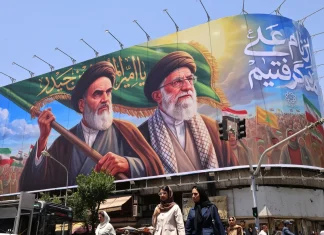
US Launches Strikes on Iran as Tehran Threatens Retaliation for Attacks
Fresh explosions rattled southern Iran overnight as the United States launched a new round of strikes, a move that came just hours after President...