Home Blog Page 56

Ryanair CEO O’Leary urges ban on morning pre-flight drinking

Ryanair's O'Leary urges pre-flight morning booze ban
Michael O'Leary said that 'boozy behaviour' by passengers is becoming a real challenge for all airlines

Before Dawn and Below the Influence: The Case for Dry Airports at First Light

There is a certain hush to airports at five in the morning: conveyor belts groaning, a fluorescent strip of light over empty check-in desks, and the muffled announcements that sound both urgent and apologetic. But lately that hush has been broken by a different, more combustible sound—raised voices, slurred laughter and the metallic clink of glasses. Michael O’Leary, the combative chief executive of Ryanair, has stepped into that pre-dawn noise with a blunt prescription: stop serving alcohol at airport bars before the start of regular pub hours.

“It’s becoming a real challenge for all airlines,” O’Leary told The Times. “I fail to understand why anybody is serving people at five or six o’clock in the morning.”

He says Ryanair is diverting almost one aircraft every day because of boozy, aggressive passengers—an eye-catching figure that, if applied over a year, translates to roughly 300 diversions. Those are not just statistics on a spreadsheet; they are planes changing course, tired crews trying to de-escalate violence, and passengers delayed or frightened mid-journey.

The cocktail of commerce and chaos

This isn’t merely a row between an airline boss and airport landlords. O’Leary’s argument raises a wider question about the incentives built into modern air travel. Airports, flush with retail and hospitality revenue, often have different licensing rules than street pubs. That can mean alcohol sales during hours when a typical bar would be closed.

“Airports have built a business model around convenience and impulse,” said Anika Sharma, a transport economist who studies aviation revenues. “When you add duty-free offers and bars open at dawn, you create a setting where tens of thousands of people pass through in a heightened emotional state—tired, excited, nervous—and alcohol becomes a multiplier.”

Ryanair has proposed two main remedies: a blanket ban on alcohol during the hours that are outside normal pub licensing times, and a limit of two drinks per passenger that could be enforced through boarding pass checks. On the surface, it’s straightforward; in practice, it’s knotty. Who enforces it? Which jurisdiction applies in international terminals? And what does “normal pub hours” mean in a continent as diverse as Europe, where opening times vary by country?

Voices from behind the bar and beyond

Standing behind a battered oak counter at an airport café that opens at 4:30 a.m., a barista named Marta wiped down a tray and sighed. “We make our rent here,” she told me. “If the airport tells us to stop selling coffee with a splash of whiskey, my boss will argue the books. But the last time we had a fight at 5 a.m. a passenger threw a chair—no one wants that.”

An airport operations manager, who asked not to be named, described the business calculus differently. “Airports are multi-jurisdictional beasts. We have franchise agreements, licensing exceptions, and long contracts. Yes, security and safety matter, but revenue from food and beverage funds many passenger services. You can’t flip a switch without a long negotiation.”

Travellers have mixed feelings. “If a rule stops someone getting violent on my flight, yes,” said Tomás, a teacher from Madrid catching an early flight to Lisbon. “But if it just means I can’t have a small beer before a long trip, that feels nannying.”

Numbers and reality: A pattern of rising incidents

The anecdotal anger and the barroom bruises sit atop a documented rise in unruly behaviour since the pandemic. Industry groups and regulators have logged thousands of incidents in recent years. Airlines across Europe and North America reported a surge of aggressive incidents—many linked to intoxication—as travel rebounded off pandemic lows.

Beyond diverting aircraft, unruly passenger behavior has tangible costs: flight delays, emergency service deployments, and legal proceedings. Ryanair has attempted to deter bad behaviour with punitive measures—a €500 fine announced for passengers removed for misconduct—and a stronger stance on reporting offenders to local authorities.

“A handful of disruptive passengers can blow the safety case for a flight,” said Captain Elaine Murphy, a former airline pilot who now teaches crew resource management. “Crew have to manage the cabin, keep tens or hundreds of people safe, and if someone is violent or belligerent that’s a legal and medical risk. Alcohol reduces inhibition and raises volatility.”

Drugs, gender and the messy human equation

O’Leary has also pointed to another ingredient in the volatility mix: drugs. “A volatile mix of alcohol and people shoving powder up their nose,” he told the paper, adding—controversially—that “the women are as bad offenders as the men in this.”

The comment prompted a flurry of reaction. Some public health specialists warned against gendered stereotyping. “Substance misuse affects all genders,” said Dr. Laila Hassan, a substance use researcher. “But the real question is how to design upstream interventions—screening, brief interventions, sensible licensing policy—so that the airport environment is less conducive to risky behaviour.”

Practicalities and policy: What could a dawn dry-out look like?

If airports agreed to curtail alcohol sales before, say, 8 a.m., enforcement would be complex but not impossible. Boarding pass-linked drink limits could be implemented technically—QR codes scanned at venues—but that requires investment and cross-stakeholder cooperation. It also raises questions about equity: would business travellers who buy lounge access get different treatment? Would duty-free purchases be exempt?

Aviation policymakers must balance safety with rights and business interests. Some airports have experimented with alcohol-free early morning zones or voluntary staff training to spot and defuse escalation. Others have increased the presence of security and rapid response teams.

“We need a layered response—policy change, staff training, public messaging and, where necessary, technological solutions,” Sharma said. “But the easiest layer to implement now is a culture change. Airlines, airports and governments need to stop treating pre-flight drinking as an unquestioned rite.”

Rethinking travel rituals

There’s a cultural angle that resonates beyond terminals: the normalization of drinking as an integral part of travel. For some, a pre-flight pint is ritual—a way to mark the transition between home and holiday, or to steel oneself for an early start. For others, it’s a dangerous accelerator of poor decisions.

As you read this, perhaps you can picture your own last airport drink. What improved your trip—or made it worse? How do we balance personal freedom with collective safety? Those are not just regulatory questions; they’re moral and social ones too.

In the end, O’Leary’s blunt challenge is less about the exact hour when a bar should close and more about responsibility. “We are reasonably responsible,” he said in the interview, “but the ones who are not responsible, the ones who are profiteering off it, are the airports.”

Whether that argument will change the rhythm of early-morning airports across Europe—or simply spark another round of negotiations between airline and airport—is an open question. But the scene he describes is unmistakable: a vulnerable space, moving millions of people every day, where a small policy tweak could ripple into safer flights, calmer cabins and fewer diversions. Isn’t that worth debating?

Government says Irish passengers from virus-hit ship will be quarantined

Irish on virus-hit ship to quarantine, says dept
The MV Hondius left Ushuaia in southern Argentina in March

A ship on the horizon, an anxious waiting game

There is a particular kind of hush that falls over a vessel when news of illness spreads through its cabins—an anxious, salt-scented silence broken by the clink of crockery and the low hum of the engines. That hush has settled over the MV Hondius, an expedition ship now making its way toward Tenerife, carrying nearly 150 souls and, for now, an invisible worry: a hantavirus outbreak that has put public-health teams in several countries on high alert.

Two of those people are Irish. Their names are not being released, and details about their condition remain private. What is public is the choreography that is now unfolding across borders: Irish health authorities preparing for the possible return of their citizens, Spanish officials arranging docking in the Canary Islands, and European public health bodies watching the vessel’s course like the hands of a slow-moving clock.

Onboard life and human voices

“There’s a strange bravery about people at sea,” said a passenger who asked not to be named. “We’re used to rough weather, but not this—uncertainty is the real storm. We’re still looking out for dolphins in the morning and sharing stories at dusk, but there’s an undertow now.”

Other voices are calmer, practical. “We have protocols for illnesses at sea,” said a crew medic via a brief statement passed to journalists. “We’re monitoring symptoms, isolating where appropriate, and communicating with port health authorities. Everyone wants to get home safely, but we have to proceed carefully.”

From Tenerife, locals watch the approaching ship with a mix of curiosity and protective concern. The port there, a mosaic of palm trees, volcanic promenades and fishermen mending their nets, is accustomed to visitors—this is the Canary Islands, a place where travel is woven into the everyday economy. But the image of a vessel at anchor because of disease resonates differently now, in a world still accustomed to pandemic-era caution.

How authorities are preparing

Back in Ireland, the Department of Health and the Health Service Executive (HSE) have activated response lines. A National Incidence Management Team in the National Health Protection Office has been stood up to coordinate the Irish public health response and to plan for the care of the two nationals should they return. “We are preparing for a range of scenarios,” an HSE spokesperson said. “Our priority is the health and safety of the individuals involved and of the wider public.”

Decisions about repatriation and quarantine will hinge on medical status, officials say. If healthy and asymptomatic, the two Irish nationals can expect to be closely monitored and to undergo a period of quarantine in line with guidance from the European Centre for Disease Prevention and Control (ECDC). If they become symptomatic, they will be assessed and treated at the appropriate level of care.

Spain’s health minister has indicated the MV Hondius is expected to dock in Tenerife within three days, and Spanish officials have reported that those remaining on board are not currently presenting symptoms. Still, docking is only the beginning: there will be certification checks, possible testing, and further assessments before passengers disembark.

Coordination across borders

Public health crises at sea force cooperation among agencies who don’t always work together every day. “These situations are logistical puzzles,” said Dr. Aisling Byrne, an infectious-disease specialist who has advised maritime health programs. “You need rapid communication between the ship’s medical team, port health authorities, national health services and, often, consular officials. The goal is to balance individual care with preventing exportation of disease.”

The Department of Foreign Affairs is providing consular assistance to the Irish citizens aboard, while the Department of Health is liaising with EU partners, the ECDC and the World Health Organization. In practical terms this means decisions about where anyone will quarantine, who will provide transport and medical oversight, and how to handle waste and decontamination on disembarkation.

What is hantavirus? Separating fact from fear

Hantaviruses are a family of viruses carried by rodents. In Europe, hantaviruses typically cause a spectrum of illness known as hemorrhagic fever with renal syndrome (HFRS), which in many cases is milder than the hantavirus pulmonary syndrome (HPS) seen in the Americas. Incubation periods vary but are often measured in weeks—not days—making contact tracing and monitoring a lengthy task.

“The key point is transmission,” Dr. Byrne said. “Most hantaviruses do not spread from person to person. The primary risk is exposure to rodent droppings and urine in enclosed spaces. Human-to-human transmission has only been documented with a few strains, like the Andes virus in South America.”

To put numbers on the risk: hantavirus pulmonary syndrome has carried case-fatality ratios in some series of roughly 30–40 percent in the United States, according to the U.S. Centers for Disease Control and Prevention, whereas many European hantaviruses tend to cause less severe disease, with mortality rates far lower—but still serious for vulnerable patients. Such statistics are a reminder that these are not “routine” infections.

Local color and human stakes

On land, Canary Islanders are used to cruise ships anchoring against the backdrop of the Teide volcano’s silhouette. Swallows dart among masts, and kiosks sell papas arrugadas (wrinkled potatoes) with mojo sauce—food that has comforted generations of seafarers. “We worry about our guests, but we also want to protect our community,” said Marta, a café owner near the port. “If they need care here, we will help, but we also have to keep our people safe.”

For the two Irish nationals, the journey home may be more than a flight and a transfer; it may involve quarantine, testing, and the peculiar blend of solitude and surveillance that comes with public health containment. Families at home wait with the mixture of dread and hope that has marked pandemic years. “We just want them home and well,” said a close friend in Dublin. “It feels so small and so immense at once.”

Bigger questions: travel, trust, and global response

This episode on the MV Hondius is a vignette of larger tensions: the desire to roam and the need to contain risk; the friction between individual liberties and communal protection; the strains on health systems when emergencies drip across borders rather than burst in one place. It also speaks to preparedness—are ports and ships adequately equipped to handle infections that are rare but dangerous?

Policy responses are evolving. The ECDC recommends that contacts be monitored and that suspected cases be isolated and tested; port health authorities are advised to ensure safe disembarkation procedures. Yet guidance is only as good as the capacity to implement it—clean wards, testing supplies, trained personnel, and clear lines of responsibility.

What we might ask next

As readers, what should we take away? How do we balance compassion for those who fall ill far from home with the legitimate need to keep communities safe? What does this tell us about the future of expedition travel, about the intersection of adventure and epidemiology? And perhaps most simply: how do communities—from a ship’s tiny infirmary to a busy port city—hold together when the unexpected arrives?

There are no neat answers. But there is a story unfolding, human and messy, that invites our attention—not just to the case count or the timetable for docking, but to the people caught inside the headlines. In the coming days, watch for official updates from the HSE, the Department of Health, and Spanish port authorities. Listen for the human notes: relief, frustration, gratitude. And consider, for a moment, what it means to be responsible travelers in a tightly connected world.

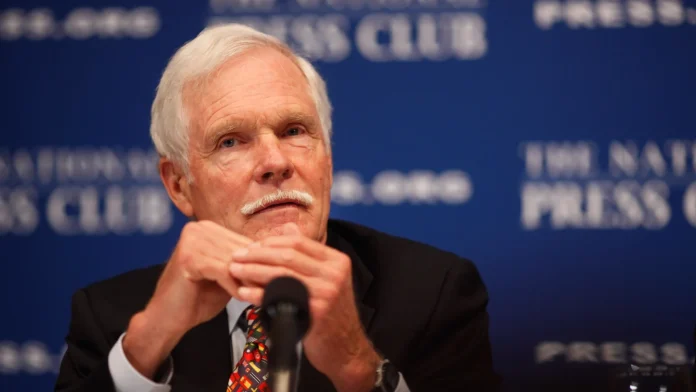
CNN founder Ted Turner, cable news trailblazer, passes away

Cable news pioneer and CNN founder Ted Turner dies
Ted Turner founded CNN in 1980

The Man Who Turned News Into a Round-the-Clock Pulse

Walk into the old CNN Center in downtown Atlanta on a quiet afternoon and you can still imagine the hum: blinking consoles, anchors pacing in front of banks of monitors, producers barking orders that no one in a print newsroom ever dreamt of hearing. That hum—equal parts adrenaline and obsession—was the world Ted Turner built.

Ted Turner, the audacious Southern entrepreneur whose name is woven into the architecture of modern television, has died at 87, his network said. He had been living with Lewy body dementia, a degenerative condition that robs people of memory, movement and the steady thread of the life they once knew.

From an Atlanta UHF station to a global newsroom

Turner’s idea was wildly simple and impossibly bold: why shouldn’t news be available all the time? On 1 June 1980, Cable News Network—CNN—went on air and turned that rhetorical question into a new reality. Where once news arrived in the morning paper or at the evening bulletin, Turner insisted on immediacy: live, continual, relentless.

That gamble matured into a global habit. CNN’s large-screen, live-from-the-scene coverage—most famously during the Gulf War of 1990–91—recast the public’s expectations. Viewers watched the world in real time, and networks around the globe scrambled to catch up. “He changed the tempo of journalism forever,” said Mark Thompson, chairman and CEO of CNN Worldwide. “Ted is the giant on whose shoulders we stand.”

Turner’s media empire didn’t stop at nonstop news. From his small start in a struggling Atlanta television station in the early 1970s—WTCG, a channel that would later become the national powerhouse TBS—he sprouted a constellation of channels that touched nearly every corner of American living rooms: TBS and TNT for entertainment and sports, Turner Classic Movies for cinephiles, Cartoon Network for children and the nostalgic adults who never quite grew out of Saturday morning cartoons. Forbes has estimated his fortune at roughly $2.8 billion.

A complicated, unmistakable figure

He was a native of Cincinnati, born Robert Edward Turner III in November 1938, a Southerner by temperament if not always by birth certificate. He went to military school in Tennessee, studied at Brown University before being expelled, then found himself thrust into a family advertising business after a personal tragedy—his father’s suicide. Turn the wheel hard enough and reinvention followed: radio stations, then that small Atlanta television outlet, then a platform that would speak to the world.

People remembered Turner for his contradictions—a gruff mustache and a public persona that could be larger than life; a love of yachts and a fierce environmental streak; a billionaire with a soft spot for causes. “He’d buy a yacht and then use it to talk about marine conservation,” said a longtime Atlanta resident. “That was Ted: showy and principled, sometimes at the same time.”

Local color and the man behind the myth

In Atlanta, where Turner’s footprint is still visible in the skyline and old studio spaces, his legacy lands in small, human ways. At the Peachtree Café—steeped in the kind of Southern hospitality Turner was born into—a waitress recalled the first time her parents stayed up all night watching live coverage from Baghdad. “We didn’t know what real-time meant until CNN,” she said. “It felt like the world had suddenly moved into our living room.”

Another neighbor remembered Turner’s taste for sports and spectacle. He owned the Atlanta Braves for decades, turning a regional baseball team into a national brand that traveled the country on television and in the imaginations of millions of fans.

Why a 24-hour news cycle matters — and what it costs

It’s easy to look back and call Turner visionary; it’s harder to account for the cultural ripples he set loose. The 24-hour news model accelerated the demand for immediacy in reporting—and with it, a series of trade-offs. Stories no longer waited for reflection; they had to be packaged for the next commercial break. The appetite for speed sometimes outpaced the appetite for verification.

Turner’s innovation also invited competition. Cable gave rise to networks with overt frames and political identities—Fox News and MSNBC being notable examples—each responding to an audience that wanted not only breaking facts but interpretation, affirmation, and at times, outrage. We live with the consequences: an information ecosystem that is faster and far more fragmented.

“Ted invented the rhythm of modern news,” said a journalism professor who studies media ecosystems. “That rhythm has democratized information access—hundreds of millions of households, around the world, now expect news immediately. But the tempo also stresses institutions of verification and shared reality.”

An illness that reminds us of human fragility

Turner’s final public chapter was defined by a disease many know little about. Lewy body dementia is one of the more common forms of progressive dementia after Alzheimer’s. Symptoms can include visual hallucinations, tremors, mobility issues and shifts in attention and alertness. For a man who once thrived in the electric clarity of the newsroom, the slow fog of dementia was a cruel contrast.

“We think of powerful men as invulnerable until the end,” said Dr. Lena Park, a neurologist who works with dementia patients. “Lewy body dementia can be merciless in how quickly it changes someone’s sense of self. Ted Turner’s struggle is a reminder that behind every public persona is a person who ages, fears and grieves.”

Legacy: an empire and its echoes

Ted Turner’s influence is stitched through business, culture and politics. CNN’s model sparked an entire industry. His cable channels reshaped family viewing habits. His philanthropy—he donated millions, and once pledged a $1 billion donation to the United Nations—added texture to an already complex public image.

But beyond the channels and the balance sheet, there’s a cultural inheritance that is harder to quantify: the habit of watching the world as it happens. That habit has informed everything from global awareness to political polarization; from activism that rallies around live footage to markets that react to minute-by-minute developments.

So how should we remember a man like Ted Turner? As a bold entrepreneur who gave us new ways to see? As a provocateur whose innovations reshaped public discourse in ways both constructive and corrosive? Perhaps the answer is both. Human beings are rarely simple—and the most consequential figures are often messy, paradoxical, fiercely generous and occasionally infuriating.

Parting questions

As you scroll past headlines on your phone or queue up a rolling-news channel, ask yourself: what do we want from our news in an age of instant access? Do we hunger for immediacy at the cost of context? How do we honor the inventors of our information age while learning from the strains their creations introduced?

Ted Turner remade the news. He also left us with the obligation to steward that transformation with care. If nothing else, his life is a prompt to think more critically about how we watch the world—and how, in the watching, we shape it.

Israel launches first attack on Beirut since April 16 ceasefire

Israel strikes Beirut for first time since 16 April truce
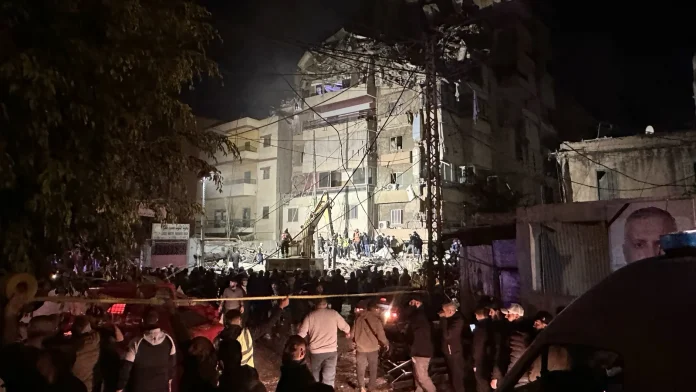
Damage seen at the site of the strike in Beirut this evening

When the Quiet Breaks: Beirut’s Southern Suburbs Return to the Sound of Explosions

For a few fragile weeks the skyline above southern Beirut had been learning to breathe again. The drone of jets that once seemed like a permanent fixture had thinned. Street vendors in the narrow lanes off the main thoroughfare started calling out their prices like they were auditioning for normal life: carton of cigarettes, a handful of za’atar, a steaming cup of cardamom coffee handed over with the quick, practiced smile of someone who had decided to keep living.

Then, in the pre-dawn hush, an explosion stitched open the night. Smoke rose over the suburbs — low, black, stubborn. The ceasefire that had calmed this patchwork of apartment towers, souks and family homes fractured in an instant as Israel carried out what it said was a precision strike targeting an operations leader in the elite Radwan unit of Hezbollah.

What happened — and why it matters

Israeli leaders framed the strike as a tactical move. In a joint announcement, the prime minister and defense minister said the attacker had been a senior figure in the Radwan force, an elite unit known for operations beyond Lebanon’s borders. Local sources and anonymous accounts close to Hezbollah identified the figure as Malek Ballout and said he had been killed, though formal confirmation has not been made public by either side.

Hezbollah answered almost immediately, firing rockets and launching armed drones toward positions in southern Lebanon and Israeli forces across the border. Israel reported two soldiers were injured and said its aircraft intercepted an unmanned aircraft before it crossed into Israeli airspace. In the south, a separate Israeli strike on the town of Zelaya was reported to have killed four civilians, including two women and an elderly man, according to Lebanon’s Health Ministry.

Numbers tell the rest of the story. Since the conflict escalated on 2 March, the Lebanese Health Ministry estimates more than 2,700 people have died across Lebanon. The Israeli military says Hezbollah has launched hundreds of rockets and drones into Israel, and that 17 of its soldiers were killed in southern Lebanon, alongside two civilians in the north. These are not just statistics — each number is a life, a family, a street corner now marked by a missing chair.

Voices from the ground

“I woke to the smell of smoke and the sound of glass,” said Samar Haddad, a teacher in Beirut’s southern suburbs, her voice a mix of fatigue and indignation. “We had just started to let our children play outside again. Now they ask if the lights will go off forever.”

At a makeshift clinic in Tyre, Dr. Farid Nasser, who has been triaging wounded for months, spoke quietly about the human toll. “We are exhausted,” he said. “Beds that were empty when the ceasefire began are filling again. If one strike undoes weeks of careful calm, what does that tell us about the durability of peace here?”

Meanwhile, an Israeli army spokesperson emphasized the security rationale. “Our responsibility is to protect civilians in the north,” the official said. “We will act on credible intelligence to neutralize threats.” On the other side, a Hezbollah field commander, speaking to reporters, described the strike as “an invasion of Beirut” and pledged to respond to any “aggression in kind.”

Ceasefire, diplomacy, and the fragile architecture of peace

This incident arrives against a complex backdrop. A tacit truce between Israel and Hezbollah — supported, at least in part, by broader understandings between the United States and Iran — had paused strikes on Beirut and many populated areas. That détente has been painstaking and partial: Israeli forces remain south of the Litani River, and exchanges of fire and targeted attacks have continued in southern Lebanon.

Washington has been quietly shepherding talks between Israeli and Lebanese diplomats. Last month the two ambassadors met in the U.S., an unprecedented contact in decades that many see as a pragmatic channel for preventing wider escalation. Yet these conversations have been low-level and contested; Hezbollah objects strongly to any engagement that sidelines its influence in Lebanon’s defense calculus.

Lebanese Prime Minister Nawaf Salam has been careful to draw a line between “normalization” and “peace.” “We are not seeking normalization with Israel,” he told reporters, “but we are pursuing a practical security arrangement that guarantees the withdrawal of troops and the restoration of Lebanese sovereignty.” President Joseph Aoun has echoed the sentiment: Lebanon wants a binding security framework and a halt to Israeli operations before any high-level meeting with Israel’s leadership.

Local politics, regional rivalries

Lebanon’s politics remain a mosaic of competing loyalties. Hezbollah — the armed Shia movement backed by Iran — dominates parts of the south and Beirut’s suburbs. Its presence complicates Beirut’s relations with its allies and opponents alike. The Lebanese government, fragile and coalitional, has opened channels with Israel out of necessity, a move that accentuates rifts at home. For many Lebanese, disarmament of non-state actors under state control is the only path toward sustainable peace. For others, Hezbollah is a guarantor of resistance and a deterrent against perceived threats.

“Disarmament sounds simple on paper,” observed Dr. Samir Karam, a Beirut-based security analyst. “In practice it involves restructuring security institutions, building trust, and addressing the political demands that drive armed groups. That’s a generational task, not a press release.”

On the margins: villages, fishermen, and the geography of fear

The Israeli military also called on residents of several villages north of the Litani River to evacuate — a move that could intensify displacement across an already strained region. For generations, this crescent of southern Lebanon has supported citrus groves, olive orchards and a small fleet of fishing boats out of Tyre and Sidon. Now, fields are trampled by boots and boats sit idle in harbors where men who once hauled nets in the morning sun ponder whether to leave their homes for the fourth time.

“My father never wanted to leave the sea,” said Karim Mansour, a fisherman who has weathered war before. “But if the sirens keep coming, what choice do I have? The fish will still be there. Will I?”

What comes next?

The immediate future is uncertain. Diplomats in Washington say a broader U.S.-Iran understanding — reportedly moving toward a pause in direct confrontations — helped underpin the Lebanon ceasefire. Yet the strike in Beirut signals how quickly local actions can rearrange fragile regional equilibriums.

So ask yourself: how do you measure peace? Is it the absence of bombs, or the presence of institutions that prevent violence from recurring? Across southern Beirut there is a hunger for both answers — and the impatience that often accompanies them.

In the smoky light of another morning, life continues. Children chalk hopscotch grids in alleys between concrete blocks. Tea shops open. But in conversations in the markets and in the corridors of power alike, there is a recurring, nervous question: will diplomacy hold, or will a single strike pull this region back into a more brutal chapter?

Whatever the answer, one truth stands: the people on the ground — the teachers, the doctors, the fishermen and the shopkeepers — will bear the immediate cost. For them, every ceasefire is a promise, and every explosion a reminder of how fragile those promises are.

Soomaaliya oo laga furayo Xafiiska Sare ee Xuquuqul Insaanka QM (OHCHR).

May 06(Jowhar) Dowladda Federaalka Soomaaliya oo ku guuleysatay in Soomaaliya markii ugu horeyso laga furo Xafiiska Sare ee Xuquuqul Insaanka QM (OHCHR).

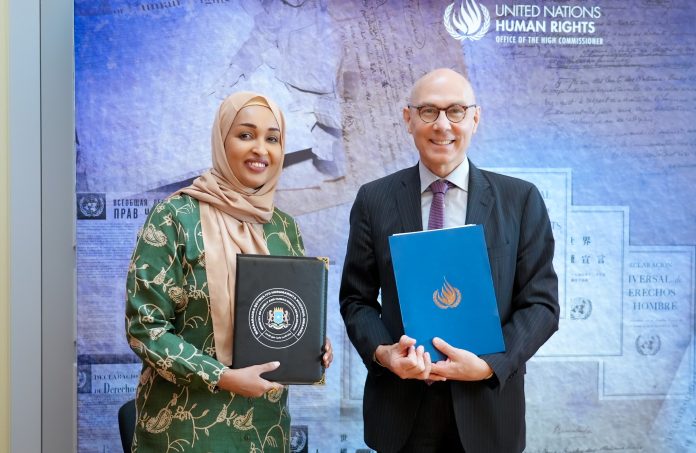
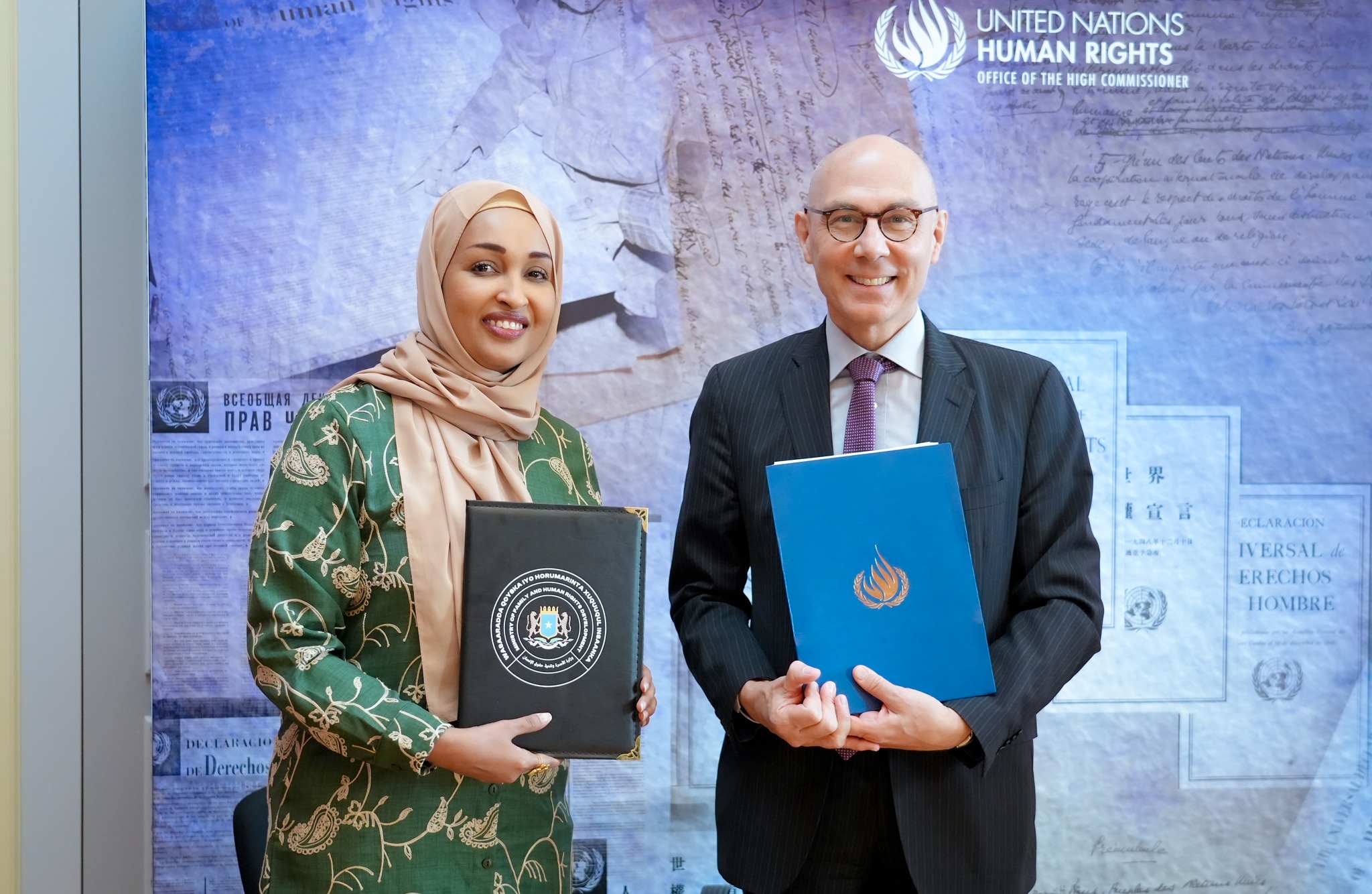
Dowladda Federaalka Soomaaliya oo ay meteleyso Wasiirka Wasaaradda Qoyska iyo Hormarinta Xuquuqul Insaanka XFS Amb Khadiija Maxamed Al-Makhzoumi iyo Xafiiska Wakiilka Sare ee Qaramada Midoobay ee Xuquuqda Aadanaha ayaa maanta oo Arbaco ah magaalada Geneva ee dalka Switzerland ku kala saxiixday Heshiis lagu Hirgelinayo Qaraarkii Golaha Xuquuqul Insaanka QM Lambarkiisu ahaa A/HRC/RES/60/28 kaasoo suntanaa lasoo wareegidii Maareynta Madaxa bannaan ee Xuquuqul Insaanka Soomaaliya, qaraarkaas oo tilmaamayey iskaashiga iyo taageerrada farsamo ee ay u baahan tahay Soomaaliya si ay u hormariso Xuquuqul Insaanka islamarkaana u maareeyso waajibaadkeeda Qaran ee Xuquuqul Insaanka iyo midka caalamiga ah.

Tani ay waxa ay ka dhigan tahay iney Dowladda Federaalka Soomaaliya markale fagaarayaasha Caalamka kasoo hoysay guul muhiim ah ayadoo dowladdu ay dadaal xooggan u gashay in markii ugu horeysay taariikhda ay QM Soomaaliya ka furato xafiiska Sare ee Xuquuqul Insaanka QM(OHCHR) kaasi oo dhowaan laga furi doono magaalada Muqdisho , tani oo noqoneysa in markii ugu horeysay taariikhda QM ay u fuliso heshiis noociisa ah mudo taasi oo ku timid dadaalka iyo ka go’naashaha Wasaaradda Qoyska iyo Hormarinta Xuquuqul Insaanka.

Soomaaliya waxaa heshiiskan u saxiixay Wasiirka Wasaaradda Qoyska iyo Hormarinta Xuquuqul Insaanka XFS Amb Khadiija Maxamed Al-Makhzoumi ayadoo dhanka QM uu u saxiixay Volker Türk Madaxa Xafiiska Sare QM ee Xuquuqul Insaanka, waxaana heshiiskan uu yahay mid Soomaaliya muhiimad gaar ah u leh maadaama dalkeenu uu ku jiro marxalad soo kabasho ah.

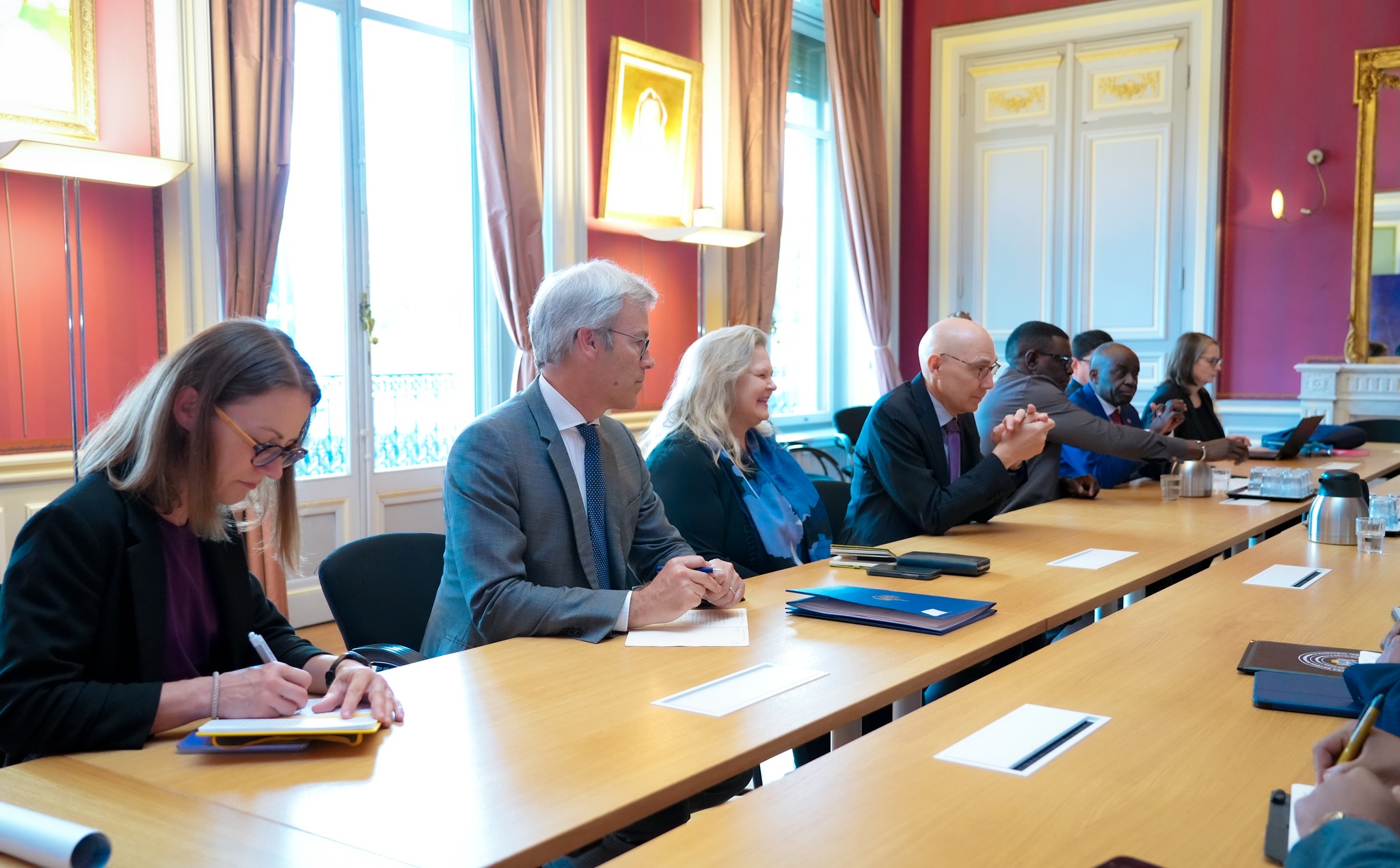
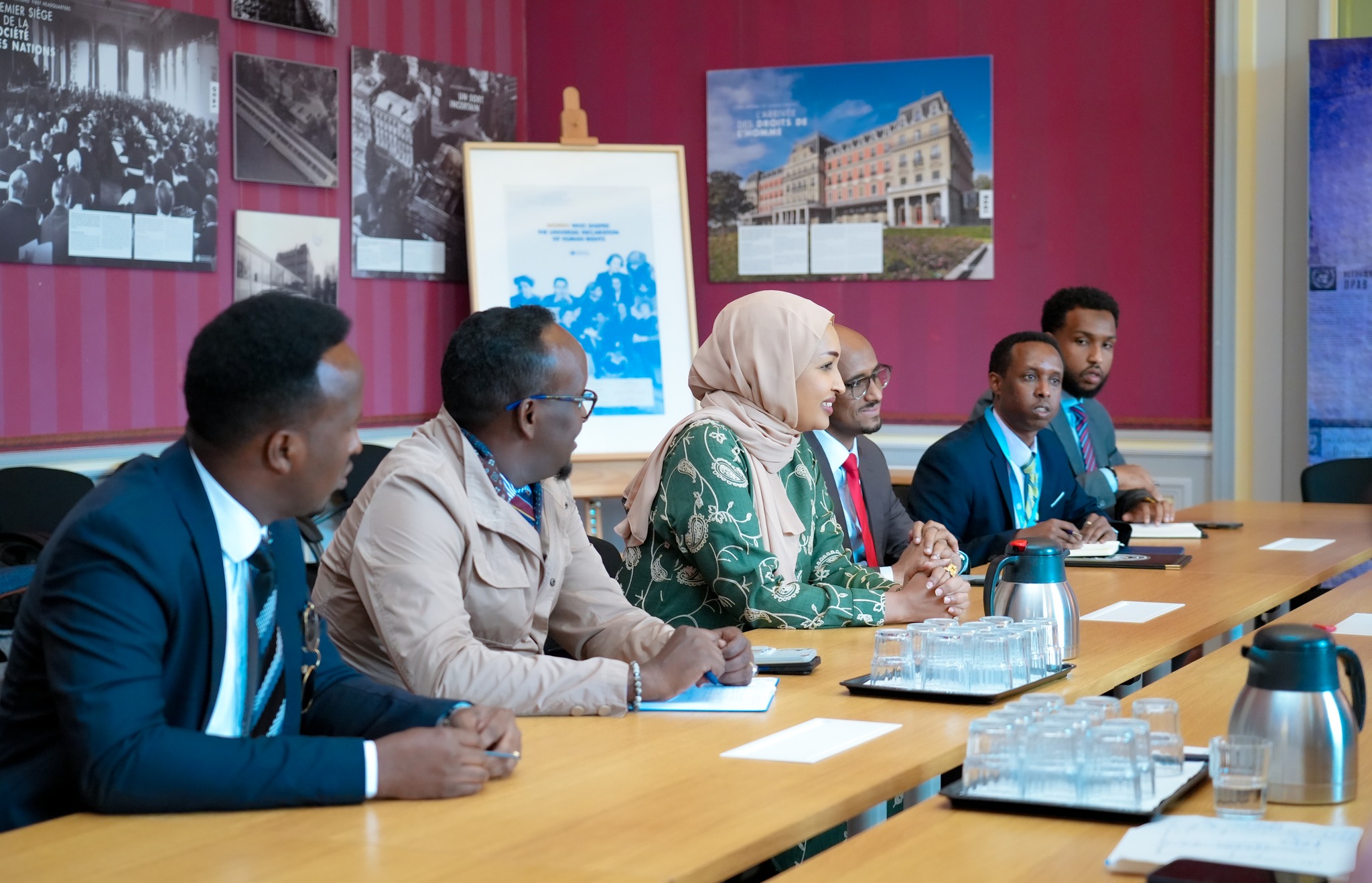
Magaalada Geneva ee dalka Switzerland waxaa ku sugan wafdi sare oo ka socda Dowladda Federaalka Soomaaliya oo ay hogaamineyso Wasiirka Wasaaradda Qoyska iyo Hormarinta Xuquuqul Insaanka XFS Amb Khadiija Maxamed A-Makhzoumi ayadoo wafdigaasi ay ka mid yihiin Agaasimaha Guud ee Wasaaradda Maxamed Bashiir Cumar, la taliyeyaal iyo quburrada Wasaaradda , waxaana guushani ay qeyb ka tahay dadaallada ay Dowladda Federaalka Soomaaliya ku bixisay sanad iyo barkii lasoo dhaafay hormarinta Xuquuqul Insaanka iyo maareyntiisa, ayadoo ka sokoow guushii weyneyd ee Octobar ay Soomaaliya ka gaartay Shirkii Xuquuqul Insaanka QM ee Geneva iyo dhismihii Guddiga Madaxa bannaan ee Xuquuqul Insaanka Qaranka ay tanitahay guul kale oo ballaaran.

Teenager detained after Brazil school shooting leaves two dead

Teen arrested after two killed in Brazil school shooting
Students of Sao Jose Institute school took cover on the roof as the incident occurred

The Day the Playground Fell Silent: A School Shooting in the Heart of the Amazon

Rio Branco wakes slowly. The sun rises hot and orange over the banks of the Acre River, turning the city’s tile roofs and patches of mangrove into a shimmer. On ordinary mornings the air smells of strong coffee and frying manioc, and children walk to school in crisp uniforms, their backpacks bumping against each other like a chorus of small hearts.

On this morning, that rhythm was shattered.

At the São José Institute, a school tucked into a working-class neighborhood not far from the downtown, panic erupted when gunfire rang out inside the compound. Two school staff members were killed; two others were wounded, including a student. The local government said a 13-year-old boy was arrested at the scene. The weapon used, officials say, belonged to the child’s legal guardian, who has also been detained.

What Happened

There are details that can be recited with clinical precision: the names, the timestamps, the arrest. But those facts never carry the full weight of what it is to be in a place where children should be safe and suddenly are not.

A witness working at a hotel adjacent to the school described scenes that read like fragments from a nightmare. “The wall is six metres high,” he recalled, voice still flat with shock. “Only one person managed to jump over and take refuge here in the hotel. The others were left on the school roof trying to escape. I heard the gunshots and a lot of screaming.”

Photos and video circulating on local channels showed stretcher-bound survivors, teachers embracing each other in the drizzle of emergency lights, parents sobbing outside the gates. The governor’s office announced that classes across the state would be suspended for three days and that psychological support teams were mobilized to help students and staff cope.

Arrests and an Ongoing Investigation

Authorities say the child suspect was taken into custody without being harmed, and investigations are underway to determine his relationship to the school: whether he was a current pupil, a former student, or an outsider. The legal guardian—whose firearm allegedly provided the means—was also detained as police seek to unravel how the weapon came to be used.

“We are treating this as a criminal case and a social tragedy,” the state said in a statement, offering condolences to families and education professionals. “We will investigate thoroughly to understand the chain of responsibility.”

Voices from the Ground

In the hours after the attack, the community in Rio Branco gathered like a storm of grief and questions. At a local clinic, a teacher pressed her hands together and tried to breathe through tears. “They are children,” she said. “We trust them here. I keep thinking about lunch break, about how quiet it was—then suddenly the schoolyard was filled with running feet.”

A mother waiting outside the hospital clutched a small jersey. “My daughter called me and said, ‘Mama, we’re hiding on the roof,’” she said. “I ran. As a parent you never think—never—for a moment that something like this could happen in our little city.”

An emergency-room volunteer described the arrival of bleeding children as one of the hardest things she’d seen in years working in a region already used to scarcity. “We are used to handling injuries from traffic or accidents, but this… this changes you,” she said. “The quiet after the sirens was the worst part.”

Wider Patterns: Why This Feels Like It Could Happen Anywhere

Brazil, despite its dazzling cultural life and deep regional diversity, has been grappling with a troubling rise in school attacks. The country has known the horror of mass violence before—the 2011 Realengo shooting in Rio de Janeiro and the 2019 Suzano massacre in São Paulo remain seared into the national memory—but every new episode forces a fresh reckoning with how communities protect their children.

Experts point to a web of contributing factors: easier access to firearms in some households, gaps in mental health support for adolescents, social media dynamics that can amplify grievances, and the broader social inequality and marginalization that leaves young people without reliable anchors.

“We’re seeing the convergence of several risk factors,” said Ana Prado, a psychologist specializing in youth trauma in the Amazon region. “Adolescents with untreated mental health needs, firearms kept unsecured at home, and a culture that sometimes fails to spot warning signs early—the result is tragic and preventable.”

Facts to Keep in Mind

  • Authorities have confirmed two deaths and multiple injured in the São José Institute shooting.
  • A 13-year-old suspect was detained; the legal guardian who owned the alleged weapon is also under arrest.
  • State officials suspended classes for three days across Acre and deployed psychological support teams.
  • Brazil has experienced a number of school attacks in recent years, prompting national debates about safety, mental health, and gun access.

Local Color: Rio Branco Between the Rivers

Rio Branco sits in Brazil’s westernmost state, a place where the forest and town meet, where rubber-tapper history and the memory of Chico Mendes mingle with the hum of motorcycle taxis. People here talk about the weather, the river’s moods, and the best place for a warm tapioca. They also talk about community—the neighbor who watches your house when you are away, the aunt who helps with the children, the football team that plays on a field of rutted red earth.

It is in that communal fabric that the shock is felt most keenly. “When violence comes here, it cuts differently,” said João, a local shopkeeper who kept his store open late, turning on the TV to catch updates. “We are used to being overlooked by federal policy. But this—this screams for attention.”

What Comes Next: Questions and Choices

After the first wave of emergency response—police, ambulances, counselors—communities must ask hard questions. How can schools be made physically safer without turning them into fortresses? How do we ensure firearms are stored responsibly? Where will adolescents find the emotional and psychological support they need?

Policymakers will likely revisit debates about gun regulation, youth services, and funding for school safety programs. But change also depends on quieter, slower work: better mental health screenings in schools, community-based outreach, and training for teachers and families to recognize warning signs.

How do we balance the need for security with the need for a warm, open learning environment? What responsibilities do guardians hold when they keep dangerous items in the home? And how do communities heal after such a rupture?

Resources and Support (What the State Is Doing)

  • Three-day statewide suspension of classes to allow investigations and initial psychological support.
  • Deployment of counseling teams to provide trauma care to students, staff, and families.
  • Law enforcement investigation to determine the circumstances of the attack and the chain of custody for the weapon.

Closing: The Long, Tender Work of Recovery

There are images that will not leave Rio Branco for a long time: parents pressing foreheads to gates, a teacher’s uniform torn and stained, students whispering in the corners of their homes. There are also small acts of repair—the volunteer bringing coffee to exhausted counselors, neighbors offering spare rooms to families who traveled to the city in panic, a football coach organizing an impromptu practice to give children something steady to hold onto.

Violence like this forces a community to choose its story: one of despair, or one of determined repair. “We are going to rebuild,” said a school administrator, voice hoarse but steady. “Not just the walls, but the trust.”

As you read this, ask yourself: what would you do if your child’s school was suddenly a crime scene? What policies would you demand from leaders? And perhaps most urgently, how can societies better see and support their young people before tragedy strikes?

Zelensky warns Russia is choosing war as ceasefires collapse

Zelensky says Russia choosing war as ceasefires falter
Ukraine had announced a proposal for an open-ended ceasefire starting at midnight local time

When Parades Meet Missiles: A Weekend That Refused to Pause

The morning air in eastern Ukraine smelled of spring and smoke — a strange, terrible mix that has become common in a country where seasons keep changing but the war never seems to. In towns like Kramatorsk and Zaporizhzhia, parents still wake their children for school. Firefighters still pull up to burning buildings. And in Moscow, the streets were being swept and flags hoisted for the ritual that has, for many Russians, become the heartbeat of May: Victory Day.

Then came the message from Kyiv: a unilateral ceasefire, a plea for a day of silence. President Volodymyr Zelensky framed it as a human offer — an attempt to pause killing while the Kremlin prepared its pageant on Red Square. The response from the other side was bluntly public and privately predictable: Russia pushed back, launching fresh strikes across Ukraine that same night and into the morning.

The choices that sleep in headlines

“They chose to blow up a chance to save lives,” Zelensky wrote, his words traveling the same channels as the explosions. “A full-scale war and public celebrations are incompatible.” It was a moral prod, aimed at the world as much as at Moscow. It was also, perhaps, a test: would the rituals of commemoration assert themselves above the obligations of war?

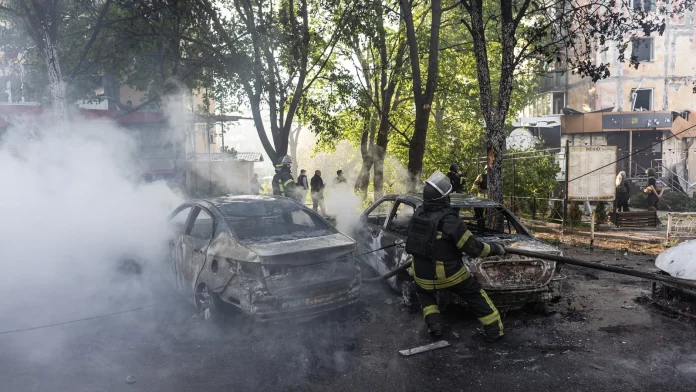
Russia’s answer was to keep firing. Ukrainian authorities reported more than 100 drones lashed at the east and south overnight, and local officials counted the human toll: at least one person dead in the latest strikes, a security guard killed at a kindergarten in Sumy, dozens more wounded, and, in the recent 24 hours, nearly 28 people killed in what Kyiv called some of the deadliest bombardments in weeks. Moscow, for its part, said it intercepted 53 Ukrainian drones during a night of air-defence claims that were, according to the Russians, fewer than previous nights.

On the ground: voices between air raid sirens

At a frontline outpost, a Ukrainian officer — speaking on condition of anonymity, as many still must — described a familiar calculus: “The enemy continued infantry raids and attempts to storm our positions. Since they did not comply with the ceasefire, we responded in kind and countered all provocations.” It is language that has become ritual too, measured and cold, but behind it are people who cook, sleep in frozen dugouts, and write letters to loved ones under the thud of artillery.

Another commander summed it up as plainly as anyone could: “An eye for an eye, a tooth for a tooth.” That stoic answer is resistance turned into policy, practiced by units whose days are counted by patrol rotations and ammunition runs. Both commanders emphasized that combat intensity remained largely unchanged, even as diplomats traded barbs in social media posts.

In Zaporizhzhia — a city of tram lines and riverfront cafes — a strike on the center left twelve dead. “There was a bus stop where people used to wait for the noon tram,” said Kateryna, a shopkeeper who watched from behind rolled-down metal shutters. “Now there is a hole in the pavement and someone’s shoes scattered by the blast. You can’t ignore what happens when your city is reduced to coordinates on a map.” Her voice caught on the last line; grief tends to do that.

Beyond borders: drones and a new geography of vulnerability

What alarms people across the region is not only the human toll but the geography of the attacks — drones buzzing hundreds of miles into Russia, strikes on Cheboksary on the Volga, claims of casualties in Crimea, and Russian strikes deep into Ukrainian cities. This is no longer purely a front-line war. Urban centers, logistical hubs, symbolic squares — all have become part of the conflict’s shifting map.

For Russians preparing to march on May 9, that has bred unease. For the first time in nearly two decades, officials announced military hardware would be removed from the parade procession — a symbolic concession interpreted by some as caution, by others as a sign of weakness. City-wide internet shutdowns, intermittent and opaque, increased the sense of nervousness: when your phone goes dead in a crisis, you feel both isolated and strangely exposed.

Numbers that don’t tell the whole story

  • Ukrainian officials reported more than 100 drones attacking across eastern and southern fronts overnight.
  • Russia’s defence ministry said it downed 53 Ukrainian drones during the night.
  • At least 28 people were reported killed in one 24-hour period, including 12 in central Zaporizhzhia.
  • Air raids and ground assaults continue despite offers of a temporary ceasefire.

Numbers help, but they also flatten. They don’t show the toddler whose bedtime routine is interrupted by sirens, the baker who closes his shop and never reopens, or the grandmother who keeps a faded photograph of relatives who never came back from the front.

Memory, theater, and the politics of commemoration

Victory Day is not merely a date on the calendar in Russia; it is a political machine and a source of collective identity. Parades, ribbons, and medals fold history into the present. For Ukrainians, the same date evokes complex memories: of sacrifice, of Soviet legacies, and of a desire to reclaim their own narrative of the past. That collision of commemorative rhythms amid an active war makes any ceasefire proposal a fraught diplomatic instrument.

“They fear drones over Red Square,” Zelensky said, reproaching the Kremlin for staging a spectacle while missiles still fell on Ukraine. Whether it’s bravado or an admission of vulnerability depends on which spectator you are — participant or bystander.

What this weekend tells us about the future of conflict

There are larger lessons here, uncomfortable ones about modern warfare. Conflicts are no longer bound by trenches and fronts. Technology compresses distance, making cities and ceremonial squares alike vulnerable. Propaganda and ritual continue to matter — they shape morale, public opinion, and the decisions of leaders. And civilians remain the most persistent variables, their lives and routines altered in ways that statistics struggle to capture.

So what should we take away? That peace proposals must reckon with ritual and symbolism, that diplomacy cannot ignore the psychological theaters of war, and that ordinary people, caught between commemoration and carnage, deserve more than slogans. They deserve safe streets, predictable nights, and a future where children’s memories are not of explosions but of school plays and summer festivals.

Will the world ever learn to separate the pomp of remembrance from the machinery of war? Or will parades always risk being the day the shooting starts, or stops — briefly, unpredictably, painfully? The answers won’t come from statements alone. They will come from ceasefires that hold, from accountability that is real, and from leaders who value the lives behind the headlines as much as the images before cameras.

Until then, people like Kateryna sweep their doorsteps and wait. They make tea at dusk. They whisper names into the night. And the rest of us watch, listen, and are asked — quietly, insistently — what we are willing to do about it.

Mucaaradka oo kudhawaaqay banaanbax ka dhacaya Muqdisho 10ka bishan

Screenshot

May 06(Jowhar) Mucaaridka Soomaaliyeed ayaa maanta ku dhawaaqay banaanbax ballaaran oo looga soo horjeedo hoggaaminta waqtigiisu gabaabsiga yahay ee Madaxweyne Xasan Sheekh Maxamuud.

Bondi Beach mass shooting suspect hit with 19 additional charges

Bondi Beach mass shooting accused faces 19 extra charges
Fifteen people were killed in Australia's deadliest mass shooting for 30 years

A Celebration That Became a Line in the Sand

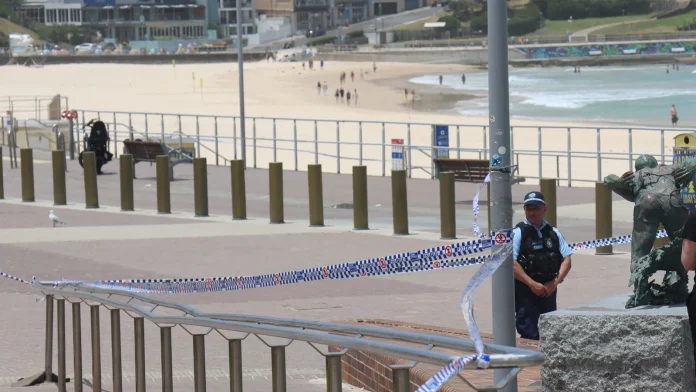
It was meant to be a simple, joyful scene: families, menorahs, the casual chatter of strangers warmed by a December sun and the salt-slick air of Bondi Beach. Children chased waves. Someone hammered latkes into the smell of takeout coffee. Hanukkah lights glittered against a horizon the color of blue glass.

Then the day cracked open. Gunshots — sudden, metallic, impossible — turned the laughter into chaos. Fifteen people lost their lives. Scores were wounded. The coastline, that famously open and easy place, felt suddenly small, trashed with grief and disbelief.

For a country that remembers Port Arthur and the sweeping reforms that followed, this felt like a rupture all over again: Australia’s deadliest mass shooting in three decades, and an act that has set off a national debate about antisemitism, security and how people can be radicalized in plain sight.

The Man Accused and the New Wave of Charges

Authorities say the alleged gunman, 24-year-old Naveed Akram, opened fire during the Hanukkah gathering. He has already been charged with dozens of counts — including 15 murders and terrorism — and court records now show a fresh raft of allegations: 19 additional charges ranging from multiple counts of shooting with intent to murder, to wounding with intent, and discharging a firearm to resist arrest.

Akram remains in a high-security prison and has not yet entered a plea. His father, Sajid Akram, 50, who is accused of being a co-conspirator, was shot dead by police during the attack. Police say the two had prepared carefully: firearms training in a rural part of New South Wales, videos posted months earlier showing them firing shotguns and moving in “tactical” ways, and an October recording denouncing “Zionists” in front of a flag linked to the so-called Islamic State.

“This was not the act of a moment,” said the inquiry’s chair in public hearings, Justice Virginia Bell. “It was planned. And it exposes a frightening currency of hatred that can be converted into violence in a very short space of time.”

A Community Asking How and Why

At the synagogue halls and beachside cafes of Sydney, people are scraping together explanations and consolation. A community volunteer who helped on the first night described her fury the way people do after a storm: “We try to make sense with light. That night they came for our light.”

A local lifeguard who watched the emergency crews arrive said, “Bondi is used to urgent moments — rescues, rip currents. But this felt different. There was a cruelty to it. Families, babies, old people… people who were simply living a quiet life.”

Officials have tried to answer procedural questions. Australia’s domestic intelligence agency had flagged Akram in 2019 but later assessed that he did not pose an imminent threat. The file now prompts an urgent, uncomfortable inquiry into how early warning systems are calibrated and why some flagged individuals slip off the radar.

What the Inquiry Has Shown So Far

  • Authorities allege months of planning, including weapons training and online radical statements.
  • Police released images suggesting tactical rehearsal with shotguns in regional areas.
  • Public hearings have been convened to examine both the immediate law-enforcement response and broader social factors.

Antisemitism in an International Mirror

What happened at Bondi did not feel isolated. In the months and years around this tragedy, community leaders and researchers had been warning of a spike in antisemitic incidents across many Western countries. Events in the Middle East — and the furious, often dehumanizing discussions that follow — have a way of translating into targeted hostility at home.

“We’re living through a contagion of hate,” said a sociologist who studies radicalization. “Conflict abroad can be a spark; online ecosystems are the accelerant. People who harbour animus find each other, amplify one another, and sometimes learn how to turn words into weaponry.”

For Jewish Australians, many of whom have deep roots in the nation’s multicultural fabric, the attack was a blow to a sense of belonging. “We’ve always considered Australia safe,” one elderly congregant said through tears. “Now our kids ask if they can still light candles at school.”

Policy Ripples: Guns, Buybacks, and Broken Consensus

In the immediate aftermath, Canberra vowed to act. New gun-control measures were announced, including a proposed nationwide buyback scheme meant to remove dangerous weapons from circulation. Yet moving from pledge to practice has proved difficult: the buyback has stalled as federal and state governments negotiate the details and politics of compliance.

Australia’s memory of Port Arthur helped create one of the world’s most effective post-shooting reforms. But this new moment highlights how policy, politics and federalism can slow even urgent change. “We can legislate,” remarked a public-safety expert, “but we also need the trust of local governments and communities to make it work.”

Questions for a Nation

There are thorny, unavoidable questions now: How do we detect and prevent radicalization without casting a net so wide it ensnares ordinary lives? How do we balance civil liberties with the need for surveillance that actually protects people? And how do societies heal when a targeted act of violence shatters everyday spaces where people gather to celebrate faith and family?

“This has to be a moment of reflection, not just reaction,” said a community organizer. “We need better social supports, better online moderation, and a national conversation about belonging.”

Small Acts, Big Meaning

At a candlelit vigil a week after the shooting, a young volunteer handed out paper stars with names of the victims. People stood barefoot on the sand, the surf whispering like a parent’s hush as strangers comforted strangers.

“When hate tries to make us small, we have to keep making light,” whispered an elderly woman, as the menorahs shimmered in the wind. Her words felt like a command and a prayer.

As the inquiry continues and court proceedings unfold, Australia — and the global community watching — will be forced to confront the harder truths that violence exposes: about identity, isolation, and the fragile architecture of safety. Will policy catch up? Will communities learn to notice and intervene earlier? Will we find ways to keep places like Bondi open and warm, without turning them into fortified zones?

These are not just Australian questions. They touch every society wrestling with the same shadows: polarized politics, online radicalization, and the ease with which anger becomes action. How will we answer them, together?

Golaha Mustaqbalka oo ka dooday laba nooc doorasho ay diyaariyeen

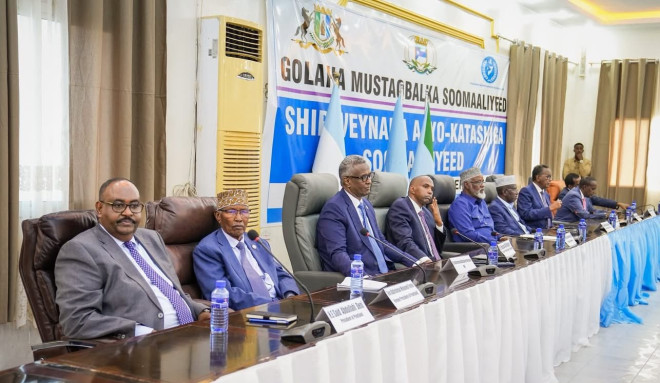
May 06(Jowhar) Golaha Mustaqbalka Soomaaliya ayaa dhexdooda ka doodaya 2 hanaan/cayn doorasho oo ay alifeen, Taas oo ay doonayaan in ay hadii ay isku raacaan ku bandhigaan shirarka dhexdhexaadin ee u dhaxeyn doona Villa Somalia iyo golaha Mustaqbalka, waxaana 2da habraac, sida aan horey u sheegnay ay leeyihiin 2 guddi doorasho, deegaan doorashooyin badan, Ergooyin cod dhiibasho ilaa Diwaangalin furan “Mid kastaaba muuqaalka ayuu uga e’eg yahay doorasho Dad-ban oo wax lagu kordhiyey uun”.

Four dead and fuel sales suspended in Crimea

Four Killed as Crimea Halts Fuel Sales Amid Escalating Tensions

0
A sweeping Ukrainian strike on Russian-occupied Crimea left four people dead, dozens wounded and fuel sales abruptly halted on Saturday, underscoring the growing reach...
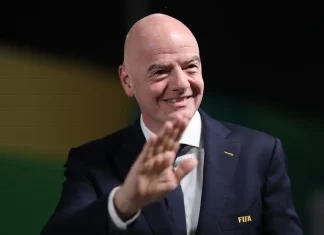
FIFA draws criticism as Infantino clocks up air miles

FIFA faces backlash as Infantino racks up frequent-flight miles

0
From Mexico to Canada to the US, FIFA president Gianni Infantino is racing from stadium to stadium at this World Cup — and critics...
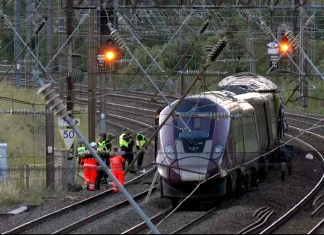
Driver killed in UK train collision, nine critical

Train collision in the UK kills driver, leaves nine in critical condition

0
Hospitals across the region were still treating dozens of passengers on Monday after two southbound trains bound for London crashed on the same stretch...
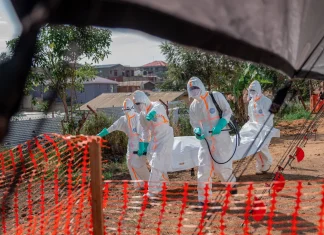
Congo says confirmed Ebola cases rise to 956

Congo Reports Confirmed Ebola Case Count Climbs to 956

0
Ebola’s toll in the Democratic Republic of Congo is climbing again, with health authorities reporting 956 confirmed cases and 247 deaths. The latest figures mark...
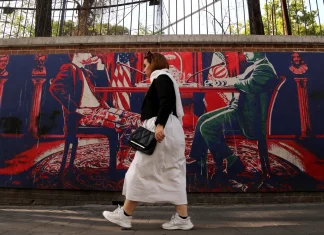
US and Iran set for new talks as Tehran closes strait

US and Iran to hold fresh talks as Tehran shuts key strait

0
With the Middle East conflict again threatening to spill into global markets, a fresh round of negotiations is set to get under way in...