

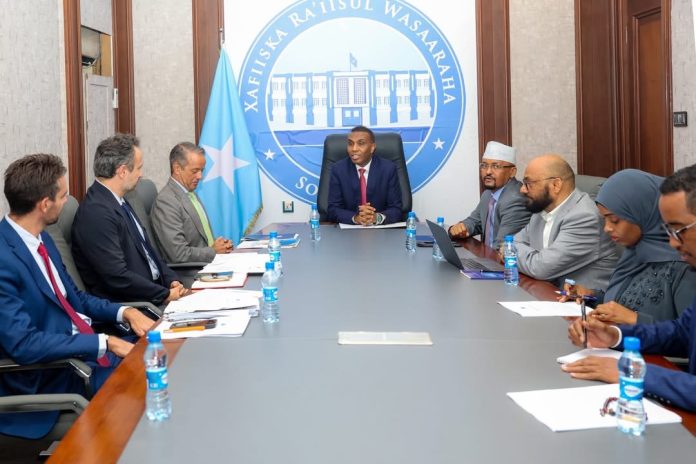
May 18(Jowhar) Ra’iisul Wasaaraha Xukuumadda Jamhuuriyadda Federaalka Soomaaliya Mudane Xamze Cabdi Barre, ayaa xafiiskiisa ku qaabilay danjiraha dowladda Talyaaniga u fadhiya Soomaaliya, Mudane Daccò Coppi, waxaana ay ka wada hadleen xoojinta xiriirka iyo iskaashiga ka dhexeeya Soomaaliya iyo Talyaaniga.
Video captures US fighter jets colliding mid-air during flight demonstration
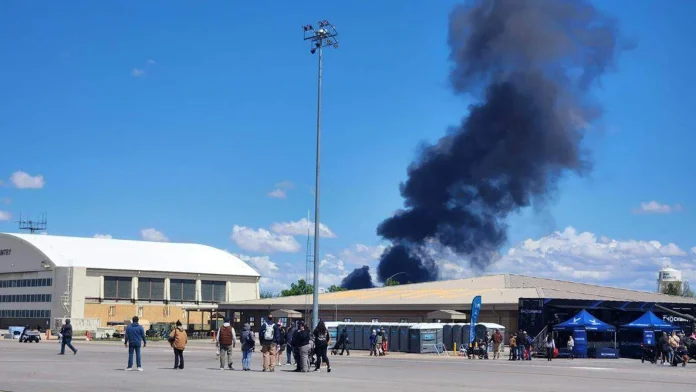
Skyfire and Silence: What Happened Above Mountain Home During the Gunfighter Skies Air Show
On a bright Idaho afternoon that had promised the familiar thrill of jets carving the sky, the crowd at Mountain Home’s Gunfighter Skies Air Show watched a dramatic tableau unfold—only this time the story ended with ejection seats and an urgent hush rather than applause.
About three kilometres from Mountain Home Air Force Base, two E/A-18G Growler jets—sleek, thunderous machines built for electronic warfare—collided in mid-air while performing a demonstration. Miraculously, all four crew members escaped the wreckage by ejecting and were reported to have landed safely. The US Navy confirmed the aircraft were assigned to Electronic Attack Squadron 129, based on Whidbey Island in Washington.
The moment the sky changed
“I was standing by the food trucks when the formation came over,” said Jenna Morales, a local teacher who has attended air shows for years. “It sounded like a bass drum, then a second later something went wrong—two loud bangs and then these orange streaks. People froze. For a few seconds nobody moved.”
That freeze, that held breath of a gathered crowd, is the sharpest image from eyewitnesses: pilots ejecting into open air, parachutes blossoming against Idaho’s high blue, emergency vehicles racing toward a scene some had only moments earlier applauded. Organizers called the incident a priority for emergency response teams, and portions of State Highway 167—near where debris fell—were closed for several days as investigators combed the area.
Official response and the investigation
Commander Amelia Umayam, a spokesperson for Naval Air Forces, U.S. Pacific Fleet, confirmed the collision and said the four crew members “ejected safely.” She added that the incident is under investigation and that more information will be released as it becomes available. Military investigations into aviation accidents typically involve squadron-level safety officers, higher naval safety centers, and sometimes interservice coordination; findings can take weeks or months to emerge.
“The priority right now is ensuring everyone is safe and that the area is secured so investigators can do their work,” a base official told local media, underscoring the careful choreography that follows any mishap involving military hardware and public spaces.
Why the Growler matters—and what it does
The E/A-18G Growler is not a standard fighter; it’s an electronic attack aircraft, a technological workhorse whose job is to deny an enemy the use of their radar and communications. A typical Growler team consists of two crew members: a pilot and a naval flight officer. The plane’s demonstrations at air shows are meant to showcase precision flying and rapid-response capabilities, a reminder of both spectacle and function.
Introduced into service in the late 2000s, the Growler represents a shift in modern aerial warfare—less about sheer speed and more about controlling the electromagnetic spectrum. That makes its appearance at a public demonstration a vivid lesson in contemporary military power. When things go wrong, however, the risks become painfully visible to those below.
Local color: Mountain Home on a day like this
Mountain Home itself is a small city with deep ties to the base—cafés and hardware stores that greet airmen and their families like old friends, a rhythm set by deployments and training schedules. For many residents, the Gunfighter Skies show was more than entertainment; it was a reunion, a reminder of the relationship between the town and the Air Force.
“We come down to support the base and to watch these pilots show what they do,” said Tom Rivera, who runs a barber shop a couple of blocks from Highway 167. “You don’t expect to see them falling out of the sky.”
The 2024 event marked the first Gunfighter Skies Air Show in eight years. The last time the festival darkened the calendar—in 2018—the community also felt the sting of tragedy: a hang glider pilot was killed in a crash during the show. Those memories linger when the roar returns.
Safety, spectacle, and the calculus of risk
Air shows are spectacular by design. They draw tens of thousands of people to fields and grandstands, fuel tourism dollars for host towns, and serve as public diplomacy for the armed forces. In the U.S., military aerial demonstrations follow rigorous safety protocols and rehearsals; yet the combination of human judgment, mechanical complexity, and aerobatic daring means accidents, while rare, are part of the history.
“Pilots train for years to handle split-second decisions,” said a retired naval aviator who asked not to be named. “But when you put two high-performance aircraft in close proximity during a maneuver, even a small miscalculation or mechanical failure can produce catastrophic outcomes. The fact that these crews survived their ejections is a testament to both equipment and training.”
Data on airshow safety show overall improvement over decades, but periodic incidents—some fatal—keep safety practices under continuous review. Each accident sets off an intense, methodical inquiry aimed at understanding human factors, systems failures, and environmental conditions that contributed to the event.
What the investigation will likely examine
- Flight data and cockpit voice recorders (where available) for both aircraft
- Maintenance logs and recent mechanical issues
- Weather conditions and visibility at the time of the demonstration
- Pilot training, rehearsals, and communications between aircraft
- Any potential third-party or ground-based factors
After the smoke clears: community and reflection
The physical cleanup and formal inquiries will take time. The stretch of State Highway 167 closed by authorities will remain shuttered as teams sift through debris and evidence. For the residents of Mountain Home, though, the more lasting work is emotional—answering questions about a spectacle many view as part of communal life.
“You go to these shows to be inspired, to feel small under a big sky,” Jenna Morales reflected. “Today, we were reminded how fragile that beauty can be.”
What does it mean for communities and the military to balance public outreach with safety? How should the spectacle of power be displayed in a world more attuned to risk and accountability? Those are questions this incident forces us to ask anew.
In a wider frame
Beyond Mountain Home, the episode touches on broader themes: the modernization of military hardware, the intimacy between bases and their host towns, and the public’s appetite for demonstrations of power—and the price that can sometimes entail. As investigations unfold and officials release findings, one thing is clear: the line between theater and hazard is thin, and it takes a lot of invisible labor—maintenance crews, safety officers, and disciplined airmen—to keep that line intact.
For now, we wait for answers. We give thanks that four lives were spared. And we watch, perhaps differently, the next time those engines scream and the sky goes alive.
What would you want to know if you’d been there? How should communities reckon with both the awe and the risk of these public displays of military skill? Share your thoughts—these conversations matter as we look to learn from the near-miss above Mountain Home.
Taliyayaasha Milatariga iyo Sirdoonka Itoobiya oo gaaray magaalada Jigjiga
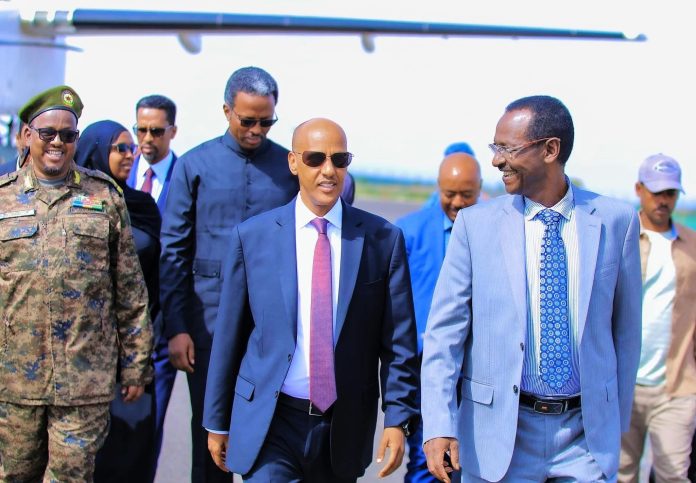
May 18(Jowhar)Waxaa magaalada Jigjiga goordhow gaaray wafdi sare oo ka socda dowladda Itoobiya oo uu hoggaaminayo Taliyaha guud ee Ciidanka Difaaca Itoobiya Field Marshal Birhanu Jula.
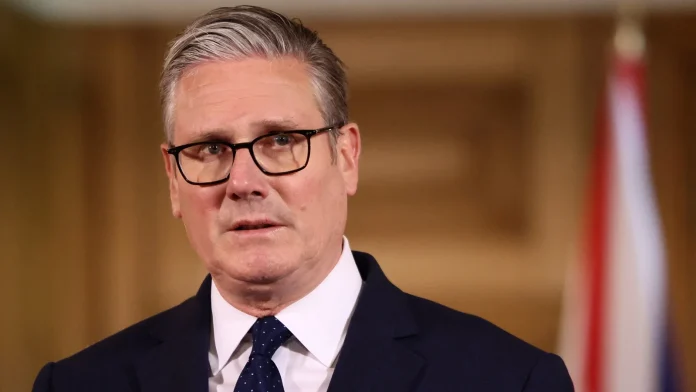
Keir Starmer heads back to Westminster amid escalating leadership challenge
A bruising restart: Labour, Brexit and the fight for Britain’s future
On a gray Saturday in a town that voted Leave eight years ago, the national conversation suddenly feels less like headline noise and more like a dispute at the family dinner table — messy, stubborn and intensely personal. What began as an internal Labour reshuffle has opened a fissure through the party and into a nation still divided over Brexit, migration and identity.
Wes Streeting’s resignation as health secretary last week was not merely the exit of a cabinet minister. It was a flare in the dark. Within hours he had signalled he would stand in any Labour leadership contest and, in doing so, made rejoining the European Union a centrepiece of his pitch. For some, this is a clarion call for a modernising project. For others, it is a provocation aimed squarely at Leave voters in towns like Makerfield — a working-class, Greater Manchester constituency that still bears the aftershocks of the referendum.
The sparks fly
“We can’t pretend the question of Europe is behind us,” Streeting told reporters, according to aides. “This is about whether Britain steps back into the centre of Europe’s economic and political life.”
His words ignited fury among factions inside Labour. Supporters of Andy Burnham — the Greater Manchester mayor widely expected to contest Makerfield as a parliamentary candidate — saw the timing as strategic, designed to drag Brexit back into a local campaign where Burnham hopes to peel votes away from Reform UK and Conservative rivals.
“It’s odd,” Culture Secretary Lisa Nandy said on air, rebuking Streeting with rare public heat. “If rejoining the EU is the answer, then essentially what we’re saying to people is, ‘life was fine in 2015, we just need to go back there.’ That’s not how you speak to people whose jobs and communities have changed.”
On the doorstep in Makerfield
Walk the high street in Makerfield on a weekday evening and you feel the tensions at the micro level. A pub corner table hums with debate. A supermarket checkout greets a cardboard stack of campaign leaflets. Canvassers in fluorescent jackets move methodically along terraced streets, pressing palms and promises to anyone who will listen.
“We voted Leave because we wanted control — of our laws, our fish, our borders,” says Alan McIntyre, a 62-year-old mechanic who has lived in the area all his life. “Nobody’s talked properly about whether rejoining would solve anything for us. It’s just politicians arguing.”
Opposite him, 28-year-old Joana Ortega, a community nurse, is less dogmatic. “I don’t have a faith in grand national gestures,” she says. “I care about whether I can get the medicines I need, whether staff shortages are fixed. If Europe helps that, then fine. But we need clarity, not slogans.”
Politics on a knife-edge
Beyond the patchwork of opinions on the streets, national forces are circling. Reform UK — the party that has made significant inroads in former industrial towns — reportedly plans to capitalise on any wavering message from Labour by highlighting Burnham’s past openness to EU membership. Nigel Farage, one of the most vocal opponents of returning to Brussels, labelled the mayor “open borders Burnham” in a hard-hitting comment picked up by national papers.
“At a time when millions of voters demand control of our borders, advocating to rejoin a European project built around the free movement of 500 million people raises serious questions,” Farage said in a statement.
Whether those words land depends on the electorate’s shifting priorities. The 2016 referendum split the country roughly 52% to 48% in favour of Leave — a statistic that has settled into the national memory as a defining fault line. But the intervening years have scrambled the map: new economic pressures, debates about migration and the after-effects of the pandemic have shifted voters’ daily concerns.
Inside Labour: strategy, loyalty and personal choice
At the centre of this storm sits Keir Starmer. Officially the prime minister, Starmer has publicly vowed to contest any leadership challenge. Privately, aides say, he weighed the weekend at Chequers and considered the very human question politicians rarely discuss: how much personal cost should he bear to keep unity? “It’s a very personal decision for him,” Lisa Nandy told the BBC, softening the party line and hinting at the complexities that lie beneath party discipline.
For many within Labour, the stakes are existential. Is the party to be defined by cautious centrism, or will it reclaim a bold progressive mission that includes re-engagement with Europe? And what does each path offer to the towns that delivered the referendum result eight years ago? These aren’t abstract questions in Makerfield — they are the difference between job security or instability, investment or decline, pride or resentment.
Experts and analysts weigh in
“This is a classic moment of political realignment,” says Dr. Aisha Rahman, a professor of British politics at the University of Manchester. “Leadership contests force parties to clarify their identities. For Labour, the challenge is to reconcile an urban, progressive base with working-class areas still sensitive to sovereignty arguments.”
Her view is echoed by political strategists who point out that leadership battles often recalibrate electoral coalitions. “Streeting is not just talking about Europe,” says Tom Ellison, a veteran pollster. “He’s signalling a broader ideological tilt — pro-internationalism, pro-trade, pro-integration — that will appeal to some voters and repel others.”
What’s at stake — and what to watch next
At first glance, this looks like a fight over personal ambition and tactical advantage. Dig deeper and you find questions that cut to the heart of modern Britain: how do we balance national sovereignty with global cooperation? How do political parties speak to communities whose experiences of globalisation are unequal?
Over the coming days and weeks, keep an eye on a few flashpoints:
- Whether Streeting formally launches a leadership challenge and the terms of his pitch;
- Andy Burnham’s decision on whether to stand in Makerfield and how he frames his position on Europe in a Leave-leaning constituency;
- Reform UK’s campaign strategy and whether anti-EU rhetoric proves decisive at the local level;
- Polling shifts — particularly among older Leave voters and younger urban Remain-inclined citizens.
A final thought
Politics is often described as theatre. But here the theatre is a mirror — showing a country still learning how to live with the choices it made. The question for readers is simple and urgent: what kind of country do you want to be in the decades ahead — one that closes ranks and protects borders, or one that seeks partnership and shared solutions? Each answer carries real consequences for hospitals, for homes, for the way we teach our children and trade with neighbours.
As the Labour family argues in public, remember that beyond the slogans are real people in places like Makerfield. They will vote on promises that affect the food on their tables and the air their children breathe. It’s a messy, human drama — and one that, for better or worse, we are still living through.
20-year-old Irish student dies in Thailand traffic collision
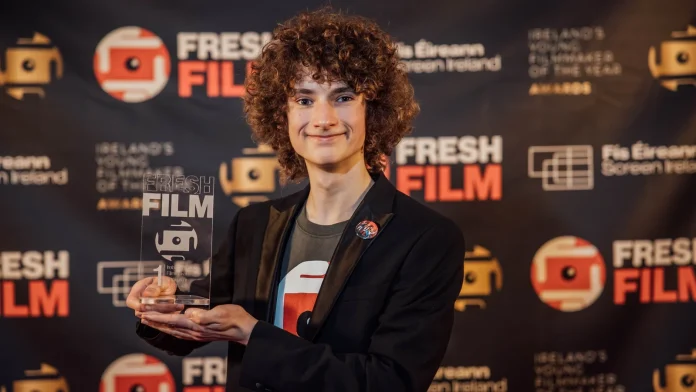
A bright young filmmaker gone: a Dublin neighbourhood, a Thai road, and the suddenness of loss
Cabra woke up like any other morning — the clatter of buses on the Navan Road, the smell of porridge and strong tea through half-open windows, the patter of children heading to school. But the rhythm of the north Dublin suburb was interrupted by a single, dreadful piece of news: Max Hendrickson, a 20-year-old from Cabra, and a Czech woman with whom he was travelling, were killed in a scooter crash while in Thailand.
It is hard to translate a headline into the small, precise language of grief. Families learn to try: names, photographs, awards and student IDs become tiny, sharp beacons, too small for the loss they now mark. Max was not just a name on a travel police report; he was widely known locally and creatively — last year he was named Ireland’s Young Filmmaker of the Year at the Fresh International Film Festival. He was in his second year at Dún Laoghaire Institute of Art, Design and Technology, a young man with a camera and a whole future in focus.
Cabra remembers
“He had that spark,” said one neighbour, pausing over a mug at the kitchen table as if the words might steady the world. “You could see it in the way he talked about stories. He’d be out with his camera on the Green on a Saturday. He wanted to tell things.”
Neighbours describe Max as a familiar figure: a hoodie, a battered backpack, the stray enthusiasm of someone who had already decided the world was a canvas. In the shop on the corner, an owner who declined to give his name placed a bouquet of wildflowers against the register — a quiet, local ritual that said simply: we see you, and we are sorry.
Labour TD Marie Sherlock, speaking after she was informed, echoed the community’s sense of stunned loss. “I have just become aware of this tragedy today — my heart goes out to the family,” she said. “I understand that he had an incredible future as a filmmaker ahead of him, and our thoughts are with the family.”
Far from home: what we know about the crash
Details are still emerging, and official accounts are cautious. What is understood is this: the pair were riding on a scooter in Thailand when a crash occurred that left both dead. The Department of Foreign Affairs in Ireland has confirmed it is providing consular assistance to Mr Hendrickson’s family as they cope with the mechanics of an unimaginable loss — the sorting of papers, the careful logistics of repatriation, the negotiation with foreign authorities in an unfamiliar legal language.
For many Irish young people, a trip to Southeast Asia is almost a rite of passage — a chance to stretch into independence, to make cheap meals with other backpackers, to chase sunsets and stories. But those journeys carry risks. The World Health Organization estimates around 1.35 million people die on the world’s roads each year, and in many places, motorcycles account for a large share of those deaths. Vulnerable road users — pedestrians, cyclists and motorcyclists — make up more than half of the fatalities globally.
Thailand, in particular, has long wrestled with a high rate of traffic deaths, with motorbike accidents forming a significant portion. That collision of youthful mobility and hazardous infrastructure, sometimes made worse by crowded tourist routes and inconsistent helmet use, is a repeated grim motif in travel advisories and emergency rooms alike.
Faces behind the headlines
To humanise the statistics, think of Max’s films: short, earnest pieces that tried to capture ordinary life — the way light cuts through a Dublin kitchen, the awkward geometry of teenage conversation. “He wasn’t making art to be pretentious,” said one college friend. “He wanted to make things that felt true. He would say, ‘I just want people to feel less alone.’”
A former lecturer at the Institute, asked to reflect on students like Max, pointed to a class of storytellers shifting the shape of Irish cinema. “The new generation,” she said, “blend personal narrative with a visual confidence that’s rare. They travel, they absorb, they come back with new eyes.”
That appetite to travel, to gather textures and voices, is part of a wider cultural movement. Irish creatives have long gone abroad — historically, to London or New York; now many travel further afield, to Asia, to Latin America — looking for experience and images. That global curiosity enriches their work, but it also exposes them to new hazards on roads that were built for different speeds and different traffic flows.
What the community does next
Grief here will be practiced in very Irish ways: there will be cups of tea, stories that loop and grow more tender with repetition, music brought out and shared. Neighbours will keep an eye on the family. The college will likely set up supports for students. Local film clubs will remember the work of one of their own. And online, a quiet stream of tributes will build into something that looks like a digital memorial.
“We’re rallying around them,” said another friend. “You have these rituals in small communities: you cook, you bring the bins in, you sit. It’s what people do when the future suddenly seems raw and split.”
Questions for the rest of us
What does this loss ask of a global community that urges its young people to see the world? How can governments, travel operators, universities and host countries collaborate to make travel safer without dimming its promise? If we champion mobility as a form of learning, what responsibility do we accept for the conditions that make that mobility precarious?
These are not rhetorical questions only for officials. They touch classrooms in Dublin and hostels in Chiang Mai; they reach into living rooms where parents scroll the newsfeed and try to reconcile wanderlust with worry. Practical steps exist: better road safety campaigns, improved enforcement of helmet laws, traveller education tailored to local hazards, and stronger consular support for families caught in emergencies far from home.
For now, Cabra mourns. For now, images of Max’s films will be watched through watery eyes. For now, two families — in Ireland and in the Czech Republic — will feel the slow, precise ache of absence.
When headlines collapse the human into data, it’s worth remembering names again: Max Hendrickson, a young filmmaker. And beside him, a Czech woman whose name is not yet public. Two people who woke one morning with plans, with playlists, with hopes — and who now have become a quiet urgency for us to think about safety, responsibility and the fragile arc of life that travel so often reveals.
If you travelled with Max, knew him from school, or can offer help to his family, consider reaching out. Share memories. Offer practical support. Turn the shock of this story into the soft, steady work of community care.
Why Britons Have Lost Faith in Their Measured Prime Minister
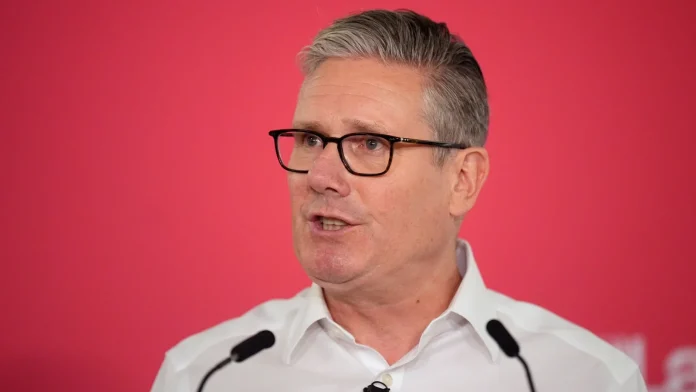
The Quiet Triumph That Wasn’t: How Caution Became a Political Liability
Walk into any cafe in Leeds, any fish-and-chip shop in Margate, or any council estate hall in Birmingham and you’ll hear the same frustrated murmur: “We voted for calm, not for drift.” That sentence, spoken in various accents and half a dozen metaphors, gets to the heart of why Keir Starmer’s promise of grown-up government — a promise that flipped the script in July 2024 and handed Labour one of its largest parliamentary hauls in history — has begun to feel hollow to many.
Don’t get me wrong: the numbers that put Starmer into Downing Street were real. In the July 2024 election Labour won 411 seats — one of the party’s best results since the Blair years. But numbers, as any political strategist will tell you, are only half the story. Labour’s national vote share was 33.7%, the lowest by any party to form a majority government in Britain since the 19th century. The arithmetic of first-past-the-post turned a modest national plurality into a Westminster landslide.
Mandate or Mirage?
“Electoral maths is not the same as political consent,” says Dr Aisha Patel, a political scientist at the London School of Economics. “When a system amplifies geographic advantage, it creates winners who may not carry broad public endorsement for an ambitious programme.”
That amplification was exactly what happened. The Conservative Party imploded, a splintered right ceded large swathes of seats, and tactical voting consolidated into a route for Labour to walk through. In dozens of constituencies, victory margins were razor-thin — a fact that would have been an early warning if anyone had been looking for one.
But Starmer did not run as a visionary. He ran as the opposite: a safe pair of hands, the anti-Jeremy Corbyn. The lawyerly, methodical leader promised to clean up Westminster and restore order after years of chaos. For a weary electorate that wanted functioning government more than ideological fireworks, that was a persuasive pitch.
The Curse of Caution
Yet governance requires more than procedural competence. It demands energy, intuition, risk-taking at times, and, crucially, the conviction to act decisively when public pain becomes intolerable. For many voters, the last 22 months have exposed a mismatch between the temper of the man and the temperature of the crisis.
“We didn’t elect a caretaker,” says Rashid Khan, a care worker from Manchester. “We elected someone to tackle prices, fix the NHS and make houses affordable. Two years on, I see pilot schemes and committees. My rent hasn’t fallen.”
That sentiment isn’t simply anecdote. The UK continues to wrestle with a cost-of-living squeeze that began in the wake of pandemic-era disruption and the energy shocks of 2022–23. The National Health Service still carries record waiting lists in the millions; social housing shortages are acute in cities from London to Newcastle; and many households feel that real wages have barely budged. For voters living those realities, incrementalism is not consolation — it’s failure.
Big Gestures, Small Footnotes
Even when Starmer has tried to act boldly, his instincts toward caution have often undercut the drama. Take the nationalisation of British Steel — an announcement designed to signal a new activist government and to placate Labour’s restive left.
“This is what an activist state looks like,” the prime minister declared in a speech intended to reset the narrative. The crowd exhaled. Then he added that the move would be “subject to a public interest test.” That second clause, procedural and dull, punctured the headline and became a metaphor for a government that talks big and footnotes its ambitions.
Self-Inflicted Wounds
Policy missteps have not helped. The decision to cut winter fuel payments — a measure aimed at fiscal prudence — made Labour politically toxic in marginal constituencies where older voters are crucial. A speech about immigration that spoke of an “island of strangers” alienated large parts of Labour’s base and reinvigorated critics who see the party as losing its moral bearings.
And then there was the Mandelson affair, which blew up when letters and past associations with controversial figures became public. What was intended as a diplomatic appointment turned into a scandal that reminded voters that Westminster still nurses its old networks and opaque deals.
“It’s less about any one mistake,” says Fiona McLeod, a former civil servant. “It’s about a pattern: the promise of competence, followed by the reality of hedging. People want accountability, but they also want outcomes. You can’t have one without the other for long.”
The Opposition Within
If Starmer’s politics embodied technocratic caution, the emerging leadership contenders present a different image. They read the mood of the country as impatient with managerialism and hungry for conviction.
- Andy Burnham, the unabashed “King of the North,” has spent years clashing with Westminster and positioning himself as a plain-speaking champion for regional voices.
- Angela Rayner brings a rhetorical intensity shaped by a working-class upbringing — she does not hide her instincts or her ambitions.
- Wes Streeting, often compared to a modernising Blairite, resigned in an act he framed as conscience rather than calculation.
“We are seeing a contest over the soul of the party — and of the centre-left more generally,” suggests Professor Mark Alvarez of Cambridge. “Do voters prefer a cautious technician who keeps things steady, or a bold redistributor who rewrites rules? The West is asking this question everywhere.”
More than a British Story
Look beyond Britain and you’ll see the pattern: from São Paulo to Stockholm, electorates have been turning against a post-2008 centrist consensus that prized expertise and steady management. The backlash is not strictly populist in a single direction; it takes the form of impatience with technocrats, calls for stronger redistribution, or demands for populist simplification. Democracies are testing what they want from those they elect.
So, ask yourself: when your ballot paper offers competence without conviction, what do you choose? A steady hand that tweaks, or a confident voice that promises to change the underlying rules?
Where Do We Go From Here?
One thing is clear: Britain did not hand Starmer the keys because it had fallen in love with carefulness. It handed him power because it needed an escape from chaos. That bargain contained an implicit promise — that measured governance would deliver tangible improvement. If that promise continues to feel unkept, the political debts will come due.
For now, the story is unfolding in real time. The Labour party faces an introspective moment that matters not just in Westminster but in living rooms across the country. The choices the party makes will ripple across the democratic world: about how to balance expertise and empathy, stability and justice, procedure and passion.
What would you demand from a government you voted for out of exhaustion? And how long would you wait for it to deliver? The answers will help decide whether this cautious experiment regains its mandate — or whether Britain’s political weather will change again, and soon.
Israeli strikes intensify across eastern and southern Lebanon border regions
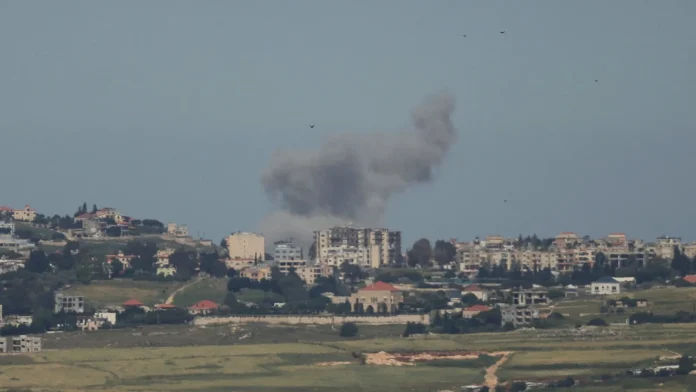
Under a Fragile Quiet: Life, Fear and Fractured Diplomacy on Lebanon’s Borders
At dawn in Sohmor, a town in Lebanon’s Bekaa Valley, farmers who should have been tending winter wheat instead stood in small knots of smoke and silence, scanning the horizon. Smoke spiraled from an olive grove half a mile away, and the occasional rumble—too close to be a truck, too distant to be thunder—kept people moving from doorway to doorway like actors waiting for a cue that never comes.
“You never know where the next strike will fall,” said Amal, a woman in her fifties whose hands are as worn from harvesting as her voice is from worry. “We planted the fields in hope, but now hope burns. My grandchildren ask why their father is not home, and I do not have an answer for them.”
This is the uneasy interlude between conflict and diplomacy. Officials in Washington announced yet another extension of a delicate ceasefire after envoys from Israel and Lebanon met for a third round of talks. But the pause in large-scale combat has not been a full stop; instead it resembles a bruise that gets pressed each time skirmishes erupt. State media in Lebanon reported fresh Israeli strikes in eastern and southern parts of the country—two in Sohmor and others across southern villages—underscoring how fragile the calm is and how quickly it can splinter.
The toll so far
Lebanese authorities say these strikes, part of a wider campaign that began with a larger war, have claimed more than 2,900 lives across the country. Shockingly, more than 400 of those fatalities have been recorded since the ceasefire took effect on 17 April.
Numbers like these are not mere statistics; they are doors closed, children changed forever, and communities that will take years to stitch back together. “We count bodies, then we count rabbits, then we count what is left of our dignity,” an aid worker with a long-term NGO in south Lebanon said quietly. “These layers of loss are cumulative.”
Negotiations in the capital—and a loud disagreement at home
Diplomacy in Washington was intended to buy breath. Representatives from both sides agreed to extend the truce, creating a narrow window for negotiation over boundaries, prisoner exchanges, and security arrangements. But inside Lebanon, the mood is far less reconciliatory.
Hussein Hajj Hassan, a Hezbollah member of parliament, dismissed the idea that talks could deliver meaningful concessions without heavy cost. “The direct negotiations that the authorities in Lebanon have conducted with the Israeli enemy have… led them down a dead-end path that will result in nothing but one concession after another,” he said, as reported by state outlets.
His words illustrate an existential friction within Lebanese politics: a government striving to steer the country through international channels while the Iran-backed Hezbollah insists its arms and stance are non-negotiable. “Disarming the resistance is a line we cannot cross,” Hajj Hassan added, warning that state leaders risk dragging the country into “very big predicaments.”
What the ceasefire actually looks like on the ground
For residents near the Blue Line—the unofficial boundary monitored for decades—the ceasefire is a patchwork. One neighborhood may echo with the sound of generators and children’s laughter, while three kilometers away, a house smolders after a strike. Israeli forces maintain a presence in parts of southern Lebanon, patrols crisscross hilltops, and Hezbollah continues to launch operations it describes as defensive. The result is an uneasy geometry of control and contestation.
“We wake up, we pray, and then we check the news because we live by the headlines,” said Nabil, a shopkeeper whose café in a border town is more a communal living room than a place of commerce. “People still buy bread in the morning with one ear listening to the radio. This is the rhythm of living in limbo.”
Voices from every side and the cost beyond the headlines
Across the region, there are conflicting narratives: one side speaks of security and the prevention of cross-border attacks; the other speaks of resistance and occupation. Experts caution that neither narrative exists in a vacuum. “This is both a local and geo-strategic conflict,” said Dr. Eitan Levi, a security analyst who studies the Levant. “Iran’s support for Hezbollah, the entanglement of Lebanese domestic politics, and Israel’s security calculations create an almost classical case of a localized flare-up with regional reverberations.”
Humanitarian agencies, meanwhile, worry about needs that outlast ceasefires. Hospitals remain stressed, supply chains intermittently fray, and the long-term mental health of children in shell-shocked towns is a silent catastrophe. “You can rebuild a wall, but you cannot rebuild the years stolen from a child who cannot sleep because of night raids,” said Sarah, a psychologist volunteering with a mobile clinic.
Local color: festivals, food and the persistence of normalcy
Even amid the tension, life persists in small, telling ways. In the Bekaa Valley, lamb stews still perfume homes, and men in flannel shirts argue over the price of grapes in open-air markets. A cedar tree older than many nations still leans in the courtyard of a village mosque. Such images are a reminder: conflict overlays a living culture, not an abstract map.
“We sit and make coffee, then share stories about the harvest as if nothing will happen,” Amal said. “But when the sky is clear at night, we all listen for planes.”
What comes next?
There are several possible futures. Negotiators could hammer out a durable agreement that addresses border security and provides for a phased withdrawal of forces and international monitoring. Or the ceasefire could remain a brittle pause, punctured by the same dynamics that produced it—retaliatory strikes, local miscalculations, and the larger power plays that crisscross this region.
For ordinary people, the choice between these futures is heart-wrenchingly simple: either a return to relative normalcy or another spiral of violence. “We do not want to be pawns in a larger game,” Nabil said. “We want children to go to school again without drills.”
Questions to sit with
As you read this, consider: what responsibility do external actors have when diplomacy fails? How much room does a small state have to chart its course when powerful proxies and regional rivals cast long shadows? And, perhaps most pressingly, what would a sustainable peace look like for people who have already lost so much?
The answers will not be tidy. But if the past months have taught us anything, it is that ceasefires are not ends in themselves. They are opportunities—brief and precarious—to choose a different trajectory. Whether those in power take that opportunity remains the central question hanging over villages like Sohmor, over border hilltops, and over a region long accustomed to waking up to the sound of discord.
Thousands Attend Two Major London Protests — 43 Detained
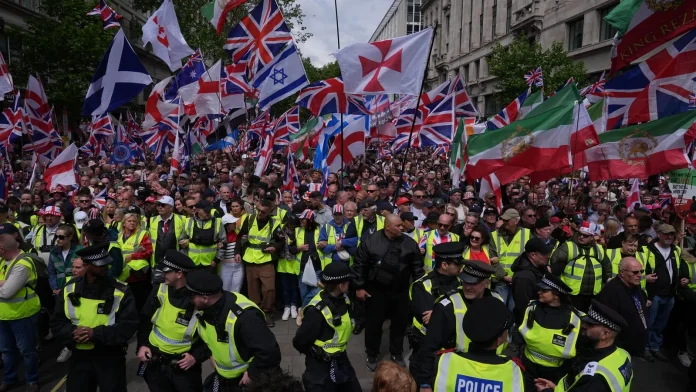
Two marches, one city: London once again at the crossroads
On a bright, unsettled Saturday in central London, two very different processions carved their paths through the same streets — each carrying its own grievances, symbols and predictions for the future.
On one side, the Unite the Kingdom rally led by Tommy Robinson — the nom de plume of Stephen Yaxley-Lennon — drew supporters in red “Make England Great Again” caps, flags and chants demanding “We want Starmer out.” On the other, a pro-Palestine Nakba Day march filled Pall Mall and surrounding thoroughfares with keffiyehs, placards reading “Free Palestinian Hostages” and banners declaring “Bristol stands with Palestine.” Police put around 4,000 officers on duty for both events and recorded 43 arrests by roughly 7:30pm; 22 others were arrested at the FA Cup final at Wembley, according to Metropolitan Police figures.
It was a day where noise could be read as data — the number of people, the variety of faces, the cadence of slogans — and where those numbers meant something more than crowd control. They mattered to politicians, prosecutors and civil liberty campaigners trying to read the mood of a country grappling with polarisation, migration and foreign conflicts that roil domestic politics.
The crowds: claims, counterclaims and the smell of the city
Estimating crowds at mass events is always fraught. Organisers of the pro-Palestine rally said at least a quarter of a million people had gathered; the Metropolitan Police had earlier estimated around 30,000. Tommy Robinson, speaking on stage, boasted of “millions” in attendance; officers put the likely turnout in the tens of thousands. Numbers became another battleground.
As the marches snaked past historic facades, the city provided texture: commuters dodging placards near Euston, tourists bewildered by chanting on the Mall, and market stallholders in Camden watching through the afternoon haze. A stall owner near the route, who gave his name as Ahmed, summed up the mood: “You could feel the tension in the air — like it was waiting to be lit. But mostly people came to be seen and heard, not to fight.”
Voices at each protest carried distinct grievances. Siobhan Whyte addressed Robinson’s crowd with a rawness that stopped conversations: she described her daughter, Rhiannon, murdered in a tragedy that she says could have been prevented. “Keir Starmer failed my daughter,” she declared, tears in her voice. “If I don’t speak now, who will?”
At the pro-Palestine gathering, Labour MP Apsana Begum and former leader Jeremy Corbyn urged unity against what they called the far right. Diane Abbott warned of “viciously right-wing” forces and urged people to “fight the fascists, fight the antisemites.” Zarah Sultana, whose rhetoric has often inflamed debates, told the crowd that familiar political alternatives were insufficient, painting the moment as a wider call to change policy, not merely personalities.
Policing, surveillance and a new legal landscape
Authorities did not police the day casually. In addition to uniformed officers on the ground, the Metropolitan Police deployed drones, monitored CCTV feeds around Wembley and — for the first time in a protest policing operation — planned to use live facial recognition systems in areas expected to be used by attendees. Commander Clair Haynes said officers would also monitor FA Cup crowds at Wembley for people likely to head toward demonstrations.
Those measures were part of a wider operating picture that included new guidance from the Crown Prosecution Service urging prosecutors to consider the online impact of chants, banners and placards. The advice asks whether slogans or symbols, once filmed and shared, might amount to stirring up hatred or otherwise influencing an audience beyond the immediate crowd.
Human rights lawyers and civil liberties groups were quick to raise concerns. “We are entering a zone where protest becomes subject to not just physical policing but digital policing,” said Clara Mendes, a solicitor who specialises in public order law. “Prosecutors now have to balance freedom of expression with online harms, and that is not an easy calculus.”
A Met spokesperson defended the tactics: “We have a duty to keep people safe and to protect the right to peaceful protest. The measures used today were proportionate and targeted.” But the use of live facial recognition and the threat of prosecuting organisers for content seen online has alarmed campaigners who argue it could chill dissent.
- Drones and CCTV were used to monitor movement and gather intelligence.
- Live facial recognition was deployed in specific, non-route areas expected to be used by attendees.
- Organisers and speakers face potential prosecution under new restrictions intended to curb extremism and hate speech.
Arrests, assaults and the limits of speech
By evening, the Met recorded 43 arrests related to the day’s activities, plus 22 at Wembley. Four officers were assaulted, and six reported hate crime offences, the force said. Two men arriving at Euston were detained in connection with separate incidents in Birmingham; one was wanted on suspicion of grievous bodily harm, the other for allegedly encouraging people to attack an officer.
Recent criminal cases were on everyone’s lips: prosecutions after individuals were filmed shouting “death to the IDF” or “globalise the intifada” had already raised debate about whether certain slogans cross the line into criminal behaviour. The CPS guidance now explicitly tells prosecutors to factor in context, the potential for online amplification and heightened tensions tied to international events.
“It’s not just words shouted into a void anymore,” said Dr Fiona Greene, a sociologist who studies protest movements. “The internet magnifies speech; a chant in Trafalgar Square can be replayed millions of times over. That changes everything for both organisers and the law.”
Voices from the street — who is being heard?
A young marcher in a keffiyeh, who introduced herself as Mariam and works in a local clinic, told me: “This is personal. My family watch the news and we feel helpless. Today, we came to demand that our leaders listen.” Nearby, a man in a red Mega hat — call him Paul — said, “We want borders, and we want our communities safe. This is about our future.” Both were firm in their convictions; both believed their cause was urgent.
Between them stood the figure of the city, old and new, an amphitheatre for global anxieties. London’s pavements have long carried competing histories; on this day they were packed with the present.
Why it matters — and what comes next
These demonstrations were not isolated. They sit at the confluence of several currents: rising populism, international conflict reshaping domestic politics, and a legal system scrambling to adapt to a digital age where a single slogan can travel the globe in seconds. The UK government’s decision to block 11 foreign nationals described as far-right agitators before one rally — and the announcement that organisers could be prosecuted — reflect that anxiety.
So where does London go from here? Will the increased surveillance and new prosecutorial guidance deter violent rhetoric, or will it chill legitimate dissent and political expression? Can a democracy keep the streets safe without locking down debate?
As the sun set and crowds dispersed, what lingered was less a verdict than a question — about how a plural society listens to itself when the noise gets loud. “We are all learning how to protest in the age of social media,” Dr Greene said. “The law will catch up, or it will fracture trust. The choice is ours.”
What did you see or feel when you last walked through a city where people were protesting? Did the energy feel like civic renewal — or something else? London offered both answers on a single afternoon. The task now is to turn that moment into policy that protects both safety and the right to be heard.
Wasiir Ayuub oo ka qeyb galay Madasha Caalamiga ah ee Magaalooyinka Adduunka en Baku
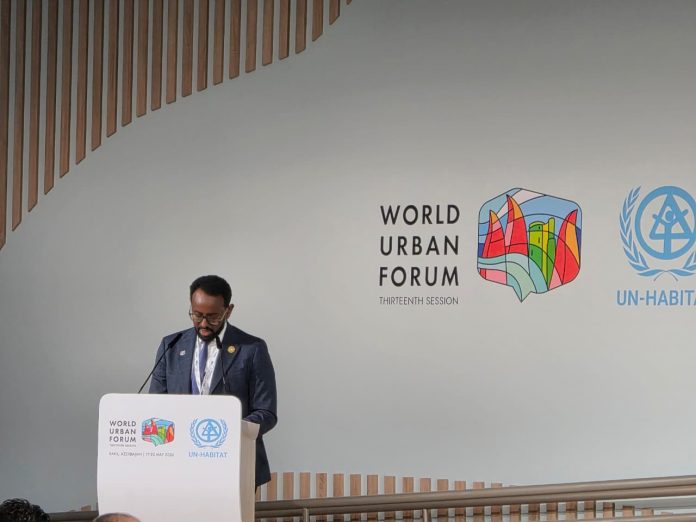
May 17(Jowhar)Wasaaradda Hawlaha Guud, Dib-u-dhiska iyo Guriyeynta Soomaaliya ayaa ka qayb galaysa Madasha Caalamiga ah ee Magaalooyinka Adduunka ee 13-aad oo ka socota magaalada Baku, caasimadda dalka Azerbaijan.
Hamas Reports Armed Wing Leader Killed in Gaza Strike
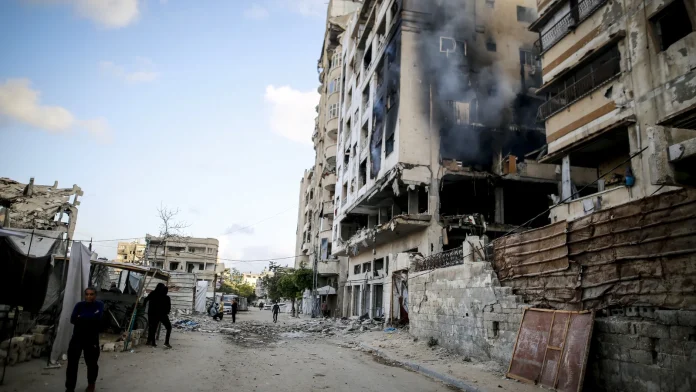
In the shadow of the minarets: Gaza wakes to news of a deadly blow
The sun had barely climbed over Gaza City when the first murmur moved through the streets — not the ordinary hum of vendors or the metallic clatter of deliveries, but announcements from mosque loudspeakers that froze people mid-step. Men, women and children stopped where they were, some clutching shopping bags, others already carrying infants, as the words rolled over the alleys and apartment rooftops: a senior commander was said to be dead.
By midmorning, those murmurings hardened into a sharper reality. A senior Hamas official, speaking privately to journalists, said the group’s military chief, Izz al-Din al-Haddad, had been killed — a claim that followed an Israeli declaration a day earlier that it had carried out strikes targeting him. Local witnesses told reporters that the calls to prayer in several mosques had been used to relay the news before any formal statement from Hamas itself.
Conflicting accounts in a fast-moving morning
The scene was chaotic but familiar: ambulances weaving between cars, shopkeepers lowering metal shutters, and clusters of people gathering in courtyards to exchange a single, terrible question — who had fallen this time? “We heard it on the loudspeaker and then everyone started crying,” said Laila, a 32-year-old mother, as she balanced her toddler on her hip. “You pray for peace, and then you wake up to more names.”
On the other side of the Israeli political spectrum, Prime Minister Benjamin Netanyahu and Defence Minister Israel Katz issued a terse joint statement the previous day saying Haddad had been targeted. Their message was stark and unambiguous: Haddad, they said, “was responsible for the murder, abduction, and harm inflicted on thousands of Israeli civilians and soldiers,” and the strike had been aimed at preventing further attacks. They did not explicitly confirm his death.
Hamas itself, however, remained formally silent. In the fog of war — where information becomes a weapon and each side measures the impact of a statement — official confirmations can lag behind the stories being told in streets and hospitals.
What this means on the ground
There are quick and obvious consequences: mourning in one neighborhood, anger in another, escalatory rhetoric from hardliners, and more fear among civilians who have already endured more than two years of war. But there are also subtler ripples. When a figure said to be a key military architect is removed, combat dynamics shift, networks scramble, and civilian life jostles again for balance.
“Killing a commander is not a neat, surgical fix,” said Dr. Miriam Halabi, a Beirut-based analyst who has followed Gaza’s militant networks for years. “Leadership decapitation can fracture chains of command — sometimes that reduces violence; other times it hardens resolve and leads to retaliation. In a densely populated territory like Gaza, the immediate cost is almost always borne by ordinary people.”
Medics working in Gaza’s damaged hospitals reported more blood and more bodies. Doctors said at least seven people were killed and around 50 injured in strikes that hit an apartment building and a nearby vehicle — including three women and a child. It remained unclear whether Haddad was among those killed in that specific strike.
Voices from a city under strain
“We don’t know who survives these days — only who is next,” said Hasan, a paramedic who has been volunteering at a makeshift clinic since the conflict expanded. “We run on adrenaline and rationed supplies. We have enough to keep people alive for the day, not for the next siege.”
Street vendors, who sell small comforts like boiled corn and strong tea, described a market with fewer customers and more checkpoints. “Business is not about profit now,” said Abu Omar, a vendor in a shuttered strip of stalls. “It’s survival. People come and ask for milk or baby formula. We trade what we can.”
Politics at the highest level — and the international backdrop
This reported killing occurs against a fraught diplomatic canvas. The October 2023 offensive and its aftermath have left the region gripped by cycles of violence, multiple rounds of ceasefires and intermittent negotiations. An October US-backed ceasefire had at one point seemed to reduce open hostilities, but the quieter intervals have done little to resolve the deeper grievances or the catastrophic humanitarian reality in Gaza.
Indirect talks — mediated by foreign powers and regional players — remain stalled. According to officials involved in the process, Israel and Hamas have been deadlocked over a US-proposed post-war plan, the contours of which remain politically toxic in many quarters. International mediators say the key stumbling blocks are security guarantees, prisoner exchanges, and the eventual political status of Gaza. “Without a credible, enforceable plan that addresses security and humanitarian needs, the cycle will continue,” one diplomat said on condition of anonymity.
Meanwhile, regional dynamics are shifting. Israel recently scaled back joint operations it had been conducting with the United States against targets in Iran, refocusing its military attention on Gaza — a move that analysts say has sharpened the tempo of strikes in the territory.
Wider implications: what the world should consider
What does the death of a single military leader mean for a conflict that has already consumed thousands? It’s tempting to view such moments as decisive. But history and current realities suggest otherwise. Leadership losses can change tactics, provoke cycles of retribution, and sometimes create openings for new, unpredictable actors to rise.
Ask yourself: when a city is reduced to fragments of routine — the sound of prayer, the queue for water, the sudden silence after an airstrike — what responsibility does the international community bear? And what responsibility do governments beyond the region have in preventing further civilian suffering?
Humanitarian agencies repeatedly warn of severe shortages in food, clean water, shelter and medical supplies across Gaza. Tens of thousands are reported displaced, urban infrastructure remains crippled, and access to basic services is intermittent. These are not abstract statistics. They are the daily realities of families who have lost homes, livelihoods and loved ones.
Looking ahead
For now, neighborhoods in Gaza will mourn and eulogies will be shared in living rooms and via loudspeakers. Israeli officials will likely present the strike as a necessary act of defense. International actors will call for restraint while consulting quietly behind closed doors. And the people living amid this turbulence will, as always, bear the brunt.
“We don’t want to be a headline in someone else’s crisis,” said a schoolteacher in Gaza City. “We want our children to learn without the sound of sirens. Is that so much to ask?”
Perhaps the most pressing question is this: will another strike be the drumbeat that paves the way toward a different future, or merely the latest note in a score that has been playing for far too long? The answer will depend not only on the combatants, but on whether the world chooses sustained engagement over episodic outrage.
Seán the sheep shearer claims New Zealand’s top shearing championship title
A young shearer from Co Wicklow has made history on the other side of the world, taking the top junior sheep-shearing title in New...
Trump calls a Putin-Zelensky summit “great” and urges talks
US President Donald Trump said it would be "great" to see Ukrainian President Volodymyr Zelensky sit down with Russian leader Vladimir Putin after Mr...
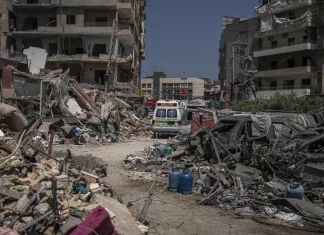
Lebanon reports Israeli airstrikes near Beirut and throughout the south
An Israeli strike hit near Beirut’s southern approach as Israel intensified bombardments across Lebanon’s south, with a medical source reporting six deaths in the...
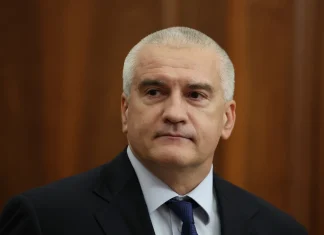
Russia Reports Four Killed in Crimea After Ukrainian Strikes
Deadly strikes in Russia-annexed Crimea have raised the toll in a widening exchange of attacks between Moscow and Kyiv, with Kremlin-installed officials reporting four...
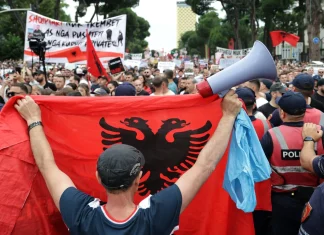
Albanians rally against Kushner-linked luxury resort development plans
Anger is spilling onto the streets of Tirana as thousands of Albanians rally against a proposed luxury resort tied to Jared Kushner, warning it...