

May 17(Jowhar)-WHO waxay ku dhawaaqday in Ebola uu ka dilaacay Jamhuuriyadda Dimuqraadiga ah ee Congo (DRC) iyo Uganda “xaalad degdeg ah oo caafimaad dadweyne oo walaac caalami ah” ka dib markii la soo sheegay in ka badan 300 oo kiis oo la tuhunsan yahay iyo 88 dhimasho ah.
Onboard Canadian cruise passenger diagnosed with hantavirus, officials confirm
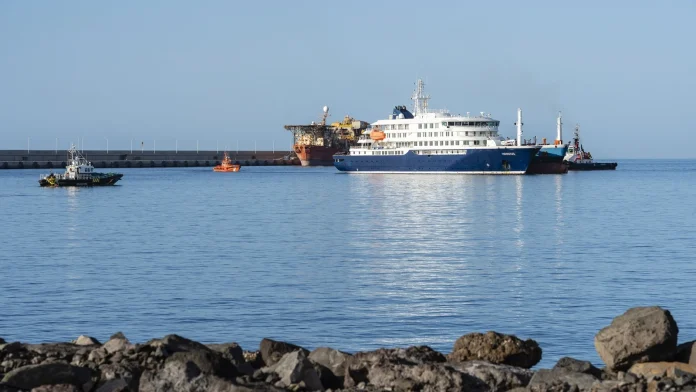
The Quiet Alarm on the High Seas: A Cruise, a Rare Virus, and the Unease It Leaves Behind
There is a peculiar stillness that comes after the ship’s engines quiet and the horizon swallows the last streak of light. On the MV Hondius, passengers who had spent days watching albatrosses wheel and the Atlantic swell felt that hush turn into something far more disquieting: a medical mystery with roots in the low, secretive world of rodents and the rugged mountains of South America.
Earlier this month, Canadian public health officials confirmed that one of four Canadians identified as high-risk contacts from that voyage has returned a presumptive positive test for Andes hantavirus. The patient, who was being monitored in self-isolation in British Columbia, and their spouse — both recently hospitalized and kept in strict isolation — now stand at the center of a cautious public-health response that blends old-fashioned epidemiology with the nervous vigilance of a post-pandemic world.
What is Andes hantavirus — and why it matters
Hantaviruses are a family of viruses carried primarily by rodents. Most strains infect people through contact with contaminated rodent urine, droppings or saliva. But the Andes strain is unusual: researchers have documented chains of person-to-person transmission, particularly in southern Argentina and Chile, making it the only hantavirus known to spread between humans.
“We’re not looking at a flu on a ship,” said Dr. Maya Singh, an infectious disease physician based in Vancouver. “Andes hantavirus causes hantavirus pulmonary syndrome, a severe respiratory disease. Historically, HPS has carried a very high case-fatality rate — often quoted in the 30 to 40 percent range. That’s why public health teams respond quickly when there’s any hint of it.”
Globally, the outbreak tied to the cruise has already been tragic: three people have died. Overnight, a handful of passengers and crew found themselves moved from the deckside dinners and lecture halls into isolation cabins and hospital wards. For now, health officials in Canada characterize the broader risk to the population as low — but “low” in public health is a cautious, qualified term, not a pronouncement of complacency.
How authorities are handling it
Public health teams conducted contact tracing, identified those considered “high risk” — people who had close, prolonged contact with symptomatic individuals — and advised self-isolation with monitoring for symptoms. Testing began with screening assays that can be reported as “presumptive positive,” with confirmatory PCR and serology to follow over the next few days.
“Out of an abundance of caution, we moved people to hospital for assessment,” a provincial health official told me. “We’re treating this with the seriousness it deserves while reassuring the public that transmission outside close contacts remains unlikely.”
- Key known facts: the ship departed Argentina on April 1 and sailed across the Atlantic before the outbreak surfaced.
- Andes hantavirus is the only species of hantavirus with demonstrated human-to-human transmission.
- No specific vaccine or antiviral therapy exists; treatment is supportive and often requires intensive care, including ventilation or extracorporeal membrane oxygenation (ECMO) in severe cases.
- Globally linked fatalities connected to this outbreak stand at three.
Voices from the voyage and the community
“We were supposed to be photographing penguins and glaciers,” said Maria Lopes, a former passenger who disembarked early when the ship diverted. Her voice, still carrying the cadence of someone who had recently left sea spray and organized chaos behind, faltered when she described the sudden change in atmosphere. “Then there were sealed corridors, medical staff in protective gear, and a calm that felt a lot like fear.”
Inside British Columbia, the local hospital’s isolation wing has become, briefly, an island of its own. Nurses move like caretakers in old seafaring tales — purposeful, quietly comforting. “We’re used to infections, but we’re always learning,” said one nurse who asked not to be named. “You don’t forget the faces of people you keep alive.”
Back in Argentina and Chile, where Andes virus has a long ecological history, epidemiologists say the pattern is familiar: human cases tend to follow rodent population surges, which in turn tie back to weather, crops and habitat changes. “When people push up against wild habitats, or when climate variables shift rodent behavior, we see more spillover events,” explained Dr. Javier Morales, an epidemiologist who has studied hantaviruses in Patagonia for two decades.
A larger story about travel, nature and vigilance
It’s tempting to draw blunt parallels between this scare and the global upheavals of the COVID-19 years. Public health officials are quick to discourage such comparisons; the dynamics differ, the tissues of transmission are not the same, and the scale remains vastly smaller. Still, the encounter forces a familiar reckoning: an age in which humans move faster and further than pathogens once could, and in which ecological change nudges hidden viruses into new spaces.
Consider these wider trends:
- Global travel continues to rebound strongly, carrying more people — and their exposures — across borders than ever before.
- Climate change is reshaping ecosystems, altering rodent populations and disease risk in unpredictable ways.
- Public-health systems, while bolstered since the pandemic, still depend on rapid testing, clear communications and the public’s willingness to trust and comply.
“We have better tools now than we did in the 1980s or even 2003,” said Dr. Singh, “but we also have more movement of people into places where they come into contact with wildlife. That increases the likelihood of these kinds of events.”
Practical questions you might be wondering — and what to watch for
For most readers, the immediate takeaway should be simple: this is not a widespread outbreak poised to circle the globe. Yet vigilance matters. Symptoms of hantavirus pulmonary syndrome can start with fever, muscle aches, and fatigue, progressing suddenly to coughing and shortness of breath as the lungs fill with fluid. The incubation period can be weeks, which complicates contact tracing and the timing of tests.
Health workers emphasize these points:
- If you were on the MV Hondius and were told you were a high-risk contact, follow public-health instructions and seek testing if symptoms develop.
- If you live in regions where hantaviruses are documented, avoid rodent exposure: seal homes, trap or exclude mice and rats, and be cautious in rodent-infested storage areas and rural buildings.
- For the general public, common-sense hygiene and awareness remain the best defenses.
What this episode asks of us
At a human level, the story is intimate. Families in isolation rooms wait. Health workers convene late-night huddles. Passengers who had come to the sea for wonder now carry the memory of sudden, medical uncertainty. At a societal level, it is a reminder that our relationship with the natural world is complicated and constantly evolving.
So ask yourself: how do we want to travel in an era of emerging infections? What investments in surveillance, rapid testing and global cooperation are we willing to make so that when a rare virus stirs, we meet it quickly and humanely?
At the end of the day, when the ocean resumed its indifferent roll and the ship continued its lonely arc across the Atlantic, one truth remained: outbreaks do not occur in isolation. They ripple through communities, across borders, and into the daily habits of people everywhere. The task for public health — and for all of us as travelers, neighbors, and stewards of the planet — is to be ready, compassionate, and unflinching in the work of keeping one another safe.
Madaxweyne Xasan oo warqadaha ka gudoomay Safiirka dalka Jabuuti
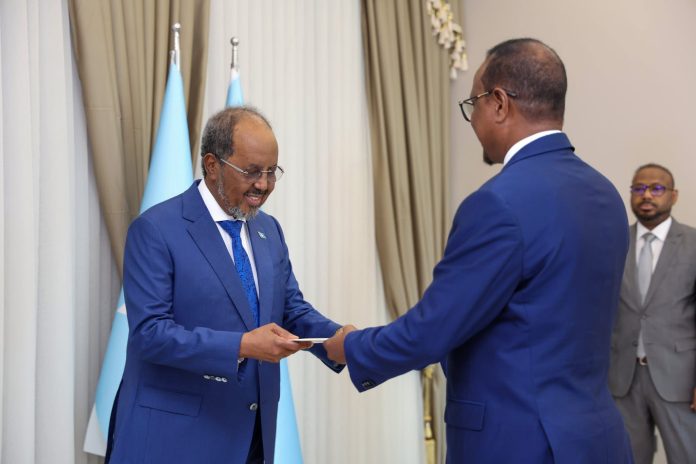
May 17(Jowhar) Madaxweynaha Jamhuuriyadda Federaalka Soomaaliya Mudane Xasan Sheekh Maxamuud ayaa warqadaha aqoonsiga danjirenimo ka guddoomay Safiirka cusub ee Jamhuuriyadda aanu walaalaha nahay ee Jabuuti u soo magacowday Soomaaliya, Danjire, Col. Cusmaan Dubbad Sugulle.
WHO Declares Ebola Outbreak a Global Public Health Emergency
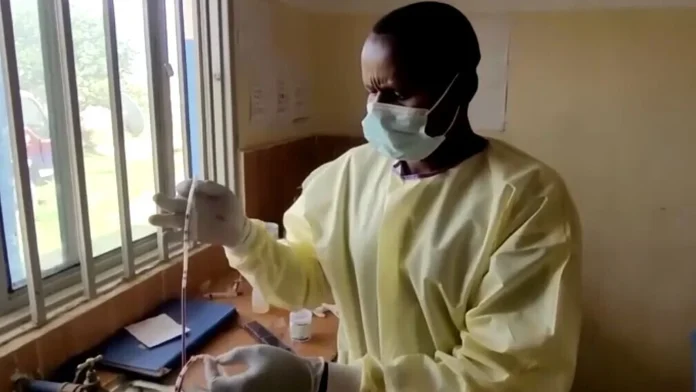
A Quiet Corner of the Continent, a Loud Global Alarm
On a humid morning at a roadside market near the DRC-Uganda border, a woman wrapped in a brightly patterned pagne folds a handful of plantain leaves into a bundle and looks up, eyes clouded with worry.
“People are whispering,” she says, folding a leaf with slow, careful hands. “They say the sickness is back. We do not know who will come next.” Her voice is practical, not theatrical—this is not a story but a disruption in the rhythm of daily life.
What the World Health Organization Has Declared
This week the World Health Organization raised the alarm: the outbreak of the Bundibugyo species of Ebola virus that has surfaced in eastern Democratic Republic of Congo and in Uganda has been designated a “public health emergency of international concern” (PHEIC).
In plain numbers—southern and eastern health officials and WHO briefings say roughly 246 suspected cases have been reported, with eight of those confirmed in the laboratory. Up to 80 suspected deaths are under investigation. Those figures are unsettling not just for what they record but for what they likely miss: the WHO has warned that the positivity rate among initial samples and the steady growth in suspected cases suggest a larger outbreak than currently visible.
Why this declaration matters
A PHEIC is only declared when an event is extraordinary, poses a risk of international spread, and may require a coordinated global response. Here, WHO officials are balancing two hard truths: this outbreak is dangerous—but it is not the same as the Zaire strain of Ebola, for which vaccines and some therapeutics exist.
“We are deploying every tool we have to slow transmission,” said a WHO epidemiologist in Geneva in a brief recorded statement. “But Bundibugyo is less familiar to us. There are no approved, species-specific vaccines or therapies readily available, which complicates containment efforts.”
On the Ground: People, Ports and Borders
In Kampala, Uganda’s vibrant capital, two unrelated lab-confirmed cases—one fatal—have been logged among travelers from the DRC. In Kinshasa, a case was identified in a returning traveler from Ituri province. These are not merely numbers on a chart; they are people crossing familiar routes—buses that ply lakeside roads, traders who depend on daily cross-border commerce, and families who visit kin on both sides.
“The border has always been porous,” says Jean-Baptiste, a motorcycle taxi driver who ferries passengers across the Bunia checkpoints. “If you close official posts, people still find paths through the forest. We know the land; we know the short cuts.” His concern is practical: enforcement, he says, can push movement into unmonitored channels and make tracing harder.
That fear is reflected in WHO guidance: countries are urged to activate disaster and emergency-management mechanisms and to step up cross-border and internal road screening—but not to shut down borders or trade indiscriminately. Closing ports can paradoxically increase disease spread by driving it underground.
Practical steps being urged
- Isolate confirmed cases immediately and provide supportive care in safe settings.
- Trace and monitor contacts daily for 21 days—the known upper limit of Ebola’s incubation period.
- Restrict national travel for suspected cases and prohibit international travel for contacts until the 21-day monitoring period is complete, except for medically necessary evacuations.
- Maintain trade and open official crossings with enhanced screening to prevent unmonitored movement.
The Human Cost—And What Makes Bundibugyo Different
Bundibugyo ebolavirus is not new; it was first identified in Uganda in 2007. But unlike Ebola-Zaire, for which rVSV-ZEBOV vaccine campaigns and monoclonal antibody therapies have been game-changers in recent outbreaks, Bundibugyo has no widely approved, species-specific vaccine or targeted therapeutics.
“We are effectively fighting in a lower-visibility mode,” says Dr. Amina Kallayi, an infectious disease specialist who has worked in several outbreaks across Central and East Africa. “Vaccines for Zaire have been a monumental tool, but they cannot be assumed to work the same way against other ebolaviruses. When you lack that layer of protection, everything else—early detection, rapid isolation, contact tracing, community engagement—becomes that much more urgent.”
For families, the consequences are immediate and grim. “My brother cried when the ambulance took his wife,” recounts a man from Ituri who asked that his name not be used. “No one can touch her. We pray, but the prayers do not fix the fever.” Funeral practices, close family care, and crowded clinic waiting rooms—familiar social fabrics—turn into risk amplifiers without careful adaptation and trust-building.
Why We Should All Care
At first glance, this might appear localized: an outbreak in eastern DRC and a few cases in Uganda. But the globalized world has a long memory of how quickly local outbreaks can ripple outward—through air travel, trade, and migration. The PHEIC is a call for international solidarity not panic. It is an appeal for resources, for laboratories, for logistics that stretch into remote places where roads are seasonal and diagnostic capacity is sparse.
“This is a test of our collective readiness,” says Dr. Samuel Ortega, a public health scholar who studies outbreak response. “Investments in surveillance, in frontline health workers, in rapid diagnostics, and in community engagement are what prevent escalation. If we ignore these outbreaks until they become regional crises, the human and economic costs multiply.”
Lessons and the wider conversation
Think about the past decade: the West African epidemic that reshaped global emergency response, the 2018–2020 outbreaks in DRC that introduced ring vaccination strategies, and the incremental progress on therapeutics. Each event raised questions about equity: who gets access to vaccines and drugs, and how do we strengthen fragile health systems so that they don’t fall into predictable crisis?
Are we prepared to mobilize testing, isolation, and personnel at the scale needed—and to do it in ways that respect local customs and livelihoods? Can international assistance be fast, flexible, and culturally sensitive? These are political and moral questions, not just technical ones.
What You Can Do—and What Comes Next
For readers far from the region: remember that global health is not distant. Early investment, clear reporting, and responsible journalism matter. Follow reputable public health channels for guidance and avoid sensationalism that stigmatizes communities already bearing the brunt of disease.
For the international community, the next steps are concrete: increase funding to support rapid diagnostic labs, respect WHO recommendations on not closing borders precipitously, and support community-led messaging so that people understand safe care and safe burials without losing dignity.
“Trust is the vaccine we don’t have,” says Marie-Therese, a community health volunteer in Bunia. “People will come to clinics if they believe the clinic will help, not punish them.” It’s a small line, the kind of human truth that statistics can’t capture but that determines whether alerts become control or catastrophe.
So ask yourself: in a world of shared vulnerabilities, how much are we willing to invest now to avoid much greater cost later? The answer will be written not in the halls of international agencies alone, but in the markets, clinics and borderlands where this outbreak is unfolding—places where care, courage and small acts of cooperation save lives.
Hantavirus Case Confirmed in Passenger from Canadian Cruise
On the Atlantic, a Quiet Alarm: The MV Hondius and the Shadow of Andes Hantavirus
When the MV Hondius slipped away from Argentina on April 1, passengers settled into the familiar rhythm of a long ocean crossing: morning coffees on deck, guide-led lectures about penguins and glacial geology, slow afternoons of card games and new friendships. Nobody boarded thinking their voyage would become a global public-health headline.
And yet, somewhere between the cold blue of the South Atlantic and the bustle of international ports, a small rodent-borne virus made its presence felt. Canadian officials have now confirmed that one of four people identified as high-risk from that cruise has tested “presumptive positive” for the Andes hantavirus, a rare but serious illness. The patient, who is one of four Canadians linked to the cluster, and a spouse with minor symptoms were transported to hospital on Friday and are in isolation as tests are finalized.
The unfolding on the ship
Stories from onboard describe an increasingly taut atmosphere: cabins turned into quarantine rooms, corridors that once hummed with card players and chatter now punctuated by measured footsteps and muffled conversations. “You could feel the whole ship hold its breath,” said one passenger, a retired teacher from Vancouver who asked to remain unnamed. “We were used to close quarters, but this was different—everyone kept their distance, eyes on their phones for updates.”
Public health authorities in British Columbia reported that one of the four high-risk individuals being monitored has returned a presumptive positive result. A third person who had been isolating in secure lodgings was also moved to hospital for assessment, officials said. Confirmatory tests are expected within days. Globally, the death toll in this outbreak remains at three, a grim reminder of how lethal hantaviruses can be.
Why the Andes hantavirus sounds different
Hantaviruses are not new to medical science. Across the Americas they have been associated with hantavirus pulmonary syndrome (HPS), a severe respiratory illness with case fatality rates that can exceed 30 percent in some outbreaks. What sets the Andes strain apart is its rare ability to transmit from person to person—a feature that has made health authorities particularly vigilant.
“Human-to-human spread is not the norm for most hantaviruses,” explains an infectious-disease specialist who has worked on outbreak responses in South America. “But with Andes, we have documented limited transmission, usually associated with close, prolonged contact—household members, caregivers, that kind of exposure.”
The virus’s natural reservoir is not people at all but rodents—specifically species such as the long-tailed pygmy rice rat (Oligoryzomys longicaudatus) in Andean regions—spread through inhalation of contaminated dust or direct contact with rodent excreta. On a cruise ship, the dynamics change: shared spaces, close social bonds and prolonged exposure can increase the risk of onward transmission if someone becomes ill.
Voices from the voyage
“I wasn’t scared so much as overwhelmed,” said a crew member who helped ferry isolated passengers to secure cabins. “You train for storms and medicals, but you don’t train for a virus that might come from the land and follow someone aboard. We moved quickly to contain things—masks, deep cleaning, dedicated routes to hospital.”
Back on shore, public health officials have leaned into reassurance. “At this moment, the overall risk to the general population in Canada remains low,” a spokesperson for the national health agency said in a statement. “We are working closely with provincial partners to monitor contacts and ensure testing and care for anyone who needs it.”
Still, for families watching their loved ones’ test results, reassurances can feel thin. “It’s a frightening kind of waiting,” said the brother of one passenger. “You imagine all the worst-case scenarios and try not to dwell on them. The waiting room becomes its own kind of storm.”
What we know — and what we don’t
Certain facts are clear. There are no licensed vaccines or targeted antiviral treatments for hantavirus infections; care is supportive and, in severe cases, involves intensive respiratory support. Incubation can span days to weeks, and early symptoms—fever, fatigue, muscle aches—can be deceptively flu-like before respiratory distress appears.
Other uncertainties remain. How many people aboard were exposed to the same index case? Were there gaps in rodent control at the port of origin? Were any crew members or shore personnel potentially exposed? These are the questions outbreak investigators will parse in the coming days, relying on contact tracing, genomic analysis and good old-fashioned patient interviews.
- Number of Canadians identified as high-risk from the MV Hondius: 4
- Presumptive positive cases reported: 1 (tests pending confirmation)
- Global deaths linked to the outbreak so far: 3
- Preventive measures: isolation, personal protective equipment, contact tracing
Beyond this ship: what it means for travel, zoonoses and preparedness
This episode is a microcosm of larger forces at play. The past two decades have taught us that zoonotic spillovers—from bats, rodents, and other wildlife—are not rare blips but recurring phenomena, amplified by travel, urbanization and environmental change. Cruise ships, with their blend of international passengers and close quarters, are uniquely sensitive environments for infectious risks.
“We cannot afford to treat each incident as an isolated event,” said a public-health academic who studies travel-related outbreaks. “We are living with an evolving risk landscape. Surveillance, rapid testing, transparent communication and cross-border cooperation are the pillars of an effective response.”
And while comparisons to the COVID-19 pandemic are inevitable—people confined, newsfeeds full of speculation—officials have been quick to caution against direct analogies. Hantaviruses behave differently; the risk to broad populations appears low. Yet the human dimensions—fear, uncertainty, the strain on healthcare and families—feel painfully familiar.
What passengers and the public can do
If you’re planning travel, especially to regions where hantaviruses have been recorded, simple steps reduce risk: avoid contact with rodents and their droppings, keep accommodations rodent-free, practice good hygiene, and consult local health advisories. On ships, follow crew instructions and report symptoms early.
“If you’re on a voyage and feel unwell, speak up,” urged a senior nurse who has worked in maritime health. “Early detection saves lives. And for everyone else: stay informed, avoid panic, but don’t dismiss precautions as overkill.”
Questions to carry home
How should we balance the comforts of travel with the reality of emerging infectious threats? What systems must be strengthened so that a health scare on a ship can be contained without isolating whole communities? And perhaps most humanly: how do we comfort those who are waiting—children, partners, friends—when answers are slow to arrive?
The MV Hondius is only one vessel on a vast sea. But its story—of a tiny pathogen, a handful of frightened people, and clinicians and officials racing to contain risk—reverberates far beyond any single cruise itinerary. It offers a reminder: in an interconnected world, vulnerability can arrive quietly, and our best defense is speed, compassion and science working together.
IGAD oo amrtay in dib loogu laabto wada-hadaladii Xalane, heshiisna laga gaaro doorashada
May 17(Jowhar) IGAD, ayaa ugu yeertay dhinacyada Soomaalida in ay heshiis gaaran, waxaana walaac laga muujiyey fashilkii shirkii Xalane, waxayna dhinacyada ku dhiirrigelisay inay sii wadaan kulamadooda si loo xalliyo khilaafaadka haray.
Israel launches strikes in southern Lebanon a day after truce extended
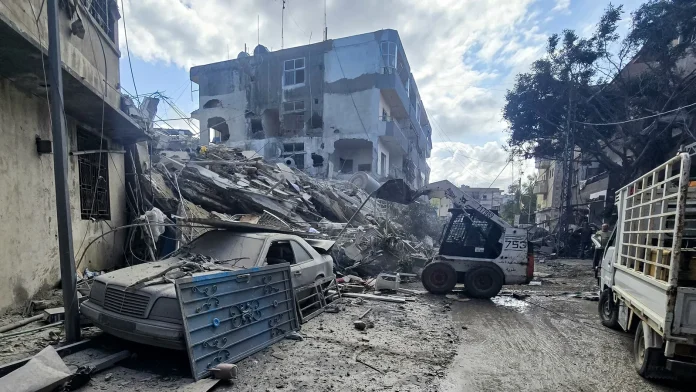
Smoke over the citrus groves: new strikes in southern Lebanon as fragile truce stutters
On a sun-scorched afternoon in southern Lebanon, the ordinary rhythms of village life — children playing in dusty alleys, old men sipping coffee under awnings, women hanging laundry scented with za’atar — were ruptured by a sequence of distant booms. By nightfall, sirens had replaced market chatter. Families loaded cars and trucks with belongings, and a steady stream of people headed north toward the port city of Sidon and the looming skyline of Beirut.
The Israeli military said it had launched fresh strikes against what it described as Hezbollah infrastructure across several zones in the south. Lebanon’s state news agency reported attacks on at least five villages and, with that, another round of displacement—families fleeing farms and homes that have already known too much loss.
What happened — and why it matters
This escalation comes just a day after officials from Israel and Lebanon announced an extension of a truce negotiated in Washington. The ceasefire, which first took effect on 17 April, was extended for another 45 days as diplomats sought to keep an already fragile calm intact. But the strikes underline how rapidly a brittle peace can fray.
“We welcomed the additional days of silence,” said a member of Lebanon’s negotiating delegation in Washington in a statement shared by the presidency. “This breathing space matters for civilians, for institutions, for a political track toward some form of stability.” Yet the breath is shallow. Hezbollah, backed by Iran and deeply embedded in southern Lebanon both politically and militarily, has denounced the talks and continued to claim responsibility for attacks claimed to be in response to Israeli moves.
Across the conflict, Lebanese authorities say more than 2,900 people in Lebanon have been killed since the fighting escalated, including more than 400 since the truce began. The Israeli military also reports losses: at least 19 soldiers have died in southern engagements since the clashes widened this spring.
Voices from the ground
“We left everything—our goats, the garden, even the old radio,” said Amal, a 47-year-old woman from a village near Nabatieh who arrived in Sidon with two children and a plastic satchel of clothes. “You never think it will happen again here. But every time you hear the planes, you remember.” Her hands trembled as she folded a small blanket over a child asleep on her lap.
“The warning came by text and a drone voice telling nine villages to evacuate,” said Jamil, a taxi driver who ferried families toward Sidon. “People moved from the hills like a river of dust. There is fear, yes, but also a strange calm — the kind you feel when you must keep going for the next person.”
An analyst in Beirut, who asked not to be named for safety reasons, framed the strikes as a grim reminder of the limits of diplomacy in a region where statecraft and armed non-state actors coexist uneasily. “Talks can create windows,” they said, “but they can’t close doors that are kept open by local militias, external patrons, and the memory of recent bloodshed.”
Sidon, Nabatieh and the texture of the south
To understand the human geography here, imagine a coastline of olive groves and sea-swept markets, then turn inland to terraces and orchards that feed families for generations. Sidon — Saida in Arabic — is an ancient port city whose glassmakers and soap-makers have for centuries traded with the wider Mediterranean. Nabatieh sits deeper in the hills: a place of small farms, lamb dinners, and a strong local culture where political allegiances can determine everything from who you marry to where you shop.
When military notices are issued — warning residents to evacuate specific villages — they don’t simply ask people to move. They displace livelihoods, school schedules, funerals, prayers. They force choices: stay and risk the next strike, or carry your life down the road and hope for a shelter that can take you in.
Numbers that frame a tragedy
- Ceasefire first took effect: 17 April.
- Truce extension agreed: 45 days (announced after talks in Washington).
- Lebanese death toll from the conflict (reported by Lebanese authorities): more than 2,900, including over 400 since the truce.
- Israeli military losses reported in southern Lebanon: at least 19 soldiers since the latest escalation.
Statistics help map the scale, but they fail to capture the small, visceral details: the neighbor who stayed behind to tend a dog, the herder who worries about olive harvests gone uncollected, the child asking whether home will still be there tomorrow.
Diplomacy under strain
The Washington talks were notable: they marked a rare, direct engagement between Israeli and Lebanese delegations after decades without formal diplomatic ties. For some Lebanese officials, the U.S.-facilitated security track represented a pragmatic attempt to keep bloodshed contained and give civilian authorities a breathing space to rebuild institutions eroded by years of instability.
“This isn’t about love between capitals,” said a diplomat familiar with the discussions. “It’s about avoiding open war that neither side wants and that would devastate a region already teetering.”
But Hezbollah, which holds significant sway in southern Lebanon and is backed politically and materially by Tehran, has publicly resisted the diplomatic track. Its leaders have continued to frame the fight in terms of resistance and deterrence, a rhetoric that resonates with parts of Lebanese society still haunted by past incursions and perceived injustices.
What should readers take away?
In a world where headlines flip by the minute, there is a compelling human truth to remember: peace is not only the absence of missiles; it is the patient, fragile labor of rebuilding trust, protecting civilians, and stitching together futures. When a truce is extended by 45 days, that is not victory. It is an interval — a pause in which choices must be made.
Ask yourself: what kind of pressure would you accept to keep your family safe? How much does the fate of a distant negotiation depend on local shopkeepers and farmers who have already lost too much? These are not abstract questions. They are the questions that shape whether Sidon’s markets return to life, whether Nabatieh’s olive harvests are gathered, whether a child hears only the call to prayer and not the whine of planes.
For now, the highways are lines of hope and fear. For now, diplomats will try to turn hours into weeks, and weeks into months of calm. But the south will keep its own time — measured not in agreements signed in distant conference rooms but in the slow return of everyday rhythms: the hum of the souk, the laughter of children, the smell of coffee at dawn.
What happens next depends as much on those rhythms as on what is written in any communiqué. And in that uncertain space between diplomacy and the next blast, ordinary people continue to live, move, and make choices that will shape the course of this embattled landscape for years to come.
Great white shark fatally attacks man off Western Australia coast
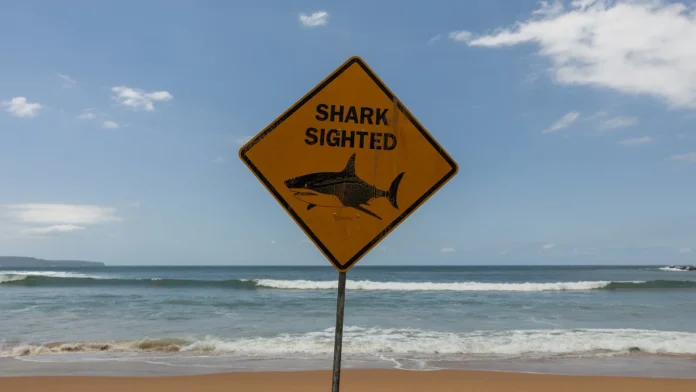
Morning Calm Shattered: A Fatal Shark Attack off Rottnest Island
The turquoise ribbon of ocean that laps Rottnest Island was, until this morning, a postcard scene: bicycles clattering on limestone paths, quokkas peeking from scrub, ferries disgorging sunburnt tourists. By 10am, that ordinary, joyous bustle had a dark, jagged edge.
Police and regional authorities confirmed that a 38-year-old man was fatally bitten by a great white shark just off the island’s shore, near Perth. The attack happened shortly before 10am local time; emergency crews worked urgently but, officials said, “the man was unable to be revived.”
Witnesses, First Responders, and a Community in Shock
“It was awful — you could see people on the ferry looking around like it wasn’t real,” said Sarah Nguyen, who runs a day-tour business on the island. “We tell families to enjoy the water and the wildlife; no one thinks about something like this.” Her voice cracked as she described seeing emergency boats slicing through a sea that had moments before been benign and bright.
A Western Australia Police spokesperson urged caution around the area and confirmed the Department of Primary Industries and Regional Development had identified the animal as a roughly 4-metre great white. “Our thoughts are with the family at this tragic time,” the spokesperson added.
Local fishermen and long-time island residents echoed the grief. “I’ve been here for forty years,” said Tom Riley, a retired skipper. “The ocean changes its mind sometimes. We respect it, but this is heavy.” Residents described a solemn island atmosphere — shops closing early and an unusual quiet falling on a place usually full of laughter.
Numbers, History, and a Growing Conversation
Shark incidents around Australia have long been tracked and debated. According to a historical database of encounters dating back to 1791, nearly 1,300 interactions have been recorded nationwide, with more than 260 resulting in fatalities. These figures remind us that while attacks are rare in comparison to the number of people who enter the water every year, the consequences can be devastating for individuals, families, and communities.
This is Western Australia’s first fatal attack since March of last year, when a surfer was mauled off a remote beach. Earlier this year, the country also mourned a 12-year-old boy killed in Sydney Harbour in January — one of four attacks that unfolded over two days and prompted the closure of dozens of city beaches. Such concentrated spates of incidents have re-energised debates about public safety, animal conservation, and coastal management.
What Scientists Are Watching
“We are seeing shifts in shark behaviour that likely reflect broader environmental changes,” said Dr. Emily Carter, a marine ecologist who studies apex predators off Australia’s south-west coast. “Rising sea temperatures alter where prey species congregate. At the same time, more people are in the water than ever before. It’s a collision of trends.”
Dr. Carter points to decades of warming in the Southern Hemisphere as a potential driver of altered migratory paths. “Sharks follow food. If their prey moves closer to shore or into new regions, so do the predators. We also have increased coastal development, which changes habitats.” She stressed that understanding these patterns requires careful, long-term monitoring rather than fear-driven policy.
Mitigation, Controversy, and Community Responses
In response to attacks, authorities often adopt a mix of measures: temporary beach closures, increased surveillance using drones and helicopters, the deployment of SMART drumlines, and, in some regions, traditional shark nets. Each option carries trade-offs.
- Drone surveillance and aerial patrols can offer early warnings without harming wildlife.
- SMART drumlines aim to capture and relocate sharks, though critics say relocation is stressful and not always effective.
- Shark nets reduce access to open water for all marine life and are controversial among conservationists.
“We need evidence-led strategies,” said Dr. Carter. “Panic policies can end up harming the very ecosystems we rely on. And they rarely eliminate risk entirely.”
Conservation groups stress that great whites and many other shark species are vulnerable or protected in Australian waters, a status born of decades of overfishing. “Sharks play a crucial role in ocean health,” said Maya Singh of the Marine Guardians Collective. “They help keep fish populations balanced. Killing them recklessly doesn’t make beaches safer in the long run.”
On the Ground: Practical, Human Responses
Authorities have urged the public to take “additional caution” in the waters around Rottnest Island. Boat operators rerouted pleasure cruises temporarily, and lifeguards increased their presence at popular beaches. The ferry companies began broadcasting safety messages to passengers.
For friends and family of the victim, details remain raw and intensely personal. “He loved the sea,” a neighbour who asked not to be named told a local paper. “He was the kind of man who would help someone with a broken down dinghy. It’s cruel and sudden.” Community vigils were planned as friends gathered to remember a life that was abruptly cut short.
Beyond the Headline: What Should We Ask Ourselves?
When a headline like this hits, it prompts familiar questions: How do we stay safe? How do we protect marine life? How much risk are we willing to live with in exchange for the freedom of coastal recreation? These are not just technical debates; they are moral and cultural choices.
Who should decide what measures to adopt — scientists, policymakers, local communities? And how can tourism-dependent places like Rottnest strike a balance between welcoming visitors and safeguarding residents?
Looking Ahead
The ocean is a place of immense beauty and real danger. The fatal attack off Rottnest Island is a heartbreaking reminder of that complexity. As mourning gives way to discussions about policy and prevention, the island’s community — like coastal communities across the world — faces hard questions about coexistence with creatures that have lived in these waters far longer than we have.
For now, the advice is simple: respect the warning flags, heed local guidance, and enter the water with eyes open. The sea is generous and indifferent; it rewards humility and punishes hubris. In the days to come, Rottnest will try to find its equilibrium again. How we reshape our relationship with the ocean will determine not only the safety of beachgoers but the health of marine ecosystems for generations to come.
Taiwan Asserts Independence in Response to Trump’s Warning
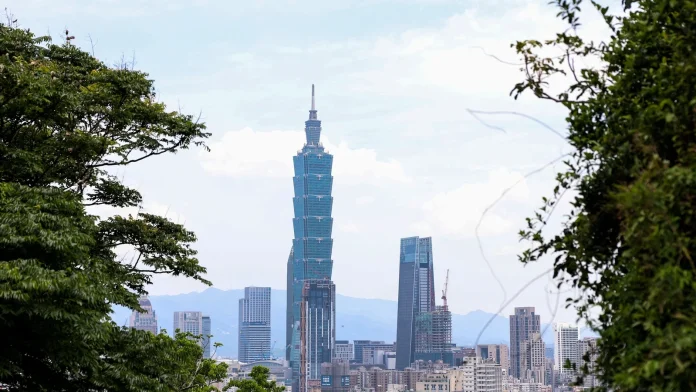
A Quiet Island and the Thunder of Giants
On a humid morning in Taipei, a vendor flips pieces of stinky tofu over a blistering wok and a grandmother sweeps fallen jacaranda petals from the stoop of a tea house. Life feels ordinary here—until you remember how fragile ordinariness can be when two global powers spar across the sea.
Last week’s diplomatic storm—President Donald Trump’s state visit to Beijing and his blunt warning to Taiwan—has left that fragility more visible. Mr. Trump told reporters he did not want a new war and urged Taiwan not to make a formal declaration of independence. He spoke of the long journey to defend the island—“we’re supposed to travel 9,500 miles to fight a war,” he told Fox News—and the weary preference for calm over confrontation.
For many in Taiwan, those words landed like a weather report: useful, but not definitive. The island answered in its own way, with an unmistakable sentence from its foreign ministry: “Taiwan is a sovereign and independent democratic nation, and is not subordinate to the People’s Republic of China.” It was a short, bright counterpoint to the grand chessboard diplomacy unfolding thousands of miles away.
The Language of Sovereignty
“We do not take these things lightly,” said Karen Kuo, a spokeswoman for Taiwan’s Ministry of Foreign Affairs, speaking over the phone from Taipei. “Our statements are meant to reflect the reality felt by the people who live here every day: robust elections, independent institutions, and a culture that has forged its own identity. Arms sales are not a favor; they are a legal and moral commitment under the Taiwan Relations Act.”
That act, enacted by the United States in 1979 after Washington shifted diplomatic recognition to Beijing, requires the US to provide Taiwan with the means to defend itself. Yet the broader question—that of whether American forces would intervene directly in the event of an attack—remains shrouded in the American doctrine of “strategic ambiguity.”
On the Ground in Taipei
Walk through the city’s bustling night markets and you’ll hear a chorus of concerns—and a refusal to be reduced to a geopolitical talking point. “We want peace,” said Mei-Ling, a 28-year-old barista who emigrated back from Melbourne three years ago. “But we don’t want to wake up one day without being asked if this land still belongs to us.”
On the docks of Keelung, an elderly fisherman named Hsu watches freighters glide by and talks about history the way older people do—slowly, with a shrug and a memory. “My father used to tell me about the war years. We are tired of war stories,” he said. “Give us trade, give us tea, let our grandchildren ride their scooters without fear.”
These voices are at once personal and political. They reflect a population of about 23.5 million people whose lives are stitched into the global economy through microchips, ambassadorships-by-commerce, and an outsized cultural influence that includes cuisine, cinema, and the soft power of a democratic way of life.
Arms, Ambiguity, and an Uncomfortable Law
Back in Washington and Beijing, the conversation is numerical and procedural. Taiwan’s parliament recently approved a $25 billion defense spending bill designed to modernize the island’s forces. According to Taipei legislators, that sum is intended to cover nearly $9 billion of an $11.1 billion arms package announced earlier by Washington, and to prepare for a second phase of acquisitions—figures Taipei hopes would top $15 billion, subject to US approval.
“This is not arms-for-arms bravado,” said Dr. Maya Everett, a defence analyst who studies East Asian security. “It’s deterrence. It’s insurance. Taiwan is trying to make any potential military adventurism costly and uncertain for Beijing.”
China, which regards Taiwan as a breakaway province to be reunited with the mainland—by force if necessary—has intensified military pressure in recent years. The 2005 Anti‑Secession Law gives Beijing the legal pretext to use “non‑peaceful means” should Taiwan formally declare independence. In turn, Taiwan has repeatedly emphasized its de facto independence through democratic practice and self-governance rather than through a one-line declaration.
Semiconductors and the Stakes of Supply Chains
There is another dimension to this standoff that reaches into every pocket and office around the globe: semiconductors. Taiwan’s foundries, led by companies like TSMC, manufacture a disproportionate share of the world’s most advanced chips—components that are vital to everything from smartphones and cars to advanced medical devices and military avionics.
“You can think of Taiwan as the lifeblood of modern electronics,” said Jin Park, a supply-chain consultant in Seoul. “Any disruption here would ripple through economies and industries worldwide. That’s why so many governments watch this situation with a mix of concern and calculation.”
A Regional Compass Point
This is not merely a bilateral tension between Washington and Beijing; it is a regional puzzle whose pieces include Japan, South Korea, the Philippines, ASEAN countries, and the broader Indo‑Pacific strategy pursued by Western democracies. The United States’ consistent—if sometimes ambiguous—commitment to Taiwan is a cornerstone of that architecture. But words spoken in stately rooms in Beijing or aboard Air Force One can change the psychological climate overnight.
“Public diplomacy matters, but actions are the true thermometer of commitment,” said Professor Li Wei, an international relations scholar in Hong Kong. “When leaders speak of ‘cooling down,’ they need to be paired with clear, verifiable measures that reduce the chance of miscalculation.”
- Population of Taiwan: ~23.5 million
- Taiwan Relations Act enacted: 1979
- China’s Anti‑Secession Law enacted: 2005
- Taiwan’s recent parliamentary defense bill: $25 billion
Questions We All Should Be Asking
What would a peaceful status quo look like for a people who live daily under the shadow of great-power competition? How do democracies balance moral commitments to self-determination with the hard arithmetic of military risk? And in a world where a single island produces chips that power the global economy, what responsibilities do distant capitals have to prevent a conflict that would harm millions?
These are not theoretical questions for the vendors, students, and taxi drivers of Taipei. They are urgent, practical, and deeply human. “We don’t want to be a headline,” Mei-Ling the barista said, half smiling. “We want to be a place where our parents can be buried and our kids can study without picking between wars and wallets.”
What Comes Next
President Trump said he would make a decision “in a fairly short period of time” about arms sales. For Taipei, that answer matters not only in terms of hardware but as a signal of political will. For Beijing, the reaction will be read as a test of resolve. For the rest of the world, Taiwan’s fate is a reminder of how local identities and global systems are now inextricably linked.
So when you sip your coffee tonight or scroll past the headlines, think about the human dimensions that map onto those lines on a world map. Imagine being asked to choose your flag or your future under the glare of foreign cameras. What would you do? And what would you expect the international community to do—for the people who simply want to live their lives in peace?
Can the United States and China Escape the Thucydides Trap?
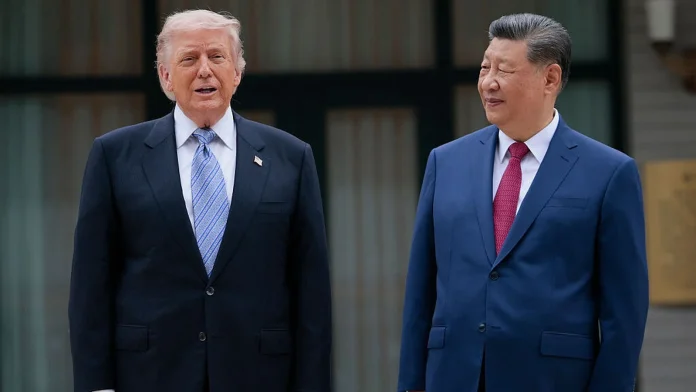
When Ancient Athens Felt Modern: Beijing, Trump, and the Specter of the Thucydides Trap
On a November morning in Beijing that smelled of chrysanthemums and diesel, a line of soldiers in immaculate formation marched past the Great Hall of the People. Brass instruments flashed in the weak sunlight. Children in matching uniforms waved small Chinese and US flags in practiced unison. It looked, in every choreographed detail, like a scene meant to be remembered.
Less visible — but no less dramatic — was a single phrase that ricocheted around the internet that day: “Thucydides Trap.” Searches for the term surged after President Xi Jinping invoked it in his conversation with President Donald Trump, and suddenly an ancient Greek historian’s grim observation about power politics felt startlingly relevant to Silicon Valley boardrooms and chip fabs.
What is the Thucydides Trap, and why are people suddenly Googling it?
The phrase stems from Graham Allison’s 2011 reframing of Thucydides’ account of the Peloponnesian War: Athens rose, Sparta panicked, and war followed. It’s shorthand now for the tension between an established hegemon and an ascendant challenger — and between two countries that possess nuclear weapons and global markets.
“When leaders talk about Thucydides, they aren’t indulging in metaphors,” said Lina Ortega, a political scientist based in Madrid. “They’re naming a problem: can two states rewire their rivalry so economies and citizens aren’t collateral?”
A Summit as Spectacle: Power, Pageantry, and a Subtle Message
From the moment President Trump stepped onto Chinese soil, the choreography was unambiguous. The parade, the red carpet, the rows of young faces holding bouquets — all of it was meant to convey one message: China is confident, capable, and no longer in the shadow of anybody.
Walking past Tiananmen Square, the two leaders paused. Xi gestured toward the vast plaza in a way that was equal parts historical invocation and private reminder. The sightline was loaded: a public stage for power, and a place where painful, censored memory sits beside ritualized pride.
“It felt like being shown around someone’s living room — but a living room where decisions are made that affect millions,” recalled a journalist traveling with the American delegation. “There was a kind of hospitable display, wrapped in muscle.”
On Taiwan, Trade, and the Tightrope of Conversation
Talk turned crisp and urgent when Xi warned that mishandling Taiwan could lead to a dangerous clash. Beijing considers the island its own, while Taipei’s 23 million people consistently show a desire to maintain the status quo and the right to decide their future.
“Taiwan is the reddest of red lines,” said a Taiwan-based analyst, echoing a sentiment that many diplomats believe defines Beijing’s posture.
For Washington, Taiwan has long been governed by “strategic ambiguity”: selling arms without promising explicitly to fight. Yet during the summit arms sales became an open item on the table. President Trump later said the two leaders had discussed U.S. arms packages “in great detail.”
That exchange matters. For decades, the subject of Taiwan was almost sacrosanct in bilateral talks. Now it was negotiable — or at least negotiable enough to be discussed in person. Political scientist Wen-Ti Sung put it plainly: “When a transactional administration begins to treat constants as negotiable, the balance of leverage shifts.”
Silicon Valley Meets Zhongnanhai: The Business of Getting In
Traveling with the American president were several of the world’s most recognizable tech executives: the CEOs of companies whose chips and software are the nervous system of modern economies. They came seeking access — market share, partnerships, customers. China, for its part, offered guarded openness.
“China’s door will open wider,” Xi told business leaders, according to state media. But there was a caveat in every smile: openness, yes — on Chinese terms. Foreign firms often must form joint ventures, surrender some proprietary technology, and navigate a legal environment where the state’s objectives are paramount.
Consider the fight over advanced chips for artificial intelligence. U.S. export controls have constrained some sales; Beijing’s own push for self-reliance has accelerated domestic investment in semiconductor design and fabrication. The result is a decoupling that looks partial, complicated, and likely to continue.
What Was Left Off the Table: Human Rights and the Retreat of Moral Language
There used to be a ritual — a gentle, carefully worded admonition about human rights placed somewhere between trade and joint communiqués. During this summit, that ritual was faint. Questions of Xinjiang, Tibet, and press freedom scarcely surfaced in public exchanges.
“The prioritization of economic interest over human rights is not new,” said Christine Ryan, a scholar at Columbia University’s Human Rights Institute. “What’s striking now is the depth and speed of the shift. When a major power deprioritizes these values, it reshapes how others engage.”
That absence is not merely symbolic. It signals to activists, to minorities, and to foreign governments that pragmatism — contracts, planes, and chips — can outweigh the language of accountability. For those who had hoped that engagement would bring change, it was a sobering moment.
Street-Level Reactions: Tea Vendors, Students, and the Quiet Majority
Not everyone was swept up in the summit’s symbolism. Outside a noodle shop near the pedestrian lanes, a tea vendor wiped his hands and smiled without revealing much.
“More tourists, maybe more business,” he said. “But politics is for them. I just want people to have money to spend.” His eyes flicked toward the televisions, then back to the kettle.
A university student in Shanghai, during a late-night conversation over dumplings, offered another tone. “I love that China gets respect, but I worry about what’s traded away,” she said. “Are we losing voices that need to be heard for deals that might not help everyone?”
Why This Moment Matters — and What It Might Mean for the World
We are witnessing a recalibration of norms. The language of equality that Xi used — asking whether China and the United States could avoid the Thucydides Trap — was an invitation and a warning. The summit itself was a demonstration: show strength, extract discussion on sensitive issues, and keep commercial lights green.
But avoiding conflict is not simply a matter of good optics and handshake agreements. It requires durable institutions, clear signaling, and domestic political coalitions willing to accept compromise. It requires managing rivalry without losing sight of universal standards.
So, what will the coming years bring? Will the world see an uneasy détente, engineered through trade-offs and silent bargains? Or will technological competition, contested narratives, and localized flashpoints like Taiwan create the conditions Thucydides once warned about?
We cannot answer that in a single dispatch. But we can ask: if history is a teacher, are we listening? Are we willing to trade immediate gains for longer-term stability? And perhaps most urgently — what does it say about our global priorities when economic incentives so often outweigh moral claims?
As the soldiers’ boots faded from the square and the world returned to its usual churn of markets and headlines, one thing felt clear: the questions raised in Beijing are not private to two leaders. They belong to all of us.

Seán the sheep shearer claims New Zealand’s top shearing championship title
A young shearer from Co Wicklow has made history on the other side of the world, taking the top junior sheep-shearing title in New...

Trump calls a Putin-Zelensky summit “great” and urges talks
US President Donald Trump said it would be "great" to see Ukrainian President Volodymyr Zelensky sit down with Russian leader Vladimir Putin after Mr...
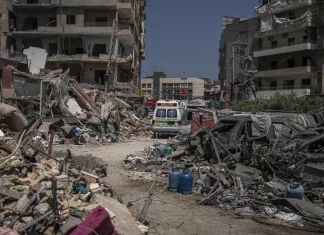
Lebanon reports Israeli airstrikes near Beirut and throughout the south
An Israeli strike hit near Beirut’s southern approach as Israel intensified bombardments across Lebanon’s south, with a medical source reporting six deaths in the...

Russia Reports Four Killed in Crimea After Ukrainian Strikes
Deadly strikes in Russia-annexed Crimea have raised the toll in a widening exchange of attacks between Moscow and Kyiv, with Kremlin-installed officials reporting four...
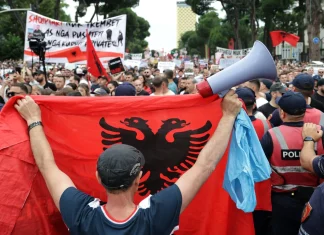
Albanians rally against Kushner-linked luxury resort development plans
Anger is spilling onto the streets of Tirana as thousands of Albanians rally against a proposed luxury resort tied to Jared Kushner, warning it...