

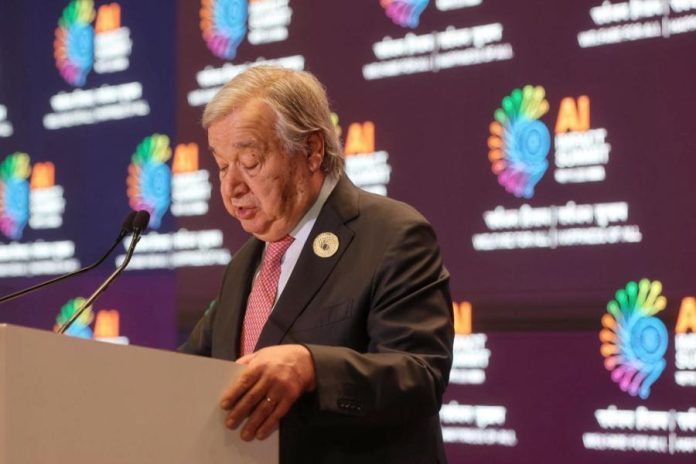
May 19(Jowhar) Xoghayaha Guud ee Qaramada Midoobay ayaa sheegay inuu si dhow ula socdo xaaladda siyaasadeed ee Soomaaliya, gaar ahaan wada-hadallada u dhexeeya Dowladda Federaalka Soomaaliya iyo Golaha Mustaqbalka Soomaaliyeed.
Authorities launch manhunt in Turkey after shooter kills six people
Nightfall in Tarsus: When Quiet Streets Became a Flashpoint
They say Tarsus breathes old stories—the Roman road, the citrus trees that scent the night, the slow procession of shepherds moving their flocks at dusk. On a recent evening, as the azan drifted over the olive groves and the sea-salt air from nearby Mersin cooled the pavement, that long memory of calm was broken by gunfire.
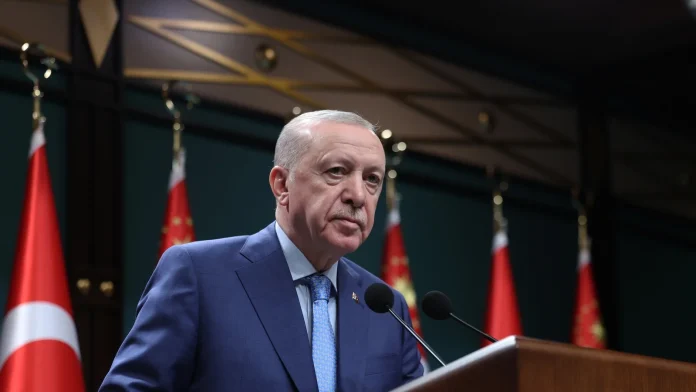
President Recep Tayyip Erdoğan later offered a terse public response: “We ask for God’s mercy on those who lost their lives,” he said in a broadcast statement, revealing that six people had been killed and eight wounded. The details, he said, were still being pieced together as security forces raced across the landscape to find the shooter.
Snapshots from the scene
What emerged in the hours that followed felt at once intimate and terrifying—a pattern that repeated itself in small towns and big cities across the globe. Local reports, amplified by state media, said the suspect, a 37-year-old man, began by killing his ex-wife at their home. From there, investigators say he moved to a nearby restaurant where he shot the owner and an employee. He then allegedly killed two more men: a shepherd keeping an eye on his animals and a passing truck driver.
“He came in without a word. We thought he was getting his telephone out, but he brought out a pistol,” said Mehmet Han Topal, a restaurant employee who was wounded in the leg and was quoted by local news agencies. “I got down. He fired at me.”
Helicopters crisscrossed the sky as police combed fields and back roads for a manhunt that stretched across the province. For a community used to the comforting regularity of evening prayers and market chatter, the sudden presence of sirens, spotlights and armed officers was a shock that rippled through families and neighborhoods.
Faces, Names, and the Small Details That Matter
It’s easy in the hours after an attack to talk only about numbers. Six dead, eight wounded—these are the stamps headlines need. But behind each figure is a life: a restaurant owner who greeted regulars with a familiar nod, a shepherd who tended his flock the way his father taught him, a truck driver moving goods along the coastal road.
“He was the kind of man who brought juice to kids in the summer,” said Ayşe, a neighbor who asked that only her first name be used. “You don’t expect that in this town. Not from someone you see every day.”
Stories like this force us to sit with uneasy contradictions. Tarsus is a place where traditions are strong and neighbors still borrow sugar over courtyard walls. Yet it is also subject to the same frictions that confront modern life—broken relationships, easy access to weapons, the slow erosion of social supports.
What the statistics tell us
Numbers alone cannot convey grief, but they can help us understand scope. Turkey’s population is roughly 85 million people, and according to a local non-governmental organization, there are tens of millions of firearms held by civilians—many, the group claims, without permits or registration. Independent observers and criminologists point out that unregulated weapons in circulation complicate policing and increase the likelihood of impulsive violence turning fatal.
The Tarsus shooting also comes after a troubling month: two separate attacks by teenagers shocked the country, one injuring 16 people and another claiming 10 lives, most of them young schoolchildren. Those incidents have fueled debate about youth alienation, mental health services, and social media’s role in radicalizing or amplifying violent impulses.
Voices from the ground
“We need to talk about how someone can go from a domestic dispute to killing strangers,” said Dr. Elif Yılmaz, a sociologist based in Ankara who studies violence in rural communities. “There are patterns: unaddressed trauma, social isolation, and—for too many—easy access to a firearm.”
A local police commander, who spoke on condition of anonymity because the manhunt was ongoing, told me, “Our priority is to bring closure to the families and to stop anyone else getting hurt. But these kinds of incidents are tests of coordination—between local officers, forensic teams, even the municipality.”
On the street corner near the restaurant, a tea vendor folded his hands and looked toward the hills where the shepherds kept their flocks. “We are small people,” he said. “We work with our hands. We know each other’s stories. This is a wound.”
Culture, control, and the rural landscape
Turkey’s Mediterranean belt—Mersin province, with its port and orchards—reflects a tapestry of livelihoods. Shepherding still threads the countryside. Tobacco and citrus are common crops. Coffeehouses hum with chess players and old men arguing over football. In many such places, informal dispute resolution and family networks once served as cushions against escalation.
But modernization, migration to the cities, and economic strains have frayed those networks. When that happens, domestic disputes can escalate, and firearms—if present—can change the outcome from an argument to a tragedy.
Questions worth asking
What responsibility do we bear as societies when weapons and unresolved personal trauma meet on a street corner? Can better gun regulation, more robust mental health services, and stronger community networks actually prevent the next attack?
“We cannot just react with words after every shooting,” said Leyla Demir, a Mersin-based activist who works with survivors of domestic violence. “We need structural change: enforcement of weapons laws, support for women at risk, hotlines, shelters, and education in schools about conflict resolution. Otherwise we are rearranging deck chairs.”
These are not new arguments. What often stalls them is political will, resources, and competing priorities. Still, the human cost—the funerals, the families who will carry this loss forever—generates pressure for action.
Beyond the headlines: a community’s reckoning
In the days to come, Tarsus will bury its dead, treat its wounded, and replay the night in endless, private ways. The manhunt may end with an arrest or may conclude with other unresolved questions. Either way, the town will be marked.
Readers around the world, who may be far from Turkey but not immune to its patterns, might ask themselves: have we become numb to these stories? Or can we let them prod us into conversations about how we structure safety, care for the vulnerable, and prevent violence from seeping into ordinary life?
“We are angry, we are sad, we are scared,” said a schoolteacher who stood in a small courtyard where children had once played freely. “But anger must become action. Not revenge. Not more guns. Real change.”
For now, Tarsus waits—waiting for answers, waiting for justice, waiting for a measure of peace that will allow its citrus trees to keep perfuming the evening air and its tea vendors to call out names as customers come for their cup. In that waiting there is grief, yes, but also the quiet hope that a community can learn, rebuild, and insist on a life in which violence is not the final word.
Court Rules Against Elon Musk in Lawsuit Targeting OpenAI

A Courtroom Curtain Call: What Elon Musk’s Loss to OpenAI Reveals About Power, Promise and Profit
Oakland’s federal courthouse fell silent for a moment that felt larger than the room itself: a unanimous jury, less than two hours of deliberation, and a verdict that will ripple through boardrooms, developer forums and dinner-table arguments about what artificial intelligence should become.
The lawsuit filed by Elon Musk against OpenAI — once a shared venture between tech luminaries committed, at least on paper, to “benefit humanity” — has ended in the courtroom for now. The jury found Musk’s claims untimely, concluding he had waited too long to press his grievance that OpenAI had veered from its founding nonprofit mission into a path of private enrichment. The judge, U.S. District Judge Yvonne Gonzalez Rogers, underscored that the record contained “a substantial amount of evidence to support the jury’s finding.”
This is not just a legal outcome. It is a lens on a conflict playing out across the globe: who gets to steward transformative technology, and how do we hold institutions accountable when the promises we trusted begin to bend under market forces?
From Ideals to Investments: A Brief Timeline
OpenAI was born in 2015 amid idealistic fervor. Founders including Sam Altman and Elon Musk pledged to build safe artificial intelligence and to make its benefits widely accessible.
But the venture’s structure evolved. Musk left the board in 2018. A year later, OpenAI created a for-profit arm — a move Musk said betrayed the nonprofit’s mission. He later alleged he was manipulated into donating roughly $38 million and that OpenAI openly courted tens of billions from investors, most notably Microsoft.
At trial, testimony included a staggering figure: a Microsoft executive said the company had spent more than $100 billion in its partnership with OpenAI. Meanwhile, OpenAI is reportedly being prepared for a potential IPO that some bankers whisper could approach a $1 trillion valuation — a figure that sounds mythic, almost as if finance is trying to harness the weather.
Key dates and numbers from the case
- 2015: OpenAI founded.
- 2018: Elon Musk leaves OpenAI’s board.
- 2019: OpenAI forms a for-profit arm.
- $38 million: Musk’s alleged donation at issue in the suit.
- 11 days: length of testimony and arguments at trial.
- Less than 2 hours: jury deliberation before the verdict.
- $100+ billion: Microsoft’s reported spending on its partnership with OpenAI (per testimony).
The Human Texture Behind Legalese
To hear the lawyers tell it is to enter a courtroom opera: accusations of “stealing a charity,” counteraccusations that Musk “saw dollar signs,” and pitched attacks on credibility that made the trial feel less like a dispute over governance and more like a question of character.
“If you don’t believe him, they cannot win,” Musk’s attorney told jurors as he urged them to doubt Sam Altman’s trustworthiness. OpenAI’s lawyer, William Savitt, shot back that Musk’s instincts do not translate into mastery of AI, quipping that “Mr. Musk may have the Midas touch in some areas, but not in AI.”
Outside the courtroom, reactions ran the gamut. A nearby barista, who asked not to be named, shrugged and said, “I don’t really care which billionaire wins — but I care about the jobs my friends might lose to these systems.” An Oakland resident and teacher, Maria Alvarez, told me, “I teach kids who use AI for research and homework. It’s powerful, but also scary. Who decides how it’s shaped matters to us all.”
Inside the courthouse, OpenAI attorneys embraced when the verdict was read. Microsoft — which faced an aiding-and-abetting claim — issued a terse statement welcoming the jury’s decision and arguing the timeline of events had been “clear.” Musk’s legal team announced it reserved the right to appeal, though the judge suggested that would be an uphill climb because the jury’s finding rested on factual determinations about when the clock started to run.
Why This Matters Beyond Billionaires
At its core, the case was a contest over competing visions for technology: a communal, safety-first approach versus a market-driven, venture-backed trajectory. But the reverberations extend far beyond OpenAI’s boardroom.
AI is woven into countless parts of modern life — from education and healthcare to jobs, justice and the intimate choreography of online consumption. People use AI for everything from diagnosing diseases and assisting legal research to creating art and, worryingly, generating deepfakes. That ubiquity raises questions about oversight, distribution of benefits, and accountability.
“This was never only about a $38 million donation,” said a tech ethicist I spoke with. “It was about whether institutions set up to protect public interest can resist the gravitational pull of private capital.”
The debate intersects with broader global trends: consolidation of tech power, investor influence in mission-driven ventures, and the nimble speed at which innovation outpaces regulation. When a company runs an AI model that can advise physicians or draft legal briefs, regulators and citizens alike must decide who gets to shape the guardrails.
Questions this verdict raises for citizens and policymakers
- How should companies that start with public-interest missions be governed if they take outside capital?
- What legal pathways exist to hold tech organizations to founding promises, and are statutes of limitations fit for purpose?
- How do we balance innovation with accountability when billions of dollars and lives are at stake?
Stories from the Front Lines
In the week after the verdict, I spoke with a small-business owner in San Jose who uses AI tools to automate bookkeeping. “It saves me time, but I worry about dependence,” she said. “If a company decides to lock features behind a paywall because investors demand returns, my small business will be squeezed.”
A former AI researcher, now teaching in a university, summed up the tension in a sentence: “There’s nothing inevitable about how AI will affect us. It’s a series of choices — corporate, legal, political — that we are making right now.”
A Verdict, Not a Conclusion
The jury’s decision closes a chapter, but not the book. Appeals may be filed. OpenAI will continue to build, hire, and perhaps go public. Mr. Musk has his own AI ambitions inside xAI and SpaceX. Governments and civil society will keep chasing governance frameworks: ethics codes, regulatory proposals, and shareholder activism all present avenues to influence AI’s trajectory.
None of these are simple. In a world where innovation and investment dance a complicated tango, who leads and who follows will shape whether AI becomes a force for shared uplift or concentrated advantage.
So, dear reader: what do you want the future of AI to look like where you live, work, and raise your children? And who do you trust — the nonprofit mission statements, the boardrooms with balance sheets, or the public institutions that are supposed to keep both honest?
History has a way of turning legal verdicts into lessons. This one teaches us to pay attention not just to the outcome in Oakland, but to the mechanisms we use to translate technological promise into public good.
Authorities scramble to contain Ebola as fatalities reach 80
On the Red Earth of Ituri: An Ebola Outbreak Unfolds
The market in Bunia hums with the ordinary chaos of a town that has learned to live with uncertainty: women balance baskets of cassava on their heads, motorbikes skitter through a cloud of dust, and the distant clank of miners returning from the pits punctuates the afternoon. Then a hum of another sort — whispered warnings, a line of people at a makeshift hand-washing station, a truck of white tents rolling in — breaks the rhythm.
This is where a fresh outbreak of Ebola is being wrestled into view, and its arrival has rattled a region still scarred by conflict. International health authorities have raised the alarm, and capitals from Kampala to Kinshasa are scrambling. For people here, the emergency is not an abstract headline but a disruption to funerals, markets and the fragile routines that stitch life together.
What we know so far
Health officials report hundreds of suspected cases clustered in eastern Democratic Republic of Congo’s Ituri province: authorities have logged roughly 246 suspected infections and about eight laboratory-confirmed cases, with preliminary figures suggesting the outbreak may have claimed some 80 lives in recent weeks.
Alarm spread beyond Congo’s borders when two cases were reported in Kampala, Uganda’s capital, prompting the World Health Organization to declare the situation a public health emergency of international concern. A separate case was reported in Goma, a city under the control of the M23 rebel movement, according to the group — a development that complicates coordinated response efforts.
The strain identified this time is Bundibugyo ebolavirus, a relative of the more notorious Zaire strain. Unlike Zaire Ebolavirus, which has an approved vaccine and some targeted therapeutics, Bundibugyo currently has no specific licensed vaccine or antiviral proven for wide use — a sobering reality for clinicians and communities alike.
Numbers, risks and human costs
To put this into context: the DRC has faced Ebola 17 times since the virus was first identified there in 1976. Ebola outbreaks have varied wildly in lethality; the World Health Organization places the average case fatality rate around 50%, with past outbreaks ranging between 25% and 90%.
The 2018–2020 epidemic in North Kivu and Ituri — fueled by the Zaire strain — was the second deadliest on record, killing nearly 2,300 people and exposing how violence, displacement and mistrust can turn a health emergency into a drawn-out catastrophe.
Frontlines and shortages
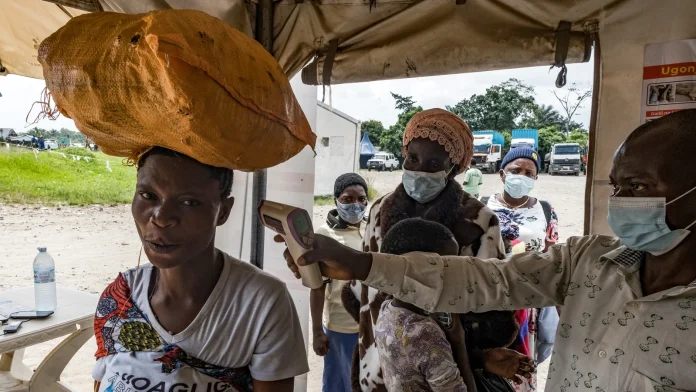
On the ground, the response has a hurried, improvisational feel. A convoy led by Congo’s health minister arrived in Bunia with tents and supplies to expand treatment capacity. Narrow hospital wards are already strained; medical staff who have been through previous outbreaks moved quickly yet cautiously, donning gloves and masks as they triage the sick.
“We are running to catch up,” said one nurse outside a field treatment center, rubbing sanitizer into hands that have not had a real break in days. “The fear is not only of the disease. It is of being too late.”
The World Health Organization has emptied its stocks of personal protective equipment in Kinshasa and is mobilizing a cargo plane from a depot in Kenya. The European Centre for Disease Prevention and Control has dispatched an expert to Addis Ababa to coordinate with African Union partners, and the US Centers for Disease Control and Prevention has said it will boost staff in both DRC and Uganda and assist in withdrawing a small number of affected American citizens.
Logistics tangled by politics and conflict
Movement across borders has tightened. The United States embassy in Uganda temporarily paused visa services, and checkpoints along the Congo–Rwanda frontier reported turned-back travelers in Bukavu. These measures, meant to curb spread, also trap livelihoods and complicate aid delivery: traders, miners and pilgrims now find their routes blocked or deeply uncertain.
“We used to go to Goma for supplies; now some roads are closed and people are afraid,” said a motorcycle taxi driver in Bukavu. “When people lose work, they lose the choice to stay home.”
How this began — and why detection lagged
Local accounts trace the outbreak’s ignition to a funeral in April. A large open-casket procession arrived in a mining town called Mongbwalu from Bunia, and within days clusters of illness began to appear. Jean Pierre Badombo, who once served as Mongbwalu’s mayor, described a devastating chain reaction: whole families sickened in rapid succession, health workers among the earliest victims.
Health ministry sources told investigators that the first alert came on 5 May, when teams were notified of an unknown illness with high mortality in Mongbwalu. But diagnostic missteps — samples initially tested negative for the Zaire strain and were not promptly escalated for further testing — delayed the identification of Bundibugyo until 14 May, a setback that likely allowed transmission to gain a foothold.
“Surveillance is only as strong as the funding and the trust behind it,” said Lievin Bangali, senior health coordinator for the International Rescue Committee in DRC. “When donor support wanes and networks fray, there are blind spots. Viruses exploit those blind spots.”
On the human side: customs, rituals and resilience
Burial rites lie at the heart of this outbreak story. Across many communities in eastern Congo and neighboring regions, funerals are both a social necessity and a cultural ritual — open-casket viewings, communal prayers, and long processions. When a virus that transmits through contact with bodily fluids meets those customs, the consequences can be swift.
“We do not want to stop mourning our dead,” said a woman who heads a community church in Bunia. “But we also do not want to bury more of our children. That is why we are learning new ways to say goodbye.”
Such shifts are not easy. Pilgrimages to Uganda for Martyrs’ Day — a national observance that typically draws thousands from across the border — were postponed this year, a sign of how public health concerns ripple through religious and cultural calendars.
Why this matters to the world
We live in an era when a local outbreak can become a global emergency within days. Air travel connects the busiest markets of Kinshasa, Kampala and beyond; displacement and conflict make containment harder; and scientific tools are unevenly distributed. Bundibugyo’s lack of a licensed vaccine underscores the inequity in pandemic preparedness: where research has focused on the deadliest strains, others remain under-resourced.
So what should the international community learn from this moment? First, that surveillance and rapid laboratory networks are investments, not optional expenditures. Second, that public health measures must be culturally intelligent — working with, not around, local customs. And third, that conflict zones demand adaptable, sustained humanitarian financing so that surveillance doesn’t fray when it matters most.
Questions for readers — and a call for solidarity
As you read this, ask yourself: how closely do global political choices — budgets, aid priorities, security policies — shape whether a viral flare-up becomes a catastrophe? What responsibilities do wealthier nations have to ensure vaccines, treatments and protective gear are available to regions that are already carrying heavy burdens?
The people of Ituri do not need pity; they need support that is rapid, sustained and respectful. A nurse with a cracked smile in a Bunia clinic summed it up plainly: “We are not waiting for miracles. We are waiting for help.”
Will the world answer in time? The tents are up, planes are on their way, and teams are moving into the red dirt at the edges of town. But the story of this outbreak will be written in the next few weeks — by health workers racing to isolate cases, by communities deciding whether to adapt old rituals, and by the global response that either contains the virus or lets it travel farther.
Trump says US strike on Iran temporarily halted to allow negotiations
When a Pause Feels Like a Precipice: Diplomacy, Drones and the Breath Between War and Peace
On a wide boulevard in Tehran, a man in a battered leather jacket pauses beneath a billboard almost the height of a building. It’s bright, impossibly cheerful — an advertisement for the Iranian national football team, already dreaming of the 2026 World Cup hosted across the United States, Mexico and Canada. He smiles, then scrolls his phone to read the latest: the US has called off a planned strike on Iran — at least for now.
That single sentence has rippled across capitals and ports, from Doha’s marble-lined halls to anxious shipping companies tracking tankers in the Gulf. It sounds like a reprieve. It also sounds fragile enough to shatter with the next misstep.
The message, the middlemen and the moment of restraint
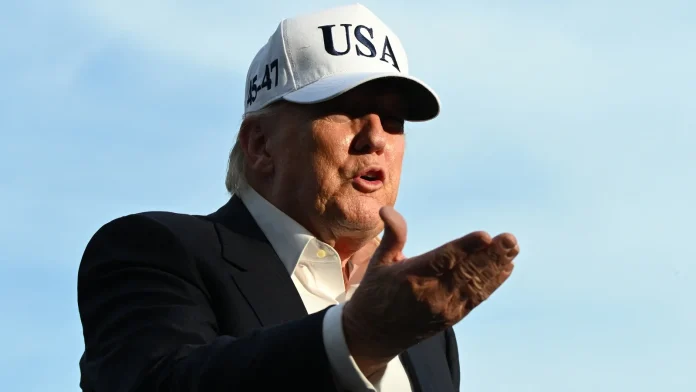
In a terse public post, US President Donald Trump announced that a scheduled military operation had been paused to allow negotiations to proceed after Tehran transmitted a new peace proposal to Washington via intermediaries. The pause, he wrote, was at the request of Gulf leaders from Qatar, Saudi Arabia and the United Arab Emirates — a concerted diplomatic nudge toward talks.
“We will not be doing the scheduled attack… but we stand ready to launch a full, large-scale assault on a moment’s notice,” he said — words that read as both conciliatory and cautionary, a diplomatic olive branch wrapped in the iron glove of military readiness.
Pakistan, which had acted as a conduit during recent talks, confirmed it had relayed Tehran’s offer to Washington. “We passed the message. We’re doing our best. But the parties keep shifting the goalposts,” a Pakistani foreign ministry official told a visiting reporter. “Time is running short.”
What’s on the table — and what’s been postponed
According to sources close to the discussions in Tehran, the Iranian proposal prioritizes an immediate end to hostilities, the reopening of the Strait of Hormuz, and the lifting of maritime sanctions that have effectively strangled Iranian shipping. Iran reportedly suggested postponing the most thorny of disputes — questions about uranium enrichment and the details of a nuclear program — to later rounds of negotiation.
Notably, those Iranian sources say Washington signalled a willingness to unfreeze roughly a quarter of Tehran’s assets held abroad — a sum they describe as “tens of billions of dollars.” Tehran, unsurprisingly, wants access to the entire frozen cache.
“Money is lifeline, not leverage,” said a Tehran shopkeeper who asked only to be identified as Reza. “People are hungry for normal: for work, for football on TV, not rocket alerts. If diplomacy brings bread and peace, who’ll complain about the politics?”
A ceasefire, drones and the Gulf’s new geography of danger
The pause comes against the backdrop of a conflict that has already upended the Gulf’s airspace and sea lanes. A fragile ceasefire has held after six weeks of heavy fighting the followed US-led air strikes. Yet the quiet has been punctured by drone attacks launched from Iraqi territory toward Gulf states. Saudi Arabia said it intercepted three drones that entered from Iraqi airspace; Pakistan’s foreign ministry publicly condemned one such attack.
“We’re in a new era of low-cost, high-impact weapons,” said Dr. Miriam Al-Hashimi, a security analyst at the Middle East Strategic Institute. “Drones and proxies allow conflict to spill beyond borders without the visible footprints of conventional armies. That complicates any attempt to establish durable peace.”
For shipping companies, the Strait of Hormuz is the spine of global oil transit. While exact figures vary by year, roughly one-fifth of the world’s seaborne oil shipments pass through those narrow waters, making its closure an immediate economic shock to energy markets and the wider global economy.
- Duration of recent open hostilities: about six weeks
- Reported frozen Iranian assets under discussion: “tens of billions” (Iran seeks full release)
- Number of drones Saudi Arabia reported intercepting in one attack: three
Claims, denials and the fog of information
State media in Iran reported that the US had agreed to temporarily waive oil sanctions while talks proceed; a US official, speaking on condition of anonymity, called that account false. Tehran’s foreign ministry spokesman, Esmaeil Baghaei, confirmed only that Iranian views had been “conveyed to the American side through Pakistan,” offering few specifics.
In short: negotiators are talking, spokespeople are hedging, and a public narrative is being stitched together with threads of both hope and caution. It’s diplomacy performed at the speed of headlines.
In the markets and on the street: different rhythms, same anxiety
At a busy port in Fujairah, tanker captains swapped radio channels and plotted slower, safer circuits around the Gulf. “We’re doing contingency plans like it’s script work,” said Ahmed Suleiman, a deckhand who has sailed these waters for two decades. “Everyone waits for the next order. But when the Strait closes, the whole map changes: prices spike, consignments reroute, families feel it at the pump.”
Investors already monitor geopolitical risk as a line item in portfolios; traders love nothing more than certainty, and this region offers nearly none. Still, financial markets breathed a tentative sigh when the strike was called off: oil futures dipped modestly, and stocks in some shipping and logistics companies ticked up.
What this moment tells us about modern conflict
There is something profound about a war that can be paused by a tweet and revived by a misinterpreted drone. The machinery of modern diplomacy is both faster and more brittle. Networks of regional intermediaries — Qatar, Pakistan, the UAE — are playing outsized roles, testing whether traditional great-power brinkmanship can be replaced by multilateral pragmatism.
“This is not just a local fight; it’s a global test,” said Elena Morales, an international relations scholar in Madrid. “Can regional leaders craft a deal that stabilizes trade routes, curbs proxy attacks, and yet leaves room for later, technical talks on nuclear matters? The temptation to resolve immediate economic pain can both help and hinder a comprehensive settlement.”
The human ledger: losses, appetites and the cost of waiting
Amid all the strategic calculus, ordinary people are live-wire affected. In Tehran’s alleys, vendors track exchange rates and the price of legumes; a quarter of frozen assets released could mean more imports, lighter inflation, fewer late-night worry calls home. In Kuwait and Riyadh, families huddle as air-defences hum. In ports around the world, captains reroute and insurers raise premiums.
What would you trade for a week of calm: access to funds, assurance of safe passage, or a promise that nuclear questions will remain theoretical? It’s the question negotiators — and citizens — must now answer.
Where might this lead?
If talks produce a durable agreement to reopen the Strait of Hormuz and lift maritime restrictions, the immediate economic shock could fade and shipping lanes could re-normalize. If not, the military pressure Trump warned of remains a real option, and the region could slide back toward open conflict.
Either way, the episode offers a stark lesson: the world is interconnected in ways that make a single flashpoint reverberate across continents. Diplomacy must move as swiftly as weapons technology has — with more nuance, broader coalitions, and deeper attention to the human consequences.
So pause and think: what would you want your leaders to do in this moment? Hold fire and bargain, or act decisively to deter? The answer will shape not just politics, but the daily rhythms of millions who will sleep, work and play in the shadow of these decisions.
For now, the billboard in Tehran still beams its promise of sport and spectacle. Below it, people carry on. Above, diplomats and generals keep one eye on their phones. Between them lies a breath — a fragile interval where the world might yet choose negotiation over escalation.
Trump warns Tehran that time’s running out to accept peace deal
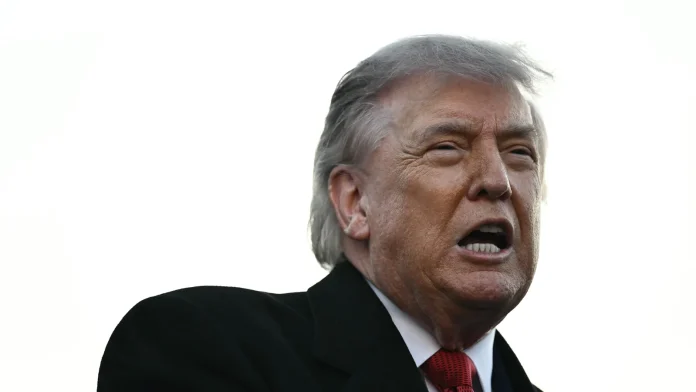
A ticking clock over the Gulf: fear, fury and a fragile ceasefire
There is a peculiar hush in the desert city of Al Dhafra at certain hours—an arid stillness punctured by the distant hum of generators, the low patter of workers’ boots and, increasingly, the thin electric anxiety of people watching headlines. On the edge of that landscape sits the Barakah nuclear power plant, an emblem of a country that has tried to turn sand into steady energy. On a recent night, a drone strike set a generator ablaze outside the plant’s inner perimeter and sent a jolt through the Gulf: the conflict many hoped would be contained has found new places to burn.
“We went out because we smelled smoke,” said Fatima al-Mazrouei, a schoolteacher in a nearby town. “My children were terrified. They asked me, ‘Is the world ending?’ How do you answer a child when the maps keep getting redder?”
The incident—officials in Abu Dhabi say two other drones were intercepted—arrives against a backdrop of stalled diplomacy. The war that erupted more than two months ago, following US and Israeli strikes on Iran, has not only scarred landscapes but rerouted economies and lives. There was a fragile ceasefire that began weeks ago, yet the bargaining table remains an expanse of unmet demands and raw expectations.
What happened at Barakah — and why it matters
Abu Dhabi’s media office said the drone struck an electrical generator outside the inner perimeter of the Barakah plant and that radiological safety levels were unaffected. The International Atomic Energy Agency (IAEA) announced that it was tracking developments closely. The UAE defence ministry reported the downing of two other drones, adding that the devices were launched from the “western border,” though officials did not provide further detail.
Barakah is not some remote experiment; it is the UAE’s central bet on nuclear power. Its four APR-1400 reactors symbolize decades of planning to secure domestic electricity and diversify away from hydrocarbons. To see flames at a generator there is to glimpse how the present conflict threatens to reach not just military targets but the vital veins of civilian life.
“Attacking a nuclear facility—even if it was an electrical unit outside the core—is a red line for so many,” said Dr. Leila Hassan, a regional security analyst who has worked with energy firms across the Gulf. “The material risk may be low in this instance, but the psychological and geopolitical fallout is enormous. People start to worry about things you can’t easily measure—supply chains, insurance premiums for shipping, the calculus of allied responses.”
Diplomacy teetering — and a president’s warning
At the same time as the flames at Barakah, statements on social media and phone lines crackled with urgency. The US president warned Iran the “clock is ticking,” threatening consequences if Tehran did not move quickly toward a peace agreement. The White House said the president had spoken with Israeli prime leadership to discuss the situation. Tehran countered, saying that the latest US response to its proposed agenda for talks contained no meaningful concessions.
On the table are competing lists of demands that, as of now, do not overlap. The United States has publicly called on Iran to roll back parts of its nuclear program and remove pressure on the Strait of Hormuz. Iran, for its part, wants compensation for war damage, an end to what it calls a US blockade of its ports, and a halt to hostilities across multiple fronts—including Lebanon, where fighting with Hezbollah has caused further bloodletting.
- US position: dismantle nuclear capabilities, reopen Hormuz to free navigation.
- Iran’s position: compensation for damage, end to port blockades, cessation of hostilities in Lebanon and elsewhere.
“You can feel the negotiation slipping into a logic of threats,” said Karim Najafi, a former diplomat who worked on Gulf security issues. “When the only certainties are ultimatums, compromise becomes scarce.”
The Strait of Hormuz: a narrow choke-point with global consequences
Beyond the rhetoric and regional sorrow, the world watches a narrow, shimmering artery of commerce. The Strait of Hormuz handles roughly one-fifth of the world’s seaborne oil exports—figures vary but most estimates place the flow at about 20% of global seaborne oil. Disruption here ripples across markets, sending prices spiking and insurance costs higher, directly affecting economies already under strain from inflation and supply-chain snarls.
Recent months have seen the largest oil supply shock in living memory tied to this conflict. Shipping companies have re-routed, insurers have raised premiums, and buyers have scrambled for alternatives. The US temporarily announced and then suspended a naval mission intended to protect passage through the strait—48 hours of movement that may yet be the harbinger of a new normal for maritime security in the region.
The human ledger: numbers, names, and the shadow of loss
Concrete numbers are grim and incomplete. Thousands on multiple fronts have been killed—civilians, fighters, and people whose lives were shaped by markets, mosques, and schools. Lebanon, Iran, Israel and other affected areas have all sustained heavy casualties. On Friday, an agreement between Israel and Lebanon extended a ceasefire in their theatre by 45 days, but the truce has not meant a return to safety for many.
“We bury people every week,” said Hassan Awad, who runs a small bakery in southern Lebanon. “Weeks feel like years. The children don’t know what normal is anymore.”
And yet, amidst tragedy, life carves out small, stubborn rhythms: fishermen mending nets, markets reopening with cautious optimism, mothers exchanging recipes while quietly tallying which news to tell their children and which to hide.
Where do we go from here?
If you are reading this from outside the region, ask yourself: what would a wider escalation mean for your kitchen table? For fuel prices? For refugees on the move? For alliances being tested in capitals around the world? This is not a local problem alone; it is a global nexus where energy, security and humanitarian concerns converge.
Diplomatic work is unfolding in many channels—public and shadowed—and the International Atomic Energy Agency’s watchful presence at Barakah will be one element among many. But diplomacy will need more than statements. It will need tangible steps: verified de-escalation measures, transparent mechanisms for reopening shipping routes, and, crucially, a path toward addressing the grievances on both sides that popped the lid off into open conflict.
“Every day that passes without progress raises the risk of miscalculation,” warned Dr. Hassan. “When you have drones, proxies, and open seas, accidents that trigger larger responses become more likely.”
The clock is indeed ticking—on negotiations, on nerves, on the fragile normal of everyday life across dozens of cities and towns tied to the Gulf’s heartbeat. The question for leaders and citizens alike is whether the region will find a way back from brinkmanship to solutions that protect lives and livelihoods, or whether the ticking will become a tolling bell.
What do you imagine when you think of a world where a single narrow strait can change the prices you pay and the safety of families far from the water? How do we, as a global community, insist that diplomacy be more than a countdown?
WHO’s high-risk Ebola emergency declaration: what you need to know
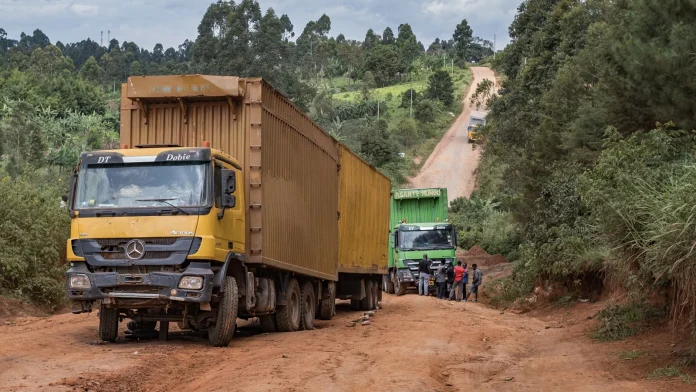
A new shadow on the map: Ebola’s Bundibugyo strain and why the world should care
There is a market morning in eastern Congo where the air hangs thick with cassava smoke and the chatter of women bartering over tomatoes. A motorcycle taxis past with a child tucked between the driver’s knees. A billboard for a local soda brand blinks above a row of stalls. It is the ordinary choreography of life in Goma — and lately, the place where an extraordinary fear has taken root.
On a quiet Sunday, the World Health Organization stepped onto the global stage and raised the alarm: the Ebola outbreak affecting parts of the Democratic Republic of Congo and neighboring Uganda is now a public health emergency of international concern (PHEIC). The virus is not the Zaire strain that dominated headlines a decade ago — this is Bundibugyo ebolavirus — a different species, with fewer medical countermeasures and questions that move faster than answers.
What happened, and what do the numbers tell us?
Authorities are working with limited and rapidly shifting data. Official tallies released with the WHO declaration show eight laboratory-confirmed cases, 246 suspected infections and 80 suspected deaths. Officials in the DRC and Uganda have confirmed multiple cases, and rebel-held parts of eastern Congo — including a statement from M23-controlled Goma — reported at least one case. Kampala confirmed a second case on the same day the WHO made its declaration.
“We are seeing an event with significant uncertainties,” a WHO spokesperson warned. “The numbers represent the tip of an iceberg we’re still trying to map.” Those uncertainties are why the WHO’s designation is not meant to sow panic but to mobilize a global response: funding, laboratory support, cross-border surveillance and coordination.
How Bundibugyo is different — and why that matters
Ebola is a family of viruses that can cause hemorrhagic fever, with a clinical picture of high fever, severe body pains, vomiting, diarrhoea and, in many cases, bleeding. Transmission is through direct contact with the bodily fluids of symptomatic people or contaminated materials — and critically, through unsafe funeral and burial practices.
Bundibugyo is one of several ebolaviruses identified since the disease was first recognised in 1976. This is the DRC’s 17th outbreak since that time, a grim tally that underscores the country’s recurring exposure to the virus. Unlike the Zaire ebolavirus, for which vaccines and some therapeutics have been developed and proven effective, Bundibugyo currently lacks approved, widely available strain-specific vaccines or therapies.
“Unfortunately, Bundibugyo has fewer proven countermeasures than Zaire ebolavirus, where vaccines have been highly effective in controlling outbreaks,” said Amanda Rojek, Associate Professor of Health Emergencies at the University of Oxford. “That means we are fighting with fewer tools, and that raises the stakes for early detection and classic public-health measures.”
On the ground: fear, resilience and the limits of aid
In a small clinic on the outskirts of Goma, a nurse named Esther — hands callused from long shifts yet gentle when she speaks — describes a community on edge. “People are afraid to come for care,” she says. “They think clinics will make them sicker or that we will take their loved ones away.” Her voice drops when she explains the strain on staff: personal protective equipment runs low, and access to some areas is blocked by insecurity.
A trader at the market who asked to be called Jean-Pierre shrugged and offered a local truth: “We live with disease here. Malaria, cholera, measles — the list is long. But Ebola is different. It asks us to change how we bury our dead. That is not an easy thing to do.”
Funeral rites in eastern Congo are a complex weave of respect, communal ties and spiritual duty. Changing those rituals to prevent transmission requires trust-building and culturally sensitive engagement — work that takes time the public-health clock does not always grant.
Borders, refugees and regional risks
The WHO also flagged countries sharing land borders with the DRC — Uganda, Rwanda, Burundi, Tanzania and South Sudan among them — as at high risk of further spread. Movement between towns in this region is constant: traders cross borders with produce, families visit relatives, displaced people seek safety. The Africa Centres for Disease Control and Prevention has been coordinating with South Sudan and others to monitor cross-border activity and limit spread.
“Ebola does not respect man-made borders,” said Dr. Amina Mbala, an epidemiologist based in Kinshasa. “In our region, porous borders and daily migration patterns mean the response must be regional too. One country’s outbreak is a shared problem.”
What does a PHEIC mean in practice?
Declaring a PHEIC is a diplomatic and scientific jolt. It does not mean the disease has become a pandemic. Rather, it signals that the outbreak poses a potential risk to multiple countries and warrants extraordinary coordination. Expect increased funding appeals, international teams mobilising for surveillance and diagnostics, and travel and trade advisories tightened by national governments.
Some governments have already taken protective measures. The Department of Foreign Affairs issued a “Do Not Travel” warning for the DRC — the most stringent level of advisory — noting that consular help will be limited and advising citizens to leave if it is safe to do so.
Tools we have — and those we lack
Public-health basics remain powerful: contact tracing, isolation of cases, safe burials, community education and protective equipment for health workers. Where available, vaccines targeted to Zaire ebolavirus have proven to be game-changers in past outbreaks. But Bundibugyo’s scarcity of specific countermeasures makes those traditional interventions even more crucial.
“We can’t wait for a new pill,” said Dr. Emmanuel Okello, a public-health specialist who has worked on past outbreaks in the Great Lakes region. “Speedy diagnostics, community engagement and personal protective gear — deployed now — can save lives while researchers race to adapt vaccines and treatments.”
What you should take away — and what to watch next
So what should the global citizen — you — take from this? First: stay informed from credible sources. Second: understand that a PHEIC is a call to action, not a call to panic. Third: remember the human stories behind the statistics — grieving families, tireless nurses, markets emptied by fear.
In the weeks ahead, watch for the following signals: whether the number of confirmed cases grows beyond the eight announced; whether neighbouring countries report more cross-border transmission; how quickly international teams can scale diagnostics and community outreach; and whether researchers accelerate the development or approval of treatments and vaccines for Bundibugyo.
We can ask ourselves hard questions: How ready are our global institutions to respond when a disease variant lacks a toolkit? How do we support communities who must change rites of mourning to survive? And how do we ensure that fragile health systems get the resources they need before crisis becomes catastrophe?
Those are not just policy questions. They are moral ones. In a world more interconnected than ever, the answer to an outbreak in a market in eastern Congo is the responsibility of all of us — scientists, reporters, neighbours, readers. We watch, we learn, and we act.
President’s sister detained aboard ship by Israeli forces
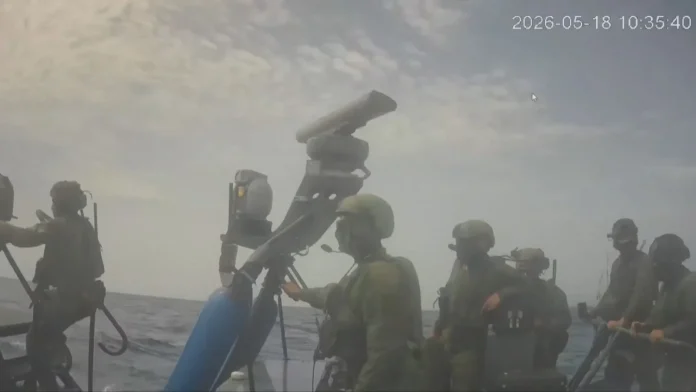
A Mediterranean Standoff: When Aid Boats Become Headlines
They left from a sleepy harbor on Turkey’s southern coast with olives for breakfast, a patchwork of life vests, and the stubborn conviction that a small wooden deck and a crew of determined civilians could pierce a blockade and deliver relief. Instead, in the blue wash of the eastern Mediterranean, their voyage turned into an international incident: Israeli vessels intercepted a flotilla some 70 nautical miles off Cyprus and, organisers say, detained at least six Irish citizens.
One of those taken, the organisers say, is Dr Margaret Connolly — whose face and voice now appear in video messages recorded before the interception. “If you are watching this video,” she says directly to the camera, “it means I have been kidnapped from my boat in the flotilla by the Israeli occupying forces, and I’m now being held illegally in an Israeli prison. I am so proud to be taking part in this flotilla — it is the largest to date.”
At sea: the moment of interception
The scene, according to ship-to-shore clips and eyewitnesses, was at once precise and chaotic: naval grey hulls looming against the horizon, small dinghies launched, voices amplified over loudspeakers. Global Sumud, the organisers, posted footage they say was captured before contact was lost — among it, images of boats circling together like a small, vulnerable fleet and shots of men and women who had come from Ireland, Spain, and elsewhere to test the boundaries of maritime law and conscience.
“They told us to change course,” said one crew member via a text message that made its way to shore. “When we didn’t, they came alongside and started boarding. It was clinical — but it felt like a theft.”
Israel’s foreign ministry was blunt on social media: it said it would not allow a breach of its naval blockade on Gaza and urged participants to turn back. The ministry framed the action as enforcement of security policy; the flotilla organisers slammed it as an act of piracy. Between those stark positions, the truth becomes a tangle of law, politics and human risk.
Voices on deck and voices ashore
Not everyone on the flotilla was on the same ship, or even at the same time. Karen Moynihan, who heads the Irish delegation but was not aboard, put the number at 15 Irish citizens sailing as part of the wider effort. “We’re asking the Irish government to make clear that these are legal, non-violent humanitarian missions,” Moynihan told reporters in Dublin. “People who have committed to carrying boxes of medicine, nappies, blankets — they are not combatants.”
Back in the Turkish port where they set off, a retired fisherman named Yusuf paced the quay. He had watched the flotilla leave with a kind of curious pride. “They were small boats, but they had big hearts,” he said, tilting his head to watch the horizon where the sky met the sea. “When the sea takes something, sometimes it gives back a story.”
On the Israeli side, officials framed the interception as consistent with a longstanding naval blockade, a security measure they say is designed to prevent weapons smuggling. International law, however, is not a monochrome document. High seas interceptions, the legality of blockades, and the responsibilities of occupying powers form a contested thicket.
“These events are flashpoints in a much larger legal and moral debate,” said a maritime law academic who asked to remain unnamed. “Boarding vessels in international waters can be lawful under specific conditions — but the application is scrutinised heavily by courts and the public.”
History in the wake: why flotillas resonate
This is not the first time such a convoy has made headlines. The 2010 Mavi Marmara episode, when Israeli forces boarded a Gaza-bound aid ship with fatal results, still echoes in the public memory and the playlists of activists. Older still is the story of civil society trying to circumvent blockades with bundles of aid and moral pressure.
Numbers matter. Organisers say this is the largest flotilla to date. The previous attempt — a departure from Spain earlier in April — ended with Israeli forces diverting vessels to Crete and detaining dozens. More than 100 pro-Palestinian activists were taken to Crete in that interception; two were detained in Israel. The pattern is not only operational; it’s performative: each interception becomes a new argument in the court of public opinion.
Local color and the human seam
Walk along the ports where these missions are born and you meet people who stitch the effort together: dockworkers loading crates of medical supplies, volunteers folding flags, young people who speak three languages and swear like poets. They talk about Gaza in personal terms — cousins, schoolteachers, neighbours — not as abstract geopolitics. “We brought sugar, powdered milk, bandages,” said Aisling, a volunteer from Cork, thumbs still raw from hauling boxes. “We thought if we could put a blanket in a child’s arms, we’d done something.”
And if the sea is a stage, its script is always written in weather and time. The Mediterranean in spring can be treacherous and calm in the same breath. A breeze that seems trivial can turn a night into a trial. For crews who volunteer not because they like danger but because they feel compelled to act, the risk is part of the offering.
Questions to ask, and the wider stakes
So what does this mean beyond the cramped decks of intercepted boats? The episode raises questions about the nature of humanitarianism, the limits of civil disobedience at sea, and the porous line between security and restriction. Who decides when a blockade is legitimate? When does humanitarian intent override sovereign enforcement? And what kind of international framework protects civilians who attempt rescue missions?
It’s worth asking: when activists risk their liberty for a cause, do they change policy — or only the headlines? Does the drama of an interception create sympathy or harden positions? You, reading this from wherever you are — what do you believe the sea should permit and what should it prevent?
What happens next
For the families and friends of those detained, the immediate concern is simple: contact, consular access, and safe return. For governments, the calculus involves diplomacy and, perhaps, public rebuke. For the flotilla movement, every interception is both cost and case study: a proof of principle that draws attention and a reminder of the heavy price of direct action.
“We didn’t come to make trouble,” one volunteer said before departure. “We came to be witnesses.” Whether witness becomes leverage depends on many things: courtrooms, parliaments, social media gusts, and — stubbornly — the small human acts that continue to define this conflict: handing out bread, nursing a child, signing a petition.
In the end, the ships are more than steel and canvas. They are stories pushed out into blue water, and the world watches to see which will make it back to shore.
- At least six Irish citizens detained, according to organisers.
- Flotilla intercepted roughly 70 nautical miles off Cyprus.
- Organisers say 15 Irish citizens are part of the broader flotilla effort.
- Previous flotilla from Spain (12 April) saw more than 100 activists taken to Crete after interception.
RW Xamze iyo Safiirka Talyaaniga oo wadahadal ku yeeshay magaalada Muqdisho
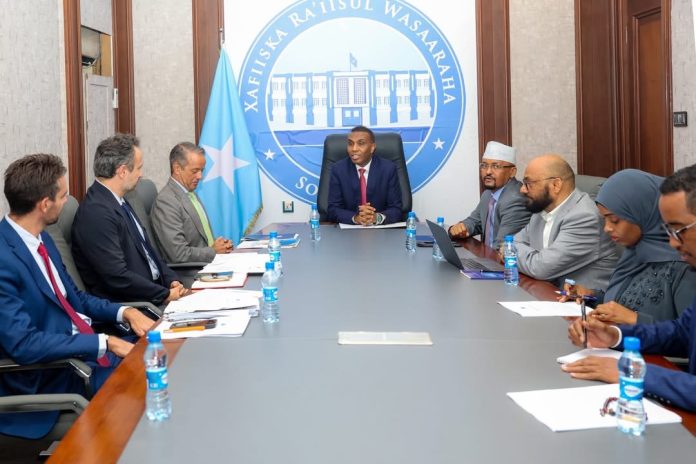
May 18(Jowhar) Ra’iisul Wasaaraha Xukuumadda Jamhuuriyadda Federaalka Soomaaliya Mudane Xamze Cabdi Barre, ayaa xafiiskiisa ku qaabilay danjiraha dowladda Talyaaniga u fadhiya Soomaaliya, Mudane Daccò Coppi, waxaana ay ka wada hadleen xoojinta xiriirka iyo iskaashiga ka dhexeeya Soomaaliya iyo Talyaaniga.
Video captures US fighter jets colliding mid-air during flight demonstration
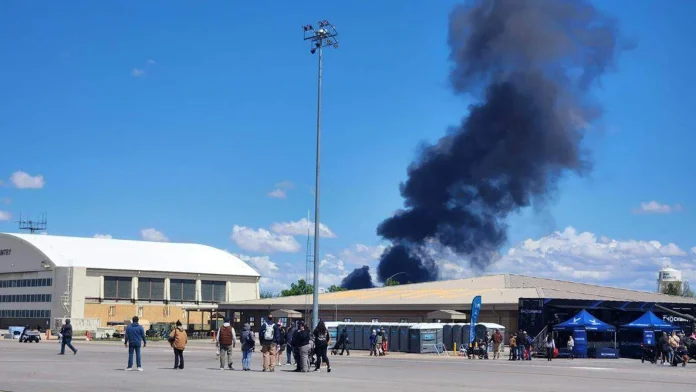
Skyfire and Silence: What Happened Above Mountain Home During the Gunfighter Skies Air Show
On a bright Idaho afternoon that had promised the familiar thrill of jets carving the sky, the crowd at Mountain Home’s Gunfighter Skies Air Show watched a dramatic tableau unfold—only this time the story ended with ejection seats and an urgent hush rather than applause.
About three kilometres from Mountain Home Air Force Base, two E/A-18G Growler jets—sleek, thunderous machines built for electronic warfare—collided in mid-air while performing a demonstration. Miraculously, all four crew members escaped the wreckage by ejecting and were reported to have landed safely. The US Navy confirmed the aircraft were assigned to Electronic Attack Squadron 129, based on Whidbey Island in Washington.
The moment the sky changed
“I was standing by the food trucks when the formation came over,” said Jenna Morales, a local teacher who has attended air shows for years. “It sounded like a bass drum, then a second later something went wrong—two loud bangs and then these orange streaks. People froze. For a few seconds nobody moved.”
That freeze, that held breath of a gathered crowd, is the sharpest image from eyewitnesses: pilots ejecting into open air, parachutes blossoming against Idaho’s high blue, emergency vehicles racing toward a scene some had only moments earlier applauded. Organizers called the incident a priority for emergency response teams, and portions of State Highway 167—near where debris fell—were closed for several days as investigators combed the area.
Official response and the investigation
Commander Amelia Umayam, a spokesperson for Naval Air Forces, U.S. Pacific Fleet, confirmed the collision and said the four crew members “ejected safely.” She added that the incident is under investigation and that more information will be released as it becomes available. Military investigations into aviation accidents typically involve squadron-level safety officers, higher naval safety centers, and sometimes interservice coordination; findings can take weeks or months to emerge.
“The priority right now is ensuring everyone is safe and that the area is secured so investigators can do their work,” a base official told local media, underscoring the careful choreography that follows any mishap involving military hardware and public spaces.
Why the Growler matters—and what it does
The E/A-18G Growler is not a standard fighter; it’s an electronic attack aircraft, a technological workhorse whose job is to deny an enemy the use of their radar and communications. A typical Growler team consists of two crew members: a pilot and a naval flight officer. The plane’s demonstrations at air shows are meant to showcase precision flying and rapid-response capabilities, a reminder of both spectacle and function.
Introduced into service in the late 2000s, the Growler represents a shift in modern aerial warfare—less about sheer speed and more about controlling the electromagnetic spectrum. That makes its appearance at a public demonstration a vivid lesson in contemporary military power. When things go wrong, however, the risks become painfully visible to those below.
Local color: Mountain Home on a day like this
Mountain Home itself is a small city with deep ties to the base—cafés and hardware stores that greet airmen and their families like old friends, a rhythm set by deployments and training schedules. For many residents, the Gunfighter Skies show was more than entertainment; it was a reunion, a reminder of the relationship between the town and the Air Force.
“We come down to support the base and to watch these pilots show what they do,” said Tom Rivera, who runs a barber shop a couple of blocks from Highway 167. “You don’t expect to see them falling out of the sky.”
The 2024 event marked the first Gunfighter Skies Air Show in eight years. The last time the festival darkened the calendar—in 2018—the community also felt the sting of tragedy: a hang glider pilot was killed in a crash during the show. Those memories linger when the roar returns.
Safety, spectacle, and the calculus of risk
Air shows are spectacular by design. They draw tens of thousands of people to fields and grandstands, fuel tourism dollars for host towns, and serve as public diplomacy for the armed forces. In the U.S., military aerial demonstrations follow rigorous safety protocols and rehearsals; yet the combination of human judgment, mechanical complexity, and aerobatic daring means accidents, while rare, are part of the history.
“Pilots train for years to handle split-second decisions,” said a retired naval aviator who asked not to be named. “But when you put two high-performance aircraft in close proximity during a maneuver, even a small miscalculation or mechanical failure can produce catastrophic outcomes. The fact that these crews survived their ejections is a testament to both equipment and training.”
Data on airshow safety show overall improvement over decades, but periodic incidents—some fatal—keep safety practices under continuous review. Each accident sets off an intense, methodical inquiry aimed at understanding human factors, systems failures, and environmental conditions that contributed to the event.
What the investigation will likely examine
- Flight data and cockpit voice recorders (where available) for both aircraft
- Maintenance logs and recent mechanical issues
- Weather conditions and visibility at the time of the demonstration
- Pilot training, rehearsals, and communications between aircraft
- Any potential third-party or ground-based factors
After the smoke clears: community and reflection
The physical cleanup and formal inquiries will take time. The stretch of State Highway 167 closed by authorities will remain shuttered as teams sift through debris and evidence. For the residents of Mountain Home, though, the more lasting work is emotional—answering questions about a spectacle many view as part of communal life.
“You go to these shows to be inspired, to feel small under a big sky,” Jenna Morales reflected. “Today, we were reminded how fragile that beauty can be.”
What does it mean for communities and the military to balance public outreach with safety? How should the spectacle of power be displayed in a world more attuned to risk and accountability? Those are questions this incident forces us to ask anew.
In a wider frame
Beyond Mountain Home, the episode touches on broader themes: the modernization of military hardware, the intimacy between bases and their host towns, and the public’s appetite for demonstrations of power—and the price that can sometimes entail. As investigations unfold and officials release findings, one thing is clear: the line between theater and hazard is thin, and it takes a lot of invisible labor—maintenance crews, safety officers, and disciplined airmen—to keep that line intact.
For now, we wait for answers. We give thanks that four lives were spared. And we watch, perhaps differently, the next time those engines scream and the sky goes alive.
What would you want to know if you’d been there? How should communities reckon with both the awe and the risk of these public displays of military skill? Share your thoughts—these conversations matter as we look to learn from the near-miss above Mountain Home.
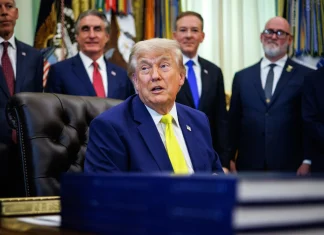
Trump calls a Putin-Zelensky summit “great” and urges talks
US President Donald Trump said it would be "great" to see Ukrainian President Volodymyr Zelensky sit down with Russian leader Vladimir Putin after Mr...
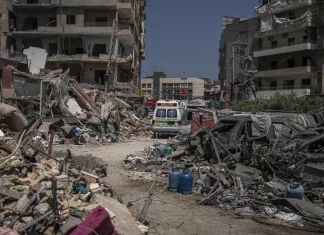
Lebanon reports Israeli airstrikes near Beirut and throughout the south
An Israeli strike hit near Beirut’s southern approach as Israel intensified bombardments across Lebanon’s south, with a medical source reporting six deaths in the...
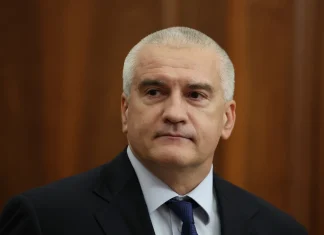
Russia Reports Four Killed in Crimea After Ukrainian Strikes
Deadly strikes in Russia-annexed Crimea have raised the toll in a widening exchange of attacks between Moscow and Kyiv, with Kremlin-installed officials reporting four...
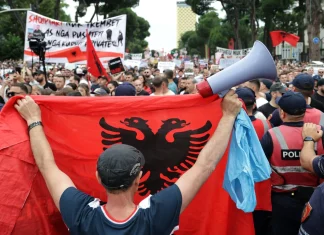
Albanians rally against Kushner-linked luxury resort development plans
Anger is spilling onto the streets of Tirana as thousands of Albanians rally against a proposed luxury resort tied to Jared Kushner, warning it...
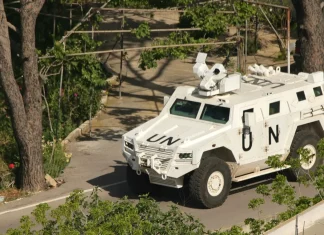
Serbian UN Peacekeeper Killed During Incident in Southern Lebanon
Shelling that slammed into a United Nations base in southern Lebanon has killed one peacekeeper and wounded two others, the United Nations Interim Force...