Home Blog Page 34

Israel launches strikes in southern Lebanon a day after truce extended

Israel strikes south Lebanon day after truce extension
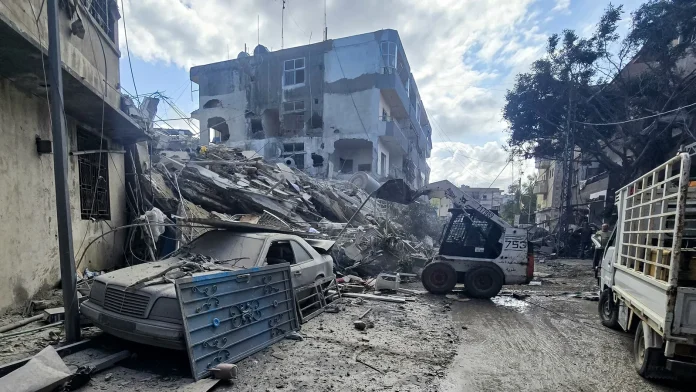
An excavator clears debris outside a damaged building following overnight Israeli bombardment on Lebanon's southern city of Tyre

Smoke over the citrus groves: new strikes in southern Lebanon as fragile truce stutters

On a sun-scorched afternoon in southern Lebanon, the ordinary rhythms of village life — children playing in dusty alleys, old men sipping coffee under awnings, women hanging laundry scented with za’atar — were ruptured by a sequence of distant booms. By nightfall, sirens had replaced market chatter. Families loaded cars and trucks with belongings, and a steady stream of people headed north toward the port city of Sidon and the looming skyline of Beirut.

The Israeli military said it had launched fresh strikes against what it described as Hezbollah infrastructure across several zones in the south. Lebanon’s state news agency reported attacks on at least five villages and, with that, another round of displacement—families fleeing farms and homes that have already known too much loss.

What happened — and why it matters

This escalation comes just a day after officials from Israel and Lebanon announced an extension of a truce negotiated in Washington. The ceasefire, which first took effect on 17 April, was extended for another 45 days as diplomats sought to keep an already fragile calm intact. But the strikes underline how rapidly a brittle peace can fray.

“We welcomed the additional days of silence,” said a member of Lebanon’s negotiating delegation in Washington in a statement shared by the presidency. “This breathing space matters for civilians, for institutions, for a political track toward some form of stability.” Yet the breath is shallow. Hezbollah, backed by Iran and deeply embedded in southern Lebanon both politically and militarily, has denounced the talks and continued to claim responsibility for attacks claimed to be in response to Israeli moves.

Across the conflict, Lebanese authorities say more than 2,900 people in Lebanon have been killed since the fighting escalated, including more than 400 since the truce began. The Israeli military also reports losses: at least 19 soldiers have died in southern engagements since the clashes widened this spring.

Voices from the ground

“We left everything—our goats, the garden, even the old radio,” said Amal, a 47-year-old woman from a village near Nabatieh who arrived in Sidon with two children and a plastic satchel of clothes. “You never think it will happen again here. But every time you hear the planes, you remember.” Her hands trembled as she folded a small blanket over a child asleep on her lap.

“The warning came by text and a drone voice telling nine villages to evacuate,” said Jamil, a taxi driver who ferried families toward Sidon. “People moved from the hills like a river of dust. There is fear, yes, but also a strange calm — the kind you feel when you must keep going for the next person.”

An analyst in Beirut, who asked not to be named for safety reasons, framed the strikes as a grim reminder of the limits of diplomacy in a region where statecraft and armed non-state actors coexist uneasily. “Talks can create windows,” they said, “but they can’t close doors that are kept open by local militias, external patrons, and the memory of recent bloodshed.”

Sidon, Nabatieh and the texture of the south

To understand the human geography here, imagine a coastline of olive groves and sea-swept markets, then turn inland to terraces and orchards that feed families for generations. Sidon — Saida in Arabic — is an ancient port city whose glassmakers and soap-makers have for centuries traded with the wider Mediterranean. Nabatieh sits deeper in the hills: a place of small farms, lamb dinners, and a strong local culture where political allegiances can determine everything from who you marry to where you shop.

When military notices are issued — warning residents to evacuate specific villages — they don’t simply ask people to move. They displace livelihoods, school schedules, funerals, prayers. They force choices: stay and risk the next strike, or carry your life down the road and hope for a shelter that can take you in.

Numbers that frame a tragedy

  • Ceasefire first took effect: 17 April.
  • Truce extension agreed: 45 days (announced after talks in Washington).
  • Lebanese death toll from the conflict (reported by Lebanese authorities): more than 2,900, including over 400 since the truce.
  • Israeli military losses reported in southern Lebanon: at least 19 soldiers since the latest escalation.

Statistics help map the scale, but they fail to capture the small, visceral details: the neighbor who stayed behind to tend a dog, the herder who worries about olive harvests gone uncollected, the child asking whether home will still be there tomorrow.

Diplomacy under strain

The Washington talks were notable: they marked a rare, direct engagement between Israeli and Lebanese delegations after decades without formal diplomatic ties. For some Lebanese officials, the U.S.-facilitated security track represented a pragmatic attempt to keep bloodshed contained and give civilian authorities a breathing space to rebuild institutions eroded by years of instability.

“This isn’t about love between capitals,” said a diplomat familiar with the discussions. “It’s about avoiding open war that neither side wants and that would devastate a region already teetering.”

But Hezbollah, which holds significant sway in southern Lebanon and is backed politically and materially by Tehran, has publicly resisted the diplomatic track. Its leaders have continued to frame the fight in terms of resistance and deterrence, a rhetoric that resonates with parts of Lebanese society still haunted by past incursions and perceived injustices.

What should readers take away?

In a world where headlines flip by the minute, there is a compelling human truth to remember: peace is not only the absence of missiles; it is the patient, fragile labor of rebuilding trust, protecting civilians, and stitching together futures. When a truce is extended by 45 days, that is not victory. It is an interval — a pause in which choices must be made.

Ask yourself: what kind of pressure would you accept to keep your family safe? How much does the fate of a distant negotiation depend on local shopkeepers and farmers who have already lost too much? These are not abstract questions. They are the questions that shape whether Sidon’s markets return to life, whether Nabatieh’s olive harvests are gathered, whether a child hears only the call to prayer and not the whine of planes.

For now, the highways are lines of hope and fear. For now, diplomats will try to turn hours into weeks, and weeks into months of calm. But the south will keep its own time — measured not in agreements signed in distant conference rooms but in the slow return of everyday rhythms: the hum of the souk, the laughter of children, the smell of coffee at dawn.

What happens next depends as much on those rhythms as on what is written in any communiqué. And in that uncertain space between diplomacy and the next blast, ordinary people continue to live, move, and make choices that will shape the course of this embattled landscape for years to come.
Great white shark fatally attacks man off Western Australia coast

Man killed by great white shark in western Australia
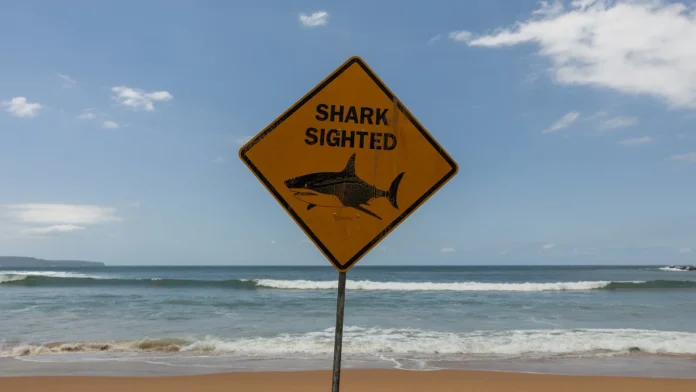
There have been nearly 1,300 shark incidents around Australia since 1791 (Stock image)

Morning Calm Shattered: A Fatal Shark Attack off Rottnest Island

The turquoise ribbon of ocean that laps Rottnest Island was, until this morning, a postcard scene: bicycles clattering on limestone paths, quokkas peeking from scrub, ferries disgorging sunburnt tourists. By 10am, that ordinary, joyous bustle had a dark, jagged edge.

Police and regional authorities confirmed that a 38-year-old man was fatally bitten by a great white shark just off the island’s shore, near Perth. The attack happened shortly before 10am local time; emergency crews worked urgently but, officials said, “the man was unable to be revived.”

Witnesses, First Responders, and a Community in Shock

“It was awful — you could see people on the ferry looking around like it wasn’t real,” said Sarah Nguyen, who runs a day-tour business on the island. “We tell families to enjoy the water and the wildlife; no one thinks about something like this.” Her voice cracked as she described seeing emergency boats slicing through a sea that had moments before been benign and bright.

A Western Australia Police spokesperson urged caution around the area and confirmed the Department of Primary Industries and Regional Development had identified the animal as a roughly 4-metre great white. “Our thoughts are with the family at this tragic time,” the spokesperson added.

Local fishermen and long-time island residents echoed the grief. “I’ve been here for forty years,” said Tom Riley, a retired skipper. “The ocean changes its mind sometimes. We respect it, but this is heavy.” Residents described a solemn island atmosphere — shops closing early and an unusual quiet falling on a place usually full of laughter.

Numbers, History, and a Growing Conversation

Shark incidents around Australia have long been tracked and debated. According to a historical database of encounters dating back to 1791, nearly 1,300 interactions have been recorded nationwide, with more than 260 resulting in fatalities. These figures remind us that while attacks are rare in comparison to the number of people who enter the water every year, the consequences can be devastating for individuals, families, and communities.

This is Western Australia’s first fatal attack since March of last year, when a surfer was mauled off a remote beach. Earlier this year, the country also mourned a 12-year-old boy killed in Sydney Harbour in January — one of four attacks that unfolded over two days and prompted the closure of dozens of city beaches. Such concentrated spates of incidents have re-energised debates about public safety, animal conservation, and coastal management.

What Scientists Are Watching

“We are seeing shifts in shark behaviour that likely reflect broader environmental changes,” said Dr. Emily Carter, a marine ecologist who studies apex predators off Australia’s south-west coast. “Rising sea temperatures alter where prey species congregate. At the same time, more people are in the water than ever before. It’s a collision of trends.”

Dr. Carter points to decades of warming in the Southern Hemisphere as a potential driver of altered migratory paths. “Sharks follow food. If their prey moves closer to shore or into new regions, so do the predators. We also have increased coastal development, which changes habitats.” She stressed that understanding these patterns requires careful, long-term monitoring rather than fear-driven policy.

Mitigation, Controversy, and Community Responses

In response to attacks, authorities often adopt a mix of measures: temporary beach closures, increased surveillance using drones and helicopters, the deployment of SMART drumlines, and, in some regions, traditional shark nets. Each option carries trade-offs.

  • Drone surveillance and aerial patrols can offer early warnings without harming wildlife.
  • SMART drumlines aim to capture and relocate sharks, though critics say relocation is stressful and not always effective.
  • Shark nets reduce access to open water for all marine life and are controversial among conservationists.

“We need evidence-led strategies,” said Dr. Carter. “Panic policies can end up harming the very ecosystems we rely on. And they rarely eliminate risk entirely.”

Conservation groups stress that great whites and many other shark species are vulnerable or protected in Australian waters, a status born of decades of overfishing. “Sharks play a crucial role in ocean health,” said Maya Singh of the Marine Guardians Collective. “They help keep fish populations balanced. Killing them recklessly doesn’t make beaches safer in the long run.”

On the Ground: Practical, Human Responses

Authorities have urged the public to take “additional caution” in the waters around Rottnest Island. Boat operators rerouted pleasure cruises temporarily, and lifeguards increased their presence at popular beaches. The ferry companies began broadcasting safety messages to passengers.

For friends and family of the victim, details remain raw and intensely personal. “He loved the sea,” a neighbour who asked not to be named told a local paper. “He was the kind of man who would help someone with a broken down dinghy. It’s cruel and sudden.” Community vigils were planned as friends gathered to remember a life that was abruptly cut short.

Beyond the Headline: What Should We Ask Ourselves?

When a headline like this hits, it prompts familiar questions: How do we stay safe? How do we protect marine life? How much risk are we willing to live with in exchange for the freedom of coastal recreation? These are not just technical debates; they are moral and cultural choices.

Who should decide what measures to adopt — scientists, policymakers, local communities? And how can tourism-dependent places like Rottnest strike a balance between welcoming visitors and safeguarding residents?

Looking Ahead

The ocean is a place of immense beauty and real danger. The fatal attack off Rottnest Island is a heartbreaking reminder of that complexity. As mourning gives way to discussions about policy and prevention, the island’s community — like coastal communities across the world — faces hard questions about coexistence with creatures that have lived in these waters far longer than we have.

For now, the advice is simple: respect the warning flags, heed local guidance, and enter the water with eyes open. The sea is generous and indifferent; it rewards humility and punishes hubris. In the days to come, Rottnest will try to find its equilibrium again. How we reshape our relationship with the ocean will determine not only the safety of beachgoers but the health of marine ecosystems for generations to come.

Taiwan Asserts Independence in Response to Trump’s Warning

Taiwan insists it is 'independent', after Trump warning
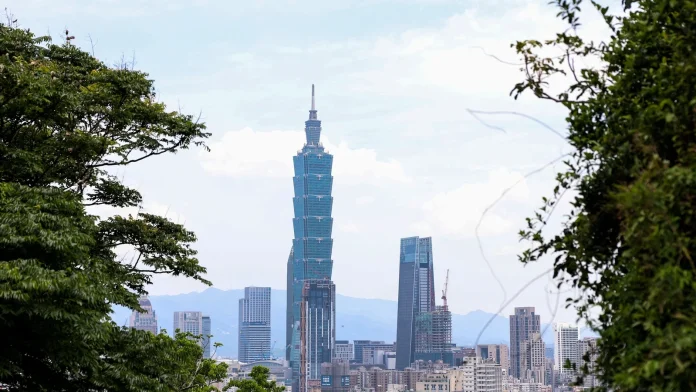
The Taipei 101 building stands among residential and commercial buildings in Taiwan's capital

A Quiet Island and the Thunder of Giants

On a humid morning in Taipei, a vendor flips pieces of stinky tofu over a blistering wok and a grandmother sweeps fallen jacaranda petals from the stoop of a tea house. Life feels ordinary here—until you remember how fragile ordinariness can be when two global powers spar across the sea.

Last week’s diplomatic storm—President Donald Trump’s state visit to Beijing and his blunt warning to Taiwan—has left that fragility more visible. Mr. Trump told reporters he did not want a new war and urged Taiwan not to make a formal declaration of independence. He spoke of the long journey to defend the island—“we’re supposed to travel 9,500 miles to fight a war,” he told Fox News—and the weary preference for calm over confrontation.

For many in Taiwan, those words landed like a weather report: useful, but not definitive. The island answered in its own way, with an unmistakable sentence from its foreign ministry: “Taiwan is a sovereign and independent democratic nation, and is not subordinate to the People’s Republic of China.” It was a short, bright counterpoint to the grand chessboard diplomacy unfolding thousands of miles away.

The Language of Sovereignty

“We do not take these things lightly,” said Karen Kuo, a spokeswoman for Taiwan’s Ministry of Foreign Affairs, speaking over the phone from Taipei. “Our statements are meant to reflect the reality felt by the people who live here every day: robust elections, independent institutions, and a culture that has forged its own identity. Arms sales are not a favor; they are a legal and moral commitment under the Taiwan Relations Act.”

That act, enacted by the United States in 1979 after Washington shifted diplomatic recognition to Beijing, requires the US to provide Taiwan with the means to defend itself. Yet the broader question—that of whether American forces would intervene directly in the event of an attack—remains shrouded in the American doctrine of “strategic ambiguity.”

On the Ground in Taipei

Walk through the city’s bustling night markets and you’ll hear a chorus of concerns—and a refusal to be reduced to a geopolitical talking point. “We want peace,” said Mei-Ling, a 28-year-old barista who emigrated back from Melbourne three years ago. “But we don’t want to wake up one day without being asked if this land still belongs to us.”

On the docks of Keelung, an elderly fisherman named Hsu watches freighters glide by and talks about history the way older people do—slowly, with a shrug and a memory. “My father used to tell me about the war years. We are tired of war stories,” he said. “Give us trade, give us tea, let our grandchildren ride their scooters without fear.”

These voices are at once personal and political. They reflect a population of about 23.5 million people whose lives are stitched into the global economy through microchips, ambassadorships-by-commerce, and an outsized cultural influence that includes cuisine, cinema, and the soft power of a democratic way of life.

Arms, Ambiguity, and an Uncomfortable Law

Back in Washington and Beijing, the conversation is numerical and procedural. Taiwan’s parliament recently approved a $25 billion defense spending bill designed to modernize the island’s forces. According to Taipei legislators, that sum is intended to cover nearly $9 billion of an $11.1 billion arms package announced earlier by Washington, and to prepare for a second phase of acquisitions—figures Taipei hopes would top $15 billion, subject to US approval.

“This is not arms-for-arms bravado,” said Dr. Maya Everett, a defence analyst who studies East Asian security. “It’s deterrence. It’s insurance. Taiwan is trying to make any potential military adventurism costly and uncertain for Beijing.”

China, which regards Taiwan as a breakaway province to be reunited with the mainland—by force if necessary—has intensified military pressure in recent years. The 2005 Anti‑Secession Law gives Beijing the legal pretext to use “non‑peaceful means” should Taiwan formally declare independence. In turn, Taiwan has repeatedly emphasized its de facto independence through democratic practice and self-governance rather than through a one-line declaration.

Semiconductors and the Stakes of Supply Chains

There is another dimension to this standoff that reaches into every pocket and office around the globe: semiconductors. Taiwan’s foundries, led by companies like TSMC, manufacture a disproportionate share of the world’s most advanced chips—components that are vital to everything from smartphones and cars to advanced medical devices and military avionics.

“You can think of Taiwan as the lifeblood of modern electronics,” said Jin Park, a supply-chain consultant in Seoul. “Any disruption here would ripple through economies and industries worldwide. That’s why so many governments watch this situation with a mix of concern and calculation.”

A Regional Compass Point

This is not merely a bilateral tension between Washington and Beijing; it is a regional puzzle whose pieces include Japan, South Korea, the Philippines, ASEAN countries, and the broader Indo‑Pacific strategy pursued by Western democracies. The United States’ consistent—if sometimes ambiguous—commitment to Taiwan is a cornerstone of that architecture. But words spoken in stately rooms in Beijing or aboard Air Force One can change the psychological climate overnight.

“Public diplomacy matters, but actions are the true thermometer of commitment,” said Professor Li Wei, an international relations scholar in Hong Kong. “When leaders speak of ‘cooling down,’ they need to be paired with clear, verifiable measures that reduce the chance of miscalculation.”

  • Population of Taiwan: ~23.5 million
  • Taiwan Relations Act enacted: 1979
  • China’s Anti‑Secession Law enacted: 2005
  • Taiwan’s recent parliamentary defense bill: $25 billion

Questions We All Should Be Asking

What would a peaceful status quo look like for a people who live daily under the shadow of great-power competition? How do democracies balance moral commitments to self-determination with the hard arithmetic of military risk? And in a world where a single island produces chips that power the global economy, what responsibilities do distant capitals have to prevent a conflict that would harm millions?

These are not theoretical questions for the vendors, students, and taxi drivers of Taipei. They are urgent, practical, and deeply human. “We don’t want to be a headline,” Mei-Ling the barista said, half smiling. “We want to be a place where our parents can be buried and our kids can study without picking between wars and wallets.”

What Comes Next

President Trump said he would make a decision “in a fairly short period of time” about arms sales. For Taipei, that answer matters not only in terms of hardware but as a signal of political will. For Beijing, the reaction will be read as a test of resolve. For the rest of the world, Taiwan’s fate is a reminder of how local identities and global systems are now inextricably linked.

So when you sip your coffee tonight or scroll past the headlines, think about the human dimensions that map onto those lines on a world map. Imagine being asked to choose your flag or your future under the glare of foreign cameras. What would you do? And what would you expect the international community to do—for the people who simply want to live their lives in peace?

Can the United States and China Escape the Thucydides Trap?

Can the US and China avoid the 'Thucydides Trap'?
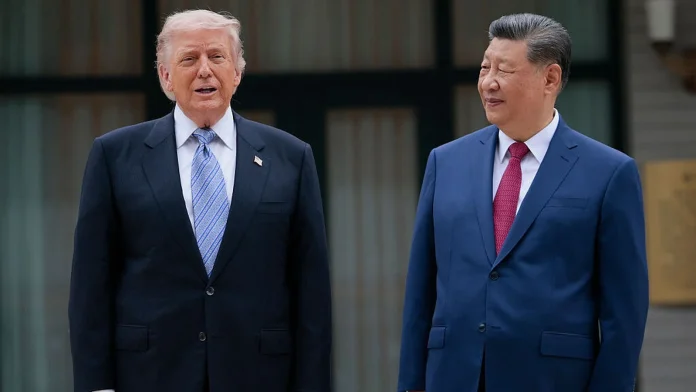
Donald Trump was treated to a Chinese military parade when he arrived for the state visit

When Ancient Athens Felt Modern: Beijing, Trump, and the Specter of the Thucydides Trap

On a November morning in Beijing that smelled of chrysanthemums and diesel, a line of soldiers in immaculate formation marched past the Great Hall of the People. Brass instruments flashed in the weak sunlight. Children in matching uniforms waved small Chinese and US flags in practiced unison. It looked, in every choreographed detail, like a scene meant to be remembered.

Less visible — but no less dramatic — was a single phrase that ricocheted around the internet that day: “Thucydides Trap.” Searches for the term surged after President Xi Jinping invoked it in his conversation with President Donald Trump, and suddenly an ancient Greek historian’s grim observation about power politics felt startlingly relevant to Silicon Valley boardrooms and chip fabs.

What is the Thucydides Trap, and why are people suddenly Googling it?

The phrase stems from Graham Allison’s 2011 reframing of Thucydides’ account of the Peloponnesian War: Athens rose, Sparta panicked, and war followed. It’s shorthand now for the tension between an established hegemon and an ascendant challenger — and between two countries that possess nuclear weapons and global markets.

“When leaders talk about Thucydides, they aren’t indulging in metaphors,” said Lina Ortega, a political scientist based in Madrid. “They’re naming a problem: can two states rewire their rivalry so economies and citizens aren’t collateral?”

A Summit as Spectacle: Power, Pageantry, and a Subtle Message

From the moment President Trump stepped onto Chinese soil, the choreography was unambiguous. The parade, the red carpet, the rows of young faces holding bouquets — all of it was meant to convey one message: China is confident, capable, and no longer in the shadow of anybody.

Walking past Tiananmen Square, the two leaders paused. Xi gestured toward the vast plaza in a way that was equal parts historical invocation and private reminder. The sightline was loaded: a public stage for power, and a place where painful, censored memory sits beside ritualized pride.

“It felt like being shown around someone’s living room — but a living room where decisions are made that affect millions,” recalled a journalist traveling with the American delegation. “There was a kind of hospitable display, wrapped in muscle.”

On Taiwan, Trade, and the Tightrope of Conversation

Talk turned crisp and urgent when Xi warned that mishandling Taiwan could lead to a dangerous clash. Beijing considers the island its own, while Taipei’s 23 million people consistently show a desire to maintain the status quo and the right to decide their future.

“Taiwan is the reddest of red lines,” said a Taiwan-based analyst, echoing a sentiment that many diplomats believe defines Beijing’s posture.

For Washington, Taiwan has long been governed by “strategic ambiguity”: selling arms without promising explicitly to fight. Yet during the summit arms sales became an open item on the table. President Trump later said the two leaders had discussed U.S. arms packages “in great detail.”

That exchange matters. For decades, the subject of Taiwan was almost sacrosanct in bilateral talks. Now it was negotiable — or at least negotiable enough to be discussed in person. Political scientist Wen-Ti Sung put it plainly: “When a transactional administration begins to treat constants as negotiable, the balance of leverage shifts.”

Silicon Valley Meets Zhongnanhai: The Business of Getting In

Traveling with the American president were several of the world’s most recognizable tech executives: the CEOs of companies whose chips and software are the nervous system of modern economies. They came seeking access — market share, partnerships, customers. China, for its part, offered guarded openness.

“China’s door will open wider,” Xi told business leaders, according to state media. But there was a caveat in every smile: openness, yes — on Chinese terms. Foreign firms often must form joint ventures, surrender some proprietary technology, and navigate a legal environment where the state’s objectives are paramount.

Consider the fight over advanced chips for artificial intelligence. U.S. export controls have constrained some sales; Beijing’s own push for self-reliance has accelerated domestic investment in semiconductor design and fabrication. The result is a decoupling that looks partial, complicated, and likely to continue.

What Was Left Off the Table: Human Rights and the Retreat of Moral Language

There used to be a ritual — a gentle, carefully worded admonition about human rights placed somewhere between trade and joint communiqués. During this summit, that ritual was faint. Questions of Xinjiang, Tibet, and press freedom scarcely surfaced in public exchanges.

“The prioritization of economic interest over human rights is not new,” said Christine Ryan, a scholar at Columbia University’s Human Rights Institute. “What’s striking now is the depth and speed of the shift. When a major power deprioritizes these values, it reshapes how others engage.”

That absence is not merely symbolic. It signals to activists, to minorities, and to foreign governments that pragmatism — contracts, planes, and chips — can outweigh the language of accountability. For those who had hoped that engagement would bring change, it was a sobering moment.

Street-Level Reactions: Tea Vendors, Students, and the Quiet Majority

Not everyone was swept up in the summit’s symbolism. Outside a noodle shop near the pedestrian lanes, a tea vendor wiped his hands and smiled without revealing much.

“More tourists, maybe more business,” he said. “But politics is for them. I just want people to have money to spend.” His eyes flicked toward the televisions, then back to the kettle.

A university student in Shanghai, during a late-night conversation over dumplings, offered another tone. “I love that China gets respect, but I worry about what’s traded away,” she said. “Are we losing voices that need to be heard for deals that might not help everyone?”

Why This Moment Matters — and What It Might Mean for the World

We are witnessing a recalibration of norms. The language of equality that Xi used — asking whether China and the United States could avoid the Thucydides Trap — was an invitation and a warning. The summit itself was a demonstration: show strength, extract discussion on sensitive issues, and keep commercial lights green.

But avoiding conflict is not simply a matter of good optics and handshake agreements. It requires durable institutions, clear signaling, and domestic political coalitions willing to accept compromise. It requires managing rivalry without losing sight of universal standards.

So, what will the coming years bring? Will the world see an uneasy détente, engineered through trade-offs and silent bargains? Or will technological competition, contested narratives, and localized flashpoints like Taiwan create the conditions Thucydides once warned about?

We cannot answer that in a single dispatch. But we can ask: if history is a teacher, are we listening? Are we willing to trade immediate gains for longer-term stability? And perhaps most urgently — what does it say about our global priorities when economic incentives so often outweigh moral claims?

As the soldiers’ boots faded from the square and the world returned to its usual churn of markets and headlines, one thing felt clear: the questions raised in Beijing are not private to two leaders. They belong to all of us.

Disneyland’s Welcome Under Strain: How Soaring Prices Hurt Visitors

Be our guest: The price problem facing Disneyland
Disneyland in Paris is only one part of a sprawling, travel-related division at Disney Inc

The Hidden Engine Behind the Mouse: How Disney’s Parks Became the Profit Powerhouse

There’s a smell that walks ahead of you at a Disney park—burnt sugar and cinnamon, a sweet, rehearsed nostalgia that follows families down Main Street U.S.A. It’s a scent that’s been bottled and sold, commodified into plush toys, streaming shows, and, increasingly, the hotels, restaurants and experiences that sit behind the turnstiles.

Most conversations about Disney begin—and sometimes end—with the movies and streaming numbers. Did the latest blockbuster cross a billion? How many new subscribers did Disney+ add this quarter? Those are headlines. But if you step past the marquee and into the balance-sheet, you find a different story: the parks and resorts—the Experiences arm—are the financial heart that keeps the rest beating.

Numbers that Speak Louder Than Fireworks

In the most recent financial year, Disney reported roughly $94.4 billion in revenue across its sprawling empire. Break that down and you find three broad geographies of business: Entertainment (movies, TV, streaming), Sports (principally ESPN and related networks), and Experiences (parks, resorts, cruises, retail and vacation clubs).

On the surface, Entertainment draws the most revenue—about $42.5 billion—yet profits tell a different tale. Of Disney’s $17.5 billion in operating profit, Experiences contributed almost $10 billion—around 57% of the total. Sports added about $2.9 billion and Entertainment just under $4.7 billion. Even if you strip out merchandising—consumer products accounted for roughly $2.18 billion of that Experiences profit—the parks and travel business remains the dominant margin generator.

Translation: the films and streaming content are extraordinarily valuable, mostly because they feed a deeper objective—turning viewers into visitors.

A World Built to Pull You In

Walk the map and you see how deliberate this is. Disney operates major resorts in California, Florida, Paris, Tokyo, Shanghai and Hong Kong; a planned presence in Abu Dhabi is on the horizon. There’s a cruise line—six ships at a time—vacation clubs and a handful of remote properties from Hawaii to Vero Beach. There are packaged ‘adventure’ trips tied to National Geographic and, more recently, an experiment in fully planned residential developments—“Storyliving by Disney.”

Each film, every show, and the ceaseless drip of nostalgia from reboots and classic character merchandising funnel attention into a single goal: an on-site experience where the company captures the diner, the hotel room, the FastPass (or its paid successor), and the selfie. That funnel is extraordinarily efficient.

Local colour

“People come for the castle but they stay for the little things,” says Sophie Martin, a primary school teacher from Paris who brings her two children to Disneyland Paris every few years. “The little shops on Main Street, the parades. We spend on food, on a princess dress, on photos—each one is small, but they add up.”

Ask a cast member and you’ll hear the mechanics: “We sell them a moment and then 100 ways to extend it,” says Carlos Rivera, a former attractions lead in Orlando. “It’s immersive and brilliant, and it’s designed to get you to open your wallet again and again.”

The Slow Burn of Price Hikes

That brilliance has a grit side. Over the past half-decade, ticketing and on-site prices have climbed in a way that many families have noticed. A one-day adult ticket to Disneyland Paris that averaged about €74 in 2019 is now commonly north of €100—and peak summer days often exceed €130. Child tickets rose in step. Dynamic pricing, introduced more widely across parks, makes an exact cost a moving target.

The guest experience has also been redesigned. Free FastPass systems that once allowed families to book ride times without additional cost have largely been replaced by user-paid queue-skipping options. Complimentary perks—some breakfasts, occasional shuttle or parking benefits—have been trimmed. Add steep hotel rates, pricier food, and incremental fees, and the day’s total can morph from a treat into a small mortgage.

“We saved for years for our kids’ Disney trip,” confesses Maya Patel, a mother of two in Mumbai. “When we went, the price of food alone was shocking. It wasn’t just the tickets; it was everything once you’re there.”

Who Pays—and Who Gets Priced Out?

That friction has two outcomes. One, Disney still draws crowds. People who treat a visit as a rare, celebratory purchase—or those who are deep fans—accept the price because the memory economy is persuasive. Two, a new demographic has emerged: the “Disney Adults,” childless singles and couples who visit frequently, combining fandom, nostalgia and disposable income into repeat business.

“We’re seeing more adults who can afford to spend on experiences rather than goods,” explains Professor Anna Müller, a tourism economist at the University of Amsterdam. “But there’s a ceiling. If the parks become the preserve of the wealthy, Disney risks losing a crucial middle-income audience whose long-term loyalty matters for merchandise and media views.”

And then there’s an uncomfortable story of overreach: anecdotal reports and long-form pieces have highlighted people running up debt to finance regular park visits. Spending becomes part of identity—an expensive hobby rather than an occasional treat.

Leadership, Strategy, and the Road Ahead

Disney’s board recently elevated Josh D’Amaro—the executive who ran the Experiences division and shepherded the parks through a tumultuous pandemic—to a top leadership role. That move underscored a truth few in the industry dispute: the parks are not merely a division; they are the company’s economic engine.

“He understands the alchemy,” says industry analyst Marcus Lyle. “He can design experiences that drive economic behavior. But design is different from stewardship—if strategy tilts too far into extraction, it can erode the goodwill that makes the brand valuable.”

There’s evidence the company knows this. Leadership discussions have reportedly flagged worries about losing middle-class customers. CEO statements have stressed value and attendance metrics, but concrete turnarounds on pricing remain limited. The balancing act is delicate: preserve profitability without hollowing out the emotional bond with fans.

What This Says About Our Times

Disney’s playbook illuminates a larger trend: in an era where streaming makes content ubiquitous, companies are monetizing scarcity via place. In-person experiences—authentic or staged—have become premium commodities. Nostalgia, too, is a market force, driving people to pay for the past to feel settled in the present.

But as we funnel more of our emotional lives into branded environments, questions multiply. When a childhood icon becomes a luxury product, what does that do to cultural memory? When moments are monetized, who gets to own them?

So I ask you: when you smell popcorn over a fireworks show, does it feel like magic, or like a well-priced product? And if the cost becomes too high, where does our collective nostalgia live?

Final Thoughts

Disney’s business is a lesson in modern capitalism—entertainment as acquisition funnel, experience as profit center. It’s also, undeniably, a masterclass in emotional design. The company has turned stories into infrastructure and nostalgia into nightly revenue.

Whether that model endures depends on limits that are economic and emotional. Price too much and you lose the middle that makes the brand a shared cultural touchstone. Price too little and you fail the markets that demand growth. Somewhere between those two lies the future of the house of mouse—a future that will require imagination, yes, but also restraint.

Streeting confirms challenge to Starmer for party leadership

Streeting confirms he will contest Starmer for leadership
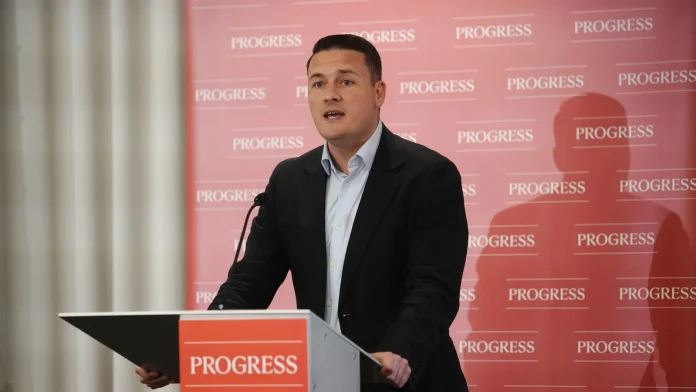
Wes Streeting told reporters in London that he intends to contest Keir Starmer as leader of the Labour Party if a contest is triggered

A Party at a Crossroads: The Moment Wes Streeting Said He’d Step Up

On a gray morning in central London, under the polite hum of a conference hall that felt more like a town square than a policy briefing, Wes Streeting stepped forward and made a choice that has the Labour Party—and the country—holding its breath.

“We need a proper contest with the best candidates on the field, and I’ll be standing,” he told reporters, his voice flat with resolve and threaded with the weary cadence of someone who has just made a hard decision. Streeting, who this week resigned as health secretary, framed his announcement as both a personal commitment and a plea for a biennial reckoning: a leadership contest that will test ideas, not personalities.

The moment landed against a backdrop of bruising election results across England, Scotland and Wales—losses that have forced a debate about the party’s direction, its soul and what it should now mean to call oneself Labour in Britain. For many inside and outside the party, that debate is no longer academic.

Why This Feels Different

There is an earnestness to Streeting’s case that is equal parts strategy and sermon. He argued that while he has the support of a swathe of MPs, it would be illegitimate to rush into a contest without giving Andy Burnham—recently cleared to stand in the Makerfield by-election—a fair route back into Parliament. “That might have been the self-interested thing to do for candidates who are in Parliament presently,” he told the Progress think tank, “but it wasn’t in the party’s interest and wasn’t in the national interest.”

That caveat illustrates the tightrope the Labour left is walking: a desire to renew leadership and ideas, and an awareness that the optics of internecine warfare could deepen the crisis rather than resolve it.

Three Ideas, One Vision

In the same speech, Streeting sketched out a triad of priorities he believes should shape Labour’s revival—ambitious, broad and aimed at reconnecting with voters who feel the party has grown distant.

  • Re-engaging with Europe: “We need a new special relationship with the EU,” Streeting said, arguing Britain’s long-term future lies with Europe and predicting “one day back in the European Union.”
  • Reimagining capitalism: He called for a national debate over what kind of capitalism Britain wants—one that asks who benefits from growth and how the state should shape markets.
  • Defending truth in the information age: Invoking the founding of the BBC, Streeting urged action to reclaim public square tools—journalism, public service media—from the corrosive incentives of social platforms.

These are not small ambitions. They speak to global conversations about how center-left parties rebuild after populist surges, about media regulation and about whether modeled social democracy can still offer a convincing route to prosperity and dignity.

Andy Burnham: A Return, or a Reckoning?

Across the Pennines the scene is no less charged. Andy Burnham, the popular former mayor with a formidable personal following in the north west, has been cleared to run in the Makerfield by-election—the seat vacated when Josh Simons stepped down to clear the way. If Burnham wins, many expect him to mount a formal challenge to Keir Starmer’s leadership.

“I’m focused on winning,” Burnham told Channel 4 News, stressing that returning to Parliament to represent people in his patch is his primary goal. “I’ve made a whole career fighting for people in this part of the world… I will carry on taking that fight to the highest level.”

There is a compelling human logic to Burnham’s candidacy. He remains a figure who, at least in polls, connects with everyday voters: Ipsos surveys cited in recent coverage showed him with a net favourability of about 24% in the north west—considerably higher than the national-level ratings of the party or its leader. That local warmth could translate into political leverage at a moment when Labour’s national poll lead has been bruised and Reform UK has surged in certain areas.

Makerfield: More Than a By-Election

Makerfield is normally considered a safe Labour seat, yet at the 2024 general election Josh Simons’ majority over Nigel Farage’s Reform UK was just 5,399. In the months since, political winds have shifted. Reform’s momentum and Labour’s polling dip have turned what would once have been a routine win into a test of whether Labour can still anchor its base in the north.

“If there’s one thing politics teaches you, it’s that the local matters,” said Dr. Maria Iqbal, a political sociologist based in Manchester. “People don’t vote merely for national policy; they vote for who they think understands their daily concerns—transport, NHS waiting times, local jobs. Burnham’s strength has always been in that local credibility.”

Voices from the Ground

In a bakery on a crossroad near Makerfield, the conversation is less about strategy and more about stress—energy bills, overstretched services, the kind of everyday pressures that feed political anger. “We want someone who’ll sort things out, not just shout about it,” said Aisha Khan, who runs the shop. “If he can stand up for our area, people will listen.”

A Labour staffer who asked not to be named said, “There’s fear of division, yes—but there’s also a hunger for change. The question is whether we can have both: a constructive contest that leads to renewal, not ruin.”

What This Means Globally

For readers outside Britain, the drama unfolding is a case study in democratic turbulence: a mainstream party grappling with populist rivals, a pressurized public sphere where truth is contested, and a political class debating whether to pivot, consolidate, or innovate. In France and Germany, center-left parties have gone through similar reinventions; in Latin America and Southeast Asia, opposition coalitions remade themselves after defeats. The story in Britain is both local and global—a mirror and a map.

So ask yourself: what does renewal look like in your context? Is it a new leader, a new set of ideas, or something the polls can’t measure—a restored trust in institutions?

Next Steps and the Road Ahead

Applications for Labour’s Makerfield candidacy close on Monday, and the party’s National Executive Committee is set to endorse a candidate on Thursday. If the timetable holds, 18 June is thought to be the earliest a by-election could take place.

All of this adds up to a compact, intense timeline where local votes could reshape national choices. For a party long accustomed to careful management, the gamble is clear: open the field and risk fragmentation, or close ranks and risk further alienation.

In the end, the Labour Party faces a familiar democratic test: can it turn internal contention into public rejuvenation? Whether Streeting, Burnham, Starmer or another voice emerges as the answer, the coming weeks will tell a larger story about political reckoning in a restless age.

What would you do if you were inside the room where that decision is made? Would you choose bold change, steady stewardship, or something in between?

Shirkadda Boeing oo Sheegtay in Shiinuhu uu Ballanqaaday inay Iibsanayso 200 oo Diyaaradood

Boeing confirms China's commitment to buy 200 aircraft

May 16(Jowhar)-Shirkadda soo saarta diyaaradaha Boeing ayaa iibin doonta tii ugu horreysay ee weyn ee Shiinaha muddo ku dhow toban sano gudahood iyadoo la raacayo heshiis ku saabsan 200 oo diyaaradood oo lagu dhawaaqay Jimcihii ka dib shirkii Madaxweyne Donald Trump uu la yeeshay Madaxweynaha Shiinaha Xi Jinping.

AU oo ka walaacsan fashilka wada-hadaladii Xalane ee DFS iyo Mucaaradka

May 16(Jowhar) Midowga Afrika ayaa walaac ka muujiyay fashilkii ku yimid wada-hadalladii Madaxweyne Xasan Sheekh Maxamuud iyo Madaxda Mucaaradka ku dhexmaray Magaalada Muqdishu.

CCW:Taageerada degdegga ah ee Turkigu u muujiyeen Xasan Sheekh waxay dirtay fariin siyaasadeed oo walaac leh

May 16(Jowhar) Hoggaamiyaha Xisbiga wadajir Xil Cabdiraxmaan Cabdishakuur Warsame oo kamid ah golaha Mustaqbalka Soomaaliya ayaa si adag u dhaleeceeyey farriintii taageerada ahayd ee Safaaradda Turkiga ay u dirtay Madaxweyne Xasan Sheekh Maxamuud, saacado uun ka dib markii uu dhammaaday muddo-xileedkiisii dastuuriga ahaa.

Boeing Says China Pledges to Purchase 200 Jets

Boeing confirms China's commitment to buy 200 aircraft

When Planes Become Diplomacy: A Sky-High Deal in Beijing

There are moments when politics takes off—literally. On a bright morning in Beijing, amidst the flags and the formal smiles, business and statecraft braided into an announcement that felt part trade deal, part theater. Boeing, the Seattle-based aerospace colossus, confirmed that China had committed to buying 200 aircraft during a high-profile visit by US President Donald Trump. And if the initial sketched lines of that agreement grow into a finished painting, the order could swell with another 750 planes down the road.

“We had a very successful trip to China and accomplished our major goal of reopening the China market to orders for Boeing aircraft,” Boeing said in a statement—words that were part celebration, part strategy. “This included an initial commitment for 200 aircraft and we expect further commitments will follow after this initial tranche.” The company, which said CEO Kelly Ortberg joined the delegation, thanked the US administration for helping make the milestone possible and signaled a long-term focus on China’s soaring appetite for air travel.

What 200 Planes Actually Means

Numbers like 200 and 750 can sound abstract until you imagine what they represent: more pilots to train, more mechanics in hangars, more gates at airports, and a vast artery of global trade and tourist flows humming to life. Boeing’s own long-term forecast—published last year—paints a sweeping picture: roughly 44,000 commercial jets will be built worldwide over the next 20 years. About half that demand, Boeing projects, will come from China, South Asia and Southeast Asia.

That’s not small-market math. If Boeing’s outlook is right, the Asia-Pacific will be the engine room of aviation growth for decades: household incomes rising, middle-class tourism exploding, and more cities turning into aviation hubs. “This deal is the tip of an iceberg,” said Li Mei, an aviation analyst in Beijing. “China’s internal demand—new regional routes, second-tier city connections, cargo expansion—is massive. Airlines will need modern, fuel-efficient fleets to meet that.”

Local Scenes, Global Ripples

Walk through Beijing Daxing Airport late on a Friday and you’ll see what the forecast looks like in human terms: families with wheeled luggage, teenagers glued to phones, itineraries pinned to cheap boarding passes. “I fly home to Xi’an every month for my parents,” said Zhang Rui, a teacher, as her toddler dragged a stuffed panda behind her. “If flights become more frequent and affordable, it changes everything—career options, weekend trips, the way we see the country.”

For smaller cities, a new plane order is more than metal and wings; it can be a ticket to connection. Airports in southwestern and northeastern China have been expanding, airport hotels are sprouting, and regional carriers are jockeying to grab market share. The trickle-down effect touches airports, tourism, maintenance, and even local restaurants that feed crews.

Politics on the Tarmac

No major corporate win of this size happens in a political vacuum. The optics—US president in Beijing, American CEOs at the table—are unmistakable. Boeing explicitly thanked the Trump administration for its role. “Trade policy and state visits create space for deals like this to happen,” said Rachel Thompson, a trade policy expert at a think tank in Washington. “But these agreements also sit atop a complex web: national security concerns, industrial policy, and fierce competition from Airbus.”

The interplay between politics and commerce is practical, too. For Chinese carriers and leasing companies, government endorsement can smooth approvals and financing. For Boeing, re-establishing momentum in China—after years of tension, regulatory hurdles, and the pandemic slowdown—could mean reaffirming its place in what is arguably the most consequential market for commercial aviation growth this century.

Voices from the Ground

“It’s encouraging to see business and government working together,” said Chen Guang, an apprentice technician at a Chengdu maintenance facility. “More planes mean more work for people like me. We’re learning new systems, new engines, and that will build skill across our cities.”

Not everyone is celebratory. Environmental advocates point out that aviation has an outsized climate footprint. Commercial aviation is responsible for roughly 2–3% of global CO2 emissions, and as fleets expand, so do the stakes of decarbonization. “Buying planes without a roadmap to sustainable fuels or offsetting is risky,” said Dr. Asha Rao, a climate researcher specializing in transport emissions. “If the world wants to meet its climate goals, airlines and manufacturers must pair growth with innovation—hybrid engines, sustainable aviation fuels, better air traffic management.”

Industry Dynamics: Supply Chains, Jobs, and Competition

Behind the announcement is a sprawling supply chain—tens of thousands of suppliers in metalworking, avionics, logistics, and composites. Boeing’s factories from Everett to Charleston hum to different cadences when new orders arrive. “A large order like this re-orients production planning for years,” explained Mark Alvarez, a union representative at a Boeing plant in the U.S. “It protects jobs here and sends ripple effects to our subcontractors.”

Then there’s the competition. Airbus has been a dominant force in China for years, and the European manufacturer has its own relationships and localized production strategies. Deals of this scale are as much about market positioning as they are about hardware. “Airbus and Boeing are packaging aircraft sales with maintenance, training, financing, and local partnerships,” said Li Mei. “It’s not just about the planes; it’s an ecosystem.”

Beyond the Order Book: What Comes Next?

Assuming the initial tranche becomes firm and additional commitments follow, the logistical work begins: delivery schedules, financing, pilot training programs, maintenance contracts, and regulatory approvals. Leasing companies and state-run banks may craft financing packages to smooth purchases. Airports will need to plan gate allocations, and training academies will ramp up to teach thousands of new pilots and technicians.

But there’s a bigger question for readers to consider: what does a rapidly expanding aviation network mean for our planet and for inequality? Easier travel can connect families, catalyze commerce, and knit regions together. It can also accelerate carbon emissions and expand tourist pressures on fragile ecosystems. How do policymakers balance growth with sustainability?

Human Stories in the Shadow of Metal Giants

At the end of a day, these deals translate into real human stories. For the flight attendant from Kunming who dreams of saving for a house, for the engineer in Shenzhen hoping to lead a new team, for the retired couple now able to visit distant grandchildren—planes are more than stock market symbols.

“We grew up in a place with no direct flights,” said an entrepreneur in Chongqing. “Last year we chartered a private jet for a meeting. If these kinds of deals lead to better connectivity, that changes where we can do business and who we can employ.”

Takeaway

Airlines place orders, corporations applaud, and politicians take bows—but the story of 200 planes (and perhaps hundreds more) is not merely about hardware. It’s about economies reshaped, careers launched, environmental trade-offs, and a world that keeps getting smaller by the minute.

So ask yourself: when you look up and see a contrail arcing across the sky, are you seeing a promise of connection, a climate dilemma, or simply the future arriving on schedule? The answer may be all of the above—and the planes that fly over will carry the consequences.

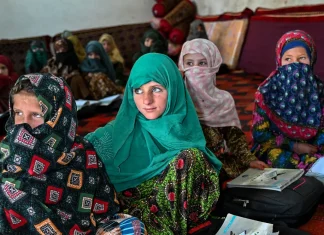
Afghan women's rights dwindle as EU plans Taliban talks

Afghan Women’s Rights Erode as EU Weighs Talks With Taliban

0
Afghanistan has slipped from the world’s front pages as attention centres on the war in the Middle East, but aid groups and UN officials...
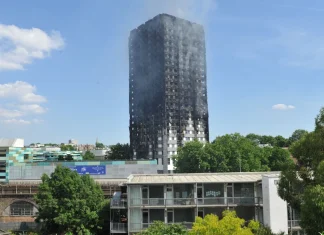
Grenfell walk on anniversary before tower's demolition

Grenfell anniversary walk held ahead of planned tower demolition

0
Nearly nine years after flames tore through Grenfell Tower, survivors and bereaved families are preparing to come together for an anniversary marked by both...
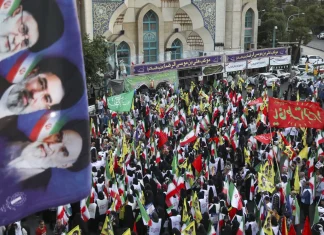
US-Iran differences emerge over timing of peace deal

US and Iran Split on Timeline for Reaching a Peace Agreement

0
A potential breakthrough to end the fighting between the United States and Iran is being billed as imminent by Washington and Islamabad, but Tehran...
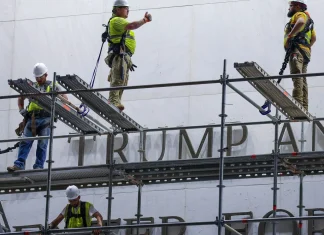
Trump's name removed from Kennedy Center

Kennedy Center Drops Trump’s Name From Its Honors and Recognition

0
Before dawn in Washington, workers quietly began peeling US President Donald Trump’s name off the Kennedy Center — a swift reversal less than six...
What is the Swiss population cap proposal?

Swiss Population Cap Proposal Explained: What It Is and How It Works

0
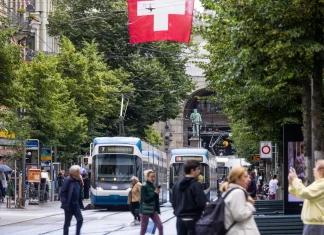
Switzerland heads to the polls tomorrow to weigh a proposal that would lock the country’s population below 10 million — a referendum critics and...