


May 12(Jowhar)Shirkadda Fuelstor oo hoos timaada shirkadaha Salaam Group ayaa maanta si rasmi ah u daahfurtay dhismaha xarun weyn oo kaydinta shidaalka iyo badeecooyinka kala duwan ah oo laga hirgelinayo deegaanka Damerjog ee dalka Djibouti. Mashruucan ayaa lagu tilmaamay mid muhiim u ah horumarinta kaabeyaasha tamarta iyo saadka gobolka Geeska Afrika.
Starmer faces mounting pressure as third UK government minister quits
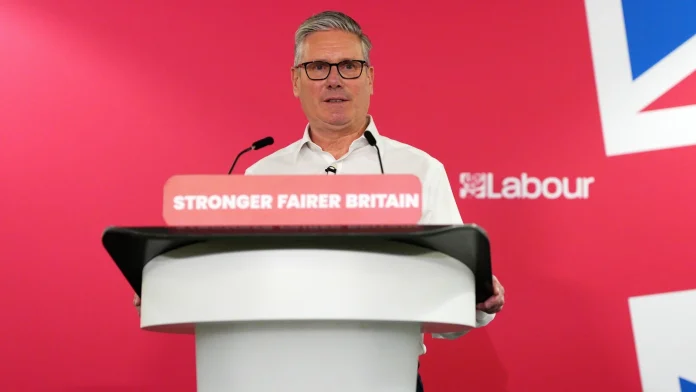
Downing Street at Dawn: A Country Waiting
There are moments in politics that feel like held breath — when the familiar rhythms of routines, briefings and party rooms collapse into a single, noisy second. This is one of those moments. Outside No. 10, the black iron railings reflect the grey London sky. Inside, a handful of ministers file into a crisply lit room where, by midday, the prime minister will chair a meeting billed as “urgent” and “decisive.” The word on everyone’s lips is the same: crisis.
What is happening here is not only about one leader. It is a study in how fragile democratic authority becomes when scandal, poor judgement, or plain political fatigue collide with the unrelenting glare of media and social media. It is also, intimately, about people — voters, civil servants, aides, and MPs — who watch the spectacle with a mix of anger, exhaustion and curiosity.
The Crunch Meeting
Cabinet tables are usually islands of careful choreography. Ministers take their places, papers rustle, a civil servant sets a timer. Today the choreography is brittle. The cabinet room has been described by insiders as tense and quiet, with conversations happening in clipped asides rather than the usual banter. A senior government source told me, “There is a calculation happening in every corner: is this a turning point or a stumble we can survive?”
Those calculations are urgent because the political pressure is real and growing. Across the country, MPs and party officials have been fielding emails, calls and texts from constituents telling them the same thing: it’s time to act. In Westminster speaking network, words like “leadership challenge,” “confidence motion,” and “resignation” travel faster than any official statement.
For the prime minister, the meeting is narrow in purpose and wide in consequence: steady the ship, restore trust, and fend off calls to quit. The outcome will shape the government’s agenda for months — possibly years — to come.
Behind Closed Doors
Inside No. 10, aides move like people carrying plates in a busy kitchen. Some speak in reassurances — “We can manage the narrative” — while others are more blunt: “If we don’t check the leaks, we lose control.” A Downing Street aide, speaking on condition of anonymity, said, “There are conversations about whether a renewed mandate can be secured. But a mandate isn’t useful if nobody believes it’s honest.”
On the other side of the table, senior ministers weigh their options. Some quietly advocate for a reset: a public apology, a set of clear policy wins, and a show of unity. Others are whispering about a leadership contest, saying that party rules and parliamentary math now make a change more plausible than it would have been months ago.
Voices on the Ground
Walk a mile from the polished pavements of Westminster and you meet a different United Kingdom. In a north London bakery, the owner, who immigrated here as a child, folds his hands over a paper cup of tea and says, “We want accountability. Whoever runs the country must be someone we can trust with our lives and pensions and kids’ schools. Right now, that trust is gone for a lot of people.”
Outside a library in Birmingham, a retired teacher I met on a bench told me, “It’s not just about one mistake. It’s about a pattern. When people in power act like the rules don’t apply to them, it chips away at the social contract.” A young voter in Leeds, clutching a tote bag, offered a different tone: “I feel exhausted by all of it. I want someone who cares about the future — jobs, housing, climate. Is that too much to ask?”
These are not just isolated sentiments. Polling organizations and civic groups report a steady erosion of public trust in institutions over the past decade, a global trend that has particular resonance here. Citizens are looking for competence and integrity; when they perceive either lacking, the political temperature rises quickly.
What Could Happen Next?
There are a few broad scenarios that political strategists are working through. None is inevitable; each depends on shifting alliances and hard-to-predict personal calculations.
- A display of unity: A dramatic public show of support could stabilize the prime minister for a time. This usually requires key figures to sign on publicly and a fast-moving policy push to reclaim the narrative.
- A slow bleed: Ongoing defections, whispered opposition, and a persistent scandal could sap authority and leave the government weakened but intact — struggling to govern effectively.
- A leadership contest: If enough MPs submit formal letters of no confidence within party rules, the stage is set for a leadership challenge and possibly a new prime minister.
- An abrupt resignation: The most dramatic outcome is a sudden resignation, which throws the door open to a rapid scramble for successors and a reshaping of national priorities.
What the Numbers Tell Us
Certain facts ground these possibilities. The UK Parliament has 650 seats; the balance of those seats within the governing party and opposition determines how easily a prime minister can survive internal rebellion or an opposition-led motion. Meanwhile, public opinion matters: when support for a leader drops dramatically in polls, MPs — who depend on voters’ goodwill — quickly feel the heat.
Economic indicators also play a role. Inflation, unemployment and household budgets are the real-world metrics voters feel most urgently. When public confidence in the government’s economic stewardship falls, political survival becomes harder.
Global Reverberations
Why should the world care? Because Britain’s political stability matters beyond its borders. The UK is a major economy, a key diplomatic player in Europe and NATO, and a partner in global financial markets. A leadership change can ripple through markets, influence diplomatic negotiations, and alter approaches to shared challenges like climate change, migration, and security.
More broadly, this episode is part of a global conversation about democratic resilience. How do modern democracies handle the failings of leaders? How do parties balance loyalty with accountability? And how does social media — with its electrifying speed — change the calculus of political survival?
Looking Ahead: A Moment of Reckoning
As the cabinet meeting concludes and ministers disperse back into their constituencies, one thing is clear: the country is watching. The outcome will not just be measured by whether the prime minister stays or goes, but by what follows — reforms, apologies, or new leadership that addresses the deeper issues voters have raised.
Ask yourself: what do you expect from political leadership in times like these? Is it contrition, competence, or both? And when leaders fail, where should accountability come from — the ballot box, the parliamentary system, or the court of public opinion?
For now, Downing Street braces for the next chapter. The conversations that begin in that room today will ripple through living rooms, workplaces and newsfeeds across the country. They will shape not only the fate of one leader, but how a nation defines the trust it grants to those who govern it.
Madaxweyne Xasan oo ka qeyb galay caleema saarka madaxweynaha Uganda
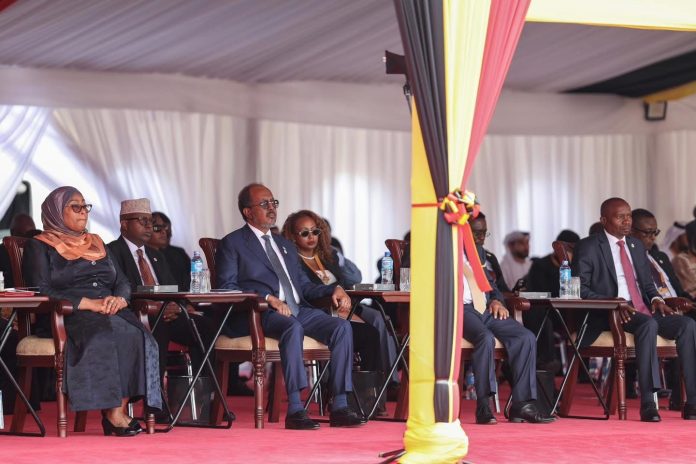
May 12(Jowhar) Madaxweynaha Jamhuuriyadda Federaalka Soomaaliya Mudane Xasan Sheekh Maxamuud ayaa maanta ka qayb galay munaasabadda caleemo-saarka Madaxweynaha Jamhuuriyadda Yugaandha Mudane Yoweri Kaguta Museveni oo lagu qabtay magaalada Kampala.
Truce expiration sparks new strikes by Russia and Ukraine
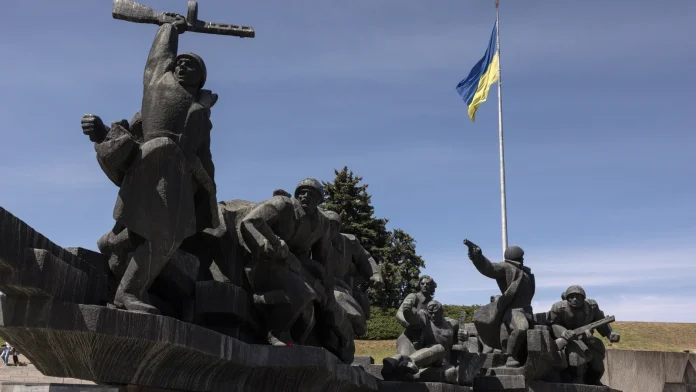
When Silence Ends: Drones Over Kyiv and the Fragility of a Truce
There was a peculiar quiet over Kyiv on the morning the truce died—an ordinary, late-spring hush of tram bells and pastry smoke—until the siren shredded it. People paused mid-sip in cafés, market vendors folded their hands over crates of cherries, and commuters ducked into the city’s vaulted metro stations, not for a routine delay but because the fragile promise of peace had evaporated with the dawn.
That silence was not the beginning of something new. It was the temporary lull before the familiar pattern resumed: alarms, uncertainty, and the unavoidable calculus of survival in a city that has learned to read the sky.
First light, first strikes
Ukrainian officials said drones flew over the capital as a three-day ceasefire—announced days earlier by US President Donald Trump—came to an end. Tymur Tkachenko, head of Kyiv’s military administration, posted on Telegram: “Enemy UAVs are currently over Kyiv. Please stay safe until the alert is cleared.” It was the first confirmed air-raid siren since the ceasefire began.
In the industrial belts to the east, the toll was grim but contained by the numbers: regional authorities in Dnipropetrovsk reported one man killed and at least four others wounded after Russian strikes hit areas including Synelnykove. “We lost a neighbor today,” said Olena, a 54-year-old grocery owner who asked that her surname not be used. “You dream about peace, and then it happens—suddenly, like a band that breaks up mid-song.”
Conflicting tallies, familiar accusations
On paper, the morning’s figures read like a ledger of contradictions. Moscow’s defence ministry claimed it had intercepted and destroyed 27 Ukrainian fixed-wing drones over the border regions of Belgorod, Voronezh and Rostov between midnight and early morning—an assertive tally that framed the day as one of Russian tactical success. Kyiv, conversely, described strikes on its territory and civilians, pointing to the human cost that numbers alone fail to convey.
“We recorded fighting today,” President Volodymyr Zelensky said in his daily address, refusing to gild the pause with illusions. “There was no silence at the front. We have recorded all of this.”
A truce announced—and unspooled
The ceasefire, declared with great fanfare by President Trump hours before Russia’s Victory Day observances, was meant to be a diplomatic icebreaker. “The beginning of the end,” he called it. For many—war-weary families, embattled mayors, foreign diplomats—it felt at once like an opportunity and an act of wishful thinking.
But the truce never had time to bed in. Even as it technically stood, both sides traded accusations of violations. The problem was not merely the veracity of those claims; it was the broader geopolitical web tugging at the ceasefire’s seams. Negotiations on the Russia–Ukraine war, long stalled, were further overshadowed by a different, escalating flashpoint in the Middle East—drawn in by American attention and global anxieties.
Why brief ceasefires slip away
Temporary pauses in conflict have a long history of collapsing under pressure: spoilers who want to test the adversary, commanders who doubt the durability of orders, and the fog of modern, fast-moving warfare that makes attribution difficult.
- Short-lived truces often lack robust verification mechanisms. Who watches the watchers, and what happens when one side says the other broke the rules?
- Modern weapons, especially drones and long-range munitions, complicate containment—attacks can be launched remotely, with ambiguous origin and intent.
- External crises—like the recent Iran-related conflict drawing U.S. focus—can drain diplomatic bandwidth and reduce the leverage needed to enforce peace.
“A truce without monitors is a promise without witnesses,” said Ihor Petrov, a defense analyst based in Lviv. “It can buy hours, sometimes days, but it cannot substitute for a negotiated, enforceable arrangement.”
The weaponization of the sky
Drones—cheap, ubiquitous, and increasingly lethal—have become the war’s new lingua franca. Both sides have integrated unmanned aerial vehicles into surveillance, targeting, and strike missions. Their proliferation is changing not only tactics but also how civilians experience conflict: an omnipresent, mechanical hum that can mean anything from an overhead reconnaissance to a fatal strike.
“You hear the drones more than the planes now,” said Marina Kovalenko, a teacher who spends afternoons volunteering at a shelter in central Kyiv. “They buzz like insects. You don’t know if they are here to watch you or to harm you.”
The technological shift is global. According to recent military trend analyses, drones account for an ever-increasing share of battlefield engagements worldwide, lowering the threshold for attacks and raising the stakes for civilian populations caught below.
Where does that leave civilians?
For ordinary people in Ukraine, a truce is less a legal instrument than an emotional breather. They spend it fixing windows, checking on elderly neighbors, and making quiet lists of what they’d do if the next alert came. The momentary calm reveals not trust, but a fragile hope—one that can be shattered in an instant.
“We measure life now in sirens,” said Olena, staring at a faded mural outside her store. “We count days we haven’t run to the shelter. That used to be a silly game for kids. Now it’s how we survive.”
Looking outward: a conflict caught between global crises
The ceasefire’s failure is not only a point in a bilateral conflict; it is a symptom of a crowded global security agenda. With attention shifting to flare-ups elsewhere—crises in the Middle East, rising tensions in other regions—momentum toward a durable settlement in Ukraine has slowed. Negotiations that once had a singular focus are now vying for diplomatic oxygen.
What does that mean for the future? It means the Ukraine war sits at an uncomfortable intersection: a local contest with global implications, whose outcome will depend as much on international will as on battlefield dynamics. It means that as long as external forces pull attention away, ephemeral pauses on the ground are unlikely to firm into lasting peace.
Questions for readers—and for policymakers
How do we value pauses in violence when they are so easily broken? Can international mechanisms be designed to make short-term truces more credible, or are such efforts inherently fragile in an age of proxy pressures and fast-moving technologies?
These are not rhetorical exercises for those waking to sirens. They are urgent policy problems with human consequences—a grandmother in Synelnykove, a teacher in Kyiv, a border village in Belgorod rustling with alarms. Each alert is a reminder that peace is not merely a headline but a daily, precarious task.
After the sirens
When the alerts finally quieted later that day, the city exhaled in small, simple gestures: lost conversations resumed, a stray cat returned to sun itself on the same concrete curb, and traders reopened their stalls. But the respite felt temporary—a waiting room between alarms.
“We live in hope and prepare for the worst,” Marina said. “That duality is exhausting, but it keeps us moving.”
In the end, the truce—and its demise—might be remembered less for the hours of silence it offered than for what those hours revealed: how fragile ceasefires can be in a world of drones and divided attention, and how, amid geopolitical chess, the people under the sky keep counting their days by the number of sirens they survive.
Israel approves special tribunal law to try Hamas for October 7 attacks
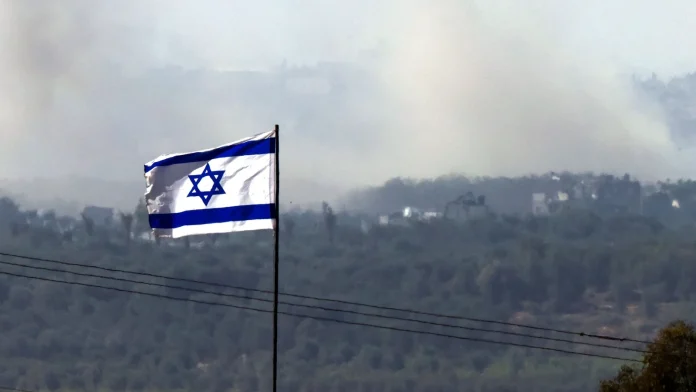
A tribunal born of grief: Israel’s new military court and the long, fraught path to accountability
In a packed Knesset chamber that felt, for a moment, like a country holding its breath, Israel’s lawmakers voted overwhelmingly to establish a special military tribunal to try fighters captured over the October 7 assault. Ninety‑three of the 120 members backed the law — a rare seam of unity in a deeply divided political landscape — and the decision landed like both a balm and a provocation across a region still scarred by that morning of terror.
There is no shortage of raw numbers that refuse to be forgotten. The attack on October 7, 2023, left at least 1,200 people dead in Israel, among them men and women, grandparents and teenagers, people celebrating life and going about ordinary days. Fighters from Hamas poured across the border, striking army positions, kibbutzim and a music festival. Two‑hundred and fifty‑one people were taken hostage and carried into Gaza, a human tally that, for many Israelis, became the measure of the wound.
In Gaza, the war that followed brought devastation on a massive scale: hospitals overwhelmed, neighborhoods levelled, families scattered. By mid‑2024 Gaza health authorities and international agencies were reporting tens of thousands of Palestinian deaths and a humanitarian crisis that international monitors described as catastrophic. The exact figures remain contested in the fog of conflict, but the human cost has been unmistakable.
What the new court does — and what it leaves open
The law establishes a three‑judge military panel based in Jerusalem to try hundreds of militants — not only those seized inside Israel during the assault but potentially others captured later in Gaza who are accused of participating in the October 7 operation or of abusing Israeli hostages.
Proceedings, the law says, will be public: major hearings broadcast, surviving victims given in‑person access while most defendants will appear by video. The statute explicitly ties charges to existing Israeli criminal law — crimes against the Jewish people, crimes against humanity and war crimes — and preserves the possibility of the death penalty for the gravest charges. If a death sentence is imposed, an automatic appeal would follow.
There is a compact list of practical details that lawmakers and supporters have emphasized:
- The court will be military in form but apply Israel’s domestic criminal statutes.
- Key hearings will be public and televised; much of the defendant participation will be by video link.
- Survivors and victims will be given access to attend in person at critical moments.
- Death sentences remain a legal possibility but would trigger an automatic appeal.
Why lawmakers say this is needed
“We needed, above all, to show that the state has instruments to deliver justice,” said a senior lawmaker who helped craft the bill, speaking quietly in an anteroom after the vote. “This isn’t about vengeance — it’s about a durable legal process that answers the grief of families.”
For many Israelis reeling from October 7, the courtroom is a promise of order in a world where ordinary rules were suddenly suspended. “You can feel it in conversations in the street,” said Miriam, a teacher from Sderot, a town repeatedly caught between conflict and uneasy calm. “People ask: will they ever stand trial? Will we see justice? For those who lost children, it is not abstract.”
Justice under a banner of concern
But the creation of a military tribunal has not silenced critics. International legal scholars, human rights advocates and some domestic voices warn that a court designed to serve a traumatised nation could become a stage for politics.
“There’s a real risk of trials morphing into symbolic performances,” said an international law expert familiar with the legislation. “A military court, even with civilian statutes applied, brings with it different procedures, evidentiary rules and limitations — all of which raise due‑process questions when the stakes include life and death.”
Those fears are not abstract. Israel already faces international legal scrutiny. The International Criminal Court opened investigations into actions during the Gaza conflict and issued arrest warrants for Prime Minister Benjamin Netanyahu and a former defence minister earlier in 2024 — a step that has deepened political rancour. Separately, the International Court of Justice is hearing a case alleging genocide; Israel rejects those allegations, arguing its operations were targeted at Hamas rather than Palestinians as a people.
Between the personal and the political
On the street in a southern town where survivors still blink at sirens, opinions are messy and often contradictory. “I don’t want a show,” said Ahmed, a shopkeeper whose shop was destroyed in the war. “I want accountability, but not just for a picture on the evening news. If justice is real, it must be fair to everyone.”
Those words capture the wider dilemma: courts are places of rules and evidence. They are also vessels for national narratives. Can a military tribunal, established amid active conflict and layered grievances, serve as a genuine forum for both punishment and reconciliation? Or will it simply reinforce narratives, deepen resentments and be grist for international criticism?
Historical echoes and legal firsts
The march of legal history haunts the proceedings. The last person executed in Israel was Adolf Eichmann in 1962 — a case that, for many Israelis, fused criminal justice with collective memory. Since then, Israel has rarely invoked capital punishment; the new tribunal reopens that historical seam and places the possibility of death sentences back into public debate.
Military courts already operate in the occupied West Bank, where Palestinians have been tried for a variety of offences. While the death penalty exists in Israel’s penal code, its application in modern times has been virtually unheard of. The recent law, then, acts as both a legal instrument and a symbol — a signal that the state intends to match legal consequences to a crime that, in many minds, marked an epochal rupture.
What comes next — and what to watch
The law passed, but it does not yet have trials to run. The Israeli security services are reported to be holding an estimated 200–300 fighters seized during the October attack; the precise number is classified. Indictments have not yet been made public, and there is no announced trial calendar. For families of the dead and the hostages still held or remembered, the wait between law and hearing is another chapter in ongoing agony.
Observers at home and abroad will be watching several things closely:
- How the court handles evidence gathered in wartime conditions, and whether proceedings meet international fair‑trial standards.
- Whether sentences — especially any death sentences — prompt domestic or international legal challenges, including appeals to the Supreme Court.
- How the tribunal’s work intersects with ongoing international probes, including the ICC and proceedings before the ICJ.
Questions that linger
What does accountability mean after mass violence? Who gets to define justice — the state, international bodies, victims, or history itself? And can trials held under the shadow of war ever fully separate law from politics?
These are not theoretical queries. They are practical, urgent, human questions that will unfold in the coming months. For now, the tribunal stands as a concrete decision: Israel’s legal system will be the stage where, at least in theory, the story of October 7 is told, scrutinized and measured against the rules that modern states claim to obey.
Whether that story brings solace, answers or new controversy will depend not just on judges and prosecutors, but on the painstaking, often painful work of evidence‑gathering, testimony and the fragile discipline of law in a world that has often felt indifferent to ordinary human suffering. How that balance is struck will say as much about the future of justice in this region as any verdict or sentence could.
Madaxweyne Deni oo ku soo wajahan Muqdisho si uu uga qeyb galo shir ka dhacaya Xalane
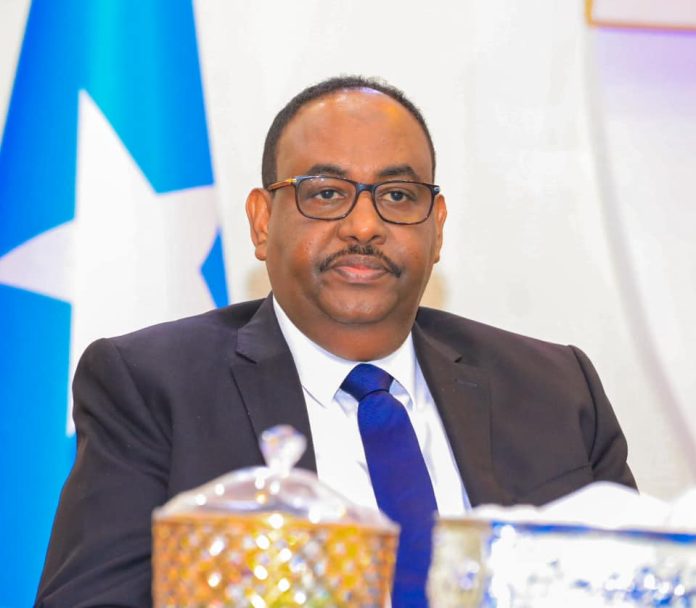
May 12(Jowhar)Madaxweynaha Dowlad Goboleedka Puntland, Siciid Cabdullaahi Deni, ayaa maanta kusoo wajahan magaalada Muqdisho, isagoo safar kaga soo amba baxayo magaalada Boosaaso oo uu maalmihii lasoo dhaafay ku sugnaa.
Ingiriiska oo dowladda Soomaaliya kala hadlay xaaladda Xuquuqda Aadanaha ee dalka
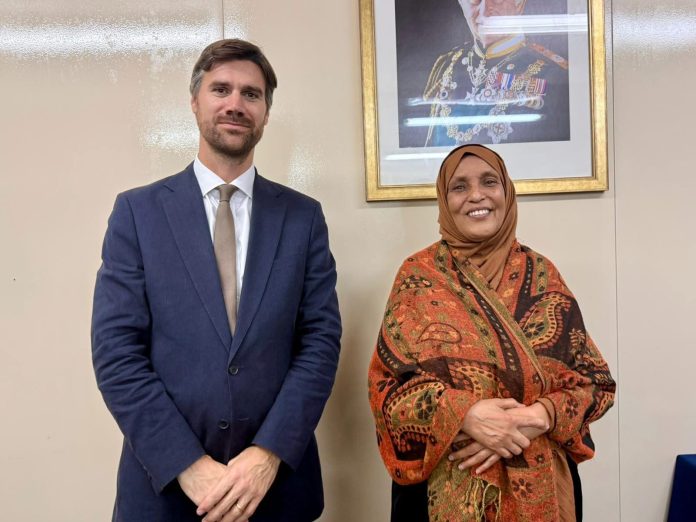
May 12(Jowhar) Guddoomiyaha Guddiga Madaxa-Bannaan ee Xuquuqul Insaanka Qaranka Dr. Maryan Qasim, ayaa kulan la yeelatay Safiirka UK ee Soomaaliya, Charles King oo ay ka wada hadleen mudnaanta arrimaha xuquuqda aadanaha, horumarinta hay’adda, iyo taageerada marxaladda dhismaha ee Guddiga.
Senior ministers call on Keir Starmer to reconsider his leadership role
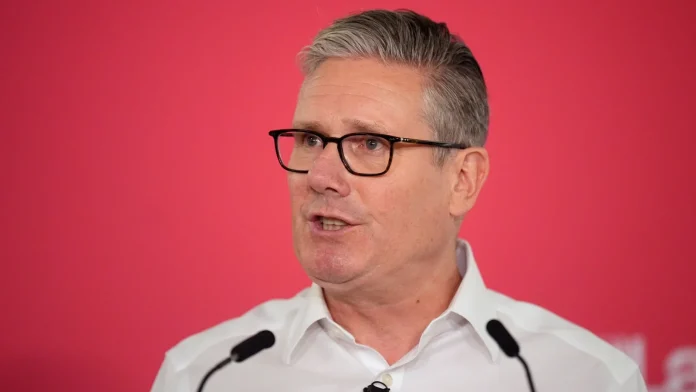
Westminster on Edge: A Prime Minister’s Quiet Storm
The marble corridors of Westminster never sleep, but in the last 48 hours they have felt, in equal measures, feverish and fragile—like a great clock caught between ticks. Political aides have walked out of Downing Street. Cabinet ministers are whispering about transitions. And outside the gates, a London drizzle seemed to wash the city’s face as if to cool a fevered debate that has now reached boiling point.
Keir Starmer, the man who guided Labour back into government, now finds himself at the centre of an implosion that smells faintly of betrayal and bitter politics. The trigger was brutal and public: last week’s local elections inflicted heavy losses on Labour, with party figures tallying almost 1,500 council seats lost across England. Scotland saw a backward step and Wales returned a humiliating third-place finish in many areas—numbers that have become the arithmetic of crisis.
The Exodus: Names, Numbers and a Party in Motion
It started with a trickle of resignations and turned into a mini exodus. By evening, six parliamentary private secretaries and aides had tendered their resignations, citing a loss of confidence in the prime minister.
- Joe Morris, PPS to the Health Secretary
- Tom Rutland, PPS to the Environment Secretary
- Naushabah Khan, Cabinet Office aide
- Melanie Ward, PPS to the Deputy Prime Minister
- Gordon McKee, DWP aide
- Sally Jameson, PPS to the Home Secretary
These departures are tiny in bureaucratic terms, but seismic in message. For many inside Westminster, aides are the canaries in the mine: they are nearest to ministers, quickest to react—and the moment they start to fall away, alarm bells ring.
A Cabinet Divided
This morning’s extraordinary weekly Cabinet meeting was billed as a clean-the-air session. Instead, it looked and sounded like a house divided. Some senior ministers—hardened figures who have weathered political storms—urged caution, warning that an immediate leadership contest would tear the party apart and hand victory to its opponents.
“We cannot turn inwards when big strategic choices lie ahead,” a senior minister told me off the record. “There’s an argument for steadiness—geopolitically we’re not insulated from storms, and domestically the economy is brittle.”
Others, however, have been more blunt. Private conversations have reportedly included appeals—gentle and direct—to the prime minister to consider an orderly transition. One voice close to the Cabinet said, “People are exhausted by damage control. The question now is less about blame and more about whether we can unify before the next fight.”
Voices in the Lobby, Voices on the Street
Walk outside the parliamentary estate and the mood is raw and vivid. At a small café on Whitehall, a civil servant paused mid-sip and offered a line that captures the sense of the moment: “It’s as if the furniture is shifting—no one is sure which chair will be left standing.”
Down the road in a north London pub, where politics is as much a pastime as a sport, a regular named Elaine—retired schoolteacher—shook her head. “They promised reform and steadiness. What we got was chaos. I voted hoping for patience and vision. What we see now is people looking at the menu and asking for refunds.”
A young apprentice, whom the prime minister planned to meet to showcase training reforms, had a different take. “I want policies that get me a job, not leadership dramas,” she said. “I’m glad they’re talking about apprenticeships, but it feels small when the top is unravelling.”
The Mechanics of a Challenge
Behind the drama lies the cold mechanics of party politics. Reports suggest that between 75 and 80 MPs have signed a letter urging the prime minister to lay out a timetable for departure. The exact figure has been traded as currency in Westminster corridors—each signature a tiny artillery shell aimed at leadership credibility.
For those who prefer analysis to anecdote, the arithmetic is stark: mass council losses act as a proxy for public sentiment. When a governing party bleeds local authority seats, the argument goes, it has failed at the grassroots level—the very places where voter trust is built or eroded.
Potential Successors and Factional Lines
Names circulate—some loudly, some as background hum. Health Secretary Wes Streeting is widely discussed as someone who might step forward, though he has publicly denied an immediate tilt for the leadership. Andy Burnham, the popular Greater Manchester mayor, is seen by many as a unifying figure; yet he faces logistical hurdles, not least the need to secure a Commons seat before mounting a serious national bid. And Angela Rayner’s call to correct what she sees as an internal block on Burnham has only added fuel to the debate about fairness and faction within the party.
“This isn’t just about one person,” said a political strategist who has worked across parties. “It’s a question of identity and direction for Labour—what does it stand for now? The electorate is asking for a story they understand. Right now, the story is muddled.”
What’s at Stake: Beyond One Leader
Ask yourself: why does the fate of one leader command such national attention? The answer is twofold. First, leadership matters. A prime minister is not just a figurehead but the person who marshals responses to international crises, economic shocks and social policy. Second, symbolism counts. When a party appears to devour its own, voters interpret weakness at a time when many already feel uncertain about the future.
There are broader themes at work: the rise of populist messaging that punishes perceived elites, the public’s impatience with incrementalism in an age of climate emergencies and economic anxiety, and the structural challenge of rebuilding a party after electoral setbacks. Labour’s dilemma mirrors a global pattern: established center-left parties across Europe and beyond are wrestling with how to renew themselves without alienating their base.
What Comes Next?
Expect theatre and procedure. Expect more private meetings, coded briefings to sympathetic journalists, and—inevitably—some public displays of solidarity. The prime minister pledged, in a central London address, to “prove the doubters wrong” and insisted he would not “walk away.” Yet words only go so far when the machinery of power creaks.
Here is a reality for readers to consider: democracy is a lot louder in the trenches than it looks from the outside. The resignations, the letters, the whispered phone calls—these are the mechanisms by which parties test their muscles and refashion their identity. For citizens, the question becomes sharp and simple: do you want a steady cabinet focused on governing, or a clean break and the clarity of a new contest?
Final Thought
As Westminster waits for the next move, the city hums—buses, suits, the occasional clack of a reporter’s heels on the pavement. Politics, like theatre, requires an audience, and the public is watching. In the coming days, when the next statement is issued and the next resignation lands, ask yourself whether this is a moment of renewal or a cautionary tale about what happens when the centre cannot hold.
“We need more than apologies and pledges,” said a community organiser in Liverpool. “We need policies that speak to people’s lives. That’s the real test—and it won’t be settled in the whispering rooms of Whitehall.”
Warakii u danbeeyay shirka mucaaradka iyo dowladda ee Mareykanka
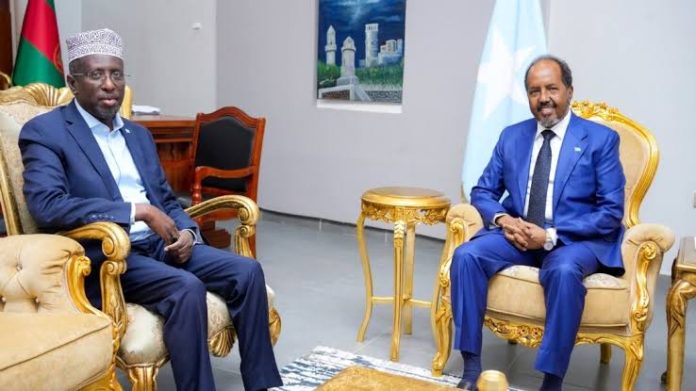
May 12(Jowhar)Imaanshaha Madaxweynaha Puntland ee magaalada Muqdisho ayaa loo arkaa inay furi karto albaabka wadahadallada masiiriga ah ee doorashooyinka dalka iyo sidii xal looga gaari lahaa xilliga kala-guurka ah.
Israel launches strikes on 30 sites across Lebanon, NNA reports
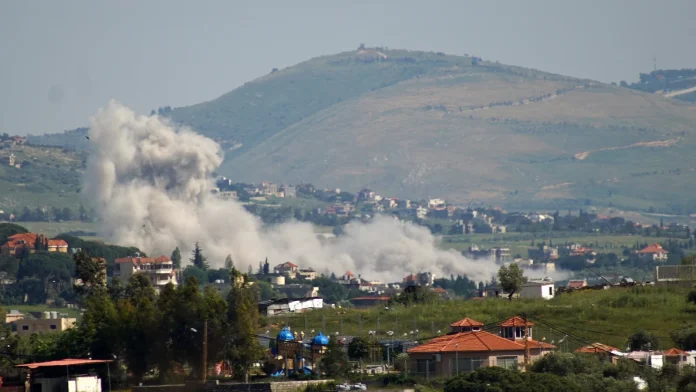
Under the Drone’s Shadow: Lebanon’s Fragile Ceasefire and the Human Cost
On a late spring morning not far from Beirut, a bakery owner named Samir wiped flour from his hands and watched a convoy of families hurry past with plastic bags and children clinging to blankets. “We bake the bread, but we can’t feed peace,” he said, voice low, as a distant hum—perhaps a drone, perhaps memory—skittered over the hills. The scene captures the jarring normalcy and relentless fear that now stitches together daily life across swathes of Lebanon.
Since the outbreak of hostilities on 2 March, Lebanese authorities say at least 2,869 people have died from Israeli strikes, a grim tally that includes dozens killed even after a ceasefire came into effect on 17 April. The truce was supposed to pause the bloodshed. Yet on a recent day, Lebanon’s state-run National News Agency (NNA) recorded strikes on more than 30 locations across the south and the Bekaa Valley—testimony to how fragile any pause has become.
Diplomacy in the Eye of the Storm
In Beirut this week, President Joseph Aoun and Prime Minister Nawaf Salam each received the United States ambassador, Michel Issa, in separate meetings. The exchanges were not ceremonial; they were the small, intense choreography of a nation pleading for restraint. Mr. Salam appealed to Mr. Issa to “exert pressure on Israel to stop the ongoing attacks and violations, in order to consolidate the ceasefire.” It was less a diplomatic nicety than a plea from a country straining under the weight of war.
The talks segue into a scheduled trilateral meeting in Washington between Lebanese and Israeli representatives—a third attempt to negotiate terms and de-escalate a conflict that has already redrawn neighborhoods, livelihoods, and headlines. If diplomacy is a slow craft, it is being asked to carry the rapidly rising tide of human misery.
Where the War Touches Home
Drive south from the capital and the geography of loss reveals itself in stop-start ways. In Zebdine, a town in the south, the NNA reported a particularly wrenching incident: an Israeli drone struck two people “while they were distributing bread” from a municipality vehicle to residents who had refused to evacuate. The image is searing—municipal volunteers, doing what people do in a pinch, suddenly risking everything.
“We stayed because the elderly cannot walk,” said Layla, a 62-year-old resident who is now in a makeshift shelter on the outskirts of West Bekaa. “We have our olive trees, our memories—where would we go?” Her voice trembled, then hardened. “But they hit where we eat.”
People here speak in short, image-rich sentences about disrupted rhythms: the bakery oven that once smelled of sesame and thyme, the schoolyard where the call to prayer and the school bell used to punctuate mornings, replaced now by the clatter of displacement. Lebanese authorities say more than one million people have been uprooted since March—families spread across relatives’ homes, public buildings, and schools converted into camps.
The Military Reality: Rights, Warnings, and Retaliation
On the military front, the lines are as blurry as the media images. Israel’s armed forces say the war has cost them 18 soldiers and one civilian contractor since the conflict began. Their doctrine under the truce, as framed by Washington, allows them to act against “planned, imminent or ongoing attacks.” That caveat has been a frequent justification for strikes that, to civilians, look indistinguishable from indiscriminate hitting.
“You can have rules, but when that rule has a big loophole, it’s not much of a rule,” commented Rana Haddad, a Beirut-based conflict analyst. “The practical effect is that any movement or gathering near a military target becomes suspect—and then civilian infrastructure pays the price.”
Hezbollah, the armed group that carried out the initial cross-border rocket attacks on 2 March in response to the assassination of a senior Iranian-linked commander, has claimed multiple strikes against Israeli military positions—at least 20 attacks it said were retaliation for ceasefire violations. Israel, for its part, reported that two Hezbollah drones damaged unmanned engineering vehicles and that its forces had “eliminated” a militant cell in south Lebanon.
Evacuations, Fear, and the Weight of Displacement
Warnings from the Israeli military preceded several strikes: evacuation messages were sent for seven southern towns and two locations in the Bekaa. The result was a “large wave of displacement,” according to the NNA. Hundreds of families on the run, children clutching plastic water bottles, elders avoiding the bright sun that reveals dust and fingerprints on their past lives.
“Our home is a rectangle of light in my mind,” said Karim, a father of three whose village was evacuated. “I wake up and try to draw it with my fingers so I don’t forget. You don’t know how heavy forgetting is until you are forced to.”
Humanitarian groups warn of compounding crises: shelter shortages, shortages of medical supplies, water insecurity, and the looming specter of disease in overcrowded shelters. Lebanon’s already-strained health system—still recovering from economic collapse and Beirut’s 2020 port blast—has been pushed to the brink.
Local Color and Everyday Resilience
In small acts of defiance and humanity, ordinary Lebanese keep the fabric of community together. Men stack sandbags in a school courtyard and women stir huge pots of lentil soup to feed neighbours. A volunteer doctor named Amal sets up an impromptu clinic from a converted van: “We stitch what we can, we give what little medicine we have, and we tell jokes when the children cry,” she said, half joked, half survival strategy.
There is also music—tender, melancholy oud strums passed among displaced adolescents—and the stubborn persistence of morning coffee brewed thick and bitter, offered to anyone who knocks. These rituals, small as they are, become anchors.
Questions That Won’t Fade
How long can a ceasefire survive an exception clause? Whose lives count as collateral in the calculus of deterrence? And what happens when diplomacy arrives late, when the geography of homes has been altered as much by evacuation as by ordinance?
These are not abstract questions; they are questions asked by parents like Layla, by municipal bakers like Samir, by analysts and diplomats. They reach beyond Lebanon’s borders, probing the global conscience as regional powers watch, and as Washington schedules yet another diplomatic intervention in hopes of threading a brittle peace.
The camera pans, the headlines scroll, and in towns like Zebdine and refugee centers in West Bekaa, people add another piece of knowledge to their battered stores of resilience: hope must be tended. The rest—the maps, the negotiations, the statistics—are the language of those far from the smell of burning flour and the sound of a child laughing despite everything.
Will the world listen to that laugh? Or will it only hear the hum of drones? The answer will be written not in conference rooms, but in the slow, stubborn work of rebuilding homes, lives, and trust.
Iran Says Deal Still Unfinished as Trump Aims to Sign Soon
A possible diplomatic breakthrough between Washington and Tehran could come within days, as US President Donald Trump said the two countries may sign a...
Fireworks and dazzling lights mark pope’s blessing of Barcelona’s new tower
With fireworks bursting over Barcelona and light rippling across stone spires, Pope Leo XIV on Sunday blessed a monumental new tower at the Sagrada...
Video: Trump Tells Reporters He “Loves” Inflation in Blunt Remark
With inflation flashing its hottest warning signal in three years, US President Donald Trump delivered a surprising take on the latest government numbers, telling...
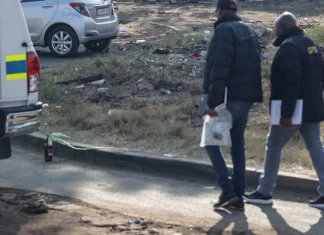
Johannesburg Shooting Leaves 12 Dead and 9 Wounded, Police Say
In a chilling overnight raid on the edge of Johannesburg, gunmen swept through an informal settlement and killed 12 people, South African police said.
Police...

Chinese sub uncovers the world’s biggest whale graveyard on ocean floor
A vast “necropolis” of whales—packed with both fresh remains and fossils millions of years old—has been found on the floor of the Indian Ocean,...