Home Blog Page 43

Israel sentences soldiers for desecrating Virgin Mary statue

Israel jails soldiers for desecrating Virgin Mary statue
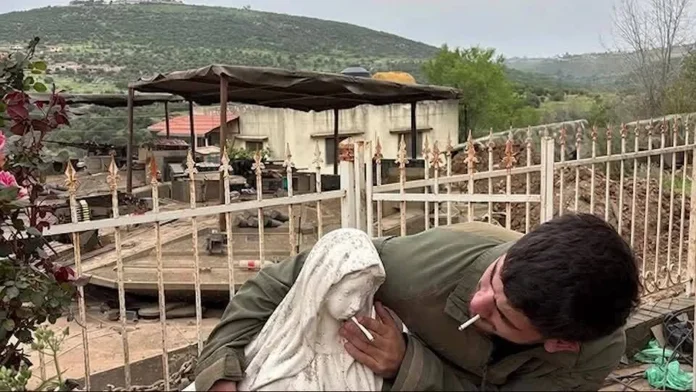
An image showed an Israeli soldier holding a cigarette onto the mouth of a Virgin Mary statue in Lebanon

An image that would not be ignored

It began with a photograph — stark, awkward, almost impossible to un-see. A young uniformed soldier, arm slung casually around the shoulders of a weather-stained statue of the Virgin Mary, held a cigarette as though offering it to the Madonna. The statue’s chipped paint and bowed head suggested decades of wind and prayer; the soldier’s smirk suggested something else entirely. The picture, taken in southern Lebanon, ricocheted across social media, translated into Arabic, Hebrew and English as if urgency were the only language that mattered.

For many in the region that image landed like a stone in a still pond: the ripples were immediate and loud. Christian communities in southern Lebanon — where olive groves slope down toward the Mediterranean and small churches punctuate red-tiled villages — felt the picture as an affront. In Israel, people asked how this could happen on the watch of a disciplined army. To observers from afar, the moment became a shorthand for something larger: the fraught mix of occupation, religion, and the performative cruelty that social media both ignites and immortalizes.

The official line and the penalties

Within days the Israeli military acknowledged the incident and said it had been investigated by commanders on the ground. The soldier who was photographed placing the cigarette was handed 21 days of military prison. The colleague who filmed the episode received 14 days behind bars. These are the figures the military released; they’re small numbers in the ledger of institutional discipline, but not insignificant for the young men who wear them.

“We treat incidents like this seriously,” a military statement read, emphasizing values and conduct expected of personnel. The same statement reiterated an institutional commitment — common to many modern militaries — to respect religious sites and symbols. It was a statement meant both to contain outrage and to insist that the act did not represent official policy.

Context: not the first time

This episode didn’t occur in a vacuum. Only weeks earlier, another photograph went viral: an image of a soldier wielding a sledgehammer and striking the head of a crucified Jesus statue in the village of Debl. Two soldiers in that case were ordered into 30 days of detention and removed from combat duty. Taken together, the incidents have provoked renewed debate about how occupying or patrolling forces interact with the material culture of the people who live beyond their borders.

Voices from the valley

“It’s not just about a statue,” Father Elias Haddad, a priest in a nearby parish, told me as he stood beneath the cool shadows of a vine-laced colonnade. “These figures are part of our history. They are the landmarks of our lives — baptisms, weddings, funerals. When someone treats them as a joke it cuts deeper than the paint.”

Rana Khoury, a 62-year-old olive farmer from the same village, scanned the photograph on her phone and shook her head. “We live with soldiers on our borders for years. We greet them sometimes. We bring them tea. This is not how we expected them to behave. It is humiliating,” she said. She then added, more softly: “It’s also a message to our children — what does it teach them about the other side?”

On the other side of the border, reactions mixed between indignation and weary familiarity. “There are always a few who forget they are ambassadors of the army,” said Amir Levin, a former non-commissioned officer who served for a decade and now runs a veterans’ support group near Tel Aviv. “Most of the men and women I served with are careful. But soldiers are young, and when they’re far from home and caught in a tense environment, bad decisions happen.”

Why a statue matters

Religious symbols are repositories of memory and identity. In Lebanon — a country of roughly six million people where Christians have historically been one of the country’s major religious groups — churches and shrines are not just ornate tourism markers. They are neighborhood anchors, places where generations have celebrated and mourned. Current demographic estimates place Lebanon’s Christian population at around a third of the total, though exact figures are contested and politically sensitive.

To desecrate or mock a religious symbol is therefore not simply to offend faith; it is to touch a nerve of communal dignity and historical presence. In regions where identity and territory are tightly braided, such gestures can feed narratives of dispossession and othering.

Social media as courtroom and executioner

One of the most modern elements of these incidents is how they are adjudicated in public. A mobile phone records the moment; the image circulates at the speed of outrage; judgment arrives from commentators, religious leaders, and officials alike. Scholars refer to this as “mediated accountability”: the court of public opinion demanding its pound of consequence, often faster than any formal process.

“There’s a double-edged quality to viral images,” said Dr. Naomi Ben-David, who studies civil-military relations. “They can force institutions to act swiftly, which is a kind of public accountability. But they also flatten context and can make isolated acts seem systemic. That can be dangerous in an already volatile region.”

Beyond punishment: what needs to change

Punishing the soldiers involved addresses the individual act, sure. But it doesn’t erase the underlying conditions that make such acts possible: long deployments, ambiguous rules of engagement, cultural gaps, and an environment where young soldiers are constantly exposed to hostility and humiliation. Military training can and must include more than marksmanship. Cultural sensitivity, ethical decision-making, and psychological support for troops are preventive medicine.

There’s also a political dimension. When acts like these are amplified, they become bargaining chips in a larger discourse about occupation, sovereignty, and dignity. Local leaders on both sides of the border — priests and imams, municipal heads and opposition figures — know this. “Treating symbols as disposable creates cycles of retaliation,” Father Haddad warned. “It may be small now, but these small things add up.”

What to watch next

  • Will the military broaden its disciplinary or training measures beyond individual punishment?
  • How will local communities respond — through protest, dialogue, or quiet resilience?
  • Will social media act as a force for systemic change, or merely as an accelerant for moral outrage?

Images last longer than apologies. But they can also spark reform. As you scroll past the photograph, ask yourself: what does dignity mean in a place where lives and histories collide daily? How should an occupying force honor the sacredness of places not its own? And how much of conflict is about territory — and how much is about respect?

In the valley where the statue stands, the church bells will ring again. People will bring bread to neighbors and oil to lamps. Someone will sand and repaint the Madonna’s face. These are small acts, but they are the work of living communities trying to repair what a single moment of disrespect can tear in the fabric of everyday life. That is where the long answer to this photograph — and to the questions it raises — will be written.
Labour pledges to place Britain at Europe’s centre

Labour will put Britain at the 'heart of Europe'

Labour says it will put Britain back at the “heart of Europe” — but what does that really mean?

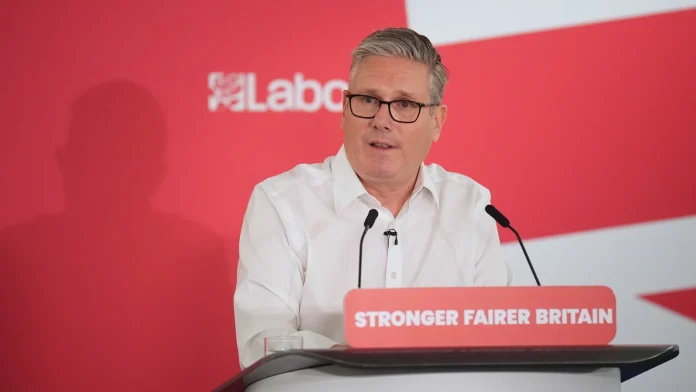
The room hummed like an old train station. Flags—Union Jacks threaded with blue stars—fluttered as people took their seats. There was the familiar scent of coffee and damp coats, the low murmur of conversation turned up a notch when the Labour leader stepped to the lectern.

“We will put Britain at the heart of Europe again,” the leader declared, voice both rehearsed and warm, the phrase landing like good news. Around the hall, phones lifted to record. In the pubs and kitchen tables that will judge this promise, reactions were already being baked like scones: some sweet, some slightly burnt.

A slogan wrapped in history and emotion

For many, those five words are a deliberate tug on memory and identity. To younger voters, “Europe” is shorthand for foreign holidays, Erasmus exchanges, and cheap flights. To older voters, it recalls decades when Britain’s foreign policy, trade deals and even TV schedules were more visibly aligned with the continent to the east. And for the millions who voted to leave, the word can still carry the sting of sovereignty regained.

“Put Britain at the heart of Europe—yes please,” said Lila Adeyemi, a café owner near King’s Cross, stirring her tea thoughtfully. “My suppliers come from Italy and France. Paperwork has doubled since 2019. If this means fewer customs forms, more customers and less worry, I’m all for it.”

Not everyone echoes that sentiment. “Heart? Soulless,” grumbled Tom Ellis, 62, a retired dockworker in Dover, a town that felt the Brexit earthquake most keenly. “We voted for control. If that goes soft, who’s to say what we voted for?”

What policy might look like — and what it won’t

On paper, the pledge can mean many things: closer trade arrangements, a security partnership, co-operation on research and climate goals, smoother travel for workers and tourists, or simply a tone-shift in diplomacy. Labour spokespeople have hinted at negotiating a “comprehensive, pragmatic partnership” with the EU—words chosen to keep both markets and voters engaged.

But talk and treaties are different beasts. Trade with the EU remains integral to Britain’s economy: before 2020, roughly four in ten of UK exports of goods went to EU countries, according to national statistics offices. Services—banking, legal, creative—are harder to quantify but are a British strength and a sticking point in any new arrangement. And then there are people: estimates suggest around 3.5–4 million EU nationals live in the UK, contributing across the NHS, hospitality, construction and classrooms. Any new policy will have to grapple with those intertwined human and economic threads.

“This isn’t 1990. The EU has changed; so has Britain. We must design a partnership fit for supply chains, services and security,” said Dr. Aisha Khan, a trade analyst at a London think-tank. “That may mean sector-by-sector agreements, not a single off-the-shelf deal.”

Local stories, global ripples

Walk through Grimsby’s fish docks or the vegetable markets of Kent and you’ll hear practical worries louder than abstract geopolitics. “We used to load oysters straight onto vans bound for Brittany,” said Margot Tremblay, a fisherwoman who now keeps two sets of export paperwork on her boat. “There’s cost and delay now. When the paperwork gets lighter, it changes lives.”

In Manchester, an independent games studio that once hired EU creatives with ease now reports longer visa lead times and higher legal fees. “We spend more on forms than on coffee,” joked lead designer Raul Mendes, but his eyes were serious. “Talent comes first. Policies that make that simple again are welcome.”

Numbers matter — and they complicate the romance

Promises are political art; economics is stubborn. The UK’s trade balance with the EU still accounts for a large slice of business: exports and imports to the bloc exceed 40% of total goods trade in most recent robust surveys. Investment flows and collaborative research on climate and health are also deeply embedded.

At the same time, the global context is shifting. The EU has been tightening its green regulations, reshaping supply chains to reduce reliance on geopolitically risky suppliers. China’s Belt and Road, US trade policy, and the aftermath of the pandemic have all nudged countries toward more resilient, sometimes regional, economic strategies. For Britain, a “heart of Europe” approach will need to balance openness with resilience.

Security and values: the quieter, harder conversation

Trade is the headline, but security co-operation—shared intelligence, joint training, coordinated responses to cyber-attacks—might be the most durable benefit of closer ties. “We can choose to be resilient together,” said a former diplomat now advising on defence policy. “Threats don’t respect shorelines; they come through networks.”

Then there are values: human rights, labour standards, environmental commitments. Whether a closer partnership will mean aligning more closely with EU norms—on green regulations, data protection, or workers’ rights—will be a political battleground within Britain as much as across the Channel.

Voices from the street

To capture the texture of opinion, I walked from boroughs of inner London to quieter seaside towns. People aren’t thinking in policy drafts; they are thinking in daily life.

  • “My daughter’s visa took months,” said Mehdi Rahman, a nurse. “If closer ties speed that, if it means better staffing in hospitals, why would anyone say no?”
  • “We wanted fishing rights,” said Elaine, a pescatarian from Cornwall. “We still remember the promises. Any deal must not forget communities like ours.”
  • “I’m cynical,” admitted Yusuf, a student from Birmingham. “Politics keeps big decisions behind closed doors. Show us the detail and we’ll listen.”

Questions that matter to you (and to the future)

What does “heart” mean when borders are porous and markets global? Can a country reweave its relationships without unpicking the social threads that made a different choice years ago?

And for those reading this on a phone in Lisbon or a laptop in Lagos: how does a Britain closer to the EU change your world? More travel, smoother visas, faster tech collaboration? Or new trade rules that ripple into supply chains you rely upon?

Looking ahead: promises, pivots and politics

Labour’s pledge to place Britain back at the “heart of Europe” is a statement heavy with history and hope. It is also an invitation to negotiation—between parties, sectors, regions and generations. The real work will be translating that musical slogan into legal text, economic frameworks and lived experience.

Politics will try to make certainty out of uncertainty. But readers should remember: policy is a process. Expect debates, pilot schemes, compromises. Expect local victories and disappointments. Expect that the rhetorical heart sometimes beats more slowly than the political pulse.

So, what do you make of it? Is a Britain at the heart of Europe a balm—a practical route back to smoother trade and cooperation—or a return to a past many are not ready to relive? The answers will be forged in towns like Dover and cities like Manchester, in Whitehall meeting rooms and Brussels corridors, and in the margins where people live their lives. Which side of the story will you watch, and which part will you help write?

Suspect in White House Press Gala Shooting Enters Not Guilty Plea

White House press gala shooting suspect pleads not guilty
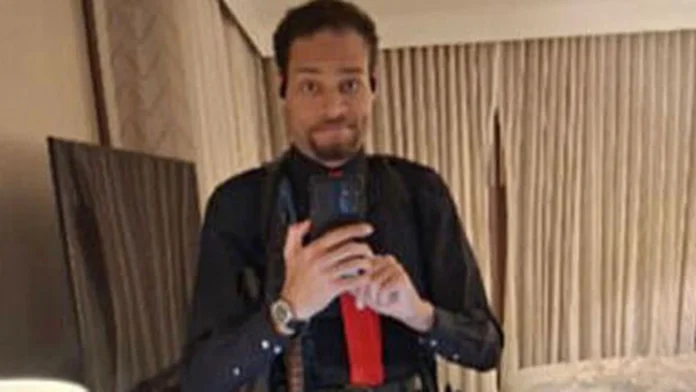
According to prosecutors, Cole Allen spent his last minutes arming himself and posing for a selfie taken with a mobile phone in the mirror of his room

Gunshots, Gasps and the Gilded Night That Almost Wasn’t

It was supposed to be an evening of inside jokes and polished banter — Washington’s annual ritual where reporters and their sources trade barbs, empathy and a little vanity over too-expensive hors d’oeuvres. Instead, the Washington Hilton’s ballroom became an arena of confusion and fear on the night of April 25, when gunfire echoed through the chandeliers and a man with a cache of weapons barreled toward the lower-floor stage.

He is identified as 31-year-old Cole Allen, a California native who, according to prosecutors, traveled across the country by train carrying a shotgun, a handgun and multiple knives. He was subdued and arrested almost immediately after charging through a security checkpoint; a Secret Service officer fired multiple times but did not strike him. Allen later appeared in federal court in an orange jumpsuit and handcuffs and pleaded not guilty to four federal charges, including attempting to assassinate President Donald Trump.

What Happened in the Ballroom

Attendees say the room was a scramble of voices and polished shoes. Journalists who live for the whiplash of political theatre later described the scene in bewildered detail.

“It went from laughter to a stampede in seconds,” recalled Maria Thompson, a political reporter who was seated on the third row. “Someone shouted, ‘Everybody take cover.’ Then movement, people diving under tables. I can still hear the clink of champagne glasses and the thud of hundreds of shoes.”

The president, who had broken with the custom of skipping the dinner in recent years, was escorted out by Secret Service agents after the first shots were heard. Organizers later confirmed that Mr. Trump and other dignitaries were moved to safety within minutes.

The Charges

Federal prosecutors have framed the alleged attack as a clear and chilling attempt with a series of felonies that carry severe penalties.

  • Attempted assassination of the President
  • Transportation of firearms and ammunition across state lines with intent to commit a felony
  • Using a firearm in relation to a crime of violence
  • Assaulting a federal officer

If convicted, Allen faces the possibility of life in prison. The case will test not only the clarity of motive and intent, but also how the justice system treats politically charged acts in an era of deep polarization.

Who Is Cole Allen?

Prosecutors say Allen is a highly educated teacher and engineer. They say his journey from California to Washington was methodical — a cross-country trip ending not in sightseeing but with a staccato burst of violence. Details about his background are still emerging, and court filings have yet to fully reveal motive or whether he acted alone.

“We cannot rush to explanations,” said Caroline Ruiz, a criminal law professor at Georgetown. “The court must determine facts: travel plans, acquisition of weapons, communications, possible radicalization. In cases like this, the narrative can get ahead of evidence.”

The Wider Context: A Pattern of Threats

This incident marks at least the third alleged attack on President Trump within a two-year window, underscoring a grim pattern. In 2024, during a campaign rally in Butler, Pennsylvania, a gunman opened fire, killing an attendee and grazing the president’s ear. Months later, law enforcement arrested a man found with a firearm on a golf course in West Palm Beach where the president was playing.

America’s presidential security history is long and fraught. Four presidents have been assassinated — Lincoln, Garfield, McKinley and Kennedy — and presidents and candidates have faced dozens of threats and attempts over the centuries. The modern protective apparatus — the Secret Service, with its decades-long evolution — now must contend with a different landscape: social media-fueled rage, disinformation, and a proliferation of easily acquired weapons.

Voices from the Night

In the hours after the arrest, the hotel’s stairwells and nearby sidewalks filled with reporters, staffers and guests still shaking with adrenaline. Their stories were blunt and human.

“I saw a man go down right near the bar,” said Antoine Rivers, a caterer who’d worked the event for years. “He was tackled like in a movie. I didn’t think they were going to catch him so fast. It was like someone slammed the rewind on a scene and then had no idea how to put it back together.”

“You try to make sense of it — was it personal? was it political? — and you keep finding more questions than answers,” said Senator Elaine Park, who was present and later praised the speed of security. “We are fortunate no one else was killed or critically injured.”

Security, Society and the Cost of Violence

There are practical questions: How did weapons move across state lines undetected? How did a man with multiple weapons make it inside a secure venue? And there are larger, more uncomfortable questions about civic life.

Experts note that the United States wrestles with an unusually high prevalence of firearms. The Small Arms Survey estimates there are more guns than people in the U.S.; other sources put civilian firearm ownership at roughly 120 firearms per 100 residents in recent years — a figure that helps explain how weapons can show up where officials least expect them.

“When you combine easy access to weapons with political polarization and a culture of grievance, you have a combustible mix,” said Dr. Nikhil Banerjee, a sociologist who studies political violence. “We also see that radicalization often travels online, where echo chambers cultivate grievance into intent.”

What Comes Next?

Legally, Allen’s not-guilty plea sets the case on a familiar but consequential path: discovery, pre-trial hearings and, unless a plea deal is reached, a jury trial. Politically, the episode will likely intensify debates about security at public events, the balance between openness and safety, and how a democracy should respond when its leaders become targets.

For the journalists, staffers and servers who will return to the fold, the questions are more immediate: Do you accept that risk as part of the job? Can a press corps continue to gather in public spaces that are increasingly fraught?

“We cover conflict and power every day,” said Maria Thompson. “But this felt personal. It made me think: how much are we willing to risk for the stories that keep democracy transparent?”

Reflection: A Moment to Ask Hard Questions

As you read this, consider how a single night in a gilded ballroom exposes broader fractures — about safety, about politics, about how communities respond to violence. Are we becoming a society in which public life is more policed and less spontaneous? How do we protect leaders without walling off civic spaces? And how do we address the grievances — mental health, social isolation, extremism — that too often end in violence?

The courtroom will be where facts are weighed and statutes applied. The courthouse steps, the dinner tables and the social feeds will be where the country debates what it means to be safe, free and publicly engaged in a fraught moment. It is a conversation worth having — urgently, carefully and with empathy for those who walked out of a ballroom that night carrying more than the memory of spilled champagne.

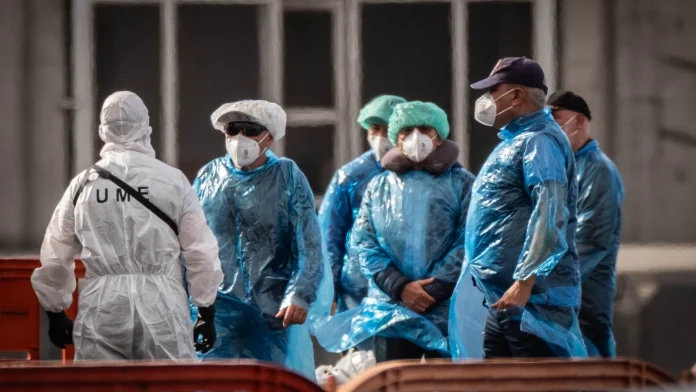
Passengers evacuated as virus outbreak forces emergency response on ship

As it happened: Evacuations from virus-hit ship begin

A cruise ship was met with a surprising and urgent situation when a virus outbreak forced an emergency response, resulting in the evacuation of passengers. The incident occurred on a luxury cruise liner that was in the midst of a voyage when multiple passengers began exhibiting symptoms of an unknown illness.

Thailand’s Former Prime Minister Thaksin Shinawatra Freed From Prison

Ex-Thailand PM Thaksin Shinawatra released from prison
Thaksin Shinawatra's release could help revive his once dominant Pheu Thai

Back to the Light: Thaksin’s Parole and the Rhythm of a Nation

It was a humid Bangkok morning that felt like the first hot breath of a long, unfinished story. The gates of Klong Prem prison opened and a man who has been at the center of Thailand’s political storms for a quarter-century stepped out into a world that had been reshaped while he was away.

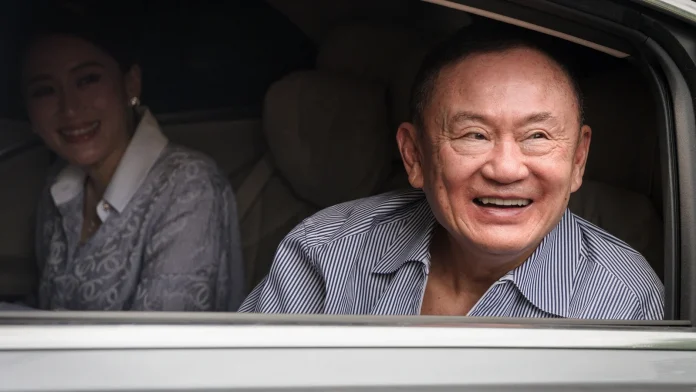
Thaksin Shinawatra, 76, emerged with his hair closely cropped and a loose white shirt, smiling and proffering embraces — most poignantly to his daughter and political protégé, Paetongtarn Shinawatra. Around them rose a chorus of voices in red: “We love Thaksin,” they chanted, the color worn like a banner of memory and loyalty.

“I was relieved,” he told waiting reporters, raising his hands in a gesture both simple and heavy with history. “I went to hibernate. I can’t remember anything now.”

A familiar face in unfamiliar times

For many Thais, that single human moment — a relieved, smiling man hugging family members under the glare of cameras — was enough to plug a hole of longing. For others, it reopened old wounds. Thaksin’s return to public life is not merely the release of an individual; it’s the reintroduction of a political force who remade Thai politics through a blend of populist programs, business savvy and raw ambition.

He dominated the scene from 2001 to 2006 as prime minister, pioneering policies like low-cost healthcare initiatives and village funds that touched millions of ordinary citizens. He was as much a philanthropist to some as a polarizing oligarch to others. Fifteen years in exile ended in 2023 when he returned to Thailand to face an eight-year sentence for convictions including conflicts of interest and abuse of power. But his return has unfolded with dramatic twists: a royal commutation cutting his sentence, a prolonged hospital stay, a Supreme Court ruling that found his hospitalization unnecessarily prolonged and ordered time to be served in prison — and now, parole.

The human chorus: voices from outside the gate

Among the crowd was Rommanee Nakano, 76, who held a small flag and waited through the heat. “He should never have been jailed,” she said, the lines on her face deepening as she spoke. “Whatever he did, he did it for the people. He just wanted the people to be well-fed and have enough to live on.”

Nearby, a young motorbike taxi driver named Anan wiped sweat from his brow with a T-shirt printed in red. “He meant jobs for my parents,” Anan said. “We voted for the promises.” He paused, then added, “But now everything is so messy. Who knows what comes next?”

A vendor frying satay on a street corner, whose stall has fed union workers and civil servants for decades, shrugged and said, “It’s not about one man. It’s about a way of life. People want to know whether their children will have work.”

Politics, prisons, and the pulse of change

The political landscape Thaksin returns to is not the one he left. His once-dominant Pheu Thai Party suffered its worst election performance on record earlier this year, slipping into a junior role in a coalition led by figures who were once his allies. Paetongtarn, who had been his visible heir in many ways, was removed from the premiership amid a wave of legal and political maneuvers that left the Shinawatra clan’s grip visibly weakened.

“He could help revive Pheu Thai,” said Titipol Phakdeewanich, a political scientist at Ubon Ratchathani University. “But he must move carefully. His instincts are to be out front, but in Thailand today, being too conspicuous attracts legal reprisals and political counterattacks.”

Titipol’s caution is not idle. The Shinawatra family has seen six leaders toppled by courts or coups over the years — an almost cyclical pattern that underscores how Thailand’s institutions, from the judiciary to the military, have repeatedly reshuffled the deck. The question now is whether Thaksin’s reappearance will be a pivot point toward political consolidation or another act in a prolonged, destabilizing drama.

Legal tangles and the question of mercy

Thaksin’s journey from conviction to commutation to hospital and then back toward incarceration exposed something else: the interplay between law, health claims and royal prerogative in Thailand. His sentence was reportedly commuted to a year by the king, and he spent months in a hospital’s VIP ward, citing heart trouble. The Supreme Court later determined that the hospital stay and minor surgeries were drawn-out maneuvers and ordered that he still had to serve the time.

As part of his parole conditions, he is required to wear an electronic ankle monitor until his sentence finishes this September — a visual reminder that freedom here is circumscribed, monitored, conditional.

Local color: ritual, food and the scent of hope

Outside the prison, the scene was steeped in everyday Bangkok life: motorbike taxis weaving between parked cars, a vendor selling som tam with chilies hitting your nose like a small promise, incense smoke from a makeshift shrine curling upward as if trying to stitch the morning together. The red shirts — a political sign, a uniform of affection — fluttered in the hot air like flags of memory.

“He’s part of our daily talk,” said Naruemon, a teacher who teaches history in a public school. “We discuss him when we eat, when we ride the bus. He’s more than politics to many people. He’s the reason families got loans, or a small clinic opened in a village. That’s tangible.”

What the world should watch

For observers beyond Thailand’s borders, Thaksin’s return is a prism through which to watch several global currents: the resilience of populist movements; the tension between legal institutions and popular mandates; and the ways in which exile and return shape modern political narratives. From Latin America to Eastern Europe to Southeast Asia, the same questions recur: What happens when a charismatic leader with deep legacies comes back after punishment or exile? Does their comeback heal or further polarize?

“Thailand is not alone in facing these dilemmas,” said Dr. Mali Charoensri, a fictive political analyst I spoke with after the release. “Leaders who built networks of loyalty often remain influential even when formally removed. The challenge for democracies is to accommodate popular movements without permitting polarization to calcify into institutional breakdown.”

Looking ahead

As the sun climbed, the crowds thinned and life in Bangkok reset into its familiar beat: street vendors sweeping, commuter trains groaning, office towers reflecting sunlight. Thaksin got into a car and drove away with family members at his side, an ankle monitor catching the light like a small, persistent star.

What does his release mean for everyday Thais? For the Pheu Thai party? For the long tug-of-war between courts, kings, soldiers and voters? The answers will not come in a day. They will be written in hospital wards and courtrooms, in election booths and in kitchen conversations where parents fret about money and hope.

So I ask you: when a political giant returns, whose story are we really witnessing — the man’s, the party’s, the people’s, or the country’s? And which of those stories will prevail in the years to come?

For now, Bangkok exhales. The man who shaped an era has stepped back into the light, watched by a nation that still cannot agree on what to do with its past. The next chapters will tell whether his presence becomes a balm, a catalyst or another chapter in a book Thailand has been writing for decades.

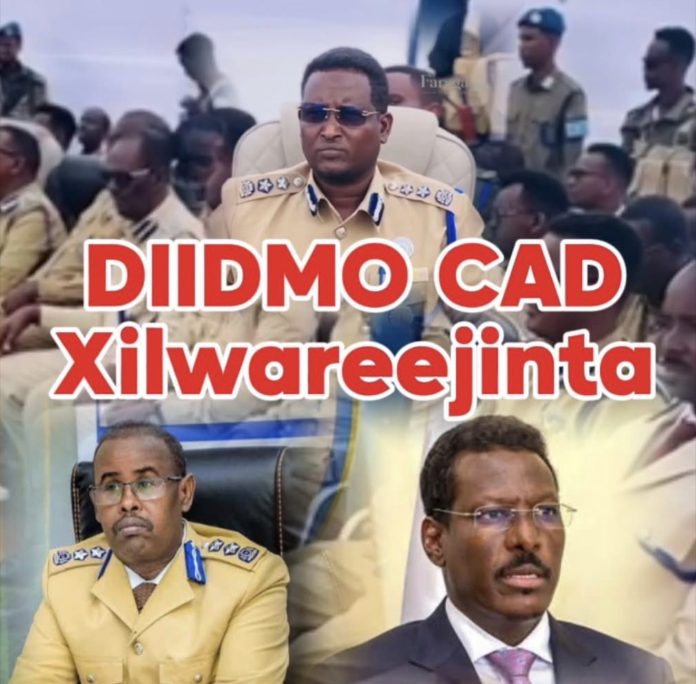
Khilaaf ka taagan taliska booliska Galmudug oo cirka galay iyo taliye Maxamed Daahir oo xilka la wareegay

Screenshot

May 11(Jowhar) Wararka laga helayo magaalada Dhuusamareeb ayaa sheegaya inuu cirka isku sii shareerayo khilaafka u dhaxeeya Dowladda Federaalka Soomaaliya iyo maamulka Galmudug, kadib markii taliyihii dhowaan uu magacaabay Madaxweynaha Galmudug Axmed Cabdi Kaariye (Qoor Qoor) ee Khaliif Cabdulle, uu diiday inuu xilka wareejiyo.

French passenger returning from cruise tests positive for virus

French passenger positive for virus on return from cruise
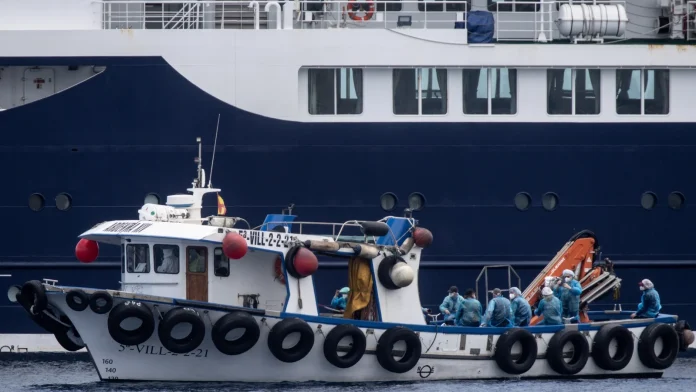
Passengers were evacuated by small boats from the MV Hondius in the Granadilla Port in Tenerife yesterday

Anchored Fear: A Cruise Ship, a Rare Virus, and the Small, Looming Questions of Our Time

There is a strange hush that falls over a port when an illness becomes a headline: fishermen still mend nets along the quay, tourists keep ordering coffee, and somewhere nearby a cruise ship bobs like an island of contained anxiety. Off the coast of Tenerife in the Canary Islands, the MV Hondius has become precisely that—an unlikely locus of worry, grief and logistical choreography as nations scramble to contain a hantavirus outbreak aboard the vessel.

The facts are stark enough to pierce the ordinary hum of news cycles: eight people who once sailed on that ship have fallen ill, six of them confirmed to have hantavirus. Three people—identified in official tallies as a Dutch couple and a German national—have died. The World Health Organization has urged a precautious path: a 42-day quarantine for all passengers. For travelers and policy makers alike, what feels new isn’t so much the disease itself but the way our interconnected world turns a single case into an international operation.

What happened on the MV Hondius?

The story, as health officials describe it, began to surface in early May. A British passenger became ill in Johannesburg on May 2—21 days after another passenger on the same voyage had died. As alarm bells rang, the ship cut a course toward Spain, anchoring near Tenerife, the largest of the Canary Islands.

Countries moved quickly. Ireland, Spain, France, the United States, Australia, the Netherlands and New Zealand all organized evacuations or repatriations for their citizens. The United States Department of Health and Human Services disclosed that among 17 Americans being repatriated, one tested PCR-positive for the Andes virus and another was showing mild symptoms; both were transported in aircraft biocontainment units. France, meanwhile, revealed one of its returned passengers has tested positive and is deteriorating, while four others tested negative but will be retested—French authorities say they have traced 22 close contacts.

Why hantavirus feels different — and why it shouldn’t be dismissed

“This is not Covid,” said Dr. Ana Morales, an infectious disease specialist I spoke to who has worked on outbreaks in South America. “But it is serious. Hantaviruses are typically transmitted from rodents, via droppings or urine, and the Andes strain can, in rare circumstances, pass from person to person during very close contact.”

Historically, Andes virus infections have come with a heavy toll. Case-fatality rates in some outbreaks have hovered in the 30–40 percent range, depending on the promptness of care and local health capacity. That statistic is sobering, but it is not a prophecy. Most people exposed to hantaviruses never transmit the infection to others; most outbreaks have remained small and containable.

“What we’ve gained from recent pandemics is not just fear—but tools,” said a WHO epidemiologist, speaking on condition of anonymity. “Contact tracing, rapid testing, isolation protocols—these have tightened. The WHO’s 42-day quarantine recommendation for passengers is cautious but sensible: the incubation period and the severity of potential disease warrant that window.”

The human stories beneath the headlines

Numbers tell one part of the story. The rest lives in the moments that don’t fit into a press release: the family on Edge of a seat in Baldonnel Airfield when Irish evacuees touched down; the steward who wiped down a cabin twice and still worries; the Australian official coordinating a charter flight as local authorities finalize quarantine sites.

“I felt a knot in my stomach when they told us we’d be going home,” said “Marta,” a passenger who preferred not to use her full name. “We were happy to leave the uncertainty, but you carry the faces of the people who are sick. You think: Did I touch that hand? Did I share a meal with them?”

Local scenes in Tenerife were quieter than the crisis felt. Cafés along the harbor still sell churros, and market sellers display bananas—Canary Islands produce is famous across Spain. A port worker leaned on a railing and said with a shrug, “Ships come and go. We treat them with care. But this, yes, it made people edge up to the rail and peer.”

Official lines and the reality of moving people

Governments have had to make quick, careful choices. France’s health minister spoke about acting early to break transmission chains, invoking emergency powers to strengthen isolation measures. Australia announced it would charter flights for its citizens, with quarantine plans to be finalized with state and territory authorities. New Zealand said its public health system could support any required quarantines.

In the U.S., evacuees were to be taken to specialised centres, including one in rural Nebraska, where clinical assessments and care would be conducted. “Each person will undergo clinical assessment and receive appropriate care and support based on their condition,” an HHS statement said. The optics of biocontainment units on aircraft stirred anxious conversation, but officials described it as a precaution to ensure the safety of crew and fellow passengers.

What should travelers take away?

It’s tempting to retreat into an “avoid all travel” mentality, especially if headlines are urgent and the details uncomfortable. But there is nuance here. Hantaviruses are not airborne in the way influenza or SARS-CoV-2 can be. Most transmissions occur through contact with infected rodents or their excrement; human-to-human spread with Andes virus remains the exception, not the rule.

That said, the episode underlines two broader truths. First: our global mobility means local pathogens can instantly become international concerns. Second: public health systems have learned lessons from COVID—many countries now have mechanisms to move people, to isolate, to test, and to communicate rapidly. The aim is to blend urgency with restraint, to act fast without sowing panic.

Looking ahead

We will learn more in the coming weeks: further test results, the outcomes for the sick, and whether new measures become standard in cruise protocols. For passengers who lived through it, the memory will not be only of illness but of the intimate human responses—phone calls to family in the dark hours, nurses offering reassurance in corridors, crew members carrying meals with gloved hands and steady eyes.

As you read this, ask yourself: what level of risk are you willing to accept to see a sunset at sea or a mountain ridge? What would you want a health system to do for you in a crisis? These are not hypothetical questions anymore—they are the practical moral choices that shape how we travel, how we govern, and how we care for one another when illness crosses an ocean.

In the coming days, authorities will keep tracing contacts, retesting those who are negative, and trying to stitch together a clear timeline. For now, Tenerife’s harbor resumes its daily rhythm. The MV Hondius remains a reminder that on a vessel of strangers, a single illness can bind people together in alarm—and in the quiet, human work of making sure the worst does not come to pass.

Wararkii u danbeeyay xaalada magaalada Muqdisho iyo dhaq dhaqaaqyadii mucaaradka

May 11(Jowhar)Xaaladda magaalada Muqdisho ayaa saaka degan, kadib dibadbaxyo shalay ka dhacay qaybo kamid ah caasimadda kuwaas oo ay dhigeen siyaasiyiinta mucaaradka. Dibadbaxyada ayaa looga soo horjeeday dhulboobka iyo cadaadiska siyaasadeed ee dowladda Madaxweyne Xasan Sheekh waddo.

How the Trump-Xi summit could impact everyday lives and global stability

What does the Trump-Xi summit mean for the rest of us?
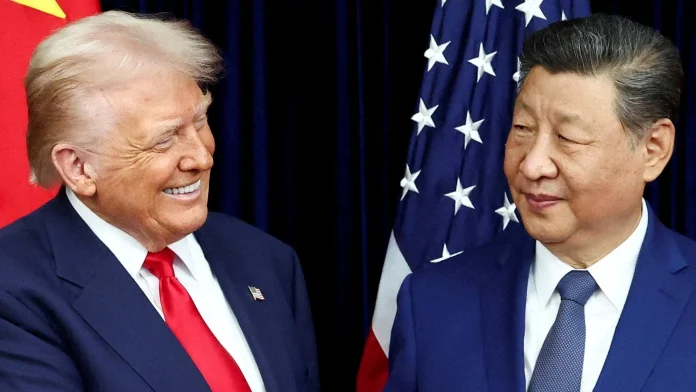
US President Donald Trump and Chinese President Xi Jinping last met in Busan, South Korea, in October

When Two Giants Share a Table: Why a Beijing Meeting Matters for the Rest of Us

There is something quietly theatrical about world history being negotiated over tea and tidy photo-ops.

Next week, in a ballroom that will be swept and scrubbed and photographed, the presidents of the United States and China will meet again. Their conversation will be dissected by diplomats, amplified by pundits and digested by markets. But for citizens in Dublin, Dakar, New Delhi and Wellington, the stakes are no less intimate: which rules will govern trade, tech, shipping lanes and the everyday tools of our lives?

Ask a container-ship captain off the coast of Rotterdam and he will tell you, in a voice worn thin by engine hum and salty air, that a single decision in Beijing or Washington can reroute his entire season. “One sanction, one tariff, one port that closes for a week,” he said, “and you feel it in your bones—costs rise, schedules slip, people lose jobs.”

A duel that feels like a dance

This encounter is not a simple confrontation. It is part competition, part choreography. On one hand, Beijing increasingly talks about self-reliance—securing chips, energy and food supply chains so the state is not vulnerable to external shocks. On the other, Washington leans on a legacy of military reach, advanced semiconductors, and deep capital markets.

“Both sides are playing for time,” said a European trade adviser who asked not to be named. “They want breathing space to shore up their strengths and mask their weaknesses.”

If you look at the ledger, the interdependence is striking. Taiwan still produces roughly 90% of the world’s most advanced semiconductors, with many of the chip designs originating from US firms. At the same time, bilateral trade in goods and services between Washington and Beijing runs into the hundreds of billions of dollars each year—enough to bind economies together even as politicians attempt to decouple them.

What a ‘G2’ could mean—and who gets cut out

There is talk—quiet and then louder—of a duopoly of influence. Imagine a “Board of Trade” where the two largest economies carve out neat pathways for their own commerce. Such an arrangement would not be illegal; it would be strategic. But for smaller and mid-size nations, it could be existentially awkward.

“If you’re not at that table, you’re at least at risk of being on the menu,” said Maeve O’Connell, who runs export strategy for a family-owned medical-device firm in County Cork. “We’ve worked for years to diversify our markets. If Beijing and Washington decide who buys what, suddenly our clients get squeezed.”

From Brussels to Canberra, policymakers are asking whether the old multilateral glue—centered on institutions like the World Trade Organization—still holds. If the world’s two biggest economies begin to silo their trade, the rules could bend, then break.

The power of ports: Hormuz, the South China Sea and the arteries of trade

A short detour to geography explains why diplomatic niceties have teeth. The Strait of Hormuz and the South China Sea are not picturesque backdrops; they are economic lifelines.

About one-third of the planet’s maritime trade transits the South China Sea. When tankers stall in Hormuz, fuel prices ripple into airlines’ ticket books and trucking companies’ balance sheets. When shipping slows, shelf prices rise. For economies that depend on imported energy and exported goods, these choke points are strategic flashpoints.

Iranian tankers may not be a household topic in Helsinki, but the cost of a blocked strait shows up in heating bills and bus fares. Hence Washington’s public pressure—and Beijing’s private calculus—to get shipping moving again.

Diplomacy as theatre and leverage

China has been busy polishing its peacemaker image. Foreign delegations have flowed through Beijing in recent months. These visits serve two purposes: keep trade moving and burnish the narrative that China is the stabilizing hand in an unruly world.

“It’s about legitimacy,” said an international relations professor in Shanghai. “If you can claim to be the broker of calm, you gain soft power even as you fortify hard power at home.”

But beyond the optics, there’s a transactional reality. China buys vast quantities of crude oil, and Beijing’s leverage over Tehran—combined with its trade heft—gives it unusual sway. Conversely, Beijing still depends on global demand to soak up overcapacity in its factories. That double bind drives much of the present negotiation.

Technology: the marrow of this century’s rivalry

Behind trade tariffs and port diplomacy lies a quieter, more existential contest: who will set the rules for artificial intelligence, semiconductors and critical materials like rare earths?

Rare earths are not rare in the geological sense, but China’s processing hegemony gives it clout. In 2020 and 2021, Beijing used export curbs as a bargaining chip, reminding the world that supply chains have pressure points.

“Control over key inputs—whether it’s chips or magnets for military hardware—translates directly to geopolitical influence,” said a policy analyst in Washington. “It’s not just commerce. It’s security.”

Small states, big concerns

For smaller democracies, the rules matter because they buy time and space. “Our governments rely on an equitable, rules-based system,” said a New Zealand trade negotiator. “That system lets us punch above our weight. If it crumbles, the choices get harder and the costs higher.”

That is why ministers in capitals from Dublin to Wellington watch the Beijing meeting with equal parts hope and trepidation. A deal that stabilizes shipping lanes and trade flows could calm markets and lower costs. A secretive arc between the two powers could shrink opportunities for everyone else.

So what might happen?

  • They could agree on narrow, technical arrangements—temporary pauses on tariffs, targeted restore-of-trade measures—buying time and headlines.
  • They might set up institutional frameworks to manage non-sensitive trade, effectively creating quid-pro-quo zones while leaving high-tech and security issues unresolved.
  • Or they could use the summit to posture—flexing domestic support—without producing meaningful outcomes, kicking hard choices down the road.

Whatever the outcome, the meeting will not simply be about two leaders. It will be about the millions whose livelihoods depend on the steadiness of supply chains, about dissidents and journalists who watch for signals about human rights, and about the fragile architecture of global cooperation in a warming world with proliferating technologies.

So here is a question for you, the reader: do you want global rules set quietly between two capitals, or an open architecture where many countries can negotiate and shape the future? Your answer will tell you whether you should be a spectator or raise your voice in the weeks ahead.

In the end, the meeting in Beijing will reveal less about who is winning and more about how the game will be played. Will it be zero-sum, or will the giants leave space for the rest of us to breathe? The choice matters far beyond the photo-op—because the world those leaders sketch will determine the next decade of trade, technology and the everyday freedoms we take for granted.

Safiirka Mareykanka oo kulan deg deg ah isugu yeeray madaxweye Xasan iyo Mucaaradka

May 10(Jowhar) Maalinta Arbacada ee soo socota ayaa waxaa kulan deg-deg ah ku yeelan doona Xarunta Safaaradda Mareykanka ee Muqdisho ergooyin ka kala socda Dowladda Federaalka iyo Mucaaradka, iyadoo uu shirkan garwadeen ka yahay Safiirka Mareykanka oo ay wehliso Ergayga Midowga Yurub ee Soomaaliya.

Starmer says UK to supply enriched uranium to Ukraine

Starmer: UK to provide enriched uranium supplies to Ukraine

0
Britain is sharpening its support for Ukraine on two fronts — energy security and economic pressure on Moscow — with Prime Minister Keir Starmer...
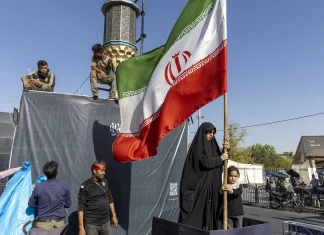
Talks with US on permanent peace to begin Friday - Iran

Iran to Begin Permanent Peace Talks With the US on Friday

0
A fragile truce in the Middle East is set to be tested almost immediately, with Iran and the United States preparing to open a...
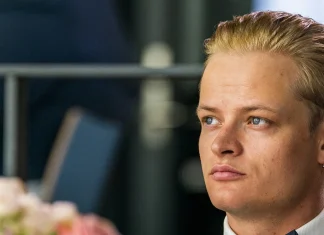
Son of Norway's crown princess denies rape charges

Norway Crown Princess’s Son Convicted in Rape Case, Court Finds

0
Norway’s royal family has been thrust into an extraordinary legal reckoning after Crown Prince Haakon’s stepson, Marius Borg Høiby, was convicted of rape and...
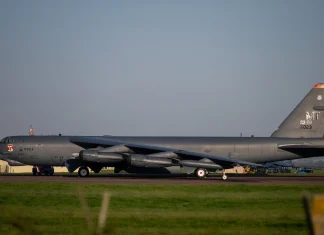
Eight feared dead as US bomber crashes in California

Eight Presumed Dead After U.S. Bomber Crashes in California

0
Fear spread quickly across the desert airfield at Edwards Air Force Base on Monday after a US B-52 bomber crashed shortly after takeoff, with...
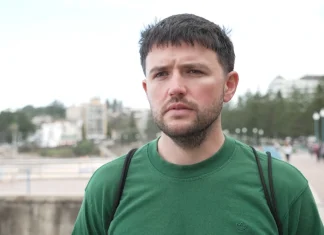
Irish man 'very wary' after Sydney shark attack

Irish man remains highly cautious following Sydney shark attack

0
Coogee Beach is welcoming swimmers back but with lifeguards on high alert and drones sweeping the water after a weekend shark attack that critically...