

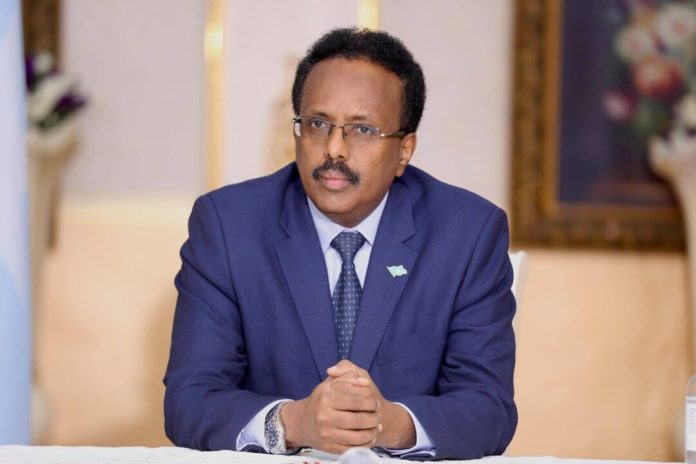
May 08(Jowhar) Madaxweynihii 9aad ee Jamhuuriyadda Federaalka Soomaaliya Mudane Maxamed Cabdullaahi Farmaajo ayaa war ka soo saaray xaaladda siyaasadeed ee cakiran ee dalka ka taagan, isaga oo xusay in Jimcaha soo socda oo ku beegan 15 May 2026 ay tahay maalintii ugu dambeysay ee muddo xileedka sharciga ah ee Madaxweyne Xasan Sheekh Maxamuud.
Maxaa ka jira in isku day dil ahaa uu ka badbaaday Khaliif Cabdiqaadir Macalin Nuur?

May 08(Jowhar) Sida uu qoray wargeyska Turkiga ee Hürriyet, kooxda Daltonlar ayaa lagu eedeeyay inay qorsheynayeen weerar ka dhan ah wasiir hore ee Soomaaliya Cabduqaadir Macalin Nuur, iyadoo hay’adaha ammaanka Turkiga ay sheegeen inay heleen xog iyo caddeymo muujinaya qorshaha la damacsanaa in lagu dilo Musharrax Madaxweyne Khaliif Cabdulqaadir Macalin Nuur.
April ocean surface temperatures hit second-highest levels on record
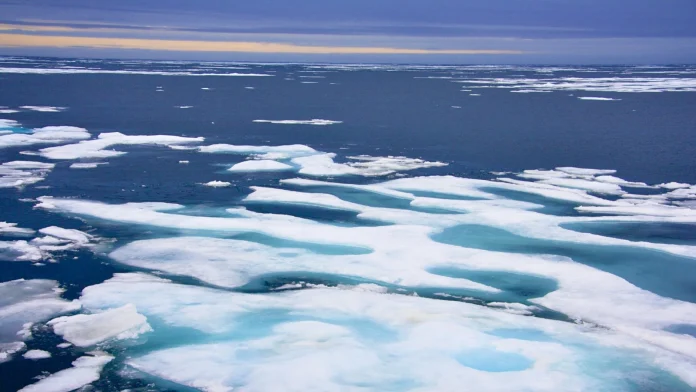
When the Sea and Sky Turn Hot: April 2026’s Unsettling Climate Scorecard
April arrived like a simmering pot left too long on the stove—anomalies building quietly below the surface until, by month’s end, the global climate readouts were impossible to ignore. Oceans outside the polar belts registered the second-highest sea surface temperatures on record for April, and a string of intense marine heatwaves rippled through the tropical Pacific. On land, the world recorded a global average surface air temperature of 14.89°C—fully 1.43°C above pre-industrial levels—making this April the joint third-warmest on record, according to the EU Copernicus Climate Change Service.
Numbers like that are abstract until you put a face on them—or a shoreline, a farm, a mountain village. Then they stop being mere data and become weather’s human consequence: scorched fields, roaring floods, brittle ice and anxious communities rearranging their lives around climate’s new grammar.
Heat in the oceans: a slow-moving emergency
The maps tell part of the story: record-high sea surface temperatures across vast stretches of the tropical Pacific, hotspots that are the breeding grounds for marine heatwaves. These are not brief blips. They persist, starving coral reefs of oxygen, shifting fish migrations and throwing traditional harvests into chaos.
“We’re seeing conditions that overwhelm ecosystems,” said Samantha Burgess, Strategic Lead for Climate at the European Centre for Medium-Range Weather Forecasts. “Sea surface temperatures were near record levels with widespread marine heatwaves, Arctic sea ice remained well below average, and Europe saw sharp contrasts in temperature and rainfall; all hallmarks of a climate increasingly shaped by extremes.”
That loss of equilibrium matters globally. Warmer seas fuel more intense storms, raise baseline humidity and influence atmospheric circulation patterns. For fishing communities from the Pacific islands to the western seaboard of the Americas, it is already changing the timetable of life—when and where fish appear, when reefs bleach, and how economies that depend on the sea survive.
Patchwork Europe: an April of extremes
Europe in April read like a continent split between two moods. The average temperature over land clocked in at 8.88°C, but that average masks striking regional contrasts. Southwestern Europe baked—Spain recorded its warmest April on record, with cities that usually enjoy cool spring evenings instead sweating through anomalously high daytime highs. Meanwhile, eastern Europe felt the cool hand of late-season chills, leaving the whole of Europe with its tenth warmest April overall.
“Our orange trees flowered earlier than usual this year,” said Ana Morales, a smallholder outside Seville. “We worry about blossoms getting hit by late cold snaps or the pollinators being out of sync. It feels like the clock has been changed on nature.”
April’s rainfall map was patchy but telling. Western and central Europe were predominantly drier than average, thanks to a stubborn high-pressure system that parked itself over the region. In contrast, Ireland, the UK, Iceland, parts of Spain and Italy, the Maghreb coast, and the Caucasus saw above-average precipitation and elevated soil moisture—an odd counterpoint to the dryness that settled elsewhere.
Floods, droughts and other weather notes from a warming world
April’s list of extremes reads like a global itinerary of disruption: tropical cyclones in the Pacific; flash flooding across the Arabian Peninsula; severe floods and deadly landslides in Iran, Afghanistan, Saudi Arabia and Syria; and drought conditions deepening in southern Africa.
“We woke up to streets turned into rivers,” recalled Mohammad al-Farsi, a shop owner in a coastal town on the Arabian Peninsula. “The wadi we used to cross on foot is now a flood that swept away cars. We keep asking, ‘Why is this happening more often?’”
Those questions are not rhetorical. Across southern Africa, farmers reported parched soils and delayed rains that threaten maize and sorghum harvests. In areas of Central Asia and Madagascar, conditions were drier than average. Conversely, large swaths of the northeastern and central United States, Canada, northern Mexico, southern China, Japan, parts of Brazil, southern Africa and New Zealand recorded wetter-than-average conditions.
- Many coastal waters: second-highest sea surface temps outside polar zones
- Global April average: 14.89°C (1.43°C above pre-industrial baseline)
- Europe land average: 8.88°C; Spain: warmest April on record
- Arctic sea ice extent: second lowest for April
Ice at the edge: an Arctic alarm
There was a stark, crystalline reminder of the broader climate trend: Arctic sea ice extent ended April at the second-lowest level on record for the month. Sea ice doesn’t just define a region’s beauty; it helps regulate global temperatures by reflecting sunlight away from the planet. Less ice means more absorption, more warming, and a cascade of effects that reach far beyond the polar circle.
“We’re not talking about a distant future,” said Dr. Laila Ahmed, a polar researcher. “Each year the window of uncertainty widens. April’s low ice extent underlines long-term trends that will determine sea level rise and weather patterns for decades.”
People on the front lines
Numbers matter, but so do lives. In flood-hit parts of the Middle East and south-central Asia, homes and mosques were swamped; families were displaced and, tragically, lives were lost to landslides and sudden inundations. In Spain, city sidewalks filled with early-season crowds seeking shade rather than spring coats. In southern Africa, a grandmother on a small plot of land counts seeds and measures rations now more carefully than she does the calendar.
“We feel the change when rains don’t come on time,” said Thabo Ndlovu, a farmer in KwaZulu-Natal. “You plant expecting a rhythm passed down from your parents. When the rhythm breaks, so does everything else.”
So what now? Reflections and responsibility
April 2026 is another notch on a growing beltway of alarming climate signals. The patterns—marine heatwaves, high land temperatures, record-low Arctic ice, and a mosaic of floods and droughts—converge on a single, sobering point: the climate is shifting in ways that amplify extremes. That’s not conjecture; it’s what multiple datasets and services like Copernicus are telling us.
What can you, the reader, take from this? First, climate change is not an abstract future; it’s unfolding in monthly bulletins and on front pages. Second, solutions are layered: early warning systems, resilient infrastructure, smarter water management, and policies that accelerate emissions reductions all matter. Third, local stories—farmers adjusting planting schedules, coastal communities planning relocations, cities updating stormwater systems—are where global policy meets everyday life.
“We need to listen to both the data and the people,” said a municipal planner in Valencia. “The science shows the direction. The communities tell us how to respond.”
As you click away into your day, consider this: what does a world look like that treats these months as signals rather than mere headlines? How do we redesign our cities, our food systems, our oceans policies to live within the new boundaries the planet is drawing? April’s climate report is urgent, but it’s also an invitation—to reckon, to adapt, and to act.
Legendary naturalist Sir David Attenborough celebrates his 100th birthday
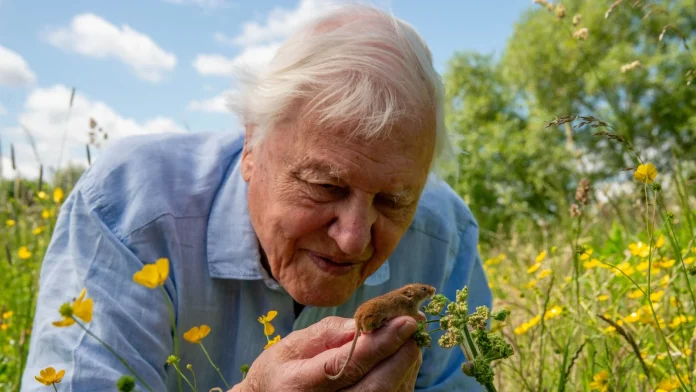
David Attenborough at 100: The Voice That Made the Earth Feel Like Home
On a bright May morning in 2026, the world celebrated a man who has spent a century listening—to tides, to trumpeting elephants, to the subtle mechanical click of a beetle’s wing—and to us, the people who needed him to tell the story.
Sir David Attenborough turned 100 on 8 May, and for those who grew up with his voice as the soundtrack to childhood curiosity, his birthday feels less like a single day on the calendar and more like a milestone in a long conversation about who we are and the home we’ve inherited.
A lifetime narrating our planet
Seventy years of filmmaking is more than a career; it’s an archive of wonder and a slow-motion witness to change. From his early days on Zoo Quest—when he returned from the field with animals destined for London Zoo—to the sweeping, elegiac canvases of Life on Earth in 1979, Attenborough turned natural history into storytelling that felt intimate and urgent at once.
“When I was a child, I thought the world ended at the garden gate,” said Asha Patel, a teacher in Leicester who brought her class to a centenary screening. “He taught us there are worlds inside a puddle and dramas unfolding on distant ice floes. He made us care.”
Those dramas were often unforgettable. There was the 1979 moment when two young mountain gorillas clambered onto him while the cameras rolled, and the gut-punch of Lonesome George—the last of his species—whose filmed decline and death put extinction in human terms. In more recent decades, sequences like the orcas creating waves to wash seals from ice floes or the heartbreaking images of albatross chicks fed plastic from the sea left viewers changed.
Blue Planet II in 2017 did more than win awards; it altered behavior. That series sparked an outcry over plastic pollution that rippled beyond living rooms into government policy and supermarket aisles. “We saw petitions, ban proposals and corporate pledges within weeks,” says Dr. Lena Müller, an environmental policy analyst. “A TV series didn’t just inform—it mobilised.”
How one voice moved the world
It is easy to quantify some of Attenborough’s impact—decades on the BBC, programmes watched across dozens of countries, thousands of hours of footage—but harder to measure the quieter ways he shifted a culture’s sympathy. He has been a bridge between science and storytelling, translating complex ecological trends into page-turning narratives.
“He made the invisible visible,” says Mike Salisbury, a long-time collaborator, who remembers Attenborough’s meticulous curiosity on set. “David didn’t just describe animals; he listened to them. He treated every sequence as if it were the first time anyone had ever seen that moment.”
That listening is more important than ever. Scientists now say biodiversity is declining at an unprecedented rate—an estimated one million species are at risk of extinction, the Intergovernmental Science-Policy Platform on Biodiversity and Ecosystem Services warned in 2019—and the planet has warmed more than 1°C since the late 19th century. Those cold facts are humanised when a voice like Attenborough’s anchors them to memory and feeling.
Centenary celebrations: global, local, musical
Across Britain and around the world, the centenary became a week’s worth of rituals: special broadcasts on the BBC, concerts at London’s Royal Albert Hall, immersive shows at the Natural History Museum, and community-led nature walks that connected a familiar narrative to local soil.
- In London, the Royal Albert Hall hosted a night of music and film, a program that mixed the orchestral scores of Planet Earth with songs that had become part of the series’ DNA—Hoppípolla played by an Icelandic ensemble, the pounding rhythms of film-score classics, and new performances inspired by scenes people watch over and over again.
- Outernet Tottenham Court Road transformed part of the city into a five-minute immersive piece called Our Story With David Attenborough, condensing a lifetime into a short, luminous, free experience for passersby.
- In Morecambe Bay, artists drew Attenborough’s likeness in the sand—an ephemeral portrait that the tide would reclaim, fitting for a life dedicated to showing us the impermanence and the preciousness of the world.
“I came for the music and stayed because I remembered where I’d been on the first time I saw Planet Earth,” said Hassan Ali, a postal worker who queued for hours outside the Royal Albert Hall. “You don’t expect a TV voice to hold you like a grandfather. But his does.”
At home in Richmond, still curious
At 100, Attenborough no longer treks through jungles or stands for hours in the polar wind. He has traded some of the globe-trotting for the small triumphs of the near-at-hand—Wild London, a 2026 series, revels in urban foxes, beavers returning to rivers, hedgehogs, and the surprising wildlife of a metropolis.
“After all that travel, he told me once, he loves Richmond best,” recalls Eleanor Marks, a neighbour. “There’s a quietness there. He loves the river and the chestnuts in spring. He knows the birds by their calls.”
The personal touches around his centenary were affectionate and playful: charities named rescued animals in his honour, orchestras arranged suites of familiar themes, and grassroots groups organised tree plantings and guided walks—small public actions that echo the larger conservation message he has championed.
Legacy, responsibility, and the question for readers
Celebrating a life as luminous as Sir David’s can be more than nostalgia. It can be a moment of reckoning. What does it mean to inherit a planet he has spent his life explaining? How do we answer his long-standing challenge: if we know what is happening, what will we do about it?
“David asked us to feel, and then to act,” says Dr. Jorge Alvarez, an ecologist. “He never told us what to do with our lives, but he made us feel the weight of our choices. That is a remarkable gift.”
So on his 100th birthday—whether you watched him as a child bent over a bedroom bookshelf, listened to him in a lecture hall, or caught his voice on a late-night documentary—ask yourself: what will my small part be? Will it be planting a tree, pressing a petition, cutting single-use plastics, or simply teaching a child to look for life’s quiet miracles?
Sir David has been clear that story and stewardship go together. If his century of broadcasting has taught us anything, it is that knowing is the first step; caring must come next, and action must follow.
As the celebrations wind down and the sand portraits vanish with the tide, the challenge remains: can the rest of us live up to the urgency, the curiosity, and the tenderness that one man coaxed out of millions? If ever there were a moment to answer that question, his hundredth year feels like it.
Zelensky wuxuu ku booriyay dadka reer Ukraine inay ka fogaadaan dhoolatuska militariga Ruushka.
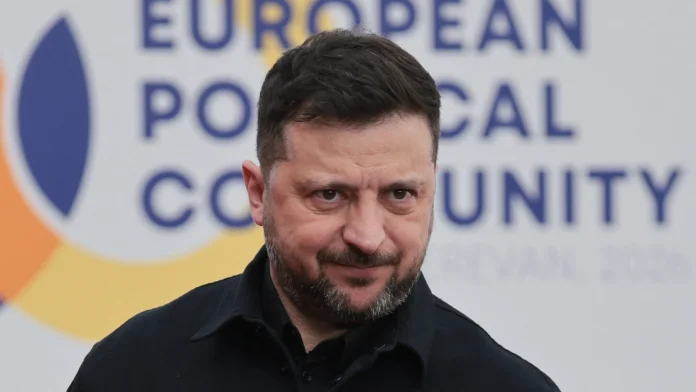
May 08 (Jowhar)- Madaxweynaha Ukraine Volodymyr Zelenskyy ayaa Khamiistii uga digay xulafada Ruushka inay ka soo qayb galaan dhoolatuska guusha Dagaalkii Labaad ee Adduunka ee 9-kii Maajo, iyadoo Moscow iyo Kyiv ay is dhaafsadeen eedeymo ka hor dhacdada.
Rescue crews search for three hikers missing after Indonesian volcanic eruption
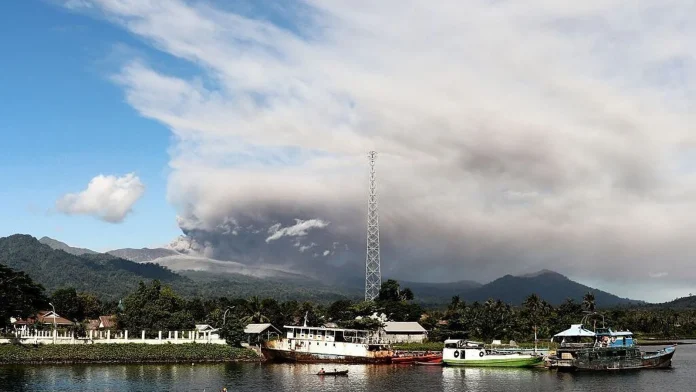
Smoke, Ash and the Silence That Follows: Mount Dukono’s Sudden Fury
At dawn on a humid Monday, the sky above Halmahera tore open in a way residents said they had never seen before. A column of ash and fire-laced smoke shot upward, a dark feather that mushroomed and stretched until, from the sea to the jungle, people felt the island exhale. Mount Dukono, one of Indonesia’s most persistent volcanoes, hurled ash as high as 10 kilometers into the atmosphere at 07:41 local time, sending hiking groups, fishing boats and village communities scrambling for shelter.
The morning’s violence left an immediate human story: 20 climbers trapped by the eruption; rescues that freed 17 people; and three hikers—still missing, still unaccounted for as the island’s rescue teams scour the slopes and the crater rim. The quick-moving column of hot ash, captured in grainy agency footage, raced down the mountain, blanketing the crater’s shoulders and cloaking trails that were only weeks ago lush with ferns and bird calls.
On the Ground: Faces and Voices
“We smelled sulfur, then the ground started to tremble,” said a rescue team coordinator who was organizing search parties from a packed command post on the coast. “There were hikers coming down coughing, some without shoes. It was chaos—people had ash in their hair, in their lungs.”
A villager near the eruption zone, an older woman who wakes to the sound of the sea and tends a small plot of sago and chili plants, described waking to a daylight that had gone brown. “At first I thought it was smoke from the faraway boat fires,” she told me, hands folded around a steaming cup of coffee. “Then it fell—like gray rain on the roofs, on the banana leaves. The chickens stopped.”
Survivors and local police have told reporters that three people—two of them from Singapore—may have died in the eruption. The local rescue agency has not yet confirmed those deaths. For families waiting on phone calls, every hour without official word lengthens the dread.
Why Hikers Were There Despite Warnings
Climbing Dukono was officially banned after an earlier eruption in 2024, but the mountain’s popularity with adventurous trekkers and the lure of its remote trails persists. Some say enforcement is lax; others point to a broader tourism rebound across Southeast Asia in the wake of pandemic restrictions.
“People come for the rawness,” explained a guide who often ferries small groups to Halmahera’s lesser-known ridgelines. “They want the emptiness, the feeling that you are the first to step here. You tell them, ‘It’s risky,’ and they say, ‘Even more reason.’ That’s the trouble.”
Numbers That Matter
Here are the facts we know so far, verified by Indonesian volcanology and rescue authorities:
- Ash column height: approximately 10 kilometers (reported by the volcanology agency).
- Alert status: kept at the third-highest level, signaling significant ongoing activity.
- Hikers affected: 20 trapped initially; 17 evacuated; 3 missing.
- Exclusion zone: authorities have warned locals and visitors to stay at least 4 kilometers from the crater.
- Recent activity: nearly 200 small eruptions recorded at the end of March as activity picked up again after a quieter 2023.
Indonesia, it’s worth remembering, is a country shaped by fire. The archipelago sits along the Pacific “Ring of Fire,” a belt of tectonic restlessness that accounts for roughly 75% of the world’s active volcanoes and about 90% of its earthquakes. The nation itself monitors more than a hundred active volcanoes, a Sisyphean task for volcanologists who track tremors, gas emissions and shifting slopes with a combination of instruments and human observation.
Risks Beyond the Plume
It’s not just the ash cloud that brings danger. Indonesian volcanology authorities warned of volcanic mudflows—the swollen, fast-moving rivers of debris and ash known as lahars—when the skies open up. Rain in a volcanic landscape becomes a mix of weather and lethal geology; ash-laden water turns into cement that buries roads, culverts and homes.
“After an eruption like this, every downpour is a threat,” said a hydrology expert with the regional disaster agency. “We map likely lahar channels and tell residents to move. But when people have lived in those valleys for generations, it’s hard to uproot them.”
Air Travel and the Wider Impact
As of now, there are no confirmed flight disruptions attributed to Dukono’s ash, but aviation authorities monitor ash plumes closely. Volcanic ash can strand aircraft, clog engines and grind visibility to nil. Remember the global chaos after the 2010 Eyjafjallajökull eruption in Iceland: tens of thousands of flights canceled and economies dented by a single, stubborn plume. With ash reaching the stratosphere at 10 kilometers, airlines and meteorologists will be watching the winds and the plume’s drift pattern for any changes that could affect regional air corridors.
Local Color: Life on Halmahera
Halmahera is not just a backdrop for volcanic drama—it’s an island of fishermen hauling in bright tuna, of women selling clove-scented snacks, of markets that open at dawn where fish are laid out on banana leaves and teas are taken with condensed milk. The island’s culture bears traces of centuries of spice trade and colonial touchpoints, but daily life there is ruled by tides and seasons, by the rhythm of palms and ocean.
“We know the mountain,” said an old fisherman who spends afternoons mending nets on a weathered jetty. “It is alive. Our grandfathers told us stories of it. But still, when it moves like that…you feel small.”
What This Means for the Future
Natural disasters are never just moments in time; they are tests of governance, community resilience and global solidarity. How do authorities balance the allure of adventure tourism against the duty to protect visitors and locals alike? How do emergency services maintain readiness across thousands of islands, with limited resources and endless possibilities for surprise?
There’s also a broader question for all of us: how do we live alongside active geology? From the Indonesian shorelines to the Pacific coasts, communities will continue to make complex decisions about where to farm, where to build and when to move. Technology—better monitoring stations, real-time alerts, drones for post-eruption surveys—helps, but so does local knowledge and the long, patient work of establishing trust between officials and communities.
How You Can Help
- Stay informed through reliable agency updates rather than social media rumor.
- If you’re traveling to volcanic regions, heed local advisories and respect exclusion zones.
- Support relief and monitoring organizations that work in Indonesia—both international and local charities.
As the search continues for the three missing hikers and families wait for definitive news, Dukono’s plume acts as a stark reminder: the Earth is alive beneath our feet, and sometimes it makes its presence impossible to ignore. Are we listening closely enough?
In the coming days, the ash will settle into fields and riverbeds, rescue teams will comb the contour lines, and communities will begin the slow work of counting losses and tallying blessings. For now, Halmahera holds its breath—and asks everyone watching from afar to do the same, to give space for grief, for rescue, and for the careful, painstaking work of recovery.
Farage celebrates Reform UK’s gains in local elections
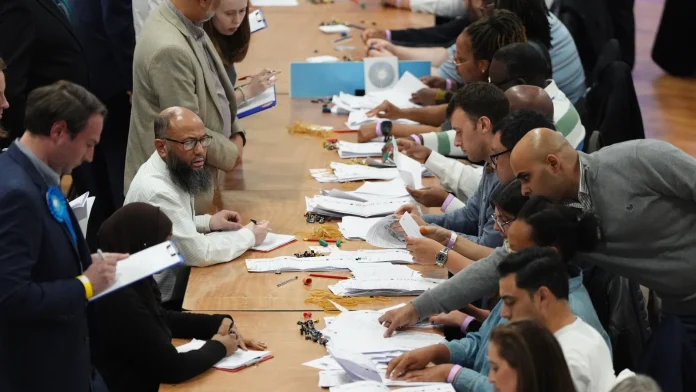
Dawn in the Count: A British Political Night That Felt Like a Turning Point
When the fluorescent lights came on in community halls from Cheshire to Greater Manchester in the small hours, they found more than bundles of ballot papers and folding chairs. They found a mood change: unease, elation, confusion—depending on which table you stood behind.
Early returns from England’s local elections read like a political weather report with gusts coming from the unexpected. Reform UK, the party that only a few years ago was a marginal force, was celebrating a wave of gains. Labour—Keir Starmer’s party—saw stumbles in places it once treated as comfortable. Across dozens of councils there were new colours on the political map, pockets of blue and turquoise replacing long-standing red.
The big numbers, early and loud
By the time results from 37 of 136 English councils had been reported, Reform UK had added more than 210 council seats to its tally, while Labour lost over 160 in the same batch of counts. Those are early, partial figures; they do not paint the whole night, but they were enough to send ripples—and headlines—through Westminster.
To put that in perspective: almost 25,000 candidates stood for more than 5,000 council seats in England alone, with votes also being cast in mayoral contests and national devolved elections in Scotland and Wales on the same day. Scotland’s parliament has 129 seats, Wales’ Senedd 96, both due to be counted later and carrying the potential to heap further pressure on national politicians depending on how those ballots fall.
Where the map changed
Small towns supplied the drama. In Halton, near the Mersey, Labour went into the evening defending 17 seats and emerged holding just two. Reform UK walked away with 15, some of them won with more than half the vote in wards where a year earlier its victory had been decided by six votes. “It’s a seismic swing,” said one local activist, wiping condensation from a takeaway coffee cup. “People are voting with their pockets and their worries.”
Hartlepool, a former Labour stronghold that has turned into a political chessboard since its by-election upheavals, saw Reform sweep every seat it contested—12 in all—leaving the council without a clear controlling party. In Tameside, within the constituency of Labour deputy leader Angela Rayner, Reform captured 18 of 19 seats up for grabs, pushing the authority to no overall control. Chorley and Wigan delivered similar shocks; Redditch, Tamworth and Exeter slipped from Labour hands.
Meanwhile, London offered a mixed picture. Labour held onto boroughs such as Ealing, Merton and Hammersmith & Fulham, but lost Wandsworth—a symbolically charged area—after holding it since the last turn of the electoral wheel. The Conservatives, for their part, managed to cling to Harlow and Broxbourne even as their national share looked shaky.
Voices from the counting halls
Nigel Farage, speaking with the buoyancy of a man who has just cleared a hurdle many thought he could not, framed his party’s surge as more than a tactical win. “We’ve jumped the hardest fence,” he told supporters, smiling. “Now we’re ready for the whole race.” His language was triumphant; the crowd’s turquoise scarves flashed like flags in a chill wind.
Opposition voices were sharper. “This is a night of very hard questions for our party,” one Labour backbencher murmured soon after the first lists were published. Some in the party privately urged the prime minister to consider his position if the losses deepened—an idea flatly rejected by senior figures who cautioned against panic. Deputy Prime Minister David Lammy urged steadiness: “We must answer the questions these results raise, but changing our leader is not the instant remedy,” he said on national radio.
What this might mean—and what it might not
Local elections are tricky beasts. They measure the mood of streets and communities more than they forecast a Westminster outcome. Political scientists stress context. “Local ballots are often a protest vote,” said Dr. Amina Chowdhury, a lecturer in British politics. “People punish national governments locally without necessarily directing that anger at the ballot box in a general election. Yet repeated patterns do matter: sustained erosion of support creates narratives that become self-fulfilling.”
Reform UK’s continued rise—the party claimed to be building on nearly 700 councillors won last year and the control of numerous local authorities—speaks to a fragmentation of Britain’s traditional two-party system. One of Reform’s strategists described what they hope is a “turquoise tide” across former Labour heartlands: a re-mapping of post-industrial towns where working-class voters feel their anxieties about jobs, immigration, and public services are not being heard.
For Labour, there were still bright signs. Lincoln and Salford held fast, and some councillors won tough fights. Historically, local defeat has not always foretold national disaster—Tony Blair’s Labour was humbled in 1999 local battles only to return in 2001 with sweeping strength. But the optics are powerful; narratives about leadership and direction form in hours and harden over weeks.
A crowded political landscape
The night was not solely a two-horse race. The Greens signalled gains in London boroughs and beyond, with party officials promising what they called “record-breaking results” in some urban wards. The Liberal Democrats celebrated taking full control of Stockport and Portsmouth councils and lamented losing their majority in Hull where Reform made double-digit gains. The Conservatives, even with party leader approval nudging higher in some polls, face a fight to resist being squeezed by Reform on the right and tactical voting on the left.
Across the towns and council chambers, the underlying concerns felt familiar: rising living costs, stretched social services, potholes that never seem to disappear, and local hospitals and schools creaking under demand. One pensioner in Hartlepool summed up a sentiment shared at multiple counts: “I don’t hate anyone,” she said, tearing into fish and chips on a bench outside the hall. “I just want someone to sort things out. If that’s a new team, I’ll give them a chance.”
Questions for the country—and the reader
So where does this leave Britain? Are we witnessing a short-term outburst of frustration, or the start of a permanent realignment? Is the fracturing of the political center a symptom of deeper economic anxieties, or a consequence of a media and social media environment that amplifies the loudest voices?
And for readers outside Britain—what does this moment tell us about representative politics in an era of rapid change? When traditional party loyalties fray, new forces can surge, for better or worse. The challenge for any democracy is to ensure that change leads to better governance, not merely to spectacle.
As counts continued and ballots from Scotland and Wales were still to be tallied, one thing was clear: the country was in a season of political recalibration. The question that will hang over Westminster in the coming days is not only who won or lost but what those results will mean for the next national conversation about leadership, policy and the future direction of Britain.
What would you change about how your local government works—if you could? Think about that as ballots are folded, boxes are sealed, and the next chapter begins to be written.
Trump sets July 4 deadline for EU to ratify deal or face tariffs
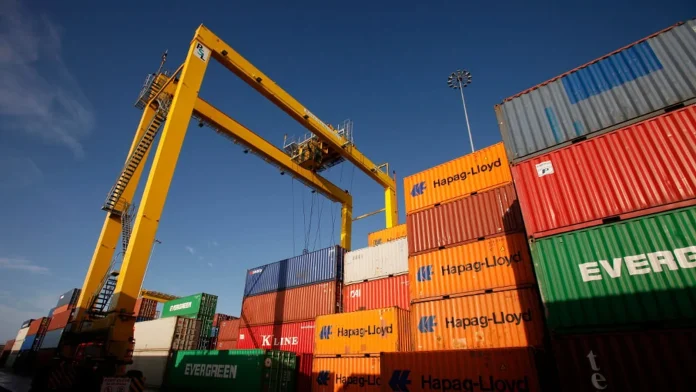
Countdown to a Tariff Turf War: The July Ultimatum That Has Brussels and Wall Street Watching
There’s a new kind of clock on the mantel in Brussels — not the slow, ceremonial one that chimes at parliament, but a ticking, political timer born of fireworks, nationalism and old-fashioned negotiation. It’s counting down to 4 July: the United States’ 250th birthday, and, for now, the deadline President’s aides say will decide whether a fragile US–EU trade truce becomes a permanent handshake or a slamming of doors and tariffs.
Walk down Rue de la Loi on a bright spring morning and you can feel the episode as much as read about it. Coffee cups steam outside the Commission, diplomats move quickly between meetings, and traders in cafés refresh feeds for updates. “It’s like watching two neighbors fight over a fence that both of them need to lean on,” said Emilie Novak, who runs a small export consultancy in Brussels. “Every day without agreement is anxiety for small businesses, farms and auto suppliers.”
A deadline wrapped in history and politics
The ultimatum is simple enough in headline form: an agreement inked last summer to cap many duties at 15% has not been fully enacted by the EU, and Washington — impatient and politically conscious ahead of its national milestone — has set a deadline. If the EU does not carry out agreed tariff reductions by 4 July, officials in Washington say duties could jump much higher.
“We set the terms; we expect compliance,” said a senior White House official speaking on condition of anonymity. “Deadlines matter in diplomacy and in commerce.”
On the other side, an EU Commission spokesperson told me, “We are committed to implementing the deal, but the bloc has procedures — scrutiny by member states, parliament and safeguards to protect consumers and critical sectors. That takes time.”
What’s at stake: trade, industry and trust
The U.S. and EU are not small players on the global stage. Together they account for trade flows well into the hundreds of billions annually — a relationship measured in factories supplied, ports bustling and services exchanged. The deal that set many European goods at 15% tariffs was intended to stabilize those flows after a period of tariffs and counter-tariffs.
But beneath the headline rate are complications: special sectoral measures for autos, legacy tariffs on steel and aluminum, and the legal fallout from U.S. courts that have questioned the president’s authority to impose sweeping duties without Congressional backing. Earlier this year, a U.S. appeals court and other tribunals pushed back on the administration’s wider tariff strategy, prompting a temporary 10% global duty while Washington seeks firmer legal footing.
Then came another blow: a U.S. trade court handed down a 2–1 ruling striking down the most recent 10% global levy, ordering refunds to the importers who challenged the policy. “The court reaffirmed that trade policy must live within the law,” said Sofia Ramos, a trade lawyer who follows the case. “That ruling constrains unilateralist impulses and raises the political stakes for any quick, sweeping re-tariffs.”
From port docks to vineyard terraces: local voices
In Hamburg, a mid-sized auto parts supplier worries that higher duties could trip supply chains that are now tightly integrated across the Atlantic. “Our wiring harness plant ships to Detroit and to Stuttgart; changes like that don’t stay on a tariff schedule — they cost jobs and idle machines,” said Markus Lenz, who manages exports for his family business.
On the other side of the continent, a winemaker in Bordeaux frets about wine tariffs that once saw bubbly slowed at customs. “We’ve already rebuilt markets, bottle by bottle,” said Amina Lafitte, whose labels sell in New York bistros. “A sudden spike in duties would push our wines out of the price range of new customers.”
Even Cyprus, which currently holds the rotating presidency of the Council of the European Union, has felt the heat. Officials there have worked to keep “positive momentum,” convening talks between MEPs and member states. “Presidency means facilitation; we cannot impose a time frame on a bloc of 27 sovereign governments,” said a Cypriot diplomat.
How courts, Congress and global rules shape a modern trade fight
Trade disputes are rarely resolved at a negotiating table alone. They bounce between the negotiating rooms and courtrooms — and sometimes to the floor of national legislatures. In Washington, the fight has spilled into the judiciary, with judges increasingly scrutinizing whether the executive can unilaterally reconfigure global commerce.
Meanwhile, U.S. officials have opened new probes into imports tied to forced labor and overcapacity — investigations that could produce future tariffs targeted at specific countries and products. This approach shifts the battleground from broad-brush tariffs to sector-by-sector fights, potentially stretching negotiations over months or years.
“Targeted measures are where the trade wars are heading,” said Tomás Delgado, an economist at an international trade institute. “It’s less about slapping on a universal tax and more about surgical responses to perceived unfair practices. That’s slower, more complex, but also more defensible in law.”
What businesses and citizens should watch
- July 4 deadline: A symbolic and practical marker; movement before then could ease tensions, stalemate could harden them.
- Court rulings: Recent judicial pushback against sweeping tariffs shows legal constraints matter.
- Member-state signoff: The EU deal still needs consensus from 27 capitals — a process that can be messy.
- Sector probes: New investigations into forced labor and overcapacity may spawn more targeted measures.
Beyond tariffs: what this moment tells us about globalization
At its heart this is not just a quarrel about customs stamps. It is a convolution of populist politics, post-pandemic supply-chain anxiety, and an international order wrestling with a new reality: economic competition in a multipolar world where trade policy is a tool of national strategy. How policymakers resolve this standoff will send signals about whether trade remains a rule-bound system or becomes a series of tactical maneuvers.
“Trade is the simplest place to show strength,” said Lidia Kowalska, a policy analyst in Warsaw. “But it is also the place where you reveal your propensity to coordinate with allies. If the U.S. raises tariffs dramatically, it won’t just change prices — it will change trust.”
For the people running factories, serving food, or shipping wine barrels, the theoretical debates translate into payrolls, freight costs and customer lists. For voters, it ties into questions of fairness, sovereignty and who benefits from globalization.
Where do we go from here?
No one expects instant clarity. Diplomats will keep talking, lawyers will keep arguing, and businesses will keep hedging. But the 4 July deadline has introduced a rhythm — and a reminder — that trade policy is time-sensitive and human. It can be used to consolidate alliances or as leverage when politics grows impatient.
So as the anniversary fireworks approach, consider this: do we want trade that is calm, predictable and anchored to mutual benefit — or trade that becomes another arena of brinkmanship in an increasingly fractious world? The answer won’t be decided by a single headline, but by the weeks and votes that follow.
Whatever happens, people on both sides of the Atlantic will feel the consequences in grocery bills, factory floors and the small joys of a shared glass of wine. And that is why a deadline that sounds like a diplomatic tick-tock matters to us all.
Israeli airstrike kills son of Hamas’ lead negotiator
Under the shadow of fragile talks: the killing that rippled through Gaza and Cairo
Late one humid night in Gaza, the usual rhythm of air-raid sirens and distant thunder of shelling was punctured by news that made the city hold its breath: Azzam Al-Hayya, a son of Khalil al-Hayya — a senior Hamas negotiator — had been struck in an Israeli airstrike and later died of his wounds, according to health and Hamas officials.
It was not just a death. In a place where family and politics are braided together, it was a statement — a sliver of violence that threatened to unspool the fragile threads holding a ceasefire and US-mediated talks together in Cairo. For residents walking the rubble-strewn streets, it was also raw grief, another body to bury in a city that has buried too many.
A funeral that felt like an argument
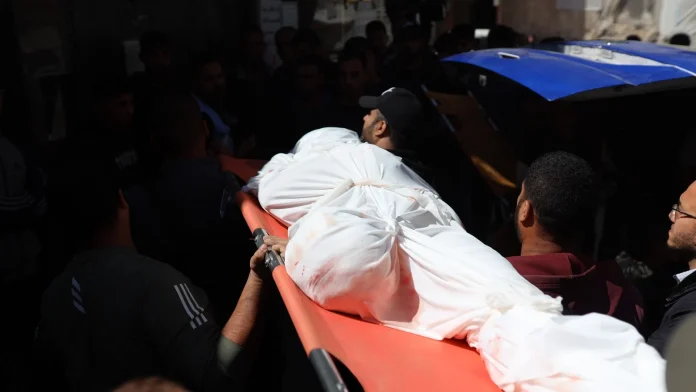
At the morgue and in the narrow lanes that fed into the cemetery, the scene was unmistakably Gaza. Women in black stood shoulder to shoulder; men raised their hands in the old chorus of grief and defiance. White shrouds — the final, simple covering — were kissed and carried. “Allahu akbar,” rose and fell through the mourners, a refrain of sorrow and conviction.
“My brother was a son, not a symbol,” a sister told me inside the crowded morgue; her voice was a brittle mixture of pride and exhaustion. “You can kill our bodies, but you cannot kill the reasons we keep standing.”
Dozens attended the burial, the funeral procession weaving past dented cars and makeshift food stalls where shopkeepers were sweeping dust from yesterday’s rain. Children watched from rooftops, their schoolbooks still stacked at home. A neighbor, Ahmed Abu Salem, a small grocer, summed up how ordinary life and politics collide here: “We opened our shop this morning to sell bread and olives, and by afternoon we were attending a funeral. How are families meant to live like this?”
Who is Khalil al‑Hayya — and why this loss matters
Khalil al‑Hayya is no stranger to grief. The veteran Hamas leader, who has led delegations at mediated talks, has lost several sons in previous Israeli strikes: one in Doha in an attack last year, and two others in Gaza in 2008 and 2014. He is said to have seven children. That pattern — targeting the families of prominent figures — is part of a long and bitter chronicle that feeds mutual recrimination.
“They are not just hitting buildings,” said Hazem Qassem, a spokesperson for Hamas, in a statement that evening. “They are targeting a negotiating delegation’s capacity to continue talking.” Whether one accepts that interpretation or sees the strikes as tactical military moves, the optics are devastating: a negotiator grieving at home while a city mourns.
Talks in Cairo: on paper, fragile; in practice, fragile and fraying
In Cairo, delegations quietly shuffled through corridors. Regional mediators, representatives of Palestinian factions, and diplomats who have spent years trying to broker pauses in violence were again trying to stitch a future from the tatters of the present. The talks — described by some in Gaza as implementing a US-backed plan to move from ceasefire to reconstruction — hinge on painful compromises, most notably the question of disarmament.
“You cannot ask someone to lay down arms while rockets are raining down on your neighborhoods,” a senior Hamas official told a Reuters reporter, echoing a sentiment heard often among locals. In diplomatic language, the current sticking point is clear: Hamas says it will not seriously engage on disarmament until Israel completes obligations from the first phase of the deal, including a halt to attacks.
On the other side, Israeli officials say their strikes are tactical, aimed at dismantling command centers and stopping militants from staging attacks on soldiers and civilians. An Israeli military statement, issued after one reported strike on a Hamas command center in northern Gaza, said the targets were militants “operating to advance and carry out terror attacks.” The military did not respond to requests for comment on the killing of Azzam Al‑Hayya.
Numbers, context and the human toll
Numbers, cold and blunt, sit under everything that has happened. Local medics report at least 830 Palestinians have been killed since the ceasefire deal took effect; Israeli authorities say militants have killed four of their soldiers in the same period. Each number contains families like the Hayyas, markets shuttered by fear, and classrooms emptied of children.
- At least 830 Palestinians killed since the ceasefire’s start, according to local health officials.
- Israeli officials report four soldiers killed by militants in the same timeframe.
- Targeting of Hamas-run police and security points has intensified, Reuters reported, as Israel seeks to weaken the group’s hold on Gaza.
In Nuseirat refugee camp, children sifted through refuse piles for salvageable items — a quiet, tragic reminder that in Gaza the war’s ripple effects are economic as well as physical. A teacher there, Leila, said, “They dream of being astronauts one day. Now they dream of a school that isn’t damaged.”
The broader picture: negotiation under fire
What happened in Gaza and Cairo is not just a local story. It is a vignette in a much larger narrative about how modern conflicts are negotiated, how violence can leak into diplomatic rooms, and how leaders make decisions while their families suffer. There are strategic calculations — pressure to degrade an opponent’s capabilities, to send signals — but there are also human costs that reverberate across generations.
“When you strike a family member of someone at the table, you are striking the table itself,” argued Dr. Samir Haddad, a regional analyst who has advised mediators in past negotiations. “It is a risky tactic: it can either force a concession or harden positions. Today it looks like the latter.”
What comes next — a pause, an escalation, or something in between?
The immediate future is a mix of urgency and uncertainty. Mediators in Cairo will try to keep talks alive; Hamas will argue its grievances, insist on ceasefire conditions being met first, and likely point to the killing of Azzam as proof that the other side is not yet committed to peace. Israel will continue to insist its operations are defensive and aimed at preventing attacks.
But beyond the statements and the strategy, there are ordinary people who will decide the meaning of what happens next. Will the parents who buried Azzam go on to demand peace, revenge, or simply safety? Will the negotiators in Cairo feel emboldened to press on, or will the grim arithmetic of new deaths steer them back from compromise?
These are questions with no easy answers. Here is one that feels essential: when the cost of every political decision is counted in blood, how do the rest of us — international mediators, far-off governments, and citizens watching on screens — ensure that diplomacy is not merely a stage for violence to play out on?
We must ask ourselves, as we read these headlines and look at these numbers: whose lives are being negotiated, and what will we, as a global community, accept as the price of a fragile peace?
Zelensky urges Ukrainians to skip Russia’s military parade
Between Parades and Sirens: A May Morning That Refuses Simple Answers
On a cool Kyiv morning, the chestnut trees along Khreshchatyk showed their first tentative green, and shopkeepers swept their stoops with the same rhythm they have for years. Yet there was an undercurrent of unease — a quiet that looks like normalcy but listens for the wrong sound. For a city learning to live in wartime routines, this week felt like the pause before a tide.
“You learn to measure your day by small things: when the baker opens, when the tram bell rings, when children spill out of school,” said Lena, who runs a small grocery near Maidan Nezalezhnosti. “But today we were all checking our phones and each other. Not for a sale, but for a decision.”
The decision at the centre of that tension is both theatrical and deadly practical. Russia has declared a unilateral ceasefire for 8–10 May — a window that includes 9 May, the annual Victory Day commemorations in Moscow that Vladimir Putin has turned into a cornerstone of national mythmaking. In a move that reads like a chess play with human lives, Moscow has urged residents and foreign diplomats to leave Kyiv, warning of possible retaliatory strikes should the truce be broken.
Why a Parade Can Have a War Behind It
Victory Day is more than a ceremony in Russia: it is a carefully staged narrative of sacrifice, triumph, and national continuity. Tanks rolling across Red Square have been a visual shorthand of power for decades. This year, though, the Kremlin says military hardware will be absent from the procession for the first time in nearly 20 years — a detail that lays bare the anxieties beneath the pomp.
“They want, for one hour, to stand in a square safely,” President Volodymyr Zelensky said in a video address, “and then go on killing.” His bluntness captures the moral dissonance many Ukrainians felt when Moscow framed its pause as a gesture of remembrance while the war continues around it.
Diplomacy has been scrambling for nuance that the battlefield rarely affords. Kyiv proposed a counter-truce starting 6 May, a measure it said would create reciprocal safety for civilians. Moscow rejected that framing, insisting its pause was unilateral and warning that any Ukrainian strike during this period would provoke a response “in kind.” The Russian defence ministry reiterated the evacuation advice for foreign missions less than an hour before Mr Zelensky’s address, casting the day as a minefield of optics and decisions.
On the Ground: Voices and Visions
From pensioners clutching shopping bags to volunteers organizing medical kits in basements, the human patchwork of Kyiv has its own view on the standoff. “We have relatives in the east,” said Mykola, a retired teacher who spends afternoons feeding stray cats. “There is fear, yes, but also a deep bafflement at the idea you can put war on pause like a TV show for a parade.”
An aid worker who asked not to be named described the strain of planning: “If you tell people to leave, they leave their livelihoods, their elderly relatives — who will care for them? If you tell them to stay, who guarantees each life?”
These are not abstract questions. Since Russia’s full-scale invasion in February 2022, millions of Ukrainians have been displaced internally or across Europe. Cities have learned to absorb waves of movement and pause, but that adaptability carries a human toll: fractured communities, missed wages, and the quiet, cumulative exhaustion of living with contingency plans.
Strikes, Drones and a Broader Theater
In recent months, Kyiv has stepped up strikes using long-range drones and missiles, reaching deeper into Russian territory than earlier in the war. These operations have unsettled the Kremlin and fed a level of mutual deterrence rarely seen in recent European conflicts. Moscow’s warnings about the potential for retaliatory strikes during the ceasefire reflect a new, perilous choreography.
Global attention is split. While leaders and analysts weigh strategic calculations, ordinary citizens navigate fears that are immediate and local. “When I was a child we used to come to parks and hear stories from grandparents about the war,” said Kateryna, a 32-year-old nurse. “Now those stories are happening to our children. The parade in Moscow means a lot to them, but for me, the point is survival here.”
How the World Watches — and Decides
Even as Kyiv pleaded with allies to avoid appearing at Moscow’s parade — a diplomatic snub that would underline support for Ukraine and rejection of the Kremlin’s narrative — the international response has been cautious. The Kremlin, for its part, announced that only a handful of foreign leaders would attend, a roster reflecting shrinking global enthusiasm and the tightening of Moscow’s circle of partners.
“Diplomatic presence at any such event is a signal,” said Dr. Samuel Ortiz, a European security analyst based in Brussels. “Attendance would have been read as normalization. Absence is a costly but powerful refusal.”
These gestures are amplified by hard facts: hundreds of thousands of military engagements in the region since 2022, billions of dollars in military aid from Western allies to Kyiv, and a refugee crisis that remains one of the largest upheavals in Europe since World War II. Yet numbers only tell part of the story. Symbols—parades, flags, and the decision of an ambassador to attend or not—shape public narratives in ways that sometimes outstrip tactical battlefield gains.
Connectivity and Control
In a modern echo of old sieges, control of information has become a front. Moscow reportedly instituted intermittent city-wide internet disruptions, a reminder that in wartime the flow of information is as strategic as ammunition.
“When the lights of the internet go off, rumors flood in,” said a Kyiv-based journalist. “People start to narrate their fears to each other, and chaos takes root in human conversation.”
- 8–10 May: Russia announced a unilateral ceasefire.
- 9 May: Victory Day — traditionally a large military parade in Moscow.
- Kyiv offered a counter-truce beginning 6 May.
- Moscow warned of possible strikes if the truce is breached.
What This Moment Asks Us
There is a peculiar cruelty in staging commemoration while lives remain at stake. What does it mean to memorialize sacrifice while current sacrifices continue? Can the choreography of a parade coexist with the messy, irreducible reality of lives interrupted by war?
For residents here, these aren’t academic questions. They are decisions about whether to leave town for a few days, whether to tend the garden or pack the photograph albums. For the world, they are questions about what signals we want to send: solidarity, restraint, or a hardening of lines.
“I hope the day passes quietly,” said an elderly man selling flowers near a war memorial. “Not because I want peace in speeches, but because my granddaughter deserves another day to play.”
And you, reader—what would you do if the city you love asked you to leave for one day so that another country could stage a memorial? Would you be reassured or enraged? There are no easy answers, only human choices threaded through geopolitics.
Whatever happens on 9 May, this moment is a reminder: wars are fought not only with weapons, but with symbols, choices, and the stories nations tell themselves. The challenge is to see those stories clearly — and to decide which ones we will answer with presence, and which with absence.
Live updates: Trump claims Iran war agreement is “fully signed”
As the Middle East watches for any sign of a breakthrough, Donald Trump has declared that an Iran war deal is “all signed,” casting...
Eight Killed After B-52 Bomber Crashes in California
A routine test flight ended in catastrophe at Edwards Air Force Base in California when a US B-52 bomber crashed and erupted into a...
Starmer: UK to provide enriched uranium supplies to Ukraine
Britain is sharpening its support for Ukraine on two fronts — energy security and economic pressure on Moscow — with Prime Minister Keir Starmer...
Iran to Begin Permanent Peace Talks With the US on Friday
A fragile truce in the Middle East is set to be tested almost immediately, with Iran and the United States preparing to open a...
Norway Crown Princess’s Son Convicted in Rape Case, Court Finds
Norway’s royal family has been thrust into an extraordinary legal reckoning after Crown Prince Haakon’s stepson, Marius Borg Høiby, was convicted of rape and...