Home Blog Page 69

Dances With Wolves actor sentenced to prison after sexual assault convictions

Dances With Wolves actor jailed for sexual assaults
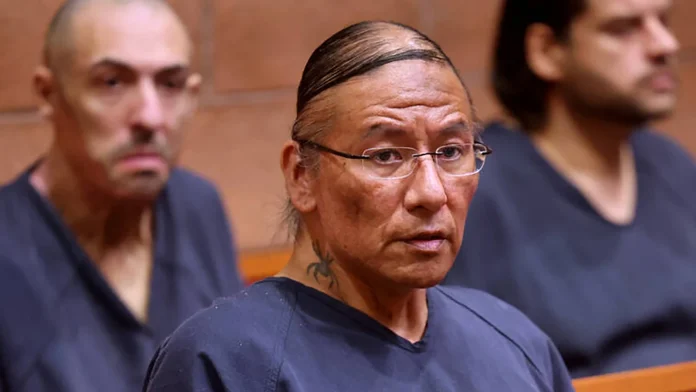
Nathan Chasing Horse has been sentenced to life in prison

When a Halo Cracks: The Fall of a Film Face and the Long Road to Justice

The courtroom was cold in ways both literal and moral. Nathan Chasing Horse — once the sunlit face of a Lakota youth in an Oscar-winning film, now a defendant in handcuffs — sat in a navy jumpsuit and looked ahead as a litany of hurt was read into the record.

“He used our prayers against us,” a woman who stood in front of Judge Jessica Peterson said, her voice steady despite the tremor beneath. “He turned our ceremonies into a weapon.”

On a gray Monday in Nevada, a jury’s earlier verdict was sealed by a judge: life in prison for Chasing Horse, 49, who was convicted on 13 counts largely related to the sexual assaults of Indigenous women and girls. He will be eligible for parole after serving 37 years — a sentence that has rippled through communities across the United States and Canada and reopened raw questions about power, faith and accountability.

From Smiles a Lot to the Witness Stand

To millions, Chasing Horse will always be Smiles a Lot, the young Sioux portrayed in Kevin Costner’s Dances With Wolves. That role, released in 1990, carried him beyond the reservation: film festivals, powwow circles, healing ceremonies and speaking tables where his name conjured recognition and, for some, trust.

To the women who testified against him, that fame became a mask. Prosecutors said Chasing Horse parlayed his public image and his self-styled role as a medicine man to manipulate and abuse — a pattern of exploitation that prosecutors described in court as a “web” spun over almost two decades.

“People came to him seeking relief — from grief, from sickness, from spiritual needs,” a prosecutor told the jury. “He built influence, and then he preyed on that influence.”

Voices from the Inside: Survivors Speak

Impact statements filled the courtroom with intimate detail: of ceremonies that were meant to heal, of instructions couched as spiritual mandates, of threats wrapped in prophecy. One woman recounted being 14 years old when she says Chasing Horse told her a spirit demanded she give up her virginity to save her mother’s life. The assault, the woman said, began that day and was followed by threats should she ever speak out.

“He told me silence kept my mother alive,” she said. “That lie devastated me and my family in ways I’m still pulling pieces back together from.”

Another survivor described complications after an assault that culminated in an ectopic pregnancy and surgery. A mother of one victim spoke into the hush: “We brought our babies to dances and powwows to see hope. We never thought we’d be burying it.”

There is anger, yes, but also a wearying grief. “I have to relearn what it means to be in a sacred space,” one woman told reporters outside the courthouse. “Part of me is afraid of the drums now.”

Cross-Border Justice and Unfinished Cases

The Nevada conviction closes one chapter, but other legal threads remain taut. In Canada, British Columbia prosecutors have charged Chasing Horse in connection with an alleged sexual assault near the village of Keremeos in September 2018; that case was first laid in February 2023. Proceedings there were paused and later resumed as U.S. criminal actions moved forward.

“We continue to coordinate with our partners in the United States,” said a spokesperson for the British Columbia Prosecution Service in an emailed statement. “Once appeals have run their course here, we will evaluate next steps.”

Meanwhile, a warrant remains outstanding in Alberta, the Tsuut’ina Nation Police Service said following the Nevada conviction, noting ongoing communication with provincial Crown prosecutors. In other words: this is not the last legal stage for the accused.

Why This Matters Beyond One Man

There is a familiar sorrow in Indigenous communities across North America when a trusted figure is accused of harming the vulnerable: it is not just the act itself, but the fracture of trust. Spiritual leaders can occupy a space where the lines between authority and intimacy blur, and when that boundary is crossed, the social cost is enormous.

Scholars and advocates point out that Indigenous women face disproportionate rates of sexual violence. While exact numbers differ by study and jurisdiction, public health reports and community organizations consistently highlight elevated risks and systemic barriers to justice — including jurisdictional confusion that can delay or complicate prosecutions when crimes cross tribal, state and national lines.

“This case is emblematic of broader issues,” said an advocate who works with survivors of sexual abuse. “When fame and spiritual authority combine, people can be isolated from other supports. That isolation is where abuse flourishes.”

Community, Culture and the Work of Repair

Outside the courthouse, traditional regalia sat folded like private relics — jingle dresses hung beside park benches, a cedar bundle tucked under an arm. Powwows and healing circles, which many survivors once attended with faith, now carry a complicated weight.

“The powwow drum has always been medicine,” a Lakota elder said. “When that medicine is poisoned, our first job is to purify it — to make space where people can pray without fear.”

Autonomy over ceremony, and who leads it, has become a conversation across tribes. Some communities have tightened protocols: licensing for healers, elders’ councils vetting those who lead ceremonies, and renewed emphasis on consent and community accountability.

Organizations that support survivors are also trying to expand culturally specific services. United Natives, an Indigenous-led group that assists people who have experienced sexual abuse, has emphasized the need for both legal and spiritual healing. “Our focus is on restoring agency,” an advocate from the group told me. “Justice is a part of healing, but so are ceremonies rebuilt on trust.”

Questions We Should Be Asking

As readers, we can ask uncomfortable questions: How often do charisma and celebrity grant a shield? What systems allow a person to move between borders and roles unchecked? How can communities protect the sanctity of spiritual practice while also ensuring transparency and accountability?

And beyond policy: how do survivors rebuild when the places that once gave them solace become reminders of harm? That is a long, living answer that will vary for every person and every community.

Where Do We Go From Here?

This conviction is a milestone for some survivors — a moment of validation in a timeline that has included silence and shame. But for many, it is also a beginning: the start of long healing processes, legal follow-ups in other jurisdictions, and the slow labor of restoring confidence in cultural spaces.

“I don’t want revenge,” one survivor said. “I want to dance again.”

Trust, once broken, can be rebuilt. It requires honesty, structural change and collective care — and an attention to the quiet, ordinary work of making sacred spaces safe. As this case continues to echo across reservation halls and courtrooms, communities will have to keep asking not only who harmed them, but how they will guard against harm in the future.

If you’re reading this and wondering how to help from afar: support Indigenous-led advocacy groups, listen to survivors without presumption, and remember that accountability is more than a headline — it’s a practice that requires patience, vigilance and compassion.

Australia will tax tech giants unless they pay news outlets

Australia to tax tech giants unless they pay news outlets
Australia is proposing that tech companies will pay local news companies for the news they share (Stock image)

When Canberra Raised the Stakes: Australia’s Bold Bet to Make Big Tech Pay for News

It was a clear Canberra morning when the prime minister stepped up to the microphone and, with a quiet intensity, put big tech on notice. The room hummed with the kind of tension you get when laws meet culture — when the steady beat of a newsroom collides with the algorithms that have remade how we get our world.

“Large digital platforms cannot avoid their obligations under the news media bargaining code,” Anthony Albanese told reporters, naming Meta, Google and TikTok as the three companies now in the crosshairs. The new draft legislation laid on the table is simple to state and messy in consequence: strike voluntary deals to pay Australian news outlets for their journalism — or face a compulsory levy equal to 2.25% of your Australian revenue.

Not just a technicality — a fight for stories, audiences and livelihoods

At first glance it’s a policy about contracts and balance sheets. Zoom out and it’s a fight over what counts as public life in the digital age. For small regional papers in Queensland, for Indigenous outlets covering remote communities, and for city dailies trying to fund investigative teams, the economics have been brutal. Advertising dollars have migrated into the arms of a few platforms; audiences have migrated to their feeds.

“People are increasingly getting their news directly from Facebook, from TikTok and Google,” Communications Minister Anika Wells said. “We believe it’s only fair that large digital platforms contribute to the hard work that enriches their feeds and that drives their revenue.”

She wasn’t speaking into a void. A University of Canberra study — one of several recent surveys — found that more than half of Australians now use social media as a source of news. The flows of attention that once arrived at a newsroom’s front desk now pass through opaque ranking systems that reward novelty, not necessarily verification. Meanwhile, digital advertising remains concentrated. Google and Meta together take a dominant share of the online ad market, leaving a shrinking slice for publishers trying to keep reporters on the street.

The 2.25% lever and its purpose

The draft laws give platforms a clear choice: negotiate content deals with Australian publishers — or pay the levy. The 2.25% figure is designed less as punishment than as leverage: a fiscal nudge meant to prevent tech companies from simply removing news from their services when asked to pay, the avoidance tactic they’ve used before.

“What we are encouraging is for them to sit down with news organisations and get these deals done,” Mr Albanese said. It’s a diplomatic carrot-and-stick approach that remembers history: when Australia first pushed a bargaining code in 2021, Facebook temporarily blocked news, and more recently, when Canberra floated similar ideas in 2024, Meta closed its “news” tab to Australian users.

Inside a newsroom: the human stakes

Walk into the office of a small regional paper — the kind that covers council meetings, school fetes and the wonky plumbing of local democracy — and you feel a different heartbeat. There’s the smell of burnt coffee, a photocopier that’s been in service since the turn of the century, and a wall of framed photos that tell the story of a town. There’s also fear.

“The algorithms don’t call us for comment,” said Maya Patel, editor of an independent weekly on the outskirts of Melbourne. “But they harvest our stories, send people to our pages or else show extracts right in the feed. We do the reporting. We shoulder the costs. If these platforms keep taking the value and not returning any of it, our newsroom shrinks. And when our newsroom shrinks, people lose a part of their civic life.”

Patel’s voice betrays more than professional concern. Her paper recently cut two reporters; the sports writer now also covers council. “You can do that for a while,” she said, “but you can’t do that forever.”

Voices from the street and the city

Outside a cafe near Sydney’s Circular Quay, a university student scrolling TikTok shrugged and said, “I don’t mind getting news in my feed. It’s quick. But I don’t always know what’s real.”

Meanwhile, an elder from a remote community, who asked to be identified only as Aunty Rose, offered a different perspective: “Our stories are small but they matter. We need to be seen and heard. If someone else uses that story to make money and we get nothing — that is not fair.”

What this means beyond Australia

Australia’s policy move is part of a global conversation about the roles and responsibilities of platforms. In Europe, regulators have pushed sweeping rules like the Digital Services Act and the Digital Markets Act; elsewhere, lawmakers are experimenting with variations on the idea that digital platforms should pay or be more accountable for the content they distribute. Canada, Britain and the EU have all had their own brushes and debates.

For tech companies, the calculus is commercial and reputational. Google has previously warned it could restrict services if forced into payments. Meta’s past responses — refusing to renew news deals in several countries or removing news tabs — have shown platforms are willing to use product changes as bargaining chips.

For democracies, the calculus is about information ecosystems. Who funds fact-checking? Who pays for reporters to chase the stories that hold power to account? The worry is that if no sustainable funding model emerges, communities will live in news deserts where misinformation and rumor flourish.

How it could unfold: scenarios and stakes

  • Best-case: Platforms do deals with a cross-section of Australian publishers, money flows into newsrooms, investigative reporting is preserved, and the levy becomes unnecessary.
  • Compromise: A mix of deals and targeted payments, alongside enhanced platform transparency and support for local journalism initiatives.
  • Worst-case: Platforms withdraw features or content, audiences fragment further, and smaller outlets are left to struggle or close.

“We are not trying to pick winners,” said an academic who studies media policy, Professor Claire Montoya of a leading university. “We’re trying to rebalance an ecosystem that tilted dramatically in favour of a handful of global intermediaries. The question is whether these policy tools will be precise enough to save journalism without unintended harm.”

Questions for readers: what kind of information commons do we want?

As you read this on a screen that probably contains feeds curated by algorithmic tastes, ask yourself: do we want our local stories to be free for platforms to harvest? Is journalism a private commodity or a public good? Should a global corporation be able to build products off the unpaid labor of newsrooms around the world?

These are not abstract policy queries. They are choices about whether your next mayor’s corruption is ever exposed, whether a remote community’s needs are visible, whether a child’s school closure is reported and questioned. They shape the civic fabric.

What happens next

The draft laws are out for public consultation, with submissions closing in May. Parliamentarians will take up the issue later in the year. In the meantime, the debate will continue — inside boardrooms, in small-town cafes, across social media feeds that are itself the center of the storm.

“We want them to sit down with news organisations and get these deals done,” Mr Albanese said — an appeal that is at once practical and, for many in Australia’s newsrooms, existential.

Whatever the outcome, the conversation is global and urgent: how do democracies sustain the infrastructures of truth in an era when the platforms that carry us also capture much of the wealth that journalism used to create? That is the question Canberra has hurled into the world — and now, in coffee shops, parliament houses and editorial rooms, people are trying to answer it.

Wakiilada beesha caalamka oo bilaabay cadaadis ku aadan iney dhacdo doorasho heshiis lagu yahay

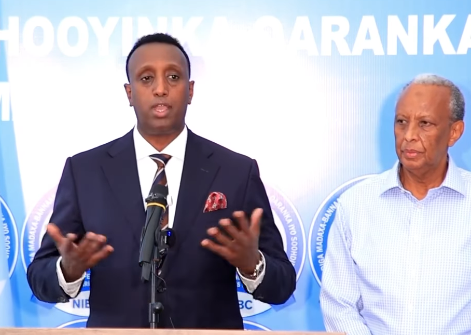
Apr 28(Jowhar) Wakiilada Beesha Caalamka ayaa todobaadkan dib u bilaabay la xariirka Madaxtooyada Federaalka & Mucaaradka golaha Mustaqbalka oo ay kala hadlayaan sidii xal loogu heli lahaa hanaan doorasho oo haysta heshiis wadar ogol ah oo dhinacyada kuqanacsan yihiin.

Lebanese President Aoun brands Hezbollah’s wartime conduct ‘treason’

Lebanon's Aoun accuses Hezbollah of 'treason' over war
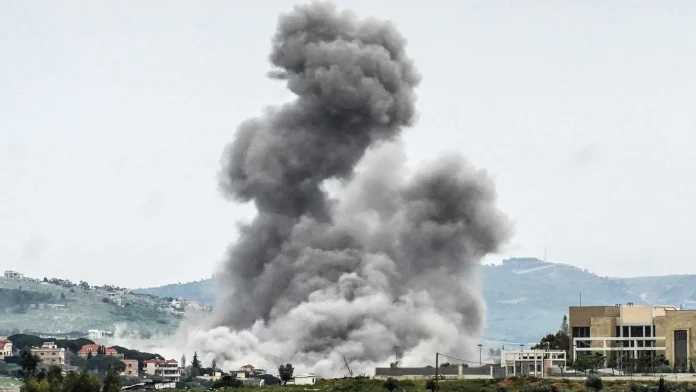
Israeli air strikes in southern Lebanon continued despite the ceasefire

Smoke over the Bekaa: Lebanon at the Edge of Another Unruly Dawn

There is a particular way the Bekaa smells after dusk — a mix of grape vine dust, diesel, and something metallic that hangs in the throat. On a recent evening, that scent was interrupted by the sting of cordite and the orange bloom of flares cutting through the valley’s low clouds. Smoke threaded the hills like smoke from a cigarette: slow, stubborn, and impossible to ignore.

On the road into southern Lebanon, a campaign billboard of President Joseph Aoun towers above a traffic jam: “The choice is for Lebanon,” it proclaims in bold letters. Drivers inch past, children peering from the back seats. The billboard is new; the choices feel painfully old.

A president’s gamble — negotiations, rebuke, and the language of treason

President Aoun has been speaking in a tone that mixes statesmanship with exasperation. He told the nation that direct talks with Israel were not a betrayal but an attempt to finally end the state of war between Lebanon and its neighbor — an end he likened to the 1949 armistice. “My goal is to reach an end to the state of war with Israel,” he said, and added a vow that any settlement would not be humiliating.

But his message carried a sharper edge, aimed at those he says dragged Lebanon into this conflict. “Those who took us to war for foreign interests are committing treason,” he declared, implicitly singling out Hezbollah without naming it. In a country where allegiance, identity and survival are braided together, that accusation is both calculated and combustible.

Strikes resume in the Bekaa — an uneasy ceasefire frays

Despite a US-mediated ceasefire that began on 16 April and was extended to mid-May, drones and artillery sounds have threaded across the horizon. The Israeli Defence Forces said they renewed strikes in the Bekaa valley, targeting what they called Hezbollah infrastructure — rocket launchers, weapons depots, and fighters — while warning residents of seven towns to evacuate north and west.

Lebanon’s health ministry reported a grim tally from a single day of renewed strikes: 14 people killed and 37 wounded, including two children and two women. Since the latest round of fighting began on 2 March, the ministry says more than 2,500 people have died in Israeli strikes — a figure that includes 277 women, 177 children and roughly 100 medics. The ministry does not distinguish between combatants and civilians in its counts; Hezbollah has not released an aggregate toll for its fighters, though the group has held a string of mass funerals for fallen members.

Voices from the ground

“My brother’s shop is gone,” said Rami, a shopkeeper from a southern border town, his voice low over the phone. “We took shelter in a school. The children try to laugh but at night you can hear them counting the minutes until morning.”

In a crowded ward at a hospital in Beirut, Nurse Fatima wipes her hands on her scrubs and leans forward. “We are full. We cannot close our doors. People come with shrapnel, with burns, with fear. They need bandages, yes, but they also need a future where the night is not a war siren.”

Cross-border dynamics and the shadow of wider regional conflict

The fighting did not arise in isolation. Analysts point to a complicated web of triggers — including recent strikes against Iranian targets — that have ratcheted up tension across the region. Israeli officials, including Prime Minister Benjamin Netanyahu, have framed their actions as necessary for the security of their soldiers and communities, insisting they act in accordance with understandings brokered with Washington and, ostensibly, with Lebanon.

Hezbollah’s response has been unequivocal: it will not stop its operations against Israeli forces in Lebanon or its raids on northern Israeli towns so long as it says Israel continues to violate the ceasefire. “We will not rely on diplomacy that has proven ineffective,” a Hezbollah statement read, and the group said it would not trust Lebanese authorities it believes have failed to protect the country.

A region awash in proxies

“This is a classic proxy environment,” said Dr. Lina Haddad, a regional security expert based in Beirut. “You have local actors who pursue local agendas, but they also act as nodes in wider regional rivalries. When those external pressures rise, local disputes ignite like tinder.”

Dr. Haddad warns that repeated cycles of flare-up, truce, and flare-up again erode civic trust. “Ceasefires can create breathing room, but only a political solution that accounts for governance, security and economic recovery will prevent the next flare,” she said.

Human cost and displacement — the numbers behind the headlines

The casualty figures are stark. Lebanon’s health ministry’s count of more than 2,500 dead since 2 March includes hundreds of women, children and health workers; Israeli officials report that Hezbollah attacks have killed two civilians in Israel and that 16 Israeli soldiers have died in Lebanon in the same period. The recent Israeli military statement also said one soldier was killed and six wounded in renewed clashes.

Beyond fatalities there is displacement. On the roads north of the Litani River, traffic resembled a human exodus: pickup trucks piled high with mattresses, pots, a goat, sometimes a single remaining olive tree. Families drove through checkpoints they could not fully trust, carrying what little they could salvage of their lives.

  • Ceasefire start: 16 April (US-mediated)
  • Extension: To mid-May
  • Lebanon ministry toll since 2 March: >2,500 dead (includes 277 women, 177 children, ~100 medics)
  • Israeli military toll since 2 March: 16 soldiers killed in Lebanon; Hezbollah-linked attacks killed 2 Israeli civilians

Culture, memory, and the ache of normal life

Walking the souks of Sidon, you can still hear the clink of coffee cups and the rattle of spice jars. A grocer named Amal hands you a sprig of mint with a smile and says, “We sell hope by the kilo.” It’s a small quip, but it is a kind of resistance: a merchant’s refusal to let war be the only narrative here.

Lebanon’s landscapes — cedar-studded mountains, terraced vineyards in Bekaa, the salt breeze of the Mediterranean — are as much part of the story as the headlines. They are living reminders that the stakes are not just territorial but civilizational: livelihoods, heritage, memory.

What now? Questions for the weary and the watchful

Can diplomacy stitch together what years of conflict have frayed? Will a renewed focus on negotiation be enough to counter the centrifugal forces pulling Lebanon apart? And perhaps most urgently: who will stand between communities and renewed ruin?

There are no simple answers. The president’s push for talks argues that the path toward peace must be direct, even if it risks political ruptures at home. Hezbollah’s insistence on resisting what it calls Israeli violations points to a parallel logic: security through deterrence. Each claim has a constituency, and each risks a different kind of damage.

Closing — a plea and a pulse

As night falls again over villages on both sides of the Litani, the human rhythms endure: someone lights a cigarette, a child practices the alphabet by a weak light, a woman boils lentils on a cracked stove. War insists on being extraordinary; everyday life insists, with equal stubbornness, on being ordinary. Which force will win out is not just a question for strategists and statesmen — it is a question for each of us who watches and cares from afar.

What will we do with what we know? Will we let numbers become mere data, or will we let them be a summons to attention, advocacy, and—if possible—action? The Bekaa waits for an answer.

EU presidency places maritime strategy at forefront of its agenda

Maritime strategy 'to the fore' of EU presidency
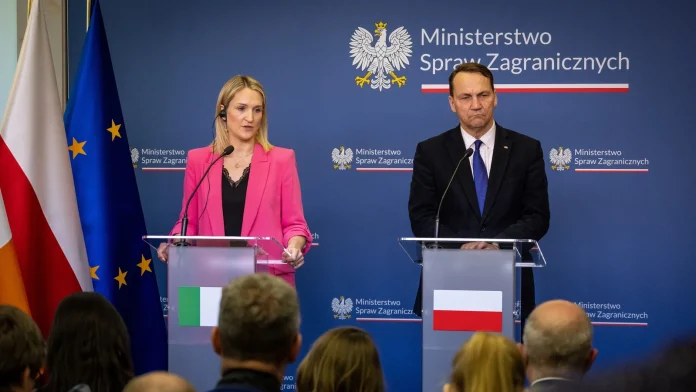
Minister Helen McEntee with Poland's Deputy Prime Minister and Minister of Foreign Affairs Radoslaw Sikorski in Warsaw

Ireland’s Atlantic Wake: A Small Nation Sets Big Maritime Ambitions on the EU Stage

On a spring morning in Warsaw, amid the soft bustle of diplomats and the faint whiff of roasted coffee drifting from a nearby café, Ireland’s foreign minister sketched a map not just of seas and coasts, but of strategy. Helen McEntee arrived in Poland with a clear intention: to use Ireland’s forthcoming presidency of the Council of the European Union — beginning 1 July — as a platform to lift maritime security from the broadsheets into urgent, practical action.

“The ocean is not some distant idea for us,” she said, clearly and simply, during a series of bilateral talks with Poland’s Radosław Sikorski and Władysław Kosiniak-Kamysz, both deputy prime ministers who double as foreign and defence ministers. “It’s our sovereignty, our infrastructure and, increasingly, our vulnerability.”

Why the sea matters now

The line between the visible and the invisible has thinned. Above the waves, navies and drones patrol; below them, delicate fibers of international life—subsea cables—carry financial transactions, medical data, and the streaming that fills our evenings. More than 95% of intercontinental internet traffic travels under the sea in these cables. Cut one and economies stutter, markets wobble and hospitals that rely on cloud systems can be imperiled.

Ireland’s new National Maritime Security Strategy, launched in February, responds to precisely this modern topology of risk and reward. It names critical assets—ports, undersea infrastructure, fishing grounds—and envisions cooperation, intelligence-sharing and capability-building to protect them. The document also signals a willingness to deepen ties at sea with neighbouring powers, including France and the United Kingdom.

“This isn’t about posturing,” said Dr. Aoife Brennan, a maritime security analyst based in Cork. “It’s about practical steps: better radar and sonar, investment in counter-drone systems for patrol vessels, coordinated incident response and shared intelligence networks. For island nations—your lines of communication are your lifelines.”

From Warsaw with priorities

In Warsaw’s polished conference rooms, Ireland and Poland found common ground. Poland, which made security the axis of its EU presidency earlier this year, is carrying the heft of today’s defence conversations. Warsaw is projected to spend close to 5% of its annual GDP on defence this year—among the highest shares in Europe. Ireland, by contrast, has historically run one of the bloc’s more modest defence budgets, hovering slightly above 0.2% of GDP.

Numbers, though, do not tell the full story. Since 2022—the year Russia launched its full-scale invasion of Ukraine—Ireland has significantly stepped up its commitment to defence. The government allocated a record €1.5 billion for defence this year, a 35% increase compared with 2022. Capital funding for defence, ministers note, has risen by some 55% in that period. It’s an accelerated trajectory for a country that has long measured itself in civic neutrality rather than military might.

“We’re changing gear,” McEntee told reporters. “We must adapt to threats that are maritime, technological and hybrid. Our investments will focus on radar, sonar, counter-drone capabilities and protecting the underwater arteries of our economy.”

On the ground and at sea

Walk along the quays in Galway or Cork and you’ll hear different cadences: the shouts of trawler crews, the creak of ropes, the low rumble of ferries. These are places where national strategy meets everyday life. Subsea cable landing points—some of them in rural, often overlooked communities—are strategic assets, with technicians and local pubs marking the only visible signs that beneath them lies the global network.

“We’re a small place but we’re on the map,” said Sean O’Malley, a harbourmaster from a coastal county, taking a drag on his cigarette as gulls circled overhead. “When the cables go down, it’s not just the city that feels it; the local shop, the hospital, the teenager doing homework. People don’t think of it until the lights flicker.”

Allies, alliances and a seat at the table

Security conversations in Warsaw also threaded through the wider European commitment to Ukraine. McEntee emphasized Ireland’s stance: that supporting Ukraine is inseparable from defending the peace and stability of Europe. “If Ukraine’s future is negotiated, the EU must have a voice, a seat at that table,” she said. “Our support cannot be transactional.”

Poland’s Sikorski nodded in agreement, pointing to the communities that bind the two countries. “We’re united not only by interests but by people—there are many Polish families who have made Ireland their home. Our ties are human as well as strategic.”

For some commentators, Ireland’s presidency offers a rare window. It’s not about turning the country into a military heavyweight overnight; it’s about shaping norms, pushing for common standards on protecting critical maritime infrastructure, and embedding information-sharing mechanisms across the EU.

Practical steps—and hard choices

Policy, of course, is economics. Defence spending is political. EU members differ starkly in capacity and appetite: while countries like Poland are spending nearly 5% of GDP on defence this year, other EU states still fall below the NATO guideline of 2% (for those who are members) or national spending priorities. Ireland’s increase in funding is meaningful, but it raises questions about long-term budgeting and the balance between investing in hard assets and building human expertise.

“Technology isn’t a set-and-forget solution,” Dr. Brennan warned. “You need trained crews, continuous maintenance, international coordination, legal frameworks that let countries share data swiftly when a crisis hits. Those are the things that take time and political will.”

What should a watching world take from this?

Consider the map again. The Irish coastline is a long, jagged suggestion of land against an immense Atlantic. The sea that has been a source of trade, myth and isolation is now a frontier for cyber and physical security. Small states like Ireland are proof that geography still matters, but so does diplomacy and policy imagination.

Ask yourself: how would your life be affected if the invisible lines beneath the seafloor were severed? Would your bank, your hospital, your child’s school be able to carry on? Ireland’s move to place maritime security at the heart of its EU presidency isn’t just about naval exercises; it’s about asking Europe to think of resilience differently—about how to protect the pipes and fibers and routes that make the modern world run.

There will be debates ahead—over budgets, over partnerships with neighbours like the UK and France, over how intrusive surveillance and intelligence-sharing should be. There will be town-hall meetings in coastal villages, committees in Brussels, and midnight cables humming under the waves. And when Ireland takes the EU helm in July, it will be steering conversations that touch ports and parliaments alike.

“We don’t want to alarm anyone,” McEntee reflected as the day’s meetings closed, “but we must be honest about the dangers. If a small island country can start a big conversation about the sea, perhaps that’s just the kind of leadership Europe needs.”

Who will listen? Who will act? And what stories will be written, not just by ministers in Warsaw, but by the fishermen, engineers and citizens whose lives run like threads beneath the ocean? The answers will, for better or worse, shape the next chapter of Europe’s relationship with the Atlantic depths.

Melania Trump urges ABC to take a stand on Jimmy Kimmel

Melania Trump says ABC should 'take a stand' on Kimmel
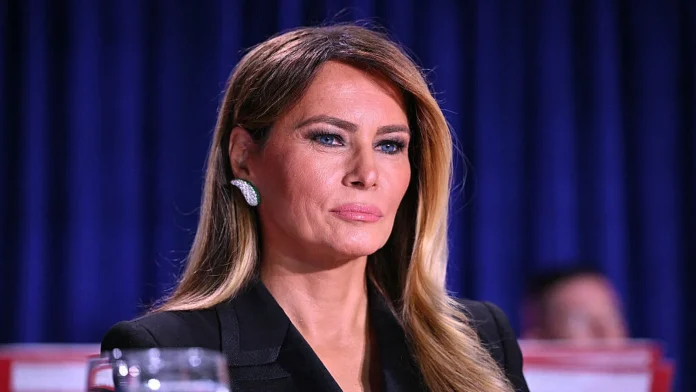
US First Lady Melania Trump described Jimmy Kimmel's behaviour as 'atrocious' in a social media message (file image)

A Night Interrupted: Laughter, Fear and a Nation Asking What Comes Next

Washington, D.C., has a particular smell in the spring — a mix of cherry blossoms, diesel from the Metro, and the faint perfume of optimism that gathers around the White House Correspondents’ Dinner. People arrive in gowns and suits, press passes sing in the shadows, and the joke writers of the capital sharpen their wits for the cameras. This year the cameras were still rolling. The jokes had already been told. And then, in the lobby of the Washington Hilton, a single burst of gunfire cracked through the air and the evening’s script was abruptly, terrifyingly rewritten.

It read like a scene from a political thriller — but it wasn’t fiction. A man later identified as Cole Allen barreled through a checkpoint, opened fire on Secret Service agents and wounded one before he was restrained and arrested. Guests were hurried outside. The dinner, an annual ritual where politicians and journalists mingle under a fragile tent of civility, was evacuated. Whispers swelled into shouts. Phones recorded hands that once clapped for satirists now trembling with fear.

When Satire Feels Like Flame

Jimmy Kimmel had already pushed the envelope days earlier. In a televised parody of the Correspondents’ Dinner, he launched into a monologue aimed at the first lady. “Mrs. Trump, you have a glow like an expectant widow,” he quipped — a line meant for shock and laughter, but landing hard in an atmosphere where political lines are redrawn daily on social feeds and talk radio.

For some, the joke was a classic late-night punch; for others it was the latest in an escalating litany of commentary they describe as hateful. “Enough is enough,” Melania Trump wrote on X, accusing the network and its talent of fanning flames. “How many times will ABC’s leadership enable Kimmel’s atrocious behavior at the expense of our community,” she said, in words that landed like a gavel.

President Donald Trump, speaking on his platform, called for Kimmel to be fired “immediately” by Disney and ABC, arguing the monologue went “far beyond the pale.”

The Echoes of a Joke

Television thrives on provocation. Satire pierces pomposity, punctures pretense, and sometimes lands a needed blow. Yet in an America where fireworks and gunfire can feel alarmingly close to each other, a barb that once would have been dismissed as merely tasteless now ricochets into debates about safety, incitement and corporate responsibility.

“Comedy has always been about pushing boundaries,” said Dr. Lila Moreno, a media ethics professor at Georgetown University. “But when those boundaries overlap with a climate of political violence, we must be reflective about intent, context and consequence. A punchline isn’t created in a vacuum.”

Not everyone agrees that the joke warranted the fury it’s received. “I watch late-night hosts to unwind,” said Rashid Alvi, a public relations consultant who attended press events in D.C. “It felt like performative outrage — an attempt to score points. But then shots were fired, and everything became raw.”

Regulatory Pressure and the Blurring Lines of Broadcast Control

The incident didn’t occur in a vacuum. The months preceding the dinner had already seen a tug-of-war between broadcasters and regulators. FCC Commissioner Brendan Carr had publicly pressured stations to consider pulling Kimmel from airwaves, warning that local broadcasters who aired his show could face fines or even loss of licenses. In response, some broadcast groups — notably Sinclair and Nexstar — briefly dropped Kimmel’s program on dozens of ABC-affiliated stations.

“What we’re witnessing is a test of where the line is drawn between free expression and public safety,” said James Huang, a communications lawyer who has represented broadcasters. “The FCC’s rhetoric signals a desire to expand local control over programming, but the downstream effect is a chilling one for editorial independence.”

ABC briefly suspended Kimmel’s show months earlier after comments about the assassination of a political activist drew condemnation. Disney, ABC’s parent company, declined immediate comment after the shooting.

On the Ground: Voices That Cut Through the Headlines

Walking the block around the Hilton the morning after, you could feel the city processing what happened in micro conversations — in coffee lines, on metro platforms, at the desks of reporters who make lives out of being present when history folds into chaos.

“We were supposed to be laughing,” said Tara Nguyen, a junior reporter, fingers still stained with coffee. “Instead, we were running. You never think that a joke could be the preface to a lockdown. It makes you wonder how easily public discourse tips into danger.”

A Secret Service veteran, who asked to speak on background, described the chaotic minutes: “Training kicks in — shield, evacuate, secure. But none of that removes the human reaction. You don’t compartmentalize fear because it’s part of the job. You feel it.” The agent’s voice was measured but haunted.

  • Wounded: One Secret Service agent was reported wounded by the suspect.
  • Arrest: The suspect was subdued and taken into custody at the scene.
  • Network responses: Disney/ABC had not issued an immediate public statement following the shooting.

Questions That Aren’t Going Away

How do we balance satire’s role as a corrective against the responsibilities of platforms and networks? When does provocative speech cross into a risk that media companies must proactively manage? And who decides when a joke moves from punchline to provocation in a landscape already brittle with political resentment?

“The immediate reaction — to pull, to punish, to punish quickly — is emotionally satisfying,” said Dr. Moreno. “But we should ask what long-term precedent we want to set for content control. Are we comfortable with regulators or corporations becoming the arbiters of comedic taste?”

At the same time, data reminds us why the stakes feel so high. The United States records tens of thousands of firearm-related deaths each year; unfamiliar headlines about violence accumulate into a national anxiety. When entertainment edges close to imagery or rhetoric suggestive of harm, that paranoia is easily weaponized.

Beyond D.C.: A Mirror for the Moment

The drama at the Hilton is more than a isolated episode. It’s an illustration of how culture, media and politics collide in modern America — how jokes become ordinance, how platforms and power trade blows, and how the public sphere is increasingly policed by both corporate boards and the loudest corners of social media.

People across the political spectrum expressed unease, but not unanimity. For some, the call to punish Kimmel is a necessary stand against what they see as normalized dehumanization. For others, it’s a dangerous slide toward censoring dissenting voices. Both sides look at the same sparks and fear different fires.

So what should an audience expect from those who shape public conversation? Should networks act as guardians, editors or simply as marketplaces of ideas? As you read this, consider where you stand: Do you think media companies should immediately remove personalities who provoke, or do you worry about the broader implications for free speech?

Closing Thought

That night at the Correspondents’ Dinner exposed more than a fissure in American humor. It exposed a nation still struggling to reconcile freedom with safety, entertainment with consequence, satire with the very real human cost of political antagonism. The jokes will return — and so will the debates. But if the past few days have taught us anything, it’s that the line between stage and street can, in moments, be alarmingly thin.

“We must ask ourselves,” Dr. Moreno said, “what kind of public square we want: one where we can laugh at power without endangering each other, or one where every laugh becomes ammunition.”

Madaxweyne Deni oo tababar u furay boqolaal askari

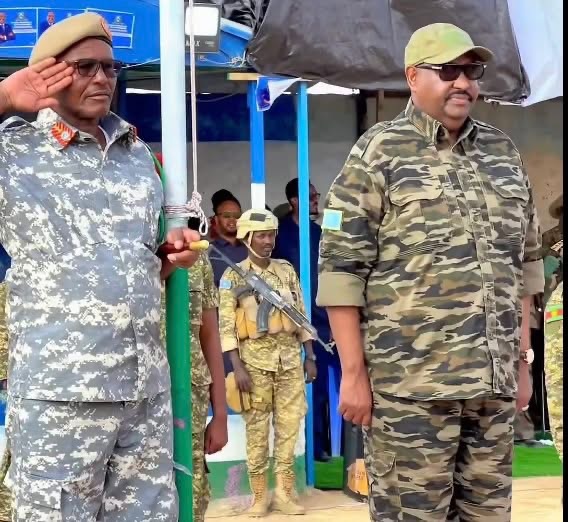
Apr 27(Jowhar) Madaxweynaha Puntland Siciid Cabdullaahi Deni ayaa boqolaal askari tababar uga furay dugsi ciidan oo ku yaalla magaalada Badhan ee gobolka Sanaag.

Dib U Dhac ku yimid qabashada Doorashada dowlad Goboleedka Koofurgalbeed

Apr 27(Jowhar)Doorashada golayaasha deegaanka iyo golayaasha wakiilada dowlad goboleedka Koofurgalbeed ayaa dib u dhac ku yimid iyadoo guddiga doorashooyinka uu shaaciyay waqtiga ay dhacayaan doorashooyinka.

Madaxweynaha Ruushka oo la kulmay wasiirka arrimaha dibadda Iran

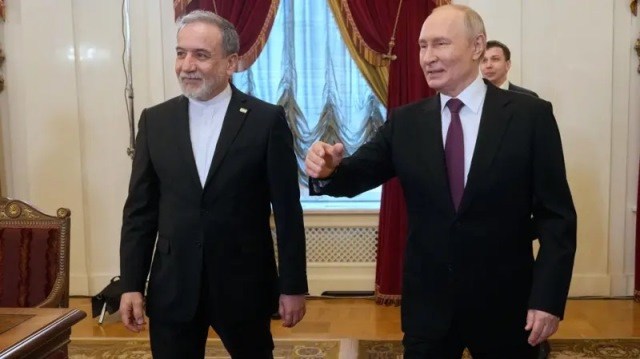
Apr 27(Jowhar)-Wasiirka arrimaha dibadda Iran Cabbaas Araghchi iyo madaxweynaha Ruushka Vladimir Putin ayaa maanta ku kulmay magaalada Moscow.

Gaza residents repurpose rubble to rebuild and reopen neighborhood streets

Palestinians use Gaza rubble to restore streets
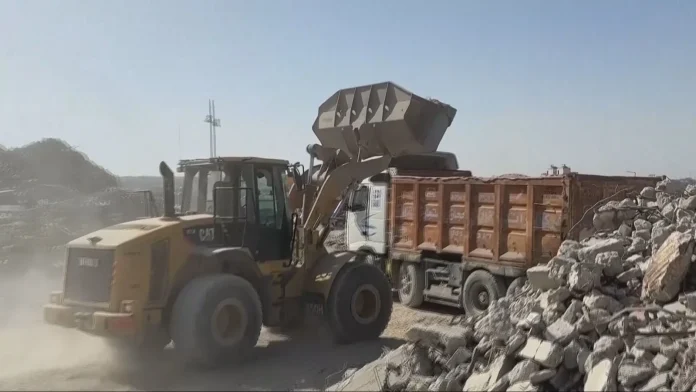
UNDP has so far removed about 287,000 ⁠tons of rubble

Rubble Roads: How Gaza’s People Are Turning Destruction into a First Step Toward Rebuilding

The first thing you notice when you step into southern Gaza is the dust. It hangs in the air like a memory—fine, gray, stubborn—stirred up by the slow, grinding teeth of machines turning deathly silence into a kind of activity. Bulldozers plough through piles of concrete and bent rebar, excavators clawing away at what used to be homes, shops, schools. Men with work boots and tarpaulin hats stand beside them, licking their lips against the grit, eyes glinting with a mix of purpose and fatigue.

“We are making a road out of what was a home,” says Alessandro Mrakic, who runs the UN Development Programme office in Gaza. He speaks with the weathered calm of someone who has seen emergencies before and knows how long the climb back up will be. “We don’t just clear; we sort, crush, and reuse. It’s practical—and it gives people work.”

The idea that could change daily life

It is a blunt, pragmatic solution: crush the wreckage, sift the steel and concrete, and repurpose the gravel and fill to repave streets, pad shelter sites, and lay foundations for community kitchens. Machines reduce giant, jagged ruins to manageable granules. The UNDP has so far removed about 287,000 tons of rubble—an enormous figure until you remind yourself it is barely a splinter compared with the full scale of destruction.

UNDP officials estimate Gaza still houses roughly 61 million tons of debris—one of the largest post-conflict clearance challenges in recent memory. At the current pace, and with unimpeded access to fuel and heavy equipment, clearance could take up to seven years. Those are generous assumptions in a place where fuel is scarce, access is contested, and the threat of unexploded ordnance punctures every day’s work.

On the ground in Khan Younis

In Khan Younis, on a dusty street that used to be lined with citrus trees and small shops, the sound is relentless: metal grinding, engines rasping, workers shouting instructions over the machinery. Men with orange vests sweep and sort. Women walk by carrying thermoses—their bright floral scarves a small defiance against the monotone of concrete.

“We used to sit and sip tea under the old fig tree,” says Fatima, a middle-aged woman from a nearby tent encampment. “Now we sit and watch the diggers. The tea is the same. The stories are the same. The soil tastes different.”

The reclaimed rubble is being used to mend roads that are vital arteries for hospitals and water trucks. Officials say many wells and clinic entrances remain blocked by collapsed structures, and loose rubble makes it almost impossible for ambulances to reach those who need them. The work is not glamorous; it’s a kind of civic triage, rebuilding access before buildings.

Risks and real costs

There is danger in every scoop. Before a single block is lifted, the UN’s mine action teams sweep the site for explosives and ordnance. Hidden beneath the broken facades are booby traps and shells—silent killers lying in wait.

“We check every meter,” says a demining supervisor who asked not to be named for security reasons. “We mark, we clear, and then the heavy equipment comes in. It’s slow, because speed kills in more ways than one.”

For men like Ibrahim al-Sarsawi, 32, the risk is also a daily calculation. “I can’t find any other source of income,” he says, wiping a hand across his dusty face. “I work because I have to. You might get hurt. You might not come home. But what else am I supposed to do?”

That stark pragmatism is echoed throughout Gaza. For many, this is work and survival braided into one. For others, it’s the first step in reclaiming a small piece of their daily life: a smoother path to the cistern, a stretch of road where children can walk without fear of stepping on nails or twisted metal.

Numbers that demand global attention

The scale of rebuilding that Gaza needs is staggering. A recent joint assessment by the European Union, United Nations, and World Bank estimates that recovery and reconstruction will require about $71.4 billion over the next decade. That figure covers housing, infrastructure, water and sanitation, electricity, schools, and health services—everything that makes a normal life possible.

“We removed 287,000 tons so far—but that is just the tip of the iceberg,” Mrakic says. “The real test is sustained support: fuel, equipment, safe corridors for materials, and time.”

Cultural fragments and daily endurance

Walk through any of the temporary camps scattered outside Gaza City and you’ll see how people stitch life back together. A father repairs an oud in a corner, its wood sanded smooth despite the chaos outside. Children draw little chalk houses on flat patches of reclaimed concrete as if rehearsing the architecture of the future. A woman makes mana’eesh—flatbread with thyme—and sells slices to workers for a few shekels. The smoke from a small stove carries a scent of cumin and resilience.

“We are not just clearing rubble,” says Sobhi Dawoud, a 60-year-old displaced man sitting outside his tent. “The war is over, yes. But this is the beginning of another war—a war of rebuilding: schools, water, electricity, sewage. The fight now is to put life back.”

Questions we can’t avoid

What does rebuilding mean when the very soil is contested? How do you plan a decade-long reconstruction while short-term politics and security anxieties keep shifting? And how should the international community balance urgency with care—speeding up aid while ensuring that rebuilding is safe, sustainable, and respects local needs and labor?

These aren’t theoretical questions for Gaza’s residents. They are practical matters of survival and dignity. A road repaired with crushed rubble can be a lifeline, yes—but it is also a stopgap. True recovery will need permanent materials, steady funding, and, above all, political will.

Beyond stones: what rebuilding must include

  • Safe, continued access for heavy machinery and fuel;
  • Comprehensive demining and unexploded ordnance removal;
  • Long-term funding for housing, hospitals, water systems, and electricity;
  • Meaningful local employment and capacity-building so Gazans shape their own recovery.

“If everything depended on outsiders, we would never start,” remarks Lila Mansour, an engineer coordinating community repairs. “But people want to work. They want to be part of rebuilding their neighborhoods. That dignity matters.”

What the rubble reveals

Rubble is more than a physical problem; it’s a witness. It tells stories of families interrupted mid-laundry, of storefronts frozen with last week’s goods, of schools where a single desk remains upright among the plaster and glass. Turning crash into road isn’t a solution to all those stories, but it is a beginning—a way to restore movement, connection, and the possibility of commerce and care.

As machines chew and sort, and as workers carry thermoses and small radios, one question settles in: when the dust finally clears, will the world be ready to fund and support the next stages? Will international pledges turn into sustained action? Gaza’s people are doing their part—often with little more than muscle, grit, and ingenuity. The rest is up to the rest of us.

So as you read this, consider the scale: 61 million tons of rubble, seven years of clearance in best-case scenarios, $71.4 billion in rebuilding needs. And then imagine a street—rebuilt, paved with stones ground from the ruins of a home, children walking to school, a vendor selling tea at dusk. What does it take, globally and locally, to make that image durable? What role do we play, right now, in stitching those fragile first stitches into something that lasts?

UK's Starmer to resign after Labour support drains away

Starmer set to step down as Labour’s backing rapidly collapses in UK

0
Keir Starmer is preparing to step aside as British prime minister, a move that would clear the way for Labour frontrunner Andy Burnham and...
Man charged over series of attacks in Edinburgh - police

Police charge man in connection with multiple attacks in Edinburgh

0
A 36-year-old man has been charged after a rapid series of violent incidents across Edinburgh left five people injured, Police Scotland has confirmed. British Prime...
US activist critical of Trump's impact on executions

US Activist Condemns Trump’s Role in Rising Execution Numbers

0
Few Americans have spent more time confronting the machinery of execution than Sister Helen Prejean — and she is now directing some of her...
US-Iran agree 'roadmap' towards peace deal - mediators

Mediators: US and Iran Agree on Roadmap Toward Peace Deal

0
High-stakes talks in the Swiss Alps have produced what mediators describe as a 60-day “roadmap” aimed at steering the United States and Iran toward...
Starmer reflecting on 'political realities' - minister

Minister says Starmer weighs “political realities” in key policy decisions

0
Mounting pressure on Keir Starmer has turned the question of his future into a live political drama, after a cabinet minister spoke of the...