Home Blog Page 77

Nationwide Tributes Pour In for Civil Rights Icon Jesse Jackson

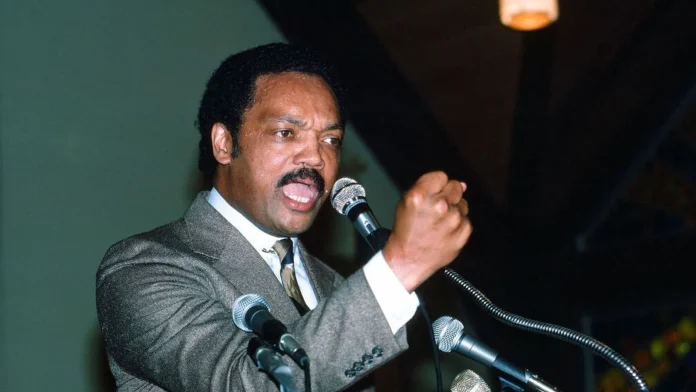
Tributes paid to civil rights activist Jesse Jackson
Jesse Jackson was present for many consequential moments in the long battle for racial justice in the United States

The Man Who Walked Between Pulpit and Protest: Remembering Jesse Jackson

There are mornings that crack open history like an old trunk — you lift the lid and the scent of a lifetime spills out. This was one of them: news rippling across neighborhoods from the South Side of Chicago to Dublin, Johannesburg to Washington, that Jesse Jackson had died at 84. For millions he was a galvanizer — a preacher who learned how to speak directly to power without losing the cadence of the church.

Outside a modest storefront office where the Rainbow/PUSH legacy still echoes, a line formed of people who remember him not as a headline but as a hand on the shoulder. “He made you feel seen,” said Marion Ellis, a retired schoolteacher who has worked in the neighborhood for four decades. “He didn’t offer sympathy. He offered a plan.”

A life that bridged pulpit and politics

Born into a segregated America, Jesse Jackson rose through the Black church into the national spotlight as a close aide to Martin Luther King Jr., then into the turbulence of the 1970s and beyond. He ran for the Democratic presidential nomination twice in the 1980s, an audacious bid that broadened the political map for people of color and reshaped what a national campaign might look like.

He founded organizations that sought to fuse grassroots economic activism with electoral politics; his Rainbow Coalition sought alliances across race and class lines, and his work cast an international net — from anti-apartheid campaigns in South Africa to solidarity with struggles in Northern Ireland.

“He taught a generation how to be relentless without losing their humanity,” said Dr. Lila Matthews, a historian of social movements. “Jackson turned sermons into strategy and sermons into sit-ins; he believed moral rhetoric had to have concrete form.”

Voices from around the world

Tributes poured in quickly and with a kind of global astonishment. Former US President Barack Obama captured a common refrain when he wrote that he and a nation had “stood on his shoulders” — an image that has become shorthand for how the arc of American progress often rests on the backs of earlier, tireless laborers. President Joe Biden praised his “optimism” and “relentless insistence on what is right and just.”

From the political right and left, there was recognition. President Donald Trump — posting on his platform of choice — called Jackson “a force of nature,” lamenting the loss of someone he acknowledged as an influential figure in American life.

Abroad, leaders noted Jackson’s global reach. South African President Cyril Ramaphosa singled out Jackson’s “irrepressible” opposition to apartheid, underscoring how U.S. civil rights struggles intersected with liberation movements worldwide. In Ireland, Sinn Féin leaders remembered a man who visited, listened, and lent his voice to peace and self-determination campaigns.

Closer to home, civil rights figures and lawyers whose lives he shaped shared intimate memories. “He wasn’t just an orator,” said civil rights attorney Benjamin Crump. “He was a teacher of how to translate spiritual conviction into political possibility.” Reverend Al Sharpton, who grew into national prominence alongside Jackson, called him “a movement unto himself” — a man who “carried history in his footsteps and hope in his voice.”

Why his loss feels so large

What made Jackson consequential was not just the scale of his ambitions but the texture of his methods. He mixed moral suasion with economic pressure — boycotts of retailers, negotiation for jobs and contracts, high-profile hostage negotiations overseas. He habitually walked into rooms where he would be told “no” and left with concessions. That capacity to turn moral outrage into measurable gain is rare.

Consider the landscape he helped alter: in the decades since Jackson first lit a national fuse, the visibility of Black political leadership in the United States has expanded — from local offices to the presidency itself. His efforts helped normalize the notion that candidates of color could compete for and command national coalitions. Those changes didn’t happen overnight, and they didn’t happen because of any single man — but Jackson’s energy helped accelerate the arc.

On the street — small stories, big meanings

At a church potluck a neighborhood organizer held this afternoon, the conversation pivoted between grief and a fierce, practical kind of gratitude. “He taught us to bargain for dignity,” said Malik Perez, 29, who coordinates youth outreach programs. “He didn’t just preach self-respect; he forced institutions to respect us through action.”

A choir director remembered him for his theatrical sense of ceremony. “Preaching to Jesse was like conducting a symphony,” she said. “He knew how to bring people together — and then, importantly, how to move them.”

Beyond memory: the questions he leaves us

Jackson’s death invites a series of uncomfortable, necessary questions. How do movements maintain moral clarity when they gain institutional power? How do we hold leaders accountable without losing the capacity to mobilize? And as inequality deepens globally, what tactics from his playbook still work — and which need rethinking in a digital, more fragmented era?

“Movements don’t have to worship heroes to learn from them,” Dr. Matthews said. “The task now is to extract useful tools — coalition-building, strategic disruption, moral framing — and adapt them.”

A final reckoning and a call to action

For many, Jackson’s life is less an end than a challenge to the next generation: keep building, keep bargaining, keep insisting that justice be practical as well as righteous. His legacy sits in the lives of activists who learned how to speak truth to markets as much as to legislatures, and in the slow widening of who is allowed to dream of national office.

Will the networks he helped weave continue to hold? That depends on organizers and citizens alike. It depends on people who will turn grief into commitment, and praise into policy. It depends, as Jackson insisted, on faith with feet — on faith that walks into rooms and refuses to leave until a better deal has been struck.

As you read this, take a moment: who taught you how to stand up? Who gave you the first idea that a different world was possible? In the quiet aftermath of a life like Jesse Jackson’s, memory and obligation sit side by side. One calls for remembrance; the other for work. Which will you answer?

  • Notable milestones: presidential bids in the 1980s; founder of organizations that merged spiritual conviction with economic and political activism.
  • Global reach: active in anti-apartheid efforts and international solidarity campaigns.
  • Legacy question: how to translate moral leadership into durable political change in the decades ahead.
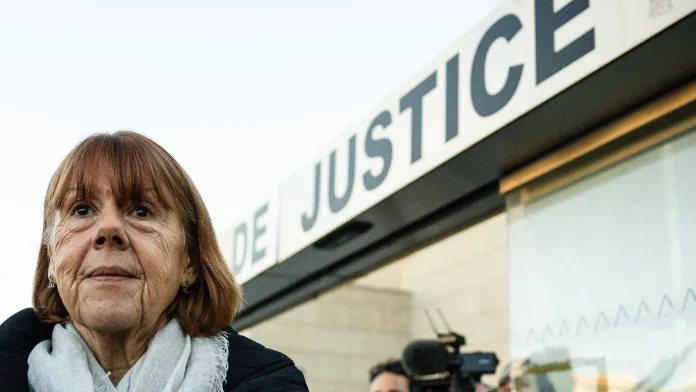

Gisele Pelicot details surviving ‘hell and back’ rape ordeal

'Hell and back': Gisele Pelicot recounts rape ordeal
Gisele Pelicot's memoir retraces the mass-rape case that turned her into a global symbol in the fight against sexual violence

When Silence Was Broken: A Woman’s Memoir That Refused to Hide

There are books that act like bandages—soft, private, meant to cover wounds. And then there is the sort of memoir that rips the bandage off, letting light and air into a room that for too long has been shut. “A Hymn to Life,” the new memoir by Gisele Pelicot, falls squarely into the latter category. It is at once tender and unflinching: a survivor’s ledger of what happened in her own home, and a call to a nation—indeed, to the world—not to look away.

Ms. Pelicot was 73 when she decided the time for concealment had ended. In a country where privacy and reputation often carry a weight of their own, she waived the anonymity normally granted to victims in sexual crimes. She wanted faces revealed, questions asked, and the ordinary neighbors who populate our shared lives made to reckon with the possibility that atrocity can hide behind polite curtains.

The Moment the World Changed for Her

Imagine waking one day to a precise, unbearable truth. In Ms. Pelicot’s account, she is shown grainy photographs by investigators—images of herself, unaware and vulnerable, in her own bed. An officer reads out a number, not a tally of bills but of assaults: dozens. “More than I could imagine,” she writes, “a figure that made my whole life tilt.”

When she returned to her house that first day after the revelation, she performed an ordinary ritual: she hung her husband’s laundry on the line. That domestic choreography—shirt by shirt, peg by peg—became a quiet, gutting image. “I looked like a dog at the gate,” she writes. The pastoral scene of a rural French afternoon masked an inner landscape that had been violently transformed.

From Private Horror to Public Trial

The ensuing legal drama was staggering in its scope. Her husband, Dominique Pelicot, and scores of other men were brought before the courts. The trial drew attention not because it was sensational, but because it cut through a taboo: how a woman’s home—a place commonly associated with safety—could be turned into a scene of repeated violation without anyone’s intervention.

“This case forced us to ask: what do we mean by consent, and how do we protect the most vulnerable among us?” said Amélie Durand, a lawyer specializing in family and sexual violence in Paris. “The law can grind slowly, but high-profile cases like this shine a light that lawmakers find difficult to ignore.”

Letters, Voices, and the Strange Comfort of Strangers

One of the most striking images in Ms. Pelicot’s memoir is the bundle of letters she received each day during the trial—handwritten pages folded and passed along by friends and strangers. Some came from a woman in Marseille recounting a parallel assault from thirty years earlier; others were simple notes from young students saying, “We believe you.”

“Those letters were oxygen,” Ms. Pelicot writes. “The newspapers were full of names and verdicts, but the letters were full of presence. They were human hands reaching in.”

An activist who campaigned outside the courthouse remembers the scene vividly. “People stood in the rain to let her know she wasn’t alone,” she said. “You could feel the city change temperature that week.”

Love, Resilience, and the Question of Revenge

No story of trauma is only a story of pain. Among the darker chapters of Ms. Pelicot’s life, she describes a tender, unexpected revival of love. Through mutual friends, she met a man who treated her as someone worthy of ordinary joys: dinner, laughter, little foolish things that remind you of being alive.

“I wasn’t looking for anything,” she writes, “but one evening I felt light-headed with happiness. I realized I had been afraid—to be seen, to be loved—and then I chose to be brave.”

She uses the language of “revenge” in a way that surprises: not as retaliation, but as reclaiming belief in humanity. “My revenge is to trust again,” she says. “Once it was a weakness. Now it is my strength.”

Local Color: Small-Town France Under Scrutiny

The story is not only about the courtroom. It is a portrait of place: the way a village square fills on market mornings, the scent of warm bread from the boulangerie, the silent rows of houses with shutters closed. The case forced neighbors to confront what they had assumed—or refused—to see.

“We always thought we knew our neighbors,” said Jean-Marc, who runs a cafe near the courthouse and asked to be identified by his first name only. “This case made people look twice at every porch and every handshake. That’s painful, but necessary.”

Facts, Figures, and the Broader Picture

Ms. Pelicot’s memoir arrives at a moment when the world is re-examining how societies respond to sexual violence. The World Health Organization estimates that about one in three women globally have experienced physical or sexual violence at some point in their lives. In Europe, surveys over the past decade have shown that sizable numbers of women have experienced some form of sexual violence since the age of 15.

In France, the fallout from high-profile cases has led to renewed debate in parliament and among civil society groups about consent laws, protective measures for victims, and the anonymity afforded to complainants. While legal reform moves at different paces in different places, the message of Ms. Pelicot’s book is universal: survivors must be heard, believed, and protected.

Why She Gave Up Anonymity

Many survivors choose anonymity to protect themselves and their families. Ms. Pelicot chose the opposite path. “If I hid, then the faces of the men who did this would disappear into the background,” she explains. “I wanted people to look, to question, to have that uncomfortable moment of recognition: that the neighbor next door could be capable of terrible things.”

Some legal scholars argue that public testimony can help shift public opinion and accelerate policy reform. Others worry about the emotional cost to the survivor. Ms. Pelicot acknowledges both. “It cost me dearly,” she admits, “but silence would have cost more.”

Invitation to the Reader

Reading “A Hymn to Life” is not a passive act. It asks you to examine your own assumptions: What do you do when a friend confesses something unlikely? How do you respond when a community secret surfaces? Are you willing to let discomfort be the catalyst for change?

As a global community, we must grapple with how structures—legal, social, cultural—either protect or fail those who are most exposed. Ms. Pelicot’s story is a local tragedy and a global lesson. It shows how a single voice, given room and respect, can alter a conversation that affects millions.

Final Thoughts: The Work That Remains

There is no tidy ending to this memoir. Pain does not fold neatly into narrative closure. But there is something bracing about a woman who, at 73, decides to step into the public light to demand accountability and to reclaim a life. “A Hymn to Life” is both an account of unspeakable harm and a hymn—imperfect, human, insisting—about the stubborn, ordinary business of survival.

Ask yourself: when the next story like this appears in the headlines, will you look away, or will you listen? When a neighbor seems off, or a workplace rumor surfaces, who will speak up? That, perhaps, is the memoir’s most urgent legacy: it turns private grief into common responsibility.

Culleton granted temporary reprieve from deportation to the United States

Culleton granted postponement from US deportation
Seamus Culleton, pictured with his wife Tiffany Smyth, was detained by ICE agents last September

Between Two Shores: The Pause in an Irishman’s U.S. Deportation and the Quiet Storm It Reveals

On a cold morning in El Paso, behind the barbed wire and the hum of fluorescent lights, an Irishman named Seamus Culleton finally felt something like a breath. Not freedom — not yet — but a legal reprieve: a federal appeals court had entered a temporary order staying his deportation for ten business days. It is a small, bright hinge of time in what has been a long, wrenching sequence of custody, court dates, and family worry.

“Following a Petition for Review (PFR) of his administrative final removal order and an ex parte motion to stay Culleton’s removal filed by our firm on his behalf, the First Circuit Court of Appeals on Friday, February 13, 2025, entered a temporary order staying Culleton’s removal for the next ten business days,” a spokesperson for BOS Legal Group said. “The court ordered the government to file their response which is due in the coming days.”

Those ten business days are more than calendar entries. They are a corridor to pleadings, affidavits, and strategy — and, for Seamus, a chance to challenge a final removal order that his lawyers say neglects important legal nuances. “Our focus is on reuniting him with his spouse and ensuring that justice is served within the bounds of our laws,” the firm added, while also declining to comment on personal family matters.

From Glenmore to El Paso: The geography of a life split

Seamus’s story is stitched with transatlantic threads. He arrived in the United States in March 2009 under the Visa Waiver Program, a scheme meant for short tourist stays — 90 days, no more. He remained. He labored, built a life, obtained work authorization, and, according to his lawyers, was in the final stages of obtaining a green card when Immigration and Customs Enforcement (ICE) agents took him into custody. He married a U.S. citizen in April 2025.

Back in Glenmore, County Kilkenny, the landscape is gentler: stone walls, low-lying fields and a pub whose name you know before you see it. “Seamus was one of ours,” said Mary O’Rourke, who runs the grocery on Main Street. “He’d be in here buying tea and telling us stories about the big country. We were shocked when we heard.”

It is a familiar pattern in many Irish towns: young people leave for opportunities and sometimes never manage the paperwork that binds a future to two places. But Seamus’s case has an extra complication — and a painful echo. Documents reveal that, as a 22-year-old in 2008, he was charged in Ireland with possession and related offences in connection with an incident in Glenmore. After failing to appear at a 2009 court sitting, a bench warrant was issued. Those charges have become, depending on who you ask, the fulcrum of his removal case.

Lawyers, judges, and the machinery of removal

Immigration attorneys say the posture of the First Circuit — issuing a short stay and asking for government response — is procedural, but meaningful. “Courts often issue temporary stays to prevent irreversible action while they consider whether an administrative order was properly entered,” said Daniel Rivera, an immigration lawyer in Boston who has handled federal appeals. “It doesn’t mean victory, but it buys time to marshal facts, medical records, marriage documentation, and legal theory.”

That time is crucial. The Department of Homeland Security has maintained that Seamus had been in the U.S. illegally for 16 years and that he had received due process during his detention. In a recent post on X, DHS Assistant Secretary for Public Affairs Tricia McLaughlin said Mr Culleton had been issued a final order of removal by an immigration judge in September 2025, and that he had been offered removal to Ireland but “chose to stay in ICE custody, in fact he took affirmative steps to remain in detention.”

Such statements illuminate the tension at the heart of immigration enforcement: the state’s right to enforce immigration laws versus individuals’ claims to relief through marriage, adjustment of status, and other legal pathways. The adjustment process is often labyrinthine. A person can have a marriage, a work permit, and an active petition and still find themselves facing removal if prior events — like an outstanding arrest warrant abroad — cast shadows over their admissibility.

Human faces, policy questions

Ask any community organizer who spends their days by courtroom doors and detention centers and they will tell you the same thing: behind every docket number is a human life. “We see people like Seamus all the time — caught between systems,” said Rosa Martinez, an El Paso outreach worker who visits detainees. “They’ve built families, they’ve paid taxes, they sometimes have old mistakes or paperwork lapses that blow up into immigration crises. The system was never designed for graceful exits.”

How many people are caught in that machinery? Official figures vary year to year, but tens of thousands of people are detained annually by ICE across the United States, and detention stays can range from days to many months. The human toll — family separation, delayed medical care, mounting legal bills — is harder to quantify.

In Glenmore, the conversation is quieter and more personal. “People say, ‘Why wouldn’t he go back?’” Mary O’Rourke said. “But it’s not like stepping off a bus. You create a life. You have a spouse, a job. It breaks you to be pulled away from that.”

What the next days might bring

The First Circuit’s order directed the government to file a response within days. That response could range from asking the appeals court to lift the stay and allow removal to proceed, to conceding that there are legal questions worth full consideration. Either way, the next move will likely determine whether Seamus spends more time in detention, is released on bond, or is reunited with his spouse.

There are broader implications too. Cases like this force a public reckoning with the nature of modern migration: the porousness of borders in one sense and the ironclad finality of a removal order in another. They raise questions about proportionality, rehabilitation, and the social costs of strict exclusion.

What does justice look like in a world where people live across borders? Is it a strict accounting of statutes and precedents, or does it include mercy, family ties, and the reality of lives rebuilt far from home? These are not abstract questions for the Culletons — they are the difference between dinner at home and nights under fluorescent light.

Waiting, watchful

For now, Seamus’s fate is paused, the legal clock ticking on a ten-business-day stay. His lawyers promise to continue their fight. DHS has reaffirmed its position that the removal order stands.

“We are committed to advocating for Mr Culleton’s right to remain in the United States based on the legal merits of his case,” BOS Legal Group said. “Our focus is on reuniting him with his spouse and ensuring that justice is served within the bounds of our laws.”

And in Glenmore, a village that measures time by turf fires and church bells, neighbors watch the horizon for news. “You hope for the best,” said O’Rourke. “You also know that sometimes the law moves slow and people move faster. You hold onto hope.”

What would you do if your life was threaded between two nations, and one legal order could sever the line? As this story unfolds, it asks all of us to reckon with migration not as statistics and policy but as the way people actually live — uneven, messy, and deeply rooted in both place and love.

Dowlada Soomaaliya oo ku dhawaaqday inay bilatay bishii Ramadaan

Feb 17(Jowhar)-Wasaaradda Diinta iyo Owqaafta ee Dowladda Soomaaliya ayaa goor dhow xaqiijisay bilashada bisha barakeysan ee Ramadaan.

Madaxweyne Xasan oo la kulmay Golaha Mustaqbalka Soomaaliyeed

Feb 17(Jowhar)- Madaxweynaha Jamhuuriyadda Federaalka Soomaaliya Mudane Xasan Sheekh Maxamuud ayaa kulan qado ah maanta ku maamuusay xubnaha Madasha Mustaqbalka ee ajiibay gogoshii Xukuumaddu ay u fidaysay 19 bishii Jannaayo 2026.

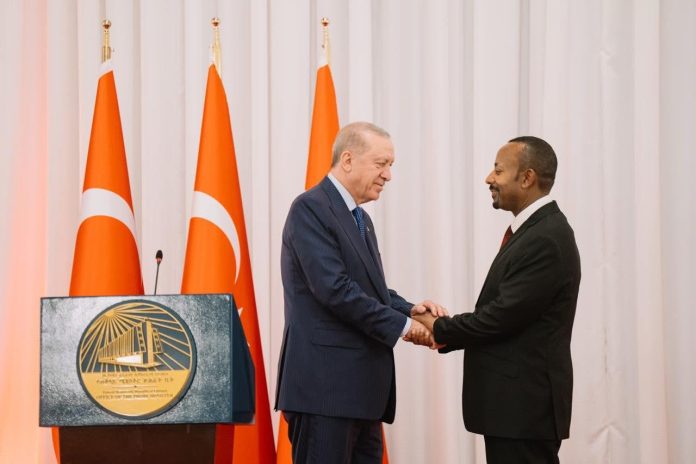
Abiye oo Erdogan kala hadlay Badda ay Itoobiya u baahan tahay

Feb 17(Jowhar)-Ra’iisul wasaaraha Itoobiya Abiy Axmed oo ka garab hadlayay madaxweynaha Turkiga Rejeb Dayib Erdogan oo jooga Addis Ababa ayaa sheegay in ay si xoogan uga hadleen arrimaha marinka Badda ee ay Itoobiya u baahan tahay.

Jackson: Civil Rights Advocate Who Worked to Bridge Divides

Jackson: Civil rights champion who sought 'common ground'
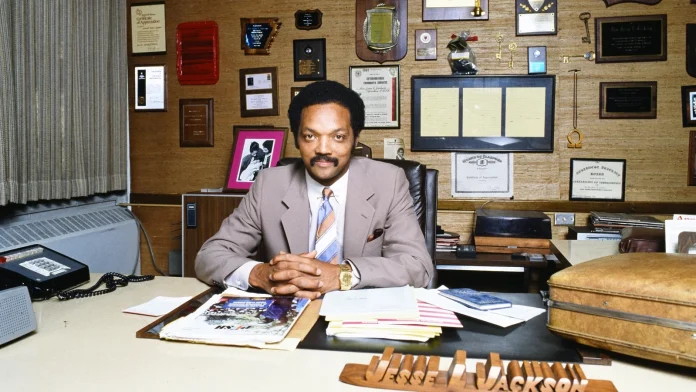
Jesse Jackson his Operation PUSH office in Chicago in August 1982

A Giant Who Spoke to the Whole Room: Remembering Jesse Jackson

The news landed like a hush mid-sermon: Jesse Jackson, the thunderous, gentling, complicated voice of American civil rights for more than half a century, has died at 84. For people who grew up under segregated signs and for those who came of age with tweets and streaming, Jackson was a bridge — not a sanitized relic, but a restless, searching presence who refused to let pain be private or progress be tidy.

“He was our door-opener,” said Marisol Vega, a community organizer who grew up attending Rainbow PUSH meetings on Chicago’s South Side. “Not perfect. Not always easy to love. But he made space for people who otherwise would have been invisible.” Her words echo a family statement that called him “a servant leader” to the oppressed and overlooked — a fitting epitaph for a man who made diplomacy, oratory and relentless agitation his craft.

From Jim Crow to the National Stage

Jackson’s story began in Greenville, South Carolina, born on October 8, 1941, into a region stitched tightly with the laws and habits of Jim Crow. The early years — a teenage mother, the adopted surname, a football scholarship and then a transfer to a historically Black college after encountering discrimination — are the kind of details that explain more than any policy analysis how a life of conscience takes root.

He moved north and into the orbit of Dr. Martin Luther King Jr., preaching, organizing, and learning to make large rooms feel intimate. On the day King was assassinated in Memphis, Jackson was in the hotel below; his later recounting of having held King in his arms became one of the many tensions that marked his life: deeply loyal to the movement that made him, yet a figure willing to pull the movement in new directions when he thought it needed course corrections.

Chicago: Laboratory and Battleground

Chicago, with its layered neighborhoods and political machines, became Jackson’s operating theater. He founded Operation PUSH and later the National Rainbow Coalition, which merged into Rainbow/PUSH in 1996. The organizations were black-led, coalition-minded, and stubbornly focused on economic empowerment — job training, corporate accountability and pressure campaigns that mixed faith and force.

“You could walk into one of his meetings and feel the argument in the air — not only about race, but about bread-and-butter stuff,” said David King, a former PUSH volunteer. “We were trying to get people into jobs, into homes, into the conversation of power. He believed dignity had an economic angle.”

The Orator Who Ran for President

Jackson translated sermon cadence into political momentum in two presidential bids that shook the Democratic Party. In 1984 he captured roughly 3.3 million votes — about 18% of the primary electorate — finishing a surprising third. Four years later he sharpened his message and broadened his reach, winning 11 state contests in 1988 and some 6.8 million votes, or about 29%.

Those campaigns were moments of possibility and blunt reminder. Jackson’s politics pushed issues of race, poverty and foreign policy onto the national stage, yet controversies — most notably inflammatory remarks about Jewish communities and New York that cost him critical allies — also revealed the peril of mixing raw, unfiltered candor with the new scrutiny of mass media.

“He didn’t dress his frustrations in velvet,” a longtime Democratic strategist observed. “Sometimes that was a strength — people heard their anger in him. Other times, it was a liability.”

Global Hustler: Prisoner Releases and Quiet Diplomacy

Jackson’s reach was not confined to American shores. He negotiated releases in places like Syria, Cuba, Iraq and Serbia, sometimes bringing home Americans who had become pawns of geopolitics. His role as a special envoy to Africa under President Bill Clinton in the 1990s and his meeting with Saddam Hussein in 1990 to help free hostages are the kind of episodes that make him read like a Cold War diplomat with a pastor’s moral thrust.

“He walked into rooms others wouldn’t,” said a former State Department official. “People thought of him as a moral broker. And often, he was effective.” It is true: Reagan thanked him when he secured the release of a U.S. naval aviator from Syria in 1984, and Bill Clinton awarded him the Presidential Medal of Freedom in 2000, recognizing a lifetime that had mixed chapel pulpit and political theater.

Controversy, Complexity, and Craft

Jackson’s life was neither untarnished saintliness nor disposable scandal. He confronted allegations — a son’s political fall from grace, personal lapses in judgment, inexplicable slips of rhetoric — that complicated the public’s love affair with him. Still, he remained a towering public presence, not because he was flawless, but because he kept trying.

He also wielded media savvy: a CNN show in the 1990s, relentless appearances, and an ability to frame a grievance as a national conversation. Yet those same qualities attracted critique: why did a movement leader spend so much time in the spotlight? Why were internal disputes so public? The answers live in the paradox of modern activism: exposure can amplify a cause, but it can also magnify human error.

Numbers That Mattered

  • 1984 Democratic primaries: ~3.3 million votes (about 18%)
  • 1988 Democratic primaries: ~6.8 million votes (about 29%), including wins in 11 states
  • Diagnosed with Parkinson’s disease in 2017; remained publicly engaged afterward
  • Founded Operation PUSH in the early 1970s; National Rainbow Coalition in 1984; merged to form Rainbow/PUSH in 1996

Legacy: What Jesse Jackson Leaves Behind

What do you inherit from a life that tries to bend institutions? For many, it is a vocabulary — phrases that teach people to ask for more. For others, it is the lines of power re-drawn: Black candidates tested the primaries because Jackson had shown it could be done. Barack Obama’s 2008 presidential success did not erase Jackson’s role; it built on a path that men and women before him had scouted.

“He gave ordinary people a permission slip to demand extraordinary things,” said Aisha Thompson, a young activist in Detroit who cites Rainbow/PUSH as formative for her organizing. “He taught us to call the president, to meet the CEO, to show up in numbers and in love.”

At the same time, Jackson’s story raises broader questions about movements and memory. How do we evaluate leaders who are fierce advocates and flawed humans? How does the public square handle concession and criticism? In an era of instantaneous judgment, what does forgiveness look like — and who gets it?

Final Reflections

In neighborhoods from Greenville to Chicago to Selma, elder church members will tell stories tonight: about a sermon that shifted a life, an office that helped a family, a call that coaxed a hostage home. Young people will stand at marches and ask how to harness moral force in an age when hashtags can make a moment but not always a movement.

Jesse Jackson’s life resists easy summarization. He was orator and organizer, error-prone and brave, a broker of compassion who also courted controversy. Above all, he insisted that public life was worth inhabiting for those the public too often forgets.

So ask yourself: when you see someone pushed to the margins, do you look away — or do you become, for a moment, a servant leader too? That question feels like the clearest inherence of a man who spent his life making noise until the nation listened.

Zelensky: Diplomacy Achieves More When Backed by Justice and Strength

Zelensky: Diplomacy more effective with justice, strength
Ukraine has endured four years of war since the Russian invasion in February 2022

Geneva’s uneasy calm: diplomacy, winter, and a war that refuses to warm

Geneva in winter is a peculiar kind of serenity: the lake mirrors the Alps like a polished plate, the streets smell faintly of roasting chestnuts and diesel, and the city’s famously neutral hotels hum with hushed negotiations. On this particular morning, a low-slung jet cut through that quiet and parked at the airport, its passengers stepping into a conference loop that has defined, in fits and starts, Europe’s most dangerous dispute in a generation.

Trilateral talks between Ukrainian, Russian and US delegations were due to begin here, and the mood was a blend of brittle hope and weary realism. “Diplomacy works only when it is backed by justice and by strength,” a Ukrainian spokesperson told me—his eyes tired, his hands steady—summarizing a sentiment that has become a mantra in Kyiv. “You can’t bargain with impunity.”

What’s on the table — and what’s not

The items being ferried between the negotiators are not just maps and memoranda; they are lived realities: cities hollowed by shelling, families who no longer recognize their neighborhoods, grids that fail when thermometers plunge below -20°C. Russia seeks a withdrawal of Ukrainian forces from swathes of the Donetsk region; Kyiv rejects any unilateral pullback without ironclad guarantees that a ceasefire will not be a prelude to renewed offensives.

Behind each point on the agenda lies a brutal arithmetic. Russian forces currently hold roughly one-fifth of Ukraine’s internationally recognized territory—an area that includes Crimea, annexed in 2014, and other pockets captured in the years since 2022. Outside observers estimate that the conflict has produced tens of thousands of civilian deaths and hundreds of thousands of military casualties across both sides. The exact toll is contested, but the human scale is undeniable: whole towns reduced to outlines, whole families reduced to lists of names.

Key sticking points

  • Territorial withdrawal: Moscow has demanded concessions Kyiv calls tantamount to surrender.
  • Security guarantees: Kyiv insists any ceasefire must include western-backed protections against a renewed invasion.
  • Sanctions and pressure: Ukraine and its partners argue that economic penalties remain one of the few levers to deter further escalation.

“You can’t paper over occupation with promises,” said Olena, a schoolteacher from Sumy who now volunteers in a bombed-out shelter. “If there are no guarantees, why would anyone believe them? We gave up land before—what stops them from taking more?”

Energy as theatre: winter, blackouts, and strategic strikes

The rhetoric at the table is matched by action on the ground. Recent Russian strikes on Ukraine’s energy infrastructure have produced what Kyiv calls the worst energy crisis of the war: hundreds of thousands of homes plunged into cold and dark as temperatures dipped toward -20°C. Hospitals have run on generators, schools have consolidated classes into warmer rooms, and neighbors have become each other’s heaters—sharing hot tea, hot food, and something like hope.

Ukraine, meanwhile, has used drones to strike at elements of Russia’s oil and gas sector—targeted blows designed to choke funding streams that analysts say help sustain Moscow’s military effort. “These are not acts of vengeance,” said an independent energy analyst in Europe. “They’re tactical attempts to alter the calculus—if you can make it more costly to wage war, you change incentives.”

Numbers that matter

  • Territory occupied by Russia: roughly 20% of Ukraine’s land area (including Crimea).
  • Estimated human cost: tens of thousands of civilian deaths and hundreds of thousands of military casualties (estimates vary; counting remains contested).
  • Households affected by energy outages: hundreds of thousands during peak bellicose strikes, with numbers rising in harsh weather.

Voices from the front and the homefront

In a recreation centre-turned-shelter near Dnipro, a woman named Kateryna held a thermos of tea as if it were an heirloom. “We stitch our children into warm clothes at night,” she said, looking at a photograph of a grandson whose face was still a memory on a cracked wall. “We joke, because if you stop joking you will only cry.”

At Geneva’s Palais des Nations, a Russian delegate—formal, clipped—told reporters: “Negotiations are a path. We are committed to discussing practical steps.” An American mediator, speaking on condition of anonymity, warned that “the room is small and every concession is heavy.”

“It’s winter in the north and war in the south,” said Mikhail, an academic who has watched peace talks for decades. “Geneva is a sensible place to talk, not because it magically makes agreements, but because its neutrality forces hard conversations.”

Beyond the table: why this matters to a global audience

If you live in a country far from Kyiv or Donetsk, you might ask: why should this particular negotiation keep you awake? Because wars don’t stay confined to borders. They reshape energy markets, reroute grain ships, fuel refugee flows, and test the resilience of international law. They also pose a philosophical question: when does the price of peace become a price of surrender?

Consider the supply chain disruptions that ripple into supermarket aisles from Europe to Africa; consider the spike in energy prices that can push households in distant countries into precarity. Consider, too, the precedent set when a powerful state is allowed, or not allowed, to secure gains by force.

Questions for the reader

  • What is the threshold between pragmatic compromise and moral capitulation?
  • How should democratic societies balance the urgency of peace with the demands of justice?
  • What role should neutral forums—cities like Geneva—play in resolving conflicts in an age of polarized global politics?

What to watch next

Diplomacy is often slow; it is also fragile. Expect days of terse communiqués, phased agreements that test trust, and shadow talks where the real bargaining happens. Watch for three signals that would indicate progress: clear, independently verifiable security guarantees; a workable framework for phased withdrawal that protects civilians; and a credible enforcement mechanism that discourages future aggression.

“We will not trade our dignity for a headline,” said an adviser to Kyiv, a phrase that lingered in the corridors after a long session. “But there are ways to end a war that preserve honor and prevent future bloodshed.”

Closing thoughts

Geneva will give us theatre and perhaps traction. But peace is not delivered in conference rooms alone; it is stitched, slowly, into the fabric of daily life—repaired power lines, reopened schools, reconciled communities. For now, the world watches a careful dance of demands and concessions beneath the Alps, while in Ukraine people clutch hot mugs and each other against the cold.

How would you balance justice and peace if you were holding the pen that signs ceasefire terms? The answer may be different for every reader, but the question—urgent, human, necessary—stays the same.

Jesse Jackson, U.S. Civil Rights Trailblazer, Passes Away at 84

US civil rights leader Jesse Jackson dies aged 84
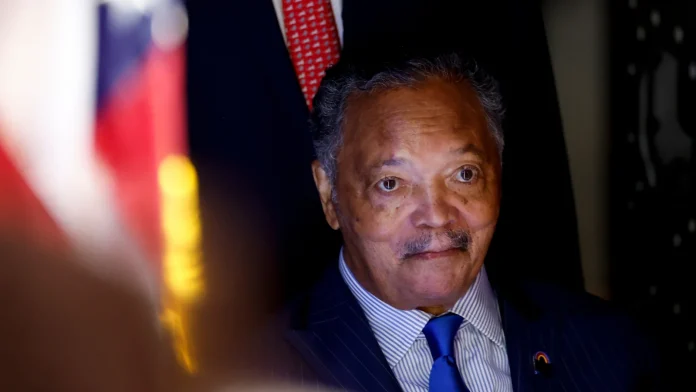
Jesse Jackson pictured in Chicago in 2024

A Giant Has Passed: Remembering Reverend Jesse Jackson

There are mornings when a city wakes to a familiar sound—the clatter of buses, the hum of a bakery, a radio voice that has become part of the domestic furniture. This morning Chicago woke differently. Word moved through neighborhoods like a ripple: Reverend Jesse Jackson had died, age 84, surrounded by his family. The short family statement—stark, tender—called him a “servant leader” who “elevated the voices of the voiceless.” For many, that was simply true; for others, the man was a complex, sometimes controversial fixture of American life. All of it mattered.

“He shared himself with the world and the world became our family,” his wife Jacqueline and their children wrote. “Honor his memory by continuing the fight for the values he lived by.” Those words hang over Jackson’s life like a banner—an invitation, a demand, a benediction.

From Jim Crow South to Chicago Pulpits

Jesse Louis Jackson was born on October 8, 1941, in Greenville, South Carolina, into a world that the Jim Crow laws had mapped in sharp, unforgiving lines. His mother was 16; his father, 33 and living next door. He was adopted by his mother’s later husband, and his early life was stitched with the small humiliations and big dangers of being Black in the segregated South.

There is a childhood picture that explains something of the man: a lanky teenager, a football scholarship that would open one door and close another, walking past a “Whites Only” sign toward activism. At North Carolina A&T, at the University of Illinois briefly, at Chicago Theological Seminary where he was ordained in 1968, Jackson learned to make moral conviction sing. He was arrested attempting to enter a whites-only public library in South Carolina and, in doing so, joined a long catalogue of personal risks civil rights leaders took to change a nation’s habits.

The Drummer in King’s Band

Jackson was more than a foot soldier; he became a lieutenant to Dr. Martin Luther King Jr., often traveling with him, learning the pulse of protest and the grammar of moral argument. He was on the floor below King at the Lorraine Motel on the day King was assassinated in 1968—an image that has haunted Jackson’s public life ever since. He later claimed to have cradled King and been the last to hear his words. Others disputed that account. The moment crystallizes the messy intimacy of movements: grief, myth, memory, tangle together.

Organizing, Oratory, and the Rise to National Prominence

Chicago became Jackson’s chosen ground. He turned a local pulpit into a national platform—founding Operation PUSH in the early 1970s, later the National Rainbow Coalition in 1984, and finally merging those efforts into the Rainbow/PUSH Coalition in 1996. Through those organizations he pushed corporations, politicians and the public to reckon with inequality—not just racial but economic and gendered, and later LGBTQ rights as well.

He had a voice that could both soothe and sting. In the 1980s his oratory drew crowds and headlines. His presidential campaigns—1984 and 1988—were more than vanity quests. In 1984 he won roughly 3.3 million votes in Democratic nominating contests (about 18% of those cast), a surprising figure that announced Black political power on a new scale. In 1988 he was more polished, more prepared: he won 11 primaries and caucuses and amassed nearly 6.8 million votes—about 29% in the nominating contests—pushing the Democratic Party to listen, to reconsider its base, its language, its future.

“America is not a blanket woven from one thread, one colour, one cloth,” he told delegates at the 1988 Democratic National Convention. “Hold your head high, stick your chest out… Don’t you surrender.” That kind of line—simple, biblical, electrifying—made him a bridge to the people who needed a bridge and a lightning rod for those who feared change.

Personal Diplomacy on the Global Stage

Jackson’s activism was not confined to speeches and ballot boxes. He became, remarkably, an unofficial diplomat. He negotiated the release of prisoners from Syria, Cuba, Serbia and Iraq. In 1984 he secured the freedom of U.S. naval aviator Robert Goodman Jr. from Syria; in the early 1990s he met Saddam Hussein to press for the release of hostages after Iraq’s invasion of Kuwait. These missions earned him invitations to the White House and a reputation as someone who could move across borders where governments could not—or would not—act.

“He did what governments sometimes could not do: he humanized bargaining,” said a longtime colleague. “He put a face to a negotiation.”

Triumphs, Controversies, and Human Frailty

To call Jackson’s life a straight narrative of triumph would be to flatten it. He weathered controversies: crude remarks that cost political momentum in 1984; personal scandals that troubled his movement; the ignominious fall of his son Jesse Jackson Jr., who resigned from Congress and later served time after a fraud conviction. Leaders, like humans, are not monoliths. They are public and private, heroic and flawed.

Still, awards arrived. President Bill Clinton gave him the Presidential Medal of Freedom in 2000. He hosted a weekly CNN show from 1992 to 2000. He continued to lean into public life well into old age—speaking out against police killings in 2020 and reminding the nation that a guilty verdict in the murder of George Floyd might be relief, “but not a time for celebration.”

Later Years: Parkinson’s and Passing the Torch

In 2017, at 76, Jackson announced a Parkinson’s disease diagnosis after years of symptoms. Globally, an estimated 10 million people live with Parkinson’s, according to WHO figures, and his disclosure humanized a common-but-misunderstood ailment. He stepped down as president of Rainbow/PUSH in 2023 after more than five decades in leadership, leaving a movement to a new generation.

“He asked us to keep going,” said a young organizer in South Side Chicago. “He told us to keep our feet on the ground and our eyes on the prize.”

What He Leaves Behind

When leaders die, we tend to tally achievements and transgressions like ledger entries. Jackson’s ledger is long: millions registered to vote, millions more inspired to run for office, civil rights organizations that persisted for decades, the kind of rhetorical fire that could raise a crowd and sometimes raise tempers. He never held elected office, yet he bent the arc of politics around him.

His life forces questions: How do movements sustain themselves when their charismatic architects age and fall ill? How do societies distinguish between the public utility of a life and the personal mistakes that accompany it? How do we honor the gains made while honestly appraising the harms?

If you have ever felt excluded by a system, Jackson’s voice—flinty and consoling—reminds you that exclusion is not inevitable. If you have ever wondered whether a single voice can alter a conversation, Jackson’s life argues yes. He made bridges where bridges were scarce; he made noise where silence prevailed.

Close the Loop: A Call

There will be memorials and eulogies and heated reassessments. There will also be the quieter things: community meetings, voter registration drives, a young organizer quoting “Don’t you surrender” into a cellphone camera. That, perhaps, would be the truest honor.

So what will you do with the inheritance of Jesse Jackson’s years? Will you register a neighbor to vote, speak up at a PTA, lobby that councilperson, mentor a teenager? He would ask you to act—not for the cameras, not for the plaques, but to narrow the gap between promise and practice.

“He gave us faith that faith will not disappoint,” a friend said. “Now, we have to finish the work.”

Madaxweynaha Turkiga Erdogan oo maanta ku wajahan dalka Itoobiya

Feb 17(Jowhar)-Madaxweynaha Turkiga Recep Tayyip Erdoğan ayaa maanta u safri doona caasimadda Itoobiya ee Addis Ababa, halkaas oo uu kula kulmi doono Ra’iisul Wasaaraha Itoobiya Abiy Ahmed si ay uga wada hadlaan xiriirka labada dal iyo horumarka ka jira Geeska Afrika.

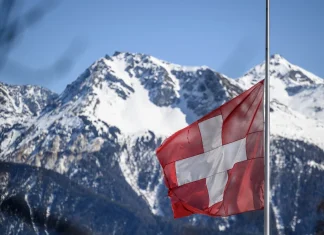
Four officials charged in Swiss ski resort fire probe

Four officials indicted in probe over Swiss ski resort blaze

0
Crans-Montana: The Quiet Resort That Wouldn't Be Quieted On a frosty January morning, the alpine silence around Crans-Montana was broken not by the crack of...

Division Emerges Within Somalia Human Rights Commission Over South West Election

0
Mogadishu – Somalia’s Independent Human Rights Commission (NIHRC) is facing internal divisions following a dispute linked to the 28 March 2026 election in the...
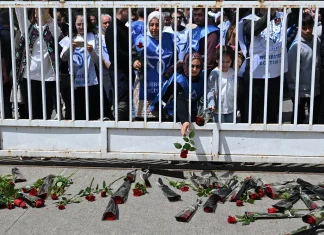
Turkey to hold funerals for school shooting victims

Turkey to Conduct Funeral Services for School Shooting Victims

0
Grief in Kahramanmaraş: A City That Won’t Forget On a cool morning in Kahramanmaraş, where vendors still fry the thick, stretchy Maraş ice cream that...
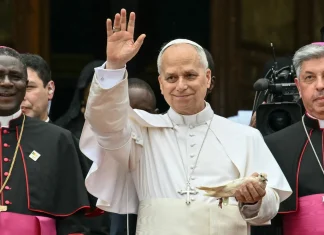
Pope Leo decries 'handful of tyrants' ravaging the world

Pope Leo condemns small group of tyrants wreaking havoc across the globe

0
Under Bamenda’s Sky: A Pope’s Rebuke That Echoed Beyond the Pulpit The airport runway in Bamenda today felt less like an arrival zone and more...
Trump says Israel and Lebanon agree 10-day ceasefire

Trump says Israel and Lebanon have agreed to a 10-day ceasefire

0
A Fragile Pause: Ten Days That Could Change a Border’s Rhythm There is an odd stillness at dusk in the towns that fringe the Israel-Lebanon...