

May 28(Jowhar)- Israel waxay sheegtay inay dishay taliyihii garabka hubaysan ee Xamaas ee dhawaan laga aasaasay Gaza, tallaabadaas oo timid maalmo uun ka dib markii ciidamada Israel ay sheegeen inay tirtireen taliyihii ka horreeyay, iyadoo cadaadiska dagaalku uu ka sii kordhayo Gaza ilaa Lubnaan iyo Daanta Galbeed.
Israel Designates Much of Southern Lebanon as New Combat Zones
Israel has sharply escalated warnings to Lebanon, declaring every area south of the Zahrani River — a waterway running roughly 40km from the border — a “combat zone” and urging residents to leave ahead of strikes targeting Hezbollah.
The sweeping alert, the first of its kind since an 17 April ceasefire, came as Israel’s military carried out broad raids in Lebanon’s south and east, and as Hezbollah said its fighters were battling Israeli forces beyond an Israeli-declared “yellow line” in the south.
The developments unfolded as many Lebanese attempted to mark the Muslim holiday of Eid al-Adha.
“We advise the residents of southern Lebanon to evacuate to the north of the Zahrani River, as all areas south of the river are considered combat zones,” the Israeli military said on social media, adding it would act “with great force” against Hezbollah.
Israel has said this week it will step up its campaign in Lebanon and that it is expanding its ground operations there.
Talks are expected on Friday between Lebanese and Israeli military delegations at the Pentagon, with another round of direct negotiations anticipated next week aimed at ending the hostilities.
Before the Zahrani warning, the Israeli military had also issued evacuation notices for the southern city of Nabatieh, along with large parts of the coastal city of Tyre and nearby districts.
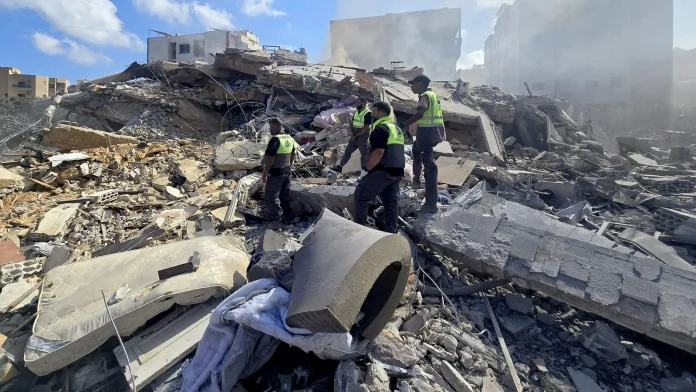
The aftermath of an Israeli attack on Tyre, Lebanon
An AFP correspondent said residents from the threatened areas of Tyre gathered in parts of the city not covered by the warning. Authorities, however, cautioned that shelters were full and urged people to travel to Beirut instead.
Lebanon’s state-run National News Agency (NNA) later reported strikes on Tyre and its surroundings, while Israel’s army said it was hitting “Hezbollah command centres”.
NNA also reported a wave of strikes on Nabatieh city that caused “huge destruction” in residential neighbourhoods.
Lebanon’s army said today that an Israeli strike in south Lebanon killed one of its soldiers.
Israel’s army chief Lieutenant Colonel Eyal Zamir said: “we are intensifying our operations in order to strike ever more severe blows to the Hezbollah organisation”.
‘Yellow line’
NNA reported additional Israeli strikes in other parts of the south and in the eastern Bekaa valley, as Israel’s military said it was targeting “Hezbollah infrastructure sites”.
Iran-backed Hezbollah said its fighters “clashed with the enemy forces at point-blank range” in the town of Zawtar al-Sharqiyah, just beyond the Israeli-declared “yellow line” in south Lebanon where Israeli troops have been operating.
An Israeli military official said yesterday that soldiers had begun operating outside the “yellow line”, which extends around 10km into Lebanese territory.
We need your consent to load this rte-player contentWe use rte-player to manage extra content that can set cookies on your device and collect data about your activity. Please review their details and accept them to load the content.Manage Preferences
Hezbollah also said it carried out three drone attacks on Israeli positions near the two countries’ shared border in northern Israel.
Israel’s military said several explosive drones fell inside its territory, and that no injuries were reported.
Lebanon’s health ministry said the overall death toll since the war began on 2 March has reached 3,269 — up by 56 from a day earlier after heavy Israeli strikes.
The NNA, citing the mayor, said 15 people were killed in yesterday’s strike.
West Bekaa
After Hezbollah drew Lebanon into the Middle East war by firing rockets at Israel in retaliation for US-Israeli strikes that killed Iran’s supreme leader, Israel has repeatedly hit Lebanon’s eastern Bekaa valley and issued evacuation warnings.
In recent days, strikes have intensified, concentrating on the West Bekaa town of Mashghara.
The area connects south Lebanon with Hezbollah strongholds in the northern Bekaa and serves as a key supply route for the group.
Lebanese military expert Hassan Jouni said the West Bekaa “is a necessary corridor for Hezbollah members if they want to move between the Bekaa and the south” and warned it could become a focal point for additional Israeli attacks.
He said Israel’s operations could soon widen to “target the north Bekaa intensively or even Beirut’s southern suburbs”, areas that have been relatively spared since the ceasefire.
A military delegation of six Lebanese officers, led by the army’s director of operations Georges Rizkallah, will take part in Friday’s Pentagon talks.
A military source told AFP the delegation will “emphasise the need for a ceasefire, and will present the army’s plan for a state weapons monopoly and the extension of state authority across the country”.
Latest Middle East stories
Taoiseach Says Adding Services to OTB Scheme Is “Not Feasible” to Implement
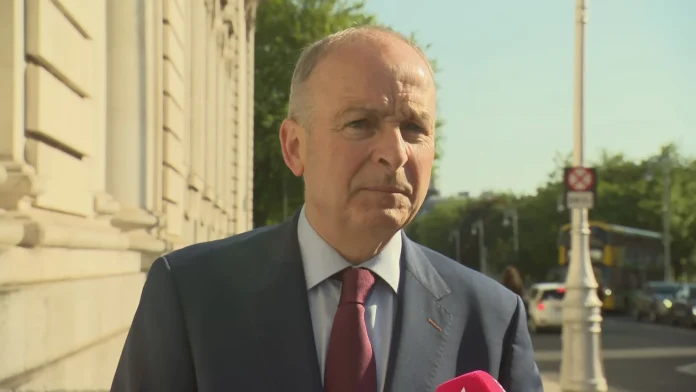
Taoiseach Micheál Martin has ruled out widening the Occupied Territories Bill to cover services, saying such a move is “not implementable” and could expose Ireland to significant economic fallout.
The Cabinet approved the text of the legislation this morning. The bill is designed to prohibit the import of goods from Israeli settlements in the occupied Palestinian territories, with the Government aiming for enactment within weeks.
Before the Cabinet meeting, Mr Martin warned that extending the measure beyond goods could rebound on Ireland.
He said it could do so “more than anybody else in terms of potential impacts on US multinationals based here back in America.
“We need to be realistic and need to be honest with people in respect of what we can achieve via this legislation,” he said.
The Taoiseach framed the bill as part of a broader sequence of actions taken by the Irish Government, calling it “further initiative in a long line of decisions the Irish Government has taken, from the recognition of a Palestinian state to intervention in the South African legal case on genocide to the ICJ, respect UN resolutions and so forth”.
After the Cabinet meeting, Minister for Foreign Affairs and Trade Helen McEntee said she welcomed Government approval of the text of the Israeli Settlements (Prohibition of Importation of Goods) Bill.
The coalition wants the legislation on the statute book before the summer recess in July.
Ms McEntee told ministerial colleagues that Ireland has long argued for a peaceful resolution to the conflict between Israelis and Palestinians.
In an interview on RTÉ’s News at One, she said the legislation “won’t change the decisions or the actions by the Israeli government”, but argued that every effort should be made to pursue the wider aim of “a peaceful solution, a two-state solution”.
She also pressed for stronger EU-wide measures: “… In tandem to this legislation I will continue to advocate for Europe to act collectively to respond to not just the increase in settler violence and expansion but the other actions that are taken in Lebanon, be it in Gaza or indeed the reintroduction of the death penalty.”
“If you look at goods or trade more generally in the occupied territories, if you were to ban that across the EU you’re obviously talking about a much bigger percentage, so we are very clear the actions that we are taking here it is in solidarity with the Palestinian people.”
Watch: Helen McEntee says she hopes the OTB legislation will be enacted by summer recess
As drafted for Cabinet, the bill would make the importation of goods originating in the settlements an offence under section 14 of the Customs Act 2015.
The Government says the approach aligns with an International Court of Justice opinion issued in 2024.
That opinion urged states to take steps to prevent trade that assists in maintaining the illegal situation created by Israel in the occupied Palestinian territories.
Read more:
Ireland calls for EU ban on trade with occupied territories
Latest Middle East stories
However, coalition members on the Oireachtas Foreign Affairs Committee are seeking an explanation for why the Occupied Territories Bill stops short of banning trade in services.
Last year, the committee recommended prohibiting both goods and services.
Fianna Fáil TD and former ceann comhairle Seán Ó Fearghaíl said he has asked Ms McEntee to appear before the committee to set out why the Government is not following what was recommended.
“If we marched up the hill on this, we need to see compelling evidence to now beat a retreat”, said he said.
Mr Ó Fearghaíl said he and other TDs understood that proceeding with a goods-only ban did not reflect public opinion on the issue.
Fine Gael TD Brian Brennan said he was disappointed the legislation did not include a ban on trade in services, saying a personal visit to the frontline in the Middle East — and the devastation he witnessed — had shaped his view.
Mr Brennan said he could accept it if the Government had received legal advice limiting what could be done, but added that committee members should also have access to that guidance.
“We need to see the devil in the detail,” he said.
We need your consent to load this rte-player contentWe use rte-player to manage extra content that can set cookies on your device and collect data about your activity. Please review their details and accept them to load the content.Manage Preferences
‘Moment for courage and principled leadership’
The Irish Human Rights and Equality Commission (IHREC) called on the Government to ensure the bill applies to both goods and services.
Chief Commissioner Liam Herrick said the International Court of Justice had “made clear that states must avoid economic or trade dealings that support or entrench Israel’s unlawful presence in the Occupied Palestinian Territory”.
“That obligation does not distinguish between goods and services, and neither should this legislation.
“If Ireland is to give real meaning to its commitment to international law and human rights, the bill must include services as well as goods. This is a moment for courage and principled leadership.
Senator Frances Black, who first introduced the legislation, said the Government had announced “a partial ban” on trade with illegal Israeli settlements.
Senator Black said the Government’s version “omits the majority of Irish trade” in services such as tech, and “undermines the scope of the legislation”.
She said she will work with opposition parties to table amendments to include services when the bill comes before the Dáil in the coming weeks.
Labour leader Ivana Bacik welcomed the decision to proceed with the Occupied Territories Bill, but said she was disappointed that trade in services was excluded.
The Dublin Bay South TD warned that, without services, the plan risked being more symbolic than meaningful or impactful.
Speaking to reporters, Ms Bacik said she plans to raise the issue in the Dáil.
Government ‘speaking out of both sides of its mouth’ on Israel sanctions – Boyd Barrett
Green Party leader Roderic O’Gorman also argued that services must be covered.
He told reporters the Government was making “a political call” to weaken the bill by leaving services out.
“Maybe we’re kind of coming to the actual nub of the issue now, that it is not a legal issue,” he said.
“This is a political call, and the political call is we can annoy the Trump administration a little bit by including goods, but not that next little bit by including services.
“I don’t accept that argument.”
Mr O’Gorman said the bill “must be passed, including services as well”, and argued there was no legal barrier to doing so.
People Before Profit TD Richard Boyd Barrett said the Government’s approach would gut the original bill by excluding services, adding that services accounted for 70% of trade with Israel.
He also said the proposed ban on goods might not cover all goods.
Mr Martin said Deputy Boyd Barrett was seeking an Israeli boycott. He said the Deputy was campaigning and attacking the Government rather than explaining what was being proposed.
The Taoiseach also said a full Israeli boycott would affect thousands of workers in Ireland. Mr Martin defended the Government’s stance, saying Ireland was one of the few EU states that had stood up on the issue.
Israel claims it killed Hamas’ newly appointed armed wing commander in Gaza
Israel says it has killed Hamas’s newly installed armed wing chief in Gaza, a move that comes just days after Israeli forces said they eliminated his predecessor, as the war’s pressure points widen from Gaza to Lebanon and the West Bank.
The Israeli military said Mohammad Odeh was killed in an operation in Gaza tomorrow.
Hamas has yet to issue an official statement, but a statement from his family said he was killed along with his wife and son.
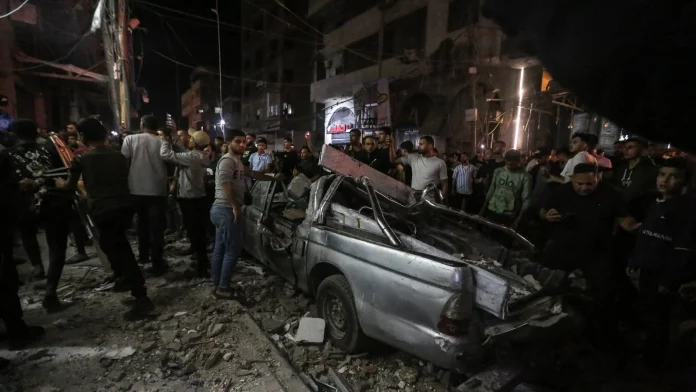
Gaza health officials said six people, including at least one woman, were killed and more than 20 others were wounded in the same Israeli strike that destroyed an upper floor of an apartment building in the Rimal neighbourhood in Gaza City.
Israeli Prime Minister Benjamin Netanyahu said that Odeh had headed Hamas’ intelligence division at the time of the 7 October 2023 cross-border attack into Israel that triggered the Gaza war and was appointed about a week ago to replace Izz al-Din al-Haddad, the group’s chief armed commander, who was killed by Israel on 15 May.
Sources close to Hamas did not confirm Odeh’s appointment as the new military chief but agreed he was seen as Haddad’s possible successor, as the group’s chief of military intelligence and possibly the last remaining living member of the armed wing’s higher leadership council.
Hours before the attack, Israel announced it had expanded ground operations in Lebanon, where it has been fighting Iran-allied Hezbollah militants since it launched attacks on Iran with the United States at the end of February. Israel is also intensifying its military activities in the West Bank.
People gather around the site of the Israeli strike, in which Mohammed Odeh was believed killed
Israel and Hamas are deadlocked in indirect talks over implementing the second phase of a ceasefire deal, which includes the group’s disarmament and Israeli army withdrawals.
The ceasefire agreed in October left Israel in control of more than half of Gaza, with Hamas controlling a sliver of coastal territory.
In a statement, Israeli Defence Minister Israel Katz said Hamas would no longer exercise civilian or military control over Gaza and that a plan for what he described as “voluntary migration” from the enclave would also be implemented “at the right time and in the right way”.
Some 900 people have been killed in Israeli strikes since the truce came into effect, according to figures from Gaza health officials that do not distinguish between combatants and civilians.
Four Israeli soldiers have been killed during the same period, Israel’s military has said.
Israel has killed dozens of Hamas leaders and military officials since the start of the Gaza war, and has vowed to kill or capture anyone who it says was involved in the 2023 attacks.
Hamas does not disclose figures for casualties among its fighters. Israel says its post-ceasefire strikes are aimed at preventing attacks or stopping people from approaching its armistice line with Hamas.
More than 72,000 people in Gaza have been killed since the war started in October 2023, most of them civilians, according to Gaza health authorities. Israel says it takes extraordinary measures to avoid civilian casualties.
Hamas’ 7 October 2023 attacks on Israel killed 1,200 people, according to Israeli tallies.
Latest Middle East stories
What’s behind Europe becoming the planet’s fastest-warming continent?
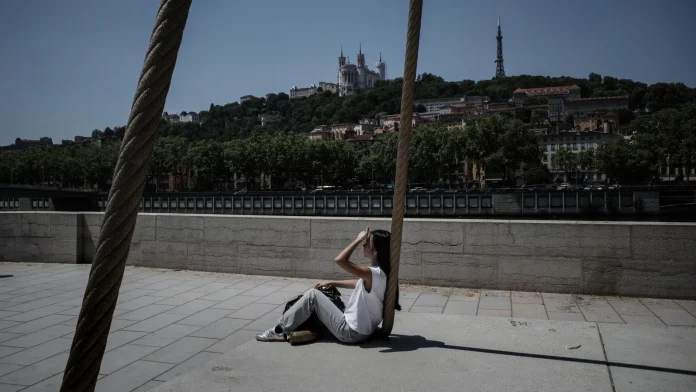
Europe is sweltering under a record-smashing heatwave this week — a stark reminder that the continent is heating up faster than anywhere else on Earth, with its northern reaches extending into an Arctic that is warming even more rapidly.
After record high temperatures for May were broken in Ireland, France and the UK yesterday and on Monday, the continent still faces more brutal heat in the coming days.
A so-called “heat dome” of warm air from northern Africa trapped under a high-pressure system over western Europe is behind the sort of heat not usually seen until high summer.
Here is a look at why Europe is warming faster than elsewhere:
A higher degree
The planet is around 1.4C warmer than in preindustrial times, defined as 1850-1900.
Europe, however, has warmed far more: it is around 2.4C hotter than the preindustrial era, according to the EU’s Copernicus Climate Change Service.
“Almost all of this heat is driven by the human-induced greenhouse effect from fossil fuel emissions, with the actual distribution of this excess heat determined by (several) factors,” researcher in extreme weather and climate change at Imperial College London Ben Clarke said.
Changing weather patterns
Beyond the overall temperature rise, the way the atmosphere behaves over Europe is also shifting — and that matters for day-to-day extremes.
Shifts in atmospheric circulation have driven more frequent and more intense heatwaves in the European summer, according to Copernicus.
High-pressure systems, which bring settled weather and higher temperatures, have become more common in Europe, Copernicus Director Carlo Buontempo said.
“If you look over the last 20, 30 years, there has been a prevalence, especially in summer, of those sort of anticyclonic conditions that are making heatwaves more likely,” Copernicus director Carlo Buontempo said.
Tourists shield themselves from the sun with hats and umbrellas at the Spanish Steps in Rome
Mr Buontempo said scientists are still debating whether the greater recurrence of that specific kind of high-pressure system is being propelled by climate change or amounts to a “statistical fluctuation”.
Such systems are often referred to as “blocking highs” because they can park over an area, holding their position and preventing other weather patterns from breaking through.
Geography professor at Trinity College Dublin Mary Bourke explained the mechanics in simple terms.
“The sky is exposed to us, there are no clouds. It’s a stable mass of air that is bringing warm air down to the surface and taking away moist air, so the air is not only warm, but it’s also dry.”
Rapidly warming Arctic
Europe’s location also amplifies the pace of change.
“Europe is connected to the Arctic, which is warming much faster than the rest of the planet,” Mr Clarke said.
The Arctic is 3.2C warmer than in preindustrial times, according to Copernicus.
Part of that acceleration comes from what scientists call the albedo feedback.
Shifts in atmospheric circulation have driven more frequent and more intense heatwaves
Snow and sea ice, which are bright, typically bounce a large share of the sun’s energy back into space. As they shrink, darker ocean and land surfaces are exposed — and those surfaces soak up more heat.
“So as sea ice melts it leads to greater absorption of heat, which in turn further warms waters and melts more ice,” Mr Clarke said.
Melting snow
The same basic principle applies further south, where winter landscapes are changing.
In other parts of Europe, the area where snow was very frequent in winter has shrunk, Mr Buontempo said.
“We have many of the historical regions that had a week or more of freezing condition now, not having that. And this means exposing dark land rather than white snow,” he said.
Falling air pollution
Cleaner air has brought major public-health benefits — but it has also altered the balance of warming and cooling in the atmosphere.
Stricter air quality regulations have reduced aerosol emissions since the 1980s.
However, tackling the pollutant had the side effect of contributing to global warming, as these tiny airborne particles have a cooling effect by reflecting sunlight and making clouds more reflective.
“While a reduction in air pollution is hugely important for respiratory health, it also increases the solar radiation at the surface, as many types of particulate matter deflect sunlight,” Mr Clarke said.
Varying degrees
Europe is not warming uniformly, with the fastest increases concentrated in particular regions.
Eastern and southeastern Europe, and parts of central Europe including the Alps, have warmed by 0.5C-1C per decade over the last 30 years, according to Copernicus.
Western and southwestern Europe, and sub-Arctic Finland, Norway and Sweden, warmed by 0.2C-0.5C per decade.
Last summer was the fourth warmest on record for Svalbard
In the far north, Svalbard — a Norwegian Arctic archipelago that is home to polar bears — has seen warming of 1.5C-2C per decade.
Among the fastest-warming places on the planet, Svalbard recorded record high summer temperatures from 2022 to 2024. Last year it experienced its fourth warmest summer on record.
Israeli Strikes in Lebanon Leave at Least 31 Dead, Officials Say
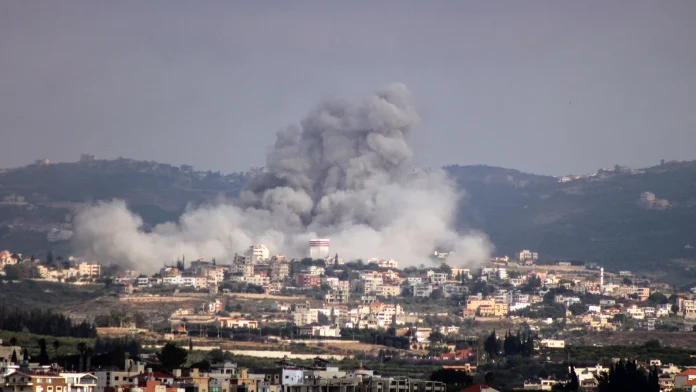
Israeli strikes across southern Lebanon left at least 31 people dead yesterday, Lebanon’s health ministry said, as Israel announced it was stepping up its campaign despite a truce in its war with Hezbollah.
Hezbollah, for its part, reported clashes with Israeli troops it said were pushing into the southern town of Zawtar al-Sharqiyah, while the Israeli military said it was widening its ground operations.
In a statement, the health ministry said the attacks killed 31 people — including at least four children and three women — and wounded 40 others.
Fourteen people were killed in Burj al-Shamali near Tyre, five in Kawthariyat al-Riz, four in Habbush, six in Maarakeh and two in Salaa, the ministry said.
Airstrikes were also reported in the southern city of Nabatieh after what was described as an unprecedented warning to the city, with plumes of smoke seen rising from multiple locations.
Lebanon’s state-run National News Agency said one strike hit near a public hospital, inflicting “significant damage to the hospital’s departments”.
The Israeli military issued evacuation warnings yesterday for at least 50 towns and villages in the south and east, including Nabatieh city.
Rubble and destruction in the aftermath of an Israeli attack on Tyre, Lebanon
An Israeli military official said troops had started operating beyond the Israel-announced “Yellow Line” in southern Lebanon, which runs about 10km inside Lebanese territory.
With Israeli operations pushing deeper into the south, Hezbollah said its fighters confronted soldiers attempting to advance into a town that overlooks Nabatieh city yesterday.
In a statement, Hezbollah said it repelled an Israeli force early yesterday as it moved toward Zawtar al-Sharqiyah following airstrikes and heavy artillery fire.
The group said it launched a series of drone and rocket attacks on Israeli forces in the town and claimed it engaged them directly.
In eastern Lebanon, the health ministry said “yesterday’s Israeli enemy airstrike on the town of Mashghara in West Bekaa resulted in a preliminary toll of 11 martyrs, including two girls and a woman, and 15 wounded, including a child”.
The ministry added that rescuers were still working to clear rubble in the eastern town.
Lebanon’s state-run National News Agency (NNA) also reported multiple Israeli strikes across the south and east.
According to the health ministry, a strike on Srifa in the south killed a rescuer and wounded two others from the Risala Scouts association, which is linked to the Hezbollah-allied Amal movement, bringing the number of rescuers killed in the war to 121.
The health ministry said the cumulative toll from Israeli attacks since 2 March — when Hezbollah fired projectiles into Israel in response to the start of the Iran war — has climbed to 3,213 dead and 9,737 wounded.
The Israeli military said 10 of its soldiers have been killed since the 16 April ceasefire, six of them by Hezbollah’s explosive drones.
The World Health Organization has said at least 608 people in Lebanon have been killed in Israeli attacks since the truce.
We need your consent to load this rte-player contentWe use rte-player to manage extra content that can set cookies on your device and collect data about your activity. Please review their details and accept them to load the content.Manage Preferences
Europe’s “heat dome” intensifies, scorching the UK, France, and Spain
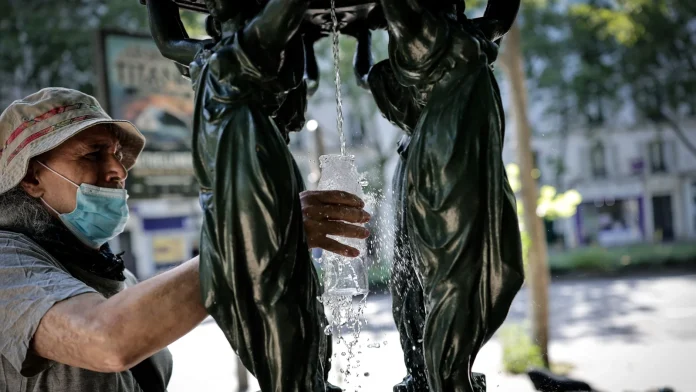
Europe is baking under an unusual early-season blast of heat, with forecasters warning of exceptional temperatures as a “heat dome” sends readings soaring far beyond what’s typical for late May.
The spike comes after a record-setting Monday: France registered its hottest day in May since records began, according to its national weather agency, while the UK also reported unprecedented highs.
Meteorologists say the culprit is a “heat dome” — hot air streaming north from Africa and held in place by a stubborn high-pressure system over western Europe — creating conditions more common in mid-summer than spring.
The impacts are already visible across the region. Parts of Italy introduced limits on outdoor work, beaches in southwest France filled earlier than usual, and farmers reported harvests speeding up as temperatures climbed past 30C.
Scientists have repeatedly linked the rising frequency and intensity of heatwaves to human-driven climate change, noting that Europe is warming faster than the global average.
The French prime minister is to hold a meeting over government preparations for the heatwave
In Spain, temperatures were forecast to crest later this week at 38C, while Italian authorities moved to curb outdoor labour during the hottest hours.
Hottest May day on record in UK
The UK has broken its record for the hottest May day again, with provisional figures reaching 35C in London, the Met Office said.
That reading overtook Monday’s provisional record for the warmest meteorological spring temperature of 34.8C, recorded at Kew Gardens in southwest London.
Lindy Brand-Daloze, a 66-year-old Australian who has lived in London for 12 years, said the heat felt like part of a bigger pattern. “It’s warm, but it’s climate change, isn’t it? So, you know, (we have) probably got to get used to this,” she said.
Researchers say climate change caused by human activity is intensifying extremes such as heatwaves, droughts and floods, making new records more likely to fall.
Posting on X, the Met Office said yesterday: “Today is now the hottest day in May on record with Heathrow and Kew Gardens provisionally reaching 35.0C.
“Until yesterday the highest temperature in May was 32.8C, but we’ve now exceeded that record on consecutive days by a full two degrees Celsius.”
The new highs arrived alongside health alerts and thunderstorm warnings across the country, and followed a series of open-water fatalities over recent days.
Police in South Yorkshire, West Yorkshire, Warwickshire, Lincolnshire and Devon and Cornwall attended separate fatal incidents involving four teenagers and a man in his 60s.
Britain’s rail network has also been affected. As temperatures climbed, Network Rail introduced speed restrictions on some tracks to reduce the risk of heat-related disruption and keep services safe.
Paris had its first day above 30C this year on Saturday as temperatures hit 31.9C
Police said four teenagers have drowned in lakes in England since Sunday during the heatwave.
The deaths occurred over a long weekend that included a public holiday, as many sought relief in open water during the hottest days.
In Lincolnshire in northeast England, officers said a 15-year-old boy drowned on Sunday.
The boy’s father, named as Declan Sawyer, urged other families to recognise the risks of children “playing near any rivers and lakes in the hot weather”.
A teenage girl was pronounced dead after being pulled from the water on Monday evening at a water park in Warwickshire in central England, police said.
In Yorkshire in the northeast, police said one boy drowned in a reservoir, and the body of a 13-year-old boy was recovered early today at a country park.
Met Office meteorologist Greg Dewhurst told AFP that the rise in extreme temperatures was “a good indication of climate change in action” and increasingly likely to become “the new norm”.
Climate advisers last week warned the UK government that the country was “built for a climate that no longer exists”, calling for adaptation measures for infrastructure such as schools and hospitals as the planet warms.
In 2022, the UK exceeded 40C for the first time since records began.
Record May temperature at Shannon Airport, Co Clare
In Ireland, Met Éireann data showed a record May temperature of 28.6C at Shannon Airport in Co Clare.
In Scotland, a grass fire broke out near Arthur’s Seat hill close to Edinburgh, with smoke drifting over the city as temperatures rose to 25C, according to firefighters and the BBC.
We need your consent to load this rte-player contentWe use rte-player to manage extra content that can set cookies on your device and collect data about your activity. Please review their details and accept them to load the content.Manage Preferences
Heatwave alert
France posted a new national record high for May yesterday, Meteo France said — just one day after the country had already set a fresh benchmark for the month.
Provisional readings showed the national heat index — the countrywide average temperature — reached 24.8C at 4pm Irish time, beating Monday’s 24.6C record.
Meteo-France said parts of the country could see highs of 33C to 36C, and warned the hot spell was expected to persist at least through the end of the week.
French Prime Minister Sebastien Lecornu is to convene a meeting with key ministers to review government readiness for the heatwave.
Paris recorded its first 30C-plus day of the year on Saturday, when temperatures reached 31.9C.
Civil defence services said a man died on Sunday during a 10km running race in Paris. Authorities also said 10 others were taken to hospital in critical condition after a race in the Paris suburb of Maisons-Alfort.
The heat also made conditions tougher for spectators at Roland-Garros in Paris.
Outdoor work restricted
Spain’s State Meteorological Agency (Aemet) warned that “extraordinarily high temperatures for this time of year” will hold across the country all week, with the exception of the Canary Islands in the Atlantic Ocean off the northwest coast of Africa.
From today, Aemet also forecast “widespread tropical nights” in southwestern Spain, with daytime temperatures expected to peak through Friday at 36C to 38C, it said on X.
In Italy, the Lazio region — home to Rome — approved restrictions on work involving “prolonged exposure in the sun” from 12.30pm to 4pm.
The rules cover sectors including agriculture, construction and logistics, and remain in force until 15 September.
Similar restrictions were introduced last year, though they only began on 30 May.
Read more: Temperatures forecast to hit 30C in some parts, says Met Éireann
Madaxweyne Xasan oo weerar culus ku qaaday siyaasiyiinta mucaaradka ah
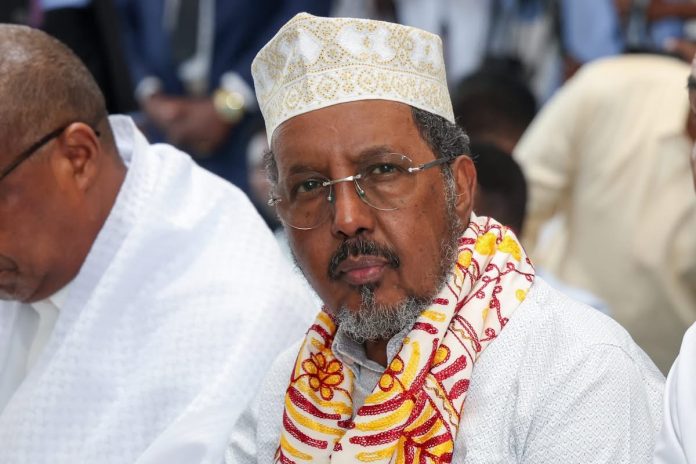
May 27(Jowhar) Madaxweyne Xasan Sheikh oo ka hadlayay Masjidka Isbaheysiga Islaamka ee Muqdisho ayaa si ba’an u weeraray mucaaradka kuhaysta talada dalka, sheegayana in waqtigiisii dhamaaday ee ay tahay in Doorasho laga heshiiyo.
Four killed after train collides with school bus in Belgium

A routine school run in northern Belgium ended in catastrophe on Tuesday morning when a train slammed into a minibus carrying children with additional needs, killing four people including two pupils aged 12 and 15.
The crash happened at a level crossing in Buggenhout, in the Flanders region.
The minibus was transporting seven pupils and a chaperone to their school, a Belgian federal police spokesperson said.
Belgian media broadcast images from the scene showing the minibus badly wrecked and lying on its side beside the railway line, as emergency crews erected tents around the vehicle.
Transport Minister Jean-Luc Crucke told RTL TV that those who died included the 49-year-old driver and the 27-year-old adult who was accompanying the children.
Two other children suffered severe injuries, he added.
Police spokesperson An Berger said the crossing’s safety barriers were down at the time of the collision. Investigators have not yet determined how the van passed the barriers and ended up in the train’s path. About 100 passengers were on board the train, and none suffered major injuries.
“The van came from Kerkhofstraat, a road running parallel to the railway line, and turned left toward Vierhuizen, crossing the railway at a point that was closed at the time. The van was hit by an oncoming train,” Ms Berger said.
A spokesman for rail infrastructure operator Infrabel confirmed the crash occurred at a level crossing and is understood to have taken place about 1km from Buggenhout station.
“The impact was extremely violent,” the spokesman said, calling the toll “dramatic”.
“It happened at around 8.08am when a minibus was struck by a train that was due to stop at the next station, which was about a kilometre away,” he said.
Local transport operator De Lijn said the vehicle was run via a sub-contractor and had no mechanical problems. The driver was medically fit, fully trained and had a clean record, the company said.
I was heartbroken to learn of the tragic accident between a train and a school bus in Buggenhout today.
My deepest condolences go out to the victims’ families and their loved ones.
Today, Europe grieves with Belgium.
— Ursula von der Leyen (@vonderleyen) May 26, 2026
‘Europe grieves with Belgium’ – von der Leyen
European Commission President Ursula von der Leyen paid tribute to the victims in a post on X, writing: “Today, Europe grieves with Belgium.”
Belgian interior minister Bernard Quintin also wrote on X: “With great dismay, I learnt of the tragic accident in Buggenhout, where a school bus was struck by a train.
“My thoughts go out to the victims and their loved ones. I wish the injured much strength.”
“What could have been a beautiful spring morning suddenly turned into a pitch-black day,” East Flanders Provincial Deputy Kurt Moens told VRT NWS.
Belgium’s dense rail network, which threads through towns and villages, has long faced safety challenges at level crossings.
Infrabel data shows that since 2021, 36 people have died in 168 accidents at such crossings.
We need your consent to load this rte-player contentWe use rte-player to manage extra content that can set cookies on your device and collect data about your activity. Please review their details and accept them to load the content.Manage Preferences
Trump Undergoes Annual Medical Exam Just Days Ahead of 80th Birthday

With his 80th birthday just days away and fresh questions swirling about his fitness, US President Donald Trump has undergone his annual medical examination at Walter Reed Military Hospital near Washington.
Mr Trump, the oldest president ever inaugurated, has frequently contrasted his mental and physical energy with that of his Democratic predecessor, Joe Biden, often touting his own vigour in public remarks.
The latest medical and dental check-up comes against a backdrop of scrutiny over moments in which he has appeared drowsy during meetings, as well as recurring bruising on his hand. The White House typically issues a summary of a president’s physical within hours or days, though how much information it releases is entirely at its own discretion.
Mr Trump will turn 80 on 14 June 14, a milestone that is set to coincide with a UFC cage fight on the White House lawn expected to draw thousands of spectators.
For years, Mr Trump has been criticised over what opponents describe as limited transparency regarding his health.
He had two medical check-ups last year: a scheduled examination in April and an unannounced hospital visit in October that reignited speculation.
Make-up is seen on the back of one of the president’s hands
Last summer, the White House said Mr Trump was evaluated for swelling in his legs and diagnosed with chronic venous insufficiency, a common condition in which weakened vein valves allow blood to pool, leading to swelling, cramping and skin changes.
The disclosure followed repeated instances in which Mr Trump was seen with swollen ankles.
Since returning to office in 2025, Mr Trump has also often been seen with bruising on his right hand, typically concealed with make-up.
The White House has said the marks stem from the aspirin he takes as part of what it calls a “standard” cardiovascular health regimen.
Donald Trump raises his fist as he stands beside Vice President JD Vance at a recent event
After the October check-up, Mr Trump said an MRI conducted during that visit showed his cardiovascular health was “excellent”.
In a letter released by the White House at the time, his doctor, US Navy Captain Sean Barbabella, wrote that Mr Trump’s cardiac age “was found to be approximately 14 years younger than his chronological age”.
Even so, Mr Trump has faced continued questions after appearing to nod off during several meetings, including a Cabinet session.
“Some people said, he closed his eyes. Look, it got pretty boring,” Mr Trump told laughing officials in February.
“I didn’t sleep. I just closed them because I wanted to get the hell outta here.”
460 European leaders urge EU to take a tougher stance on Israel
With war raging in Gaza and tensions rising across the West Bank, a large coalition of veteran European political leaders is urging the European...
Russian strikes hit Kharkiv, killing four and injuring 20 people
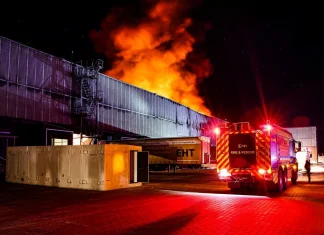
A fresh wave of missiles and drones slammed into Ukraine overnight, killing four people in the Kharkiv region and injuring more than 20 others,...

Bill Gates grilled by Congress over alleged ties to Jeffrey Epstein
Bill Gates is heading to Capitol Hill for scrutiny that has shadowed some of the world’s most prominent figures: his past ties to Jeffrey...
Kallas urges clear, accurate facts about the Aughinish situation
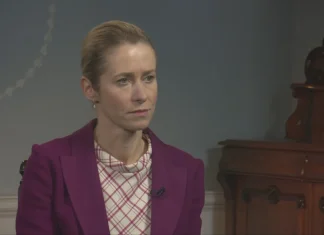
As scrutiny intensifies over claims involving a major Irish refinery and Russia’s war effort, EU foreign policy chief Kaja Kallas says the priority is...

U.S. World Cup official backs visa ban blocking Somali referee
A visa denial that stopped a decorated Somali referee at a US airport has drawn fresh attention to how the White House says it...