Home Blog Page 20

Estonia Says NATO Downed Suspected Ukrainian Drone, Officials Report

Estonia says NATO shoots down suspected Ukrainian drone

Midday alarms over Võrtsjärv: how a stray drone jolted Estonia’s calm

It was the sort of quiet afternoon that feels stitched into the Estonian countryside — birch shadows sliding across fields, the surface of Lake Võrtsjärv catching light like a sheet of pewter, and small towns humming gently with their weekday routines. Then, just after noon, the sky spoke.

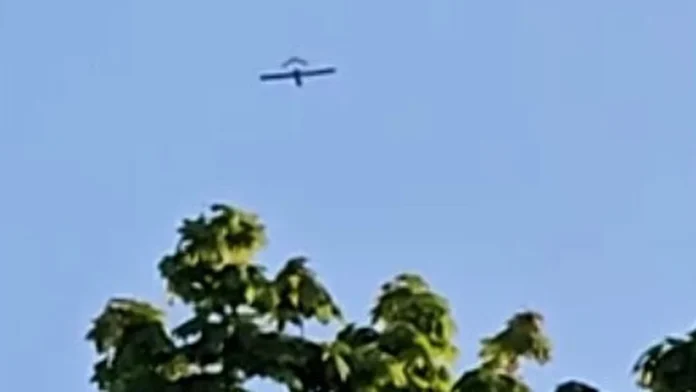
Residents of southern Estonia heard the whine of jets and the low, insistent tone of a military alert. Within hours, tiny shards of wreckage lay scattered near Poltsamaa, cordoned off by police and examined by investigators. Officials announced that a NATO fighter — an F‑16 flown from Romania — had shot down a suspected Ukrainian drone after Estonian and Latvian radars tracked it entering Estonian airspace.

“Our radars picked up a potential threat before it crossed the border,” Estonia’s defence minister later told reporters in Tallinn, his voice calibrated between caution and concern. “When the object entered Estonian territory, we activated the agreed procedures immediately.”

A brief chronology

The timeline reported by Estonian authorities was crisp and unsettling in its simplicity: radar detection, alert across six southern and eastern counties, interception by allied fighters, and fragments falling into a rural municipality. The air threat alert closed after roughly an hour, but the reverberations were only beginning.

Police have blocked access to the site where debris landed, and forensic teams are combing for serial numbers, charred components and anything that might reveal where the drone came from, how it navigated and why it crossed into NATO space.

Voices from the shore: locals respond

People who live near Lake Võrtsjärv — Estonia’s second-largest lake, a broad inland sea of some 270 square kilometres — are still replaying the midday drama as if it were a film. “I was pulling up my nets when I heard the jet,” said Aino Jõgi, a 62‑year‑old fisherwoman from a village on the lake’s western edge. “You don’t expect the sky to be dangerous here. You expect the geese.”

At a nearby bakery, customers exchanged worried looks. “We saw a flash over the trees and figured something had fallen,” said Markus, a cashier who gave only his first name. “For the past years we’ve been used to distant news — now it knocks on our door.”

Not every voice was alarmed. “We are on NATO territory,” shrugged a local farmer. “If something flies over, better they handle it fast. But still — it’s unnerving. My granddaughter asked if war had come to our village.”

Diplomacy on the phone and claims of interference

Within hours, Tallinn and Kyiv exchanged words. Estonia’s defence minister said he received a phone call from Ukraine’s defence minister offering apologies for the incident. Kyiv, embroiled in a brutal conflict with Russia, has repeatedly warned that its weapons and drones can be disrupted by electronic warfare that forces them off course.

Marko Mihkelson, chair of the Estonian parliament’s foreign affairs committee, wrote that the most likely explanation was Russian electronic interference — a familiar tactic that juggles civilian danger with strategic deniability. “When communications and GPS go awry, a fighter‑launched drone becomes little more than a piece of metal falling from the sky,” Mihkelson warned.

Expert perspective: how drones slip the leash

To understand how a drone intended for one target ends up over a friendly country, listen to the engineers and analysts. “Modern conflict zones are now saturated with jamming devices and spoofing signals,” said Dr. Elena Petrov, a European analyst in electronic warfare. “A drone relying on GPS or radio guidance can drift miles if adversarial forces manipulate those inputs. It’s less a deliberate incursion than a side effect of a high‑intensity electronic battlefield.”

Experts also note that the proliferation of inexpensive drones, and their use by both state and non‑state actors, has turned the sky into a crowded, contested commons. “Drones are cheap enough to be disposable, but when they cross borders the stakes are anything but cheap,” another security analyst remarked.

Regional ripple effects: Finland, Latvia and a NATO puzzle

Estonia’s incident is not an isolated ripple. Just days earlier, Finnish authorities issued an alert about suspected drone activity around Helsinki — suspending airport traffic and telling residents to stay indoors, though no drone was ultimately found. Latvia, Estonia’s southern neighbor, has also seen its own airspace concerns increase.

The broader pattern is unmistakable: conflict in Ukraine is leaking into the Baltic airspace, turning national borders into risk zones for unintended encounters. NATO has maintained an air policing presence in the Baltics for years; the alliance rotates fighter jets among member states, and Romania’s F‑16s are part of that collective shield.

  • Estonia and the other Baltic states joined NATO in 2004; the alliance’s collective defense clause means that airspace violations are not just local issues.
  • Estonia, with a population of roughly 1.3 million, has invested heavily in defense and digital resilience — a strategy born of history and geography.
  • Electronic warfare and drone proliferation are reshaping how small states experience security in real time.

So what now? risk, rules and the everyday

For small towns whose lives are threaded through centuries of quiet routines, the question is intimate: how do you wake up to international conflict? For policymakers, the challenge is procedural and political: how to keep airspace secure without escalating confrontations, and how to manage incidents that begin as technical failures but quickly acquire geopolitical meaning.

“We have to be ready for accidents,” said an Estonian border official who asked not to be named. “But we also need clarity — who takes responsibility when a device crosses a border because it was jammed? How do we prevent a mistake from spiraling?”

Beyond the immediate technical fixes — better identification systems, more resilient navigation for drones, clearer communication channels between Kyiv and NATO capitals — there is a cultural conversation taking shape. Can technology be kept humane? Can states find ways to mitigate harm to civilians and preserve the everyday rhythms of life under a cloud of drones?

Questions to carry with you

As you read this, consider: how close do we want warfare technologies to come to our families and streets? How should democracies safeguard public space without militarizing it? And finally, what responsibility do actors in conflict zones have for spillovers that affect nations far from frontline battles?

There are no easy answers. But in a world where a piece of metal can cross a border and change the tenor of a noon at the lake, the small questions — about safety, responsibility and neighborliness — have become urgent. For the fishermen of Võrtsjärv and the parents pacing at their kitchen tables, the phenomenon is no longer an abstraction. It is a reminder that geopolitics, like weather, moves through the places we call home.

European Commission unveils plan to curb soaring fertiliser costs for farmers

EU Commission launches plan to address fertiliser costs
Some 20% of global supplies of the two ingredients normally pass through the Strait of Hormuz

When Fertiliser Becomes Geopolitics: A Crisis Unfolding on the Farm

On a rain-slick morning in County Clare, a tractor idles outside a small farmhouse while inside, a farmer stares at a spreadsheet that used to make sense.

“Last year we budgeted for seed, diesel and a bag or two of fertiliser,” he says, tapping the laptop like it might cough up a miracle. “Now those bags cost more than my mortgage in some months. It’s surreal.”

Across Europe, that same surreal arithmetic is playing out in barns, kitchen tables and co-op offices. This week in Strasbourg, the European Commission unveiled a Fertiliser Action Plan aimed at calming a market roiled by geopolitical shocks and policy shifts: the closure of the Strait of Hormuz, the war in Iran, and the introduction of the EU’s Carbon Border Adjustment Mechanism (CBAM).

What’s in the plan?

The Commission framed the initiative as a two-track response: immediate relief for farmers and a longer-term push to rebuild domestic fertiliser capacity. Officials argued the plan will shore up food security while nudging the sector toward greener, Europe-made solutions.

  • Short-term support for farmers squeezed by price spikes and supply shortages
  • Incentives to scale up local fertiliser production and recycling technologies
  • Encouragement for member states to reallocate Common Agricultural Policy (CAP) funds into eco-schemes that boost nutrient efficiency
  • Temporary flexibility in state-aid rules to allow quicker government intervention

The action plan was unveiled by the EU’s agriculture commissioner and the commissioner for cohesion and reform — a clear signal that Brussels wants this to be as much an industrial policy conversation as an agricultural one.

The sting of a global choke-point

It is easy to forget how intimate global trade is with what grows in your field. Roughly one-fifth of key fertiliser inputs move through the Strait of Hormuz — a narrow waterway off the coast of Iran that has become a flashpoint. When tankers stop moving, prices spike and contracts unwind.

“You can study macroeconomics all you want, but farmers feel the shock in real time,” said an agricultural economist based in Dublin. “Fertiliser isn’t a luxury. It’s the nutrient pipeline for yields. Disrupt that pipeline and you risk higher food prices downstream.”

Beyond the physical bottleneck, policy choices have amplified pain. The CBAM — designed to level the carbon playing field by taxing emissions embedded in imports — went live at the start of the year. According to estimates shared by farm groups, the new levy will cost EU agricultural producers nearly €900 million in 2026 alone.

Voices from the ground

In the social room of a cooperative in County Kilkenny, the mood is restless. A cooperative manager says suppliers did what they could: “Some bought bulk shipments before the CBAM came into effect; that’s why we’ve had stock this autumn. But that strategy pushes the problem forward, not away.”

A representative from the Irish Co-operative Organisation Society (ICOS) warned bluntly that Ireland is especially exposed. The country imported about 1.7 million tonnes of fertiliser in 2025, ICOS notes, and has asked the government to back a €40 million state aid package to blunt the cost shock.

“Our farms are small and our margins are thin,” said an ICOS spokesperson. “With milk prices around 37 cents a litre and pressure on outputs, another cost shock could unpick livelihoods.”

Not everyone welcomed the Commission’s plan. A farming advocacy network plans to stage a protest at the European Parliament in Strasbourg, arguing that the response fails to address the immediate burden imposed by CBAM. “It feels like a policy with no teeth,” said one protest organizer. “We need concrete measures that lower prices and ensure supply, not only long-term pledges.”

Between climate ambition and short-term pain

This is where the story becomes morally and politically knotty. Europe has been aggressive in trying to cut industrial emissions and spur greener production — and many scientists and policymakers argue these are essential steps. Yet those same measures can increase costs today for farmers already confronting thin margins and volatile markets.

“This is the classic policy trade-off: climate credibility versus near-term competitiveness,” an EU policy analyst said. “You don’t have to choose one over the other, but you do have to manage the transition. That means cushioning vulnerable sectors during the shift.”

The Commission says its approach does exactly that — combining short-term relief with investments in home-grown, lower-carbon fertiliser technologies. Translating the rhetoric into reality will require money, industrial partners and time.

What could be done — urgently and longer-term

Farmers, scientists and cooperatives have a list of practical ideas they say could help.

  • Immediate subsidies or targeted state aid to offset CBAM-related increases this year
  • Incentives for nutrient recycling — turning animal slurry and food waste into usable fertiliser
  • Investment in electrochemical and green-ammonia plants that use renewable electricity instead of natural gas
  • Programs to improve precision farming so every kilo of fertiliser does more work

“If you can phase in technology while protecting incomes, you get resilience and decarbonisation,” the Dublin-based economist suggested. “But it won’t happen by wishful thinking.”

Why the rest of the world should care

Beyond Europe, the ripple effects are global. When a major exporter tightens supply or when a compact waterway becomes contested, markets realign. Food prices are political; they sway elections, shape migration patterns and test social cohesion. The fertiliser story is thus a microcosm of a larger tension: how to reduce emissions without undermining the fragile systems that feed billions.

Ask yourself: how much resilience do we expect from globalized supply chains? How much are consumers and taxpayers willing to subsidize transitions that are both urgent and costly?

On the road ahead

For farmers like the one in County Clare, the answers are not abstractions. They are balance sheets, family conversations and the timetable of the next planting season. “We’re not against green goals,” he says, rolling his shoulders as if preparing for another dozen phone calls. “We just need them to make sense for people who are still paying the bills.”

The Commission’s plan is a step. Whether it becomes a bridge or a bandage depends on speed, seriousness and solidarity — between governments and farmers, between industry and citizens, between climate ambition and economic reality.

Europe faces a choice: accept short-term pain for long-term gain, or muddle through and risk both food security and decarbonisation. Which path will policymakers, markets and the public choose? That decision will echo in fields and kitchens for years to come.

€1m Bail for Mango Tycoon’s Son Over Alleged Death

Bail set at €1m for Mango tycoon's son suspected in death
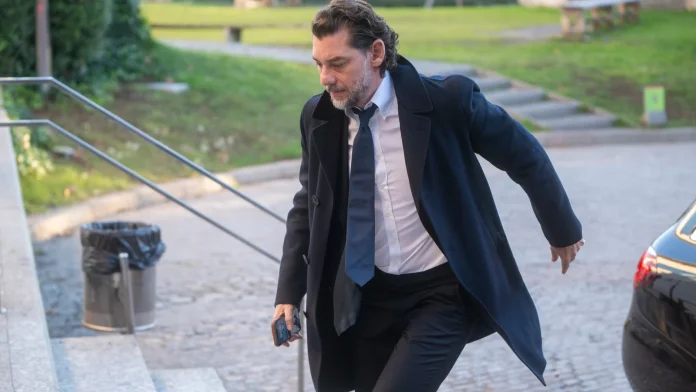
Jonathan Andic pictured as he arrived for his father's funeral in 2024

A fall on the mountain, a family in the glare: the Andic story widens

When the wind slices down the limestone faces of Montserrat, it carries the smell of rosemary and the kind of silence that makes the mind loud. It was into that silence, last December, that 71-year-old Isak Andic — the Turkish-born founder of Mango and a titan of Spanish retail — disappeared from public view in the most abrupt of ways: a fatal fall near the Salnitre caves in Collbató. What began as a muttered local tragedy has, with the passage of months, ballooned into a high-stakes legal drama that touches on family power, corporate empires, and how we decide what counts as accident and what counts as crime.

From accident to homicide probe: the legal volte-face

Catalonia’s Mossos d’Esquadra arrested Isak Andic’s eldest son, Jonathan, earlier this month and a court in Martorell has set bail at €1 million. The court ordered him to surrender his passport, appear weekly before the judge and not leave Spain as investigators examine the death “as a charge of homicide.” These are sharp, procedural measures that carry an unmistakable weight — to be named a suspect in a homicide probe is not the same thing as being convicted, but the social consequences ripple outward immediately.

“We must treat this case with the utmost seriousness,” a fictionalized quote from a Catalan prosecutor in this narrative might read — and that is precisely how residents and onlookers have reacted. Initially treated as a tragic accident, the case was closed by a judge in January 2025 when no criminal wrongdoing was found. Yet, prosecutors and the Mossos reopened the file in October after declaring inconsistencies in Jonathan’s testimony and other leads that warranted fresh scrutiny.

What happened on the slope — and why questions remain

The terrain around the Salnitre is not forgiving. Locals point out the ravines and the abrupt drops carved into Montserrat’s dramatic silhouette. “We all walk there,” said a Collbató innkeeper in a reconstructed voice. “You respect the mountain. It’s beautiful, but you don’t lower your guard.” Authorities say Isak fell from a height in that treacherous band — a claim that, at first, seemed to be explained away by a slip, an accident that befalls experienced hikers and novices alike. But investigators later seized devices and records, reportedly including Jonathan’s phone, and began connecting threads that made the simplistic explanation harder to accept.

There are other human embers in the scene: testimony cited by Spanish newspapers about tense relations between Isak and his son, a partner whose financial entanglements with the family have been widely discussed, and a history of succession struggle in a company that is both a household name and a sprawling global business.

The human face of a corporate saga

Mango is not a small shop on a seaside boulevard. It began as a single boutique on Barcelona’s Paseo de Gracia in 1984 and grew into an empire with roughly 2,850 stores worldwide, operating across more than 120 markets and employing more than 16,400 people. At the time of his death, Forbes estimated Isak Andic’s fortune at about $4.5 billion. Those numbers matter because the stakes here are not only legal but financial and reputational: a family-owned brand with global reach now faces intense scrutiny when the family itself becomes the story.

“Family firms walk a fine line between private life and public responsibility,” says a hypothetical expert in family business governance. “When an accident involves the figurehead of such a company, everyone watches — investors, employees, even shoppers who have a sentimental attachment to the brand.” Jonathan joined Mango in 2005 and rose to manage the Mango Man line and sit as vice-chairman. He has consistently denied wrongdoing and insists his father’s fall was an accident.

Between the courtroom and the kitchen table

What is easy to forget amid bail hearings and seized phones is how this story looks across kitchen tables in Barcelona, Istanbul and international city hubs where Mango’s racks hang. For workers at a factory in El Prat or a store manager on Calle Preciados in Madrid, the questions are immediate and mundane: Who will run the company? Will business continue as usual? The human costs — grief, suspicion, fractured loyalties — become part of the ledger, even if not recorded there.

“We’re worried about jobs,” said a reconstructed quote from a longtime Mango employee. “This is a company and a life for many of us. We hope it’s resolved quickly, whatever the truth is.” And yet quick resolutions are not what courts or grief often grant.

Secrecy, spectacle and the law

The investigation remains under judicial secrecy, and that silence creates a vacuum filled by rumor, newspaper scoops and social media conjecture. In that void, details leak — a seized phone here, testimony from Isak’s partner, Estefania Knuth, there — and narratives form. Some portray a restless heir cast under suspicion. Others imagine a tragic misstep on a narrow trail. The law, for its part, moves in its own tempo: careful, methodical, often maddeningly slow to the public eye.

“Judicial secrecy is intended to protect the integrity of the process,” a fictionalized legal analyst notes. “But it also fuels speculation. That can be unfair to suspects and victims alike.” The decision to treat the case as homicide for investigative purposes does not equate to formal charges, but it raises the intensity of forensic scrutiny and legal consequence.

What this says about modern wealth and inheritance

Beyond the immediate drama is a larger theme: the brittle arrangements of family fortune in the 21st century. Many of the world’s most recognizable brands are still family-controlled, yet the pressures of global markets, generational change, and personal ambition can create combustible tensions. The Andic story invites us to ask difficult questions: How do families manage succession? How transparent should powerful families be when public welfare — jobs, supplier networks, brand reputation — is affected?

In a world where the private lives of the wealthy are relentlessly public, this case will likely be dissected not only in Barcelona courtrooms but across opinion pages and dinner tables worldwide. What does it mean to inherit not only money, but also expectation, scrutiny and a public identity?

Looking ahead

For now, the mountain keeps its secrets. Jonathan Andic remains out on bail, tethered to the Spanish judicial system by conditions that will shape his daily life and career. The prosecutors and the Mossos continue digging through testimony and materials under a cloak of secrecy that will be lifted only slowly, if at all, by formal charges or a judicial decision.

Will the truth be a tragic misstep on a treacherous trail — or something more complicated? As readers, as citizens, as consumers of brands that thread our wardrobes, you might ask: how much do we owe to the privacy of families, and how much to the clarity demanded by markets and law? The answer matters not only for one family on one mountain but for the broader interplay of power, accountability and the stories we tell about both.

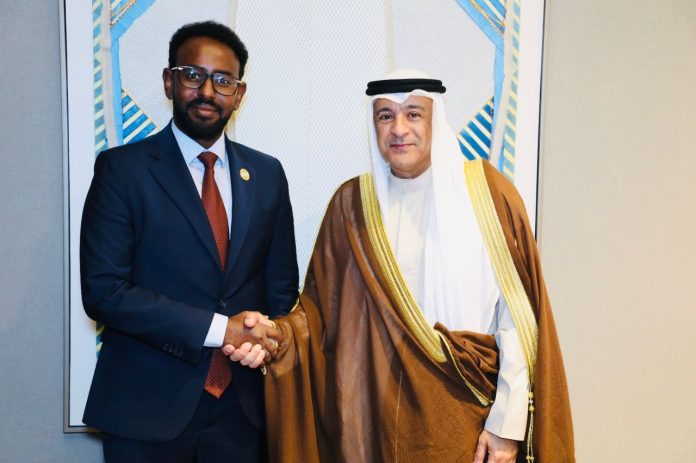
Wasiir Ayuub Ismaaciil oo magaalada BAKU kula kulmay Xoghayaha Golaha Iskaashiga Dalalka Khaliijka Carabta

May 19(Jowhar) Wasiirka Wasaaradda Hawlaha Guud, Dib-u-dhiska iyo Guriyeynta XFS, Mudane Xildhibaan Ayub Ismail Yusuf , oo uu wehliyo Safiirka Jamhuuriyadda Federaalka Soomaaliya u fadhiya Jamhuuriyadda Azerbaijan, Danjire Abdinur Dahir Fidow.

Iran: Peace plan demands reparations for wartime damage

Peace proposal includes reparations for war damage - Iran
Tehran's latest peace proposal to the United States involves ending hostilities on all fronts

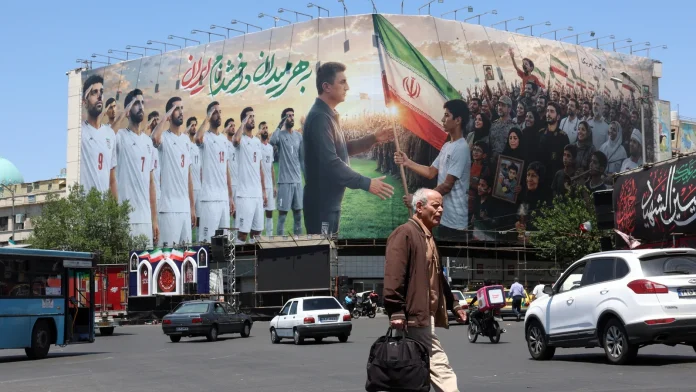
At the edge of the sea and the edge of a decision: Tehran’s latest peace paper

Early morning in Tehran has a smell to it—brewed black tea, exhaust, and the faint smoke of samovars at the small cafes where men still gather with newspapers and the day’s worries. This week, those worries have a single, brittle shape: a paper passed quietly between capitals that asks for an end to a war that has scarred the region.

Iran’s foreign ministry has laid out a list of conditions it calls a path to peace: hostilities must stop on every front, US military forces should withdraw from positions close to Iranian borders, the longstanding sanctions regime must be lifted, frozen Iranian funds must be returned, reparations should be paid for damage caused during the conflict, and the US maritime blockade must be ended. Deputy Foreign Minister Kazem Gharibabadi summarized those demands in terse, official language to state media, but the appeal felt, on the streets, far less diplomatic and far more urgent.

What Tehran is asking for

  • An immediate cessation of hostilities across the region, including Lebanon.
  • Withdrawal of US forces from areas perceived as proximate threats to Iran.
  • Full lifting of sanctions and release of frozen assets.
  • Reparations for destruction caused in the course of the conflict.
  • An end to the US marine blockade that has strangled trade and daily life.

These are not novel requests. They echo earlier offers and grievances that have run like a seam through decades of Middle Eastern politics. What gives this moment its charge is the backdrop: a conflict that has left thousands dead, hundreds of thousands displaced, and a vital artery of global commerce—the Strait of Hormuz—temporarily closed or perilously contested.

Leaders, intermediaries and the halting language of diplomacy

Washington’s response has been a study in public contradiction. President Donald Trump, who last week dismissed an earlier offer as “garbage,” announced that he had paused planned strikes after receiving Tehran’s fresh proposal and suggested there was a “very good chance” of a deal that would curb Iran’s nuclear ambitions. “If we can do that without bombing the hell out of them, I would be very happy,” he told reporters, his words a blunt mix of threat and reluctant diplomacy.

Behind the public sparring are quieter channels. Pakistan, which hosted the only round of peace talks last month, emerged as an intermediary, sharing Tehran’s text with Washington. “They keep changing their goalposts,” a Pakistani official said, worried about the clock as much as the politics. “We don’t have much time.”

That sense of urgency is not fanciful. The Strait of Hormuz is not just a local waterway—it is one of the chokepoints of the global economy. Historically, somewhere between 17 and 20 million barrels of oil per day have passed through its narrow waters, about a fifth of the world’s seaborne oil trade. Any disruption ripples into markets, into pump prices, into household bills from Shanghai to São Paulo. That is why the leaders of Qatar, Saudi Arabia and the United Arab Emirates reportedly asked Washington to hold off on strikes: not out of affection for Tehran, but out of fear of economic shockwaves.

The human toll beneath the headlines

Numbers do their work, but they do not speak. The war killed thousands in Iran before a ceasefire briefly held in April. Israel’s campaign in Lebanon killed thousands more and drove hundreds of thousands from their homes. Iranian strikes on neighboring states and on Israel have killed dozens. These are not statistics to be filed and forgotten; they are people—families exiled from neighborhoods they built, fishermen who no longer trust the sea, children for whom sirens are a familiar lullaby.

“We wake up counting the power outages and the promises,” said Fatemeh, a shopkeeper across from the old bazaar in Tehran, her hands stained with dye from the bolts of cloth she sells. “If the money comes back, maybe I can pay for electricity. If the fighting ends, maybe my brother can come home. But promises have a way of falling between the teeth of history.”

In a makeshift shelter outside Beirut, 47-year-old Karim folds a thin blanket around his shoulders and looks past the camera. “We didn’t choose to be a bargaining chip,” he said. “We lost our house. My children lost their school. How do reparations turn into our kitchen table?”

Where negotiations might bend—and where they won’t

There are glimmers of flexibility. Multiple sources suggest the United States may be willing to unfreeze a portion—perhaps a quarter—of Iran’s assets held in foreign banks. That amount amounts to tens of billions of dollars, a life-changing sum in a country where inflation and shortages have become daily realities. Washington has also signaled a willingness to allow limited, supervised nuclear activity under the International Atomic Energy Agency (IAEA), a concession designed to preserve face for both sides while maintaining technical oversight.

Tehran, for its part, insists nothing short of lifting all sanctions will be acceptable. “Partial measures leave our people hungry and our industry idle,” one senior Iranian official told state media. “We will not accept a half-peace that keeps the chokehold in place.”

Washington publicly denies it has eased oil sanctions during talks. Diplomacy on this scale is as much theater as it is negotiation—postures are struck for domestic audiences, hardliners get placated by tough rhetoric, and mediators whisper behind the curtains.

Unseen engines: proxies, drones and the new geometry of war

This conflict has not been a single front. Iran’s network of proxy militias and the drones launched from Iraq and other theaters have blurred lines and made the war asymmetric. For every decision made in a marble-paneled room, there are fighters, smuggled weapons, and makeshift bomb factories that do not respond to memoranda. The result is that even if capitals sign an agreement tomorrow, the work of verification and de-escalation on the ground will be painstaking—and dangerous.

“Negotiations can turn off formal hostilities, but they cannot instantly untangle a decade’s worth of regional entanglements,” said Dr. Miriam Alvarez, a nonproliferation expert who has watched Middle Eastern negotiations for thirty years. “You need inspectors, you need confidence-building measures, you need local buy-in. Otherwise agreements are paper without practice.”

What would peace look like—and what will it cost?

Imagine a day when young men in Beirut no longer sleep in temporary housing, when the fishermen of Bandar Abbas cast nets without scanning the horizon for drones, when an Iranian entrepreneur can access a foreign bank account without months of permits. That is the human promise of diplomacy. But there is a catch: trust is a currency harder to mint than cash. It demands verification, concessions, and a willingness from populations to accept imperfect compromises.

So what should the world ask for? Security, certainly. A reduction of proximate forces. Freedom of navigation in vital waterways. Oversight by neutral bodies like the IAEA. Reparations that actually reach victims. And, crucially, a political framework that addresses underlying grievances—economic strangulation, regional rivalry, and ideological posturing.

Will this peace proposal be the turning point or another waypoint on a longer, grinding road of crisis and negotiation? The answer lies not just in Washington or Tehran, not just in capitals and ships and capitals, but in the small, stubborn choices of ordinary people—shopkeepers, teachers, exiles—who will live with the outcome.

As you read this, perhaps with a cup of coffee or tea, ask yourself: what would you trade to avoid another night of sirens? Is peace worth imperfect terms? The diplomats will haggle over legalese; the rest of us will live with the consequences. For now, the paper sits on a table somewhere, ink drying, and two sides consider whether it is a bridge or a mask.

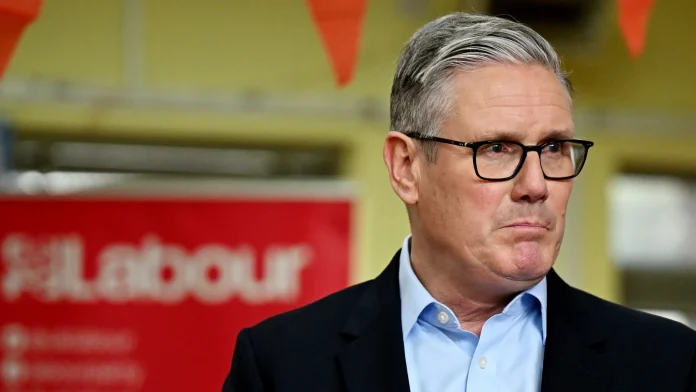
Keir Starmer convenes first cabinet meeting following Streeting’s resignation

Starmer chairs first cabinet since Streeting resignation
British Prime Minister Keir Starmer has insisted he will not set out a timetable for his departure

Downing Street on edge: a quiet cabinet meeting with a loud echo

There was a brisk, damp morning in Westminster when I walked past the black railings of Downing Street. A lone cleaning van hummed by; a tourist tried to take a selfie with the famous door blurred behind them. The mood inside, I’m told by aides who asked not to be named, was less photographic and more forensic — an administration steadying itself amid rumour, distrust and the raw mechanics of party politics.

Today’s routine cabinet meeting will feel anything but routine. It comes after the shock resignation of Health Secretary Wes Streeting and his public call for the prime minister to step down — a rupture that has ricocheted through Labour ranks and beyond. And it comes as Greater Manchester Mayor Andy Burnham has declared his intention to fight the Makerfield by-election, thrusting a high-profile regional figure back into national contention.

A mayor’s return, a prime minister’s stand

Keir Starmer has been adamant: he will not “walk away” from Number 10. He plans to face his ministers and colleagues today in a new-look cabinet — a visible act of continuity. Yet the questions hanging over the room are big and political, not administrative. What does a prime minister do when a once-loyal minister resigns and publicly urges them to quit? What happens when a popular regional leader flirts with a return to national politics?

Andy Burnham, at the heart of this drama, has been clear about his pitch. “A vote for me is a vote to change Labour,” he told crowds on the campaign trail, his voice carrying the cadence of a mayor who talks policy in plain language and wears his northern identity like a badge.

But the story is not yet an open-and-shut leadership challenge. If Burnham wins Makerfield, he would still need the written support of 81 Labour MPs to trigger a formal leadership contest — a threshold that would transform speculation into a full-scale battle for the party’s soul. As one long-serving Labour MP put it to me this morning, under the cover of anonymity: “Eighty-one signatures is a big ask. It’s a filter that separates a hot moment from a real campaign.”

Is he immediate or patient?

Not everyone expects Burnham to pounce instantly. Alex Sobel, the Leeds MP and a Burnham supporter, told LBC that an immediate contest was “not his expectation” — suggesting the mayor might step back into Parliament with an aim to serve if asked, to help “turn this Government round.”

So the narrative splits: a quick, dramatic showdown, or a longer, more tactical game of influence and persuasion that reshapes Labour’s direction without the trauma of an open contest.

What the polls are saying

Numbers matter. Public opinion (and crucially, party membership opinion) is a thermostat for leadership. A YouGov survey released this week illuminated sympathy for Burnham among party members and voters.

  • 47% of Labour members named Burnham as their first choice for leader.
  • 31% preferred Starmer.
  • Angela Rayner polled at 8% as a first choice.
  • Wes Streeting attracted 4% as a first choice, with 57% saying his resignation was the wrong move.
  • In a head-to-head between Burnham and Starmer, 59% favoured Burnham to 37% for Starmer.

Such figures are not destiny. They are a map: showing where sentiment lies today, not necessarily where it will be tomorrow. Still, the data are a clarion call to the party’s managers and campaigners — and to Starmer himself.

Local color: Makerfield, Manchester and the mood on the ground

Makerfield sits in the broad, rolling patchwork of the North West — terraced streets, former mills, high streets with independent bakers, and a resilience that comes from decades of reinvention. Walk into the café across from the bus depot and you might hear a conversation lift: football, the price of a chip butty, and politics. “People here are fed up with decisions made by folks who’ve never seen the inside of a mill or a council chamber,” says Joanne Patel, a community organiser who has lived in the area for 25 years.

“We want local power,” she told me. “We’re tired of a bloated central state. We want money and decision-making to actually match what our councils need.”

Burnham’s messaging has tapped into that sentiment. In speeches he has described a “bloated national state and a malnourished local one,” arguing for more devolution of power — and pocketbook — to town halls and mayors. It’s a pitch that resonates in places where services are stretched and stories of underfunded councils have become everyday grievance.

Yet Burnham also took care to tamp down one of his prior, more provocative lines. He previously spoke of wanting the UK back in the EU within his lifetime — a statement that played into the national debate over Brexit. More recently he stated he was “not proposing that the UK considers rejoining” the bloc and warned against reopening the agitated arguments of the Brexit years. Locals I spoke with were relieved to see the mayor steady himself on that issue; many want energy on housing, health services and jobs rather than a rerun of the referendum debates.

What’s at stake for Labour — and for the country

At its heart this is a story about identity and direction. Is Labour a cautious, managerial party that governs to steady markets and institutions, or is it an energetic force for redistributing power and resources to the regions that felt left behind in recent decades? The answer will shape not just internal dynamics but national policy on devolution, public services and how the UK positions itself in a changing global economy.

Professor Helen Carter, a political scientist specialising in party politics, told me: “Leadership contests are rarely just about personalities. They crystallise visions. Burnham’s push is as much about policy — localism, devolution, redistribution — as it is about personality. For Starmer, the challenge is to show both competence and imagination.”

And there is a larger question for voters: do we prefer leaders who steady the ship, or leaders who throw the sails wide and try for new destinations? There is no universal answer. The preference depends on where you sit: an office in Whitehall; a council chamber in Manchester; a small business in Makerfield; a nurse in an overstretched hospital ward.

Scenarios and endings — for now

  1. If Burnham wins Makerfield and secures 81 MPs, Labour faces a leadership contest that could reorient the party.
  2. If he wins Makerfield but fails to gather support, he may still exert influence as a returning MP and major public figure.
  3. If he loses Makerfield, Burnham’s national ambitions could be checked, but his critique of centralisation will linger in the party’s debates.

Every political story leaves room for surprise. What felt inevitable a week ago can feel tenuous today. And that’s what makes observing this unfolding chapter in Labour politics — and in British public life — so absorbing. Will voters reward a call for change? Will members rally behind a steady hand? Or will the party find a compromise that blends both impulses?

Ask yourself: in a country still healing from years of economic strain and political upheaval, what do you want your leaders to prioritise — stability or transformation? The answer will help shape not just Labour’s next move, but the direction of British politics for years to come.

Four missing divers’ bodies recovered off Maldives coast

Bodies of four missing divers located in the Maldives
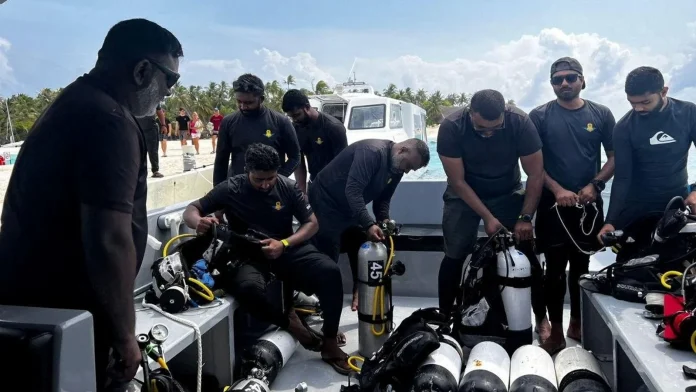
A rescue team prepares to take part in the search and recovery operation for the four Italian scuba divers in the waters of Vaavu Atoll

Dark Water, Quiet Islands: A Tragedy Beneath the Maldives

On a wind-cut afternoon in Vaavu Atoll, the turquoise smile of the Indian Ocean hid a deep, cold secret. What began as an expedition into coral-carved caverns turned into a years‑long echo of loss for four families in Italy, and a painful reminder to the global dive community of how quickly adventure can become a catastrophe.

Last Thursday, a group of Italian scuba divers, experienced and eager, entered an underwater cave at roughly 50 metres (about 165 feet). The next days would see a frantic, technically difficult search, the recovery of one diver from a chamber some 60 metres deep, the heartbreaking discovery by an international specialist team that the remaining four were indeed inside that same cave, and then another blow: a Maldivian Navy diver taking part in the recovery succumbed to decompression illness.

“This operation has been technically demanding and emotionally devastating,” said Maria Conti, a spokesperson for DAN Europe, the international diving safety network that coordinated assistance. “Finding the locations of the missing divers gives families a terrible clarity. It also gives us the ability to plan a safe, staged recovery—because rushing would risk more lives.”

What happened in Vaavu?

Vaavu Atoll is the sort of place you see postcards for: low islands crowned by palms, fish markets with silver glinting in the sun, and dive boats—dhonis—moored like sleeping animals. But below the picture-perfect surface lies a labyrinth of overhangs, swim-throughs and caverns formed where ancient limestone met an unruly ocean. For many experienced divers, especially those keen on the technical challenge, cave diving here is intoxicating. For those unprepared, it can be lethal.

At around 50 metres depth, the Italian team was exploring a roughly 200-foot (about 60‑metre) long cave when things went wrong. On Friday, Maldivian authorities recovered the body of one diver deep within a cave chamber. Over the weekend, a specialist Finnish team of cave-diving experts—tasked with mapping and locating the missing divers—spent three hours underwater confirming the position of the other four bodies and collecting the data necessary to stage a careful recovery.

“We needed to know the layout precisely before we could risk sending recovery teams into those chambers,” explained Jukka Laine, lead of the Finnish retrieval contingent. “Cave penetrations at those depths are unforgiving. Visibility, silt, current, and the need for staged decompression all make every minute and every metre dangerous.”

Risk, rescue, and the price of urgency

Rescue efforts were already being hampered by rough seas and bad weather. Then, on Saturday, the mission took the cruelest possible turn: a Maldivian National Defence Force diver participating in the search developed severe decompression illness and died. Authorities temporarily suspended recovery work as they reassessed safety protocols.

“Losing one of our own is a wound to the whole island,” said Mohamed Hussain Shareef, the chief spokesperson for the President’s Office in the Maldives. “We are investigating the procedures that led up to the dive and will ensure that every step moving forward prioritizes safety—for rescuers and for the families waiting for answers.”

Decompression illness (often called “the bends”) is a known hazard when divers ascend too quickly from depth or make long, deep dives without the requisite staged decompression stops. The risk is higher with deeper dives and when divers penetrate overhead environments like caves where an immediate ascent to the surface is impossible.

The human dimension

Back in Malé and on the small local islands, the mood is muted. Fishermen who usually wrestle with nets at dawn now watch quietly as dhonis leave for the site and return empty. At the harbour in thinly populated Felidhoo, a woman in a sarong—Aisha Moosa, who runs a small guesthouse and has been working with dive groups for a decade—sits with a thermos of sweet tea and says, “We teach guests the ‘Maldivian respect’ for the sea. But even with respect, the ocean is bigger and older. Sometimes, people forget that.”

“We lost a Maldivian diver doing what many of us love—helping others,” said Lieutenant Ahmed, who asked that his surname not be used. “That pain will take long to heal. People come here seeking beauty, but they must understand the rules and the training needed.”

Numbers that nudge the conscience

How dangerous is diving? Recreational scuba is relatively safe compared with many outdoor sports, but it carries risks. DAN’s recurring reports suggest that globally there are roughly a hundred to a few hundred diving-related fatalities each year—numbers that cluster where technical diving, cave diving and poor training intersect. Cave diving accidents are a small fraction of total dives but account for a disproportionate share of fatalities because of the overhead environment, depth, and logistical difficulty of rescue.

The Maldives itself is a nation almost entirely dependent on tourism. The industry contributes a sizeable share of GDP and buoyant, internationally oriented communities have developed around sites like Vaavu. In short: lives, livelihoods and reputations are intertwined in the blue that surrounds these islands.

What the experts say

“Cave and deep technical dives require redundant systems, meticulous gas planning, and an unwavering commitment to training,” said Dr. Emily Carter, a diving medicine specialist who has worked on decompression research. “Often, accidents happen when one or more of these layers fails. When that failure occurs in an overhead environment—where direct ascent is blocked—it magnifies the consequences.”

She emphasized the burden on operators and regulators. “It’s not enough to rely on the goodwill of dive guides. There must be enforceable standards for training, for equipment and for the authorization of challenging dives.”

A complicated recovery, and questions that remain

The Finnish team’s three-hour operation to identify where the missing divers were has been described as an “important milestone” by DAN Europe. It sets the stage for a staged, carefully planned recovery expedition, likely to involve mixed-gas diving, multiple support teams, and meticulous decompression schedules. That kind of operation is slow and costly—but speed here could be deadly.

The President’s Office has said it is investigating pre-dive procedures. Families in Italy are demanding answers. Local Maldivian communities want assurances that recovery teams—and leisure divers who come to their reefs—will be protected.

Who bears responsibility when adventure leads to disaster? Dive operators, training agencies, regulators, the divers themselves—each plays a part. And then there is the sea, patient and indifferent, whose beauty invites us and whose rules we ignore at our peril.

What can divers and travellers learn?

  • Get qualified for the specific type of diving: cave and technical dives require specialized training and experience beyond open-water certification.
  • Insist on transparent dive plans from your operator, including contingency measures and clear certification checks.
  • Understand the limits of your equipment and your body; depth, gas mixes, and staged decompression matter.
  • Be mindful of local conditions—weather and currents can transform a dive site overnight.

As the families wait for closure, and as Maldivian authorities weigh how to move forward without risking more lives, the story asks uncomfortable questions: Are thrill and tourism being cautiously balanced against risk? How do small nations enforce standards without crippling a vital industry? And what responsibilities do adventurous travellers carry when stepping into environments where one wrong turn can be fatal?

For now, the islands keep their secrets for a little longer, and the sea returns to its glassy, indifferent calm. But the faces around the harbours, the grief of those who lost loved ones and the dedication of rescue teams all ripple outward beyond this atoll. When you next book a dive, will you look closer at the qualifications and the safety margins that sit between you and the deep?

Keir Starmer vows he won’t abandon his leadership role

I am not going to 'walk away' from role, insists Starmer
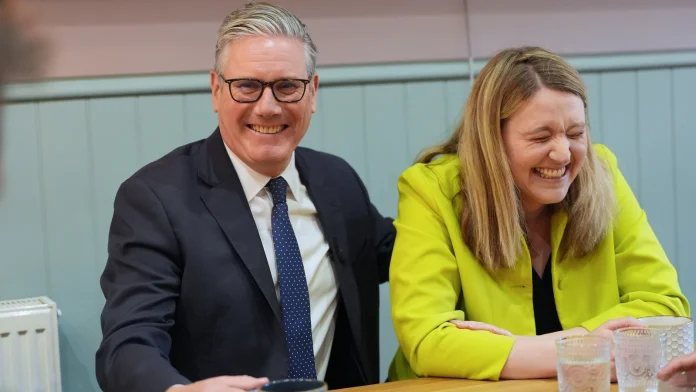
British Prime Minister Keir Starmer paid a visit to small business owners in London today

Keir Starmer at a Crossroads: The Labour Party’s Quiet Storm

On a cool May morning, with the dew still clinging to the lawns of Chequers and the cameras long gone, Britain’s prime minister sat with a familiar stubbornness and a very new vulnerability. “I do want to fight the next election,” Keir Starmer told reporters this week, voice steady but circumspect. Behind the line was a leader who has spent years polishing a message of competence — and now finds himself answering a different, sharper question: can competence alone win back a fractured country?

The turbulence that landed at Downing Street began with local council results on 7 May. For Labour the morning-after was not a bruise but a burn: losses significant enough that almost a quarter of Labour MPs publicly signalled they wanted a change of leadership. Two prominent figures — Andy Burnham, the Greater Manchester mayor, and Wes Streeting, the newly resigned health minister — have stepped into the breach, forcing an internal reckoning and unsettling the markets, which have nudged up government borrowing costs amid the uncertainty.

A leader under pressure, not ready to walk

Starmer’s response has been a mix of defiance and self-reflection. “I remind myself every day that I was elected to serve the people, to serve the country,” he said, framing his dilemma as duty rather than ego. He has refused to volunteer a timetable for departure and told allies he will not “walk away” — even as whispers gather momentum in Westminster that a contest could be triggered if 81 Labour MPs (roughly 20% of the parliamentary party) nominate a challenger.

“It’s not about marquee battles or Twitter storms,” said a senior Labour MP who asked not to be named. “People want to see an offer that lands where their lives are. The question isn’t whether Keir stays; it’s whether the party can look like it understands the country.”

Andy Burnham’s bid: Back to parliament, back to the future?

Andy Burnham has staked his claim in blunt, optimistic terms. Speaking at a summit in Leeds, he offered a compact pledge: affordability, regional power, and industrial renewal. “A vote for me will be a vote to change Labour,” he declared, casting himself as both remedy and rallying point.

Burnham’s route back into Westminster is Makerfield, a constituency that voted Leave in 2016 and where Reform UK now stands strong. Winning the by-election would give him the parliamentary foothold to mount a leadership challenge. His pitch is classic Labour but refocused: away from managerial competence toward bread-and-butter transformation. “People feel left behind,” a Makerfield shopkeeper told me as she served a breakfast bap. “They want jobs, proper wages, and someone who doesn’t just say ‘trust us’.”

That message resonates with some voters and alarms others. Burnham has openly suggested the long-term case for rejoining the European Union — a stance that has already been seized upon by political rivals. Nigel Farage and Reform UK have accused him of courting “open borders,” and Conservative-friendly pundits have painted his Europe talk as politically reckless in a place with a strong Leave majority.

The Brexit shadow

Brexit remains the thorniest of subplots. Wes Streeting, who resigned as health minister, has pledged to run in any leadership contest and has signalled he would like Britain to rejoin the EU — a position that immediately lit a fuse inside Labour. Supporters of Burnham worry that a renewed focus on Europe could alienate Leave-voting constituencies like Makerfield.

“This is not the moment to reopen old wounds,” said a Burnham ally in Greater Manchester. “We need to be talking about prices in the supermarket, trains that run on time, and clean air. We don’t win by relitigating 2016.”

Inside the party: Fracture lines and familiar faces

Deputy leader David Lammy has tried to close ranks publicly, assuring viewers that there will be “no timetable for departure.” But his tone carried a kind of weary realism: leadership is a personal decision, he said, and one the prime minister must make alone.

Meanwhile, the dynamics between Burnham and Streeting have taken on a sharper edge, with media speculation suggesting that competition between them risks making Brexit — rather than cost of living or regional inequality — the dominant theme in the contest. Culture Secretary Lisa Nandy, a Burnham ally, called it “odd” that Europe would be central to Streeting’s pitch, warning that promising a return to the EU as the solution is a nostalgic move that overlooks present-day anxieties.

What’s at stake

The stakes are more than a personality test. They touch on:

  • the Labour brand: managerial competence versus bold redistribution;
  • electoral arithmetic: can Labour win back working-class Leave voters while energising its urban base?
  • economic confidence: investor nerves have already nudged borrowing costs higher, increasing the financial stakes of political instability;
  • policy direction: will the party tilt toward regional reindustrialisation and state activism, or double down on technocratic stewardship?

“Every leadership fight reshapes a party,” said an analyst at a London think-tank. “But this one could reshape British politics because it forces Labour to choose who it is for: the country that feels secure and wants low taxes, or the country that feels insecure and wants big fixes.”

On the ground in Makerfield: Voices between the lines

Walking the high street in Makerfield, you meet a mix of resignation and appetite for change. A nurse in a café spoke of long shifts and stagnant pay: “We need a party that’s about getting people back to work with decent pay, not just about shiny promises.” A delivery driver brushed his hands off and said bluntly, “I’ll vote whoever fixes fuel and food prices.”

For many voters, the leadership contest feels abstract until it connects to bank statements and bus timetables. “This isn’t Westminster theatrics for us,” said an elderly man as he shelled peas outside a local market. “This is whether our kids can stay here and have a life.”

Looking outward: A mirror of global trends

What’s happening in Labour is not unique to Britain. Across democracies, parties that once branded themselves as competent managers are being challenged by voices promising visceral solutions to a sense of economic displacement. Voters want tangible answers: affordability, jobs, dignity. Political elites must reconcile managerial competence with moral imagination — the ability to offer a story of collective renewal.

So here is the question for any reader watching from elsewhere: when your politics prefers orderly, technocratic stewardship, what happens when the public demands soulful, systemic change? Can a party be both?

Where this might lead

We are likely to see more heat than light in the coming weeks: nominations, sparring on talk shows, and a by-election in Makerfield that could be a referendum on Labour’s direction. If 81 MPs back a challenger, a formal contest will begin. If Burnham wins a seat, he will be hard to ignore. If Starmer clings on and re-centres quickly, he may yet stitch a battered coalition of voters back together.

Either way, the contest is a reminder that political leadership is never just about policy papers and soundbites. It’s about trust: being seen to understand the texture of people’s lives and offering a future that feels both believable and better.

As Britain watches, ask yourself: what kind of leader would you want steering a country through cost-of-living crises, global uncertainty, and the slow grind of social change? And is Labour, in its current moment, capable of becoming that leader?

Trump hints at potential agreement on Iran’s nuclear program

Trump signals possible deal over Iran nuclear programme
Vessels are seen anchored in the Strait of Hormuz

A Last-Minute Pause on the Brink: How a Diplomatic Thread Held Back a Night of Bombs

It was the kind of cliffhanger that makes you forget to breathe: aircraft carriers silhouetted against a bruised horizon, commercial tankers clustered like nervous sheep in the Strait of Hormuz, and a president saying—almost offhand—that he had called off an attack that had not, publicly, been announced.

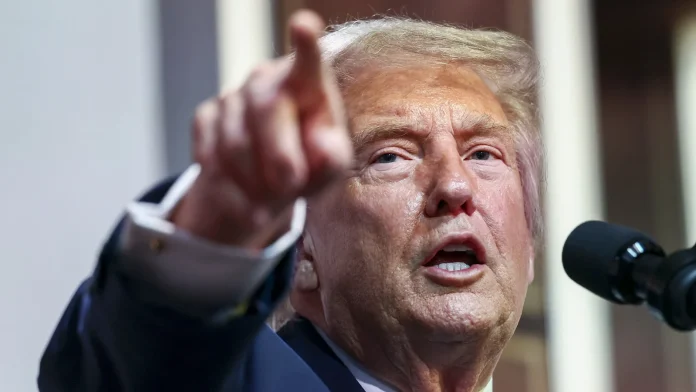
“There seems to be a very good chance that they can work something out,” the president told reporters, adding with characteristic bluntness, “If we can do that without bombing the hell out of them, I would be very happy.” The words landed in capitals and coastal towns alike, reverberating through markets and mosque courtyards, gold souks and embassy hallways.

Behind the headline was a simple, fragile narrative: Tehran had sent a proposal to Washington via Islamabad; Qatar, Saudi Arabia and the UAE had asked the United States to stand down for now; and the commander-in-chief had given the military orders to “be prepared” to strike at a moment’s notice if diplomacy failed. It sounds dramatic because it was. It also sounded perilously provisional, like a surgical pause while a scalpel hovered inches above skin.

Where the Sea Meets the World: The Stakes of Hormuz

To understand why a single phone call—perhaps a half-dozen whispered messages—can upend global flows, you have to stand on the deck of a dhow in the Strait of Hormuz. The waterway is a narrow throat between the Persian Gulf and the Gulf of Oman, and through it passes roughly one-fifth of the world’s seaborne oil trade. Any disruption here ripples to refinery floors from Rotterdam to Singapore and to grocery lists in Sub-Saharan Africa.

“When the tankers stop, the world notices,” said Leila Mansouri, a veteran shipbroker in Dubai who watches the bay like a hawk. “You don’t need a full-scale war to make prices spike. A few missiles, a few days, a few headlines—suddenly buyers get nervous, and everyone pays.”

The Message Couriers: Pakistan, Gulf Monarchies and Quiet Diplomacy

What played out was not a Hollywood summit but the old, messy craft of back-channel diplomacy. According to officials briefed on the exchanges, Tehran’s proposal was relayed through Pakistan, which has acted as a discreet intermediary since hosting an initial round of talks last month. The leaders of Qatar, Saudi Arabia and the UAE—countries with intensive and sometimes competing ties to both Tehran and Washington—urged patience.

“We were asked to buy a day,” said a Pakistani diplomat who spoke on condition of anonymity. “To give the mediators space. To let the negotiations breathe. We passed the message. But I’ll be frank: progress is difficult. The goalposts keep moving, and time is not on anyone’s side.”

Those shifting goalposts are the heart of the problem. According to a senior Iranian source, the new Iranian text mirrored earlier offers in several respects: an immediate focus on ending the fighting, reopening the Strait and lifting maritime sanctions—at least temporarily. Tehran is also said to be seeking the release of assets frozen in foreign banks—amounts described broadly as “tens of billions” of dollars.

What Washington Says — and What It Won’t

U.S. officials’ public posture has been cautious. A White House voice said the administration had not formally accepted any package, but that there had been movement on certain elements, including the possibility of releasing a portion of frozen funds and allowing limited nuclear activity under International Atomic Energy Agency supervision.

“Nothing is settled until everything is settled,” a senior administration official told me, tiredly. “We are trying to thread a needle: prevent Iran from acquiring a nuclear weapon, secure freedom of navigation through Hormuz, and reduce the violence that has cost lives and rattled markets.”

Voices from the Region: Fear, Defiance and Daily Life Interrupted

On the streets of Bandar Abbas, a port city on Iran’s southern coast, the mood was a peculiar mix of defiance and pragmatism. Shopkeeper Zahra Karim, wrapping dates in a shopstick, shrugged at talk of grand deals.

“We are used to sanctions, to threats,” she said. “People here care about bread, school fees, getting into town. Politicians will shout. But if that money comes back—even a little—it will buy fertilizer and fix the fishing boats.”

Yet Tehran’s official tone remained combative. State media amplified warnings from the Khatam al-Anbiya command that Iran’s forces were “ready to pull the trigger” should a renewed assault be launched. “Any renewed aggression… will be responded to quickly, decisively, powerfully, and extensively,” one senior military official was quoted as saying.

Why a Ceasefire is So Fragile

The ceasefire that has held after six weeks of escalating strikes is best described as uneasy. Drones have continued to fly from Iraq toward Gulf countries, where officials say some have been intercepted. Pakistan has publicly condemned a recent drone attack that reportedly originated in Iraqi airspace. In such an environment, a miscalculation—a radar blip, a misidentified flight, a rogue commander—can trigger an avalanche.

“In a volatility-prone theatre like this, restraint is the scarcest commodity,” said Dr. Miriam Alvarez, a senior fellow at a Washington-based Middle East institute. “You have multiple armed actors, proxy networks, and domestic political incentives to act tough. Diplomacy only needs a few actors to want it; war only needs one mistake.”

What Would a Deal Look Like—and Who Pays the Price?

The contours of a potential agreement are familiar from previous Iran diplomacy: limitations on weapons-grade enrichment, intrusive monitoring by the IAEA, phased sanctions relief, and guarantees about maritime traffic. But the devil is in the detail—how many centrifuges, who polices the sea lanes, and whether frozen assets are returned in full or in tranches.

“Anything less than robust verification is a recipe for renewed conflict,” warned Dr. Hassan Rouhani (not the former president), a nuclear policy analyst I spoke with. “And any deal that simply papered over the underlying grievances—economic strangulation, regional security competition—will not last.”

Questions That Remain

So where does this leave us? Is this pause the pivot point toward a meaningful settlement, or a tactical respite before the storm? Will the release of some frozen funds be enough to change Tehran’s calculus? Can regional powers bridge decades of mistrust in a few short weeks?

Every diplomat, captain and shopkeeper I spoke to returned to the same plain truth: no one wanted to see the Strait choked and markets spooked, yet many doubted whether a balance could be struck that satisfied hardliners on either side. “We have always lived with uncertainty here,” said Mansouri, the shipbroker. “This is just a different kind of uncertainty.”

Why This Moment Matters Globally

Beyond the immediate crisis, the episode lays bare a larger pattern: the world is still dangerously interlinked, and regional conflicts can prompt global ripple effects—energy shocks, refugee flows, and geopolitical realignments. It also reminds us that diplomacy, however messy and mediated, remains humanity’s best insurance against the worst impulses of power.

Will history record this as a masterful pause or a narrow escape? That depends on whether negotiators can turn the fragile breath of calm into durable peace—or whether, once again, the detonator will be pressed and the ships will sail under fire.

Xoghayaha Guud ee Q.Midoobe oo ka deyriyay xaalada siyaasadeed ee Soomaaliya

May 19(Jowhar) Xoghayaha Guud ee Qaramada Midoobay ayaa sheegay inuu si dhow ula socdo xaaladda siyaasadeed ee Soomaaliya, gaar ahaan wada-hadallada u dhexeeya Dowladda Federaalka Soomaaliya iyo Golaha Mustaqbalka Soomaaliyeed.

Israel, Hezbollah trade blows as diplomats meet in US

Lebanon reports Israeli airstrikes near Beirut and throughout the south

0
An Israeli strike hit near Beirut’s southern approach as Israel intensified bombardments across Lebanon’s south, with a medical source reporting six deaths in the...
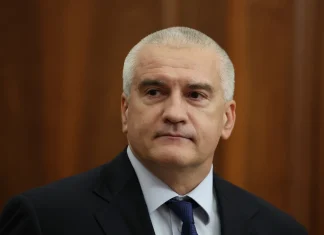
Ukrainian strikes kill four in Crimea, Russia says

Russia Reports Four Killed in Crimea After Ukrainian Strikes

0
Deadly strikes in Russia-annexed Crimea have raised the toll in a widening exchange of attacks between Moscow and Kyiv, with Kremlin-installed officials reporting four...
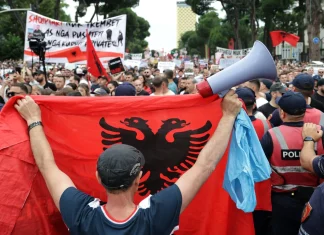
Albanians protest over Kushner-linked luxury resort

Albanians rally against Kushner-linked luxury resort development plans

0
Anger is spilling onto the streets of Tirana as thousands of Albanians rally against a proposed luxury resort tied to Jared Kushner, warning it...
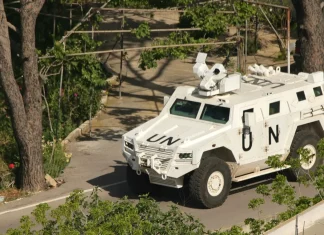
Serbian UN peacekeeper killed in south Lebanon

Serbian UN Peacekeeper Killed During Incident in Southern Lebanon

0
Shelling that slammed into a United Nations base in southern Lebanon has killed one peacekeeper and wounded two others, the United Nations Interim Force...
Ukraine, Moldova move to next stage of EU membership bids

Ukraine and Moldova advance to the next phase of EU membership talks

0
The European Union has agreed to push Ukraine and Moldova into the next phase of their bids to join the bloc, after diplomats said...