

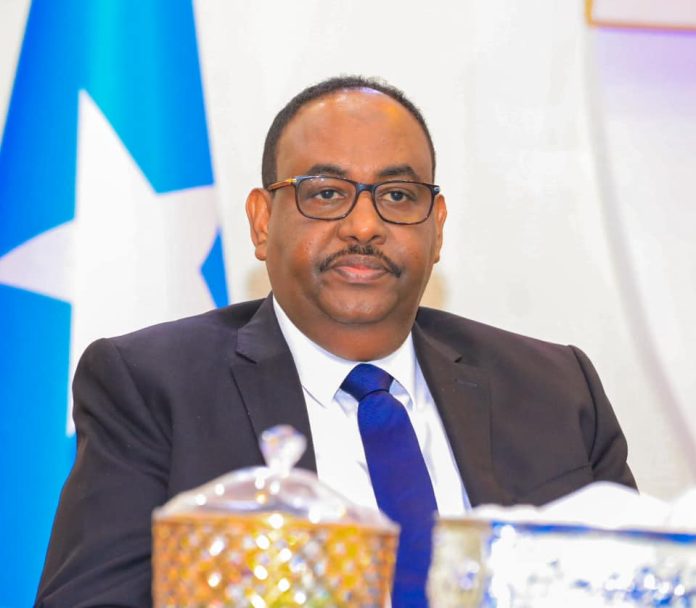
May 12(Jowhar)Madaxweynaha Dowlad Goboleedka Puntland, Siciid Cabdullaahi Deni, ayaa maanta kusoo wajahan magaalada Muqdisho, isagoo safar kaga soo amba baxayo magaalada Boosaaso oo uu maalmihii lasoo dhaafay ku sugnaa.
Ingiriiska oo dowladda Soomaaliya kala hadlay xaaladda Xuquuqda Aadanaha ee dalka
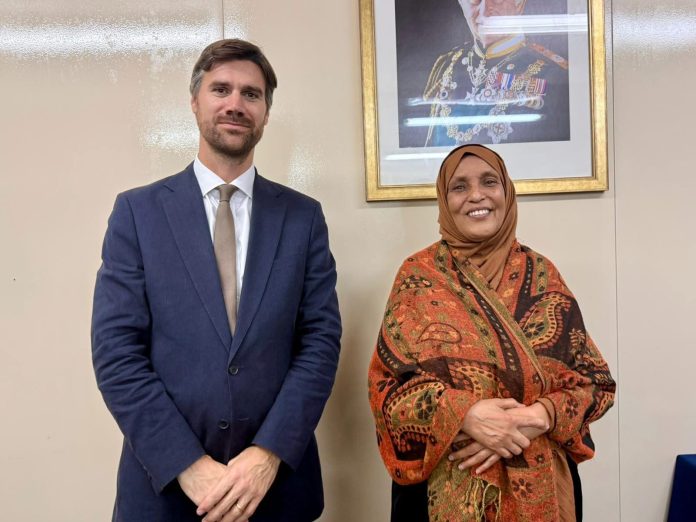
May 12(Jowhar) Guddoomiyaha Guddiga Madaxa-Bannaan ee Xuquuqul Insaanka Qaranka Dr. Maryan Qasim, ayaa kulan la yeelatay Safiirka UK ee Soomaaliya, Charles King oo ay ka wada hadleen mudnaanta arrimaha xuquuqda aadanaha, horumarinta hay’adda, iyo taageerada marxaladda dhismaha ee Guddiga.
Senior ministers call on Keir Starmer to reconsider his leadership role
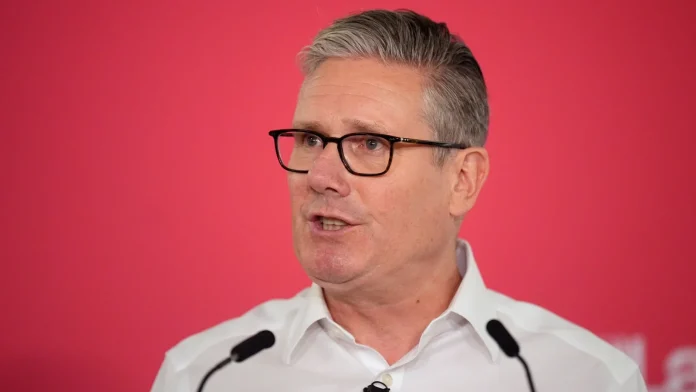
Westminster on Edge: A Prime Minister’s Quiet Storm
The marble corridors of Westminster never sleep, but in the last 48 hours they have felt, in equal measures, feverish and fragile—like a great clock caught between ticks. Political aides have walked out of Downing Street. Cabinet ministers are whispering about transitions. And outside the gates, a London drizzle seemed to wash the city’s face as if to cool a fevered debate that has now reached boiling point.
Keir Starmer, the man who guided Labour back into government, now finds himself at the centre of an implosion that smells faintly of betrayal and bitter politics. The trigger was brutal and public: last week’s local elections inflicted heavy losses on Labour, with party figures tallying almost 1,500 council seats lost across England. Scotland saw a backward step and Wales returned a humiliating third-place finish in many areas—numbers that have become the arithmetic of crisis.
The Exodus: Names, Numbers and a Party in Motion
It started with a trickle of resignations and turned into a mini exodus. By evening, six parliamentary private secretaries and aides had tendered their resignations, citing a loss of confidence in the prime minister.
- Joe Morris, PPS to the Health Secretary
- Tom Rutland, PPS to the Environment Secretary
- Naushabah Khan, Cabinet Office aide
- Melanie Ward, PPS to the Deputy Prime Minister
- Gordon McKee, DWP aide
- Sally Jameson, PPS to the Home Secretary
These departures are tiny in bureaucratic terms, but seismic in message. For many inside Westminster, aides are the canaries in the mine: they are nearest to ministers, quickest to react—and the moment they start to fall away, alarm bells ring.
A Cabinet Divided
This morning’s extraordinary weekly Cabinet meeting was billed as a clean-the-air session. Instead, it looked and sounded like a house divided. Some senior ministers—hardened figures who have weathered political storms—urged caution, warning that an immediate leadership contest would tear the party apart and hand victory to its opponents.
“We cannot turn inwards when big strategic choices lie ahead,” a senior minister told me off the record. “There’s an argument for steadiness—geopolitically we’re not insulated from storms, and domestically the economy is brittle.”
Others, however, have been more blunt. Private conversations have reportedly included appeals—gentle and direct—to the prime minister to consider an orderly transition. One voice close to the Cabinet said, “People are exhausted by damage control. The question now is less about blame and more about whether we can unify before the next fight.”
Voices in the Lobby, Voices on the Street
Walk outside the parliamentary estate and the mood is raw and vivid. At a small café on Whitehall, a civil servant paused mid-sip and offered a line that captures the sense of the moment: “It’s as if the furniture is shifting—no one is sure which chair will be left standing.”
Down the road in a north London pub, where politics is as much a pastime as a sport, a regular named Elaine—retired schoolteacher—shook her head. “They promised reform and steadiness. What we got was chaos. I voted hoping for patience and vision. What we see now is people looking at the menu and asking for refunds.”
A young apprentice, whom the prime minister planned to meet to showcase training reforms, had a different take. “I want policies that get me a job, not leadership dramas,” she said. “I’m glad they’re talking about apprenticeships, but it feels small when the top is unravelling.”
The Mechanics of a Challenge
Behind the drama lies the cold mechanics of party politics. Reports suggest that between 75 and 80 MPs have signed a letter urging the prime minister to lay out a timetable for departure. The exact figure has been traded as currency in Westminster corridors—each signature a tiny artillery shell aimed at leadership credibility.
For those who prefer analysis to anecdote, the arithmetic is stark: mass council losses act as a proxy for public sentiment. When a governing party bleeds local authority seats, the argument goes, it has failed at the grassroots level—the very places where voter trust is built or eroded.
Potential Successors and Factional Lines
Names circulate—some loudly, some as background hum. Health Secretary Wes Streeting is widely discussed as someone who might step forward, though he has publicly denied an immediate tilt for the leadership. Andy Burnham, the popular Greater Manchester mayor, is seen by many as a unifying figure; yet he faces logistical hurdles, not least the need to secure a Commons seat before mounting a serious national bid. And Angela Rayner’s call to correct what she sees as an internal block on Burnham has only added fuel to the debate about fairness and faction within the party.
“This isn’t just about one person,” said a political strategist who has worked across parties. “It’s a question of identity and direction for Labour—what does it stand for now? The electorate is asking for a story they understand. Right now, the story is muddled.”
What’s at Stake: Beyond One Leader
Ask yourself: why does the fate of one leader command such national attention? The answer is twofold. First, leadership matters. A prime minister is not just a figurehead but the person who marshals responses to international crises, economic shocks and social policy. Second, symbolism counts. When a party appears to devour its own, voters interpret weakness at a time when many already feel uncertain about the future.
There are broader themes at work: the rise of populist messaging that punishes perceived elites, the public’s impatience with incrementalism in an age of climate emergencies and economic anxiety, and the structural challenge of rebuilding a party after electoral setbacks. Labour’s dilemma mirrors a global pattern: established center-left parties across Europe and beyond are wrestling with how to renew themselves without alienating their base.
What Comes Next?
Expect theatre and procedure. Expect more private meetings, coded briefings to sympathetic journalists, and—inevitably—some public displays of solidarity. The prime minister pledged, in a central London address, to “prove the doubters wrong” and insisted he would not “walk away.” Yet words only go so far when the machinery of power creaks.
Here is a reality for readers to consider: democracy is a lot louder in the trenches than it looks from the outside. The resignations, the letters, the whispered phone calls—these are the mechanisms by which parties test their muscles and refashion their identity. For citizens, the question becomes sharp and simple: do you want a steady cabinet focused on governing, or a clean break and the clarity of a new contest?
Final Thought
As Westminster waits for the next move, the city hums—buses, suits, the occasional clack of a reporter’s heels on the pavement. Politics, like theatre, requires an audience, and the public is watching. In the coming days, when the next statement is issued and the next resignation lands, ask yourself whether this is a moment of renewal or a cautionary tale about what happens when the centre cannot hold.
“We need more than apologies and pledges,” said a community organiser in Liverpool. “We need policies that speak to people’s lives. That’s the real test—and it won’t be settled in the whispering rooms of Whitehall.”
Warakii u danbeeyay shirka mucaaradka iyo dowladda ee Mareykanka
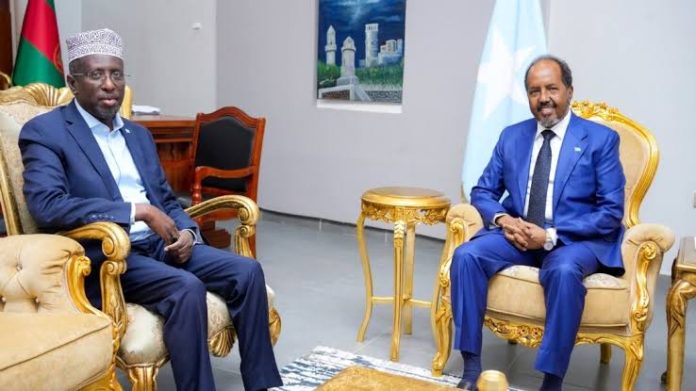
May 12(Jowhar)Imaanshaha Madaxweynaha Puntland ee magaalada Muqdisho ayaa loo arkaa inay furi karto albaabka wadahadallada masiiriga ah ee doorashooyinka dalka iyo sidii xal looga gaari lahaa xilliga kala-guurka ah.
Israel launches strikes on 30 sites across Lebanon, NNA reports
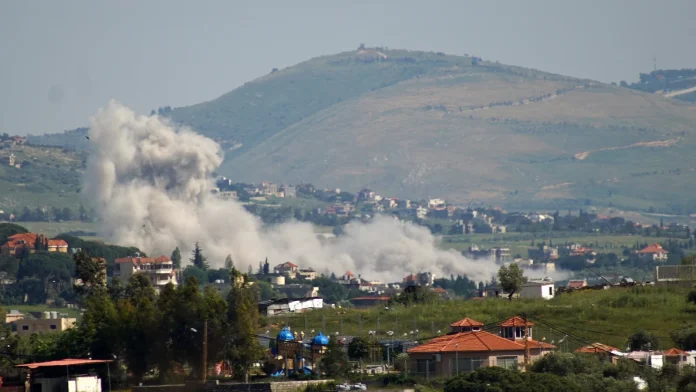
Under the Drone’s Shadow: Lebanon’s Fragile Ceasefire and the Human Cost
On a late spring morning not far from Beirut, a bakery owner named Samir wiped flour from his hands and watched a convoy of families hurry past with plastic bags and children clinging to blankets. “We bake the bread, but we can’t feed peace,” he said, voice low, as a distant hum—perhaps a drone, perhaps memory—skittered over the hills. The scene captures the jarring normalcy and relentless fear that now stitches together daily life across swathes of Lebanon.
Since the outbreak of hostilities on 2 March, Lebanese authorities say at least 2,869 people have died from Israeli strikes, a grim tally that includes dozens killed even after a ceasefire came into effect on 17 April. The truce was supposed to pause the bloodshed. Yet on a recent day, Lebanon’s state-run National News Agency (NNA) recorded strikes on more than 30 locations across the south and the Bekaa Valley—testimony to how fragile any pause has become.
Diplomacy in the Eye of the Storm
In Beirut this week, President Joseph Aoun and Prime Minister Nawaf Salam each received the United States ambassador, Michel Issa, in separate meetings. The exchanges were not ceremonial; they were the small, intense choreography of a nation pleading for restraint. Mr. Salam appealed to Mr. Issa to “exert pressure on Israel to stop the ongoing attacks and violations, in order to consolidate the ceasefire.” It was less a diplomatic nicety than a plea from a country straining under the weight of war.
The talks segue into a scheduled trilateral meeting in Washington between Lebanese and Israeli representatives—a third attempt to negotiate terms and de-escalate a conflict that has already redrawn neighborhoods, livelihoods, and headlines. If diplomacy is a slow craft, it is being asked to carry the rapidly rising tide of human misery.
Where the War Touches Home
Drive south from the capital and the geography of loss reveals itself in stop-start ways. In Zebdine, a town in the south, the NNA reported a particularly wrenching incident: an Israeli drone struck two people “while they were distributing bread” from a municipality vehicle to residents who had refused to evacuate. The image is searing—municipal volunteers, doing what people do in a pinch, suddenly risking everything.
“We stayed because the elderly cannot walk,” said Layla, a 62-year-old resident who is now in a makeshift shelter on the outskirts of West Bekaa. “We have our olive trees, our memories—where would we go?” Her voice trembled, then hardened. “But they hit where we eat.”
People here speak in short, image-rich sentences about disrupted rhythms: the bakery oven that once smelled of sesame and thyme, the schoolyard where the call to prayer and the school bell used to punctuate mornings, replaced now by the clatter of displacement. Lebanese authorities say more than one million people have been uprooted since March—families spread across relatives’ homes, public buildings, and schools converted into camps.
The Military Reality: Rights, Warnings, and Retaliation
On the military front, the lines are as blurry as the media images. Israel’s armed forces say the war has cost them 18 soldiers and one civilian contractor since the conflict began. Their doctrine under the truce, as framed by Washington, allows them to act against “planned, imminent or ongoing attacks.” That caveat has been a frequent justification for strikes that, to civilians, look indistinguishable from indiscriminate hitting.
“You can have rules, but when that rule has a big loophole, it’s not much of a rule,” commented Rana Haddad, a Beirut-based conflict analyst. “The practical effect is that any movement or gathering near a military target becomes suspect—and then civilian infrastructure pays the price.”
Hezbollah, the armed group that carried out the initial cross-border rocket attacks on 2 March in response to the assassination of a senior Iranian-linked commander, has claimed multiple strikes against Israeli military positions—at least 20 attacks it said were retaliation for ceasefire violations. Israel, for its part, reported that two Hezbollah drones damaged unmanned engineering vehicles and that its forces had “eliminated” a militant cell in south Lebanon.
Evacuations, Fear, and the Weight of Displacement
Warnings from the Israeli military preceded several strikes: evacuation messages were sent for seven southern towns and two locations in the Bekaa. The result was a “large wave of displacement,” according to the NNA. Hundreds of families on the run, children clutching plastic water bottles, elders avoiding the bright sun that reveals dust and fingerprints on their past lives.
“Our home is a rectangle of light in my mind,” said Karim, a father of three whose village was evacuated. “I wake up and try to draw it with my fingers so I don’t forget. You don’t know how heavy forgetting is until you are forced to.”
Humanitarian groups warn of compounding crises: shelter shortages, shortages of medical supplies, water insecurity, and the looming specter of disease in overcrowded shelters. Lebanon’s already-strained health system—still recovering from economic collapse and Beirut’s 2020 port blast—has been pushed to the brink.
Local Color and Everyday Resilience
In small acts of defiance and humanity, ordinary Lebanese keep the fabric of community together. Men stack sandbags in a school courtyard and women stir huge pots of lentil soup to feed neighbours. A volunteer doctor named Amal sets up an impromptu clinic from a converted van: “We stitch what we can, we give what little medicine we have, and we tell jokes when the children cry,” she said, half joked, half survival strategy.
There is also music—tender, melancholy oud strums passed among displaced adolescents—and the stubborn persistence of morning coffee brewed thick and bitter, offered to anyone who knocks. These rituals, small as they are, become anchors.
Questions That Won’t Fade
How long can a ceasefire survive an exception clause? Whose lives count as collateral in the calculus of deterrence? And what happens when diplomacy arrives late, when the geography of homes has been altered as much by evacuation as by ordinance?
These are not abstract questions; they are questions asked by parents like Layla, by municipal bakers like Samir, by analysts and diplomats. They reach beyond Lebanon’s borders, probing the global conscience as regional powers watch, and as Washington schedules yet another diplomatic intervention in hopes of threading a brittle peace.
The camera pans, the headlines scroll, and in towns like Zebdine and refugee centers in West Bekaa, people add another piece of knowledge to their battered stores of resilience: hope must be tended. The rest—the maps, the negotiations, the statistics—are the language of those far from the smell of burning flour and the sound of a child laughing despite everything.
Will the world listen to that laugh? Or will it only hear the hum of drones? The answer will be written not in conference rooms, but in the slow, stubborn work of rebuilding homes, lives, and trust.
Zelensky’s former chief of staff identified as a suspect in investigation
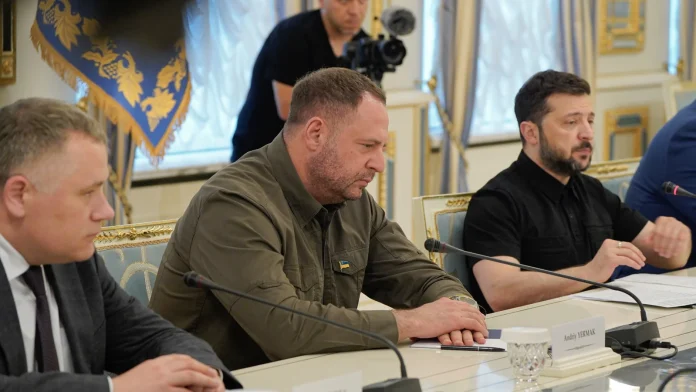
A shock in a time of war: power, suspicion and a country watching
The morning the news broke, Kyiv felt smaller. Not physically — the city is the same clustered maze of Soviet façades and glass towers — but the conversation that day shrank toward one uncomfortable subject: trust. Headlines announced that a name once synonymous with influence in the president’s circle had been flagged by anti-corruption investigators. In parlors and cafes, on tram rides and in government corridors, people asked the same quietly furious question: can you fight for your country abroad if you’re fighting corruption at home?
Ukrainian authorities say an investigation has identified a senior former presidential aide as a suspect in a scheme that allegedly laundered roughly $10.5 million through an upscale housing project outside Kyiv. The agencies have held to procedural practice and not published the person’s name; local outlets and social feeds, however, linked the inquiry to Andriy Yermak, President Volodymyr Zelensky’s one-time chief of staff. Yermak, who resigned amid a wider scandal last year, denies owning property at the development and has said little else publically.
The allegations, in plain terms
What the authorities have described so far is a familiar pattern to anyone who studies corruption: shell companies, layered transfers and real estate as a destination for suspicious funds. Officials say roughly $10.5 million was funneled into an elite housing development — a kind of modern gated enclave where Kyiv’s wealthier residents shelter from the city’s dust and air raids.
Those sums sit within a broader probe that exploded into public view last November when investigators alleged a separate scheme involving kickbacks valued at about $100 million tied to the state atomic agency. That earlier revelation prompted resignations, new charges against several high-level figures and a fraying of public patience that had been building for years.
- Amount under this investigation: approximately $10.5 million
- Related probe revealed last November: alleged $100 million kickback scheme
- Context: these revelations emerged while Ukraine continues to fight a full-scale invasion that began in 2022
“Procedures must be respected”
At a short briefing, Dmytro Lytvyn, the president’s communications adviser, struck a cautious tone. “We are at the stage of procedural actions,” he told reporters. “Speculation does not help the state or the investigation.”
That insistence on due process is one of the few things that unites officials and opposition figures alike. Under Ukrainian law, suspects are not to be named publicly before formal charges; yet, in the internet era, quiet legal protections can be overtaken by an online loudspeaker.
The man at the center — who wielded real power
To understand why this story has resonance, you have to understand the cast. Yermak — a former film producer and entertainment lawyer who became Zelensky’s right-hand man — occupied a rare space in Ukrainian politics: unelected but indispensable. He was often described as the country’s second most powerful person, negotiating on Kyiv’s behalf in delicate talks and appearing at the president’s shoulder at key moments. His resignation last year was presented as part of a broader attempt by the presidency to reset, to show that no inner circle was untouchable.
“He was everywhere — at summits, at the negotiating table, on TV,” says Olena Hrynko, a political scientist in Lviv. “Power consolidated informally in Ukraine for years. That is a dangerous thing in peacetime; in wartime it becomes combustible.”
Voices from the city: anger, weary pragmatism, cautious hope
On a street in Podil, an old Kyiv neighborhood where coffee steam meets late Soviet tiles, residents traded takes with the blunt honesty of people who have seen governments come and go.
“I supported the idea of changing everything after 2014 and again in 2019,” said Serhii, a 35-year-old taxi driver who declined to give his full name. “Now, every time someone close to the president is accused, I think: will we ever be different?”
Across town, a young NGO worker named Iryna was more cutting. “We are asking our partners for weapons and funds. Donors will look at these stories. They ask: are reforms real or cosmetic?”
A security guard at one of the gated developments near the capital shrugged when asked about the scandal. “People with money don’t like to talk to journalists,” he said. “But they watch the news.”
Why this matters beyond Kyiv
This is not merely an internal squabble. Ukraine is receiving sustained international attention and support — diplomatic, financial and military — worth tens of billions of dollars since the full-scale invasion in 2022. Western capitals have made anti-corruption reforms a recurring condition of deeper political support. If allegations of high-level graft appear, donor confidence is at risk. That matters not just for the ornamental politics of reputation, but for weapons, ammunition and rebuilding budgets.
“Corruption is a force multiplier for an aggressor,” said Taras Melnyk, an anti-corruption lawyer who has advised Ukrainian watchdogs. “When systems leak, when procurement is crooked, the state’s ability to defend itself and to care for citizens is weakened. Citizens and partners demand accountability—especially now.”
Global themes: wartime governance and the burden of accountability
History offers no simple lessons here. Nations under siege have historically centralized power to act fast; centralized power can deliver decisive action, but it also breeds opportunity for misuse. The question for Ukraine is whether it can thread the needle: maintain unity and speed of decision in wartime while preserving transparency and the rule of law.
Some observers warn against expecting a tidy outcome. “Complex, entrenched systems of patronage don’t vanish just because something terrible happens externally,” says Hannah Roth, a governance specialist who has worked in Eastern Europe. “What changes is the politics of reform — and the political cost of appearing to shield allies.”
What comes next?
Investigations like this tend to unfold slowly. Prosecutors will gather documents, follow financial flows, and make decisions about charges. The presidency, already bruised by scandal and by the daily strain of wartime leadership, faces a test of its narrative: will it show rigorous cooperation with investigators and a willingness to see the law applied, or will it appear to circle the wagons?
For ordinary Ukrainians, the stakes are tangible. Will the money coming into their country be spent where it’s needed — on weapons, on hospitals, on rebuilding — or will it evaporate into the same opaque channels that have frustrated generations?
As you read this from wherever you are in the world, ask yourself: what should accountability look like during national emergencies? Is it possible for societies to demand both rapid, concentrated action and open, decentralised oversight? These are hard questions, and Ukraine’s answer will ripple beyond its borders.
Final image: a city watching itself
In the evening, as the city’s lights blink to life and the sirens — reminders of a distant thunder — fall silent for the night, Kyiv’s people return to ordinary rituals: kids doing homework by the dim light, neighbors sharing a bottle of wine, shopkeepers locking up. The scandal will continue its legal and political journey. The mood on the streets, for now, is a mix of weary skepticism and a stubborn insistence on better governance. “We won’t trade our future for silence,” said Olena, the political scientist. “Not now.”
Final Evacuation Flights from MV Hondius Touch Down in the Netherlands

People in White Suits, a Drifting Ship, and a Quiet Question: What Happens When a Rare Virus Collides with Modern Travel?
They stepped down from the air ambulance like characters in a surreal tableau: white medical overalls, masks pulled tight, each clutching a plain white sack of belongings. For a few seconds the airport terminal felt less like a travel hub and more like the stage of an improvised drama—one that had begun thousands of kilometers away on a small expedition ship cutting through Atlantic swells.
By evening, two planes carrying 28 evacuees from the MV Hondius had landed in the Netherlands. The Dutch foreign ministry confirmed the numbers: passengers, crew, medical staff, and the specialized epidemiologists who have become fixtures in outbreaks the last decade—one from the World Health Organization, another from the European Centre for Disease Prevention and Control.
Who came down from the sky
The first aircraft delivered six former guests from the vessel: four Australians, one New Zealander, and a British citizen who lives in Australia. Expecting to rejoin their families across an ocean, they were instead routed to a quarantine facility near the airport. “We thought we’d be back home in weeks,” said “Emma,” an Australian passenger who asked that her surname not be printed. “Instead we were told to get into covers and masks. It felt like being inside a picture with no caption.”
The second flight disembarked 19 crew members, alongside a British doctor who had been on board and the two epidemiologists. Unlike the quarantined group, the crew stepped off without full protective gear—masks only—carrying sizeable white sacks as if their lives had been reduced to the contents of a single duffel. “We’re trained for a lot of things at sea,” one young crew member said, “but this is not the sea I signed up for.”
The Hondius continues on, but not as usual
Oceanwide Expeditions, the ship’s operator, says the Hondius is now steaming from Tenerife toward Rotterdam for extensive disinfection. Starboard lights burn as the vessel threads northward, the volcanic silhouette of Tenerife receding in its wake. Onboard, the numbers have dwindled but not disappeared: 25 crew members and two medical staff remain, along with the somber knowledge that a German passenger died during the voyage. His death—a reminder that outbreaks are not only statistical nuisances but human tragedies—has left a shadow that no disinfectant can fully erase.
“We’re arranging for professional decontamination at a northern European port,” an Oceanwide spokesperson told reporters. “At the same time, our priority is the wellbeing of our crew and passengers.”
A quick primer: what is hantavirus?
Hantaviruses are a family of viruses primarily carried by rodents. Depending on the strain, infection can cause two major syndromes: hantavirus pulmonary syndrome (HPS), more common in the Americas, and hemorrhagic fever with renal syndrome (HFRS), more seen in Europe and Asia. HPS can be severe—mortality rates for some strains have approached 30–40%—and symptoms often begin with fever, muscle aches, and fatigue before progressing to breathing difficulties. Incubation can range from one to five weeks, which complicates tracing and response efforts.
“On ships, the issue is always about vectors and enclosed spaces,” said Dr. Leila Moreno, an infectious disease specialist who has worked with maritime outbreaks. “Rodents on board or rodent-contaminated supplies could introduce hantaviruses. Person-to-person transmission is rare for most strains, but when you’re in close quarters the fear—and therefore the response—intensifies.”
Quarantine, logistics, and the human ripple effect
Quarantine is not just a medical protocol; it is a social punctuation. Those six passengers destined for Australia will stay near the airport until vetted and cleared for repatriation. For them, and for the crew who stepped off breathing into masks, the process will include medical observation, testing, and the slow calculus of whether to return to home ports or new isolation hotels.
For families waiting at the other end of this journey, the hours are long and filled with uncertainty. “My sister called me in tears,” said Marcus, whose partner was a crew member on the Hondius. “You hear ‘quarantine’ and you picture hospitals and sirens. But she’s on a ship, in the middle of nowhere—it’s this thin line between being safe and being isolated.”
Beyond individual anxieties, the episode underscores something larger: modern travel remains alarmingly vulnerable to the old laws of biology. After the pandemic, cruise operators revamped protocols, invested in testing, and staged elaborate infection-control plans. Yet new or re-emerging pathogens—whether rodent-borne viruses or other agents—test those safeguards in unanticipated ways.
What officials are saying
Officials from health agencies are cautiously optimistic but pragmatic. “We have teams working to identify the source and to ensure that contacts are traced and monitored,” said a spokesperson from the Dutch health authority. “We also have protocols for port disinfection and crew welfare that will be activated upon arrival.”
The presence of WHO and ECDC epidemiologists aboard the flight signals international coordination—an acknowledgment that in our connected world, a viral scare in the Atlantic can ripple across continents within 48 hours.
Why this matters to us all
Think for a moment about the commodities and comforts of global travel: fresh fruit from elsewhere, crew rotations halfway around the globe, food supply chains that stretch across continents. Ships are microcosms of globalization—efficient, cramped, and dependent on continuous human and material exchange. When something like hantavirus appears on board, it becomes a test case for how those systems hold up.
We might ask: are our screening systems focused enough on non-respiratory, rodent-borne threats? Have maritime inspections intensified in the post-COVID era to account for vermin and cargo contamination? And perhaps most humanly, how do we care for the mental and physical health of sailors and expedition passengers who willingly put themselves in remote environments for the sake of exploration?
Small details that matter
At a small café near the airport, a barista named Anne—a native of Rotterdam—watched the arrivals on the news and shook her head. “They looked so tired,” she said. “You could tell by how they held their bags. Travellers in my city are used to seeing ships come and go. But this—this looked like a story from another time.”
In Tenerife, local guides who had waved to the Hondius days earlier recalled the bright chatter of passengers on deck, binoculars trained on migrating cetaceans and cliffs. “We made jokes about the weather and the dolphins,” one guide said. “None of us expected that the trip would end with masks and flights home.”
Final thoughts: learning while we move
Outbreaks on ships are not inevitable, but they are predictable—if one reads the conditions. Close quarters, aging infrastructure, complex supply chains, and the ever-present possibility of rodents or contaminated provisions make maritime travel a unique public-health puzzle.
As the Hondius nears Rotterdam and the world watches, we would do well to remember that every evacuee who steps off a plane is a person with a life, a family, and a story. The broader lesson is less about fear and more about humility: that in a globalized age, local biological realities can ripple outward quickly, and our responses must be equal parts science, logistics, and compassion.
So here is a question for readers: as travel resumes and expands in the years ahead, what trade-offs are we willing to accept between the thrill of exploration and the fragility of shared biology? How do we design systems that keep curiosity alive without sacrificing safety? The answers will shape not merely policy, but the texture of our shared voyages.
Israel sentences soldiers for desecrating Virgin Mary statue
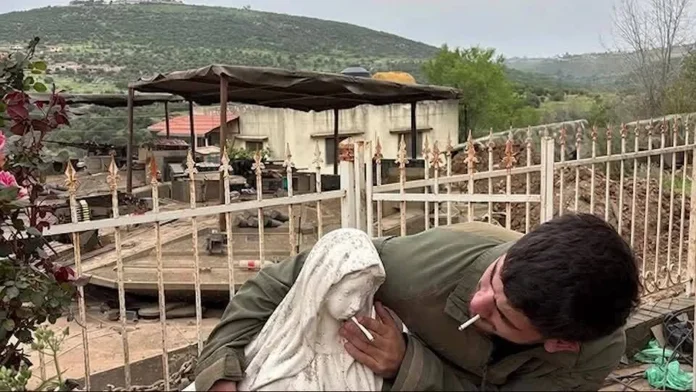
An image that would not be ignored
It began with a photograph — stark, awkward, almost impossible to un-see. A young uniformed soldier, arm slung casually around the shoulders of a weather-stained statue of the Virgin Mary, held a cigarette as though offering it to the Madonna. The statue’s chipped paint and bowed head suggested decades of wind and prayer; the soldier’s smirk suggested something else entirely. The picture, taken in southern Lebanon, ricocheted across social media, translated into Arabic, Hebrew and English as if urgency were the only language that mattered.
For many in the region that image landed like a stone in a still pond: the ripples were immediate and loud. Christian communities in southern Lebanon — where olive groves slope down toward the Mediterranean and small churches punctuate red-tiled villages — felt the picture as an affront. In Israel, people asked how this could happen on the watch of a disciplined army. To observers from afar, the moment became a shorthand for something larger: the fraught mix of occupation, religion, and the performative cruelty that social media both ignites and immortalizes.
The official line and the penalties
Within days the Israeli military acknowledged the incident and said it had been investigated by commanders on the ground. The soldier who was photographed placing the cigarette was handed 21 days of military prison. The colleague who filmed the episode received 14 days behind bars. These are the figures the military released; they’re small numbers in the ledger of institutional discipline, but not insignificant for the young men who wear them.
“We treat incidents like this seriously,” a military statement read, emphasizing values and conduct expected of personnel. The same statement reiterated an institutional commitment — common to many modern militaries — to respect religious sites and symbols. It was a statement meant both to contain outrage and to insist that the act did not represent official policy.
Context: not the first time
This episode didn’t occur in a vacuum. Only weeks earlier, another photograph went viral: an image of a soldier wielding a sledgehammer and striking the head of a crucified Jesus statue in the village of Debl. Two soldiers in that case were ordered into 30 days of detention and removed from combat duty. Taken together, the incidents have provoked renewed debate about how occupying or patrolling forces interact with the material culture of the people who live beyond their borders.
Voices from the valley
“It’s not just about a statue,” Father Elias Haddad, a priest in a nearby parish, told me as he stood beneath the cool shadows of a vine-laced colonnade. “These figures are part of our history. They are the landmarks of our lives — baptisms, weddings, funerals. When someone treats them as a joke it cuts deeper than the paint.”
Rana Khoury, a 62-year-old olive farmer from the same village, scanned the photograph on her phone and shook her head. “We live with soldiers on our borders for years. We greet them sometimes. We bring them tea. This is not how we expected them to behave. It is humiliating,” she said. She then added, more softly: “It’s also a message to our children — what does it teach them about the other side?”
On the other side of the border, reactions mixed between indignation and weary familiarity. “There are always a few who forget they are ambassadors of the army,” said Amir Levin, a former non-commissioned officer who served for a decade and now runs a veterans’ support group near Tel Aviv. “Most of the men and women I served with are careful. But soldiers are young, and when they’re far from home and caught in a tense environment, bad decisions happen.”
Why a statue matters
Religious symbols are repositories of memory and identity. In Lebanon — a country of roughly six million people where Christians have historically been one of the country’s major religious groups — churches and shrines are not just ornate tourism markers. They are neighborhood anchors, places where generations have celebrated and mourned. Current demographic estimates place Lebanon’s Christian population at around a third of the total, though exact figures are contested and politically sensitive.
To desecrate or mock a religious symbol is therefore not simply to offend faith; it is to touch a nerve of communal dignity and historical presence. In regions where identity and territory are tightly braided, such gestures can feed narratives of dispossession and othering.
Social media as courtroom and executioner
One of the most modern elements of these incidents is how they are adjudicated in public. A mobile phone records the moment; the image circulates at the speed of outrage; judgment arrives from commentators, religious leaders, and officials alike. Scholars refer to this as “mediated accountability”: the court of public opinion demanding its pound of consequence, often faster than any formal process.
“There’s a double-edged quality to viral images,” said Dr. Naomi Ben-David, who studies civil-military relations. “They can force institutions to act swiftly, which is a kind of public accountability. But they also flatten context and can make isolated acts seem systemic. That can be dangerous in an already volatile region.”
Beyond punishment: what needs to change
Punishing the soldiers involved addresses the individual act, sure. But it doesn’t erase the underlying conditions that make such acts possible: long deployments, ambiguous rules of engagement, cultural gaps, and an environment where young soldiers are constantly exposed to hostility and humiliation. Military training can and must include more than marksmanship. Cultural sensitivity, ethical decision-making, and psychological support for troops are preventive medicine.
There’s also a political dimension. When acts like these are amplified, they become bargaining chips in a larger discourse about occupation, sovereignty, and dignity. Local leaders on both sides of the border — priests and imams, municipal heads and opposition figures — know this. “Treating symbols as disposable creates cycles of retaliation,” Father Haddad warned. “It may be small now, but these small things add up.”
What to watch next
- Will the military broaden its disciplinary or training measures beyond individual punishment?
- How will local communities respond — through protest, dialogue, or quiet resilience?
- Will social media act as a force for systemic change, or merely as an accelerant for moral outrage?
Images last longer than apologies. But they can also spark reform. As you scroll past the photograph, ask yourself: what does dignity mean in a place where lives and histories collide daily? How should an occupying force honor the sacredness of places not its own? And how much of conflict is about territory — and how much is about respect?
In the valley where the statue stands, the church bells will ring again. People will bring bread to neighbors and oil to lamps. Someone will sand and repaint the Madonna’s face. These are small acts, but they are the work of living communities trying to repair what a single moment of disrespect can tear in the fabric of everyday life. That is where the long answer to this photograph — and to the questions it raises — will be written.
Labour pledges to place Britain at Europe’s centre
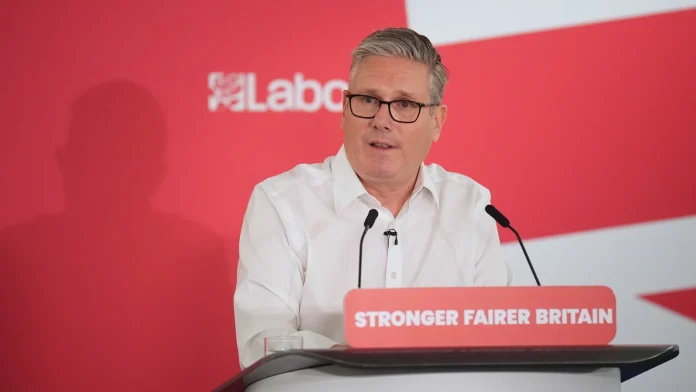
Labour says it will put Britain back at the “heart of Europe” — but what does that really mean?
The room hummed like an old train station. Flags—Union Jacks threaded with blue stars—fluttered as people took their seats. There was the familiar scent of coffee and damp coats, the low murmur of conversation turned up a notch when the Labour leader stepped to the lectern.
“We will put Britain at the heart of Europe again,” the leader declared, voice both rehearsed and warm, the phrase landing like good news. Around the hall, phones lifted to record. In the pubs and kitchen tables that will judge this promise, reactions were already being baked like scones: some sweet, some slightly burnt.
A slogan wrapped in history and emotion
For many, those five words are a deliberate tug on memory and identity. To younger voters, “Europe” is shorthand for foreign holidays, Erasmus exchanges, and cheap flights. To older voters, it recalls decades when Britain’s foreign policy, trade deals and even TV schedules were more visibly aligned with the continent to the east. And for the millions who voted to leave, the word can still carry the sting of sovereignty regained.
“Put Britain at the heart of Europe—yes please,” said Lila Adeyemi, a café owner near King’s Cross, stirring her tea thoughtfully. “My suppliers come from Italy and France. Paperwork has doubled since 2019. If this means fewer customs forms, more customers and less worry, I’m all for it.”
Not everyone echoes that sentiment. “Heart? Soulless,” grumbled Tom Ellis, 62, a retired dockworker in Dover, a town that felt the Brexit earthquake most keenly. “We voted for control. If that goes soft, who’s to say what we voted for?”
What policy might look like — and what it won’t
On paper, the pledge can mean many things: closer trade arrangements, a security partnership, co-operation on research and climate goals, smoother travel for workers and tourists, or simply a tone-shift in diplomacy. Labour spokespeople have hinted at negotiating a “comprehensive, pragmatic partnership” with the EU—words chosen to keep both markets and voters engaged.
But talk and treaties are different beasts. Trade with the EU remains integral to Britain’s economy: before 2020, roughly four in ten of UK exports of goods went to EU countries, according to national statistics offices. Services—banking, legal, creative—are harder to quantify but are a British strength and a sticking point in any new arrangement. And then there are people: estimates suggest around 3.5–4 million EU nationals live in the UK, contributing across the NHS, hospitality, construction and classrooms. Any new policy will have to grapple with those intertwined human and economic threads.
“This isn’t 1990. The EU has changed; so has Britain. We must design a partnership fit for supply chains, services and security,” said Dr. Aisha Khan, a trade analyst at a London think-tank. “That may mean sector-by-sector agreements, not a single off-the-shelf deal.”
Local stories, global ripples
Walk through Grimsby’s fish docks or the vegetable markets of Kent and you’ll hear practical worries louder than abstract geopolitics. “We used to load oysters straight onto vans bound for Brittany,” said Margot Tremblay, a fisherwoman who now keeps two sets of export paperwork on her boat. “There’s cost and delay now. When the paperwork gets lighter, it changes lives.”
In Manchester, an independent games studio that once hired EU creatives with ease now reports longer visa lead times and higher legal fees. “We spend more on forms than on coffee,” joked lead designer Raul Mendes, but his eyes were serious. “Talent comes first. Policies that make that simple again are welcome.”
Numbers matter — and they complicate the romance
Promises are political art; economics is stubborn. The UK’s trade balance with the EU still accounts for a large slice of business: exports and imports to the bloc exceed 40% of total goods trade in most recent robust surveys. Investment flows and collaborative research on climate and health are also deeply embedded.
At the same time, the global context is shifting. The EU has been tightening its green regulations, reshaping supply chains to reduce reliance on geopolitically risky suppliers. China’s Belt and Road, US trade policy, and the aftermath of the pandemic have all nudged countries toward more resilient, sometimes regional, economic strategies. For Britain, a “heart of Europe” approach will need to balance openness with resilience.
Security and values: the quieter, harder conversation
Trade is the headline, but security co-operation—shared intelligence, joint training, coordinated responses to cyber-attacks—might be the most durable benefit of closer ties. “We can choose to be resilient together,” said a former diplomat now advising on defence policy. “Threats don’t respect shorelines; they come through networks.”
Then there are values: human rights, labour standards, environmental commitments. Whether a closer partnership will mean aligning more closely with EU norms—on green regulations, data protection, or workers’ rights—will be a political battleground within Britain as much as across the Channel.
Voices from the street
To capture the texture of opinion, I walked from boroughs of inner London to quieter seaside towns. People aren’t thinking in policy drafts; they are thinking in daily life.
- “My daughter’s visa took months,” said Mehdi Rahman, a nurse. “If closer ties speed that, if it means better staffing in hospitals, why would anyone say no?”
- “We wanted fishing rights,” said Elaine, a pescatarian from Cornwall. “We still remember the promises. Any deal must not forget communities like ours.”
- “I’m cynical,” admitted Yusuf, a student from Birmingham. “Politics keeps big decisions behind closed doors. Show us the detail and we’ll listen.”
Questions that matter to you (and to the future)
What does “heart” mean when borders are porous and markets global? Can a country reweave its relationships without unpicking the social threads that made a different choice years ago?
And for those reading this on a phone in Lisbon or a laptop in Lagos: how does a Britain closer to the EU change your world? More travel, smoother visas, faster tech collaboration? Or new trade rules that ripple into supply chains you rely upon?
Looking ahead: promises, pivots and politics
Labour’s pledge to place Britain back at the “heart of Europe” is a statement heavy with history and hope. It is also an invitation to negotiation—between parties, sectors, regions and generations. The real work will be translating that musical slogan into legal text, economic frameworks and lived experience.
Politics will try to make certainty out of uncertainty. But readers should remember: policy is a process. Expect debates, pilot schemes, compromises. Expect local victories and disappointments. Expect that the rhetorical heart sometimes beats more slowly than the political pulse.
So, what do you make of it? Is a Britain at the heart of Europe a balm—a practical route back to smoother trade and cooperation—or a return to a past many are not ready to relive? The answers will be forged in towns like Dover and cities like Manchester, in Whitehall meeting rooms and Brussels corridors, and in the margins where people live their lives. Which side of the story will you watch, and which part will you help write?
Suspect in White House Press Gala Shooting Enters Not Guilty Plea

Gunshots, Gasps and the Gilded Night That Almost Wasn’t
It was supposed to be an evening of inside jokes and polished banter — Washington’s annual ritual where reporters and their sources trade barbs, empathy and a little vanity over too-expensive hors d’oeuvres. Instead, the Washington Hilton’s ballroom became an arena of confusion and fear on the night of April 25, when gunfire echoed through the chandeliers and a man with a cache of weapons barreled toward the lower-floor stage.
He is identified as 31-year-old Cole Allen, a California native who, according to prosecutors, traveled across the country by train carrying a shotgun, a handgun and multiple knives. He was subdued and arrested almost immediately after charging through a security checkpoint; a Secret Service officer fired multiple times but did not strike him. Allen later appeared in federal court in an orange jumpsuit and handcuffs and pleaded not guilty to four federal charges, including attempting to assassinate President Donald Trump.
What Happened in the Ballroom
Attendees say the room was a scramble of voices and polished shoes. Journalists who live for the whiplash of political theatre later described the scene in bewildered detail.
“It went from laughter to a stampede in seconds,” recalled Maria Thompson, a political reporter who was seated on the third row. “Someone shouted, ‘Everybody take cover.’ Then movement, people diving under tables. I can still hear the clink of champagne glasses and the thud of hundreds of shoes.”
The president, who had broken with the custom of skipping the dinner in recent years, was escorted out by Secret Service agents after the first shots were heard. Organizers later confirmed that Mr. Trump and other dignitaries were moved to safety within minutes.
The Charges
Federal prosecutors have framed the alleged attack as a clear and chilling attempt with a series of felonies that carry severe penalties.
- Attempted assassination of the President
- Transportation of firearms and ammunition across state lines with intent to commit a felony
- Using a firearm in relation to a crime of violence
- Assaulting a federal officer
If convicted, Allen faces the possibility of life in prison. The case will test not only the clarity of motive and intent, but also how the justice system treats politically charged acts in an era of deep polarization.
Who Is Cole Allen?
Prosecutors say Allen is a highly educated teacher and engineer. They say his journey from California to Washington was methodical — a cross-country trip ending not in sightseeing but with a staccato burst of violence. Details about his background are still emerging, and court filings have yet to fully reveal motive or whether he acted alone.
“We cannot rush to explanations,” said Caroline Ruiz, a criminal law professor at Georgetown. “The court must determine facts: travel plans, acquisition of weapons, communications, possible radicalization. In cases like this, the narrative can get ahead of evidence.”
The Wider Context: A Pattern of Threats
This incident marks at least the third alleged attack on President Trump within a two-year window, underscoring a grim pattern. In 2024, during a campaign rally in Butler, Pennsylvania, a gunman opened fire, killing an attendee and grazing the president’s ear. Months later, law enforcement arrested a man found with a firearm on a golf course in West Palm Beach where the president was playing.
America’s presidential security history is long and fraught. Four presidents have been assassinated — Lincoln, Garfield, McKinley and Kennedy — and presidents and candidates have faced dozens of threats and attempts over the centuries. The modern protective apparatus — the Secret Service, with its decades-long evolution — now must contend with a different landscape: social media-fueled rage, disinformation, and a proliferation of easily acquired weapons.
Voices from the Night
In the hours after the arrest, the hotel’s stairwells and nearby sidewalks filled with reporters, staffers and guests still shaking with adrenaline. Their stories were blunt and human.
“I saw a man go down right near the bar,” said Antoine Rivers, a caterer who’d worked the event for years. “He was tackled like in a movie. I didn’t think they were going to catch him so fast. It was like someone slammed the rewind on a scene and then had no idea how to put it back together.”
“You try to make sense of it — was it personal? was it political? — and you keep finding more questions than answers,” said Senator Elaine Park, who was present and later praised the speed of security. “We are fortunate no one else was killed or critically injured.”
Security, Society and the Cost of Violence
There are practical questions: How did weapons move across state lines undetected? How did a man with multiple weapons make it inside a secure venue? And there are larger, more uncomfortable questions about civic life.
Experts note that the United States wrestles with an unusually high prevalence of firearms. The Small Arms Survey estimates there are more guns than people in the U.S.; other sources put civilian firearm ownership at roughly 120 firearms per 100 residents in recent years — a figure that helps explain how weapons can show up where officials least expect them.
“When you combine easy access to weapons with political polarization and a culture of grievance, you have a combustible mix,” said Dr. Nikhil Banerjee, a sociologist who studies political violence. “We also see that radicalization often travels online, where echo chambers cultivate grievance into intent.”
What Comes Next?
Legally, Allen’s not-guilty plea sets the case on a familiar but consequential path: discovery, pre-trial hearings and, unless a plea deal is reached, a jury trial. Politically, the episode will likely intensify debates about security at public events, the balance between openness and safety, and how a democracy should respond when its leaders become targets.
For the journalists, staffers and servers who will return to the fold, the questions are more immediate: Do you accept that risk as part of the job? Can a press corps continue to gather in public spaces that are increasingly fraught?
“We cover conflict and power every day,” said Maria Thompson. “But this felt personal. It made me think: how much are we willing to risk for the stories that keep democracy transparent?”
Reflection: A Moment to Ask Hard Questions
As you read this, consider how a single night in a gilded ballroom exposes broader fractures — about safety, about politics, about how communities respond to violence. Are we becoming a society in which public life is more policed and less spontaneous? How do we protect leaders without walling off civic spaces? And how do we address the grievances — mental health, social isolation, extremism — that too often end in violence?
The courtroom will be where facts are weighed and statutes applied. The courthouse steps, the dinner tables and the social feeds will be where the country debates what it means to be safe, free and publicly engaged in a fraught moment. It is a conversation worth having — urgently, carefully and with empathy for those who walked out of a ballroom that night carrying more than the memory of spilled champagne.
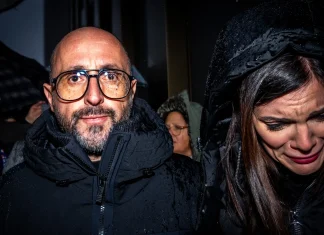
Swiss Fire Sparks New Scrutiny and Questions for Bar Owners
A fresh round of questioning is set to reopen painful memories of one of Switzerland’s deadliest New Year’s celebrations, as investigators return to the...
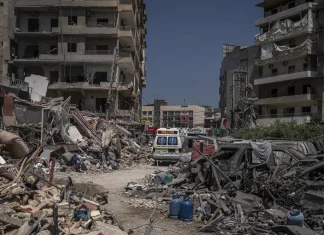
UN doubles Lebanon aid appeal amid surging humanitarian needs
Lebanon’s humanitarian crisis is deepening so fast that the United Nations says it now needs more than twice the funding it originally sought, as...
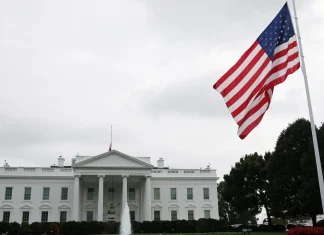
Trump Confirms Massive Rally, Cancels U.S. 250th Anniversary Concerts
President Donald Trump says he is taking America’s 250th anniversary celebration into his own hands, calling for a mass rally in Washington on 24...
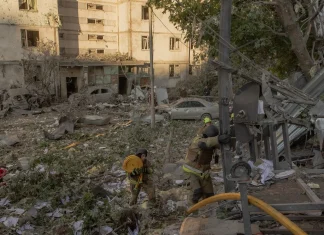
Trump Says a Putin-Zelensky Meeting Would Be “Great,” Urges Talks
President Donald Trump said a face-to-face meeting between Ukrainian President Volodymyr Zelensky and Russian President Vladimir Putin would be “great,” welcoming the prospect of...

Seán the sheep shearer claims New Zealand’s top shearing championship title
A young shearer from Co Wicklow has made history on the other side of the world, taking the top junior sheep-shearing title in New...