Home Blog Page 38

Iran casts doubt on US diplomatic commitment after recent attack

Iran questions seriousness of US diplomacy after attack
Iran's UN envoy Amir Saeed Irvani accused the United States of violating the ceasefire

Smoke on the Water: A Gulf in Flux and the Fragile Thread of Diplomacy

The sun rises low over the Persian Gulf, turning oil-slicked water into a molten mirror. Off Kharg Island, a key node in Iran’s oil exports, satellites have recently traced a stain of crude spreading across more than 52 square kilometres of sea — a stark, visible sign that the fallout from the region’s clashes is not merely geopolitical but ecological, too.

For weeks now, the Gulf has felt like a pressure cooker. Naval confrontations have become routine, missiles and drones have brushed past airspace and air defenses, and the language on both sides has hardened between threats and conditional offers of talks. Yet alongside this kinetic drama runs another, quieter storyline: negotiation attempts mediated by third parties, the slow, clumsy choreography of diplomacy in wartime.

Shots, Silence, and a Waiting Game

Late last week an F/A-18 Super Hornet — a flash of metal and thunder — disabled two Iranian-flagged tankers in the Gulf of Oman. U.S. Central Command said the strike used precision munitions to prevent the vessels from breaching a naval blockade intended to choke off Iranian exports to its ports. Tehran’s spokespeople described the attacks as acts of “American terrorism” and claimed their forces had responded in kind before the exchanges subsided.

“We are living the war on the water,” said Reza, a deckhand who has worked ships out of the southern ports for two decades and asked that his full name not be used. “Boats aren’t moving. The radio is full of warnings. Everyone is looking at the horizon for the sound of aircraft.”

There was supposed to be a response to Washington’s latest proposal to extend a fragile truce and open the door to negotiations. U.S. leaders said they expected Tehran to reply “tonight.” If an answer moved through Pakistani intermediaries — who have been quietly shepherding ceasefire talks — there was no public sign of it. In Tehran, Foreign Minister Abbas Araghchi told his Turkish counterpart that recent U.S. actions in the Gulf have only deepened doubts about Washington’s sincerity.

“The recent escalation of tensions by American forces… has added to suspicions about the motivation and seriousness of the American side in the path of diplomacy,” Araghchi said in a statement carried by Iran’s state media. That distrust hangs over any possibility of a negotiated peace like a low cloud ready to come down.

When Diplomacy Is Interrupted by Missiles and Mistrust

Diplomatic channels are alive, yet strained. Pakistan has been pitching itself once more as a mediator; Qatar has quietly hosted envoys and its prime minister met with U.S. officials in Washington to discuss Pakistani-led efforts. Small, pragmatic acts of statecraft continue while the theatre of war threatens to drown them out.

“Mediation works on credibility and patience,” said Laila Haddad, a Doha-based conflict resolution specialist. “If military actors keep acting as if diplomacy is a cover for weak resolve, the whole process collapses. Confidence-building is not theatrical; it’s consistence day-to-day, and that’s what has been most missing.”

There are competing narratives about the leverage on the table. A U.S. intelligence assessment — reported by major outlets — suggested a blockade of Iranian ports might not inflict severe economic pain on Iran for roughly another four months, implying a limited window for Washington to press Tehran militarily while using the blockade as leverage. A senior U.S. intelligence official pushed back on that framing, insisting the blockade was already inflicting “real, compounding damage.”

  • Strait of Hormuz: roughly one-fifth of global seaborne oil passes through this chokepoint in calmer times.
  • Kharg Island: a central export terminal for Iran, now at the centre of an oil contamination incident covering more than 52 sq km (Orbital EOS).
  • Civilians: The UAE reported air defenses engaging with incoming missiles and drones, and three people sustained moderate injuries in one such exchange.

Allies, Allies in Name and in Tension

The conflict is testing alliances. European leaders have spoken of keeping NATO’s machinery intact even as differences over the Iran war expose rifts between Washington and key partners. Germany’s chancellor reiterated that Europe wants the alliance to function, even while disagreeing on how to confront Tehran. “We are willing to keep this alliance alive,” he said, underlining a shared goal — preventing nuclear proliferation — even as tactics diverge.

“Partnership isn’t about unanimous cheerleading,” said Henrik Olofsson, a Stockholm-based analyst. “It’s about finding common outcomes with different strategies. Right now, however, those strategies look unaligned.”

Local Voices, Global Ripples

On the ground, the consequences are immediate and intimate. At a small teahouse near the port, an oil worker named Fatemeh cradled a teacup and watched news footage of the disabled tankers. “We are tired of being the arena for the big players,” she said. “My son cannot find steady work because vessels are turning back. We are watching our sea die.”

Environmental advocates warn the spill near Kharg Island could compound long-term damage. Early reports said the slick had “much reduced” the following day, suggesting a leaking infrastructure incident rather than a fresh barrage of tanker hits. But even temporary contamination undermines fisheries, livelihoods, and the fragile coastal ecosystems that many communities rely on.

“These are slow-moving catastrophes,” said Dr. Amina Nasser, a marine ecologist. “Oil doesn’t only smother birds; it infiltrates food chains and economies. When a shipping lane is used as leverage, the cost is paid disproportionately by ordinary people and the environment.”

Why Should Anyone Outside the Region Care?

Because the Gulf remains a linchpin of global energy flows and geopolitical stability. Disruptions can ripple through stock markets, pump prices at the gas station, and force policy recalibrations from Tokyo to London to Lagos. Because the story isn’t only tanks and jets; it’s about whether war can be kept local or whether nuclear ambitions, proxy conflicts, and alliance fractures will pull the wider world in.

And finally, because what happens here raises a question worth asking aloud: when conventional power and coercion sit uncomfortably beside the slow, uncertain work of diplomacy, how do we choose which to prioritize?

Paths Forward — Or Deeper Into the Fog

For now, the truce extension remains on a hinge. Mediators scrabble for momentum. Naval commanders continue patrols. Environmental teams survey oil, and families wait for ships to return. The Gulf is a place of trade and tradition, of fishermen, oil workers, diplomats and soldiers. Each is a reminder that in geopolitics the human cost is not abstract.

“If we cannot make room for real talks, this will keep coming back,” Laila Haddad warned. “And the price will grow, measured in livelihoods, in ecosystems, and in the patient trust that diplomacy requires.”

Are we prepared to accept that price? Or will the next round of strikes, sanctions, and countermeasures be the push that finally forces parties to sit and dismantle the machinery of mistrust? The Gulf’s calm is brittle; whether it holds will depend as much on the quiet work of negotiation as on the thunder of jets.
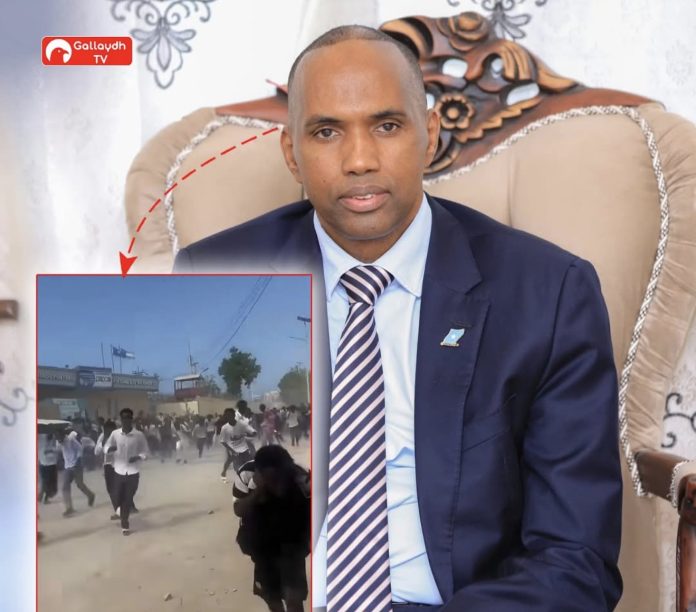
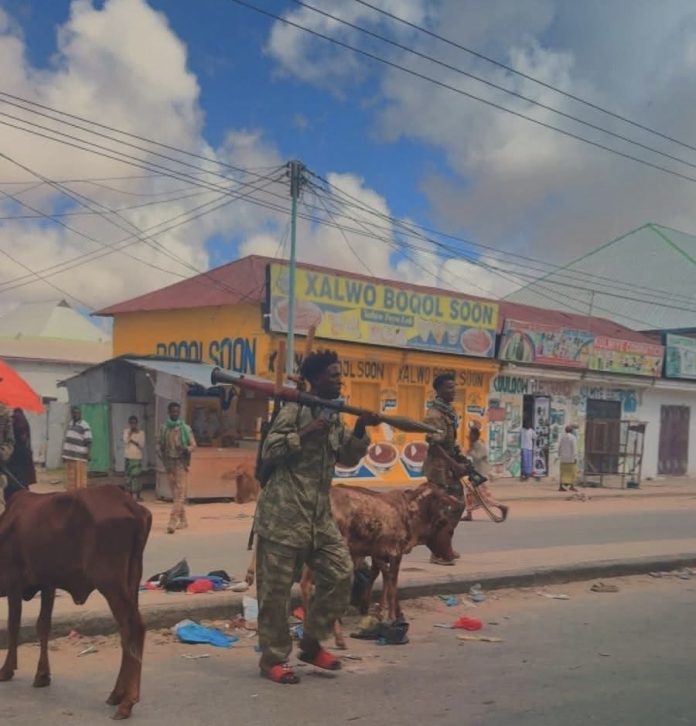
Khayre oo ka hadlay dadkii ciidanka dowladda ay ku dileen degmada Deyniile

Screenshot

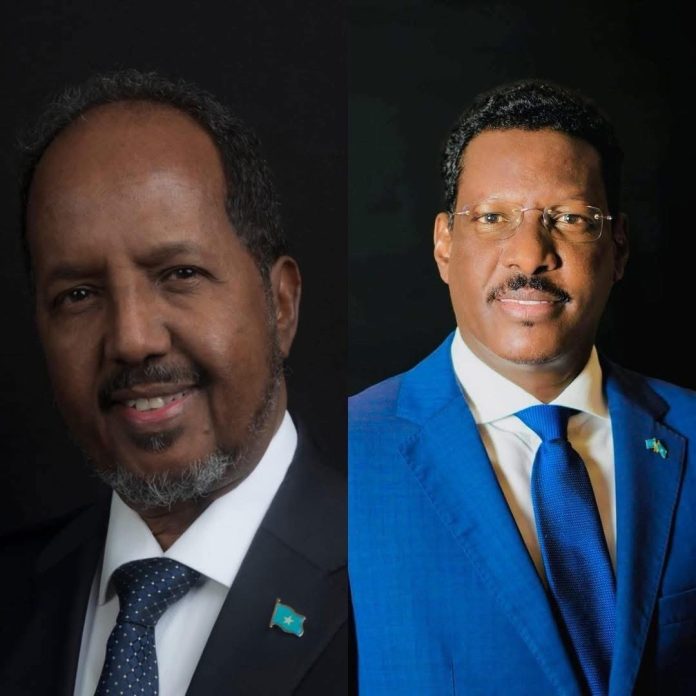
May 10(Jowhar) Raysal wasaarihii hore ee Soomaaliya Xasan Cali Khayre oo hadda ka mid ah xubnaha mucaaridka Soomaaliya ayaa sheegay in dawladda Soomaaliya si badheedh ah u dishay dad bannaan baxyayey oo ku sugnaa degmada Dayniile ee magaalada Muqdisho.

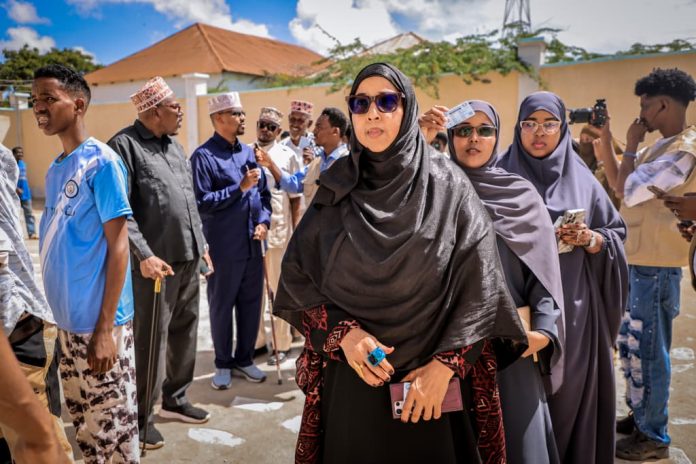
Ciidamadda Dowaldda oo dhimasho iyo dhaawac u geystay shacab banaanbaxayay

May 10(Jowhar) Dhimasho iyo dhaawac ayaa ka dhashay rasaas la tilmaamay in ciidamada dowladda ay ku rideen shacab dibadbax ka dhigayay qeybo kamid ah degmada Deyniile ee gobolka Benaadir.

Evacuation underway for virus-stricken vessel off Tenerife coast

Evacuation of virus-hit ship begins off coast of Tenerife
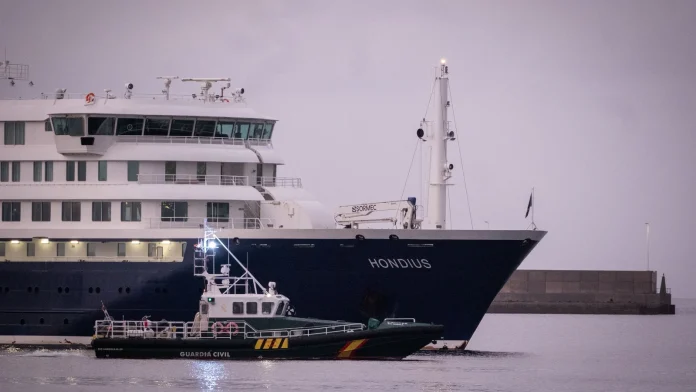
A Spanish Guardia Civil vessel seen alongside the MV Hondius ship in Tenerife this morning

Tenerife’s Quiet Harbor, A Ship Under Watch: The Evacuation of the MV Hondius

The morning air off Tenerife smelled of salt and diesel, the island’s familiar breeze carrying the low hum of engines and the distant clatter of a port that had not expected to be the stage for an unfolding public‑health drama.

At anchor near the industrial piers of Granadilla de Abona, the expedition vessel MV Hondius — a luxury cruise ship turned emergency enclave — sat under the watchful eyes of the Guardia Civil and a small armada of Spanish patrol boats. On board, passengers watched the shoreline inch closer, their faces lit sometimes by phones and sometimes by the quiet dread that comes with uncertainty.

How the Disembarkation Is Being Staged

Spanish authorities moved with the kind of precision borne of hard lessons learned in recent years: teams of public health officials and military personnel boarded the ship for final checks before beginning a carefully choreographed disembarkation.

“We are doing everything possible to ensure no one mixes with the general population,” Health Minister Mónica García told a small press contingent, according to people present. “Those who are Spanish nationals will be repatriated first, and we will maintain strict separation protocols throughout.”

Order of Evacuation

  • Spanish nationals: first to small boats, then sealed buses to the airport, and onward by government aircraft to Madrid.
  • Passengers from the Netherlands, Germany, Belgium and Greece: grouped to travel on a Dutch plane.
  • Citizens from Ireland, Turkey, France, the UK and the US: scheduled on later flights.
  • The final wave, set for the following afternoon, to include passengers bound for Australia, New Zealand and nations across Asia.

Officials emphasized that the small boats ferrying people ashore and the sealed buses taking them the ten‑minute ride to Tenerife South Airport were not routine transport: those buses were sealed and staff wore protective equipment, and passengers were to be transferred directly to aircraft or designated health facilities with no stop in public spaces.

What Authorities Say — And What We Know

The evacuation follows an outbreak of hantavirus on the MV Hondius that sickened eight people and resulted in three deaths — reported to be a Dutch couple and a German national. Six cases have been laboratory‑confirmed and two considered suspected, according to the World Health Organization, which has been closely involved in the response.

“All passengers are being treated as high‑risk contacts,” said an official from the European public‑health agency. “This is a precautionary measure given the close quarters on board.”

Hantaviruses are typically linked to rodents. In most of Europe, species such as Puumala and Dobrava viruses cause hemorrhagic fever with renal syndrome (HFRS), often acquired through contact with rodent droppings. But some hantaviruses — most notably the Andes virus in South America — have been associated with rare person‑to‑person transmission. The World Health Organization has said the risk to the broader global population remains low, while acknowledging the moderate risk to those aboard the ship.

“The ship underwent environmental and hygiene checks,” a health ministry bulletin read earlier in the day. “Inspectors did not find evidence of rodent infestation on board, and hygiene conditions are appropriate, but extreme caution is warranted.”

On the Dock: Faces, Voices, and a Sense of the Island

Down on the quay, Spanish military buses rolled into position. Workers in bright vests moved like a choreography not usually seen in the island’s fishing port: cones, cordons, and clusters of officials with clipboards. A Guardia Civil vessel had shadowed the Hondius as it approached, and local fishermen paused in their routines to look at a ship that would normally be a curiosity, not a crisis.

“I’ve watched a lot of big ships come into Granadilla,” said Antonio, a fisherman who has mended nets in this harbor for thirty years. “But we are used to the sea bringing surprises. You hope everyone will be safe.”

Across town, hotel lobbies that usually hum with tourists felt the strange lull of displaced arrivals — no cheer, only procedural calm. The Canary Islands are no stranger to visitors, but this kind of medical repatriation is rare here. The archipelago’s volcanic topography and long seasons of tourism add a distinctly local texture to the scene: the smell of roasting coffee near the port cafés, a string of bougainvillea flaring pink against worn concrete, police radios murmuring in Castilian and English.

International Threads: WHO, Governments and the Logistics of Repatriation

WHO Director‑General Tedros Adhanom Ghebreyesus flew into Tenerife to coordinate with Spanish ministers, an indication of how the crisis has drawn swift international attention. Several governments dispatched aircraft to bring their citizens home; the Irish government, for example, sent a jet to transport two Irish nationals back to Ireland where they will be cared for in a designated health facility and monitored for weeks.

“We will monitor arrivals closely,” a senior Irish health service official said. “Isolation and careful testing are the backbone of our plan.”

Thirty crew members will remain on board while the Hondius sails to the Netherlands for disinfection — a practical detail but a stark reminder of the liminal life on a vessel that is now both a travel memory and a potential outbreak site.

Why This Matters Beyond Tenerife

There is a broader conversation threaded through this incident: the intersection of global mobility and public health preparedness. Cruise ships, which ferry thousands across continents every year, concentrate people in enclosed spaces and cross borders rapidly. That makes them efficient vectors of leisure — and, occasionally, of disease.

Ask yourself: how well did the systems put in place after the COVID‑19 pandemic prepare us for a different pathogen on a different platform? Where have investments been made, and where do gaps linger?

Public health experts emphasize that while the global risk is low, the event underscores the need for rapid, transparent communication and international cooperation. “This is a test of coordination,” said Dr. Elena Kovács, an infectious‑disease specialist who studies travel‑related outbreaks. “You need rapid diagnostics, clear protocols for transport and quarantine, and sensitive communication with people who are frightened, confused and far from home.”

What to Watch Next

In the coming days, authorities will monitor repatriated passengers for symptoms, complete contact tracing where applicable, and complete disinfection of the ship. Laboratories will continue to analyze samples to better understand the strain involved and whether unusual transmission routes played a role.

For now, Tenerife’s harbor returns slowly to its ordinary rhythms. Tourists will wander its promenades; fishermen will haul in their catches. But the port’s temporary role in a global public‑health response will remain a vivid reminder of how interconnected we are — and how quickly a tiny pathogen can bring the world’s systems into synchronous motion.

What do you think — are our global travel systems resilient enough for the next unexpected outbreak? The Hondius has anchored a question that will not easily drift away.

Shacabka Koofur Galbeed oo u dareerey goobaha codbixinta

May 10(Jowhar)Shacabka ku nool deegaannada Maamulka Koonfur Galbeed Soomaaliya ayaa saaka waaberigii hore u dareeray goobaha codbixinta, si ay uga qeyb qaataan doorashooyinka qof iyo codka ah ee ay soo qabanqaabisay dowladda Federaalka Soomaaliya.

Sheekh Shariif oo iclaamiyay in banaanbixii weynaa uu ka dhacayo garoonka Koonis

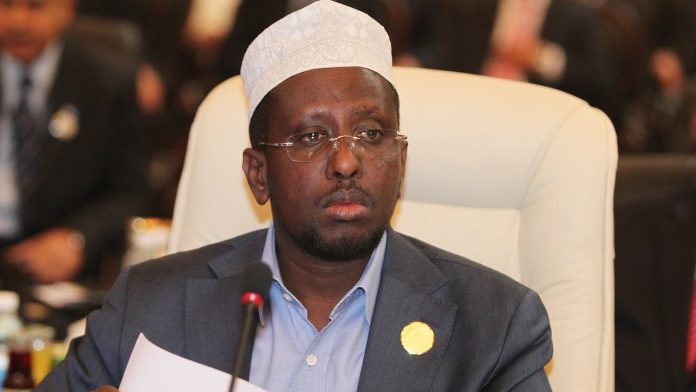
May 10(Jowhar) Madaxweynihii hore ee Soomaaliya Sheekh Shariif Sheekh Axmed ayaa shir jaraa’id oo uu ku qabtay gurigiisa deegaanka Mirinaayo ee degmada Boondheere ku shaaciyey in bannaanbaxii mucaaradka uu ka dhici doono garoonka Koonis ee degmada Cabdicasiis, saacadda 11:00-ka duhurnimo ee maanta.

How the Kremlin is throttling internet access across Russia

How Putin's regime is throttling the internet in Russia
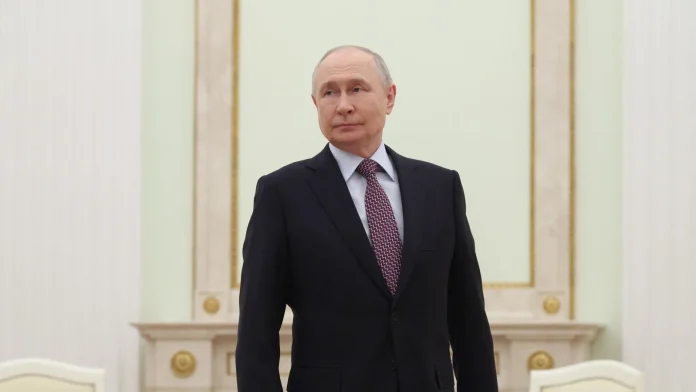
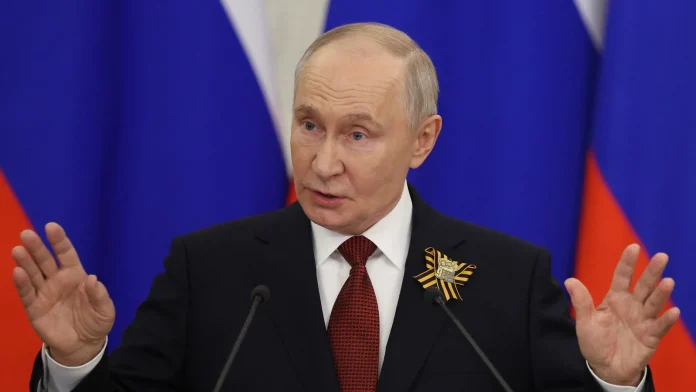
Russian President Vladimir Putin said that the internet restrictions were needed to defend the country against 'terrorist attacks'

A city that suddenly felt analog

On a pale spring morning in central Moscow, two women paused under the copper domes and snapped selfies as if to document something more than a day out. Their screens sputtered. The usual river of messages, videos, and gossip slowed to a trickle. Commuters in the Metro peered at dead apps the way people used to check watches—out of habit and disbelief.

“It felt like someone had pulled the plug on a part of our lives,” says a film professional in his 40s, who asked not to be named. “We use these tools for everything—work, family, news. When Telegram or WhatsApp falter, it’s not a glitch. It’s a small panic.”

This is no occasional outage. Over the past year, Russia’s internet has been reshaped—gradually, then suddenly—into something more closed, more curated, and more controlled. Messaging apps that once carried the private pulse of the nation are being throttled or barred. Western social platforms and independent news outlets remain largely blocked. And when the state’s engineers flick switches before a major national ceremony, entire neighborhoods can wake up with an unfamiliar inconvenience: a restricted life in the palms of their hands.

The tools of a quiet squeeze

The changes did not arrive overnight. The Russian government’s media regulator, Roskomnadzor, began building the technical and legal scaffolding a decade ago: a blacklist system in 2012, a “sovereign internet” law in 2019 that gave authorities the power to isolate Russia’s network, and a steady drumbeat of restrictions that escalated after the 2022 full-scale invasion of Ukraine.

Then came the bans. Facebook and Instagram disappeared from Russian mobile screens within weeks of the invasion. Messaging platforms followed. WhatsApp was declared non-compliant earlier this year; Signal was blacklisted in 2024. Telegram—long a bastion for both private chatter and public channels with millions of subscribers—was gradually squeezed and then throttled.

“The goal is obvious,” says Igor Gretskiy, a foreign-policy researcher now based in Tallinn. “Create a RuNet that looks outward but listens inward—an ecosystem you can curate, censor, and surveil.”

Authorities present their moves as defensive measures—necessary, temporary steps to stop drone strikes and terrorist acts. In practice, they amount to a wholesale attempt to steer how Russians discover facts, tell stories, and organize.

Timeline in brief

  • 2012 – Roskomnadzor launches a national blacklist for online content.
  • 2019 – The Sovereign Internet law grants tools to cut international connectivity.
  • 2022 onwards – Western platforms and many foreign news sites are blocked after the invasion of Ukraine.
  • 2023–24 – Messenger apps (WhatsApp, Signal, Telegram) face throttles and bans; YouTube speeds were limited to steer users to Russian platforms.

Max, the state-approved remedy

When free apps go, the state often pairs bans with an alternative. Enter Max: a government-backed “super-app” installed on newly sold phones in Russia and promoted as a one-stop portal for messaging, payments, and public services. It is the Kremlin’s answer to the problem of uncontrollable software: a domestic platform where the rules are known and the logs can be read.

Pro-Kremlin outlets claim tens of millions of users have adopted Max; one paper reported figures exceeding 85 million. Tech analysts say the app’s architecture makes surveillance and moderation easier—an intentional trade-off between convenience and privacy.

“The government wants a digital assistant that does everything except ask questions,” says Lena Volkova, a digital-rights researcher. “That sacrifice of privacy for functionality is exactly what authoritarian tech plays on.”

Everyday life under shifting signals

The human cost of that trade-off is immediate. Journalists who once whispered through end-to-end encrypted channels find sources harder to reach. Small businesses that sold goods through social apps see payments delayed. Friends who used Telegram channels to organize cultural events now scramble to new platforms—if they can.

“I’m still holding out against Max,” the unnamed film worker told me. “I don’t trust an app that’s handed to me like a baton with ankle weights attached.”

Across Moscow and St. Petersburg, young people vocalize their frustration on the platforms that still work—often carefully, without naming the president or the war. Dissent is practiced in fragments: a snarky meme, a short-lived hashtag, a quiet thread of complaint. Even some government-friendly voices have muttered criticisms, not at the top of power, but at “authorities” in general—safe enough to avoid reprisals but blunt enough to reveal unease.

“We are adapting, but adaptation feels like resignation,” says Anya, a 22-year-old university student. “You learn VPNs, you switch to VK playlists, you accept lower-quality videos. But little by little, you stop expecting the world to be at your fingertips.”

What this means beyond Moscow

The Russian experiment is part of a larger story: the splintering of the global internet. Countries from Beijing to Ankara have shown that it is possible to shape an online environment to fit political needs. The model is seductive to regimes that fear information flows they cannot control—whether those flows carry protest, reportage of military setbacks, or foreign perspectives that contradict official narratives.

Digital rights groups warn the trend is accelerating: more governments are refining the same playbook—legal restrictions, technical throttling, domestic substitutes, and intense surveillance. The consequences are not merely local. As more nations pursue internet sovereignty, citizens worldwide face a patchwork of online realities defined less by global connectivity and more by national preference and security theater.

Paranoia at the center

Inside the Kremlin, according to a leaked European intelligence report, fear is palpable. The document—published recently in international media—describes heavy surveillance measures for those who move in the president’s orbit and restrictions on travel and communication. Whether that paranoia is justified or exaggerated, its effect is clear: a leadership that trusts fewer channels is more likely to limit them for everyone else.

It is tempting to imagine these moves as purely strategic. But there is also a theatrical side: the optics of control. When a leader reads from handwritten notes rather than a teleprompter, the gesture becomes part performance—an assertion that the messy, risky internet is unnecessary or dangerous for a modern state.

And you—what would you do?

Imagine waking up tomorrow and finding that the apps and websites you rely on are slower, censored, or gone. How would you work? How would you stay in touch with family abroad? Where would you get reliable news? These are not abstract questions for the people I spoke to in Moscow. They are practical anxieties that shape daily life.

There are no easy solutions. Activists teach workarounds: VPNs, decentralized platforms, encrypted offline meetups. But each countermeasure has costs and risks—and governments learn fast.

The last, most human cost is quieter: the loss of a shared public square where people argue, laugh, and learn together. An internet that is curated by the state becomes an echo chamber by design. And once you accept a smaller world, it is hard to imagine why you would fight to make it larger.

In the end, whether Russia becomes a model others follow, or an outlier whose hard line softens, will be decided not just by policy and code, but by ordinary people choosing how much of themselves they will trade for a semblance of safety. What would you trade?

Putin says he believes Russia-Ukraine war is nearing its end

Putin says he thinks Russia-Ukraine war is ending
Mr Putin was talking to the press after the scaled-back Victory Day parade in Moscow

Red Square in an Unsettled Spring: A Parade, a Promise, and a Pause

On a cool May morning, under the brooding façade of the Kremlin, Moscow staged a Victory Day that felt like an echo and a warning at once — familiar ritual refracted through the prism of a war that has already reshaped Europe.

There were the veterans, stoic and small in the face of history; the young cadets, their boots synchronized on the cobbles; the orange-and-black St. George ribbons pinned to coats like stubborn talismans. But instead of the thunder of tanks and the metallic clatter of missile systems, giant screens narrated the might of the military: rolling footage, close-ups of hardware in action, the polished choreography of an army shown at a distance.

And then, in the same afternoon, President Vladimir Putin stepped into the softer light of the Kremlin press terrace and said something that landed like a pebble in a pond of long, dangerous ripples: “I think that the matter is coming to an end.”

What Did He Mean?

Those eight words have been unpacked and repacked across newsrooms and dinner tables. For some, they were a genuine olive branch; for others, a tactical pause, a headline-grabbing line meant to reset the narrative without changing the reality on the ground.

Putin did not, however, retreat from months of rhetoric that framed the campaign as a “special military operation” with aims yet to be fulfilled. He also floated an unusual preference for a negotiator: Gerhard Schröder, the former German chancellor now widely seen in Europe as a controversial Moscow ally. That choice raised eyebrows in capitals where Schröder’s close ties to Russia have long been a political red line.

If you squint at the timeline, the comments arrive at an awkward historical intersection. The invasion of Ukraine in 2022 fractured relations between Russia and the West in a way not seen since the Cold War. Since then, the conflict has stretched — as both sides alternately tightened and loosened their grips — through more than four years of fighting, draining economies, displacing millions, and leaving new scars on the European map.

Ceasefires, Exchanges, and the Politics of Pause

In recent days, diplomacy has come with short windows. The U.S. announced a three-day ceasefire that Moscow and Kyiv each appeared to support, and both sides spoke of prisoner exchanges. President Donald Trump, who has been promoting his own role as a potential broker, told reporters he wanted the pause extended: “I’d like to see it stop,” he said.

Ceasefires have punctuated this conflict before. Some have held for weeks, others for days. The pattern is familiar: a mutual easing followed by a recrudescence. That makes it essential to ask: when a leader of one of the principal parties says he believes “the matter is coming to an end,” is he describing reality, or shaping it?

Voices from the Street: Moscow, Kyiv, and Somewhere Between

“We still bring flowers to the memorials,” said Ekaterina, a 68-year-old pensioner who stood near a war memorial watching the footage on the screens. “Victory Day is the day we remember those who fought fascism. But this… I do not know what to feel. Pride? Fear? It is confusing.”

Across the border in Kyiv, a schoolteacher named Olena folded a student’s drawing of a sunny house into her palm and said, “Any talk of peace is welcome. Children have asked me if the sirens will ever stop. We want a real, lasting agreement—not a pause so someone can regroup.”

A Western diplomat in Brussels, speaking on background, summed up the dilemma: “We welcome any sign of de-escalation. But we cannot mistake a tactical lull for strategic victory. The European security architecture is damaged — trust takes years to rebuild.”

And in a makeshift kitchen near the frontlines, a medic who asked to be identified only as “Ihor” laughed bitterly when asked whether the war could end soon. “We hear these words often,” he said. “Peace always sounds close on the broadcast. Then the field hospital fills again. I want to believe it. But belief is expensive when it means buying bandages.”

The Cold Arithmetic of a Hot War

Numbers do not capture grief, but they contour the conversation. Moscow controls just under one-fifth of Ukrainian territory — a statistic that frames both bargaining chips and strategic dead ends. The war’s duration has already exceeded the length of the Soviet Union’s own Great Patriotic War campaign in 1941–45, a grim historical irony that Russians and Ukrainians know intimately.

Economically, analysts speak of pressure on a roughly $3 trillion Russian economy stretched thin by sanctions, military spending, and the long-term costs of a protracted conflict. Millions of Ukrainians have been displaced. Civilian and military deaths, widely reported as numbering in the tens of thousands and possibly far higher, remain contested and difficult to verify independently.

Negotiations, Mediators, and the Architecture of Security

When Putin mentions altering the security arrangements of Europe, he treads into territory that many Western leaders regard as non-negotiable. The post-1989 order — built on commitments, treaties, and institutions like NATO and the EU — is not simply about lines on maps. It’s about trust, predictability, and a balance of influence.

Calling Gerhard Schröder as his person of choice to mediate may have been a signpost: Russia wants interlocutors who, at minimum, are sympathetic to its view of history and of Western duplicity. For many in Europe, Schröder’s candidacy would be unacceptable. For Russia, it may have been an attempt to shift talks to a friendlier stage.

European leaders have repeatedly said that Ukraine must be able to defend its sovereignty and territorial integrity; some have even insisted that “defeat” of Russia is necessary to prevent further aggression. That rhetorical firmness is rooted in real fears: a Europe that cannot guarantee its own borders risks sliding into renewed insecurity. The specter of the 1962 Cuban Missile Crisis — when the world came close to nuclear confrontation — reminds us how quickly miscalculation can escalate.

Why This Moment Matters Beyond Eurasia

Ask yourself: why should a pause in fighting on a Ukrainian battlefield matter to someone in Lagos, São Paulo, or Seoul? Because wars disrupt markets, migration patterns, and the rules that underpin global trade. Because energy supplies and grain exports have already ripple-effected across continents, touching lives far from the Don or Dnipro rivers. Because the precedent set by this conflict — how revisionist powers are met or resisted — will shape alliances for decades.

And there is a moral dimension. The images we see on screens, the statements uttered by leaders, the displaced families arriving at borders — these are not abstractions. They are human lives in motion, quickened by fear, hope, and the need for practical remedies: shelter, education, medical care, truth.

What Comes Next?

No one can offer certainty. Negotiations could follow and falter. Ceasefires could stretch into fragile peace, or they could serve as breathing space for renewed offensives. Public opinion in Russia shows signs of strain; in Europe, political leaders juggle solidarity with Ukraine against domestic pressure to reduce exposure to an expensive, distant war.

We should listen to the people who live where the maps are changing. We should watch how the international community responds. And we should ask ourselves: what kind of world do we want when the fighting stops — one built on grudges and spheres of influence, or one that invests in institutions, accountability, and the rights of people to choose their own futures?

On a spring day in Moscow, a parade played footage of hardware and a president spoke of endings. In Kyiv, a teacher folded a child’s drawing into her palm. Between them, the work of turning pause into peace — if peace is truly on offer — will be the slow, stubborn labor of statesmen, soldiers, negotiators, and ordinary citizens alike. Will we choose to help that labor bear fruit?

Wadahadal u dhexeeya Villa Somalia iyo Galmudug oo ka furmayo Jabuuti

May 09(Jowhar)Waxaa la filayaa inuu magaalada Jabuuti ka furmo wadahadal u dhexeeya dowladda Federaalka Soomaaliya iyo maamulka Galmudug, xilli ay cirka isku shareertay xiisadda siyaasadeed ee u dhexeysa labada dhinac.

Mucaaradka Muqdisho ku Shiraya oo Maanta Shaacinaya Goobaha Bannaanbaxyada

May 09(Jowhar)-Hoggaamiyeyaasha mucaaradka ee ku shiraya magaalada Muqdisho ayaa lagu wadaa inay maanta si rasmi ah u shaaciyaan goobaha lagu qaban doono bannaanbaxyada la qorsheeyay maalinta berri ah.

460 European figures call on EU to be tougher on Israel

460 European leaders urge EU to take a tougher stance on Israel

0
With war raging in Gaza and tensions rising across the West Bank, a large coalition of veteran European political leaders is urging the European...
Four killed, 20 injured in Russian strikes on Kharkiv

Russian strikes hit Kharkiv, killing four and injuring 20 people

0
A fresh wave of missiles and drones slammed into Ukraine overnight, killing four people in the Kharkiv region and injuring more than 20 others,...
Gates Foundation opens external review of Epstein ties

Bill Gates grilled by Congress over alleged ties to Jeffrey Epstein

0
Bill Gates is heading to Capitol Hill for scrutiny that has shadowed some of the world’s most prominent figures: his past ties to Jeffrey...
Need to get 'facts straight' around Aughinish - Kallas

Kallas urges clear, accurate facts about the Aughinish situation

0
As scrutiny intensifies over claims involving a major Irish refinery and Russia’s war effort, EU foreign policy chief Kaja Kallas says the priority is...
US World Cup chief defends visa ban for Somali referee

U.S. World Cup official backs visa ban blocking Somali referee

0
A visa denial that stopped a decorated Somali referee at a US airport has drawn fresh attention to how the White House says it...