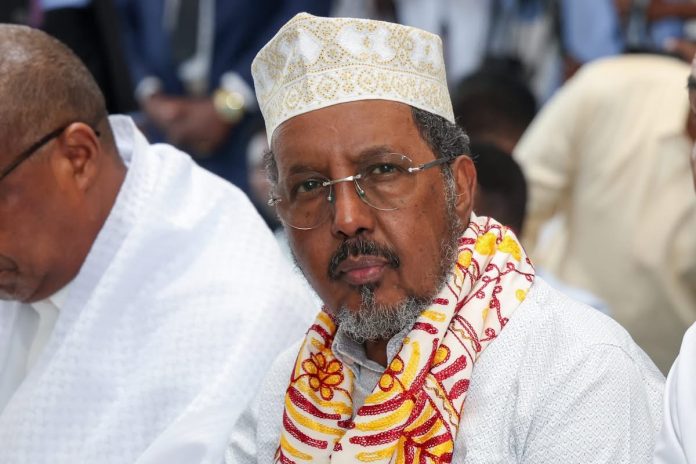
Mar 30(Jowhar)- Madaxweynihii Dowlad Goboleedka Koofur Galbeed Soomaaliya Cabdicasiis Xasan Maxamed ayaa qoraal uu soo dhigey bartiisa Facebook ku sheegay inuu iska casilay xilka Madaxweynaha DKGS.
Moscow Says It’s Pleased Oil Shipment Reached Cuba Despite US Blockade
A tanker in the moonlight: how 730,000 barrels became a story about more than fuel
There are moments when geopolitics sheds its lab coat and walks into the street. In Havana, that moment looks like a line of battered cars idling at a service station, drivers clutching ration coupons, faces lit by a thin, impatient sun and the glow of a city that refuses to look defeated.
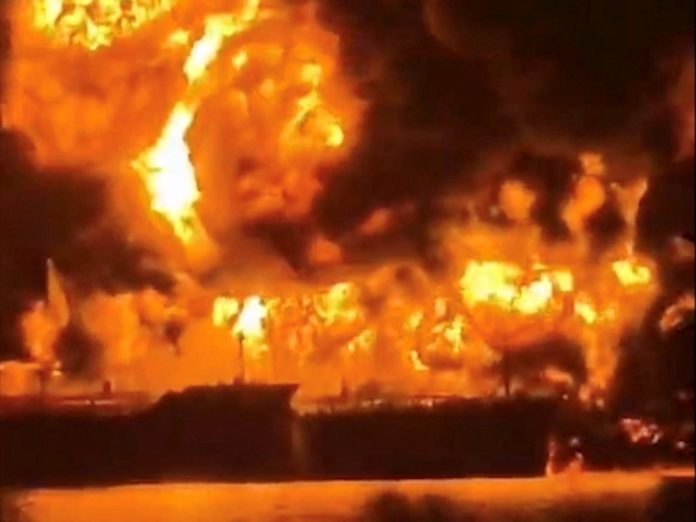
At sea, the Anatoly Kolodkin — a steel-skulled tanker carrying roughly 730,000 barrels of crude — crept along Cuba’s northern coast in early March, its progress traced by satellite dots and anxious phone calls. For some it was simply a ship; for others, it was a promise wrapped in hull paint: a promise of light bulbs that might not flicker out each evening, of buses that could run for another week, of hospitals that might keep life-support machines humming for another day.
Not just barrels: the human arithmetic
“It’s not glamorous. It’s diesel and kerosene and the things that keep a hospital alive,” said Dr. Ana María Ruiz, a pediatric nurse at a Havana hospital where backup generators have become an essential part of the daily routine. “When the lights go off we hold our breath. When fuel comes, we breathe.”
Energy experts estimate that the crude aboard the Anatoly Kolodkin could yield about 250,000 barrels of diesel once refined — roughly enough to cover Cuba’s diesel needs for a little more than a week if used conservatively. That calculation comes with caveats: processing can take 15–20 days, and then there’s the question of whether the refined product will be prioritized for power plants, public transport, agriculture, or healthcare.
The voyage and the politics
This was no ordinary commercial delivery. The tanker, sailing out of the Russian port of Primorsk on 8 March, was sanctioned and shadowed by headlines before it left harbor. It was escorted part of the way by a Russian naval vessel; British naval observers noted the pair split as the tanker crossed into the Atlantic. U.S. officials — according to press reporting — signaled that the ship would be allowed to approach Cuban waters, a delicate decision at the crossroads of sanctions policy and humanitarian need.
“Russia considers it its duty to step up and provide necessary assistance to our Cuban friends,” a Kremlin spokesman told reporters, framing the shipment as political solidarity as much as logistics. Across the Caribbean, U.S. President Donald Trump said he had “no problem” with countries sending fuel to Cuba, noting the human stakes and suggesting a softer posture in this instance. The exchange of statements underscored a strange choreography: diplomatic tension softened for a moment by a common recognition that people cannot live on policy briefs alone.
Timeline you can follow
- 8 March: Anatoly Kolodkin departs Primorsk, Russia.
- Early–mid March: Satellite and ship-tracking data place the tanker off Cuba’s northern coast.
- Following arrival: Processing at Cuban refineries expected to take 2–3 weeks, with refined diesel available in the weeks after that.
Faces of a blackout: how the crisis landed at home
Across Cuban neighborhoods, the crisis has been felt in small, intimate ways and in large, terrifying ones. Blackouts — seven nationwide since 2024 — have become a recurring punctuation to daily life. In one Havana neighborhood, vendors who used to roast coffee on corner grills have cut back hours. Classic American cars, already heroes of improvisation, sit idle because gasoline is rationed. Public buses run thinner routes. Some schools stagger classes. Families improvise cooling and heating with whatever they can.
“You learn to cook with the sun. You learn to sleep in the heat,” said Jorge, a mechanic in Matanzas who asked that his last name not be used. “But when my cooker stops working and the clinic can’t keep the machines, this is not about adapting; it’s about surviving.”
Cuban authorities say the situation has affected medical care, pointing to rises in risk for patients with chronic illnesses, including children with cancer, as routine treatments and refrigeration for medicines become precarious.
What the fuel will — and won’t — fix
Experts caution against imagining this single shipment as a cure-all. “Short-term relief is real,” said Jorge Piñón, an energy policy analyst who has studied Cuba for decades. “But it’s a Band-Aid on a deeper wound: aging infrastructure, limited refining capacity, and a geopolitical squeeze that disrupts reliable supply chains.”
The oil aboard the Anatoly Kolodkin can be turned into diesel and other refined fuels, but refining takes time and capacity. Cuba’s principal refinery in Matanzas is not in a position to instantly flood the market. Officials and analysts say the government will face agonizing choices: prioritize electricity generation to reduce blackouts, or allocate fuel to keep buses and trucks moving so the economy does not grind to a halt.
And then there are secondary effects. Airlines have suspended some flights to the island. Public transport woes ripple through supply chains. Farmers who cannot run tractors see harvests threatened. The crisis is not only about lights and cars; it’s about food, medicine, livelihoods.
Local color and daily improvisation
Walk the Malecón at dusk and you see the resourcefulness: families cooking with portable stoves, neighbors pooling gas for a shared generator, old women bartering eggs for a kilometer’s worth of bus fare. The ration book — the libreta — is back at the center of conversations, brought out in living rooms and bodegas as people count coupons and plan errands around fuel availability.
“We share,” said María, who sells empanadas near the Vedado neighborhood. “If my neighbor has a little diesel, she’ll help my son get to work. That’s Cuba: when the state falters, people don’t.”
Why a single tanker matters beyond the island
This story is a lens into a larger, uncomfortable question: when sanctions hit a population, who bears the cost? Around the world, sanctions are increasingly used as tools of statecraft. They can be effective at targeting elites and economies, but they often have diffuse humanitarian consequences that ripple down to patients, students, farmers and factory workers.
Allowing a sanctioned tanker to dock is not simply an operational decision; it is a moral calculus. It raises questions about how to balance pressure on governments with protection for civilians — and it forces us to confront whether our international systems are designed to allow necessary life-saving commerce while still pursuing political aims.
So here is the question for you, the reader: when geopolitics meets the human needs of ordinary people, which do we prioritize — principle or pragmatism? And is there a way to do both?
For now, in Cuba, people wait. The Anatoly Kolodkin may have reached the shoreline, but the real work is only beginning: refining, deciding, routing, and — above all — choosing how a nation and its people will allocate a fleeting reservoir of fuel. The glow of the city, for a little while longer, depends on it.
Xasan Sheekh oo kulan la yeeshay danjirayaal iyo wakiilada hay’adaha caalamiga ah
Mar 30(Jowhar)- u qaabilay danjireyaasha iyo wakiillada hay’adaha caalamiga ah ee ka hawlgala Jamhuuriyadda Federaalka Soomaaliya.
Ra’iisul Wasaare Xamsa oo magacaabay wasiir ku xigeeno cusub
Mar 30(Jowhar)- Ra’iisul Wasaaraha Xukuumadda Jamhuuriyadda Federaalka Soomaaliya Mudane Xamsa Cabdi Barre soo saaray wareegto uu kumagaacabayo Wasiir Ku xigeenno cusub kuwaasoo buuxinaya xilalkii ay iska casileen qaar ka mid ah golaha wasiirada Xukuumadda JFS.
Dowlada Federalka Soomaaliya oo war ka soo saartay dagaalka Baydhabo
Mar 30(Jowhar)-Dowlada federalka soomaaliya ayaa ka hadashay isbedelka ka dhacay magaalada ee Xarunta kumeelgaarka ah ee dowlad goboleedka koofur galbeed ee soomaaliya.
Knesset poised to vote on bill to reinstate death penalty

In the Shadow of the Noose: Israel’s Parliament Poised to Reintroduce Capital Punishment for Palestinians
There are days in politics when the room itself seems to lean one way or another. Today, in the marble corridors of the Knesset, it leans toward a question that will reverberate far beyond Israel’s borders: should the state restore, as a default, the death penalty for Palestinians convicted by military courts of killing Israelis?
It is not a dry legal amendment being debated behind closed doors. It is a law that carries a terrible theatricality. Supporters of the bill have worn noose-shaped lapel pins in recent days, a grim accessory that has been photographed and posted across social media. Opponents call it a political stunt that traffics in fear and spectacle.
What the bill would do — and who it targets
The proposed law would require military courts in the occupied West Bank to impose the death penalty for the killing of Israelis, with sentencing to take place within 90 days and almost no possibility of clemency. The original text reportedly mandated the death sentence for non-Israeli citizens convicted of deadly “terrorist” acts in the West Bank; revisions ahead of today’s vote expanded judges’ discretion to include life imprisonment in some cases. But critics say the core remains: it singles out Palestinians tried by military courts.
“This is a measure aimed squarely at those who live under occupation,” said Layla Mansour, a teacher from Ramallah, as she folded a scarf against the spring wind. “It isn’t just law; it’s a signal of who is considered human, and who is disposable.”
The bill was drafted by Itamar Ben-Gvir, the national security minister known for his uncompromising rhetoric. Proponents argue it is a necessary deterrent in the wake of the horrors of October 7, 2023, when nearly 1,200 people were killed in an assault by Hamas militants. For many Israelis still raw with grief, the proposal is framed as an answer: a way to ensure that the atrocity never repeats.
“We cannot be naïve about deterrence,” a member of the bill’s backers told a local newspaper. “There must be consequences so severe that those who would murder know the cost.”
Why critics say the law is discriminatory
Human-rights groups and European governments have been blunt. Foreign ministers from Germany, France, Italy and the United Kingdom called the draft law “de facto discriminatory,” warning that it risks undermining democratic principles. A group of United Nations experts cautioned that the bill’s definitions of “terrorist” are vague and overbroad, opening the door to execution for acts that may not meet recognized thresholds for terrorism under international law.
“When the legal text is vague, it gives enormous power to prosecutors and judges,” said Dr. Rachel Stein, a legal scholar at Tel Aviv University. “In the backdrop of military courts—where due process safeguards are weaker—the risk of irreversible miscarriages of justice becomes very real.”
Military courts, conviction rates and the weight of occupation
These are not abstract concerns. The West Bank is governed in practice by military courts that try Palestinians; Israelis are generally tried in civilian courts. According to B’Tselem, an Israeli human-rights organization, the conviction rate in these military courts hovers around 96 percent. The group also reports patterns of coerced confessions and interrogation practices that rights advocates describe as tantamount to torture.
“Our prisoners are being slowly killed by neglect and abuse,” said Abdallah Al Zughari, head of the Palestinian Prisoner’s Club, invoking a statistic that has been repeatedly cited since October 2023: more than 100 Palestinian detainees have died in Israeli custody or during transfers since the start of the war. “To add a legal death sentence on top of slow violence—this is a moral abyss.”
These voices matter because the mechanism the state would use—military courts—is built into the architecture of occupation. They operate behind barbed wire, behind checkpoints. For Palestinians living under them, the outcomes feel preordained.
Global context: the death penalty in retreat
It is worth stepping back: the global trend is toward abolition. Amnesty International’s tally places 113 countries that have abolished the death penalty for all crimes, while roughly 54 retain it in law or practice. A handful of established democracies, including the United States and Japan, still maintain the penalty; many others have moved to a moratorium or legislated abolition.
“History shows capital punishment is not a reliable deterrent,” said Miriam Lopez, a policy analyst at an international human-rights NGO. “Research comparing capital punishment and life imprisonment finds no consistent advantage in preventing homicide.”
Israel itself abolished the death penalty for ordinary crimes in 1954; the only civilian execution in the state’s history was that of Adolf Eichmann in 1962—an extraordinary, singular case tied to the Holocaust’s crimes against humanity. The military remained, technically, capable of imposing capital punishment. But it has never done so.
On the ground: fear, grief and a fracture in the public imagination
Walk through a West Bank olive grove in autumn, and you hear a different register of politics: the clack of pruning shears, the conversation about picking times, the complaint about settler harassment. The bill sits in stark contrast to these everyday concerns—yet it reaches into them.
“We harvest olive oil the same way my grandfather taught me,” said Ahmad Nasser, who lives in a village near Nablus. “But now, every military jeep that passes, every raid, every arrest—those are not statistics. Those are our children. I am afraid for them.”
On the other side of the Green Line, there are parents who see the proposal as the only morally defensible response to unspeakable violence. “We’ve buried our sons from Kibbutz Be’eri,” said Aviva Rosen, whose son was killed on October 7. “I don’t want revenge—I want guarantees that no family will ever go through what we went through.”
Can the state have both security and justice? That is the question — and there are no easy answers. Security measures without procedural safeguards risk transforming law into a blunt instrument; procedural safeguards without credible deterrence risk eroding trust in the state’s ability to protect its citizens.
What comes next — and why you should care
The parliament’s vote today is more than local politics. It is a test of how a democracy balances the imperatives of security and human rights under the strain of prolonged conflict. It will shape how Israel is perceived by its neighbors and by partners in Europe and beyond. It will determine whether the death penalty—rare, heavy, irreversible—returns to regular use in a context where those who would face it are from an occupied population that lives under a separate legal regime.
How do we weigh suffering against principles? How do societies respond to mass trauma without sacrificing the institutions that prevent future abuses? As this debate unfolds, ask yourself: what do we hope the law will be when it is at its best? And what are we willing to lose in the name of immediate security?
Regardless of today’s vote, expect challenges. Israeli rights groups have already signalled plans to take the measure to the Supreme Court. International pressure will intensify. And in towns and villages on both sides of the divide, families will continue to live with the consequences.
For now, the noose lapel pins still catch the light. They are a symbol, yes—and also a warning. Laws engraved in haste and politics offer little room for mercy. In the end, the most lasting judgment may be the one that history renders, not on individuals, but on the integrity of the legal and moral order a society chooses to uphold.
Zelensky calls on Russia to stop attacks on energy infrastructure
A Fragile Offer in a Fractured Landscape: Zelensky’s Proposal to Spare Energy Infrastructure
On a raw, gray morning that might have been lifted from any conflict-weary capital, Ukrainian President Volodymyr Zelensky stepped in front of reporters and offered a proposal that sounded almost shockingly pragmatic: stop striking energy facilities, and Ukraine will do the same. It was a plea shaped by strategy as much as compassion—aimed not only at keeping lights on in his own country but at soothing tremors in global energy markets already jittery from months of war.
“If Moscow truly wants to protect civilians and stabilise markets, they know where to start,” Zelensky said, a line delivered with the deliberate cadence of a leader juggling public opinion, wartime calculus and international diplomacy. “We are prepared to reciprocate. We will not target their energy sector if they stop targeting ours.”
Why energy sites matter beyond borders
Energy infrastructure—pipelines, refineries, power plants—is not merely strategic in the old military sense. It is the scaffolding of daily life, of hospitals, transport and commerce. When electricity or fuel stops flowing, the pain radiates quickly: factories idle, hospitals ration, food spoils, and markets stutter. Analysts routinely warn that strikes against these nodes can ripple through global oil and gas prices, prompting unpredictable volatility in markets that serve a global population that consumes around 100 million barrels of oil a day.
“Attacks on energy infrastructure are not just tactical; they’re economic shockwaves,” said Elena Markovic, an energy policy analyst based in Vienna. “Even the threat of disruption raises insurance costs, pushes traders to hoard risk premia, and can quickly hike prices at the pump in distant cities.”
Zelensky’s proposal, then, can be read in two lights: humanitarian and geopolitical. One reduces immediate harm to civilians and critical services. The other aims to limit the diplomatic fallout that arises when oil markets wobble—because volatility there seldom stays local.
Russia’s Response—or Lack of One
From the Kremlin came a hands-off tone. Dmitry Peskov, the spokesman who often shapes Moscow’s messaging, told reporters that a new round of mobilization was “not on the agenda.” In the choreography of wartime communications, that silence can be meaningful: a denial of escalation, an attempt to project normality, or simply a refusal to entertain Zelensky’s olive branch in public.
There was no immediate sign of Russia accepting the energy-sector truce. Instead, Russian state media later reported battlefield gains in eastern Ukraine—claims that Western monitors could not independently verify. On the same day, tensions with Britain flared anew: Moscow expelled a British diplomat, accusing him of espionage activities. The diplomat was named by Russian authorities as Albertus Gerhardus Janse van Rensburg.
“We cannot tolerate actions that put our people or our institutions at risk,” said a UK Foreign Office spokesperson, calling the accusation “completely unacceptable” and warning that Britain would defend its staff and their families. The episode read like a Cold War riff: tit-for-tat expulsions, warnings against contact with foreign diplomats, a tightening of bilateral space.
Diplomacy under pressure
Small diplomatic skirmishes like these reverberate in ways the public rarely sees. Embassies operate as lifelines for citizens abroad, hubs for visas, culture, emergency assistance. When nations signal that lines of contact are hostile, the cost is often borne by ordinary people—expats, travelers, families seeking consular help.
“I was born in this city and I’ve lived through curfews and shortages, but when embassies get pulled into this kind of theatre, it feels personal,” said Oksana Holub, who runs a small café in Kyiv. “My cousin in London calls and asks if it’s safe to visit. Trust frays.”
Collateral Incidents: Drones, Finland, and the Fog of Electronic Warfare
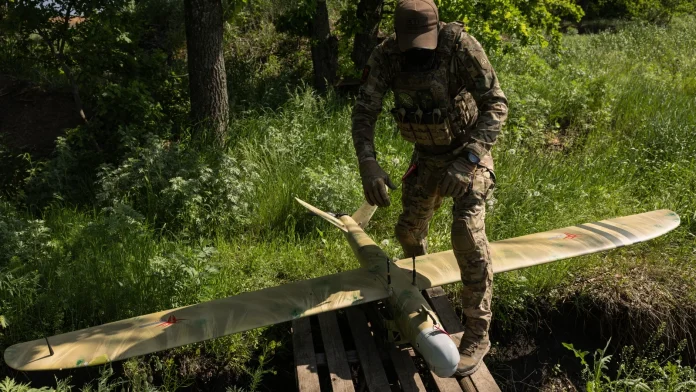
Adding to the mess was a quieter but no less consequential episode: two drones that crashed in Finland over the weekend. Kyiv quickly apologised, saying the unmanned vehicles were likely diverted by Russian electronic warfare systems and that there had been no intent to violate Finnish airspace.
“We regret the incident and have communicated directly with Finnish authorities,” said Georgiy Tykhy, a spokesman for Ukraine’s Foreign Ministry, in a statement that sought to tamp down fears of escalation. “These systems are highly complex; if they were manipulated, responsibility lies with those who deploy electronic countermeasures.”
Finland—now a member of NATO and sensitive to incursions since the war’s wider regional impact—was cautious but measured in its response, calling for thorough investigation while acknowledging Kyiv’s apology. In border regions the episode sparked unease. At a petrol station in the Finnish town of Tornio, a local shopkeeper summed up the mood: “We don’t want to be part of a wider war. We want to live, sell sausages and drink coffee,” he said with a rueful smile.
What’s at Stake: Local Lives, Global Markets
When leaders negotiate about whether to spare gas pumps or refineries, they are bargaining over more than energy. They’re bargaining over hospitals’ backup generators, school heating bills for the winter, the livelihoods of truck drivers and factory workers—and over how the world manages risk when geopolitical shocks pile on economic fragility.
Consider these threads:
- Global oil consumption hovers near 100 million barrels per day; even small supply shocks can trigger outsized price movements.
- European countries radically reduced their direct dependency on Russian gas after 2022, but energy networks remain interconnected, and indirect effects persist.
- Electronic warfare and drone incidents are a new, destabilising layer—machines hijacked in flight can produce mistakes that spiral beyond anyone’s control.
The human dimension
“People don’t care about barrels or megawatts when their child’s oxygen concentrator loses power,” said Dr. Amir Yusuf, a physician volunteering in a Ukrainian regional hospital. “So when leaders haggle over whether to spare energy assets, they are also deciding if hospitals can keep running.”
That moral arithmetic—balancing military objectives against civilian harm—is what breathes urgency into Zelensky’s offer. It is also why the world watches with a blend of hope and scepticism: hope that a pragmatic pause could protect civilians and markets; scepticism because past pauses have been fragile, temporary and easily broken.
A Global Question: Can Warfare and Infrastructure Be Decoupled?
Ask yourself: is it realistic to imagine a conflict where infrastructure is off-limits? Theoretically, yes. Practically, history and contemporary warfare suggest otherwise. Energy systems are both tools and targets. But if diplomacy can embed stronger rules—if third-party monitors, clear verification, and consequences for violations can be designed—then there is potential to reduce the human cost without indemnifying military aggression.
“International norms evolve,” Elena Markovic said. “It used to be that chemical weapons were a battlefield reality for much of history. Now there are clearer lines. We could be at the start of a similar conversation for energy infrastructure.”
Where This Leaves Us
Zelensky’s proposal is striking because it is simple and because it reaches across the battlefield with an offer that, if accepted, would provide immediate relief to civilians and a calming signal to markets. But the fog of war, the politics of pride, and the cascade of retaliatory diplomacy make the path to such an agreement perilous and uncertain.
As readers around the world sip their coffee, fill up at the pump, or flip switches at home, the drift of this conflict will touch them in small, practical ways even if they live thousands of kilometers away. The question before leaders is stark: can they find the pragmatic mechanisms to protect the lifelines that bind us all together, even amid hostility?
It is a challenge that tests not just military strategy but imagination, restraint, and a very human sense of proportionality. Are we willing to protect the lights that keep children reading, hospitals breathing, and economies humming—even while war is waged?
Ciidamadda Dowladda oo gudaha u galay magaalada Baydhabo
Mar 30(Jowhar)-Warar hordhac ah & muuqaalo la baahiyey ayaa muujinaya ciidamada dowladda Faderaalka ee kayimi Buurhakaba shalay oo kusugan qeyb kamid ah gudaha magaalada Baydhabo, iyagoo ay Koonfur Galbeed sheegayso in ay is difaacday oo ka hortagay gulufkan.
How governments worldwide are confronting the global fuel crisis

Free buses, dimmed lights and shorter showers: how a distant conflict is reshaping daily life
On a chilly Melbourne morning at Footscray station, commuters moved through the foyer with the unusual buoyancy of people who suddenly don’t have to calculate a petrol budget. There was a ripple of private relief—soft smiles, the deliberate extra step onto a crowded tram—small acts of ease in a world where the cost of getting from A to B feels suddenly political.
The state of Victoria announced, via a brisk social media post, that public transport would be made free from tomorrow. “It is a temporary measure to take pressure off the pump and ease the cost of living for Victorians right now,” Premier Jacinta Allan wrote, acknowledging the limits of the policy while insisting on its immediacy. The scheme is set to run initially until the end of April.
“It won’t solve every problem, but it is an immediate step I can take to help Victorians right now,” Allan added—words that landed on social media and breakfast tables with equal force.
For the commuter who usually spends between $40 and $80 a week filling a tank and feeding meters, the gesture matters. “I usually spend about $50 a week on petrol,” said Maya Collins, a barista who lives in Sunshine and commutes into the city. “Tomorrow I can save that and maybe get a week’s worth of groceries we usually have to skimp on.” Her voice had the practical gratitude of someone for whom policy filters directly into the contents of the fridge.
Small policy shifts, big social ripples
Victoria’s move is among a spate of short-term, sometimes improvised, measures governments are adopting as fuel markets tighten in response to the conflict involving Iran. Some are imaginative. Some are austere. And some are raw reflections of the fragility of today’s global energy web.
Across the Tasman, Tasmania has reportedly joined the fare-free experiment for an extended period, a nod to the idea that public transport subsidies are not only social policy but also emergency relief when pumps spike and household budgets shrink.
How other governments are saving fuel—and reshaping daily life
From Cairo to Seoul, policy ideas are being traded like quick fixes—and citizens are adapting in real time. Here are some of the measures now in place, each one a small mirror of a broader dilemma: how to keep economies moving while energy becomes scarce and costly.
- Egypt has imposed a 9pm closure on shops, restaurants and malls, dimmed streetlights and cut roadside advertising to preserve fuel and electricity. Officials say the country’s monthly energy bill has swollen from about $560 million to $1.65 billion since the conflict caused price shocks.
- Thailand has urged civil servants to swap long-sleeved suits for short shirts and to use stairs instead of elevators, after previously experimenting with fuel price caps that were later rolled back. Fuel prices reportedly jumped around 22% after the policy reversal.
- Sri Lanka declared Wednesday a public holiday for the public sector—effectively creating a four-day working week for state institutions, while pushing civil servants to work from home where possible.
- South Korea is nudging citizens toward shorter showers and scheduled charging for phones and electric vehicles, and plans to restart five nuclear reactors by May while keeping some coal plants online longer than planned.
- Myanmar moved to an “even-odd” driving policy to restrict private cars on alternate days, turning license plates into calendars and congestion into a new kind of civic arithmetic.
- The Philippines declared a “national energy emergency” on 24 March, pairing work-week reductions and fuel subsidies with controversial decisions like temporarily lifting bans on certain fuels and negotiating new oil imports.
Scenes from the frontlines of adaptation
In Cairo’s narrow commercial streets, shopkeepers sweep doorways at dusk and close earlier than they used to. “The lights used to be on until midnight,” said Hassan, who runs a small grocery near Tahrir. “Now we close at nine because we must, not because we want to.” He paused, then added, “We save on the electricity bill, but the customers disappear sooner, and so does our income.”
In Seoul, a 28-year-old software developer named Ji-won described a culture shift: “At work, everyone jokes about who is taking the shortest shower. It’s weird to have so many aspects of your private life guided by national policy, but here we are.”
Even among policy wonks, the mood is pragmatic rather than celebratory. “These measures are triage,” said Dr. Amir Rezaei, an energy economist I spoke with over the phone. “They buy time. They redistribute pain. But without coordinated international action—to stabilize supply, diversify sources and accelerate renewables—we’re cycling through short-term fixes.”
What do these quick fixes reveal?
They reveal inequality, adaptation and the tension between emergency and long-term planning.
Consider the paradox: a bus that becomes free for a month is a direct benefit for lower-income riders, but it does little for rural families who rely on cars and have no viable transit alternative. A ban on night-time shopping in Egypt saves fuel and electricity, but it also cuts income for late-night hospitality workers. Even something as simple as asking officials to wear short sleeves in Thailand underscores the limits of demand management when supply is the real bottleneck.
These are not merely logistics; they are ethics. Who gets protection when petrol becomes scarce? Who bears the burden of sacrifice? Who benefits when a price shock hits a globalized market?
Beyond the emergency: lessons and questions
There are hard lessons here for urban design and energy policy. Cities that offer dense, reliable public transport and walkable neighborhoods are more resilient when fossil-fuel prices spike. Countries that invest in diverse energy mixes—renewables, storage, smarter grids—have more room to maneuver. But those investments take time, money and political will.
As you read this, ask yourself: what would make your city more resilient? Would you ride public transport more if it were cheaper? Could your workplace adopt a shorter week without losing productivity? These are not hypothetical for many people—they are the conversations happening now in town halls and kitchen tables across continents.
At the end of the day, emergency measures are human stories. They are commuters saving $50 a week, bakers closing early, office workers debating shower lengths. They are also policy experiments—sometimes clumsy, sometimes creative—that reveal what we value and how well-prepared we are when global systems wobble.
For now, Victorians will climb onto free trams and buses and count the small relief. Elsewhere, people will tighten belts, dim lights, and reconsider the rhythms of daily life. The question that lingers is not only how long these measures will last, but how many of them we will choose to keep as we build a more resilient future.
Wararkii u danbeeyay dagaalka ka dhacay duleedka magaalada Baydhabo
Mar 30(Jowhar)-Dagaal xooggan ayaa maanta ka qarxay duleedka magaalada Baydhabo, kaasoo u dhexeeya ciidamadda Koofur Galbeed iyo kuwa dowladda Soomaaliya.