Home Blog Page 40

Museveni Launches First Islamic Insurance Firm

Screenshot

Mar 05(Jowhar)-President Yoweri Kaguta Museveni has today launched Tamini General Insurance, Uganda’s first Islamic Insurance firm.

Ingiriiska oo sheegay in duqeynta loo geystay Saldhigooda Cyprus aysan Iran ka danbeyn

Mar 05(Jowhar)-Dowladda Ingiriiska ayaa xaqiijisay in diyaaradda lala beegsaday Saldhiggeeda Cyprus aysan ka dambeynin Iran.

Russia Accuses Ukraine After Gas Tanker Sinks Near Libya’s Coast

Russia blames Ukraine after gas tanker sinks off Libya
The vessel sank off the coast of Libya, according to Libyan port authorities (Stock image)

A Tanker Lost at Sea: Fire, Accusations, and the Uneasy Geography of Modern Conflict

Night fell over the olive-dark waters north of Sirte, and with it came a blast that would split a routine voyage into a headline. The Arctic Metagaz, a liquefied natural gas (LNG) carrier bound from Murmansk toward Port Said, was reported to have suffered sudden explosions, ignited into a towering inferno and then — in a scene that felt improbably cinematic and tragically mundane at once — slipped beneath the waves.

“We saw a column of fire that looked like a lighthouse, only it was moving,” said Saleh, a fisherman from the coastal village of Qasr, who was up mending nets when coastguard radios began crackling. “We kept distance. The sea swallowed everything the next day.”

The Libyan port authority said the wreck occurred roughly 130 nautical miles north of Sirte, within the country’s search-and-rescue zone — a wide, contested maritime patchwork where the rules of engagement are as frayed as the map. Thirty crew members — all reported to be Russian nationals — were rescued, according to Maltese and Russian authorities. No fatalities were announced.

From Sirte’s Coast to the Kremlin: Accusations Fly

Within hours, blame ricocheted across capitals. The Russian transport ministry made a blunt charge: naval drones had been launched from Libyan shores, it said, and Ukraine was behind the attack. Moscow called the episode “an act of international terrorism and maritime piracy,” and demanded answers.

Libya’s National Oil Corporation, meanwhile, swiftly distanced itself, stating it had no role and that routine port traffic had not been affected. “This was a commercial voyage between Murmansk and Port Said,” an NOC spokesperson told reporters, adding that local fuel supplies remained uninterrupted.

Ukraine’s security service did not respond to immediate requests for comment, and in the fog of competing narratives, one truth remains stubborn: a large, modern tanker that had been carrying energy vital to homes and industries was sunk, and a fragile stretch of sea became another theater for a wider geopolitical argument.

What Happened At Sea — And Why It Matters

Details are still emerging, but maritime analysts point to a worrying trend: weaponized drones and miniature unmanned surface vessels are becoming tools of hybrid warfare. “We are seeing a technological leap in how states and non-state actors project power,” said Dr. Ana Moreno, a maritime security analyst at the Institute for Global Shipping Studies. “A single, inexpensive drone can temporarily neutralize a vessel valued in the tens or hundreds of millions, and cause cascading economic effects.”

How cascading? Consider the numbers: global LNG trade moves hundreds of millions of tonnes of fuel each year, connecting producers in Russia, the United States, Qatar and beyond with buyers across Europe and Asia. Interruptions in this chain — whether from direct attacks, insurance jitters, or rerouted voyages — can ripple through commodity markets and push up energy prices for consumers far from the site of the incident.

Already, global markets were on edge due to conflict in the Middle East. Now, an attack in the Mediterranean adds another layer of uncertainty to a commodity market that is notoriously sensitive to geopolitical shocks.

Voices from the Deck and the Shore

On the deck of a neighbouring supply vessel, a crew member who asked to remain anonymous described a scene of controlled chaos after the explosions: “It wasn’t just flames. It’s the noise, the heat. You think metal can’t betray you. Then it bends.”

Back onshore, local residents expressed a mix of alarm and weary resignation. “We rely on the sea. It feeds us. But the sea is not the same — there are strangers in it now,” said Mariam, who runs a small café by the waterfront where fishermen bring in the day’s catch. “We worry for our boys who go out at night.”

Diplomats and legal scholars, too, are weighing in. “If a state launches attacks from a third country’s territory, or if non-state factions operate with impunity, it tests the limits of international maritime law,” said Professor Ian Brookes, an expert in maritime law at a European university. “There are questions about jurisdiction, responsibility for rescuing survivors, and the definition of piracy versus acts of war.”

Libya’s Tangled Coastline

The Mediterranean coast of Libya has long been a mosaic of competing authorities and local powerbrokers. Sirte, once better known as a crossroads of trade and history, sits near oil terminals and has in recent years been a magnet for shifting allegiances. That fragmentation makes the waters off Libya particularly hard to police — and easier to exploit.

“The Libyan coastline is not a single coastline,” an analyst with a regional NGO said. “It is dozens of micro-fronts, each with different loyalties. That pluralism creates gaps where weapons and drones can be launched without clear accountability.”

Railways and Drones on Two Fronts

On a separate but related note, the war in Ukraine continues to see drone use expanding beyond naval arenas. In the early hours following the tanker sinking, a Russian drone struck an empty passenger train in Ukraine’s Mykolaiv region, injuring a railway worker. UZ, the Ukrainian national rail operator, has reported a marked uptick in strikes against rail infrastructure — essentials like locomotives, bridges and specialized maintenance equipment — noting 18 strikes since the start of March and damage to dozens of facilities.

“Railways are the circulatory system of any country,” said Oleksiy, a railway technician in Dnipro. “When you attack them, you don’t just break metal — you slow hospitals, schools, factories. The aim is to grind down a society’s ability to function.”

Energy Politics and the Wider Implications

Even as the Mediterranean waters smoldered, energy diplomacy was playing out in closed-door meetings. Moscow announced a Kremlin meeting with Hungary’s foreign minister to discuss long-term oil supplies — a reminder that, despite conflict, pipelines and tankers remain bargaining chips in the high-stakes diplomacy of energy.

Hungary, heavily reliant on Russian oil, has become a focal point in Europe’s internal energy debates: can national dependency be reconciled with political solidarity? The answer will matter not only to capitals in Europe, but to markets from Tokyo to Tunis.

And what about the human element? The thirty rescued sailors, the shore communities who watch tankers pass like migrating beasts, the refinery workers whose livelihoods depend on steady fuel flows — their lives are threaded through each policy choice and each missile strike.

Questions to Carry Forward

As you read this, consider the invisible lines that stitch the modern world together: pipelines, shipping lanes, satellite links. How easily do those lines fray when politics turns corrosive? How, and by whom, should the international community enforce the safety of high seas commerce?

“This is not just about one tanker,” Dr. Moreno reminded me. “It’s about how war now reaches into the arteries of the global economy, with low-cost technology and high-stakes consequences.”

The Arctic Metagaz is gone. For a while, the slick of oil and memory will linger on the sea. But the incident leaves larger questions in its wake: about accountability, about the oceans as a commons in wartime, and about the everyday people — sailors, fishermen, rail workers, diplomats — who find their lives redirected by events decided far above their heads. Where do we go from here? And who will chart the way?

Xildhibaanadii Puntland ee lagu xanibay magaalada Muqdisho oo maanta u safraya Garoowe

Mar 05(Jowhar)-Xildhibaanada ka soo jeeda deegaannada Puntland ee dhowaan dowladda federaalka Soomaaliya ay ku xayirtay magaalada Muqdisho, ayaa saaka u amba baxaya magaalada Garoowe ee xarunta maamulka Puntland.

Ciidanka Iiraan oo weeraray maleeshiyaad Kurdi ah oo ku sugan gudaha Ciraaq

Mar 05(Jowhar)-Wakaaladda wararka ee dowladda Iiraan ayaa sheegtay in ciidamada Iiraan ay xalay weerar ku qaadeen maleeshiyaad Kurdi ah oo ku sugan gudaha Ciraaq.

Israel and Iran Launch New Strikes as Conflict Spreads Regionally

Israel, Iran launch fresh attacks as war spreads
An Israeli airstrike targeted an area in Beirut's southern neighborhood this morning

Dawn and Dust: How a Pre-Dawn Strike Turned the Gulf Into a Global Story

Before the sun rose, the suburbs of Beirut tasted smoke. A pre-dawn airstrike cut through the fragile hush, a precise burst of light and sound that fractured the night and the already brittle calm in the Levant.

Residents who had been warned to flee only hours earlier scrambled from shuttered homes, children clutching blankets, elders clutching photo albums. “We had minutes to go,” said Rana, a shopkeeper in Hazmieh, her voice tight with fatigue. “I left with my slippers and my son. You can’t explain to a child why the world suddenly screams.”

The target was a Hezbollah stronghold in the Beirut suburbs — the group Tehran backs and which has publicly vowed to retaliate for the killing of Iran’s supreme leader. Israel, which carried out the operation, said it was simultaneously intercepting a fresh barrage of missiles launched from Iran. Across the region, explosions and the white plumes of intercepted rockets painted a night sky people in Tel Aviv, Dubai and Riyadh will not forget soon.

Numbers on the Ground — and in the Air

As morning unfolded, casualty counts and displacement figures began to trickle in like conflicting radio reports.

Lebanese officials reported at least 75 dead and more than 83,000 people displaced since this round of fighting began — numbers that mask individual tragedies: lost livelihoods, shattered homes, schools turned into shelters. Meanwhile, Iran’s state news agencies claimed a far higher toll across the theatre, while U.S. authorities reported military losses in single digits. Such gaps between figures are now part of the grim arithmetic of modern conflict.

Global supply chains felt the shock as well. The Strait of Hormuz, a narrow maritime choke point through which roughly one fifth of the world’s crude oil typically transits, saw tanker transits plunge by some 90 percent, according to energy intelligence firm Kpler. Markets that had been watching for months for any sign of instability suddenly found a very real reason to care.

Across the Gulf: Missiles, Missed Targets and a Stricken Warship

The fighting did not confine itself to Lebanon and Israel. Iran announced it had fired missiles “across the region” and its Revolutionary Guards claimed to have closed the Strait of Hormuz — an assertion that, true or not, sent shocks through global energy markets and shipping lanes.

Near Kuwait, Britain’s maritime agency reported a large explosion early in the morning and images of oil slicks spreading across Gulf waters began circulating on social media. In Iraq, a mysterious nationwide blackout left millions in darkness; Baghdad’s electricity ministry attributed it to a sudden fall in gas supplies to a key powerplant, though the timing raised uncomfortable questions.

Then came the news that a U.S. submarine had struck an Iranian frigate off Sri Lanka — the IRIS Dena — during what had been described as a “friendly visit” to the region. Sri Lankan officials later said at least 87 people were killed and 61 remained missing; 32 sailors were rescued, some wounded. The United States released footage it said showed the warship sinking in international waters.

The U.S. defense secretary described the operation in blunt terms, saying the strike had been deliberate and decisive. “We are fighting to win,” he told reporters. Iranian officials in turn warned of an increasingly costly response and an escalation that could engulf diplomatic missions and civilians far beyond the front lines.

A Missile That Missed — and a World That Nearly Did

In an unprecedented moment of cross-Atlantic tension, a missile launched from Iran was shot down by NATO air defenses as it veered toward Turkey’s airspace. Turkish officials said the missile had been aimed at a British base in Cyprus and “veered off course.” Ankara summoned the Iranian ambassador and warned against any act that could expand the conflict.

“This was a dangerous near-miss,” said Dr. Leyla Özdemir, a security analyst in Istanbul. “It underlines how quickly errors or technical failures can escalate into broader, even global, crises. One malfunctioning missile is not just a technical issue — it’s a political one.”

Civilians, Cities and the Collateral Damage of Modern War

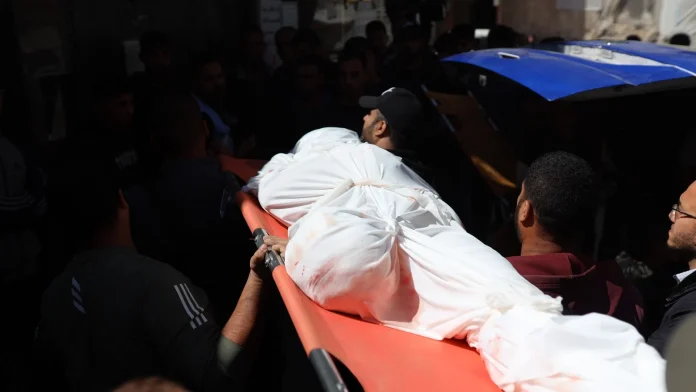
For people on the ground, geopolitical rhetoric is cold comfort. In Kuwait, an 11-year-old girl was reported killed by falling shrapnel. In the Iranian port town of Minab, state television broadcast scenes of grieving families with bodies wrapped in white shrouds — claims of more than 150 dead, many children.

Gulf cities long celebrated for their safety — Dubai, Riyadh, Doha — suddenly woke to air raid alerts and intercepted missiles. Authorities reported several interceptions of missiles and drones, including one aimed at Saudi Arabia’s Ras Tanura oil complex, a lifeline for the global energy market.

Commercial air travel has been hit. Airlines rerouted flights, and governments chartered flights to evacuate citizens: the United States sent a first charter for Americans, and France and Britain performed similar extractions. Tourists and expatriates shuffled through airports with duffel bags and faces full of questions about where to go next.

Voices from the Rubble

“We have no more patience to wait for news,” said Hassan, a schoolteacher sheltering in southern Lebanon. “You wake to a world that changes its mind at the sound of a siren. Children can’t do schoolwork when the books are damp from smoke.”

Amid the chaos, aid groups warned of rising humanitarian needs. Hospitals in border towns said they were overwhelmed; supply chains for food and medicine were stretched thin. “If this continues, it will not be only a security crisis, but a humanitarian disaster,” warned Sara Haddad, coordinator for a Beirut-based relief NGO.

Why This Matters to You — and to the World

Beyond the immediate human toll, there are cascading consequences. The temporary shutdown of a vital shipping channel and the disruption of oil tankers reverberate through economies already fragile from pandemic recovery, climate stress and inflation.

Consider this: when the Strait of Hormuz slows to a trickle, oil prices can spike, shipping insurance costs jump, and supermarkets halfway around the world feel the squeeze. Global diplomatic institutions find themselves tested as alliances calibrate responses while trying to avoid a larger conflagration.

What do we do when wars are fought not only with soldiers but through drones, cyberattacks, and strikes on infrastructure that civilian life depends on? How do communities rebuild trust and normality when a school can be a target one week and a shelter the next?

Paths Forward — and Peril

  • Immediate de-escalation and clear communication channels are essential to prevent accidental escalation between major powers.
  • Humanitarian corridors and neutral monitoring are needed now to reach displaced families and to protect hospitals and schools.
  • Global institutions and energy markets must plan for sustained disruptions to chokepoints like Hormuz and diversify supply routes.

As diplomats make frantic calls and generals issue strategic statements, the people under the rubble keep counting losses and holding onto small acts of dignity: sharing bread, making tea at a makeshift camp, consoling a neighbor who will not return to their home.

When you read these headlines from afar, spare a thought for Rana and Hassan and the families who woke before dawn. Ask yourself: when conflict touches a chokepoint, how does it touch your life? And what responsibilities do nations and citizens have to keep the worst from happening?

In an age where a missile’s arc can redraw maps of fear within hours, the world is being reminded — painfully and inescapably — that local tragedies have global echoes. How we answer them now will shape the next chapter of a region that has endured too many already.

Growing cemetery reveals Ukraine’s crushing wartime human toll

Expanding cemetery shows Ukraine's devastating loss

Where Memory Grows: Lviv’s Lychakiv Cemetery and the New Geography of Grief

There is a roadside rhythm to Lviv that softens the shock of the war: trams click and sigh along cobbled streets, café doors open to the smell of freshly roasted beans, and the old city breathes in bell tolls and conversation. Then you turn a corner, climb a low hill, and the ornate gates of Lychakiv Cemetery fold the living world away.

On a gray Sunday last month, the cemetery felt like a ledger of the young. Rows upon rows of wooden crosses — some leaning, some newly painted — mark graves of people born in the 1980s and 1990s, men and women who had plans, loves, jokes. They had been soldiers, volunteers, drone technicians, fathers, sons, daughters. More than a thousand of them who have fallen since the full-scale invasion began are interred here, their names carved into the city’s memory.

A place that has run out of space

“We filled the old military section last December,” Kolya Shevchenko, a city official who oversees the cemetery, told me, tracing a path between headstones. “We had to open a new plot, right here, because the losses have not stopped.”

He speaks without flourish, which makes the facts all the sharper. The wooden crosses that now mark the newest graves were never meant to be permanent. They are immediate, raw — a place-holder until society can make something sturdier of memory.

City authorities say they will replace those makeshift crosses with permanent headstones. Designs have been drafted to reflect the religious diversity of Ukraine’s armed forces: Orthodox, Catholic, Jewish and Muslim markers, each intended to offer a proper shape to remembrance.

One grave, one life: Ostap’s story

At the center of the cemetery’s newest section there is a bench that looks like it has been there forever. A woman sits there every day. Olga Smolynets comes to visit her son Ostap’s grave seven days a week.

“He loved fishing and reading,” Olga says, fingers worrying the edge of a scarf. “Since he was a child he was curious about space. He’d watch documentaries, anything about the stars.”

Before the war, Ostap worked in an internet shop in Lviv. He volunteered after the invasion and was first posted near home to protect the Druzhba oil pipeline, a critical artery. Later he became commander of a drone unit. In September 2024 — a week before his thirty-second birthday — he was killed defending a town in the Donetsk region.

“He wanted to fix things,” Olga says. “To make them better. That was his whole life.”

Her grief is private, but not isolated. Mourners who gathered last Sunday spoke of sons who loved soccer, brothers who were bakers, friends who wrote poetry. They told stories with stubborn tenderness. “We joke about him skipping breakfast,” one woman said, and then her voice broke and she laughed, a small, human sound amid the big machinery of war.

Counting the uncountable

Official tallies can’t fully capture what is happening here. Ukraine’s ministry of defence does not publish current, comprehensive figures on killed and wounded personnel. President Volodymyr Zelensky told France 2 last month that roughly 55,000 Ukrainians had been killed in combat since the beginning of the full-scale invasion — but he also said many remain classified as missing.

On the other side of the front, reporting and verification are even more fragmented. Mediazona, an independent outlet working with the BBC’s Russian service, has verified 200,000 Russian soldiers’ deaths. Western military intelligence estimates, meanwhile, have suggested Russia may have lost as many as 1.2 million soldiers since February 2022. The margins between these figures are wide. The truth sits somewhere between the certainties and the silences — and that is where families live every day.

The toll beyond numbers

What does a city do when the number of dead becomes an infrastructure problem? Lviv is adapting. New plots are being prepared; wooden markers will be exchanged for carved stone. There are plans for multi-faith headstones — and debates over where public money should go when hospitals and schools also need rebuilding.

“We’re trying to honor each person,” Kolya told me. “But honor takes time and resources. The city is tired, but we must do this right.”

A military historian I spoke with, who asked to remain anonymous, reminded me that cemeteries are how nations write themselves into permanence. “When a society buries its dead, it shapes a narrative,” they said. “Those narratives can bind communities together — or they can fracture them, if memory is mishandled.”

Local color and the rituals of mourning

In Lviv, mourning comes with particular gestures. People leave small cups of coffee by headstones, or old paperback novels. Spring-blooming chestnuts shade the avenue, and on warm days the cemetery smells faintly of honey and mowed grass. Priests and volunteers walk the rows, offering blessings in several languages; a rabbi came last month to bless a Jewish gravesite newly filled, and a Muslim cleric offered prayers for another.

“We try to make space for everyone,” a volunteer named Marta told me, arranging a bouquet of wildflowers. “These are not just soldiers. They were brothers, neighbours, teachers.”

What do we do with so much loss?

It is a question that will resonate far beyond Lviv. The cemetery’s wooden crosses are symptomatic: of lives interrupted, of a country making room for the consequences of a geopolitical struggle that has reshaped Europe. For families like Olga’s, the choice between burial and memory is not abstract — it is daily care, a slow pilgrimage from kitchen table to grave.

As you read this, consider the small gestures that hold a society together: the bench where a mother sits, the gardener who trims the grass, the volunteer who keeps a list of names. How do communities sustain compassion when grief is so commonplace? How does a generation of children grow up with so many empty chairs across their tables?

Closing

Lychakiv Cemetery is more than stone and soil. It is a living archive, a place where the quiet work of mourning is done in full view. The city is planning permanent headstones; the designs will reflect faith and identity. But the essential memorial is already there, in the daily rituals that Olga and others perform — in the fishing tales and the space documentaries, in the way a mother calls her son’s name into the afternoon wind.

We can read the numbers and debate strategy and geopolitics. Or we can sit for a moment and imagine that bench in Lviv, and the small, fierce resilience of a community that keeps coming back to mark a life, to tell the story, to say: we remember. What would you carry to a grave to remember someone you loved?

Regular coffee and tea consumption linked to reduced dementia risk, study finds

Drinking coffee and tea lowers dementia risk - study
The study showed that decaffeinated coffee did not have the same impact on patients

A Cup to Remember: Can Your Morning Brew Protect Your Mind?

There are mornings when a city smells of coffee—steam rising from paper cups, chatter at sidewalk tables, the ritual clink of spoons against porcelain. We reach for that first warm mug for many reasons: comfort, routine, a small, civilized defiance against sleep. Now, new research suggests that the humble cup might offer something else: a modest shield against the slow fade of memory that haunts millions worldwide.

Researchers analyzing the lives of more than 130,000 men and women across decades found a striking pattern: those who regularly drank caffeinated coffee or a modest amount of tea were less likely to develop dementia than those who drank little or no caffeine. Over a follow-up that stretched as long as 43 years in some participants, the people with the highest intake of caffeinated beverages had roughly an 18% lower risk of dementia.

What the study actually looked at

The teams behind the finding drew on two of the United States’ longest-running health studies: the Nurses’ Health Study and the Health Professionals Follow-Up Study. Altogether, the sample included 131,821 participants, of whom 11,033 developed dementia during the observation window. Diet, subjective cognitive complaints, objective cognitive testing, and other health markers were collected repeatedly, giving the researchers repeated snapshots of lifestyle and cognition across midlife and older age.

Perhaps the most intriguing detail: decaffeinated coffee did not confer the same apparent benefit. Tea — in moderation, roughly a cup or two a day — mirrored the positive signal, suggesting caffeine itself, or other compounds that travel with it, may hold neuroprotective potential.

Voices from the morning crowd

“I’ve had coffee with breakfast every day for 50 years,” says Evelyn, 78, a retired schoolteacher who lives on the outskirts of Dublin. “My daughters joke that it’s what keeps me going. It’s heartening to hear my little habit might have been doing more than lifting my spirits.”

Across the city, João Silva, a barista who has been pulling espressos for a decade, chuckles: “People come in and tell me their life story over a double shot. If those shots help keep the mind sharp, I feel like a community pharmacist.” His fingers move with long practice, tamping, pulling, timing—rituals as much scientific as cultural.

Why might caffeine help?

Scientists don’t claim coffee is a miracle cure. But biology offers plausible ways caffeine — and the other bioactive chemicals in coffee and tea, such as polyphenols — could protect brain cells. These compounds can temper inflammation, reduce oxidative stress that damages cells, and influence neuronal signalling in ways that, over time, may slow cognitive decline.

“We also compared people with different genetic predispositions to developing dementia and saw the same results — meaning coffee or caffeine is likely equally beneficial for people with high and low genetic risk of developing dementia,” said Yu Zhang, one of the study’s lead researchers. That observation suggests the relationship is not simply a quirk of family history.

Neurologists caution, however, that observational studies cannot prove cause and effect. “What this research gives us is a strong signal — a pattern consistent over a very long time,” says Dr. Maya Kapoor, a neurologist who studies aging and cognition. “But we still need randomized trials and mechanistic work to know whether caffeine itself is protective and through what pathways.”

How much is enough — and what’s too much?

If you’re picturing a limitless coffee fountain, slow down. Across interviews and expert commentary, a common refrain emerges: moderation. The sweet spot in this study seemed to be two to three cups of caffeinated coffee a day. Above that, the benefits plateaued rather than soared.

Professor Donal O’Shea, an endocrinologist, described the findings as “reassuring” for people worried about memory loss, while urging prudence. “Two to three cups of coffee a day seems to be the sweet spot. Caffeine does affect your circulation,” he noted, reminding listeners that individual tolerance—sleep, anxiety, blood pressure—matters.

That advice resonates with real-life experience. “My mother always said, ‘A little is good, too much is trouble,’” Evelyn laughed. “She was right about a lot of things.”

Practical takeaways

  • Moderate consumption — around two to three cups of caffeinated coffee, or one to two cups of tea — was associated with lower dementia risk in the study.
  • Decaffeinated coffee did not show the same association, pointing toward caffeine (or molecules that come with it) as an active ingredient.
  • The benefit appeared across people with differing genetic risk, suggesting broad potential relevance.
  • Observational studies can’t prove causation; lifestyle, diet, education and other factors may also play significant roles.

Context: why this matters now

Dementia is not a single disease but a collection of conditions that erode memory, judgement and independence. The World Health Organization estimated tens of millions of people live with dementia worldwide — a number that is projected to rise as populations age. In a world where definitive prevention remains elusive, even small risk reductions matter. An 18% relative reduction in risk across a large population could translate into hundreds of thousands of people keeping more of their cognitive faculties for longer.

And there’s culture wrapped up in it: coffee and tea are woven into rituals of home and work around the globe. From the Turkish cezve steaming at dawn to iced coffee lines in Tokyo, these are moments of pause—and, possibly, protection.

Questions to keep brewing

As you reach for your cup tomorrow, consider: do our daily rituals do more than sustain mood and sociability? Could common comforts be quietly shaping long-term health? And if coffee and tea do help, how do we ensure equitable access to the benefits and avoid overlooking other crucial prevention strategies—exercise, sleep, blood pressure control, social engagement?

“We don’t want people to think that simply drinking coffee is enough,” says Dr. Kapoor. “It’s one piece of a larger puzzle.” But she adds, with a smile, “If it’s also one of life’s small pleasures, then that’s a happy bonus.”

Final sip

There’s beauty in the idea that small, everyday choices—rituals that link past to present, that anchor us in morning light—might carry deeper consequences for our future selves. Whether you prefer a strong espresso, a milky latte, or the quiet clarity of green tea, the growing body of evidence nudges us toward moderation and balance. And perhaps the next time you take that first sip, you’ll taste not only caffeine but a little hope.

MP’s husband arrested on suspicion of espionage for China

Husband of MP arrested on suspicion of spying for China
Joani Reid has said, 'I have never seen anything to make me suspect my husband has broken any law'

When a Quiet Scottish Street Suddenly Became the Epicenter of a Global Story

On a rain-slick morning in East Kilbride, a town of tidy gardens and bus routes that fold into the hills outside Glasgow, neighbours stood on pavements in shock and curiosity. A uniformed police presence threaded through the terraces; vans idled with engines ticking. For people who come here for the hum of local shops and the smell of fresh rolls from the bakery, it was a jolt — a reminder that geopolitical fault lines can arrive at your front door without warning.

Three men were detained by counter-terrorism officers in a coordinated operation that stretched from London to mid-Wales. The Metropolitan Police confirmed the arrests of men aged 39, 43 and 68 on suspicion of assisting a foreign intelligence service. Searches were carried out at several addresses: the properties where the men were detained, plus others in London, East Kilbride and Cardiff. All three remain in custody as searches continue.

Faces and Names: The Personal Layer Behind the Headlines

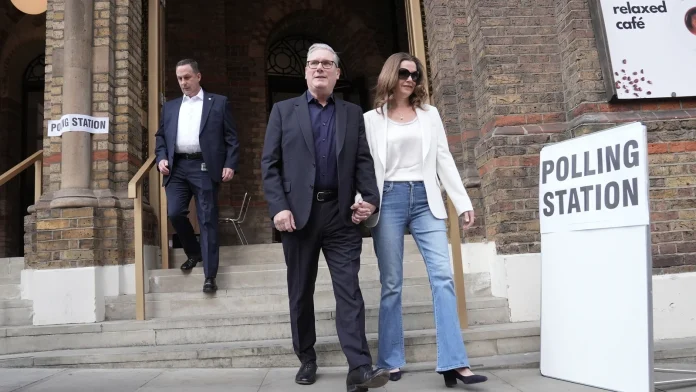
One of those arrested is married to Joani Reid, Labour MP for East Kilbride and Strathaven and a member of the Home Affairs Select Committee. She issued a clear, personal defence: she says she has never had dealings with China as an MP, has not raised China-related matters in the Commons and has never been to the country. “I have never seen anything to make me suspect my husband has broken any law,” she told reporters, asking for privacy for her children as the investigation unfolds.

Her husband, listed as a lobbyist on Ms Reid’s parliamentary register and named in Companies House records as director of a communications firm, is central to the inquiry. For a family accustomed to the cadence of constituency work — surgeries, school runs, local charity events — the intrusion of a counter-terrorism probe is both bewildering and bruising.

What the Authorities Say

Commander Helen Flanagan, who leads Counter Terrorism Policing London, framed the arrests as part of a proactive, preventative investigation. “We have seen a significant increase in our casework relating to national security in recent years,” she said, underlining the scale of the task facing law enforcement as foreign malign activity becomes more complex and diffuse.

Security minister Dan Jarvis added the government’s voice: if there is evidence that a foreign state has attempted to interfere in UK sovereign affairs, “we will impose severe consequences and hold all actors involved to account.” He highlighted the National Security Act — the legal framework ministers say gives intelligence agencies and police modern tools to deter and disrupt state threats.

How the Operation Spanned the Map

The Met detailed the geography of the operation: the 39-year-old man was arrested in London; the 43-year-old in Pontyclun, south Wales; the 68-year-old in Powys, mid-Wales. Additional searches were undertaken in London, East Kilbride and Cardiff as part of the wide-ranging sweep. Police stressed that while these are serious matters, they do not believe there is any imminent threat to the public.

Voices from the Street and the Study

At a café near Ms Reid’s constituency office, a barista who asked to be identified only as Tom wiped down a counter and sighed. “You hear things — whispers on the bus, messages from friends — but nobody expects national security to land like this,” he said. “It’s unnerving, especially when there are kids involved.”

A neighbour, an elderly woman who has lived on the road for three decades, offered a gentler perspective: “Joani has always been seen helping folk, turning up at raffles and fetes. Whatever’s happening, I hope the children are shielded.”

A former intelligence officer, speaking on condition of anonymity, pointed to a broader pattern. “Democracies are under strain from low-visibility influence operations. They’re not always dramatic — often they’re long campaigns to shape opinions, access information, or gain influence through intermediaries,” they said. “This investigation looks like part of that tapestry.”

Politics, Posturing and Public Anxiety

The arrests fed instantly into political rhetoric. On social media and in Westminster lobbies, commentators sharpened their language. Conservative politician Kemi Badenoch posted a video decrying what she called a pattern of Chinese targeting of Britain and accusing the government of naivety — invoking the decision by some leaders to deepen diplomatic channels with Beijing as a strategic misstep. “China is targeting Britain, targeting our MPs. Enough,” she said.

Such reactions show how national security incidents can quickly become touchstones for broader debates: about trade and energy dependence, about how to balance engagement with competition, and about how democracies should respond without lapsing into suspicion and prejudice.

Questions That Outlast the Headlines

What does this moment mean for the relationship between foreign policy and the everyday lives of politicians’ families? How do investigators balance the imperative to protect the public with the right to privacy for those swept up in inquiries? And how can journalists — and readers — separate necessary scrutiny from gratuitous sensationalism?

There are no easy answers. What is clear is that the story sits at the intersection of several global trends: intensifying great-power competition, the expanding remit of national-security law, and the growing awareness that influence can be as potent as espionage when wielded subtly over time.

Local Color, Global Consequences

Back in East Kilbride, life goes on. Delivery vans make their rounds. School bells ring. Yet the usual rhythms have acquired a new edge. A municipal worker who polishes the war memorial by the civic centre remarked, “You’d think small towns were immune to these headaches. But we’re not. Bad things happen wherever people gather.”

That human scale is important to hold onto. Behind policy speeches and legal statutes are ordinary lives — children in need of reassurance, neighbours offering casseroles and cups of tea, and public servants navigating a balance between secrecy and accountability.

What Comes Next?

Investigations of this nature can take weeks or months. For now, the police say the probe is ongoing, and they have thanked the public for cooperation. For politicians, the episode will feed into renewed calls for tough responses to alleged foreign interference. For the public, it is a reminder that in an interconnected world, decisions made in diplomatic corridors can ripple into the streets where we live.

So, reader: how should societies protect themselves from malign influence without eroding the freedoms and privacy that define democratic life? It’s a question that local streets and international capitals are asking, and the answer will shape not only policy but the contours of everyday trust for years to come.

Trump cautioned against risking a ‘Russian roulette’ showdown with Iran

Trump warned against playing 'Russian roulette' over Iran
A Tomahawk missile is fired from a US warship

When Madrid Said No: A Small Country, a Big Moral Choice

Late one crisp Madrid evening, Spain’s prime minister stepped in front of a camera and spoke as if he were talking not to a room of politicians but to a cross-section of humanity: parents, shopkeepers, soldiers, and the children who would inherit the consequences of today’s choices.

“You cannot play Russian roulette with the destiny of millions,” Pedro Sánchez said, his voice steady. “This is how humanity’s great disasters start.” The phrase landed like a pebble in a still lake; the ripples reached capitals and trading floors around the world.

The spark was brutal and sudden: US and Israeli air strikes against Iranian targets over the weekend, an offensive that has set off the kind of diplomatic aftershocks that redraw alliances and reroute commerce. Spain, a NATO member that hosts two important U.S. facilities in the south — the naval base in Rota and the airfield at Morón — reacted by closing those bases to U.S. planes involved in the operation and by openly denouncing the strikes as reckless.

From Andalucían Harbors to the Halls of Power

Drive south from Seville and you find Rota’s harbor boats silhouetted against the Atlantic. Local fishermen, who have seen both the boom of tourism and the ebb of fisheries, watched the national drama unfold with a mix of disbelief and weary familiarity.

“This is not our war,” said Carmen López, 58, who runs a tapas bar a five-minute walk from the docks. “We sell olives and shrimp, not bombs. But when the world gets hotter, our bills and our children’s futures get colder.”

The decision to deny use of Rota and Morón was not merely symbolic. Those installations are linchpins of U.S. naval and air logistics in Europe — the kind of real estate that turns strategic plans into practical operations. In Madrid, officials argued that Spain’s move was a defense of international law, not a provocation.

A Trade Threat and a Transatlantic Fracture

Washington’s response was as sharp as it was immediate. In a televised exchange, President Donald Trump threatened to “cut off all dealings” with Spain over the government’s stance. The words bounced through Madrid’s corridors of power and onto the phones of Spanish exporters and investors who trade heavily with the United States.

“We are not going to be complicit in something that is bad for the world or contrary to our values simply to avoid reprisals,” Sánchez replied. “No to the war — four words, but a coherent position.”

Whether those words will be enough to protect Spain from economic fallout is the question on everyone’s mind. Bilateral trade between Spain and the United States accounts for tens of billions of euros a year and supports tens of thousands of jobs on both sides of the Atlantic. A sudden tightening of ties would be felt in factories, shipping yards, and the small businesses that stitch global supply chains together.

Allies, Laws, and the Erosion of an Old Order

Across Brussels, the European Commission issued a measured shot across the bow of threats: it stood “ready” to defend EU interests through the bloc’s trade mechanisms. “We stand in full solidarity with all member states and, through our common trade policy, stand ready to act if necessary to safeguard EU interests,” Commission spokesman Olof Gill said.

From Sydney, Canada’s prime minister — speaking during an official visit — described the strikes as “inconsistent with international law” and urged a rapid de-escalation. “Canada calls for a swift reduction in hostilities and reaffirms that international law binds all belligerents,” he said.

International lawyers and historians watching this stanza of global theater cannot help but draw parallels. The 2003 U.S.-led invasion of Iraq, many remind us, sowed deep and long-lasting instability across the Middle East: experts estimate the economic costs of that conflict ran into the trillions and the human toll into the hundreds of thousands. The lessons are cautionary and stark.

“We learn from those mistakes not just because they were costly, but because they reshaped security, migration, and the very credibility of multilateral institutions,” said Dr. Ana Ruiz, professor of international relations at the Complutense University of Madrid. “This is not about being anti-American or anti-Israeli; it’s about asking whether unilateral military action advances human security or merely compounds suffering.”

Voices on the Street and in the Boardroom

In the bustling market of La Latina, a teacher named Javier tapped his fingers on a cup of café con leche. “Our kids learn about ‘never again’ in school, but then we see decisions made as if history has no memory,” he said. “People here want peace. It’s as simple and stubborn as that.”

But the international picture is not monochrome. Some leaders and analysts argue that if Iran has resumed activities that threaten regional stability or undermined non-proliferation efforts, action must be considered. “You cannot ignore a nuclear pathway when you are responsible for the security of millions,” a former diplomat now advising a European security think tank told me on condition of anonymity. “But legality and multilateral legitimacy matter. They are the only long-term currency in international relations.”

Markets, Energy, and the Quiet Costs of War

Beyond the moral and legal questions lie immediate material consequences. Markets are jittery; oil and gas prices tend to spike on news of major conflict in the Middle East, a region that still supplies roughly one-fifth of the global oil market. For European consumers, who are still feeling the aftershocks of the 2022 energy crisis, a fresh surge in prices could be devastating.

Then there are secondary effects: supply chains rerouted, insurance premiums for shipping climbing, and investors recalibrating risk. For local businesses whose livelihoods depend on stable trade, the geopolitical debate is not abstract. “If exports slow down, my factory will shrink,” said María González, who runs a small textiles workshop in Valencia. “We don’t want war. We want orders.”

What Comes Next?

Madrid’s stance has set a dramatic test for the post-war architecture that underpins international order. Will NATO’s cohesion hold when members publicly clash over the legality and wisdom of strikes? Will the European Union prove capable of defending its collective economic interests? And perhaps most important: will the international community find pathways to diplomacy before the conflict broadens?

These questions are not the sole province of policymakers. They belong to all of us. When a government says “no” to war, is it shirking responsibility or shouldering it? When a superpower threatens retribution, is it protecting its interests or bullying the world into compliance?

In the end, Sánchez framed his government’s decision in moral terms: “We’re not going to be complicit in something that’s bad for the world.” The line resonated in alleys and embassies alike — a reminder that, as history keeps proving, the actions of states ripple outward, shaping not only geopolitics but the day-to-day lives of ordinary people.

What would you do if your country were faced with this crossroad? Vote with your voice in the comments, but more importantly, ask your leaders what long-term vision they have for a world that seems, more often than not, teetering on the edge of someone else’s impulse.

Iran shoots down US fighter jet, pilot rescued - report

US fighter jet downed by Iran; pilot reportedly rescued

0
Smoke over the desert: an American warplane falls, and a region holds its breath There are moments when the desert seems to inhale, as if...
Family says man held in Iran faces possible execution

Family Warns Detained Man in Iran Could Face Execution

0
They Called Him a Criminal on TV. His Family Calls Him a Son, a Friend, a Believer. On a chilly Dublin morning, Sama Sabet sits...
US vows to target more Iranian infrastructure

United States Vows Broader Targeting of Iran’s Key Infrastructure

0
Smoke Over the Strait: How a Narrow Waterway Became the World's Pressure Point There are places on the map that, for most people, exist as...
Artemis crew break away from Earth's orbit to the Moon

Artemis Crew Breaks Free of Earth Orbit, Sets Course for Moon

0
They lit the sky: Artemis II’s bold shove toward the Moon When the Orion capsule’s engine roared to life, it felt less like a technical...
Russia carrying out aerial attack on Ukraine - officials

Officials Report Russia Launches Widespread Aerial Attacks Across Ukraine

0
Night of a Thousand Shadows: When the Sky Became a Frontline There are nights when a city hears only the ordinary sounds—distant traffic, a dog...