

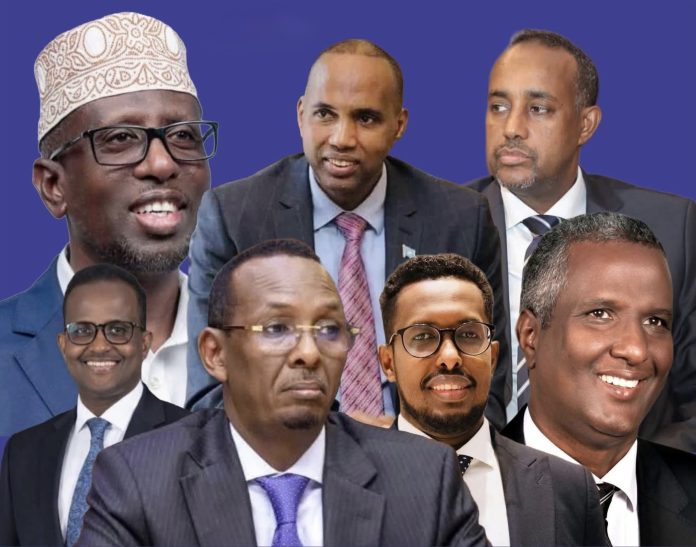
Apr 15(Jowhar)Siyaasiyiinta mucaaradka ee ka soo jeeda Muqdisho ayaa caawa kulan muhiim ah ku yeelanaya hoyga madaxweynihii hore Sheekh Shariif Sheekh Axmed, iyagoo diiradda saaraya xaaladda siyaasadeed ee cakiran ee dalka iyo marxaladda kala guurka ah ee lagu jiro. Kulankan ayaa kusoo aadaya xilli ay sii xoogeysanayso hubanti la’aanta la xiriirta doorashooyinka, kadib markii uu dhammaaday muddo xileedkii Baarlamaanka Federaalka.
EU urges fixed end date for temporary energy cost relief measures
When Relief Needs a Deadline: Europe’s Tightrope Between Bailouts and Better Policy
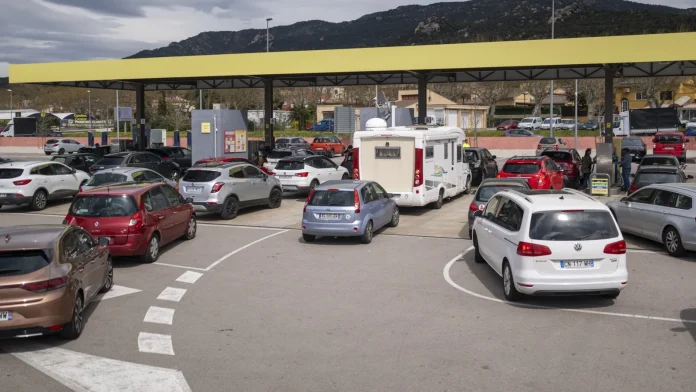
There’s a particular hush that falls over a petrol station at dawn—only the pumps breathe, a half-frosted dashboard light humming as an anxious commuter fills the tank. That hush was interrupted across Europe last week not by protesters or markets, but by a different kind of politics: the argument over how governments should soothe the sting of rising energy costs without locking in new problems for taxpayers, the climate and future budgets.
Valdis Dombrovskis, the European Commissioner for Economy, stepped into that debate on the stage of the International Monetary Fund with a blunt, plain-spoken warning: emergency help must come with an exit strategy. “When you hand people a blanket,” he said in conversation with IMF European Department head Alfred Kammer, “you don’t want them to think the cold is permanent.”
Lessons Still Fresh from 2022
The memory of 2022 is a political scar. When Russia’s invasion of Ukraine sent gas prices through the roof and electricity bills spiked, European governments reacted. Subsidies, tax cuts and price caps rolled out across the continent. They were politically expedient, and often broad—designed to be fast, not surgical. The result was immediate relief for households and firms, but also hefty fiscal bills and lingering distortions in energy markets.
“We learned that haste without precision can be costly,” Dombrovskis told the audience. “Broad-based measures are easier to administer—but they stay in place, and their price tag swells. That’s something we simply cannot afford now.”
Why “cannot afford”? Governments across the eurozone are operating in a different landscape than in 2022. Sovereign debt levels remain elevated in many member states, and central banks have raised interest rates to wrestle down inflation. The European Central Bank’s policy rate, much lower in 2021, was in the vicinity of several percentage points by 2024—a far cry from the ultra-loose settings that cushioned pandemic-era emergencies.
Targeting, Sunsets and the Politics of Pain
Dombrovskis’ prescription has three ingredients: targeted support, clear sunset clauses, and avoidance of measures that would prop up fossil-fuel demand. It reads simple on paper, but playing it in public is another thing.
“Targeted relief costs more political capital,” said Ana Ribeiro, a fiscal policy analyst in Lisbon. “You have to draw lines—who qualifies, for how long, and how do you verify need. That’s messy. But messy beats a long, open cheque that we’ll all pay for later.”
There is growing evidence that some governments are trying to thread that needle. Germany, for instance, unveiled a short-term fuel relief package—about €1.6 billion of measures lasting two months—aimed at softening the immediate shock without creating permanent incentives to burn more oil. In France, officials pledged to keep any sectoral supports limited to those most in need and to renew assistance on a monthly basis, not an open-ended entitlement.
“It’s basic governance,” said Marie Dupont, owner of a small bakery on a narrow street in Lyon. “We need help to survive this week, but we don’t want a policy that becomes our lifeline forever. We also want the help to reach us—not just big firms or everyone with a car.”
Why Avoid Boosting Fossil Fuels?
There’s a paradox at the heart of many relief programs: if you blunt price signals that encourage conservation and cleaner choices, you can end up prolonging the very demand you aim to temper. At a time when EU climate targets still require steady reductions in fossil-fuel consumption, policy choices that inadvertently expand demand risk contradicting long-term commitments.
“If the goal is to protect vulnerable households, subsidies targeted at them make sense,” said Dr. Tomasz Novak, an energy economist based in Warsaw. “Blanket fuel tax cuts, however, reduce the price for everyone—from the delivery truck driver to the SUV owner who commutes solo. That’s neither equitable nor green.”
Consider this: global oil demand has hovered around 100 million barrels per day in recent pre-pandemic years, and even small percentage upticks translate to millions of barrels. At today’s price sensitivities, a temporary reduction in pump prices can stimulate demand just as much as durable policy nudges—unless designed carefully.
Voices from the Ground
On the quays of Klaipėda, a port town where tankers and grain freighters anchor, the conversation is practical. “We don’t want subsidies to disappear if the problem is structural,” said Ieva, a crane operator who asked to use only her first name. “If fuel becomes cheaper for a month, we might catch up—but what about the next month?”
Across the Rhine in a service station near Frankfurt, Marcus, a long-haul trucker, was clearer about what he needs. “If authorities give us a targeted rebate, it helps us keep our costs down without wasting money on people who don’t need it,” he said. “We’ll accept means-testing if it means help reaches the small operators.”
Practical Principles for the Present
- Set clear time limits (sunset clauses) on emergency measures so they don’t persist by inertia.
- Target assistance to households and sectors demonstrably at risk to maximize effectiveness and minimize fiscal cost.
- Avoid across-the-board price cuts that could stimulate fossil-fuel demand and hinder decarbonization goals.
- Design administrative systems that are quick to deploy but robust enough to prevent leakage and fraud.
These are not just technocratic prescriptions. They are political choices about what societies prioritize: short-term comfort, long-term fiscal sustainability, and climate commitments. And often, the hardest part is selling that complexity to citizens who want a simple answer at the checkout.
Bigger Questions: Solidarity, Transition and Trust
One question hovers above all of this: what kind of social compact do Europeans want as they navigate repeated shocks—pandemic, war, supply-chain turmoil, geopolitical flashpoints? Do voters expect universal buffers, or do they accept targeted cushions that protect the most vulnerable while nudging everyone else toward less carbon-intensive behaviors?
“Crises reveal the seams in social contracts,” said Professor Eleni Markou of the University of Athens. “If governments show they can be both compassionate and disciplined—providing relief that’s temporary, focused and aligned with climate targets—they will strengthen trust. If they choose blanket measures, they might score short-term political points but undermine fiscal and environmental resilience.”
So, what would you choose if you were in charge for a day? A short burst of universal relief that buys immediate comfort—or a more surgical approach that may feel harsh to some but aims to protect the public purse and the planet over the long run?
Final Thoughts: A Time-Limited Blanket?
In the end, Dombrovskis’ message is less bureaucratic than moral: emergency interventions must not become permanent lifelines. We can be generous without being permanent; we can protect today’s families while insisting on the systems that prevent tomorrow’s crises. The petrol station at dawn will still be there when the sun rises—but the question now is whether the policy blanket you wrap around yourself will be stitched with a scheduled seam or left to fray into a budgetary and environmental tangle.
Europe’s leaders are testing that seam. Some governments are already trying pragmatic, time-limited relief. Whether this moment becomes a model of disciplined compassion—or a re-run of 2022—will depend on political courage, administrative IQ, and public patience. And, not least, whether voters are willing to accept the uncomfortable truth that every euro of relief carries a choice about our collective future.
Maine poised to be first US state to ban large-scale data centers

Maine’s Pause: Small Towns, Giant Servers, and the Moment a State Said “Not Yet”
On an early spring morning in Augusta, Maine’s statehouse hummed with a debate that felt, somehow, both local and epochal. Lawmakers voted to hit pause on the construction of large data centres — those humming cathedrals of servers that power everything from streaming video to the latest generative AI models. The bill, approved by both chambers, now heads to the desk of Governor Janet Mills. If she signs it, Maine will become the first U.S. state to impose a temporary moratorium on big data-centre builds driven by the AI boom.
“We’re not anti-innovation,” Representative Melanie Sachs told reporters after the vote. “We are pro-deliberation. Communities deserve to understand the costs — to their wallets, their water, and their landscapes — before we invite projects of this scale.” Her words landed like a call to breathe, to slow down an industry sprinting at full speed.
Why a Moratorium Matters
Across the United States, the rush to house artificial intelligence has translated into concrete, steel and transformers. Tech companies are pouring capital into sprawling facilities to house banks of GPUs and cooling systems that never sleep. That buildout has been worth “tens of billions” in investment, analysts say, and has reshaped local economies — sometimes overnight.
But that growth brings a ledger of trade-offs. Data centres are voracious users of electricity; in some places they can alter grid dynamics and nudge up household power bills. They also demand water for cooling and vast tracts of land — land that might otherwise be fields, forest, or housing. Polling shows the unease: a Quinnipiac University survey found roughly 65% of Americans would oppose a data centre being built in their community.
Maine’s bill would block permits for facilities with electrical capacity above 20 megawatts until November of next year and would create a state council to evaluate future proposals — a pause intended to let lawmakers craft rules that balance innovation with community needs.
Voices from the Small Towns
Go to a town hall in midcoast Maine and you’ll hear things you won’t on a corporate earnings call. At a meeting in the coastal village of Rockport, lobsterman Eddie Carter described a scene at the harbor: “The sea gives us a living, and the town gives us a life. If a company came and sucked up our water or lit up the night sky with towers, it wouldn’t be the same. We want jobs, sure, but not at the cost of what makes this place home.”
Across the county in a pine-smelling township ringed by blueberry barrens, local councilwoman Joanne Reyes spoke bluntly about transparency. “Developers came here with glossy presentations, but when we asked about how much power they’d actually need, we were told ‘proprietary.’ That’s not enough. Our residents deserve facts so we can vote with our eyes open.”
These sentiments are echoed nationwide: communities asking who benefits and who pays when data centres land in their backyards.
Grid Stress, Rising Bills, and Water Worries
There are technical reasons for concern. Data centres’ GPUs — the chips that run today’s AI — are energy-hungry, and their density concentrates enormous loads on local distribution systems. The U.S. Energy Information Administration has flagged regions where household electricity bills have climbed, and while it’s seldom the sole cause, large industrial customers can tilt the balance.
Water is another knotty issue. Mega-facilities use a lot of cooling, often relying on water-intensive systems. That raises questions in drier parts of the country and even here in Maine, where rivers and aquifers support fisheries and recreation. “We have to think about cumulative impact,” said Dr. Aisha Khan, an energy policy researcher at the University of New England. “One project might be manageable. A cluster is a new reality. Policy needs to catch up.”
Not All Bad: Jobs and Infrastructure Gains
It’s not all cautionary tales. Proponents of data-centre investment point to jobs, property taxes, and the sometimes-unexpected byproducts of tech money: upgraded fiber networks, improved emergency services, and training programs that anchor young people locally. In towns that have struggled with population decline, a major employer is seductive.
“We could use the good-paying construction jobs and the ongoing maintenance roles,” said Anthony Rivers, who runs a family-owned hardware store in a rural county seat. “But we want contracts for locals, not just an influx of outside workers who leave once the plant is humming.”
The statewide moratorium is meant not as an absolute rejection but as a bargaining pause — a chance to set conditions that can make projects more beneficial to communities if they go forward.
What the Council Could Do
The proposed council, which the bill would create, is designed to be multidisciplinary: energy planners, environmental scientists, municipal officials, and community representatives. Its job would be to assess risks, project grid impacts, and sketch best practices around land use, water, and employment commitments.
“Think of it as a ‘pre-flight checklist,’” said Lena Occhi, a municipal planner in the Penobscot region. “We need consistent, transparent metrics so towns aren’t negotiating in the dark. That’s what this moratorium buys time for.”
Global Echoes: A Local Decision with International Themes
Maine’s moment is part of a larger global conversation. Cities from Iceland to Singapore have wrestled with the same questions: where should high-energy infrastructure sit, who decides, and how do we ensure environmental stewardship without stifling technological progress?
What happens in Augusta could ripple outward. If other states see that a pause yields stronger community protections and clearer regulatory frameworks, we might witness a shift from rapid, developer-led booms toward more measured, negotiated growth. Alternatively, a veto could send an equally powerful signal about the limits of local resistance to a global industry.
Questions for the Reader
As you read this from wherever you are — a city apartment, a rural village, a coastal town — ask yourself: When technology demands land and water, who should decide where it goes? Should communities be allowed to say no? And what trade-offs are we willing to accept in exchange for faster, smarter services?
Maine’s decision is a reminder: progress need not be headlong. There’s dignity in deliberation. There’s wisdom in asking how we balance the bright promise of AI with the everyday things that give life its texture — clean water, affordable power, green spaces and the quiet rhythms of small-town mornings.
Whether the governor signs the bill or not, this debate has already reshaped the conversation. It’s no longer only about megawatts and mega-deals; it’s about who belongs at the table when the future is built, and how a place — from the granite coast to the blueberry fields — can remain itself in the face of global change.
Sarkaal ka tirsan madaxtooyada oo Muqdisho ku dilay askari ciidan iyo Wasiir Fartaag oo xiisad ku lug yeeshay
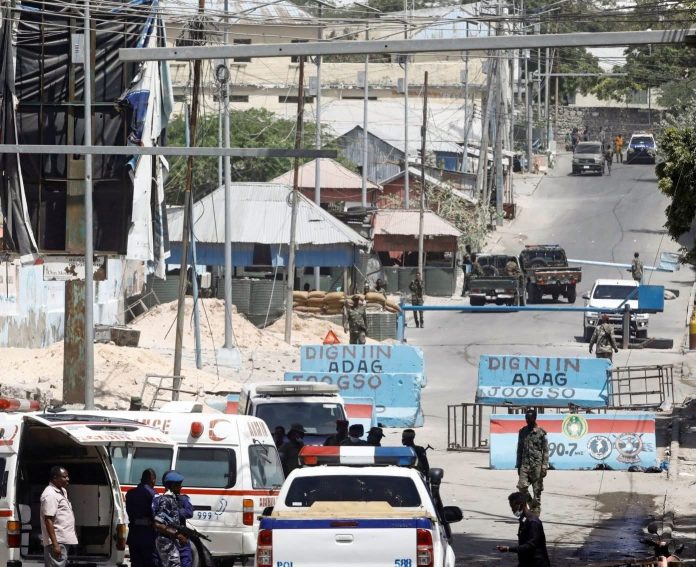
Apr 15(Jowhar) Sida uu xaqiijiyay taliyaha ilaalada wasiirka Amniga ee XFS, ciidamo booliis ah oo ku sugnaa meel bar koontarool ah oo ku taala Xamarwayne ayaa waxaa soo gaaray baabuurka wasiirka Amniga Fartaag oo uu markaas waday darawalka wasiirka, waxaana kadib dhacay is fahmi waa labada dhinac ah, taas oo sababtay in darawalku la soo baxo bastoolad halka ciidankii barta koontatool joogay ee booliisku ay qoryo ula soo baxeen darawalka.
Madaxweyne Trump oo si lama filaan ah uga hadlay xalka Washington iyo Tehran
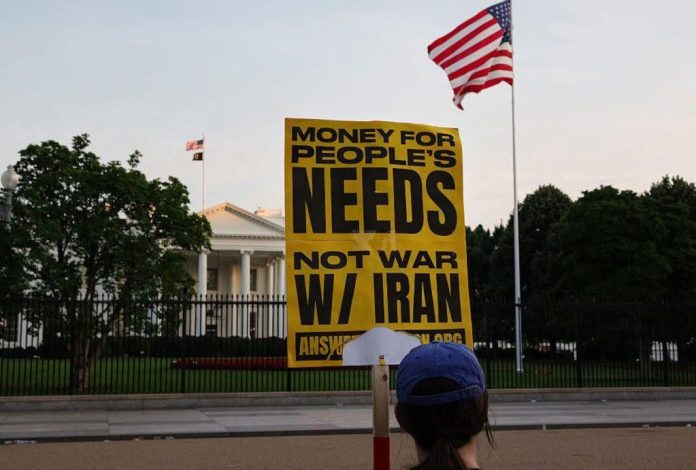
Apr 15(Jowhar) Madaxweyne Trump ayaa FOX NEWS u xaqiijiyay in dagaalka u dhaxeeya Washington iyo Tehran uu qarka u saaran yahay in la soo afjaro. Hadalkan ayaa ku soo beegmaya xilli dhowaan uun ay fashilmeen wada-hadalladii nabadda, isla markaana markab Shiinuhu leeyahay uu jabiyey go’doomintii Maraykanka ee Biyaha Iran.
U.S. Says Blockade Has Fully Stopped Iran’s Maritime Trade
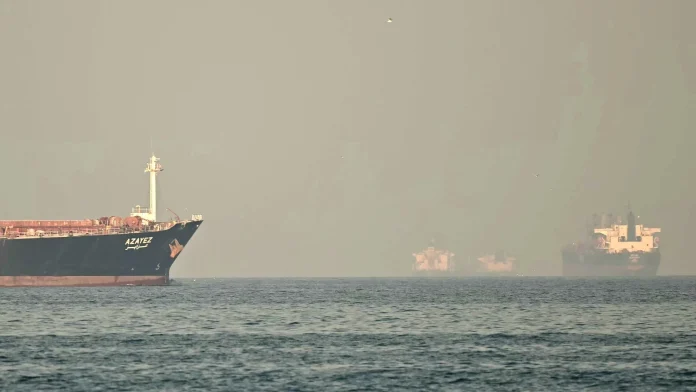
Blockade, Bargains and the Breath Between Wars: A Gulf at the Edge
There is a peculiar hush that falls over port cities when trade stops. The cranes pause mid-arc, the deckhands lean on rusted rails and cups of tea cool untouched in the hands of men who have always measured their days by the coming and going of ships. In the Persian Gulf today, that hush is not a local misfortune but a strategic silence: the United States says it has effectively stopped seaborne trade into and out of Iran, even as tentative diplomacy flickers back to life a few time zones away.
“In less than 36 hours since the blockade was implemented, US forces have completely halted economic trade going into and out of Iran by sea,” wrote Admiral Brad Cooper, head of US Central Command, on social media. It is a simple, stark sentence. For Tehran, officials say, shipping is not incidental—“it fuels 90% of Iran’s economy,” Cooper added—so the blockade is a blunt instrument.
Back to the Table — Or Back to the Brink?
On the other side of the ledger, President Donald Trump has signalled optimism that talks may resume imminently. “I think you’re going to be watching an amazing two days ahead,” he told reporters, suggesting negotiators could meet in Pakistan within days and indicating he did not expect to extend the fragile two-week ceasefire that is due to lapse on 21 April.
There is a careful choreography at work. Pakistani officials, Iranian envoys and Gulf intermediaries say negotiating teams could reconvene in Islamabad later this week. One senior Iranian source—speaking on condition of anonymity—told me the calendars were not closed and that “everyone understands a pause is still a possibility, but we have to see whether words turn into deeds.”
On the Ground: Voices from the Gulf
A fisherman in Bandar Abbas named Reza described the blockade in small, human terms. “Boats don’t need to be shot at to be damaged,” he said, fingering a frayed rope. “When cargo stops, my son’s wages stop. When my son’s wages stop, the shopkeepers close. We smell war in the air—sometimes it arrives in the belly.”
In Dubai’s coffee shops and Tehran’s teahouses, the conversation is the same: fear braided with weary hope. A Lebanese teacher in Beirut commented, “We have lost so many already—people talk about numbers, but tonight we count the names.” The toll cited by multiple sources: roughly 5,000 dead in the conflict so far, with about 3,000 in Iran and 2,000 in Lebanon. Those numbers are more than statistics. They are empty chairs in kitchens from Shiraz to Sidon.
Diplomacy Under Pressure: Nuclear Moratoria, Sanctions and the Big Ask
What’s blocking a deal? The nuclear question, which always has been the Gordian knot in relations between Washington and Tehran. Over the weekend in Pakistan, U.S. negotiators reportedly offered a sweeping 20-year suspension of all nuclear activity in Iran. Tehran countered with a far shorter pause—three to five years, according to people briefed on the talks. It is a chasm measured in decades and trust.
Rafael Grossi, director of the International Atomic Energy Agency, framed the issue clinically in Seoul: a moratorium’s length is ultimately a political decision, he said, and one that could be used as a confidence-building measure. “There are technical pathways to verification,” Grossi explained, “but politics decides timelines.”
On the other side of the ledger, Tehran insists any pause should be matched by sanctions relief; Washington wants verifiable removal of enriched material. “Each side is asking the other to start from the thing it fears losing most,” an analyst at a Middle East policy think-tank told me. “That creates bargaining space—but also a lot of pressure.”
Complications Beyond the Table
Even if negotiators can find a compromise on enrichment, the region’s violence complicates matters. Israel has continued military operations in Lebanon targeting Hezbollah—operations the US and Israel say are not part of the ceasefire, while Iran insists they are. Those differing legal interpretations undermine the fragile trust necessary for any broader settlement.
International outrage has been rising. Britain, Canada, Japan and several other countries jointly condemned recent attacks that led to the deaths of UN peacekeepers in Lebanon, calling for an “urgent end to hostilities.” The death of three Indonesian peacekeepers last month was cited as a particularly dark marker of conflict spilling beyond state-on-state exchanges.
Markets, Movement and the Maritime Map
The diplomatic back-and-forth has immediate global reverberations. The Strait of Hormuz—this narrow throat of water between Iran and the Arabian Peninsula—matters to the world’s energy markets. Historically, roughly one-fifth of seaborne oil flows through the strait, and when the waterway is threatened, prices move. Oil benchmark prices eased for a second day on the hints that talks might resume. Asian stocks rose; the dollar, which had been on a seven-session slide, steadied.
And yet the sea still tells its own tale. Several vessels turned back under the blockade, including the Rich Starry, a Chinese-owned tanker sanctioned by the US, which reversed course toward the Strait of Hormuz after exiting the Gulf. The Wall Street Journal reported that US forces had intercepted eight Iran-linked vessels since the blockade began—numbers that underline the degree to which economics and security have been fused into a single, high-stakes tactic.
What Would Success Look Like?
Imagine for a moment that a deal emerges: a limited, verifiable pause on enrichment; a phased sanctions rollback; assurances that Israel’s activities in Lebanon would be addressed by separate mechanisms. Would that bring durable peace? Perhaps. Or perhaps it would simply buy time—an interlude in a longer, more complicated rivalry that will need economic, political and social reconciliation to be solved for good.
“We can stop the shooting, but you cannot engineer trust at gunpoint,” an experienced diplomat who has worked on Iran nuclear issues told me. “Trust takes institutions, transparency, and time.”
Questions for the Reader
What would you ask negotiators if you could sit at that table? Is a deal that freezes nuclear progress for two decades worth the economic and political costs of a blockade? And how should the international community weigh the lives lost—5,000 and counting—against the strategic calculus that brought them here?
Lasting Echoes
There are scenes from ports that will stay with me: a container yard where a security guard chews on a sunflower seed and says, almost casually, “We used to have trucks every hour. Now we wait.” An elderly woman in Beirut folding a map of the region into a square and telling me, “Maps are like promises; sometimes they tear.”
If the coming days bring negotiators back to a table in Pakistan, we should welcome the effort while remembering that diplomacy is slow and that human lives are not—they break quickly. The blockade is a lever. So too is dialogue. Which one bends the world toward peace depends—more than anything—on the willingness to trade bravado for compromise, and suspicion for a chance to rebuild.
How a US naval blockade of Iran could disrupt global oil supplies
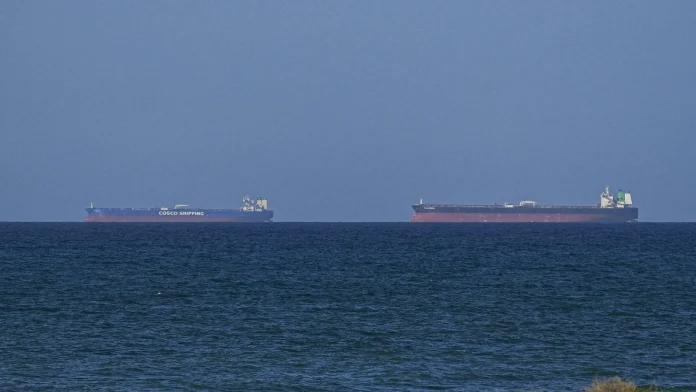
A chokepoint turned pressure cooker: the Strait of Hormuz in the crosshairs
At dawn the tankers sit like slow-moving leviathans along a seam of blue — hulks of steel and rust, their decks slick with salt and the smell of diesel, waiting for orders that may never come. The Strait of Hormuz, barely 21 miles wide at its narrowest, has long felt like the throat of the world’s oil trade: a crowded, anxious artery that connects Persian Gulf oil to global markets. Now that throat has been clamped down.
In a move that ripples far beyond any single harbor, the US military has started blocking shipping to and from Iranian ports — a step that would effectively deny about two million barrels of Iranian crude every day entry into global markets. For a planet still addicted to oil, the implications are immediate and unnerving.
What unfolded at sea
The announcement
After weekend talks in Islamabad failed to produce an agreement, President Donald Trump declared that the US Navy would “begin the process of BLOCKADING any and all ships trying to enter, or leave, the Strait of Hormuz.” The language was blunt; the action sharper.
US Central Command followed with a more operationally precise statement: vessels attempting unauthorized entry or exit from blockaded Iranian ports could face “interception, diversion, and capture.” The American military insisted that normal passage for ships merely transiting the strait to and from non-Iranian ports would not be impeded — a fine technical line that, in practice, leaves shipmasters and insurers jittery.
Iran’s Revolutionary Guards answered in kind. “Any American or allied vessel that approaches the Strait will be treated as a breach of the ceasefire and will be dealt with decisively,” a Guards statement warned. On the water, rhetoric matters. Missiles, mines, mechanical failure — any one of those can make a threat lethal.
What this means for oil flows
To put numbers beside the anxiety: Iran exported an estimated 1.84 million barrels per day (bpd) of crude in March and about 1.71 million bpd in April, according to Kpler tracking. That sits slightly above the 2025 average of roughly 1.68 million bpd. Blockading those flows would be a meaningful dent in the global supply chain.
But markets are messy. In the weeks before hostilities intensified on 28 February, Iran surged oil onto ships; by early April Kpler estimated there were more than 180 million barrels of Iranian crude either in transit or held in floating storage — a near-record backlog. Approximately 100 million of those barrels were anchored off Malaysia, Indonesia and China, meaning that some cargoes were already outside the immediate reach of a Strait blockade.
Still, even with ships full and waiting, the sudden cutoff of new exports tightens supply. It constrains refinement planning. It raises the question every policymaker and market strategist will now ask: who will make up the shortfall?
Who will feel the pinch fastest?
Asia. Always Asia. Before conflict reshaped trade routes, China was the largest single buyer of Iranian crude. India, long subject to Western pressure over purchases, had just been granted a sanctions waiver that allowed shipments to resume — New Delhi was due to receive its first Iranian crude in seven years this week, shipping-data showed.
Across the region, refineries and traders will scramble for alternatives, and not all can pivot quickly. That scramble shows up in insurance premiums, charter rates, and in the widening spreads between grades of crude — technical details that eventually pass through to consumers as higher petrol and energy bills.
Traffic, tankers and the odd exception
Even as the Strait has been largely choked since the start of the conflict, there have been snapshots of movement. A Chinese tanker with methanol loaded in the UAE transited the strait — perhaps the first such passage since the blockade — and two other vessels crossed as well. Prior to the blockade, two Pakistan-flagged tankers, Shalamar and Khairpur, sailed into the Gulf to take on cargoes; the Liberia-flagged VLCC Mombasa B was ballasting in the Gulf, and the Malta-flagged Agios Fanourios I, attempting a passage to load Iraqi crude for Vietnam, turned back and anchored near the Gulf of Oman.
On 7 April some 187 laden tankers, carrying around 172 million barrels of crude and refined products, remained inside the Gulf, Kpler reported. That inventory provides some short-term relief to buyers but also represents a logistical choke — ships full of product but unsure where to go or when engines will be cleared to move.
Beyond the immediate: insurance, markets and geopolitics
Shipowners and insurers hate uncertainty. War in a narrowing channel translates into higher premiums and higher freight rates, which reverberate through the cost of goods. When insurance costs rise, some carriers will refuse to enter risky zones; others will demand extra war-risk premiums. Oil companies recalibrate exports, arbitrage shifts, and refiners hedge differently. The result: volatility.
“We are not just talking about barrels,” said Maya Alvarez, an oil market analyst in London. “We’re talking about the plumbing of global energy. Alternate pipelines exist; Gulf producers can send crude east through Fujairah, or shift flows via the East-West pipeline into the Red Sea. But pipelines have limited capacity. Ships are flexible. A sudden loss of two million barrels a day is big enough to move markets and small enough to be absorbed unevenly — and that asymmetric pain falls on import-dependent economies in Asia and beyond.”
Voices from the shore
“The port is quieter,” said Ali Rezaei, a crane operator in Bandar Abbas, where the air tastes of sea salt and welding smoke. “We used to load tankers around the clock. Now ships wait and men wait. If nothing changes, families will tighten belts this summer.”
In Muscat, a shipping agent who asked not to be named described frantic calls: “Charterers ring us at all hours. They ask for routing plans, bunkers, insurance. We have to tell them there are no easy answers.” The voice conveyed exhaustion. There was also a note of resignation: logistics, he said, is mostly anticipation.”
Wider currents: energy security in an unstable world
Ask yourself: how much of our daily life do we want tethered to a few narrow waterways and fragile geopolitics? The crisis at Hormuz is a reminder that energy security is as much about politics and geography as it is about economics. It is also an argument for diversification — not only in fuel sources, but in the routes and diplomatic ties that keep shops open and lights on.
There are broader reflexes at work: countries are accelerating strategic stockpiles, some buyers are deepening ties with other suppliers, and conversations about renewables and electrification gain urgency. Yet transitions take time. Today’s decisions are made in the uncomfortable middle ground between immediate energy needs and long-term climate goals.
What’s next — and what should you watch?
- How the US Navy implements the blockade: rules of engagement and enforcement will determine escalation risks.
- Iranian responses: asymmetric tactics like mines or small-boat harassment could complicate navigation.
- Shifts in tanker rates and insurance premiums: early indicators of market stress.
- How importers — India, China, Japan, South Korea — pivot their procurement strategies.
- Diplomatic moves: can new talks, backchannels or third-party mediators defuse a situation that imperils global trade?
The Strait of Hormuz has always been more than a shipping lane; it’s a mirror. It reflects the imbalance of a global system that still runs on fossil fuels and depends on narrow passages guarded by political power. As tankers sit and the world waits, the choices made in Washington, Tehran, and in boardrooms and ministries from Beijing to New Delhi will decide whether this becomes a temporary shock or a longer-term rearrangement of energy geopolitics.
What do we, as observers and consumers, learn from this? Perhaps that resilience is not only about storing oil. It is about imagination: imagining new routes, new alliances, and new energies. It’s about asking hard questions — and, crucially, preparing for answers that may not be comfortable.
United States and Iran Set to Resume Diplomatic Talks This Week Despite Port Blockade
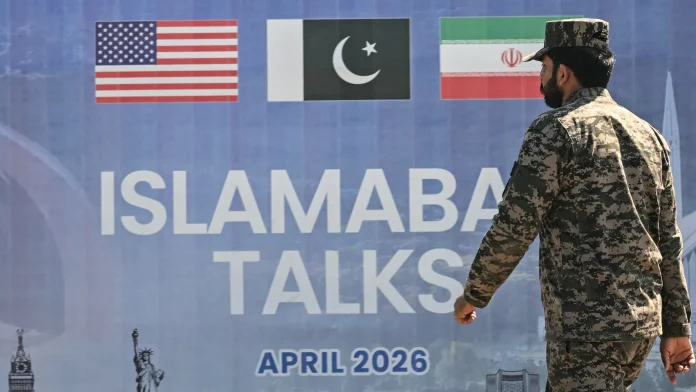
A Ceasefire That Breathes—And a Blockade That Squeezes: Diplomacy Returns to Islamabad
In the cool early hours of Islamabad, jasmine and diesel mix in the air as the city waits for news. Delegates who flew in last week have scattered back to their hotels; the low, constant hum of generators at the diplomatic quarter punctuates murmurings of a return to the negotiating table. After a weekend of tense discussions that ended without a breakthrough, negotiators from Washington and Tehran may be back in Pakistan before the week is out, sources say—an anxious, hopeful reprise to a diplomatic drama playing out on the narrow bridge of the Strait of Hormuz.
“We’re not done,” said a senior Pakistani official who asked not to be named. “Both sides left a place at the table. That means there’s still a door open.”
The Blockade, the Strait, and the Price of Passage
On Monday, the United States moved to block shipping traffic in and out of Iran’s ports. Tehran answered with a furious denouncement, calling the move “piracy” and warning that no Gulf port would be safe if Iran’s own were threatened. For traders and tankers, the blockade is more than rhetoric: the Strait of Hormuz is a chokepoint through which roughly one-fifth of the world’s oil and liquefied natural gas once flowed freely. Any sustained disruption here ripples through economies from Tokyo to Nairobi.
Markets reacted, then steadied. A combination of diplomatic signals—talks possibly resuming—and the initial lack of direct military engagements helped calm the trading floors: benchmark crude slid below the psychologically important $100 per barrel mark after a brief spike. But the International Monetary Fund and the International Energy Agency have already painted a grimmer backdrop.
The IMF recently warned that if the conflict worsens and oil prices remain above $100 through 2027, global growth could tip toward recession. The IEA, in turn, has trimmed its near-term forecasts for supply and demand growth, projecting that the shocks from conflict and sanctions will shave expansion from both sides of the oil equation.
On the water
Despite the blockade announcement, satellite and shipping data showed Iran-linked tankers moving through the strait, some not destined for Iranian ports. The U.S. Central Command framed its orders narrowly: the blockade would apply to vessels entering or leaving Iranian ports in the Gulf and the Gulf of Oman, and would not interfere with neutral, transiting ships bound for non-Iranian destinations. In practice, enforcement at sea is a knotty, dangerous puzzle.
“Ships are like small moving countries,” said an American maritime security analyst based in London. “You can write rules on paper, but at sea you need navigation, fuel, crews, flags, insurance—and the choices captains make in a crisis are human, and often pragmatic.”
Back to the Table: Diplomacy on a Tightrope
The weekend talks in Islamabad—the highest-level contacts between the U.S. and Iran since 1979—ended without a deal. Yet the sense among diplomats was not of complete failure. A proposal to reconvene has been circulated, and both sides have reportedly kept their calendars open for Friday through Sunday.
“No final chapter has been written,” an Iranian diplomat said in a low voice over tea. “We tested each other’s limits—now it’s time to see who will carefully step back.”
From Washington’s side, negotiators have been firm on one red line: any agreement must remove enriched nuclear material from Iran and include credible verification mechanisms to ensure Tehran is not edging toward a weapon. “Verification is non-negotiable,” a senior U.S. official told Reuters anonymously. “We need to be able to prove what we see on paper in the real world.”
That stance has resonated in allied capitals. Israel’s leadership, vocal and uncompromising, insists that enriched material cannot remain inside Iran. Other Western nations—Britain and France among them—have declined to join the U.S.-led blockade but have offered to help protect shipping lanes if a diplomatic framework is agreed.
Complications on the ground
Compounding Pakistan’s fragile mediation is the war’s spillover into Lebanon, where Israel has kept striking Iran-backed Hezbollah targets. Iran argues those operations should fall within any ceasefire calculus; Israel says they are separate. The result: parallel fires burn beyond the immediate U.S.-Iran standoff, widening the diplomatic tentacles and complicating any neat resolution.
Voices from the Gulf and Beyond
Walk into any coastal port town in the Gulf or the fishermen’s wharves along Iran’s southern coast, and you’ll hear a rich mix of fear, stoicism, and weary commerce. “We know the sea,” said Hassan, a fisherman from Bandar Abbas, his hands still smelling of salt and fish. “When prices jump, our nets get heavier with trouble. We don’t want war. We want to sell our catch and feed our families.”
In Islamabad, hotel staff who have been serving international delegations report late-night corridors where translators, aides, and ministers met quietly after public statements. “They smoke and drink tea and talk,” said a manager at an unassuming diplomatic hotel. “Sometimes they even laugh. It shows they are still human, despite what they do on television.”
Energy traders speak in colder terms. “A temporary lull in prices doesn’t change the structural risk,” said a Singapore-based trader. “Supply chains were already fragile coming out of the pandemic. Add a chokepoint under threat—that’s a multiplier.”
Why this matters to you
Ask yourself: when you fill your car, heat your home, or book a flight, how much of that experience depends on an invisible line of ships threading a narrow waterway? The crisis in the Gulf illustrates how geopolitics, energy security, and everyday life are braided together.
- Nearly 20% of global oil and gas flows cross the Strait of Hormuz in normal times.
- The IMF warns of a recessionary risk if oil averages remain above $100 through 2027.
- Even limited port restrictions can set off insurance hikes, reroutings, and supply-chain delays worldwide.
What comes next?
The next days in Islamabad will feel like holding a breath. Will delegations return, open with new proposals, and inch toward verification language that both sides can live with? Or will the blockade harden positions, encouraging stakeholders to prepare for a longer, costlier conflict?
“Diplomacy is messy and slow,” reflected a veteran Pakistani mediator. “But war is fast and final. The fact we are still talking is not nothing—it’s everything.”
As you read this, somewhere a tanker turns, a negotiator rewrites a line, and a family calculates the price of bread. These ripple effects are global, intimate, and immediate. They ask us, as citizens of a connected world, whether the great work of preventing catastrophe is worth the patience it requires.
Golaha Mustaqbalka oo ku goodiyay iney doorasho dalka ka qabanayaan hadii…..
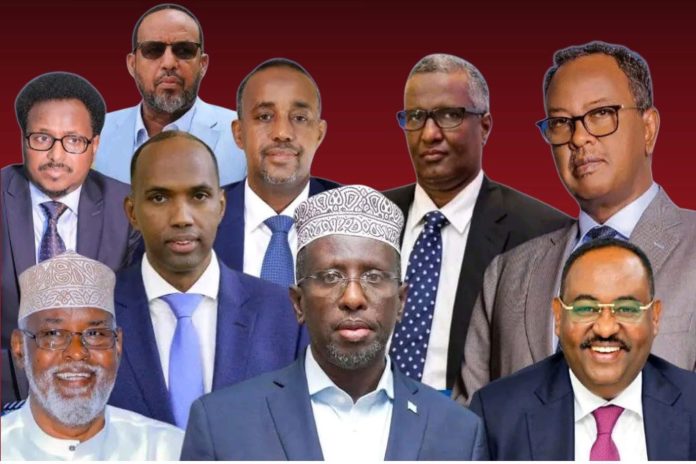
Apr 14(Jowhar) Golaha Mustaqbalka Soomaaliyeed ayaa war-saxaafadeed ay soo saareen ku sheegay in 14-ka Abriil 2026 uu dhammaaday muddo xileedka Baarlamaanka Federaalka, taasoo dalka gelisay firaaq dastuuri ah.
Negotiations lay bare deep divide between Lebanese government and Hezbollah
Beirut Before Dawn: A City Holding Its Breath
The air in downtown Beirut felt contrived that morning — like a theater waiting for the curtain to lift. Horns, chants and the clack of shoes on cracked sidewalks formed an uneasy score. People gathered in small knots beneath fluttering flags: red-and-white Lebanese banners, a few black-and-white Hezbollah standards, and placards that read, in Arabic and English, “No normalization” and “Ceasefire now.”
“You can hear it in the streets — this is not just politics for us,” said Amal, a schoolteacher who lives in the southern suburbs. “It is family names, fields, graves. When they speak of talks, they speak of our bodies.”
These demonstrations were not staging for cameras; they were a raw, public display of a deeper rift. For many Lebanese, the notion of sitting across a table with representatives of Israel — even indirectly, and even in Washington — felt like crossing a line drawn across generations. To others, including ministers in Beirut, the trip to the US capital was a desperate attempt to buy time and to stop the bleeding.
Washington: A Short Meeting, Heavy Expectations
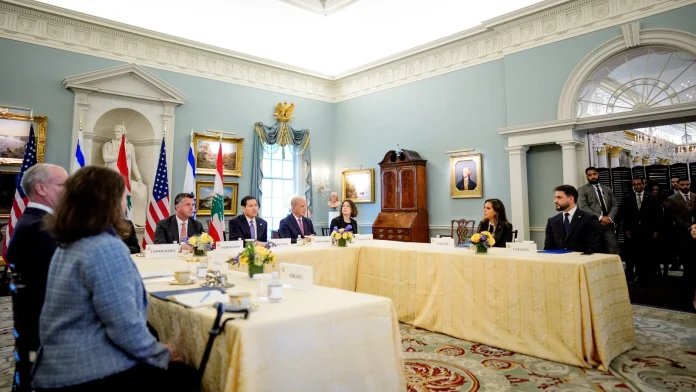
In a conference room in Washington, a handful of diplomats met under the watchful eye of a senior US official. Israel’s envoy and Lebanon’s ambassador faced each other for just over two hours — the most direct, formal encounter between the two countries in decades.
When the delegates emerged, their joint statement read like a diplomat’s arithmetic: commitment to further talks, a mutual expression of interest in pausing hostilities, and talk of potential reconstruction assistance. A US official hailed the session as a potential “historic milestone”; the Lebanese delegation called for an immediate ceasefire; Israel emphasized that any meaningful agreement would require the disarmament of militias operating in Lebanon.
In other words: much was said, little was changed.
What the Two-Hour Meeting Did — and Did Not — Achieve
The meeting accomplished a few clear things: it opened a channel of direct governmental contact, it put Lebanon’s plight on an international table, and it created political space for discussions about reconstruction financing. But it did not deliver a ceasefire, and it did nothing to reconcile the core impasse — Hezbollah’s arsenal and role in Lebanese politics.
“This was, at best, a preliminary breath,” said a senior Lebanese minister, watching the news in a dim café. “We went because the alternative was standing still while people die.”
On the Ground: A War of Homes and Highways
The human toll has been devastating. Since March, more than 2,000 Lebanese have been killed in the clashes, and in a span of just over a month, roughly 40,000 housing units were reduced to rubble, according to assessments by humanitarian groups and local authorities. Entire neighborhoods in southern Lebanon were emptied as families fled airstrikes that targeted bridges, farmland and what Israel described as strategic sites.
“They flattened the road over the Litani and left people isolated,” said Karim, a 43-year-old farmer. “We used to sell tomatoes in Sidon. Now we cannot even reach the market.”
Displacement statistics fluctuate — several hundred thousand people have been uprooted at various points — but what is clear is the scale of the social damage. Schools that served generations sit damaged or repurposed as makeshift shelters; health clinics strain under the weight of war wounds and chronic illnesses untreated during weeks of bombardment.
Why Hezbollah’s Absence Matters
One of the central puzzles of diplomacy in Beirut is the reality that the Lebanese government does not control all the levers of power. Hezbollah, which holds parliamentary seats and runs a robust social welfare network, also commands a military capability that many say eclipses the Lebanese Armed Forces in the south.
“You cannot negotiate the disarmament of a group that is not simply a domestic actor,” said Paul Salem, a senior analyst with decades of experience in the Levant. “Hezbollah is integrated into wider regional networks. What happens between Washington and Tehran often matters as much as what happens in a Lebanese cabinet room.”
This point cuts to the heart of the impasse: Israel insists on the disarmament of armed non-state actors as a precondition for meaningful peace talks. The Lebanese government — constrained by domestic politics and dependencies on its powerful neighbor in the east — cannot deliver that on its own. To many analysts, any durable agreement will require either Hezbollah’s consent or a broader regional recalibration.
Back Channels and the Politics of Acquiescence
Still, absence from a negotiating table does not always mean absence from the outcome. Lebanon’s politics are famously labyrinthine. Back channels have long existed: tracks of communication pass through parliamentary figures, clerical networks, and regional intermediaries. In 2006 and again in later years, ceasefires were brokered without Hezbollah formally signing an agreement at the table.
“They don’t have to be at the dais to influence the decision,” a veteran Lebanese parliamentarian told me. “You talk to the people who speak to them.”
The Regional Context: Iran, Proxies, and the Limits of State Sovereignty
Analysts emphasize that the Lebanon question is not simply local; it’s a node in a larger web of regional rivalry. Iran’s relationship with various militias across the Middle East — from Syria to Iraq and Lebanon — has long been a source of anxiety for Gulf states, Israel, and Western capitals.
“Any settlement in Lebanon will be influenced heavily by Tehran’s calculations,” said Rana Haddad, a Middle East policy scholar. “If Iran decides to de-escalate its proxy strategy, things could change dramatically. If it doubles down, we should expect more of what we’re seeing now.”
That interdependence means that the United States — and its conversations with Tehran — hold critical leverage. But diplomacy there is slow, fraught and subject to shifts far beyond Beirut’s control.
Hope, Pragmatism and the Work of Living
Despite the grim arithmetic, hope remains the currency of everyday life. A culture minister I spoke to compared the decision to attend talks to taking a critically ill patient to the hospital: not because cure is certain, but because the alternative is to do nothing. “We can’t live without hope,” he said. “If you have a child who needs hospital care, you take him to the hospital. You don’t ask if the doctor will succeed.”
On the streets, that hope takes smaller, quieter forms. Neighbors share generators when power lines go down. Women’s associations cook hot meals for displaced families. A carpenter in Tyre turned his workshop into a temporary shelter, carving cots from raw timber for families who lost homes in an instant.
Questions for the Reader
What does sovereignty mean when non-state actors hold military power? Can international diplomacy, often slow and procedural, match the tempo of lives being upended on the ground? And as global citizens, how much do we owe people whose neighborhoods are erased by bombs while headlines flicker somewhere else?
These are not questions with easy answers. They demand a recalibration of how we think about war, peace and the responsibilities of regional and global powers. They also demand attention to the small, stubborn acts of solidarity that keep societies alive between summits.
Final Thoughts: A Fragile Window
The Washington meeting was not a miracle. It did not remake borders or displace militias. But it opened a small, fragile window — a chance to pause, to argue for a ceasefire, and to bring the language of reconstruction and humanitarian aid into a conversation that has largely been dominated by explosives and retribution.
Whether that window becomes a door depends on decisions in capitals beyond Beirut, on back-channel diplomacy, and, crucially, on the willingness of armed groups to step back from the precipice. For the people of Lebanon, the calculus is immediate and humane: stop the bombing, rebuild the houses, heal the hospitals. For the rest of the world, it’s a reminder that peace is less a document than a daily practice — fragile, hard-won, and worth fighting for.
460 European leaders urge EU to take a tougher stance on Israel
With war raging in Gaza and tensions rising across the West Bank, a large coalition of veteran European political leaders is urging the European...
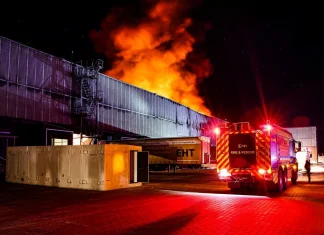
Russian strikes hit Kharkiv, killing four and injuring 20 people
A fresh wave of missiles and drones slammed into Ukraine overnight, killing four people in the Kharkiv region and injuring more than 20 others,...

Bill Gates grilled by Congress over alleged ties to Jeffrey Epstein
Bill Gates is heading to Capitol Hill for scrutiny that has shadowed some of the world’s most prominent figures: his past ties to Jeffrey...
Kallas urges clear, accurate facts about the Aughinish situation
As scrutiny intensifies over claims involving a major Irish refinery and Russia’s war effort, EU foreign policy chief Kaja Kallas says the priority is...

U.S. World Cup official backs visa ban blocking Somali referee
A visa denial that stopped a decorated Somali referee at a US airport has drawn fresh attention to how the White House says it...