Home Blog Page 32

New declaration could change processing of migration cases

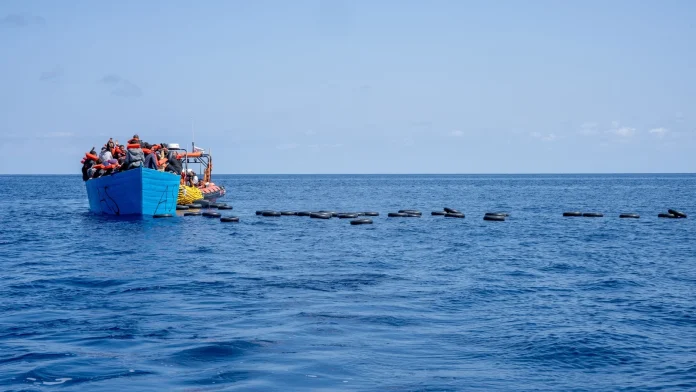
7,900 died, disappeared on migration routes in 2025: UN
The Missing Migrants Project has documented more than 80,000 deaths and disappearances during migration since 2014, the agency said

A Quiet Storm in Strasbourg: How a Political Declaration Is Reworking the Rules of Migration

There are moments when institutions—quiet, crusted-over things that most of us assume will outlast the headlines—suddenly crack and reveal the hot machinery inside. The recent political declaration issued by 46 members of the Council of Europe is one of those moments. It reads like the product of long nights in conference rooms where law, fear and politics are squeezed into bullet points. But the reverberations will be felt in courtrooms, in border towns, and in family kitchens across a continent still arguing about who belongs and on what terms.

The declaration is not law. It does not rewrite the European Convention on Human Rights (ECHR) or bind the European Court of Human Rights (ECHR/ECtHR). What it does is political: it signals a shift in tone and asks judges to give national governments a “broader margin of appreciation” when dealing with migration, deportations and public safety. For many governments, that is welcome. For civil society groups, human rights lawyers and families dependent on the protections of the Convention, it is deeply worrying.

What the declaration puts on the table

Read closely, the document balances two claims that often fall into conflict: that migrants’ fundamental rights must be respected, and that sovereign states have an “undeniable” right to control who stays and who goes. It explicitly addresses the deportation of convicted criminals, the assessment of healthcare in receiving countries, and how family life arguments under Article 8 of the Convention should be weighed when a state seeks to expel someone.

In plain language, the declaration asks judges to defer more frequently to national evaluations of public safety, national security and “the economic well‑being of the country.” It flags so‑called return hubs and even touches on the alleged instrumentalisation of migration by hostile actors—a nod to recent tensions on eastern borders where states accuse others of deliberately directing people to create pressure points.

  • 46 Council of Europe member states signed the declaration.
  • It emerged from an initiative led by Denmark and Italy and follows a stormy letter by their prime ministers in 2024–25.
  • Some 90 Irish civil society groups had previously warned against any weakening of the Convention, given its centrality to agreements like the Good Friday Agreement.

Voices on the ground — Dublin, Strasbourg, and beyond

Walk the streets of Dublin and you will see the debate in microcosm. Outside the Department of Justice one morning last week, a knot of campaigners in raincoats held placards that read “Human Rights Don’t Expire at the Border.” A few metres away, a mother—her accent drawn from a lifetime on the west coast—told me she supported tougher deportation rules after her neighbour’s son was assaulted.

“We are hospitable people,” she said, “but hospitality is not the same as helplessness. If someone hurts our children, they must answer for it.” Her voice held the weary, immediate logic of safety—an argument that ministers in several capitals use to justify the declaration.

On the other side of the debate, Eilis Barry, chief executive of a long‑standing legal aid organisation, spoke with the bluntness of someone who has watched courts stand between the state and the vulnerable for decades. “If you start telling judges how to read rights, you chip away at the very safeguard that people fall back on when their country fails them,” she told me. “The Convention was built on universality. That cannot be an a la carte menu.”

In Strasbourg, diplomats described late nights of bargaining and compromise. “No one wanted a spectacle,” one negotiator admitted. “But there was pressure—the kind that comes from leaders who have to answer angry citizens and vocal media.” The negotiator asked not to be named; the confession had the uneasy taste of someone caught between legal principle and political survival.

Why this matters beyond Europe

This is not just a quarrel about technicalities. The debate speaks to global trends: the strain between human rights norms born after World War II and a political climate characterised by migration, insecurity and nationalist retrenchment. Across continents, leaders ask the same question: how do you reconcile open borders of principle with closed borders of practice?

Think of the ECHR as part of a transnational safety net. When that net is intentionally frayed, the fall is not only legal. It is cultural. It chips at trust between citizens and institutions. The Good Friday Agreement, often cited in the Irish debate, is a reminder that law and memory are intertwined; when rights protections are reshaped, the political settlements that depend on them feel it immediately.

There are also practical consequences. Courts routinely weigh family ties, medical needs and the risk of ill‑treatment abroad when considering deportation. The declaration asks judges to accept national assessments of what constitutes “inhuman or degrading treatment” and to give less weight to differences in healthcare quality between states. In a continent with uneven hospital capacities and divergent social safety nets, that can decisively alter outcomes.

Questions for readers — and for our courts

Do we trust judges in distant capitals to balance competing harms better than ministers who must answer to voters? How do we safeguard the universality of human rights while recognising legitimate state responsibilities to protect citizens?

These are not hypothetical quandaries. They are ethical tests played out in a grandmother’s appeal to stay with her grandchildren, in the decision to remove a man convicted of serious offences, in a judge’s sleepless night poring over evidence of medical risk.

What happens next

The declaration is political. It will be cited in cases, in speeches, and in the corridors of power. But it is not a magic wand. The European Court retains supervisory jurisdiction. National courts remain independent. The fight will migrate into legal opinions and into the press—slow, granular, and at times excruciatingly human.

Expect more diplomacy, more letters, and more court challenges. Expect communities to become the theatre of this debate: towns where a new deportation order arrives at the same time a local school opens its doors to refugee children. Expect politicians to juggle headlines and legal architecture, and lawyers to remind them that rights are only as healthy as the people who can access them.

The declaration is a crossroads. On one path sits a fragile reaffirmation of state control; on the other sits a recommitment to universal protections that transcend electoral cycles. Which route will Europe choose? Perhaps the better question is: what kind of societies do we want to be when the dust settles?

As you read this, imagine the courtroom clock ticking. The judge will decide. The country will debate. And families will live the consequences—one deportation at a time.
Seven days of conflicting signals and maneuvers from the Kremlin

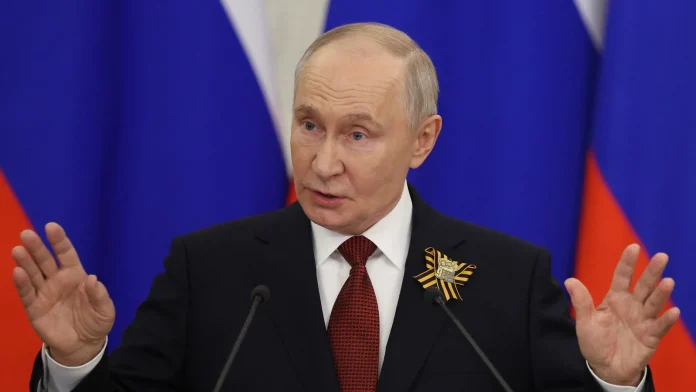
Putin says he thinks Russia-Ukraine war is ending
Mr Putin was talking to the press after the scaled-back Victory Day parade in Moscow

Mortar of Morning: Kyiv Wakes to Grief After Deadly Strike

When I arrived at the apartment block, the air smelled of dust and boiled cabbage — ordinary Kyiv scents mixed with the extraordinary. Neighbors stood in slippers, still wearing winter coats though the calendar said spring. Candles flickered against shattered glass. A small girl’s plastic unicorn lay half-buried in the rubble, its painted eye staring at the sky.

Ukrainian authorities now say at least 24 people were killed in the strike on this residential building, including three children. Officials and residents describe it as one of the deadliest single attacks on a Ukrainian city in months. More than 20 different sites across Kyiv were reportedly hit by drones and missiles in the same wave.

There is a strange, mute choreography to these scenes — the hush that follows sirens, the quiet of people making tea with shaking hands, the ritual of laying flowers on concrete like reaching for some human story in a pile of stones.

Faces, Names, and the Small Objects That Tell the Tale

“My mother used to sit on that balcony and knit,” said Olena, 67, wrapping her hands around a thermos. “Now there is no balcony, only a hole in the wall. We are left with the silence she used to fill.”

Inside a makeshift command post, volunteers sorted lists: names to call, apartments to check, donations to move. A young medic pulled off a disposable glove and let out a long breath. “We’ve learned to act quickly,” she said. “But what we cannot learn is how to turn off the sorrow.”

Nearby, a cluster of children — their cheeks flushed from the cold — showed me a drawing. “This is our home,” one of them said, pointing at a crooked house with a bright sun. “This is where we sleep.” Their drawings, ornamented with suns and doves, felt like fragile proof of ordinary life persisting at the edges of catastrophe.

How the Attack Fits Into a Larger Pattern

The scale and timing of the strike on Kyiv dovetail with unsettling messages from Moscow. In a recent press briefing, Russian President Vladimir Putin suggested the conflict may be nearing its end and floated the idea of a mediation role for former German chancellor Gerhard Schröder — an offer European capitals were quick to dismiss.

But words from Kremlin corridors have been inconsistent. On one day, officials hint at a de-escalation; on another, the rhetoric snaps back to exclusion and blame. “They speak as if peace is a box to be ticked by the other side,” observed a foreign-policy analyst in Kyiv. “In practice, the pattern remains: negotiations without an end to strikes are just rhetoric.”

Inside Russia: Fatigue, Prices, and Propaganda

Inside Russia, the public mood is complicated. There is weariness. There is worry about rising costs. Official statistics place inflation around 6 percent, but residents and economists say the day-to-day reality — especially food prices — feels much sharper. Lines at grocery stores, the substitution of imported goods with cheaper alternatives, and the prominence of ration-like conversations over coffee all speak to pressure on household budgets.

“People are exhausted,” said a Russian economist who spoke on condition of anonymity. “There’s a cognitive dissonance between the Kremlin’s optimistic messaging and the emptying of wallets at the market.”

The Kremlin’s spokespeople have also framed the narrative as one in which the responsibility to stop the war lies with Kyiv, glossing over the fact of Russia’s invasion in 2022. That line of argument sits uneasily beside images of bodies pulled from apartments and the nightly litany of damaged infrastructure across Ukrainian cities.

Information Wars and the Gordian Knot of Diplomacy

Diplomatic moves and media narratives are intertwined. When leaders propose mediators or announce the prospect of talks, it is not only the content but the audience that matters. “Some statements are aimed less at foreigners and more at domestic viewers,” said Dr. Maria Kovalenko, a Kyiv-based sociologist specializing in conflict rhetoric. “A promise of peace can be a balm even when it’s not accompanied by meaningful action.”

And yet, balm without bandwidth — without a real halt to the bombardment — feels hollow. Europe’s quick rejection of out-of-the-blue mediation proposals reflected a broader skepticism: peace must be negotiated on terms that protect civilians and respect international law, not used as political theatre.

The Human Ledger: Numbers, Names, Memory

Numbers are blunt instruments. They tell part of the story — 24 dead, three children among them; more than 20 locations struck in Kyiv — but they cannot account for the missing cups or the silence on a neighbor’s balcony. They cannot hold the sound of an Orthodox bell calling a city to prayer or the way an embroidered rushnyk is draped over a pile of rubble as an improvised memorial.

Globally, the war has displaced millions, strained energy and food markets, and pushed diplomatic alliances into reconfiguration. But at ground level, the metrics convert into meals missed, schools closed, and anniversaries that families can no longer celebrate together. “We count the killed and the wounded,” a volunteer coordinator told me. “But our daily tally is the lives we try to keep together — the elderly we warm, the children we comfort.”

What Do We Owe Each Other?

As you read this, consider the ordinary things that make a city livable: the bakery on the corner, the municipal tram that rattles at dawn, the neighbor who returns borrowed sugar. Imagine them gone, replaced by a map of detours, by lists of missing names. How should the world answer when such ordinariness is struck down?

There are no easy answers. There is outrage. There are calls for accountability and for renewed diplomatic pressure. There are practical things: medical supplies, power restoration, shelter for the displaced. But there is also a moral ledger: a question we keep asking aloud — to leaders, to institutions, to ourselves — about what constitutes a legitimate path to peace.

“I don’t want revenge,” whispered a woman at the memorial, petals stuck in her scarf. “I want my daughter’s laughter back.”

Closing: A City That Remembers and Keeps Going

Kyiv continues to move — its trams, its volunteer hubs, its bakeries with long lines in the morning. The city plants flowers where it can. It sings, sometimes with a cracked voice. It buries, and then it wakes again. Amid geopolitical chess and public rhetoric, the human work goes on: to rescue, to heal, to remember.

What do we do with knowledge of this? How do we translate it into action that prevents the next strike, the next family lost in their sleep? The answers demand sustained attention, not headlines that flicker and fade. They demand that the world keep looking, keep listening, and above all, keep insisting that peace be measured not in press releases, but in the quiet return of ordinary mornings.

Tickets for South Korea–North Korea soccer showdown sell out within 12 hours

South-North Korea football match sells out in 12 hours
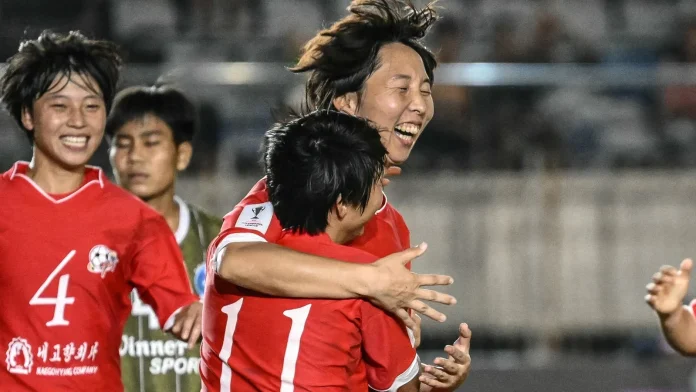
The Naegohyang squad (inset) are set to arrive in South Korea on Sunday by air from Beijing

A Football Match That Feels Bigger Than Sport: When Two Koreas Meet in Suwon

There is a particular hush that takes hold of a city the morning after tickets vanish. In Suwon — a city of red-tiled roofs, steaming street-food stalls and the slow silhouette of Hwaseong Fortress — that hush was punctured by messaging app pings, coffee shop banter and the hum of people making plans for a night they hope will be remembered.

All 7,087 general-admission tickets for the Women’s Asian Champions League semi-final between Suwon FC Women and North Korea’s Naegohyang Women’s FC were snapped up in roughly 12 hours. The Korea Football Association confirmed the sell-out on the day tickets went on sale, and the velocity of sales says as much about the appetite for sport as it does about curiosity — perhaps yearning — for connection across a heavily militarized border.

Why a club match feels like history

This fixture, set for 20 May in Suwon — about 35 kilometres south of Seoul — is not just another semi-final. It marks the first time a North Korean sports team has come to the South since 2018. That gap is more than calendar pages; it’s a reminder that the peninsula remains technically at war. The 1950-53 Korean War ended with an armistice, not a peace treaty — a fact that infuses almost every inter-Korean encounter with geopolitical overtones.

And yet, because this is a club competition rather than a national team match, the rules strip away some of the usual ceremony. No national anthems. No flags flown in official capacities. What remains is the raw, human theater of competition: twelve players on each side, the smell of grass, the shouts and whistles, the drama of a single ball.

What the crowd might look like

There will be no official “away supporters” from the North — North Korean citizens are, in almost all cases, barred from travelling freely to the South. But the match will still carry the color of civil society. Seoul’s unification ministry has allocated 300 million won — roughly $200,000 — to support South Korean civic groups planning to cheer for both teams, an unusual and deliberate gesture intended to shape the atmosphere inside the stadium.

“We want to create a space where cheering is about the players and the game, not flags or politics,” said a Unification Ministry official. “This is about people-to-people contact in the simplest form.”

On the ground in Suwon, people are imagining the scene in everyday terms. “I came to cheer for Suwon, of course,” said Lee Jun-ho, a university student who queued overnight for a ticket. “But I’m also curious to see how the North Korean players play. They’ve produced great young talent before.”

Around a corner near the stadium, Ms. Kim, a 58-year-old noodle vendor, laughed and said: “If they play well, I’ll clap for them. If they come to buy dinner after the match, I’ll give them extra kimchi.” Her tone was mischief wrapped in pragmatism — a small human counterpoint to big politics.

Football as a mirror and a bridge

Sport has long been an ambivalent medium for diplomacy — part mirror, reflecting historical tensions and national pride; part bridge, offering a rare, neutral ground for contact. In this case, the competition’s club status and the absence of national insignia deliberately lower the volume of state symbolism, while choreography in the stands — civic groups cheered on by government funds — adds a new, awkwardly hopeful layer.

Dr. Hana Cho, who studies inter-Korean cultural exchanges at Yonsei University, said: “These moments are less about immediate political breakthroughs and more about changing the texture of everyday interaction. A football match can’t solve high-level nuclear standoffs, but it can humanize the other, which matters.”

Her view is echoed by sports historians who have tracked how athletic encounters can create narratives that outlast a single match. “Look at the way the 1995 baseball game between American and Cuban players still resonates,” one historian told me. “Sport accumulates meaning over time.”

On the pitch: stakes and style

North Korean women’s teams have a reputation in Asia for fierce competitiveness, especially at youth levels. They’ve produced standout performances in various regional tournaments and are known for disciplined, intense play. For Suwon, the match is a chance to secure a place in the final on 23 May at home territory — and to test themselves against an unfamiliar opponent.

“We prepare for every opponent with respect,” said Suwon head coach Park Min-seok. “North Korean teams are well-drilled. But home crowd energy is a real thing. We’ll use the support wisely.”

Naegohyang will fly in from Beijing on Sunday, a short journey that belies the heavier logistics of cross-border sporting travel. Regardless of the result, the semi-final will determine who meets either Melbourne City of Australia or Japan’s Tokyo Verdy Beleza in the final, a matchup that would crown Asia’s top women’s club team.

Numbers that matter

  • Tickets: 7,087 general-admission seats sold out in ~12 hours
  • Government support: 300 million won (≈ $200,000) to civic groups
  • Distance: Suwon ≈ 35 km south of Seoul
  • Final date (if victorious): 23 May

What this moment asks of us

When a match is stripped of flags and anthems, what remains are faces — of players, coaches, vendors, fans. You see someone who looks exhausted after a long travel day. You see a young fan squeezing a foam finger. You see a woman offering extra kimchi to strangers. These are small acts, but in aggregate they start to nudge a narrative in a different direction.

So here’s a question to carry with you into the stadium or onto your screen: if two groups separated by politics can find common language through sport, what can we do to foster more of those common languages in other parts of our lives?

Critics will rightfully caution against over-romanticizing a single match. Geopolitics don’t dissolve because a ball crosses a line. Yet for a few hours in Suwon, the focus will shift from cold policy to warm feet, from headlines to the grassroots rhythm of a beautiful game. For fans and players alike, that will be enough to make history feel less like a threat and more like a shared story waiting to be told.

After the final whistle

Win or lose, the image of North Korean players walking off the pitch in a South Korean city and slipping quietly into the back of a bus will be photographed, captioned and debated. But among vendors and volunteers, there will be quieter recollections: who smiled first, who struggled to speak a common phrase, who exchanged jerseys. Those are the small inventory items of human contact — easily overlooked by headline writers, endlessly significant for those who collect them.

On 20 May, the lights at Suwon’s stadium will be brighter than usual. Whether they illuminate a pathway to closer ties or simply offer a memorable night of football, they will shine on players and spectators who, for a few hours, will share the same pulse: the rising and falling tide of a match — and the fragile, hopeful possibility that sport can, sometimes, teach us how to see one another.

CIA chief visits Cuba amid mounting national oil shortage

CIA director visits Cuba as nation runs out of oil
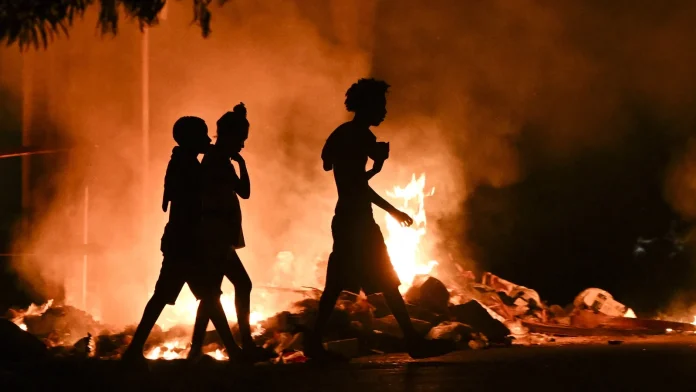
People walk past a fire set by demonstrators during a protest against the lack of energy and blackouts in Havana

Havana in the Dark: A Secret Visit, A Nation Running on Empty

The city felt like a slow exhale. Streetlights winked out block by block, and the air—thick with the salt of the nearby sea and the hum of a million small grievances—grew colder where power once warmed it.

On a night when much of Cuba was plunged into darkness, a flash of light appeared not on the Malecón but online: a handful of photos posted by the Central Intelligence Agency on X showing its director, John Ratcliffe, sitting across a table from Cuban officials. Faces in the pictures were deliberately blurred; one face was not. That belonged to Ramón Romero Curbelo, the head of intelligence at the Cuban Interior Ministry.

The images were compact, almost clinical. They read like evidence in a case: a photographic acknowledgment that a long, fraught history of espionage and embargoes had a new, clandestine stanza.

A Visit Against a Backdrop of Shortages

To most Cubans outside the filtered glow of social media, the most immediate reality was the generator’s roar and the rattle of pots and pans. Power outages have become more than an inconvenience here; they are a daily arithmetic—food that spoils, clinics that ration oxygen, students who study by the uncertain light of a phone.

“We knocked for an hour in the evening,” said Mariela, a mother of two in San Miguel del Padrón, describing the nightly ritual of protest that has become common in Havana neighborhoods. “What else can we do? Cry? Pray? We bang the pots and that says it all.”

State television quoted Energy Minister Vicente de la O Levy as saying the country had effectively run out of imported oil. “The impact of the blockade is indeed causing us significant harm… because we are still not receiving fuel,” he told reporters, painting a stark picture of a nation running on dwindling reserves.

Only one tanker from Russia—historically one of Cuba’s most reliable patrons—has made it through recent restrictions, and according to the island’s energy officials, that cargo has largely been expended. The blackouts that followed were not an abstract policy discussion; they were physical, audible, and communal.

Spycraft in an Age of Sanctions

The CIA confirmed the encounter, issuing the photos and a terse acknowledgment that a meeting had taken place. Cuba’s government framed the visit differently—a chance, it said, to “contribute to the political dialogue between both nations” and to calm tensions.

“These talks demonstrated categorically that Cuba does not constitute a threat to US national security,” read a Cuban statement, which also rejected claims of Havana being a staging ground for hostile activity against the United States. “We have never supported any hostile activity against the United States,” it added, addressing persistent allegations about foreign—particularly Chinese—presence on the island.

There is theater in secrecy, and the theater here is layered: a former intelligence boss in a room with the man who once ran one of America’s own clandestine services; a country that for decades has been the target of US embargoes trying to insist it harbors no threat; an opposition in Washington intent on reshaping how aid is delivered.

Aid, Politics, and the $100 Million Question

On the other side of the debate stands Senator Marco Rubio, who has renewed an offer of $100 million in food and medical assistance for the Cuban people—with a significant proviso: the aid should bypass Cuban government channels and be distributed through the Catholic Church.

“The Cuban people should know there’s $100 million of food and medicine available for them right now,” Rubio told NBC News, arguing the assistance would help prevent the emergence of a failed state just 90 miles from U.S. shores. “It’s in our national interest to have a prosperous Cuba.”

President Miguel Díaz-Canel, in turn, called publicly for an end to what he described as a coldly calculated blockade. “The damage could be eased in a much simpler and faster way by lifting or relaxing the blockade,” he said, framing the shortage as a political choice with human consequences.

What the Numbers Tell Us

  • Cuba’s population is roughly 11.1 million people—millions for whom electricity, medicines, and fuel are not abstract policy points but daily necessities.
  • AFP data compiled amid the outages showed that about 65% of Cuban territory experienced simultaneous blackouts on a recent Tuesday, a figure that captures the scale of the disruptions.
  • April 10 marked a symbolic moment: a U.S. government plane landed in Havana for the first time since 2016, a small diplomatic crack in what has otherwise been a wall of distance.

Voices from the Streets and the Corridors of Power

“My mother is diabetic,” said José, who works nights in a bakery in the Cerro district. “When the lights go, the insulin needs to be kept cool. We can’t live like this.”

An economics professor at the University of Havana, who asked to remain unnamed for professional reasons, told me: “Sanctions are a blunt instrument. They hurt the economy, and they hit the most vulnerable first. But there are also systemic failures here—inefficient grids, ageing infrastructure—that predate the latest diplomatic flare-ups.”

From Washington, analysts framed the face-to-face as a pragmatic, if secretive, attempt to manage risk. “When two intelligence services meet, it’s rarely about friendship,” said Marta Ellis, an expert on Latin American security. “It’s about stabilizing a situation. If you can prevent escalation by keeping channels open, that is often deemed worthwhile even by rivals.”

Protests, Pots, and the Pulse of Resilience

Protests in Cuba in recent weeks have been modest in size but resonant. People bang pots and pans; they take to small roads and plazas. It is not a mass insurrection, but a mosaic of discontent—neighborhood by neighborhood, kitchen by kitchen.

“This is not about politics anymore,” said Lázaro, an older man who sells fruit near the Parque Central. “We want light. We want food. We want our children to not be scared of losing their medicines. Politics can wait for us to be alive.”

Questions for the Reader—and for the Future

What does it mean when aid becomes conditional, when fuel becomes leverage, when diplomacy is done in shadows? Are there lines we refuse to cross for strategic gain, lines that may cost ordinary lives?

These are not rhetorical luxuries. They are the contours of real decisions: how to balance pressure against an authoritarian regime with humanitarian concerns; how to engage a government accused of repression without abandoning the people who live under it.

Back in Havana, as a new day pushed the darkness aside, people repaired to the markets, the clinics, the front stoops. They swapped stories about the night’s outage and the unseen visitors who might—or might not—have brought a solution. They moved forward in the only way they could: practically, ruefully, determinedly.

“We have survived worse,” said Mariela, wiping her hands on her dress. “But survival is not the same as living. We deserve both.”

As the world watches this small island of 11 million navigate the tense choreography of high-stakes diplomacy and daily survival, one thing is clear: the intersection of intelligence, energy, and human need will continue to define Cuba’s story—and the global responsibility to engage it—long after the photos on X fade from view.

Maldives rescue teams search for Italian divers feared drowned at sea

Maldives rescuers search for drowned Italian divers
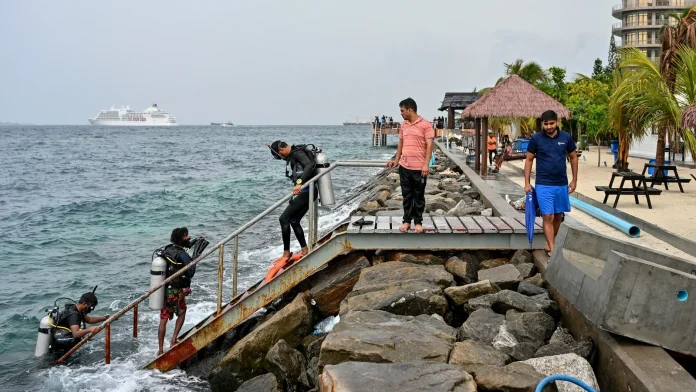
A tourist, along with guides, returns after an open-water diving session near Rasfannu Beach in Malé

In the Quiet Blue, a Sudden Silence: The Search After a Deadly Dive in the Maldives

The sea around Vaavu Atoll had been a watercolor of aquamarine and cobalt, a patchwork of reefs and lazy currents where tourists drift between coral gardens and manta rays. By nightfall, that same sea took on a harder, more private edge—waves thudding against the hulls of search vessels, headlamps cutting through spray, people staying awake to pray, to wait, to hope.

For a second day, Maldivian coastguard teams, the National Defence Force and security personnel have been combing an expanse of remote ocean after a diving trip turned tragic. Five Italian citizens diving off a live-aboard vessel did not return as scheduled; rescuers recovered one body from a submerged cave at roughly 60 metres. Authorities say they believe the remaining four are inside that same underwater chamber.

Voices from the water

“We are heartbroken and urgently focused on recovery,” Mohamed Ameen, the Maldives Minister of Tourism, said in a statement that carried the weary cadence of someone addressing a small, tight-knit island nation suddenly tethered to grief across continents. “Our coastguard and all relevant agencies are fully committed to the operation.”

A colleague at the University of Genoa confirmed that among the victims were a marine biology professor, her daughter and two early-career researchers — names that, in their quiet lives, threaded scientific curiosity with the coral they studied. “She loved this place,” said one faculty member, voice flinty with sorrow. “She came here to witness reefs and to teach the next generation what is worth protecting.”

On the shoreline of a nearby inhabited island, a fisherman named Hassan watched the search boats pocket the horizon. “We see storms, we see currents change,” he told me, wiping salt from his hands. “But when the sea keeps something, it is always a heavy thing for a small place like ours.” His words captured an island truth: the ocean provides, and it takes away.

What happened — and why it matters

The Maldives, an archipelago of 1,192 coral islands stretched across roughly 800 kilometres of the equator, is among the world’s most cherished dive destinations. Live-aboard boats ply its atolls, ferrying divers to secluded channels and drop-offs, where pelagics and pinnacles draw enthusiasts into water as clear as glass.

Local authorities reported that the recovered body was located in an underwater cave at about 60 metres — a depth twice the commonly accepted recreational limit of 30 metres in Maldivian regulations. While experienced professionals sometimes dive deeper using technical gas mixes and specialized training, cave diving presents a distinct and unforgiving set of hazards: silting, loss of line, nitrogen narcosis and the unforgiving problem of no vertical escape.

“Cave diving is a different discipline,” explained Dr. Elena Rossi, a dive medicine specialist who has worked in Indian Ocean clinics. “Depth multiplies danger. At 60 metres you’re dealing with altered physiology and the absolute necessity of redundant systems. One small failure becomes catastrophic in seconds.”

Weather also appears to have been a factor. Police said conditions in Vaavu Atoll were rough on the day of the incident, and a warning had been issued for passenger boats and fishermen. Rough seas can complicate both the dive itself and the subsequent surface search and recovery work.

Numbers that force a pause

Accidents of this nature are relatively rare in the Maldives, yet they are not unheard of. Local media tallied at least 112 tourist deaths in marine-related incidents over the past six years, with some 42 attributed to diving or snorkelling. Those figures are a reminder that paradise can be perilous when risk and romance blur.

Globally, diving is a low-frequency, high-consequence activity: millions of dives each year, only a small portion ending in serious incidents, but when they do, the repercussions ripple widely — through families, through institutions, and through the tourism ecosystems that rely on both safety and good stories.

On the line between adventure and safety

The Maldives’ tourism economy — accounting for a significant share of national GDP and employing tens of thousands — depends on the allure of pristine seascapes. That economic dependence creates pressure: operators push routes, customers seek novel experiences, and the gray zone between certified technical diving and recreational exploration widens.

“We always brief our guests,” said Aisha Ibrahim, a dive operations manager on a nearby atoll. “But experience and certification matter. You can’t just call yourself a diver and go into a cave at 60 metres. We tell people: training, equipment, and respect for the sea. There is no substitute.”

There is also a governance question. Regulations in the Maldives limit dives to 30 metres for recreational divers, but enforcement in distant atolls — where live-aboard boats can anchor far from oversight — can be difficult. That gap between rule and reality is where tragedy often slips in.

What search and recovery look like

Rescue crews have worked through the night despite gusting winds and spray that turned the search into an exercise of patience and endurance. Divers sent into that 60-metre cave risk the same exposure that likely befell the victims, and teams must coordinate decompression protocols and safety lines in challenging conditions.

“We are using every resource we have — boats, divers, remotely operated vehicles where possible,” said an MNDF official overseeing the operation. “Every hour counts, but we will continue until the families have answers.”

  • Lessons for divers: proper training for technical dives; adherence to depth limits; use of redundant gas systems and lines.
  • For authorities: better monitoring of live-aboard itineraries and improved communication in remote atolls.
  • For travelers: ask questions, verify credentials, and prioritize safety over the ‘ultimate’ photo or bragging rights.

Beyond the headlines

When a small group of researchers and teachers goes into the sea to expand knowledge, and does not return, the loss is residential — felt acutely by family and friends, and strangely public because it unfolded in a place where people from across the world gather. This incident forces us to reconcile our appetite for adventure with the ethics of risk, the limits of regulation, and the fragile labor of local responders.

How should countries that depend on tourism preserve both their natural wonders and the people who come to marvel at them? How do we, as travelers, balance the desire for once-in-a-lifetime experiences with the humility that the ocean inspires?

In the coming days, investigators will piece together the timeline, the equipment used, the training of those involved. For now, families are waiting, rescuers are searching, and an archipelago used to hosting joy must make room for grief.

“We travel to find beauty, but also to learn our place in the world,” Hassan the fisherman said, staring at the thin line of lights on the horizon. “Today, that lesson is heavy. We must remember them and keep learning.”

Shirkii Xalane uga socday dowladda iyo mucaaradka oo lagu kala tagay

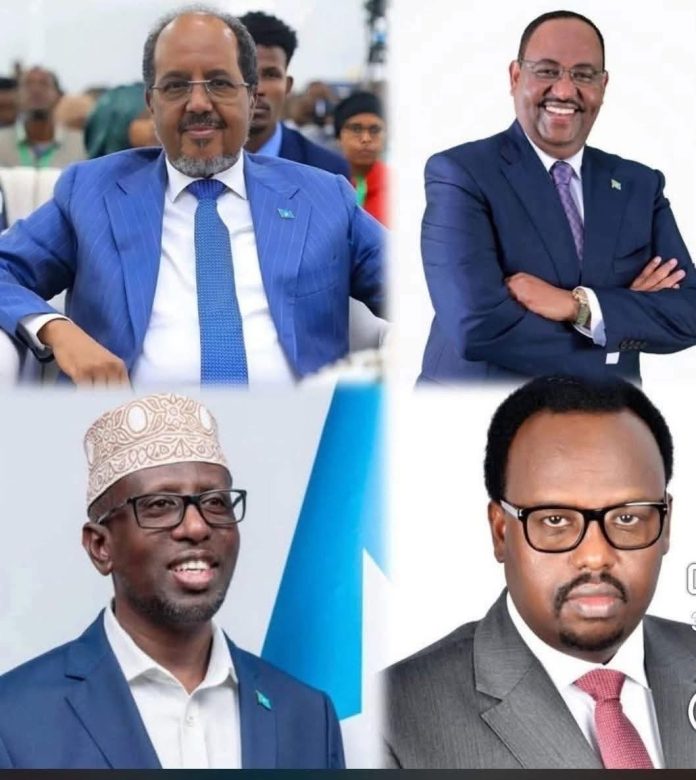
May 15(Jowhar) Waxaa soo dhammaaday kulankii 3aad ee Xalane uga socday Madaxweyne Xasan sheekh iyo Golaha Mustaqbalka Soomaaliya oo ay metalayeen Madaxweyne hore Shariif Sheekh Axmed iyo Madaxweynaha Puntland Siciid Deni.

Trump Hails US-China Relationship as ‘Strong’ Following Meeting with Xi

US-China relations 'strong', says Trump in Xi meeting
Donald Trump old Fox News that China had agreed to order 200 Boeing jets

A Garden, Two Men and a Fragile Calm: Inside a Beijing Summit That Was More Theater Than Triumph

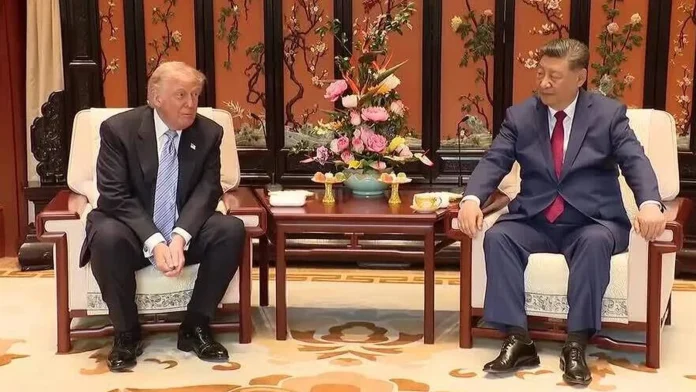
There is something ceremonial about power when it chooses to wear the trappings of a garden. Against the walled hush of Zhongnanhai — the imperial gardens repurposed into the nerve center of modern Chinese command — two leaders met between roses and lacquered pavilions. They strolled. They exchanged small courtesies. They sat in ornate red chairs and sipped tea in a place where emperors once listened to ministers and now two of the most consequential politicians on Earth parsed economics and diplomacy.

If you closed your eyes, you might have believed the choreography: friendly smiles, an offer to send seeds, a mutual nod toward stability. Open them, though, and the scene felt like a taut, well-lit stage, with curtains concealing unresolved lines. For a global audience watching a U.S. president visit China for the first time since 2017, the optics were deliberate—warmth met restraint—yet substance remained stubbornly evasive.

Trade Truce, Not a Breakthrough

On paper, the summit produced lists and talking points: promises to buy American farm goods, beef and energy, talk of aviation orders, and murmurings about mechanisms to manage future trade. On the tarmac of markets and political expectations, the outcome felt smaller.

“These were stability deals, not headline-making breakthroughs,” said Chim Lee, a senior analyst who has watched Sino-U.S. ties for years. “Both sides wanted to avoid collision, but neither wanted to cede strategic leverage.”

President aides described roughly $30 billion in “identified” non-sensitive purchases — an attempt to show movement without touching the thorny issues that have defined relations in recent years. A claim that China had agreed to buy 200 Boeing jets was made on U.S. television, but investors greeted the figure with skepticism: Boeing shares dropped more than 4% the day after, a testament to how muted promised purchases can be when markets expect more.

And then there was the long, cold shadow of cutting-edge technology. No breakthrough emerged on the sale of high-end AI chips. The future of advanced semiconductors—chips that are the blood in the veins of artificial intelligence—remains a geopolitical standoff. One CEO’s last-minute accompaniment to the trip underscored the point: business wants access; governments are wary to cede the edge.

Why the Market Gave a Lukewarm Reception

Investors had hoped for a roadmap out of tariff standoffs and supply-chain disruptions. Instead, what they got was reassurance that neither leader wanted to escalate, coupled with hedging language that leaves policy flexible. That’s not nothing. But in a world where capital prices volatility on certainty, the summit felt strategically calming but economically underwhelming.

Energy, Iran and the Strait of Hormuz

Beyond trade, energy security was a central theme—hard to avoid when politics in the Middle East have a direct line to pump prices at the global pump. The Strait of Hormuz, an artery through which some 20% of the world’s seaborne oil and liquefied natural gas normally flows, was invoked as a shared concern.

“Disruptions in the Middle East are not an American problem or a Chinese problem; they are a global problem,” explained Dr. Amina Farouk, an energy economist. “When shipping lanes are threatened, every economy pays.”

Beijing’s foreign ministry did not mince words about a recent conflict involving Iran: “This conflict, which should never have happened, has no reason to continue,” officials said publicly during the talks, adding that China would support efforts to find a peace settlement. In private, analysts doubt Beijing will suddenly push Tehran to capitulate—after all, Tehran serves as a strategic counterweight in Beijing’s calculations about global influence and pressure.

Taiwan: The Thin Line Between Warning and Threat

Midway through the banquet speeches and polite exchange, a steeper tone entered the room. Taiwan—just 80km from China’s coast and a perennial flashpoint—was raised. Beijing used the occasion to underscore a blunt message: mishandling the island issue risks conflict.

“We talked about Taiwan because it is where misjudgment could become catastrophic,” said a diplomat who requested anonymity. “It’s a message in a gilded envelope.”

Washington, bound by law to ensure Taiwan can defend itself, offered the predictable response: policy unchanged, support steady. Yet the room’s conviviality revealed how fragile that equilibrium is. The warning was sharp, but tucked within an otherwise friendly summit—another reminder that diplomacy often couples caution with charm.

Human Rights and the Limits of Courting

Not all sticks were put away. The U.S. side raised human-rights cases—most notably a high-profile media tycoon held in Hong Kong—urging for compassion and legal fairness. Beijing framed such matters as internal affairs, an immutable line in its diplomatic script.

“We will always bring up human dignity and legal process,” said an American official. “Whether that translates into results is another matter. For now, we keep the conversation alive.”

Local Voices from Beijing

Walking away from Zhongnanhai, the city felt indifferent and intimate at once. A tea vendor near the gate offered a wry smile, stirring jasmine leaves into a cup.

“They come to drink our tea and practice smiles,” she said. “We have our daily worries—rents, school places—but every summit makes us feel both important and invisible.”

A university student, carrying a backpack emblazoned with an English slogan, noted the spectacle with the distance of youth. “It’s a play of power. We want peace, jobs, chance to study abroad. I just hope these talks mean my friends can work somewhere without politics stealing their futures.”

What This Moment Tells Us About the Wider World

What unfolded in Zhongnanhai is both a microcosm and a symptom. The display of cordiality set against stubborn disagreements speaks to a world where competition and cooperation must coexist. Supply chains are being rebalanced; technology is being weaponized into geopolitics; energy security remains a global common good precariously dependent on local conflicts.

Consider these threads:

  • 20%: Rough share of global seaborne oil and LNG typically flowing through the Strait of Hormuz.
  • 200: The number of Boeing jets reportedly discussed—enough to stir markets, but not to soothe investor expectations.
  • Ongoing: The elusive talks over advanced AI chips and semiconductors, a technology tug-of-war that underpins tomorrow’s economic advantage.

Where Do We Go From Here?

Diplomacy here was pragmatic and performative. It bought time and avoided escalation. But time is not an answer; it is a resource. Will it be used to build transparent mechanisms for trade, to stabilize energy routes, to reduce the chance of a miscalculation over Taiwan—or will it be saved as political cover until the next election cycle and the next crisis?

Ask yourself: do you want a world where major powers keep one another close enough to prevent war but distant enough to allow confrontation in the shadows? Or do you imagine a different pathway—one where global issues like energy, technology governance and human rights are managed through inclusive institutions rather than ad hoc pacts?

As the leaders departed their tea cups and rose gardens, the global audience was left with a sense of cautious relief and nagging incompletion. The garden had been pleasant. The roses smelled fine. But the seeds planted—if any—will need careful tending.

Study predicts quarter of World Cup matches may exceed 26 degrees Celsius

25% of World Cup games likely to be in over 26C - study
With all 16 host cities staging open-air Fan Festivals, hundreds of thousands of supporters could be impacted

A World Cup Sweating: When Summer Soccer Meets Rising Heat

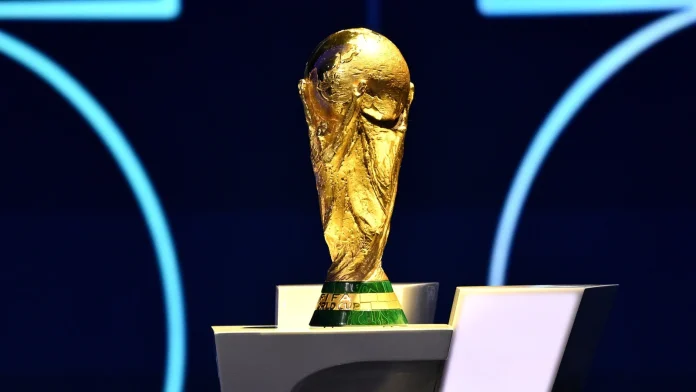
Close your eyes and picture a corner kick at dusk: the roar of the crowd, the stadium lights humming on, the taste of beer and sunscreen in the air. Now imagine the same scene in an oven — not metaphorically, but physically. That is the uncomfortable reality scientific teams are warning us about as this summer’s World Cup unfurls across 16 cities in the United States, Canada and Mexico.

A new analysis by climate researchers finds that roughly one quarter of matches — about 25% — are likely to be played when the Wet Bulb Globe Temperature (WBGT) exceeds 26°C. For athletes and fans, that figure matters. WBGT incorporates air temperature, humidity, wind speed and solar radiation to estimate how the body is stressed in heat. Most sports scientists treat roughly 28°C WBGT as a practical danger line for elite performers; beyond it, the risk of heat illness, lost performance and even collapse rises sharply.

Where the heat will bite

The study highlights certain cities where conditions look particularly perilous. Miami, Kansas City and the New York–New Jersey area sit on the higher end of the risk curve. The venue hosting the final, in the greater New York–New Jersey region, now faces about a 50% higher chance of heat-related disruption than it did during the 1994 World Cup held in the United States.

And while stadiums in places like Dallas and Houston boast powerful cooling systems, that trickle of relief does not extend to the fans streaming into open-air fan festivals — all 16 host cities are staging them — or to the lines of taxis, food stalls and long walks from parking lots to gates. In these outdoor environments the study finds roughly a one-in-three chance that temperatures will eclipse that 28°C WBGT mark during many matches.

What WBGT means in plain terms

Think of WBGT as the “felt” temperature multiplied by environmental cruelty. At 26°C WBGT, an athlete working hard begins to sweat more than they can evaporate. At 28°C and above, teams start confronting real physiological limits: core body temperature climbs, muscles fatigue faster, and the brain’s ability to coordinate and decide diminishes. Coaches notice mistakes. Medical staff grow more vigilant.

“I’ve fielded calls from sports directors already,” says Dr. Mina Patel, a sports physiologist in Toronto. “This isn’t about turning a game into a sauna—it’s about protecting human beings whose bodies are being pushed to the edge during a spectacle where millions are watching.”

Faces in the fan zone: real people, real risks

Walk the fan festival in Midtown Manhattan and you’ll hear different rhythms: the sizzle of street food, chants in half a dozen languages, and the shuffle of sunburnt feet. Vendors set up umbrellas, but shade is thin and queues are long.

“We sell sunglasses and cold drinks, but there’s only so much shade under a vendor tent,” says Javier Morales, who has been vending empanadas and cold agua frescas at festivals in Miami for a decade. “When the heat hits, people slow down. Children get cranky. Older folks look for a bench and a sip of water. It changes the whole atmosphere.”

Fans sense it too. “I love being here,” says Lena Thompson, a lifelong soccer supporter from Kansas City. “But after the first half of that last friendly here, my whole team was dizzy. I asked myself: are we asking too much of these players and of the people who come from out of town?”

Numbers that demand action

Concrete numbers help slice through the rhetoric. The study estimates about five World Cup matches could face WBGT above 28°C. Twenty-five percent of matches will likely exceed 26°C WBGT. All of this has become more probable because the climate backdrop has shifted: roughly half of human-induced warming has occurred since 1994, meaning summers are hotter and hot spells longer than they were in the last generation.

“Adjustments are no longer a luxury,” says Vincent Alvarez, a team physician with experience at international tournaments. “We need structured mitigation: mandatory cooling breaks, medical tents that actually cool people, more water points, and the option to delay or move matches if conditions are dangerous.”

What mitigation could — and should — look like

FIFA has pledged to monitor conditions and to activate extreme-heat protocols. But what can host cities realistically deploy at scale? Practical measures include:

  • Mandatory cooling breaks during play and clear hydration protocols for teams.
  • Shaded, temperature-controlled rest areas for fans and staff at fan festivals.
  • Flexible scheduling, including earlier kickoffs and potentially shifting matches to cooler venues if necessary.
  • Public health campaigns on recognizing heat stroke and when to seek medical help.
  • Augmented medical staffing and field-side cooling equipment in high-risk venues.

“Those aren’t luxuries,” says Dr. Patel. “They’re the baseline for any physically intense international event in a warming world.”

Beyond the tournament: a broader conversation

This is more than logistics. It’s a test of how global sporting events adapt to a changing planet. Already, the World Cup in Qatar required a calendar rewrite; northern hemisphere summers are hotter now than they used to be, and that influences everything from athlete performance to the economics of hosting.

So here’s the question for readers: should the international sporting calendar be rethought in light of climate reality? Or are we better served by bolting on mitigation measures and carrying on? There’s no facile answer, but the debate matters — because it’s not merely about spectator comfort or television ratings. It’s about safeguarding lives.

As the first whistle blows this summer, watch how officials, teams and fans respond. Will the organizers enforce strict heat protocols? Will cities provide cool refuges and clear communication? Or will we chalk up collapses and fainting spells to “the heat of competition” and move on?

Whatever happens, this World Cup will be as much a trial of human endurance as it is a tournament of skill — and a vivid reminder that climate trends touch even our most cherished rituals. If sport reflects society, then how we protect players and fans in this tournament will say a great deal about how we answer bigger questions about climate, equity and public health in the years to come.

Seven killed, 45 injured after Russian strikes batter Kyiv

Seven dead, 45 wounded as Russian strikes pummel Kyiv
Rescuers work at a residential building destroyed following Russian drone and missile strikes in Kyiv

Night Lights and Broken Glass: Kyiv After the Heaviest Wave of Drones

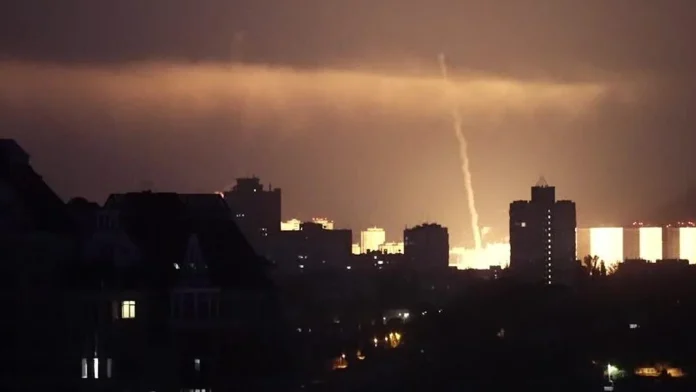
Kyiv woke today not to birdsong but to the metallic rattle of air-raid sirens and a sky that stuttered with explosions. For hours, the capital of Ukraine endured one of the most concentrated aerial onslaughts in recent memory—hundreds of drones and scores of missiles slicing through the night, turning apartment windows into lattices of shattered glass and sending families scrambling for the subterranean safety of metro stations.

“There was no warning, just that scream of the sirens and then the sky lit up like a concert of lightning,” said Olena, 58, who spent the night under the cold lights of a Kyiv metro stop with her granddaughter. “We wrapped ourselves in blankets, shared tea from a thermos. You try to make jokes for the child, but your hands are shaking.”

The scale, in numbers

According to the Ukrainian air force, the barrage included 675 attack drones and 56 missiles—an unprecedented volume aimed largely at the capital. Their defenses intercepted the vast majority: officials reported that air defenses shot down 652 drones and 41 missiles. Kyiv authorities estimated that 20 locations across the city were damaged—residential buildings, a school, a veterinary clinic and other civilian infrastructure among them.

  • Attackers reportedly launched: 675 drones and 56 missiles.
  • Air defenses knocked down: 652 drones and 41 missiles (about 94% of drones, 73% of missiles).
  • Casualties at the scene of one collapsed apartment block: seven dead (three men, three women and a young girl) and some 45 wounded.

Numbers can feel numbing. But when you stand in the dust and concrete of a collapsed Soviet-era apartment—where the smell of burning insulation mixes with the sharper scent of cordite and fear—the figures take on faces and names.

Scenes from the Rubble

At dawn, rescue workers with soot-blackened faces dug through fractured slabs and twisted rebar. They passed bodies from trembling hands to stretchers, while neighbors stared, some huddled in slippers and nightgowns, others kneeling in prayer. A rescue volunteer, Petro, wiped his brow and said, “We train for this kind of night, but that never makes it easier. You pull out a child and you don’t stop thinking about their homework, their favourite cartoon. War steals the small, ordinary things first.”

The destroyed building—one of countless blocky apartment complexes that line many Kyiv neighborhoods—offered a brutal reminder of how urban warfare scrapes away the private lives of civilians. A schoolroom where children once practiced reading aloud now stands pocked with holes and water stains; a veterinary clinic that once comforted trembling pets is shuttered behind a layer of debris. “My cat, Klym, is missing,” a woman named Hanna whispered. “The vet had been open there for years. He used to know all the neighbors.”

Ballistic threats and the limits of defence

Officials admitted the most troubling vulnerabilities were not against small drones but ballistic missiles. “Drones are dangerous, but our systems are designed to detect and intercept them in large numbers,” said a senior air-defence commander in Kyiv. “Ballistic trajectories are a different challenge—higher speed, less time to react.”

The technical reality is stark: while Ukraine’s layered air defenses have improved dramatically since 2022, new tactics and the sheer scale of modern kamikaze drone swarms strain even the best-equipped networks. Analysts warn that as drone technology becomes cheaper and more ubiquitous, cities across the world could face similar threats unless international norms and defenses keep pace.

Voices from the Capital and Beyond

President Volodymyr Zelensky, speaking to the nation, framed the strike as a deliberate blow against civilian life and urged international partners not to look away. “They are targeting our homes, our schools, our hospitals,” he said. “Silence would be complicity.”

International leaders reacted with condemnation. France’s president called the strikes evidence of strategic desperation; the head of the EU said they mocked negotiations for peace. Several countries—including the UK, Estonia, Latvia, Finland, the Netherlands, Moldova and Slovakia—issued statements condemning the attacks.

“By striking civilians, Moscow seeks to break our will,” a European diplomat said. “But what it reveals is a strategic failure, not ruthlessness that brings victory.”

On the ground, grief and anger mingled. “They bombed the place where my neighbour made pierogi every Sunday,” said Andriy, a man with blood on his shirt who had been pulled from the rubble. “He’d knock on my door at dawn with them, laughing. What is left for us now?”

Diplomacy under strain

The strikes land at a fraught moment. A brief, fragile ceasefire negotiated with international involvement the week prior dissolved amid accusations of violations. Talks of a larger truce have been complicatingly tied to territorial conditions—chief among them Moscow’s demand that Kyiv withdraw from parts of the east—demands Kyiv has rightly rejected as tantamount to surrender.

“You can’t build peace on forced concessions,” said Dr. Marta Kovalchuk, a conflict-resolution scholar in Lviv. “Short ceasefires can soothe for a moment, but without a legitimate, mutually acceptable framework they are brittle. Worse, they let the more powerful party exploit pauses to regroup.”

What this means for the world

Beyond the immediate devastation, this attack underscores shifts in modern warfare: the rise of drone swarms, the targeting of civilian infrastructure, and the psychological toll of living under constant threat. Cities in many regions—far beyond Eastern Europe—are now studying this tragedy for lessons in civil defence, rapid medical response, and resilient infrastructure.

It also raises urgent questions for global diplomacy. How should the international community respond when civilian neighborhoods, schools and ambulances are at risk from waves of unmanned systems? How can humanitarian corridors be guaranteed when the tools of war are increasingly deniable and diffuse?

For the people of Kyiv, those questions are less academic. They want a roof that doesn’t explode, a school that stays open, a city where children can learn without waking to the thunder of missiles. For now, they bunker down, pass around hot tea in the shadowed entrails of metro platforms and try to sleep.

A city’s stubborn heartbeat

Even as sirens fade and cranes begin to clear the streets, life insists on continuing. Shopkeepers tape boarded windows; bakers reopened ovens repaired from the day before; an elderly man swept the doorway of his building and offered bread to arriving rescuers. Small acts of normality—sharing food, folding blankets, checking on the elderly—are acts of defiance in their own right.

So I ask you, reader: when you see images of collapsed buildings and jackbooted geopolitics, whose faces do you see? And what obligations do we all carry—states, citizens, institutions—when the instruments of war leap into civilian skies?

The night’s tally is grim: lives lost, neighborhoods altered, hopes for a quick cessation of hostilities dimmed. But the human response—resilience threaded with sorrow—is as real as any statistic. If anything, Kyiv’s people have taught the world how ordinary courage can endure amid extraordinary horror. How will the international community respond not just with words, but with concrete measures to protect civilians and de-escalate a conflict that has already reshaped Europe for a generation?

Lebanon and Israel resume US-hosted talks amid ongoing strikes

Lebanon, Israel hold new talks in US as strikes continue
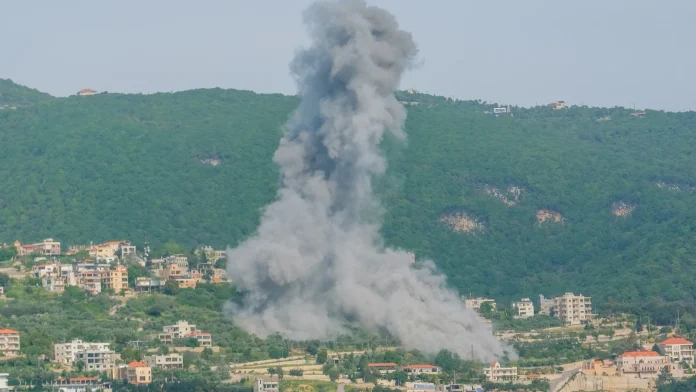
Smoke rises following an Israeli airstrike in Jarjoua, southern Lebanon

A Frayed Quiet: Washington Talks as Bombs Still Fall

There is a strange hush to diplomacy when the sound of airstrikes still hangs in the air. Today, delegations from Lebanon and Israel sat across from one another inside an austere State Department room in Washington, attempting to stitch together a longer peace as a temporary ceasefire — already fragile and bloody — approaches its scheduled end.

Outside, the narrative is raw and immediate. Israeli forces say they struck Hezbollah positions in southern Lebanon, warning civilians in several towns to evacuate before the raids. Lebanon’s state news agency and the health ministry report strikes that killed dozens only a day earlier — including children. An AFP tally, based on Lebanese authorities’ figures, puts deaths during the ceasefire period at more than 400, while Lebanon’s overall death toll since the strikes began is reported at over 2,800, including at least 200 children. These are not abstract numbers; they are schoolrooms emptied, marketplaces shuttered, lives upended.

The diplomatic gambit

Talks began in the capital just after 9am local time and stretched into a day of intense negotiation. Washington’s role is familiar: mediator, stage-setter, and sometimes lightning rod. The two sides have no formal diplomatic ties, and this meeting — the third of its kind in recent months — unfolded under the same uneasy optimism that has marked previous rounds.

“The first objective is simple and urgent: stop the killing,” a Lebanese official involved in the delegation said, speaking on condition of anonymity. “We will push for a consolidation of the ceasefire and full respect for Lebanese sovereignty.”

American envoys involved in the mediation included experienced diplomats and political appointees. A U.S. State Department statement framed the talks as an effort to restore Lebanese authority across its territory and to prevent armed groups from entrenching themselves — language that echoes a broader, decades-long debate about statehood, militias, and regional influence.

On the ground: stories from Lebanon’s borderlands

Drive south from Beirut and you feel the country’s layered history in every turn: citrus groves smudged by dust, stone houses with satellite dishes, the hum of market vendors selling za’atar and olives. Yet in towns near the border — villages like those around Rosh HaNikra and the hilltops that overlook the coastal plain — the tension is not historical; it is immediate and seismic.

“We left with nothing but the clothes on our backs,” said Nawal, 42, who fled her village with her two children. “We piled into a car with neighbours and drove inland. My son keeps asking when we can go home. How do you tell a child what a ceasefire means when the planes still arrive?”

Hezbollah and Israeli forces traded accusations today over drone activity near the border. Israeli officials reported a Hezbollah drone fell into Israeli territory, wounding several civilians. Hezbollah said it struck Israeli soldiers at the Rosh HaNikra site. Whether these incidents are one-offs or a prelude to renewed escalation remains the central fear.

Humanitarian strain

Hospitals in southern Lebanon have been stretched thin. “We’re running out of surgical supplies and blood,” said Dr. Elias Haddad, a surgeon at a regional hospital. “We operate like an orchestra trying to play without a conductor — each of us improvising to save lives.”

Humanitarian agencies warn that displacement, food insecurity, and damage to infrastructure could have long-term consequences if a sustainable ceasefire is not secured. The United Nations has repeatedly called for protection of civilians and unimpeded access for aid, but on the ground, the road from rhetoric to relief is bumpy and bureaucratic.

Jerusalem’s march: a city under strain

While diplomats debated in Washington, another pressure valve released in the Old City of Jerusalem. The annual Jerusalem Day march — a festooned parade for many Israelis marking what they call the reunification of the city after 1967 — wound through narrow stone lanes, accompanied by flag-waving and music.

But this year, the pageant took on a sharper edge. Groups of ultranationalists chanted slogans that frightened and angered Palestinian residents, who in many neighborhoods stayed behind locked doors. “It’s a day for us, but not for them,” said Ahmed, a shopkeeper near Damascus Gate, his voice low. “They celebrate our displacement and pretend it’s a triumph.”

These scenes are an acute reminder that local flashpoints — marches, checkpoints, contested neighborhoods — can ripple outward and feed larger regional conflagrations.

Politics at home: Fatah, reform, and the Palestinian question

Back in Ramallah, Palestinian President Mahmoud Abbas presided over a rare Fatah congress, promising reforms and signaling a willingness to hold long-postponed elections. The gathering was described by organizers as a bid to renew political legitimacy amid growing public frustration and the grinding pressures of occupation and conflict.

“We remain committed to reform and to democratic renewal,” Abbas told delegates. Yet for many Palestinians, words offer scant solace against the reality of displacement, checkpoints, and fractured leadership. International partners, from the EU to Arab capitals, have publicly urged reforms and political renewal, while voices across the region debate what a viable two-state solution would look like after decades of stalemate.

Why the world should care

It is tempting to treat these negotiations and skirmishes as distant, local affairs. But conflicts here have outsized global effects: refugee flows that stress neighboring states, spikes in global oil and commodity markets when regional risk rises, the proliferation threat when militias arm and state authority weakens.

“Instability here is indirectly felt in very practical terms: higher food prices in distant markets, rerouted shipping lanes, and political pressure in capitals far away,” said Dr. Helena Moradi, a Middle East analyst. “We ignore these fault lines at our peril.”

  • Ceasefire timeline: The truce went into effect on 17 April and had been extended through Sunday.
  • Reported casualties: More than 400 fatalities during the ceasefire window, with Lebanon’s overall toll since the strikes began reported at over 2,800, including at least 200 children (per Lebanese authorities and AFP tallies).
  • Diplomatic actors: U.S. mediators and Washington-based envoys are leading talks with delegations from Beirut and Jerusalem.

Questions to sit with

As you read this from wherever you are in the world, ask yourself: what does a durable peace require here — and elsewhere in places torn by chronic conflict? Is it possible to separate short-term security guarantees from the longer project of political reform and state-building? And how should the international community balance pressure and support without stripping agency from the people directly affected?

In the end, the diplomats in Washington can draft words and blueprints, and generals can push maps across tables. But it will be the voices from the clinics, the marketplaces, and the classroom who judge whether peace is real or merely a pause between storms.

“I want my children to grow up without the sound of drones,” said Nawal, looking down at her son. “Is that too much to ask?”

Fireworks, light show as pope blesses new Barcelona tower

Fireworks and dazzling lights mark pope’s blessing of Barcelona’s new tower

0
With fireworks bursting over Barcelona and light rippling across stone spires, Pope Leo XIV on Sunday blessed a monumental new tower at the Sagrada...
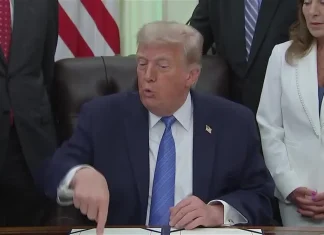
Watch: 'I love the inflation,' Trump tells reporters

Video: Trump Tells Reporters He “Loves” Inflation in Blunt Remark

0
With inflation flashing its hottest warning signal in three years, US President Donald Trump delivered a surprising take on the latest government numbers, telling...
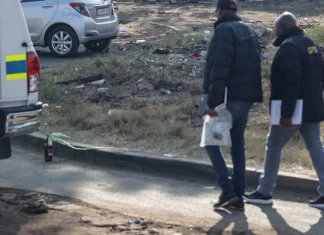
Twelve killed, nine injured in Johannesburg shooting

Johannesburg Shooting Leaves 12 Dead and 9 Wounded, Police Say

0
In a chilling overnight raid on the edge of Johannesburg, gunmen swept through an informal settlement and killed 12 people, South African police said. Police...
World's largest whale graveyard discovered by Chinese sub

Chinese sub uncovers the world’s biggest whale graveyard on ocean floor

0
A vast “necropolis” of whales—packed with both fresh remains and fossils millions of years old—has been found on the floor of the Indian Ocean,...
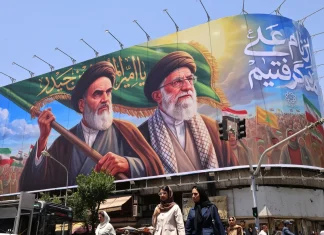
US strikes Iran as Tehran warns of response to attacks

US Launches Strikes on Iran as Tehran Threatens Retaliation for Attacks

0
Fresh explosions rattled southern Iran overnight as the United States launched a new round of strikes, a move that came just hours after President...