Home Blog Page 33

Streeting steps down; Burnham considers running in by-election

Streeting resigns, Burnham eyes bye-election

Note to readers: what follows is a creative, reimagined dispatch inspired by the headline “Streeting resigns, Burnham eyes bye-election.” It is written as a vivid, immersive blog piece and should not be taken as straight news reporting. Think of it as reportage filtered through a storyteller’s eye — grounded in the rhythms of UK politics, local life and the wider forces that shape them.

A sudden afternoon that shifted a town’s hum

There are moments when a place seems to take a collective breath. In the market square, a woman paused mid-step with two paper bags of apples. In the council offices, a junior staffer stared at an email twice. On the high street, the barista tamped a shot of espresso and then left it sitting on the counter as the radio crackled with the same phrase: “resignation announced.” The person at the center of it — a nationally known figure who had spent years as a prominent voice in Westminster — had tendered their resignation. And across town, people began to whisper the same name as a possible successor: Burnham.

The scene was quintessentially British — a mix of stoicism and gossip, of civic pride and impatience. Streetlamps blinked on as if to punctuate the uncertainty. It was a small town moment with national echoes.

Why this matters

A single resignation in the Commons can set off a chain reaction. It can force a by-election, redraw attention away from Westminster’s scripted battles, and create an opening for neighbouring political figures to test their appeal beyond their usual boundaries. By-elections have long been laboratories of public mood: lower turnout, higher intensity, the chance for personalities to leap into new roles.

From Westminster corridors to local tea rooms

Inside the curry house near the station, Noor, the owner, wiped his hands on a towel and said, “These things feel far away until someone you recognise leaves. Then it’s suddenly in the centre of everything.” Noor’s shop has seen MPs come and go, and he knows how quickly gossip unravels. “People talk about fairness, about promises. But what they really want is someone who shows up. Not just press conferences.”

If the whispers are true and an ambitious regional leader considers standing, the dynamics change. The person being speculated about here has been a relentless advocate for devolution, arguing for stronger city-region powers, more investment in transport, and a politics less obsessed with London. For many locals, the idea of a familiar face stepping into the fray feels like home turf politics meeting national theatre.

Voices from the street

“We don’t want another career politician parachuted in,” said Fiona, a primary school teacher and mother of two, as she shepherded her children across the square. “If someone comes here, physically comes and listens, I’ll give them a chance. But it’s the listening that counts.”

Tom, a retired engineer who has canvassed in more weather than he cares to remember, was blunt: “People are fed up with the same old promises. By-elections are small — turnout is often just a third or less of a general election — but they’re vivid. You get people who rarely vote, and you get the committed who always do. That mix can surprise you.”

Numbers that frame the story

To put this into perspective: the UK’s general election turnout has hovered in the high 60s in recent national contests — about two-thirds of eligible voters. By contrast, by-elections frequently attract far fewer participants; it’s common to see turnout between 30 and 45 percent. That gap matters. It means local party machinery, motivated volunteers and a handful of swing voters can disproportionately shape the outcome.

Labour’s internal polling and the math of modern British politics know this well. A regional heavyweight contemplating a straight shot to Westminster would weigh not only their national profile but also the capacity to convert name recognition into votes where people feel the daily pinch: on healthcare waiting lists, housing costs and local transport fares.

What party strategists are thinking

“A by-election is a mirror,” said a campaign strategist who asked to remain anonymous. “It tells you where the party is failing at the grassroots and where it’s resonating. If a well-known figure with executive experience — someone who has run a city-region — throws their hat in, it’s a signal to voters: we want to govern with experience, not just slogans.”

Opposition strategists, meanwhile, are watching the clock. By-elections are opportunistic — moments to test messages, to trial policy lines ahead of larger battles. They can deliver humbling defeats or galvanising wins. Either outcome provides its own kind of political capital.

Local color: the textures that matter

In the biscuit-and-tea lanes off the high street, conversation blends the practical with the poetic. There are references to the old municipal coat of arms still visible above a closed tobacconist, to the Saturday market’s beetroot seller who remembers rationing stories, to the football club that stitches civic pride into weekend rituals. This is the human geography of a constituency — the places people meet, argue and vote. It’s where national narratives either land softly or crash.

“My gran had a poster of a candidate in 1979,” joked a student at a nearby university, “and she’d always say: ‘Politics is like the telly — you can mute it, but it’s still on.’ We don’t want more noise. We want change.”

What this could mean beyond the constituency

Look beyond the immediate drama and you see larger themes: leadership tested by local accountability, the tug between regional power and national politics, and a moment when personalities can change the trajectory of a party. There is also a global resonance — democracies everywhere are wrestling with trust, representation, and who gets to speak for whom.

Will voters reward a well-known figure who crosses geographic boundaries to contest a seat? Or will they see such a move as opportunism — a parachute drop into a community that wants its own voice elevated rather than replaced? That question sits at the heart of modern politics: is leadership about spotlight or stewardship?

Questions to carry with you

  • What does it take for a political figure to earn legitimacy in a place they do not currently represent?
  • How do local identities shape national outcomes — and how do national narratives reshape local lives?
  • When is momentum earned, and when is it manufactured?

The long view

Even as campaign leaflets start printing and volunteer lists are updated, the deeper contest will be about trust. Resignations are punctuation marks in political stories. They force reflection, re-alignment, sometimes reinvention. For the people on the high street who will ultimately decide, what counts are the practical things: a reliable bus timetable, a GP appointment that doesn’t take weeks, decent housing, and a school where teachers aren’t burning out.

There is poetry in the absurdity of it all: a single email can unravel years of steady narrative. But there is also humility. Politics, at its most human, is about showing up. If the figure now being discussed chooses to step into a by-election, they will be judged not by past speeches but by whether they can sit in the same cafe, listen to the same worries, and turn that listening into action.

So, reader: what would convince you? A grand vision, or a handful of carefully kept promises? A famous name, or someone who knows the potholes in your road? The choice, should the ballot appear, will be more than local — it will be a reminder that democracies are built from small acts of trust and an ever-present willingness to be held to account.
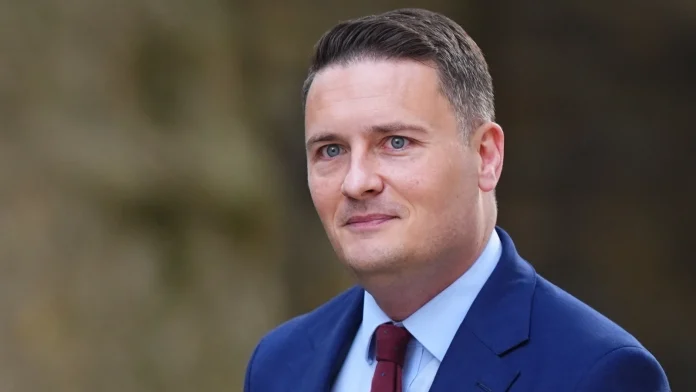
Streeting resigns from UK government to mount bid against Starmer

Streeting quits UK govt, paving way to challenge Starmer
In his resignation letter, Wes Streeting said: 'Where we need vision, we have a vacuum'

A sudden crack in Labour’s façade: Wes Streeting walks, Westminster braces

On a gray morning that felt like an indictment, Westminster woke to news that Wes Streeting had resigned as health secretary — not with the neat choreography of a managed exit, but with a line that landed like a thrown gauntlet.

“It would be dishonourable and unprincipled to continue,” he wrote, and the phrase echoed down Whitehall corridors like a chorus of questions. Within hours the political air filled with the scent of knives being sharpened, rumours of allegiance and calculations about who might stand and who would stand aside.

More than a resignation: the rumble of a leadership contest

Streeting’s departure is not merely a personnel change. It crystallizes a deeper anxiety roiling within the Labour Party: is the party’s current leadership the best vehicle to take them to the next general election?

Under Labour’s rules, a formal leadership contest requires the backing of 81 Labour MPs — a threshold that is as much about numbers as it is about nerve. Around 90 MPs have publicly demanded the prime minister step down, yet the dissidents are not a single, united front. For now, they are a chorus of discordant voices rather than a well-drilled baton corps.

“People are angry,” said one Labour staffer in Westminster, speaking on condition of anonymity. “Not necessarily at policy, but at directionlessness. There’s a sense that we promised change and we stalled.”

Who’s in the frame?

Names drift through the lobbies and teashops of Westminster like autumn leaves. Angela Rayner — once deputy to the prime minister — has been cleared of deliberate wrongdoing in her tax affairs investigation and, although she says she won’t “trigger” a contest, she has not closed the door on a possible run. Other figures spoken about in hushed, excited tones include Ed Miliband, the energy secretary, and the less-expected prospect of an armed forces minister who has accused the leadership of too much sloganeering and not enough action.

“We do not need more slogans,” one minister wrote recently, “We need action.” Whether those words will stitch together a viable campaign remains to be seen.

The unions, the base, and the politics of loyalty

Perhaps the most consequential development has been the withdrawal of support from parts of Labour’s trade union chorus. Historically, unions have been the beating heart of Labour’s machine; to see that rhythm falter is to sense the party’s lifeblood being tested.

“Support isn’t unconditional,” a regional union official told me over the phone. “Members want clarity about strategy and a plan to actually improve people’s lives — not an endless round of focus groups.”

That pressure is not just internal theatre. It is practical: trade union influence shapes campaign funding, volunteer mobilization and the tone of debates in constituency halls across the country.

Angela Rayner: cleared, but steadying her wings

Rayner’s exoneration of deliberate wrongdoing in relation to an underpayment of stamp duty removes one of the last formal obstacles to her re-entering the frontline. Yet she speaks in tones of caution. “It clipped my wings,” she told a Sunday paper, describing the experience of scrutiny and the decision to step back from ministerial duties.

Standing in a community centre in a northern constituency, a social care worker who voted Labour all her life said, “Angela gets things done. If she runs, I think she can remind people why we still bother with politics.”

Rayner herself frames her ambitions as collective rather than personal. “I’ll play my part in doing everything we possibly can to deliver the change,” she has said — language that resounds with local campaigners who prize impact over optics.

What’s at stake: policy, trust, and the next election

This is not just about personalities. At its core, the debate is about competence and narrative. The government’s next major move — the introduction of the Social Housing Renewal Bill — is intended to address chronic shortages of council homes and reform right-to-buy rules that have, over decades, halved local authority housing stock in many areas.

Housing is a live wire in British politics. Decades of policy have transformed the landscape: council house sales since the 1980s are numbered in the hundreds of thousands, and waiting lists for social housing stretch long in cities and towns. “If leadership can’t be seen delivering answers on housing, people will look for alternatives,” said an academic who studies urban policy.

For a government that ran on competence and the promise of rebuilding public services after hard years of austerity and pandemic, policy delivery is a test. Starmer has signalled that this bill will be his government’s attempt to take back the narrative — to show Labour can not only critique but create change.

In the communities

In Manchester’s cafes and on terrace streets, the conversation is immediate and visceral. A mother of two queuing at a nursery said: “It’s about my kids having somewhere stable. Politics feels distant until it affects your roof.”

Rumours that Greater Manchester’s mayor might re-enter Parliament have changed from whispered possibility to improbable fantasy as several MPs declared they would not give up their seats for a by-election. Local pride, inter-office loyalties, and personal calculations are all part of the messy choreography of party life.

Looking outward: what this means for Britain and beyond

For international observers, the struggle within Labour offers a mirror to broader democratic trends: parties once deemed monolithic are fracturing along lines of generational change, institutional loyalty and ideological reappraisal. Across Europe and beyond, established parties are wrestling with the same questions — how to reconcile professional managerial competence with the fiery passion that brought them to power.

Do voters prefer steady governance or bold reinvention? Can a party be both? These are not just British questions; they are the ledger entries of democracies worldwide.

What comes next — and what to watch for

Expect a short, sharp season of horse-trading, consultation and public posturing. The prime minister is expected to fight any challenge and has spent recent days meeting ministers and MPs in a bid to steady the ship. If a challenger emerges, the first test will be the 81-MP threshold — a simple arithmetic that will reveal whether this is a battle of ideas or a tug-of-war of personalities.

Meanwhile the government will table the Social Housing Renewal Bill, seeking to reclaim political initiative. If that bill is perceived as substantive and constructive, it might reset conversations. If not, the murmurs in the tearooms could grow louder.

And you, the reader: what do you want from the parties that ask for your loyalty and your vote? Stability, charisma, bold policy, or quiet competence? Perhaps it’s time to ask not who looks most electable, but who can deliver the changes that land in the lives of ordinary people.

Final note: a party at the crossroads

Wes Streeting’s resignation is a punctuation mark in what may prove to be a long sentence for Labour. The coming days will test whether this is a moment of renewal or an unraveling.

Either way, Westminster buzzes — full of impatience, calculation and a fragile hope that, in the end, the argument will be about ideas that lift lives rather than the choreography of power. Watch this space; the story is far from over.

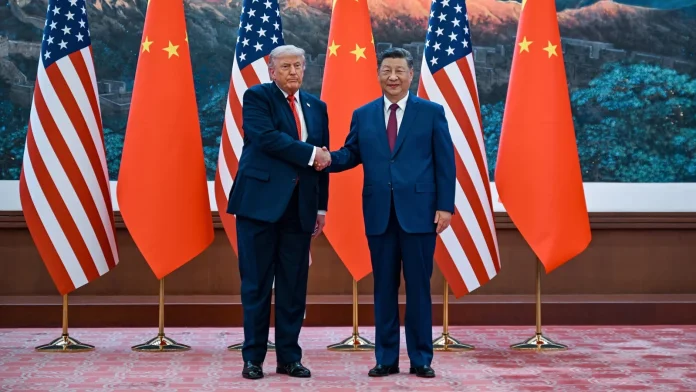
Xi warns Trump’s Taiwan missteps could ignite dangerous cross-strait conflict

Xi warns Trump mishandling of Taiwan may spark 'conflict'
The opening ceremony featured an honour guard for Presidents Xi and Trump

Under the Red Flags: A Summit that Smelled of Orchids, Oil and Danger

Beijing in spring is a study in contrasts: ancient temples muffled by modern traffic, incense and diesel, ceremonial red banners and a business class humming about AI chips. It was in that braided city — the Great Hall of the People, a crop of children with paper flowers waving at the motorcade — that two leaders of the 21st century staged a meeting that felt part state pageant, part chess match.

Chinese President Xi Jinping welcomed U.S. President Donald Trump with all the choreography of diplomacy: an honor guard, a slow procession of flags, an audience of ministers and generals. But behind closed doors, in a meeting that ran more than two hours, the tone changed. Mr. Xi delivered a blunt—some would say unflinching—message: resolve the Taiwan problem carefully, or risk pushing U.S.-China ties into a “highly perilous situation.” In less poetic language, he warned that missteps could lead to collisions, even conflict.

“We spoke plainly,” said a senior Chinese diplomat who asked not to be named. “The message was: Taiwan is not a side issue. It is existential for China. Mishandling it could have consequences for the whole world.”

Pageantry and Private Warnings

The ceremony outside the Great Hall — rows of guards, the polished boots and brass, the children on the plaza — could have been lifted from a travel brochure. Later, the two presidents toured the Temple of Heaven, historically where emperors asked for good harvests. Flowers, photographers, and the odd selfie kept the optics bright.

But the optics were only the cover story. According to Beijing’s readout, Mr. Xi praised recent U.S.-China economic and trade team talks in South Korea as reaching “overall balanced and positive outcomes.” Both sides say they want to preserve the fragile trade truce struck last October — the agreement that saw the U.S. suspend a slew of tariffs and Beijing back away from weaponizing rare-earth exports.

“Trade is the easy part at these meetings,” said Dr. Mei Lin, a trade scholar at a Beijing university. “But easy is relative. There are deep distrusts, and both capitals need wins. For Xi, it’s stability and technological sovereignty. For Trump, it’s jobs, planes and energy deals he can point to back home.”

Cash, Chips and CEOs

Mr. Trump came with a delegation that read like a Fortune 50 roll call: chiefs of industry and technology, from Elon Musk to Nvidia’s Jensen Huang and Apple’s Tim Cook. They flew with the president in search of smoother trade lanes, greater market access, and, in some cases, permission slips for high-tech components. Reporters later noted that Washington had cleared roughly a dozen Chinese companies to buy Nvidia’s H200 AI chips — an important, if symbolic, concession — though deliveries had not yet begun.

“We want fair rules and a level playing field,” a U.S. trade adviser traveling with the delegation told me. “And we want to reduce the chronic imbalance that built up over decades — planes, grain, energy. It’s about jobs, plain and simple.”

The Taiwan Fault Line

Taiwan — a vibrant democracy of 23.5 million people in the western Pacific — has long been the thorniest issue between Beijing and Washington. The island lives in a gray zone: the People’s Republic of China claims it as a province, while Washington, constrained by no formal diplomatic recognition, is nevertheless bound by the Taiwan Relations Act to help Taipei defend itself.

Last fall a proposed arms package worth about $14 billion was circulating in Washington: fighters, missiles, defensive systems that Taipei sees as essential, and Beijing sees as provocation. Xi told Trump that such arms sales were a red line. The Chinese foreign ministry framed the exchange in stark terms: mishandling Taiwan could send bilateral ties down a dangerous path.

“We told them plainly,” said a trade official who attended part of the meeting. “This is the most important issue we face. It’s not about paper maps; it’s about security and national pride.”

Trump, for his part, was pointedly silent when asked on the grounds whether Taiwan had been discussed as photos were taken at the Temple of Heaven. The U.S. White House brief afterwards emphasized cooperation on trade, agriculture, and even an interest from Beijing in buying American oil to reduce dependence on Middle Eastern sources — a line that carries weight as global markets strain under geopolitical instability.

Straits, Oil and the Wider World

Outside this bilateral drama sits a wider, messier world. One-quarter of the world’s seaborne oil transits the Strait of Hormuz at any given time — crude and natural gas vital to economies from Shanghai to Stuttgart. With conflict in the Middle East disrupting shipments, the global energy map has been rearranged, and both presidents signaled an interest in reopening the key waterway and stabilizing markets.

“It’s in China’s interest to calm things down,” said Marco Rubio, speaking aboard Air Force One, echoing the U.S. talking point. “Chinese ships are stuck in the Gulf. A prolonged slowdown would blow back on exporters across the board.”

Analysts, however, were skeptical that Beijing would lean on Tehran. Iran remains a strategic partner for China — a counterweight in a world dominated by Washington. Pressuring it to capitulate would exact a price Beijing may not be willing to pay.

Domestic Politics, Global Stakes

There is theater at home too. For Mr. Trump, who has seen his approval ratings buffeted by war and domestic turmoil, a successful trip promises talking points for a domestic audience hungry for economic wins. For Mr. Xi, whose political base is more consolidated, the calculus is different: stability, strategic autonomy and continued technological advancement.

Still, both sides have practical reasons to keep trade moving. The U.S. wants to sell Boeing jets, farm goods and energy to chip away at a bilateral trade imbalance that has long been a political bugbear. China wants access to advanced chipmaking equipment and fewer restrictions on semiconductor flows — the lifeblood of everything from smartphones to submarines.

Voices From the Street

To capture the local color, I walked past a noodle stall near the Temple of Heaven. The owner, Ms. Liu, wiped her hands and watched the limousines roll by.

“We notice the guests,” she said, laughing softly. “More cameras, more foreigners. But we mostly care about prices — oil, wheat, the cost of meat. If they can make things cheaper for us, fine. If not, we will keep selling noodles.”

On a subway platform, a university student named Zhou Xia offered a different perspective. “We want peace,” she said. “War or a new cold war will only make our lives harder. But we are proud of our country. If others poke our core issues, we will stand firm.”

What This Meeting Means — and What It Doesn’t

What emerged from the summit is both obvious and worrying: interdependence and rivalry remain tangled. The two giants share supply chains, shareholders and a mutual interest in preventing runaway conflict. Yet beneath the handshake and the banquet lies an uncomfortable truth: there are limits to what diplomatic theater can achieve when national security, pride and economic competition are at stake.

So what should we watch next? Will the tentative trade mechanisms agreed in theory translate into concrete market openings, more U.S. beef and Boeing orders, and smoother chip exports? Will the United States sign off definitively on the Taiwan arms package? Will Beijing nudge Tehran toward moderation, or will it prioritize strategic allies?

Ask yourself this: in a globalized world, how much do you want geopolitics to be sorted by state dinner optics, and how much by clear, enforceable rules that protect people’s livelihoods? The leaders have posed their cards. Now the world will wait to see whether they’re playing for a win-win or a winner-takes-all table.

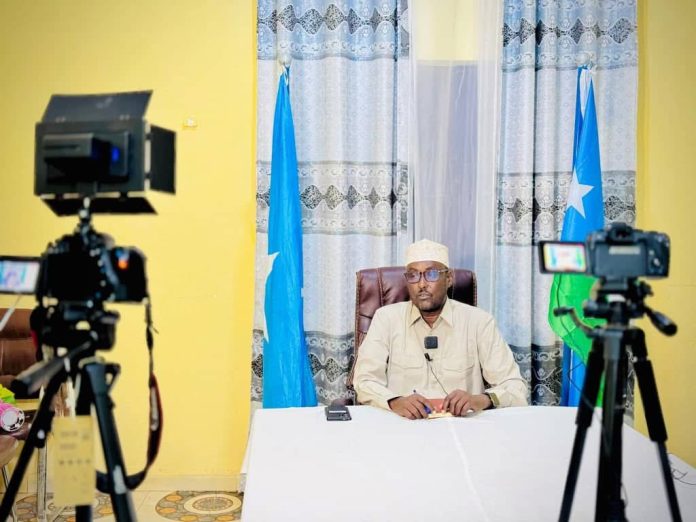
Mareykanka iyo Ingiriiska oo dhinacyada Soomaalida ugu hanjabay iney dalka ka guurayaan hadaan galabta heshiis la gaarin

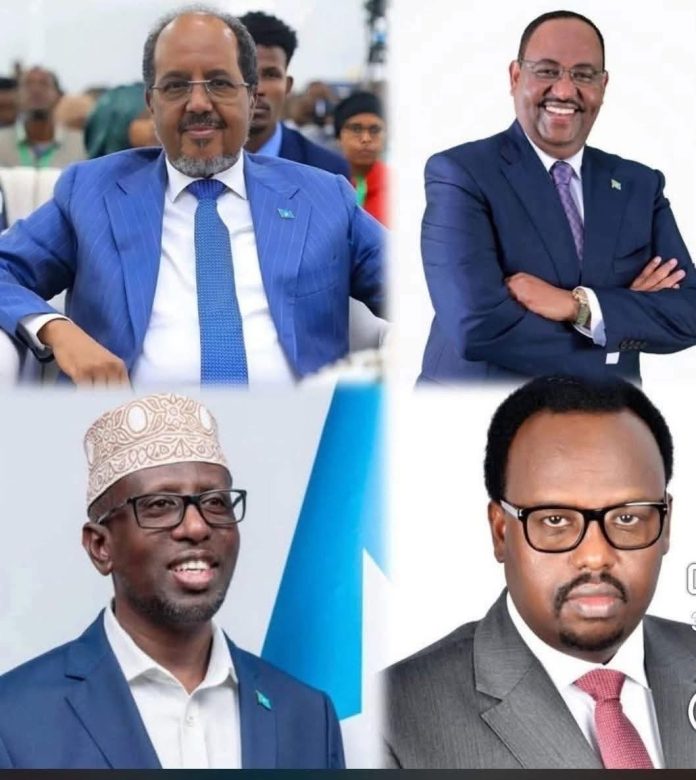
May 14(Jowhar) Sida ay xaqiijinayaan ilo wareedyo wargal ah oo ku dhow dhow kulankii Xalane maanta ka dhacay, ka dib markii ay is mari waayeen dhinacyada Madaxweyne Xassan Sheikh & Golaha Mustaqbalka, layskuna qabtay qodobka mudo xileedka la xariira & hanaanka kala guurka, wakiilada caalamiga ah ayaa si lama filaan ah usoo dhexgalay, iyagoo dhexda dhigay war culus oo saameyn weyn kulanka kuyeeshay, kaas oo ahaa.

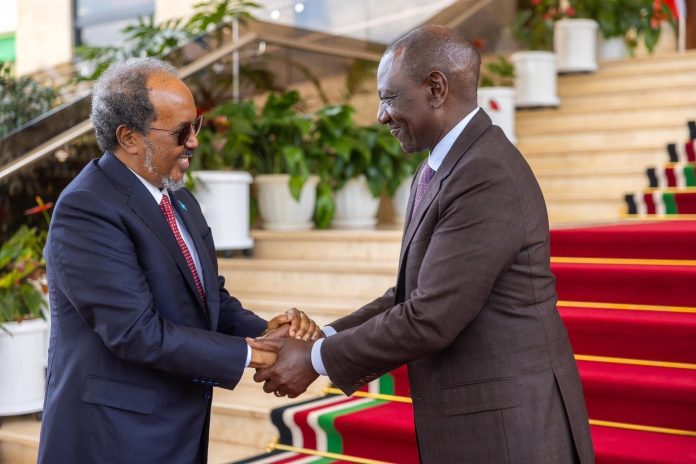
Madaxweynaha Kenya Ruto Oo Ka Digay Xaaladda Murugsan Ee Soomaaliya iyo muranka doorashada

May 14(Jowhar)-Madaxweynaha Kenya William Ruto ayaa walaac xooggan ka muujiyay xaaladda siyaasadeed ee Soomaaliya, isagoo sheegay in khilaafaadka gudaha ay sii adkeeyeen mustaqbalka dalka.

Wadahadalo mar kale uga furmay xerada Xalane madaxda dowladda iyo Mucaaradka

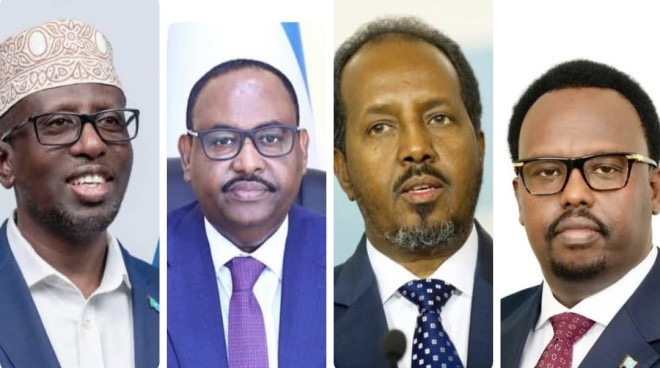
May 14(Jowhar) XALANE: Madaxweyne Xasan Shiikh oo uu weheliyo Raysal wasaare ku-xigeenka dalka, Saalax Jaamac iyo Madaxweynaha Puntland, Deni & Madaxweyne hore Shariif ayaa mar kale goordhaweyd u fadhiistay wada-hadallada doorashada dalka, iyada oo Golaha Mustaqbalka ay dooddooda ku ku uuriyeen; in DFS aqbasho in uu idlaadey muddo-xileedkeeda kana tanaasusho doorashada qof & cod oo keliya laga wada-hadlo doorashooyin Dadban oo dad badan.

Shots ring out at Philippine Senate as politician dodges ICC scrutiny

Gunshots at Philippines senate as politician evades ICC

A Senate on Edge: Gunfire, a Fugitive Senator, and the Philippines’ Quiet Crisis

They say the city never sleeps, but on a humid midday in Pasay, the Philippine Senate felt like a trapped heartbeat — quick, jagged, uncertain.

At least five shots cracked through marble corridors and glass-paneled offices, sending senators, staff and journalists into the small sanctuaries of their rooms and closets. For a while the giant building that houses the Senate felt less like a temple of law than a bunker: lights dimmed, voices whispered, and papers rustled like the sound of a country holding its breath.

“We heard them — pops, really, like someone letting off a starter pistol,” said a legislative aide who asked not to be named. “Then the panic. People were under desks. We didn’t know if it would get worse.”

Why the Shots?

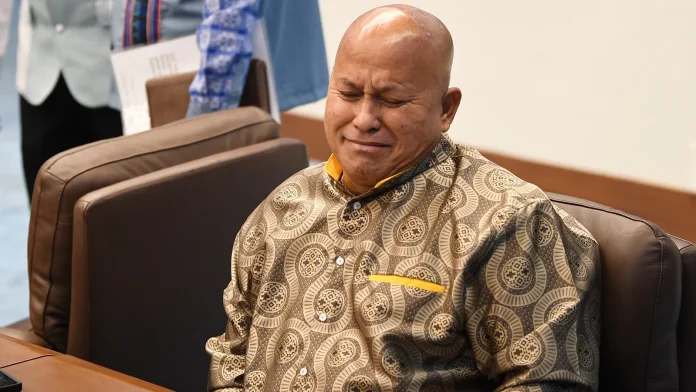
The scene unfolded around one central fact: Senator Ronald “Bato” Dela Rosa — the former national police chief who rose to fame and infamy during the Duterte-era anti-drug campaign — was sheltering inside the Senate complex as authorities sought to detain him ahead of transfer proceedings tied to an International Criminal Court inquiry.

Interior Secretary Juanito Victor Remulla arrived on the scene and told reporters there were no casualties and that the hunt for whoever fired the shots was ongoing. “I am here to ensure the integrity of the Senate and the protection of all the senators,” he said, adding that Mr. Dela Rosa was “safe” and “accompanied by security personnel.”

“We have assured him there is no warrant of arrest to be served,” Mr. Remulla said — a statement that only amplified tensions between branches of government and left many Filipinos asking: who speaks for the rule of law when institutions themselves seem divided?

Voices from Inside

Senate President Alan Peter Cayetano, who drew a line around his chamber to prevent agents from entering, posted online that he didn’t know who had fired the shots. “Everyone’s locked in their rooms now. We cannot go out, we cannot secure our other staff. Why are we under attack here?” he wrote, echoing the bewilderment many felt.

Melvin Matibag, director of the National Bureau of Investigation — whose agents had attempted to serve detention papers earlier — denied that his officers fired any shots, saying his unit had been on “stand down” at the time. “There were no NBI agents inside the Senate when the shooting occurred,” he told local media.

A television reporter, visibly shaken, fought back tears while broadcasting from inside the building; Senator Robin Padilla urged the pack of journalists to evacuate for their own safety. The images were surreal: a democratic chamber converted into a place where people hid, whispered and prayed.

Context: The Long Shadow of the Drug War

To understand why a Senate building could be the refuge for a politician accused in an international inquiry, you need to look at what the Philippines has lived through for the last decade.

Mr. Dela Rosa, nicknamed “Bato” (rock), served as national police chief from 2016 to 2018, during the early and most violent phase of former President Rodrigo Duterte’s war on drugs. Human rights groups say thousands died in police operations and vigilante-style killings; the damage is not merely numerical but social. Families still mourn; communities still carry the memory of sudden knock-at-the-door funerals.

The International Criminal Court has been watching. The prosecutor opened a preliminary examination in 2018 into possible crimes against humanity in the context of the anti-drug campaign, and human rights organizations have urged international attention for years. Whether and how national courts engage with those allegations has become not only a legal question but a political one.

What this Moment Means

When a senator sought sanctuary inside the Senate to avoid transfer abroad, it crystallized tensions around sovereignty, accountability, and the limits of power. Who can be arrested, by whom, and where — these are not hypothetical questions in the Philippines right now. They are being answered, fractiously and publicly.

“This isn’t about one man,” said Ana Rivera, a human rights lawyer in Manila. “It is about whether institutions — courts, legislatures, the executive — can cooperate to pursue justice without turning the pursuit into a spectacle that shields the powerful.”

Beyond the Building: A Nation Watching

Across Metro Manila, people watched broadcasts on small TVs in sari-sari stores and over coffee in street-side carinderias. In one barangay, an elderly vendor said she couldn’t sleep, remembering the late nights when sirens used to run through the neighborhood.

“We want peace, yes, but not this kind of silence where people are afraid to speak,” she said, fingers wrapped around a cup of black coffee. “We need courts, but they must not be used as a way to hide.”

Polls over the past several years show that public trust in institutions in the Philippines has been fragile; for many, the spectacle in the Senate will deepen questions about checks and balances. Does political solidarity matter more than the rule of law? When national pride meets international law, who wins?

Quick Facts

  • Location: The Senate of the Philippines meets in the GSIS Building in Pasay City, Metro Manila.
  • Senator involved: Ronald “Bato” Dela Rosa — former national police chief (2016–2018).
  • Allegations: Linked to the Duterte-era anti-drug campaign; subject of ICC attention regarding alleged crimes against humanity.
  • Immediate outcome: No fatalities reported after the shooting; investigation ongoing.

What Comes Next?

The Supreme Court ordered the government to respond within three days to Mr. Dela Rosa’s petition seeking to bar arrest and extradition — a judicial move that adds a new layer to the already complicated legal chess match.

International observers will be watching closely. How the Marcos administration handles this incident — which pits legislative protection against judicial process and international scrutiny — may signal how the Philippines navigates overlapping authorities in the future.

“This episode is a test,” said Mark Santos, a constitutional expert at a Manila university. “It tests whether political loyalties can override due process, and whether institutions will act as guardians of the state or as private clubs protecting their own. The answer will define the shape of Philippine democracy for years.”

Questions to Sit With

As you read this from anywhere in the world, consider: What does it mean when a lawmaker becomes a fortress? How should a society balance national pride and international accountability? And perhaps most urgently: how do everyday people — families who lost sons, daughters, neighbors — see justice being served?

The Senate’s marble floors will be scrubbed and the bullet casings collected. But the stains are deeper than the visible ones. Trust, once splintered, takes time to mend.

For now, the country waits. The Senate remains a room of many voices — some loud, some trembling — and outside, the city keeps walking, trading, gossiping and grieving, as nations do when history knocks a little too loudly at the doors of power.

Gudoomiyaha Gedo oo kasoo horjeestay qorahaha DFS ee gobolkaasu doorashi uga qabaneyso

May 14(Jowhar) Jubbaland ayaa Xukuumadda Faderaalka markale ka xoogtay caasimadda gobalka Gedo ee Garbahaaray, Cabdulaahi Shimbir oo ahaa gudoomiyihii gobalkaas oo horay uga gadooday Jubbaland ayaa hadda dib ugu laabtay.

United Arab Emirates denies Israeli claim Netanyahu visited UAE

UAE denies Israeli claim that Netanyahu visited country
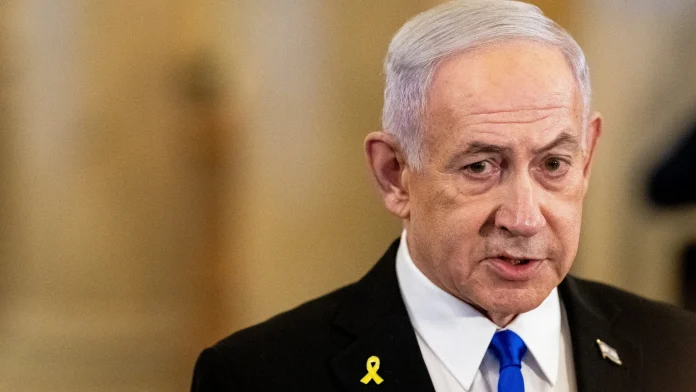
Benjamin Netanyahu's office had claimed that he met the Emirati president in the UAE during Israel's war on Iran, a claim the UAE has denied (file photo)

Night-time Diplomacy, Daylight Denials: A Gulf Mystery Unspools

On a warm Abu Dhabi evening, the city’s glass towers shimmered like a row of sentinels above the Persian Gulf. Inside a teahouse near the corniche, shopkeepers and office workers paused their conversations to scroll through the same headline: did Israel’s prime minister secretly visit the United Arab Emirates during a fraught period of conflict with Iran?

The story read like a spy novel — a clandestine trip, a meeting behind closed doors with the Emirati president, and, if true, a diplomatic leap that would rewrite recent assumptions about alliances and survival in the region. Then, almost as quickly, the air was cleared: the UAE’s foreign ministry called the reports “baseless,” insisting no such visit or unannounced military delegation had been received.

“We have received no dignitary or military unit from Israel,” an Emirati diplomat told me over the phone, his voice low with frustration. “Any claim otherwise is not grounded in fact and was never coordinated with us.”

From Jerusalem, an aide to the Israeli prime minister’s office struck a different tone: “This was a narrow, strategic engagement that marked a breakthrough in cooperation,” the aide said, speaking on background. “In times of war nations sometimes move fast and quietly to protect their people.”

Why this matters

The tug-of-war over the visit is more than a matter of protocol. It sits on top of a much bigger, raw wound: the war that began on 28 February when US and Israeli strikes hit Iranian territory, sparking a cascade of tit-for-tat incidents that sent the region into jittery overdrive.

The UAE finds itself in the crosshairs, having reported repeated missile and drone strikes in the weeks since. The lore of secrecy — whether true or not — hints at a recalibration: partners helping partners, perhaps quietly. Or it could be a fissure that reveals competing narratives, each government shaping the story for domestic audiences and international allies.

The Strait of Hormuz: Tollbooth of Power

If the alleged visit was a one-line beat in the ledger of geopolitics, Iran’s posture over the Strait of Hormuz is a chapter. The waterway is not just a channel of water; it is a chokehold on the world’s energy arteries. In peacetime roughly one-fifth of seaborne oil and liquefied natural gas passes through its narrow passage. In war, it becomes a weapon.

Iranian commanders have openly suggested that their control of the strait could be monetized — “significant” revenue, even the potential to double oil income, according to state media summaries of a military spokesman’s remarks.

“When you control the gate to global energy, you have more than a military advantage,” said Sara Lin, an energy strategist in Singapore. “You have leverage over shipping routes, insurance premiums, commodity prices and the economies that depend on them.”

Indeed, Brent crude climbed above $100 a barrel as markets jittered over the continued uncertainty, and analysts warned that even sporadic closures or delays could ripple into food and fertilizer shortages because petrochemical feedstocks travel these same lanes.

From tolls to tankers

Reports that Tehran began collecting “tolls” on vessels — small sums at first, according to Iranian parliamentary officials — have alarmed import-dependent nations. Iran’s definition of where the strait begins and ends now stretches from Jask in the east to Siri Island in the west, a broader zone that gives Tehran room to claim oversight.

“We’ve seen state-backed entities in Tehran adopting new revenue streams during crises before,” said Dr. Karim Mansouri, a Tehran-based maritime security analyst. “The idea that Iran would turn maritime control into income isn’t surprising. The more worrying part is how other states respond.”

Response is complicated. The United States has enforced a naval blockade on Iranian ports and repositioned the aircraft carrier Abraham Lincoln in the Arabian Sea. US officials report redirecting dozens of commercial vessels and, at times, disabling ships. Washington has also warned that no single country should be able to impose tolls on traffic through Hormuz — an idea apparently acknowledged in recent US-China discussions ahead of a summit between President Donald Trump and Xi Jinping.

On the ground: people and pricing

The geopolitical chess plays out with human faces and real bills. At a diner near the Mina Zayed fish market, 58-year-old Fatima al-Harbi folded her hands around a cup of strong coffee and spoke about prices.

“We used to buy fish for three dirhams, now it’s more than double,” she said. “Everything goes up. Fuel, bread, working costs. People talk about politics, but we count bills.”

In the port town of Jask — now in the language of some Iranian officials part of a “controlled zone” — a boat captain named Reza shrugged when asked about tolls. “The sea has always been how we live. If they put new rules, we follow them. But it is the ships that pay; the fishermen pay with fewer buyers,” he said.

Global supply chains under stress

Ship trackers have shown increased activity by large tankers flagged by China and elsewhere attempting to weave through the disputed waters. Some nations are exploring alternative logistics: rerouting via the Red Sea and Suez Canal, expanding pipeline capacity, or locking into bilateral shipping arrangements that resemble Tehran’s deals with regional partners.

  • About 20% of global seaborne oil flows through the Strait of Hormuz in peacetime.
  • Brent crude breached triple figures amid the tensions, affecting fuel and fertilizer prices worldwide.
  • The US has reported redirecting and disabling dozens of vessels as part of its enforcement measures in the Arabian Sea.

Bigger picture: alliances, elections, and economics

These are not isolated incidents; they are symptoms of a shifting international order. The Abraham Accords of 2020 brought normalization between Israel and several Gulf states, but those diplomatic bridges are being tested by a war that draws in Iran, the US, and by extension, China and other global powers.

Back in Washington, politics looms. The White House has framed demands in stark terms: end Iran’s nuclear ambitions and lift its grip on Hormuz. “They cannot have a nuclear weapon,” President Trump reiterated as he departed for talks with Xi — a line that resonates domestically and fuels critics who argue that the costs of war are being borne by taxpayers and ordinary families.

Polls indicate restlessness. A Reuters/Ipsos survey showed a large share of Americans want clearer explanations for why their country is at war. At home, inflation metrics — food, rent, and transport — are biting into household budgets, adding a domestic pressure cooker to foreign policy calculations.

Where do we go from here?

For ordinary people in Abu Dhabi, Jask, and ports around the globe, the questions are immediate: will prices rise further? Will shipping routes remain safe? Can talks, backchannel meetings, and international pressure defuse a situation that has already drawn planes, carriers, and insurers into a risky spiral?

“Diplomacy often happens in whispers before it becomes news,” an unnamed Western diplomat told me. “But whispers without confirmation are dangerous too — they create expectations and sometimes false hopes.”

So, reader: imagine you are a trader watching oil tick higher, a commuter facing a price rise at the pump, a parent counting grocery expenses. How much of your life should be determined by decisions made thousands of miles away on a strait half the width of a city? The answer may well shape the next chapter of geopolitics in the Gulf and beyond.

Massive 800-drone Russian daytime assault kills six in Ukraine

Daytime Russian barrage of 800 drones kills 6 in Ukraine
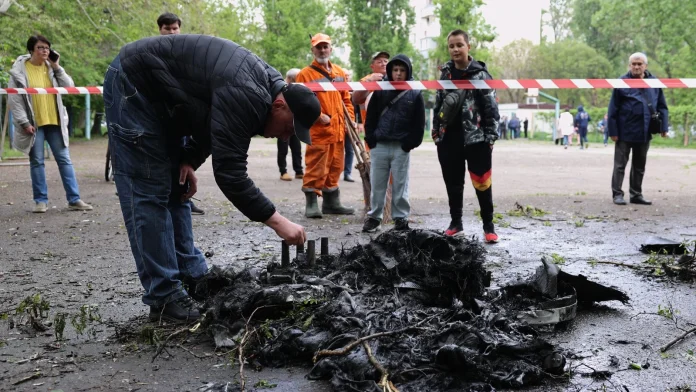
A man inspects fragments of a drone in the courtyard of a residential building following an air attack in Odesa

Daylight Thunder: Ukraine Faces an Unprecedented Drone Barrage

On a bright spring morning that some residents remember for the smell of fresh bread and the calls of street vendors, the sky over much of Ukraine turned into a passing black blotch of metal and noise. Air raid sirens wailed, metro stations filled with hurried, bewildered people, and a new chapter in this long war unfolded — not under the cover of night, but in broad daylight.

“Since midnight, at least 800 Russian drones have already been launched,” President Volodymyr Zelensky wrote on social media, summing up an attack that killed at least six people and wounded dozens, he said. The strikes hit towns and regions as far-flung as Rivne, Zaporizhzhia, Kherson and Odesa, leaving shattered glass, damaged apartment blocks and a heightened sense of vulnerability in their wake.

What Happened — and Where

Unlike previous large-scale strikes, which often fell after dark, this assault unfolded during daytime hours. Kyiv residents reported scrambling into subway tunnels — the city’s metro again becoming both shelter and seam between everyday life and the unpredictable violence overhead.

Rivne, in western Ukraine, bore some of the deadliest blows. Local authorities reported three people killed and four wounded after drones struck civilian infrastructure and a residential building. One person was killed in Zaporizhzhia, two others in Kherson, and multiple injuries were recorded in Odesa, Khmelnytskyi and Cherkasy. Ukraine’s military intelligence described a “prolonged air strike against critical facilities.”

Across the border in Russia’s Bryansk region, local officials said two people died in separate drone incidents — one in the village of Stara Pogoshch and another at a post office in Sevsk. The reciprocal casualties underscore how the conflict’s violence spills across lines with tragic, often anonymous consequences.

Voices from the Ground

“We had bread in the oven. My wife grabbed the kids and ran. The drone sirens were closer than I have ever heard them,” said a man waiting on a metro platform in Kyiv. “You think you can prepare for anything after four years, but this felt like a new kind of fear.”

In Rivne, a volunteer medic, Oleksandr, described the scene after the strike: “We arrived and there was dust everywhere, a child crying on a blanket, neighbors handing milk to firefighters. The physical damage is one thing. The hardest part is the look in people’s eyes — tired, but still stubbornly friendly.”

“This was not an accident,” President Zelensky charged, tying the timing of the barrage to the international calendar. He alleged Moscow launched the attack during U.S. President Donald Trump’s visit to China to “disrupt the overall political atmosphere” and draw attention away from the war’s true human costs.

Why This Feels Different

For more than four years, cities across Ukraine have been subject to relentless missile and drone attacks, but typically the largest-scale strikes came at night, when air defenses and civilian movement patterns can be exploited. Daytime attacks suggest a strategic shift — either an attempt to overwhelm remaining air defenses, to target infrastructure when people are at work and school, or to send a geopolitical message.

“Launching hundreds of drones during daylight signals confidence — or desperation,” said Dr. Elena Markov, a security analyst focusing on unmanned systems. “It’s a calculated gamble: drones have been adapted to penetrate layered defenses, and massing them can saturate radar and interceptor systems. The casualty toll is both tactical and psychological.”

Analysts have long warned about the democratization of aerial warfare. Since 2022, drones of many kinds — commercial quadcopters retrofitted for conflict, Iranian-made loitering munitions, and bespoke kamikaze variants — have reshaped the battlefield. The sheer volume of unmanned systems available has lowered the logistical bar for massed strikes, enabling parties that can assemble fleets to wage persistent pressure campaigns.

The Cost to Civilians and Infrastructure

Beyond the immediate toll in lives and injuries, the attacks raise long-term concerns. Power stations, water treatment facilities and critical logistics hubs have been targeted in previous waves, often causing cascading impacts that linger long after the last shell falls. Ukraine’s own estimates — reinforced by international observers — point to widespread damage to civilian infrastructure throughout the war, with tens of thousands displaced at various times and many urban neighborhoods still rebuilding.

Local shopkeeper Halyna in Kherson summed up what repeated assaults do to small businesses: “You rebuild a window three times, and finally you start saving for a new place. You never know if the next raid will be your last day open. People don’t want charity; they want a predictable tomorrow.”

Geopolitics in the Background

This attack did not occur in a vacuum. Zelensky urged U.S. President Trump to raise the issue of ending Russia’s invasion during his visit to China, signaling Kyiv’s desire to fold this tragedy into broader diplomatic currents. Whether and how great powers discuss the war behind closed doors has a direct influence on whether such strikes become more or less frequent.

Internationally, decision-makers face a knot of competing priorities: geopolitical positioning with China, domestic politics, the desire to avoid escalation, and moral pressure to push for civilian protections. Meanwhile, Ukraine’s plea is straightforward and urgent: stop the war before more lives — and cities — are lost.

Questions for the Reader

How do we reckon with a world where aerial warfare is no longer confined to military zones and nightfall offers no guarantee of safety? What do we owe civilians caught in the crossfire when the instruments of war grow cheaper and more numerous?

When the tools of violence become widely available, how do international norms and law keep pace? These are not theoretical questions. They matter in subway platforms in Kyiv and kitchen tables in Rivne, where a morning’s ordinary routine can be shattered by a buzzing machine from the sky.

Looking Ahead

The human thread running through this episode is stubborn and familiar: people attempting to carry on, to make a living, to raise children and keep hope alive amidst the rupture. Rescue crews sifting through rubble. Neighbors sharing tea. City councils tallying damage and trying to restore electricity.

“We will patch the roof, we will heal the wounds. We always do,” one volunteer said as dawn turned the dust in the air to a soft gray. “But patching is not the same as peace.”

If this barrage indicates anything, it is that the war’s technologies and tactics are evolving — and that global attention, diplomatic will, and humanitarian protections must adapt in turn. For Ukrainians, each attack brings the same question: what will be the shape of tomorrow? For the rest of the world, the question is whether we will answer.

World's largest whale graveyard discovered by Chinese sub

Chinese sub uncovers the world’s biggest whale graveyard on ocean floor

0
A vast “necropolis” of whales—packed with both fresh remains and fossils millions of years old—has been found on the floor of the Indian Ocean,...
US strikes Iran as Tehran warns of response to attacks

US Launches Strikes on Iran as Tehran Threatens Retaliation for Attacks

0
Fresh explosions rattled southern Iran overnight as the United States launched a new round of strikes, a move that came just hours after President...
460 European figures call on EU to be tougher on Israel

460 European leaders urge EU to take a tougher stance on Israel

0
With war raging in Gaza and tensions rising across the West Bank, a large coalition of veteran European political leaders is urging the European...
Four killed, 20 injured in Russian strikes on Kharkiv

Russian strikes hit Kharkiv, killing four and injuring 20 people

0
A fresh wave of missiles and drones slammed into Ukraine overnight, killing four people in the Kharkiv region and injuring more than 20 others,...
Gates Foundation opens external review of Epstein ties

Bill Gates grilled by Congress over alleged ties to Jeffrey Epstein

0
Bill Gates is heading to Capitol Hill for scrutiny that has shadowed some of the world’s most prominent figures: his past ties to Jeffrey...