Home Blog Page 48

Starmer’s leadership tested as millions head to polls in UK local elections

Starmer faces test as millions vote in UK local elections
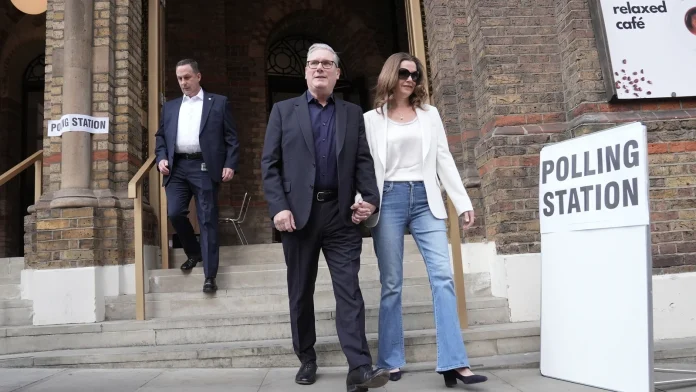
Keir Starmer and his wife are pictured after casting their votes at Westminster Chapel in central London

Polling Day in Britain: A Nation’s Quiet Reckoning

The caravan looked almost comical parked beside the village green in Duxford — a domestic relic turned temporary temple of democracy. A grandfather in a flat cap shuffled inside to cast his vote; a teenager rolled up in a hoodie, more curious than committed. Outside, the spring sky threatened rain and a small radio played football scores, punctuating the low hum of conversation. This ordinary scene is, in microcosm, where Britain’s big political questions are being judged.

Today’s local and devolved elections are not just another item on Britain’s civic calendar. They are a stress test for a prime minister whose party swept to power only months ago, a barometer for the surge of newer parties, and a referendum — of sorts — on whether voters want stability or upheaval. Across England, Wales, and Scotland, nearly 25,000 candidates are vying for more than 5,000 council seats on 136 local authorities. In Westminster’s quieter corridors, officials and activists are watching the numbers pop up on spreadsheets like heartbeat monitors.

High stakes, stark numbers

Poll-watchers have been bitterly candid: some analyses suggest Labour could lose around 1,850 council seats across England. In Wales, forecasts have been even harsher, with the governing party bracing for a defeat at the Senedd that would be its first national loss in over a century. And it isn’t just about local councils — every Scottish Parliament seat (129 in total) and 96 Senedd places in Wales are up for grabs.

“Local elections are where national stories get translated into human terms,” said a political analyst I met in a café in Leigh-on-Sea. “They tell us what people are worried about on their doorsteps: bins, broken pavements, adult care. But they also tell us whether the national mood has soured. Right now, that mood looks fragile.”

Voices from the voting queue

At a portable polling station in Leigh-on-Sea, volunteers swapped anecdotes as voters came and went. “We had a stream of people this morning — pensioners, parents, nurses,” said Aisha, a 57-year-old poll clerk who has worked elections for two decades. “Some are angry, some are hopeful. A lot simply say: ‘We want someone who will sort things out.’ That can mean very different things for different people.”

On the doorstep in a terrace near Manchester, an NHS worker named Daniel put it bluntly: “I voted Labour in the last election because I needed stability at work. But I can’t help feeling the promises haven’t landed. People are worried about bills and care. We need to see that change, otherwise what was the point?”

Opposite him, a small-business owner in Hampshire shrugged. “I want competence. I want local taxes predictable, the high street breathing again. I don’t care for the theatre of Westminster — I want roads and safety.”

Leaders’ appeals and modern political theater

The campaign trail has been a theatre of contrasts. The prime minister has framed the vote as a test of unity. “In tough times,” a Downing Street spokesperson summarized in the run-up to polling, “the government must stand up for families and keep the nation steady.” That appeal to steadiness sits uneasily with rumours of internal dissent: whispers of a backbench letter urging the prime minister to set a timetable for stepping down if results are poor have circulated in parliamentary corridors, and debates about recent diplomatic appointments have sparked fresh controversy.

Across the aisle, the Conservatives insist they are the only party able to deliver on immediate bread-and-butter issues — cheaper energy, more cops on the beat, relief for high street businesses. “We know where we went wrong and we’re fixing it,” said a regional Conservative councillor I spoke to. “This election is about competence, not slogans.”

On the fringes of the political map, newer parties have coached themselves as change agents. Reform UK, buoyed by a spectacular performance in last year’s local contests, has pushed a straightforward message: deliver decisive change now. “If you want real change, vote for it,” a Reform campaigner said at a hustings.

The Liberal Democrats and Greens, meanwhile, have pitched themselves as guardians of decency and local championing. “We’re calling on voters to back people who will work hard on the ground – not just shout in Parliament,” said a Lib Dem canvasser in Hull.

What’s at stake beyond seats

Local elections may appear parochial but they ripple outward. They shape who manages planning decisions, social care, housing allocations, and local policing priorities. They also influence national narratives: a poor showing for the governing party can embolden rivals and intensify internal leadership battles. The financial markets notice too; investors watch political stability and policy coherence closely.

“These contests can change the conversation inside party rooms,” said a seasoned political strategist who asked not to be named. “If leadership is perceived as weak, the instinct is to look for someone who can reset the agenda. That’s when you see rumours and manoeuvres. It’s messy, and often overblown, but it’s real.”

Statistics and the wider picture

  • More than 5,000 council seats are contested across 136 English councils.
  • Nearly 25,000 candidates stood for election.
  • All 129 Scottish Parliament seats and 96 Welsh Senedd seats are also up for grabs.
  • One forecast suggested Labour could lose roughly 1,850 council seats in England.

These figures are not just numbers on a sheet; they represent real offices that influence people’s daily lives. They tell us where power will be localised for the next four years and beyond — or where it may fragment into coalition and compromise.

Beyond the ballot: reflection and stakes for democracy

As evening draws near and counters in council chambers flick on their screens, voters will wonder if their little sheet of paper made a dent. Will this be the poll that forces a national rethink? Or will it be another episodic jolt in Britain’s churning political life?

“I don’t expect miracles,” said Marie, a retired teacher leaving the polling caravan in Duxford. “I just expect people to try. That’s what I want more than anything — effort.”

What do you expect from your local representatives? When politicians argue about national strategy, who is there to fight for your pavement, your school, your care home? Today, in a caravan and a church hall and a community centre, the choices being made may not feel historic in the dramatic way we often expect. But history is made of small things. The future is, often, decided one ballot at a time.
Communities across Australia hold vigils for murdered five-year-old girl

Riot erupts after Indigenous girl, 5, killed in Australia
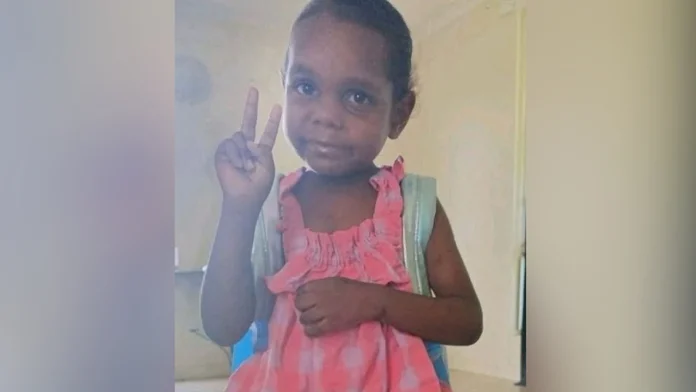
Kumanjayi Little Baby was found dead yesterday after she went missing from her home last Saturday

A nation in candlelight: remembering Kumanjayi Little Baby

On a cool evening that smelled of red dust and eucalyptus, towns and cities across Australia flickered with the same quiet light: hundreds of candles held aloft, tiny flames bowing in the breeze, pink scarves and ribbons catching the streetlamps. They were small, warm beacons — and together they formed a country-sized chorus of grief, anger and a searching for answers.

The name at the center of that chorus is Kumanjayi Little Baby, a five-year-old whose disappearance on April 25 and whose death after a five-day search has shaken communities from the shadow of the MacDonnell Ranges to Sydney’s harborside. Her death has also reopened raw conversations: about the safety of Indigenous children, the tensions between law and customary practice, and what justice looks like in a nation still grappling with a colonial past.

From disappearance to vigil

It began, as many tragedies do, with the frantic scramble. Volunteers — hundreds of them — joined police and local rangers to comb dense bushland and river red gum stands on the outskirts of Alice Springs, the desert town many locals still call Mparntwe. Tracks were followed, calls were made, helicopters scanned the red plains. Five days later, authorities found Kumanjayi dead. A 47-year-old man, Jefferson Lewis, was charged with her murder and two separate offences that cannot be publicly disclosed under reporting restrictions.

In towns and cities around the country, people gathered to remember her. Organisers asked mourners to wear pink — Kumanjayi’s favourite colour — and to bring candles. The image of strangers standing together in a soft, collective glow became the public face of what private grief and communal responsibility look like.

The Outback’s storm: payback and sorry business

In Alice Springs, the grief spilled over into a deeper, culturally specific response. A crowd estimated at around 400 Indigenous people gathered to demand what they called “payback” — a term that, to many Australians unfamiliar with the nuance, can conjure images of retaliatory violence. Within Aboriginal communities, however, the word sits within a broader lexicon of customary law, where retribution, restoration and balance mingle in practices that vary between nations.

Many in Alice Springs entered “sorry business” — the traditional period of mourning that governs behaviour, speech and ceremony after a death. For days the town was quieter in some parts, and louder in others: quiet, where conversations were held in whispers and families retreated to mourn; loud, where public meetings, songs and ritual kept the community’s grief visible and collective.

“We are hurting. Our children are our responsibility,” said Aunty Marlene (not her full name), an Arrernte elder who spoke with a voice both soft and fierce. “This isn’t about law alone. It’s about how we care for our kids when everything around them is pushed to the edge.”

Voices from the vigils

At a candlelight vigil in Sydney, a mother of two stood with a hand over her mouth, tears catching the flame light. “You don’t expect a child to be taken. You don’t expect to be lighting a candle for someone else’s little girl,” she said. “But we come together so she isn’t forgotten.”

Police issued statements expressing condolences and stressing that charges had been laid. “We mourn with the family and the community,” a senior officer said. “Our priority is a thorough investigation and ensuring the legal process runs its course.” Still, in many remote communities there remains a fraught relationship with policing — a history of mistrust that complicates how justice is both sought and received.

Dr. Amelia Carter, an Indigenous studies scholar, told me: “What we’re witnessing is grief refracted through structural inequalities. It’s not just the violence of one act; it’s the slow violence of dispossession, overcrowded housing, under-resourced services, and a justice system that doesn’t always speak the same language as customary law.”

Context and numbers that matter

These are not abstract concerns. Indigenous Australians make up roughly 3% of the national population but are disproportionately represented in many adverse statistics: they account for a far larger share of the prison population, for overrepresentation in child protection systems, and for poorer outcomes in health and housing in many parts of the country.

The Northern Territory, where Alice Springs sits, has one of the highest proportions of Indigenous people of any Australian jurisdiction; in too many remote communities, services that urban residents take for granted — mental health support, early childhood programs, stable housing and secure employment — are stretched thin.

Local color: life at the town edge

In Alice Springs, life is framed by the land: the MacDonnell Ranges that bleed orange at dawn, the spinifex-stippled plains, and the seasonal chatter of birds that flit between ghost gums. Children play on cul-de-sacs while elders sit in shaded verandas, cooling themselves with palm fans and cups of tea. Yet at the town’s edges, housing shortages push families into overcrowded homes and pressure points — where safety nets fray.

“You hear the kids playing, and you laugh,” said Jonah, a teacher who has worked in local schools for a decade. “But when something like this happens, you feel the fault lines. You think about how we missed the signs — or whether they were even visible to begin with.”

What the vigils asked of people

  • Bring a candle
  • Wear pink, Kumanjayi’s favourite colour
  • Honor the family and respect the space for “sorry business”

Questions that linger

Vigils do not answer the larger questions. They are, at once, a balm and a mirror. They soothe by recognizing a loss; they reflect the deeper, systemic issues everyone must wrestle with. What do we owe to children in communities that have been historically marginalised? How can obligations under the law coexist with customary processes of healing? And how should policing, social services and community leadership work together in places where mistrust runs deep?

These are not questions with simple solutions. They demand patience, funding, cultural humility and sustained political will. Country-wide, Australians have at least one thing to decide: whether tonight’s candlelight will be another fleeting gesture — or the spark that reignites long-delayed conversations about prevention, protection and genuine partnership with Indigenous communities.

What comes next

Kumanjayi’s family will hold a vigil in Alice Springs; others will continue to hold remembrance events across the nation. For many, the immediate hope is for grieving, for community cohesion, and for a legal process that respects both the law and cultural protocols. For others, the tragedy underscores the urgent need for systemic reform.

As you read this, ask yourself: when we say “never again,” what do we mean? Is it enough to light a candle? Or must we, as a nation, light a path toward real prevention — better housing, culturally led family support, meaningful dialogue between systems?

Back in Alice Springs, as the last of the candles sputtered and the glow receded into the dark, one elder tugged her scarf tighter and said, simply: “We hold her in our stories now. But stories must be followed by change.” The country is listening. Now comes the harder part — answering.

Maamulka Gobolka Banaadir hakiyay bannaynta dhulalka Danta Guud

May 07(Jowhar)-Maamulka gobolka Banaadir ayaa soo saaray war saxaafadeed uu ku hakinayo bannaynta dhulka danta guud kadib markii gelinkii dambe ee shalay uu iska horimaad hubeysan ku dhex maray degmada Dayniile ciidamada dowlada iyo dabley hubeysan dagaalkaa oo ka dhashay qasaare isugujirta dhimasho iyo dhaawac.

Global demands for sanctions after Israel intercepts Gaza-bound flotilla

Israel: Detained flotilla activists to be taken to Greece
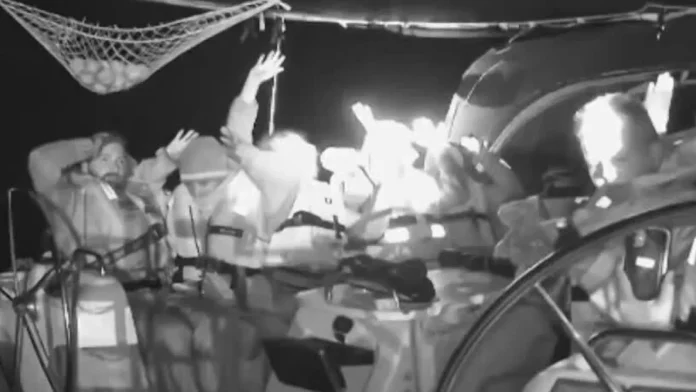
A screengrab from a camera on board one of the ships that was intercepted in international waters by Israeli forces

When the Sea Becomes a Stage: Ireland’s Dilemma After the Flotilla Interception

On a wind-swept morning in the Dáil, a small ship off the coast of Greece became the catalyst for a much larger conversation — one about law, conscience, and how nations choose to hold other states to account.

Dozens of activists, some of them Irish citizens, were detained after Israeli forces intercepted a flotilla bound for Gaza in international waters last week. Seven of those detained were from Ireland and have since been released. But the brief headlines don’t capture the long, layered grief and political urgency that followed: a flurry of parliamentary questions, demands for sanctions, and the resurfacing of a stalled piece of Irish law meant to address trade with occupied territories.

“This is not just a diplomatic spat — it is a human story,”

a flotilla participant told me on a late-night call. “We were trying to bring attention. We were trying to remind the world there are people in Gaza whose lives are governed by a blockade.”

The flotilla’s interception is the latest drama in a long-running, contentious issue. The Gaza Strip — home to more than two million people — has endured severe restrictions for years. International aid agencies have frequently warned of deteriorating humanitarian conditions, and the seaborne protests echo the 2010 Mavi Marmara incident, when violence during a similar confrontation left several activists dead and reshaped global debate about blockades and the rights of civilians.

A call for an investigation and sanctions

In Dublin, People Before Profit-Solidarity TD Ruth Coppinger used the Leaders’ Questions to press the Government for a robust response. She urged ministers to demand an investigation into the interception and to consider economic sanctions against Israel — arguing that states cannot look the other way when actions in international waters raise questions about the use of force and collective punishment.

“When are you going to sanction Israel?” she asked directly, capturing the emotional pitch of many who watched the footage and read the accounts streaming off the boats.

Minister for Foreign Affairs Helen McEntee replied by reiterating Ireland’s long-stated advocacy for Palestinian rights and the two-state solution, stressing that much of Ireland’s diplomatic work occurs at a European level. “We need to advocate at a European level,” she told the Dáil, underlining the reality that small states often use multilateral forums to amplify their influence.

Questions of law, politics and complexity

Legal scholars say the interception of vessels in international waters is laden with legal complexity. Under international law, naval blockades can be lawful in the context of armed conflict if they meet strict criteria; civilian ships in international waters generally enjoy protection unless they present a direct threat or the interception adheres to precise legal standards.

“The line between lawful blockade enforcement and unlawful interference with humanitarian initiatives is a narrow one,” said Dr. Siobhán Murphy, an international law expert at Trinity College Dublin. “Each incident demands transparent investigation and prompt, independent legal scrutiny. That’s how confidence — and accountability — is restored.”

For others, the response must go beyond legal niceties. “We need political consequences,” argued a campaigner from a Dublin solidarity group. “If states are stopped from acting because of realpolitik, it sends a cruel message to the people suffering on the receiving end.”

The Occupied Territories Bill: an old promise, a live issue

The flotilla episode also re-opened another political file that has been gathering dust in the corridors of power: the Occupied Territories Bill. First proposed about eight years ago, the bill would make it illegal for Irish businesses to import goods from settlements in occupied territories.

Three-hundred-and-fifty lawyers have publicly backed the bill, asserting it would withstand legal scrutiny. Yet its passage has been slow, with government ministers repeatedly promising action without delivering clear timelines.

“It must be exhausting in your role trying to come up with new excuses each time on the bill,” Deputy Coppinger said, her frustration reflecting broader public impatience among community groups and some opposition politicians.

Minister McEntee told the Dáil that the government remained committed to implementing the legislation, but that the matter was thorny — entwined, she said, with questions about economic exposure and the role of services in the proposed restrictions. She also noted ongoing consultations with the Attorney General, promising clarity on timelines soon.

Why the delay matters

Critics argue the delay is not merely bureaucratic hesitancy but reflects deeper economic and geopolitical entanglements. “Ireland’s trade networks and corporate ties — especially where US multinationals are concerned — complicate the calculus,” said an economist who asked not to be named. “Governments often speak from principle, but policy that bites into commerce requires a tougher stomach.”

Those in favour of quicker action point to both moral and strategic reasons. They argue that trade restrictions against settlements are a lever that democracies can use without military intervention — a non-violent tool to shape behaviour and push for adherence to international norms.

Voices from the streets and the docks

Back in Dublin’s neighborhoods, reaction to the flotilla and to the political standoff was immediate and personal. At a small café near the docks, an elderly man who had been a volunteer on solidarity campaigns since the 1980s told me, “Ireland has a history of standing with the underdog. It is in our bones.”

A young medical student who had travelled to the region with aid shipments added, “People on the ground in Gaza need access to medicine and the basics. Whether it’s through law or pressure, governments should make sure humanitarian norms are respected.”

Meanwhile, in the Dáil, the Social Democrats’ deputy leader Cian O’Callaghan accused the Government of breaking an election promise by delaying the bill’s implementation. The tension between electoral commitments and policy realities is a thread that will likely run through Irish politics for months to come.

What should we expect next?

The immediate fallout will likely be diplomatic — demands for investigations, calls at the United Nations, and heavy media scrutiny. Ireland, which has long sought to amplify its voice at the EU level, will press for a united European response, McEntee said.

But the story stretches beyond a single flotilla. It surfaces broader questions: How should small states balance values and economic ties? What is the role of civil society in shaping foreign policy? And when does principled rhetoric become actionable policy?

As readers, what do we want our governments to do when international law seems insufficient or slow? Do we accept incrementalism in the name of economic stability, or do we demand bolder moves to curb what many call systematic injustice?

Final frame

On the sea, the flotilla’s wake fades. In parliament, the exchange of words grows louder. But for families in Gaza, for the activists who put their bodies on boats, and for a generation of Irish voters who expect moral clarity, the incident will not soon be forgotten.

“We didn’t go because it was easy,” one activist said. “We went because someone has to keep shining a light.”

Whether that light becomes policy, sanctions, or simply another parliamentary debate remains to be seen. For now, the questions raised by the interception ripple outward — asking not only what states will do, but what citizens will insist upon.

Qoor qoor oo dib u magacaabay taliyaha booliska Galmudug oo dowladda ay bedeshay

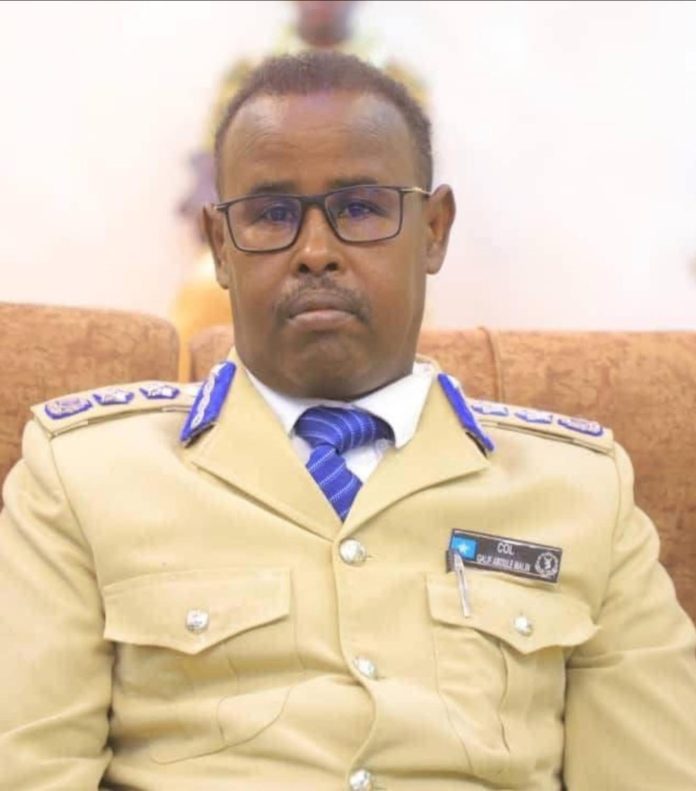
May 07(Jowhar) Madaxtooyada Galmudug ayaa dib u magacowday taliye booliska Galmudug Khaliif Ilkacase, iyagoo kahoryimi magacaabida Taliye Boolis oo Federaalka magacowday sida muuqata.

Faransiiska oo markab dagaal usoo diray Bariga Dhexe

Screenshot

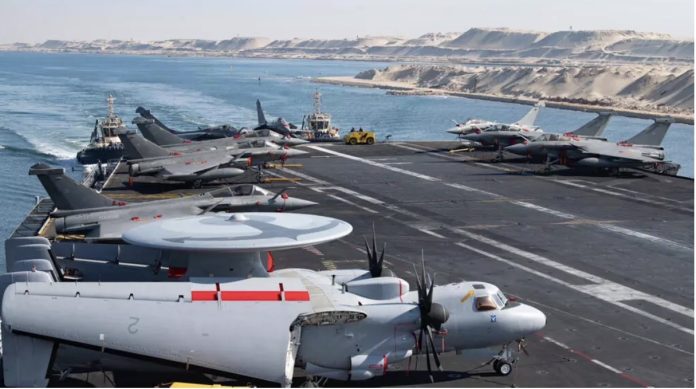
May 07(Jowhar) Markabka diyaaradaha dagaalka xambaara ee Charles de Gaulle oo Faransiisku leeyahay ayaa u jihaystay Bariga Dhexe, isagoo ka gudbay Kanaalka Suez kuna wajahan Badda Cas.

U.S. strikes Iranian tanker, says blockade remains in place

US hits Iranian tanker, says blockade remains in effect
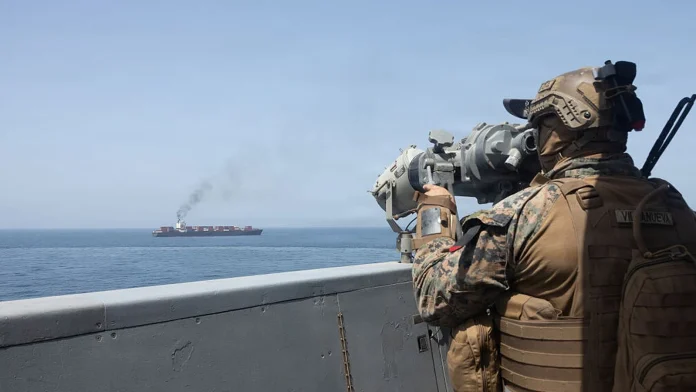
The US blockade against ships attempting to enter or depart Iranian ports 'remains in full effect', US Central Command said (file image)

The Morning the Sea Stopped Cooperating: A Gulf Tale of Guns, Diplomacy and a Disabled Tanker

The Gulf of Oman is a place that keeps its own hours. Dawn arrives here as a sheet of molten light over the water, and ships — ghosts of steel and paint — settle into the slow choreography of global trade. On one such morning recently, that choreography was interrupted by the staccato bark of warning rounds and a missile of consequence: a 20mm cannon burst that put the rudder of the Iranian-flagged tanker M/T Hasna out of service, leaving the vessel helpless as it tried to change course toward an Iranian port in apparent defiance of a U.S. blockade.

U.S. Central Command described the action in terse operational language: American forces observed the Hasna in international waters heading for Iran, issued multiple warnings, and when the crew failed to comply, a U.S. Navy F/A-18 Super Hornet launched from the USS Abraham Lincoln fired several rounds that disabled the tanker’s steering. “Hasna is no longer transiting to Iran,” CENTCOM posted on social media.

Up close: what that looks like

Picture a grey naval carrier forging into the morning haze, jets like predatory birds lifting from its deck. A tanker — long, slow, oiled and proud — rolls in the swell. Words on a radio fail to move men who may have been told other orders. And then metal sings: the sound of cannon fire, a flutter of sparks, an exhausted ship spinning reluctantly as engineers fight a steering jam engineered by another state’s weaponry. For those with binoculars on nearby decks or shored-in spectators in Bandar Abbas or Fujairah, the scene would be chillingly intimate.

“We saw the plane drop down and then the ship stopped responding,” said a crew member on a nearby freighter who asked not to be named. “No one wants to be the next story on the news.”

Between cannons and conference rooms: how a skirmish and talks moved in tandem

What makes this act of force more than another headline is the diplomatic shadow that followed it. Behind closed doors — according to multiple sources — mediators in Islamabad were conveying an emerging, one-page memorandum designed to halt the broader hostilities in the Gulf. The document, reported to be about a 14-point outline, would set out a framework to end the war, while leaving thorny matters like Iran’s longer-term nuclear posture to later discussions.

“We will close this very soon. We are getting close,” a Pakistani source briefed on the talks told a reporter. Pakistan has quietly borne the role of go-between ever since it hosted rare direct peace talks, shuttling messages between Washington and Tehran.

U.S. President Donald Trump amplified the sense of urgency and ultimatum. In a morning post on social media he wrote that the conflict could end “Assuming Iran agrees to give what has been agreed to,” later threatening that “If they don’t agree, the bombing starts,” language that underscored just how fragile any progress remained.

Iran’s reply — cautious, public, private

Tehran’s public posture was a mix of guarded openness and skepticism. Iran’s foreign ministry said it was reviewing the proposal and would respond through Pakistan, while senior Iranian parliamentarian Ebrahim Rezaei dismissed the memorandum reported by U.S. media as “more of an American wish-list than a reality.” Foreign Minister Abbas Araqchi, visiting China, said Tehran sought “a fair and comprehensive agreement,” signalling that Tehran wanted not just an end to immediate hostilities but guarantees for the future.

“The Americans will not gain anything in a war they are losing that they have not gained in face-to-face negotiations,” Rezaei insisted — a reminder that domestic politics and prestige are critical currencies in Tehran.

Markets and mariners: the global fallout

News of a possible diplomatic breakthrough sent markets into a breathless wobble: benchmark Brent crude futures plunged by around 11% to roughly $98 a barrel, and global equities responded with a relief rally. For a world still rebuilding pandemic-era supply chains and grappling with energy transition debates, the prospect of de-escalation in the Hormuz corridor felt like a release valve.

Why the fuss? Because the Strait of Hormuz is not a local road. It is an artery. Roughly one-fifth of the world’s seaborne oil flows through the strait — a narrow choke point that, when threatened, ripples through supply chains, refining margins, shipping insurance, and national treasuries from Tokyo to Rotterdam.

“A disruption here is global by design,” said Leila Mansour, a Dubai-based shipping analyst. “Insurance premiums spike, charters get cancelled, and some owners decide the extra voyage around Africa is cheaper than risking the strait. That adds days, fuel, and cost — and the market prices that in.”

Meanwhile, maritime attacks have kept the threat tangible. A French shipping company reported a container ship struck in the strait and evacuated injured crew members — a reminder that the conflict touches ordinary seafarers who leave loved ones onshore and unwittingly ride the geopolitics of their employers’ cargoes.

Allies, unease, and unread strategic maps

Not everyone in Washington’s alliance network is on the same page. Israel, a principal wartime ally, appeared unalarmed by reports of a deal and instead said it was preparing for an escalation. That fissure highlights competing threat perceptions: for some, the priority is immediate trade and safety through Hormuz; for others, it is ensuring that any deal does not leave strategic shortfalls, such as limits on missiles or regional proxies.

And yet, the proposed memorandum’s architecture — a short agreement followed by 30 days of detailed negotiations — could set a workable sequence: halt the shooting first, then unstick the harder issues like sanctions relief, frozen assets, and nuclear constraints. But as negotiators and commanders know well, sequencing matters, and every delay is leverage for one side or the other.

Local color: lives on the water

On the docks, ordinary people register the news in ways that are visceral, not abstract. A fisherwoman in Bandar Lengeh described the sea as “our paycheck and our prayer.” A port worker in Bushehr said he’s tired of thinking about missiles: “We want children to go to school, not to learn where to hide.”

Mariners who congregate at coffee shops on the water trade stories — of close calls, of a captain who rerouted a voyage at midnight, of insurance forms that now come with a war-risk addendum. These are the human margins of foreign policy: those who earn their living by tides and charts and who pay the immediate price when a state chooses to block a channel or fire warning rounds.

What happens next — a pause or the next act?

The coming days will test the limits of both diplomacy and deterrence. If Iran and the U.S. sign even a preliminary memorandum, the world will watch whether a fragile pause reduces attacks and reopens the strait to shipping. If talks stall, sea lanes remain contested, and regional actors may be drawn into escalation.

Ask yourself: how comfortable are we with the idea that global commerce can be held hostage at a few miles of water? What counts as a fair outcome for a country under years of sanctions, and where do we draw the line between necessary pressure and open conflict?

The Gulf has always been a place of trade and tension, of long memories and sudden crises. The disabled rudder of the Hasna is more than a technical detail: it is a metaphor. Steering remains possible, but only if enough parties agree to hold the wheel together.

  • What to watch: Tehran’s reply via Pakistan; any formal signature of a memorandum; movement of commercial traffic through Hormuz.
  • Key data points: roughly 20% of world seaborne oil transits the Strait of Hormuz; Iran’s existing stockpile includes more than 400 kg of uranium enriched to near weapons-grade, a persistent issue in past demands.
  • Human stakes: seafarers’ safety, regional stability, and global energy prices.

In the career of a journalist you learn that no single image contains the whole truth. But the image of a ship that cannot steer — drifting in international water, its crew uncertain, its future tied to choices made far away — captures the moral and practical dilemma facing the Gulf and the wider world. Will cooler heads steer us back to safe harbor, or will the next shot tip the balance? The answer will arrive not only from conference tables but from those who work on the water and the policymakers who decide whether to extend a hand or clenched fist.

EU urged to halt Israeli settlement construction in the West Bank

Call for EU to deter Israel from building in West Bank
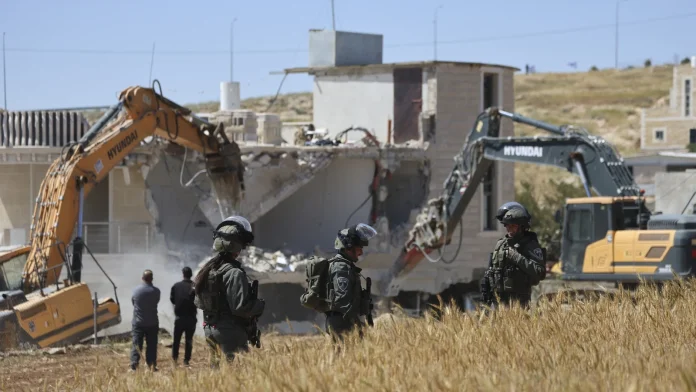
Israeli forces stand near excavators during the demolition of a house in the Al-Dirat area of Masafer Yatta, south of Hebron in the Israeli-occupied West Bank

When a Road Can Re-write a Map: Europe’s Alarm Over the E1 Plan

There are places on the map where a single stretch of asphalt — or a cluster of concrete homes — can alter not just geography, but the future of a people. The E1 area, a narrow swathe of land east of Jerusalem, has become one of those places. For decades it has sat at the center of a geopolitical tug of war: a sliver of high ground that, if built over, would stitch Israel’s settlements together and sever East Jerusalem from the main Palestinian population centres of the West Bank.

This spring, nearly 450 former European Union ministers, ambassadors and senior officials sent a wake-up call across capitals and committee rooms in Brussels. Their message was uncompromising: if Israel proceeds with plans to build a new settlement block in E1 — a tender reportedly expected to open for some 3,401 housing units that organisers say could accommodate up to 15,000 people — the EU should respond with targeted measures designed to deter the project.

“This is not about symbolism,” said one veteran diplomat who signed the appeal. “It is about preventing a structural change on the ground that would make a two-state solution geographically impossible.” That blunt assessment captures why so many former insiders—people who once sat around the same tables where policy was made—have chosen to step back into the spotlight.

What the former officials want

The signatories call for smart, targeted sanctions aimed at the individuals and organisations driving settlement expansion: politicians, settler leaders, local planning authorities, developers, engineers, and even the banks and contractors that make construction possible. Measures proposed include visa bans and prohibitions on doing business within the EU.

“We are talking about precision pressure,” explained a retired EU legal adviser. “Not blanket boycotts, but calibrated steps to make clear there are consequences for actions that violate international law and remove the possibility of a negotiated peace.”

The list of suggested targets is wide: planners who approve blueprints, engineers who design access roads, companies that finance projects, and lawyers who create the legal scaffolding for land expropriation. The idea is to turn the usual diffuse economics of settlement expansion into a series of choke points that European governments could exploit.

Why E1 matters

Think of the West Bank as a jigsaw puzzle of enclaves and highways. E1 sits on a sensitive seam. If fully developed, it would knit Ma’ale Adumim — one of the largest Israeli settlements east of Jerusalem — to the city itself, creating a contiguous bloc of Israeli-controlled land that would isolate Palestinian towns like Ramallah and Bethlehem from the capital.

International observers warn that such a change would not be reversible. “It would be a kind of urban annexation without formal annexation,” said Maya Khalil, a Palestinian urban planner in Ramallah. “Once the road networks and housing are in place, reversing them is nearly impossible politically and economically.”

These warnings come on the back of a broader reality. Roughly half a million Israeli settlers now live across the occupied West Bank and East Jerusalem, a dramatic rise compared with 20 years ago. Each new housing project, each new road, alters the living patterns of Palestinians — from daily commutes to water access — and constrains the geography of any future Palestinian state.

From Diplomatic Pleas to the Streets: Voices on the Ground

In Amman cafés and Jerusalem bakeries, the reactions are visceral. “When they speak in Brussels, we hear in our homes,” said Fatima, who runs a small grocery in a Palestinian neighbourhood east of Jerusalem. “We already feel squeezed. Another development in E1 would be like putting a final nail in the concept of two states.”

On the other side of the same coin, an Israeli settler who asked not to be named framed the project as basic housing policy. “People need roofs,” he said. “Families grow. This is about living, not politics. But I understand why people see it differently.”

These local vignettes capture the human texture behind the high-level exhortations. They are what a corridor talk in Brussels or a press release cannot fully convey: the daily worries of commuters, the mathematics of household expansion, the flashpoints created by checkpoints and new roads.

Legal, Moral and Strategic Questions

At stake are questions that echo far beyond one Mediterranean hill. Under international law, Israeli settlements in the occupied territories are widely considered illegal. But enforcement has been inconsistent, and international institutions have struggled to translate law into action.

That is why former European officials are calling for a new playbook. “Sanctions have been used successfully in other contexts to change behaviour,” explained Christophe Legrain, a policy analyst in Brussels. “The challenge is political will: the EU has tools, but it needs unity and appetite to use them in a sustained way.”

There is also an argument about effectiveness. Some analysts fear that sanctions could harden domestic politics inside Israel and be used to rally nationalist sentiment. Others counter that inertia and normalisation without consequences has already emboldened settlement expansion.

Across the Sea: A Flotilla, Two Detainees and Questions of Humanity

While diplomats argued over sanctions, a much smaller, quieter drama was unfolding at sea. A humanitarian flotilla that set off from ports in France, Spain and Italy aiming to break the naval blockade of Gaza was intercepted in international waters. Two activists — a Spanish national of Palestinian origin, Saif Abu Keshek, and a Brazilian activist, Thiago Avila — were taken to Israel and remain in custody.

Their case has become another diplomatic irritant. International human rights groups and the United Nations have called for their swift release, arguing that peaceful attempts to deliver relief or show solidarity should not be treated as war crimes. “Detaining people who tried to carry aid is not justice,” said Elena Fraga, a lawyer with a Mediterranean NGO helping the detainees. “It sends a chilling signal to civil society.”

Adalah, an Israeli human rights group representing the pair, alleges severe mistreatment during detention — constant light in their cells, blindfolding during movements, and prolonged isolation. Israeli authorities reject these allegations and have not filed formal charges, though they have said the two are suspected of links to organisations they deem hostile.

The flotilla episode underscores a broader tension: how democracies balance security concerns with humanitarian impulses and civil liberties. It also raises practical questions about the blockade of Gaza, an eight-year-plus reality (since 2007) that international agencies say has left the territory economically crippled and heavily dependent on aid.

Big Questions Still Open

So where does this leave the reader, sitting anywhere from Lisbon to Lagos, from New York to Nairobi? What does Europe owe — to international law, to the idea of a negotiated peace, to the lived reality of Palestinians and Israelis who must coexist in the same little patch of land?

These are not hypothetical questions. They are invitations to think about how international politics is practised: whether through the blunt instrument of sanctions or the subtler currency of diplomatic pressure, trade, and legal action. They are about whether the international community can find a way to slow, stop or reverse trajectories that are already rewriting maps and lives.

As one retired ambassador put it, “If we do nothing, geography becomes destiny. If we act, there is a chance to keep open the possibility of two peoples living side by side with dignity.” The decision, and its moral calculus, will not be settled in a single meeting or letter. But as the E1 contour grows clearer on satellite imagery and as small boats push against naval lines, the stakes are unmistakable — not only for the region, but for any global order that claims to value law, human dignity and negotiated solutions.

Fariinta beesha caalamka ee ay wada sugayaan dhinacyada isku haya xukunka dalka

May 07(Jowhar) Mucaarad iyo Muxaafidba dhinacyada ayaa wada sugaya fariinta wakiilada caalamiga ah, gaar ahaana mid kamid ah dalalka Reer galbeedka oo dhexdhexaadin iskugu keenaysa sida qorsheysan, waqtiga isku imaatinka ayaana la sugayaa, iyadoo dhinacyadu aqbaleen soo jeedinta wakiilada caalamiga ah.

Trump predicts rapid end to war as Iran evaluates U.S. peace deal

Trump sees swift end to war as Iran reviews US peace deal
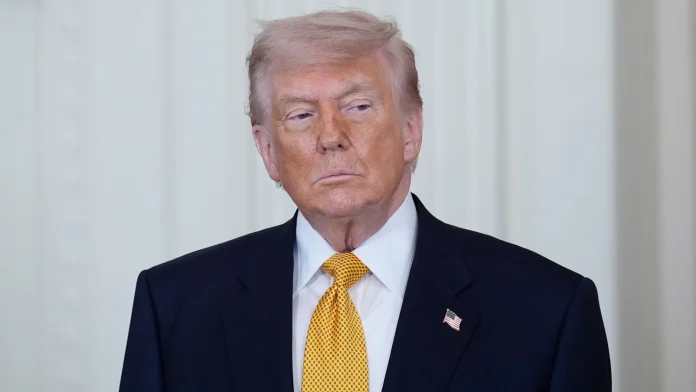
Donald Trump has repeatedly played up the prospect of an agreement to end the war

On the Edge of the Strait: A Fragile Pause Between War and Diplomacy

There is a strange stillness over the Strait of Hormuz, as if the sea itself is holding its breath. Tankers sit like beached whales on satellite images; sailors swap uncertain messages over crackling radios. On shore, tea vendors in Bandar Abbas watch the horizon through shuttered kiosks, and traders in Tehran scroll through headlines that change by the hour.

It has been nearly two months since the conflict erupted on 28 February, yet the world has never felt closer — or more precarious — to a sudden unravelling of that violence. In the Oval Office, US President Donald Trump told reporters that talks opening a path to peace were progressing, and predicted that if an agreement were reached, “it’ll be over quickly.”

But quickness and peace are different things. The proposal reportedly on the table — a short, one‑page memorandum floated by US mediators — is less a full treaty than a political ceasefire designed to buy time and open channels for more arduous negotiations.

What the memo would do — and what it would not

According to sources briefed on the talks, the memorandum would formally end active hostilities and trigger 30 days of detailed bargaining. The immediate priorities would be reopening the Strait of Hormuz to commercial shipping, lifting targeted US sanctions in stages, and putting limits on Iran’s nuclear activities.

What the draft does not address — at least in the initial phase — includes some of the most contentious items on Washington’s checklist: explicit curbs on Iran’s ballistic missile program, a formal halt to support for regional proxy groups, and the fate of Iran’s existing near‑weapons‑grade uranium stockpile, which officials say tops 400kg.

“It’s a framework, not a settlement,” said Takamasa Ikeda, senior portfolio manager at GCI Asset Management. “Markets are betting on the reduced probability of immediate military escalation, but a one‑page peace memorandum is not a cure for the underlying mistrust.”

Voices from the Gulf and Tehran

On a blustery morning in Bushehr, a port city that has alternated between blackouts and anxious vigils, 38‑year‑old merchant Ali Rezaei folded his hands and sighed. “If the ships come back, my container of dried limes will actually reach Dubai,” he said. “We have already lost two months of contracts. This is not just geopolitics for us — it is bread.”

In Tehran, the official posture has been cool and, at times, mocking. Mohammad Baqer Qalibaf, speaker of parliament, used social media to deride early reports of a breakthrough, writing in English, “Operation Trust Me Bro failed.” A foreign ministry spokesperson told state media that Tehran would “convey its response in due course,” underscoring how much is still in the hands of diplomats and domestic politicians.

“There’s deep scepticism here,” said Dr. Laila Mahmoud, a Gulf security analyst who has lived and worked in the region for two decades. “For Iran, any agreement that stops short of addressing sanctions and guarantees of sovereignty will be sold at home as a hollow concession.”

Markets, Missiles and the Global Spin Cycle

The reporting of a possible deal was enough to send financial markets into a rapid re‑pricing. Brent crude futures plunged roughly 11% at one point to around $98 a barrel before settling back above $100. Global equities bounced, bond yields eased, and analysts credited the optimism to a reduced near‑term probability of expanded military action.

Yet the volatility is a reminder of how tightly linked geopolitical stability is to global energy flows. The Strait of Hormuz — a narrow, turquoise choke point between the Arabian Peninsula and Iran — once handled about one‑fifth of the world’s seaborne oil and gas. Even the suggestion that it could be reopened has ripple effects that travel from oil traders on Wall Street to fuel pumps in Nairobi.

“The contents of the US‑Iran peace proposals are thin,” Ikeda added, “but there is an expectation in the market that further military action will not take place in the days ahead.”

Ships, Blasts and the Thin Line of Escalation

Not far from this dance of diplomacy, the clang of naval action continues. US Central Command reported that forces fired on an unladen Iranian‑flagged tanker, disabling it as it attempted to sail toward an Iranian port in contravention of a US blockade — a reminder that unilateral operations are still ongoing even as talks proceed.

This week a fire and explosion struck the Panama‑flagged HMM Namu, a South Korean vessel transiting the strait, briefly putting 24 crew members at risk. Tehran’s embassy denied any involvement, even as President Trump asserted that Iran “had taken some shots” at the ship and called on South Korea to join a US effort to escort vessels through the waterway.

“There are too many actors with different incentives in the region,” said an independent security consultant who asked not to be named. “One misfired rocket, one misinterpreted manoeuvre, and the fence between war and peace snaps.”

The Mediation Mess — and Who’s Really Pulling Strings?

The sources said the US negotiating team included Steve Witkoff and Jared Kushner, the latter a figure whose presence signals an unusual, highly personal diplomatic track. Pakistani channels and other quieter back‑channels have also reportedly been involved — a reminder that in modern conflicts, official diplomacy often runs in parallel with informal, sometimes shadowy, mediation.

If both Tehran and Washington sign the memorandum, the clock would begin on a 30‑day sprint to turn the paper agreement into a comprehensive accord. That is time to lay down verification mechanisms, sequencing on sanctions relief, and technical arrangements for the Strait’s security. It is also time for domestic politics to complicate everything.

In Iran, hardliners who see any concession as capitulation are powerful. In the United States, the shadow of sanctions architecture and the politics of credibility loom large. Who will reassure which electorate? Whose generals will accept what orders? These are not questions easily solved by a single page.

Why This Moment Matters — And What Comes Next

Beyond the immediate arithmetic of oil and arms, this episode forces a broader reckoning: how do we build durable peace in an era of fractured institutions, asymmetric warfare and hyper‑speed media cycles? Can a short memorandum create the breathing space needed for deeper trust, or will it merely paper over combustible differences?

Ask yourself: when a fragile ceasefire depends on a one‑page document and a 30‑day clock, what happens if either side wakes up tomorrow to a headline that changes the calculus? What kind of diplomacy can survive missile launches, proxy skirmishes, domestic political theatre and the ever‑present imperative of credibility?

For now, the strait waits, the sellers and sailors watch their screens, and negotiators — audacious, exhausted, hopeful — try to convert precarious calm into something more lasting. Whether this is the start of a real settlement or another interlude in a long, bitter contest will depend on what happens in the next 30 days, and on whether leaders on both sides can put patience ahead of display, and verification ahead of rhetoric.

Keep watching the water, because when that lifeline flows again, it will tell us as much about global politics as it does about the price of diesel at your nearest pump.

US downs Iranian drones as war reaches 100th day

Live updates: Trump claims Iran war agreement is “fully signed”

0
As the Middle East watches for any sign of a breakthrough, Donald Trump has declared that an Iran war deal is “all signed,” casting...
Eight dead in B-52 bomber crash in California

Eight Killed After B-52 Bomber Crashes in California

0
A routine test flight ended in catastrophe at Edwards Air Force Base in California when a US B-52 bomber crashed and erupted into a...
Starmer says UK to supply enriched uranium to Ukraine

Starmer: UK to provide enriched uranium supplies to Ukraine

0
Britain is sharpening its support for Ukraine on two fronts — energy security and economic pressure on Moscow — with Prime Minister Keir Starmer...
Talks with US on permanent peace to begin Friday - Iran

Iran to Begin Permanent Peace Talks With the US on Friday

0
A fragile truce in the Middle East is set to be tested almost immediately, with Iran and the United States preparing to open a...
Son of Norway's crown princess denies rape charges

Norway Crown Princess’s Son Convicted in Rape Case, Court Finds

0
Norway’s royal family has been thrust into an extraordinary legal reckoning after Crown Prince Haakon’s stepson, Marius Borg Høiby, was convicted of rape and...